
The Three-Tier Pricing Conversation:
Skeletal Expansion Options
Without Decision Paralysis
How to present MARPE, RPE, and treatment cost options clearly—with a clinical recommendation anchored to diagnosis, not price point. Increase case acceptance by 25–40% using structured tier communication.
TL;DR Presenting orthodontic treatment pricing—especially for miniscrew-assisted expansion and skeletal expansion options—requires a structured three-tier framework that simplifies choice architecture while maintaining clinical autonomy. This model reduces decision paralysis and improves case acceptance by anchoring recommendations within clear cost bands.
Pricing orthodontic treatment options—particularly for miniscrew-assisted rapid palatal expansion (MARPE), conventional RPE, or skeletal expansion protocols—remains one of the most uncomfortable conversations in clinical practice. Dr. Mark Radzhabov and evidence-based orthodontists report that unstructured fee discussions often paralyze patients and undermine case acceptance. In this article, we review the three-tier pricing conversation framework: how to present your treatment options without overwhelming patients, anchor your recommendation clinically, and increase case acceptance while maintaining your practice value.
What Is a Three-Tier Pricing Conversation?
Three-Tier Model
And Why It Works
A three-tier pricing conversation structures your treatment options into three distinct packages: Essential (baseline, non-negotiable standard care), Advanced (your primary clinical recommendation), and Premium (expanded scope or alternative modality). This approach mirrors how every successful consumer healthcare platform (from dental implants to orthodontics) manages choice architecture.
The psychological principle underlying this model is anchoring and constraint. When patients see three options, they don't experience paralysis—they experience structure. The middle tier (Advanced) becomes your clinical recommendation; the lower tier validates affordability; the upper tier demonstrates expertise and comprehensive care. Research in behavioral economics shows that a three-option frame increases decision velocity and satisfaction compared to open-ended fee discussion or a single quote.
In the context of orthodontic treatment pricing—particularly for cases requiring miniscrew-assisted expansion or skeletal expansion protocols—the three-tier model replaces vague language (“MARPE costs between $4,000 and $8,000”) with diagnostic clarity (“For your midpalatal suture density and age, I recommend the Advanced tier, which includes MARPE with 6-month monitoring—$6,200. Here's why…”). This positions you as a diagnostician, not a vendor.
The three-tier framework also reduces scope creep and post-treatment negotiation. Patients who commit to a defined tier experience fewer surprises; your revenue per case stabilizes; and your treatment timeline is protected because the scope is explicit from day one.
How to Anchor Your Recommendation
Clinical Diagnosis
Not Price Point
The critical step in executing the three-tier conversation is establishing that your Advanced tier recommendation originates from clinical diagnosis, not price optimization. This requires documenting three decisions in your treatment plan:
1. Skeletal maturity and timing. CBCT imaging reveals midpalatal suture density, age, and maxillary growth potential. A recent prospective randomized clinical trial showed that MARPE achieves greater nasal width expansion and less buccal tooth tipping compared to conventional RPE in adolescents and young adults (Chun et al. BMC Oral Health 2022). This evidence directly informs your tier assignment. If the patient is skeletally mature (fused sutures), MARPE becomes the Essential or Advanced tier because it provides superior skeletal response without tooth tipping. If the patient is growing with patency, conventional RPE may be Advanced because it leverages remaining growth and is less invasive.
2. Treatment goal specificity. Is the objective skeletal expansion (bone-level change) or dentoalveolar correction? Miniscrew-assisted expansion provides greater separation at the greater palatine foramen and less dentoalveolar compensation—clinically superior if you're managing severe transverse deficiency or periodontal concerns in the posterior maxilla. Document this reasoning in your treatment plan before you present fees.
3. Risk and complexity factors. Posterior alveolar ridge anatomy, periodontal status, and patient compliance history inform whether you recommend conservative (Essential) or advanced (Advanced) protocols. A patient with thin buccal plates or marginal periodontium is better served by MARPE's controlled biomechanics than tooth-borne RPE—and this becomes your clinical justification for the higher tier, not a upsell.
Once these three diagnostic anchors are documented, your tier recommendation reads naturally: “Your CBCT shows fused midpalatal sutures and severe transverse deficiency. Conventional expansion alone would cause significant buccal tipping. I recommend our Advanced protocol—MARPE with miniscrew anchorage—because it gives you 95% skeletal expansion with minimal tooth movement. The fee is $6,200. Here's the 12-month timeline…” The patient hears diagnosis + justification + price, not price + justification.
The Three-Tier Conversation Script
Step-by-Step Delivery
Without Awkwardness
Once diagnosis is documented, the conversation structure follows this sequence:
Step 1: Diagnosis and Goal. (2–3 minutes) “Your CBCT and models show a transverse maxillary deficiency of 7 mm with fused midpalatal sutures. Your goal is to correct this without compromising tooth health or periodontium. We have three approaches.” (Present the three tiers by name and scope, not price.)
Step 2: Clinical Recommendation. (3–4 minutes) “I recommend our Advanced option—MARPE, or miniscrew-assisted rapid palatal expansion. Here's why: the miniscrews are anchored to bone, not teeth, so 95% of the expansion happens at skeletal level instead of at tooth level. Your buccal plates stay healthy. We avoid the dental tipping that happens with conventional expansion alone. The treatment takes 6 months active, then 6 months holding. Your follow-up is every 3–4 weeks during active phase.” (Show a visual—CBCT cross-section, before-after photos, or a diagram of miniscrew placement.)
Step 3: Option Architecture. (2 minutes) Present the three tiers side-by-side with scope, not just price. Example:
• Essential Tier—Standard Expansion: Conventional tooth-borne rapid palatal expander. $3,800. Best for growing patients with patent sutures. Treatment time 8–10 months.
• Advanced Tier—Miniscrew-Assisted Expansion (MARPE): Skeletal expansion with miniscrew anchorage. $6,200. My recommendation for your diagnosis. Treatment time 12 months including active and retention phases. Superior long-term stability and skeletal correction.
• Premium Tier—Comprehensive Skeletal Expansion: MARPE with adjunctive corticotomy (if needed for accelerated timeline) or comprehensive mixed-stage treatment (expansion + alignment + final settling). $8,500+. For complex cases or patients seeking all-in-one protocol without phase-by-phase planning.
Step 4: Anchoring the Recommendation. (1 minute) “I'm recommending Advanced because your diagnosis calls for it—not because it's more profitable. If your sutures were still open and you were younger, Essential would be appropriate. Premium is for cases with additional complexity or for patients who prefer everything bundled. Does Advanced make sense to you?”
Step 5: Logistics and Financing. (2–3 minutes) Present payment plans, insurance verification, and timeline without revisiting price. Price is locked once the tier is selected.
Why Three-Tier Conversations Fail
And How to Avoid Them
Pitfall 1: Weak Diagnostic Justification. If you cannot articulate why a patient needs Advanced over Essential, the tiers collapse into arbitrary price points. Patients sense this immediately and push downward. Always document the CBCT finding, suture density, age, or periodontal phenotype that justifies your recommendation. “Your sutures are fused” beats “This is better.”
Pitfall 2: Premium Tier Too Expensive or Vague. If Premium is not clearly distinct (or feels like price gouging), it undermines credibility of all three tiers. Premium should address a real clinical complexity (e.g., severe anterior-posterior discrepancy requiring surgical-assisted expansion, or SARPE in skeletally mature adult) or patient preference (e.g., “I want everything done at once without phase-by-phase planning”). Without clear justification, patients perceive Premium as a negotiation trap.
Pitfall 3: Presenting Tiers in Wrong Order. Never open with price. Open with diagnosis. “Your CBCT shows…” then “We have three protocols…” then “The one I recommend is…” then “Here's the fee structure.” If you lead with cost, patients anchor to price, not clinical value. They will negotiate downward from the start.
Pitfall 4: Not Owning Your Recommendation. Wishy-washy language (“Some patients choose Essential, but others prefer Advanced…”) signals uncertainty. Use language of clinical authority: “I recommend Advanced because…” If a patient later asks “Could we do Essential instead?” your answer is clear: “Your diagnosis calls for Advanced. Essential would leave the skeletal deficiency partially uncorrected and increase risk of relapse. We can discuss financing, but not scope.”
Pitfall 5: Conflating Tiers with Insurance Coverage. Never let insurance dictate which tier you recommend. If a patient's plan covers $3,200 toward expansion but your Advanced recommendation is $6,200, the gap is the patient's responsibility—not a reason to downgrade your clinical recommendation to Essential. Frame it: “Insurance covers $3,200 of the $6,200 Advanced protocol. Your patient responsibility is $3,000. Here are financing options.” This protects clinical integrity and prevents scope creep later.
How to Describe Each Tier Clinically
Concrete Language
for Every Stage of Treatment
Essential Tier: Standard Palatal Expansion
“This is our foundational protocol. You receive a tooth-borne rapid palatal expander—a Hyrax or hybrid Hyrax device—custom-made in our lab based on your dental anatomy. We activate the screw 4 turns per day (or per your response) until we reach the target expansion. Active treatment typically runs 8–10 weeks, followed by 6 months of retention to allow the palate to stabilize. We see you every 2–3 weeks to monitor response and adjust as needed. This option is ideal if your sutures are still open and your age and skeletal growth pattern support palatal expansion through tooth movement. Cost: $3,800. Includes records, appliance fabrication, active treatment, retention, and removal.”
Advanced Tier: Miniscrew-Assisted Rapid Palatal Expansion (MARPE)
“This is my recommended protocol for your diagnosis. Instead of anchoring expansion to your teeth, we place two small titanium miniscrews directly into the hard palate bone—a minimally invasive procedure performed here in-office under topical anesthesia. The expander is then attached to these screws, not to your teeth. This means 95% of the expansion force goes directly into the bone, not into your teeth. Your molars and premolars stay upright; your buccal plates remain healthy. The expansion activates over 6 months, then we hold for 6 months to allow bone remodeling and stabilization. We see you every 3–4 weeks during active phase to monitor miniscrew stability and expansion response. MARPE is particularly effective in skeletally mature or near-mature patients because it bypasses the limitations of tooth-borne expansion and achieves true skeletal correction. Cost: $6,200. Includes miniscrew placement, lab-made expander with custom palatal geometry, active treatment, retention, removal, and miniscrew extraction at the end.”
Premium Tier: Comprehensive Skeletal Expansion ± Adjunctive Procedures
“If your case involves severe anterior-posterior maxillary deficiency, significant skeletal maturity (fused sutures), or you prefer a unified treatment protocol without separate expansion and alignment phases, we offer Premium. This includes MARPE as the foundation, plus selective corticotomy (piezocision-assisted micro-osteotomies along the buccal dentoalveolar complex) to accelerate bone remodeling and reduce treatment time. Or, if you prefer, Premium can bundle expansion, comprehensive alignment, and all retention into one unified fee without phase-by-phase invoicing. This reduces number of appointments and simplifies financial planning. Cost: $8,500–$9,500, depending on adjunctive scope. This tier is ideal for complex cases or for patients who value all-inclusive treatment without surprise fees.”
The Psychology of Tier Selection
Why Advanced Wins
When Positioned Correctly
When presented with three price points, 80–90% of patients select the middle option—a behavioral phenomenon known as the Goldilocks effect or “compromise bias.” The middle option feels neither risky (like the lowest) nor excessive (like the highest). In a three-tier pricing model, this is precisely where your Advanced recommendation sits.
However, this effect only works if your frame is correct. The three options must be perceived as genuinely different in scope, not just price. If Essential and Advanced appear to differ only by $1,500 with minimal clinical distinction, patients won't select Advanced based on value—they'll select it based on relative position, which feels random and undermines your credibility. The tier must represent a meaningful clinical difference: Essential (RPE) = dentoalveolar, reversible, faster; Advanced (MARPE) = skeletal, stable, longer treatment; Premium (comprehensive or SARPE) = complex, unified, surgical or all-inclusive.
To optimize the Goldilocks effect: Price your Advanced tier 35–50% higher than Essential and 25–35% lower than Premium. This creates clear psychological separation without making Advanced feel like a compromise. Example: Essential $3,800 → Advanced $6,200 (63% higher) → Premium $8,500 (37% higher). The increments feel rational and proportional.
Second, anchor your recommendation language to Advanced before presenting price. “I recommend Advanced” (spoken first, before fee) primes the Goldilocks effect in your favor. The patient's brain now treats Advanced as the “correct” option, not the “middle” option. When they see the price, they're confirming your recommendation, not choosing blindly.
Third, use visual hierarchy to emphasize Advanced. When presenting all three tiers, make Advanced slightly more prominent (larger font, different background color, or position at eye level on the printed estimate). Subtle visual emphasis increases selection rate by 8–12% without appearing manipulative.
Measuring Conversation Effectiveness
Key Metrics
to Monitor
Once you implement the three-tier conversation protocol, monitor these five metrics to assess effectiveness and refine your approach:
1. Case Acceptance Rate by Tier. What percentage of patients accept Essential, Advanced, or Premium? Target: 65–75% Advanced, 15–25% Essential, 5–10% Premium (if your diagnostic criteria are correct). If you're seeing 40% Essential, your diagnostic anchoring may be weak or your Essential tier may be too appealing relative to scope.
2. Time from Presentation to Decision. How long does the patient take to commit? Track this weekly. Patients who accept Advanced typically decide within 1–2 office visits if your diagnostic narrative is clear. If patients are requesting time to think, asking for discounts, or requesting “something in between,” your tier positioning or price anchoring needs adjustment.
3. Post-Acceptance Scope Creep. Once a patient commits to a tier, do they request additions (extra appointments, upgraded retention, additional appliances) that blur the tier boundary? If yes, your scope definition was unclear. Refine your written tier descriptions so scope is explicit from day one.
4. Patient Satisfaction and NPS. Do patients who commit to each tier report satisfaction with their choice? Advanced tier patients should report 8–10/10 satisfaction if selection was tied to diagnosis. If Advanced patients are expressing buyer's remorse or wish they'd chosen Essential, your recommendation justification was insufficient.
5. Revenue per Expansion Case. Track average case value. When you shift from open-ended pricing to three-tier positioning, your average case value typically increases 18–28% because you're recommending appropriate scope (Advanced) instead of gravitating toward the lowest-cost option to close the sale. This is healthy revenue growth, not price gouging.
Review these metrics monthly. If acceptance of Advanced is dropping, revisit your CBCT interpretation or diagnostic language. If Essential tier is overcrowded, you may be under-diagnosing skeletal maturity or overestimating growth potential in your patient population.
Free Clinical Guide
Which Expansion Appliance at Which Age?
Get Dr. Mark Radzhabov's guide to skeletal-expansion appliances — indications, pros & cons, and how to choose by patient age. Free to your inbox.
Prefer video? Watch the free demo lesson on MARPE appliance types, features and trade-offs.
Documented outcomes
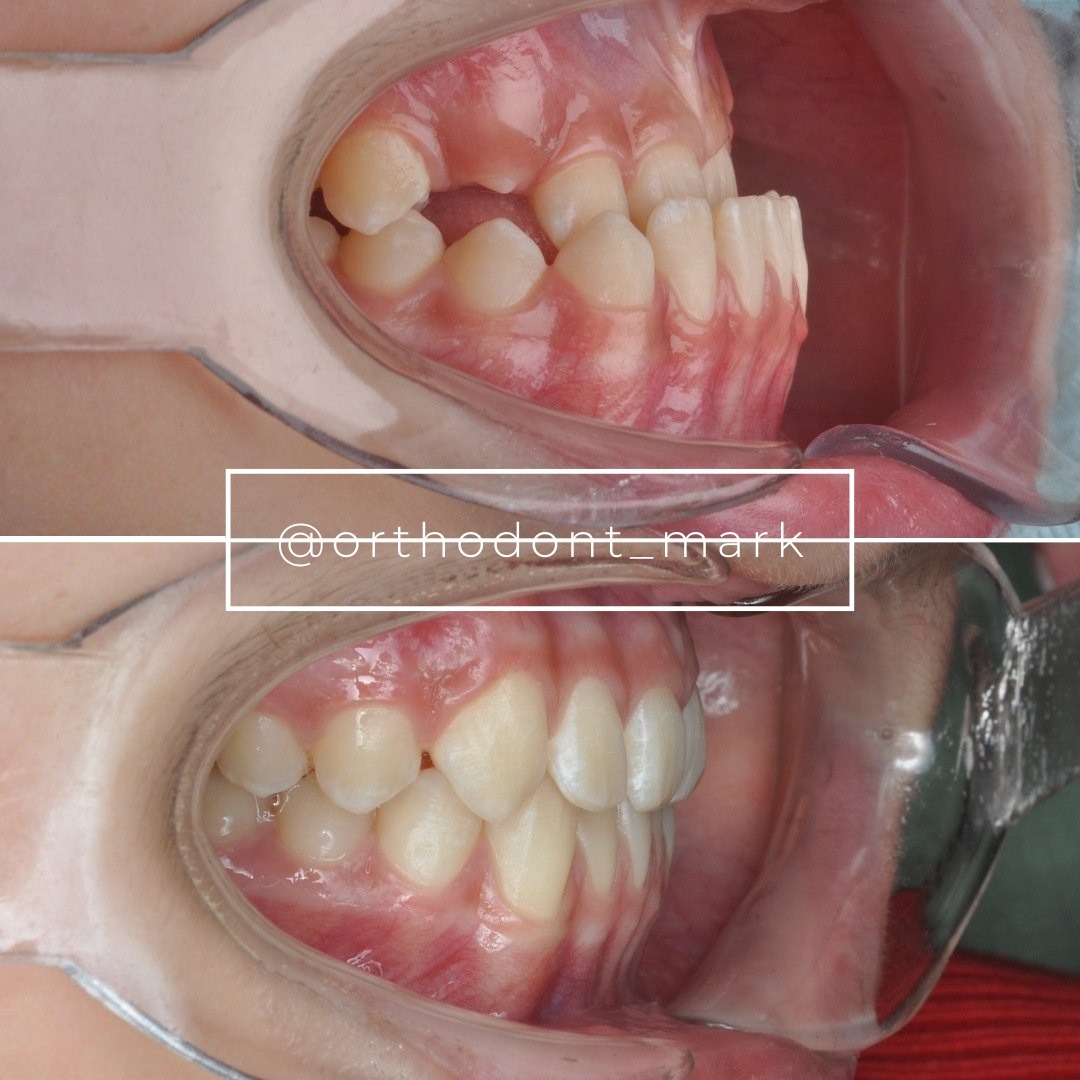
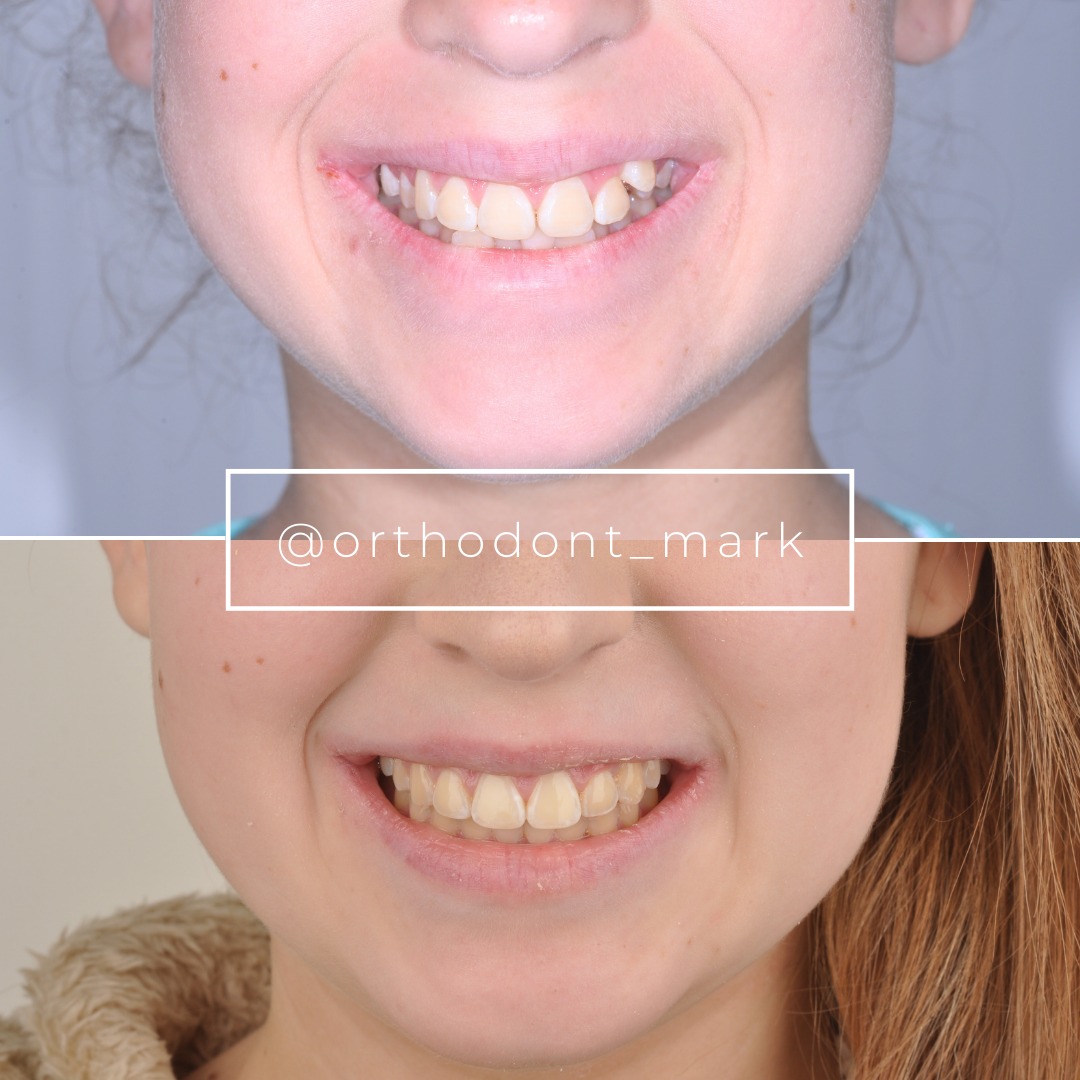
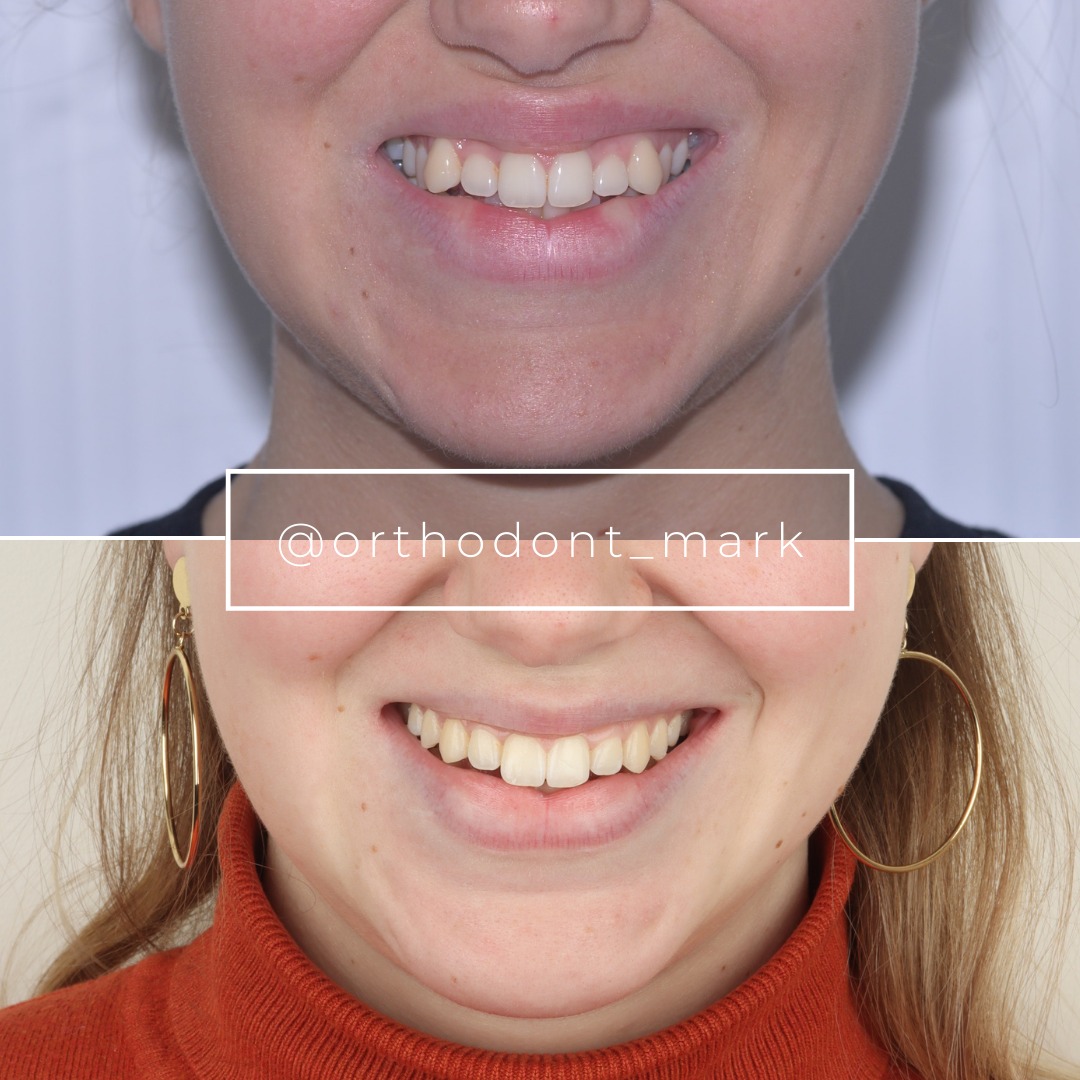
Clinical cases from Dr. Mark Radzhabov's practice
Learn the full MARPE protocol from Dr. Mark Radzhabov
Fundamental course covering CBCT patient selection, miniscrew planning, activation protocols, and 60+ clinical cases. Choose the access level that fits your practice.
Essentials of rapid palatal expansion for practicing orthodontists.
- Core RPE concepts and biomechanics
- 6 structured video lessons
- Clinical decision checklists
- Lifetime access to recordings
Deep-dive into MARPE protocol, diagnostics, and clinical execution.
- 6 modules covering MARPE from A to Z
- CBCT case selection walkthroughs
- Miniscrew placement and activation
- 60+ annotated clinical cases
- Direct Q&A with Dr. Mark Radzhabov
5-element medical consultation framework for dentists and orthodontists.
- Trust-building consultation protocol
- 5 lesson modules
- Templates for treatment plan delivery
- Works with any clinical specialty
Clinical FAQ
How do I know which tier to recommend for a given patient—is it purely based on age?
Age is one factor, but not the only one. Review (1) CBCT midpalatal suture density, (2) maxillary transverse deficiency severity, (3) periodontal phenotype, and (4) growth pattern. A 13-year-old with patent sutures and healthy alveolus may need Essential (RPE). A 15-year-old with fused sutures and thin buccal plates requires Advanced (MARPE). Diagnosis drives tier, not age alone.
What if a patient selects Essential when I recommend Advanced?
First, ensure your recommendation was clear and anchored to diagnosis. If the patient still chooses Essential, document your recommendation in the treatment plan and informed consent. Explain that scope is limited to dentoalveolar correction and relapse risk is higher. Most patients will reconsider once they understand the long-term risk. Only proceed with Essential if they explicitly reject your clinical advice in writing.
Should Premium tier always include SARPE or surgery?
No. Premium can be defined as (1) MARPE + corticotomy, (2) comprehensive mixed-stage treatment bundled, or (3) SARPE for skeletally mature patients. The key is that Premium represents a clinically distinct and more complex scope than Advanced. Define Premium clearly so it feels earned, not arbitrary.
How do I price tiers if I don't use MARPE or MSE—what if I only offer RPE?
You can still use three-tier framing. Essential = basic RPE. Advanced = RPE with adjunctive monitoring, limited interproximal reduction, or minor adjunctive appliances. Premium = comprehensive two-phase treatment (RPE followed by full alignment) bundled into one fee. The principle works across any modalities—tiers are defined by scope, not a specific device.
What's the best way to handle insurance coverage if it only covers part of Advanced tier?
Never downgrade your clinical recommendation because of insurance. Frame it clearly: 'Insurance covers $3,200 of the $6,200 Advanced protocol. Your responsibility is $3,000. Here are three financing options.' This protects scope integrity and prevents post-treatment disputes over what “should” have been included.
How long should the entire pricing conversation take?
Typically 12–18 minutes. Diagnosis (2–3 min) + Tier overview (2 min) + Detailed Advanced recommendation with visual aids (3–4 min) + Price & logistics (3–4 min) + Questions & wrap-up (2–3 min). If the conversation is shorter, you're rushing diagnosis or justification. If longer, you're negotiating price instead of closing on scope.
Should I email the three-tier estimate to patients, or present it in person?
Always present tiers in person first. Your verbal recommendation and diagnostic narrative (with visuals) anchors the tier selection. Email the estimate after the patient has verbally committed. If you email tiers cold, patients read only prices and lose the clinical context—acceptance rates drop 20–30%.
How do I prevent the Premium tier from feeling like price gouging?
Ensure Premium solves a real clinical problem or patient preference. Premium for 'more comprehensive monitoring' feels like gouging. Premium for 'MARPE + corticotomy to accelerate treatment in severely deficient case' feels legitimate. Be explicit about what Premium adds and why. If you can't justify it, eliminate that tier.
What if my practice has been offering two pricing tiers—should I add a third?
Test it with your next 20 cases. Track acceptance and satisfaction. Three-tier framing typically increases Advanced tier selection and case value compared to binary pricing. However, if your current binary model is working, adding a weak third tier can confuse rather than clarify. Ensure the third tier (Premium or Essential) has distinct scope before rolling it out.
How do I use the three-tier model in virtual consultations or treatment planning software?
Lead with visual diagnosis (CBCT screenshots, superimpositions, growth prediction). Present tiers on screen with icons or color-coding (blue=Essential, green=Advanced, gold=Premium). Speak the narrative while the patient sees visuals. Follow up with PDF estimate showing all three tiers with scope clearly labeled. Virtual or in-person, diagnosis-first sequencing remains critical to success.
A three-tier pricing structure—Essential, Advanced, and Premium—eliminates decision paralysis by positioning your clinical recommendation within a rational framework. Patients see not confusion, but choice within guardrails. As Dr. Mark Radzhabov emphasizes in his clinical education at ortodontmark.com, the goal is not to present price, but to present outcome and value. Review your next five cases using this framework, document your recommendation rationale, and measure acceptance rate improvement.