
MARPE Activation Protocol:
Step-by-Step Clinical Guide
From screw placement to skeletal expansion
Evidence-based turn schedules, latency timing, and radiographic milestones for predictable miniscrew-assisted rapid palatal expansion outcomes.
TL;DR The MARPE activation protocol typically follows a turn schedule of 0.2 mm (0.25 turns) per day after a latency period of 7–10 days, with skeletal expansion response superior to tooth-borne RPE. Recent evidence demonstrates that miniscrew-assisted rapid palatal expansion achieves consistent orthopedic gains in both growing and non-growing patients when activation is coordinated with imaging milestones.
Miniscrew-assisted rapid palatal expansion has become the gold standard for transverse skeletal expansion in contemporary orthodontic practice. This clinical guide by Dr. Mark Radzhabov at Orthodontist Mark walks through the evidence-based MARPE activation protocol—from initial screw placement timing through daily turn schedules and skeletal response monitoring. Understanding the biomechanics of MSE screw activation and the optimal palatal expansion turns per day will help you achieve reliable orthopedic gains while minimizing dentoalveolar side effects in both adolescent and adult populations.
What Is MARPE Activation Protocol?
MARPE activation protocol
MARPE activation protocol is the systematic daily turn schedule and clinical monitoring regimen applied to miniscrew-assisted rapid palatal expanders to achieve orthopedic transverse expansion in skeletally mature and growing patients. Unlike conventional tooth-borne rapid palatal expansion (RPE), the miniscrew-assisted approach applies force directly to the midpalatal suture, bypassing dental support and enabling true skeletal expansion. The protocol encompasses three critical phases: pre-activation assessment and miniscrew placement, latency period management, and active expansion with coordinated imaging surveillance. Success depends on precise daily turns, patient compliance, and integration with overall treatment planning. Modern MSE systems—including the popular Leheaux Dental and Korean designs—all follow fundamentally similar activation sequences, though individual clinician modifications account for patient age, skeletal maturity, and specific transverse deficiency magnitude.
Why MARPE Timing and Latency
Matter in Skeletal Response
The latency period—typically 7 to 10 days after miniscrew placement—is not arbitrary; it allows initial osseointegration and permits inflammatory markers to stabilize before active force is applied. Studies examining midpalatal suture biology confirm that premature activation risks implant failure and unpredictable skeletal response. Dr. Mark Radzhabov emphasizes that the latency interval also serves as a critical patient education window: compliance is reinforced, daily turn protocols are practiced with a dummy screw or model, and expectations are aligned. After latency resolution, the standard turn schedule begins at 0.2 mm per day (equivalent to 0.25 quarter-turns), allowing the midpalatal suture to remodel without excessive inflammation. Some clinicians employ a slower 0.1 mm per day schedule in adult patients over 45 years or in those with prior maxillary surgery; the evidence supports individual adjustment based on skeletal maturity and bone density. Rapid expansion rates (≥0.5 mm/day) are reserved for younger patients with greater suture compliance and are not recommended as a routine protocol.
Daily Palatal Expansion Turns:
Mechanics and Monitoring
The daily turn schedule is the cornerstone of the MARPE activation protocol. A standard quarter-turn (0.25 turns) delivers approximately 0.2 mm of expansion per day, equating to roughly 1.4 mm per week or 6 mm per month. Most screw designs are calibrated such that one full rotation (1.0 turn) equals 0.8 mm of expansion; therefore, 0.25 turns yields 0.2 mm. Patients must be instructed to turn the screw once daily at the same time (typically morning or evening) using the provided key or activation tool, maintaining consistent turn speed and pressure. The screw should be turned slowly and steadily until resistance is felt; forcing beyond this point risks stripping the threads or damaging the palatal bone. Many clinicians provide patients with a turn log or smartphone reminder to track compliance. Radiographic monitoring—typically by occlusal radiographs or CBCT at 2–4 week intervals—confirms expansion is primarily skeletal (midpalatal suture opening) rather than dentoalveolar (buccal plate tipping). If imaging shows excessive buccal tipping or minimal suture separation, the turn schedule may be adjusted downward or the expansion phase extended. Orthodontist Mark recommends calibrating the expected total turns needed at treatment onset: for a 7 mm transverse deficiency, roughly 35 turns over five weeks would be planned, with adjustments based on radiographic feedback.
The Complete MSE Activation
Schedule: Phase-by-Phase Breakdown
The complete MARPE activation schedule unfolds in four overlapping phases. Phase 1—Miniscrew Placement & Latency (Days 0–10)—involves precise mid-palatal suture placement under topical or local anesthesia, often combined with transpalatal arch (TPA) and fixed appliances placed on the same date. Patient instructions are delivered verbally and via written guide; compliance during latency is reinforced even though no turns occur. Phase 2—Active Expansion (Weeks 2–5 or until target width achieved)—begins after latency and continues the 0.25 turns/day protocol. Most cases expand 6–8 mm in 4–5 weeks. Radiographs at 2 and 4 weeks confirm skeletal response; if dentoalveolar tipping is evident (>20% dentoalveolar vs. skeletal gain), turn frequency is reduced to 0.15–0.2 turns/day. Phase 3—Holding / Consolidation (2–3 months)—stops active turns once target expansion is reached, allowing bone remodeling at the midpalatal suture. During this phase, a static retention screw or a slow, light continuation (0.05 turns weekly) may be used. Phase 4—Integration & Multibracket Progression—begins when CBCT or repeated occlusal radiographs show suture stability; fixed appliances are then activated to align teeth, correct midline, and address any residual dentoalveolar compensation. Total time from insertion to active expansion completion typically ranges 3–7 months, depending on expansion magnitude and patient age.
Step-by-Step Patient Instructions
for the MARPE Turn Protocol
Clear, written patient instructions are essential for the success of the MARPE activation protocol. Upon delivery of the screw (after latency), the patient should receive: (1) a numbered turn log or digital tracker; (2) a demonstration video or live demonstration of the correct turn technique, using a model or dummy screw; (3) written instructions in the patient's primary language with photographs or diagrams showing the screw location and direction of turn; (4) the correct screw key and storage instructions; (5) emergency contact information in case of thread damage, pain, or difficulty turning. The patient must understand that one quarter-turn per day is the standard—neither skipping days nor “catching up” with multiple turns. Many clinicians schedule a follow-up visit 3–5 days after activation begins to assess patient technique, review compliance, and address early concerns. Periodic telephone or text check-ins between office visits reinforce adherence and allow early detection of compliance issues. If a patient misses 2–3 consecutive days, the missed turns should not be performed in a single session; instead, resume the daily protocol and accept a slight delay in total expansion time. Patients with fine motor difficulty or language barriers may benefit from pre-loaded, spring-loaded screw designs or delegation to a parent or caregiver, provided the designated helper is trained and supervised.
Radiographic Milestones in the MSE
Activation Schedule
Radiographic monitoring at defined intervals is critical for confirming that expansion is primarily skeletal and adjusting the MARPE activation protocol if needed. Baseline imaging—obtained at miniscrew placement or just before latency ends—typically includes occlusal radiographs (anterior and posterior) and/or a CBCT scan if one was not already taken for surgical guide placement. At 2 weeks into active expansion, a follow-up occlusal radiograph should assess early midpalatal suture separation and exclude excessive buccal plate tipping. At 4 weeks, a second radiograph or CBCT (depending on initial findings) confirms trajectory and allows turn schedule adjustment if needed. Upon reaching target expansion (usually 6–8 mm), a final CBCT is valuable for quantifying skeletal versus dentoalveolar gain; studies show that proper MARPE technique yields 60–75% skeletal and 25–40% dentoalveolar compensation. If radiographs reveal predominantly dentoalveolar response (>50% tipping, <50% skeletal opening), the turn schedule should be reduced from 0.25 to 0.15 turns per day, or expansion paused briefly to allow bone remodeling. The midpalatal suture opening should progress roughly 0.2–0.3 mm per week on occlusal radiographs; if opening lags significantly behind expected linear expansion, miniscrew loosening or implant failure is suspected and CBCT evaluation is mandatory. Documentation of radiographic milestones in the clinical record ensures accountability and provides evidence should medicolegal questions arise.
Common Pitfalls and Modifications:
Adapting the Protocol to Patient Factors
Despite careful planning, certain clinical scenarios may necessitate modification of the standard MARPE activation protocol. Screw loosening—evidenced by increased play when turning or reduced resistance—typically occurs if insufficient latency was allowed or if bone quality is poor; in such cases, the screw must be re-tightened or replaced, and latency restarted. Excessive dentoalveolar tipping on imaging warrants reduction of turn frequency from 0.25 to 0.15 turns per day, addition of an intermaxillary force (light Class II elastic), or insertion of an interproximal distractor to lock in skeletal gains. Pain or patient-reported “clicking” at the screw site may indicate inflammation or screw micromotion; slowing the turn schedule to 0.15 turns per day for 1–2 weeks often resolves this. Patients over 45 years or those with history of Le Fort I surgery often benefit from a modified 0.1 mm/day schedule to accommodate reduced bone turnover. Very young patients (under 12) in whom growth is ongoing may tolerate or even benefit from 0.3 mm/day activation if radiographs show favorable skeletal response and minimal tipping. Language barriers or fine motor difficulty can be addressed by employing a caregiver, using larger diameter turn keys, or selecting pre-loaded or self-correcting screw designs. Orthodontist Mark recommends building flexibility into the protocol: the 0.2 mm/day standard is evidence-based and appropriate for 80% of cases, but individual modification based on radiographic response, patient age, and compliance maintains treatment predictability and safety.
Post-Expansion Consolidation and Treatment
Planning Integration
Once the target transverse expansion is achieved and radiographs confirm stable midpalatal suture opening, the MARPE activation protocol transitions to a consolidation phase. During consolidation (typically 2–3 months), the screw is left in place but no new turns are administered; some clinicians apply one very light turn (0.05 turns) weekly to maintain suture engagement, while others omit activation entirely. The midpalatal suture will begin remodeling and ossifying during this window, establishing permanent skeletal gains. Concurrent with consolidation, fixed multibracket appliances are either placed (if not already in situ) or activated to begin transverse and anteroposterior correction. The transpalatal arch (TPA) or other transverse wire is progressively expanded to match the new skeletal base, preventing relapse and coordinating dental alignment with expanded maxilla. Many clinicians leave the miniscrew in place for the duration of comprehensive treatment (12–24 months) to provide anchorage for transverse control and to allow emergency re-activation if unexpected relapse occurs. Screw removal typically occurs once all fixed appliances are debonded and retention (wraparound retainer or fixed lingual retainer) is fabricated. Post-treatment stability studies show excellent relapse control when the MARPE screw remains in situ during multibracket therapy, compared to early removal. Documentation of the screw location, turn history, and final screw torque in the clinical record facilitates smooth transition to retention and future care.
Free Chairside PDF
MARPE Activation Protocol: Turn Schedules by Age
Dr. Mark Radzhabov's two-page protocol: turn schedules for children, adolescents and adults, the two-week recall checklist, and when to pause instead of adding turns. Free to your inbox.
Prefer video? Watch the free demo lesson on MARPE appliance types, features and trade-offs.
Documented outcomes
Clinical cases from Dr. Mark Radzhabov's practice
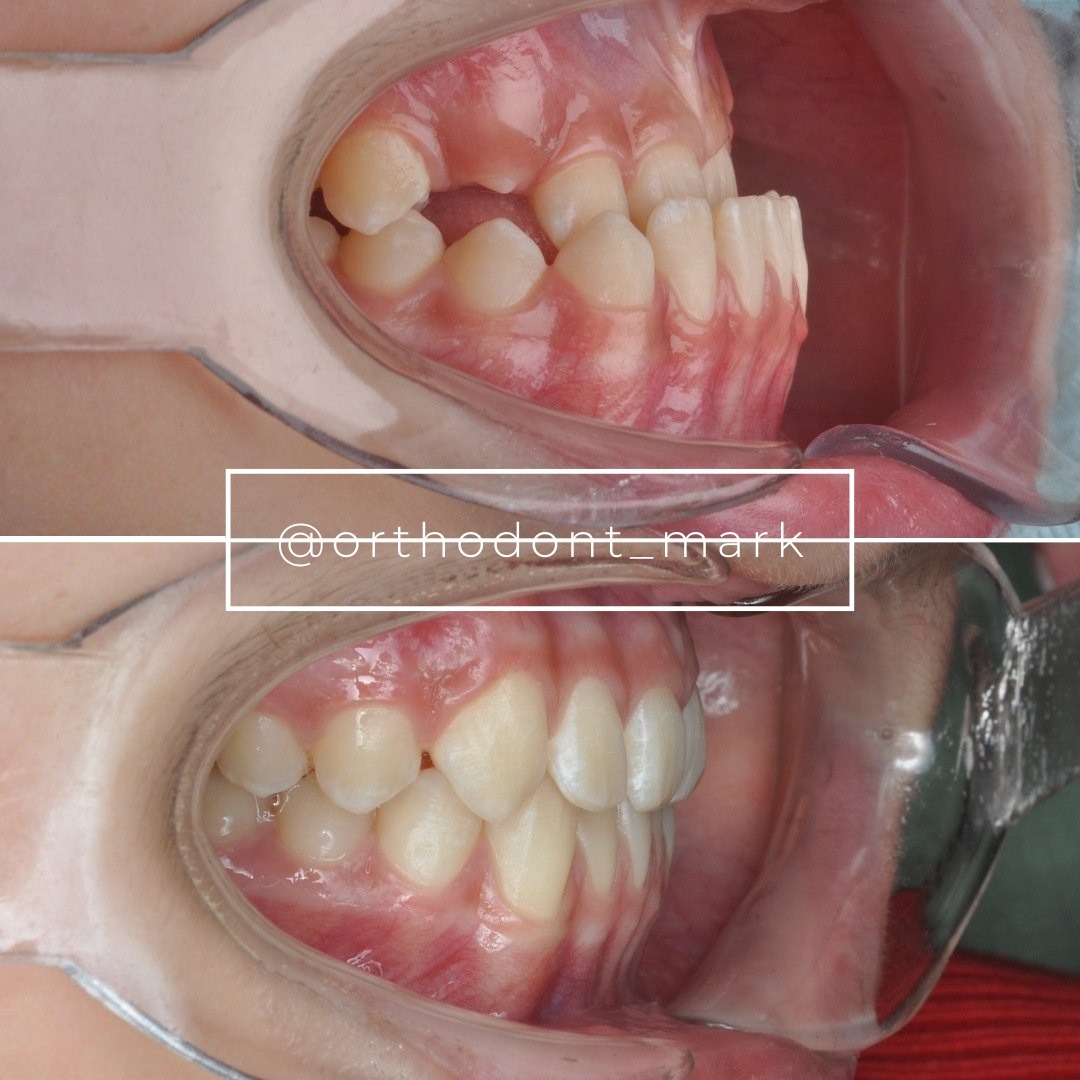
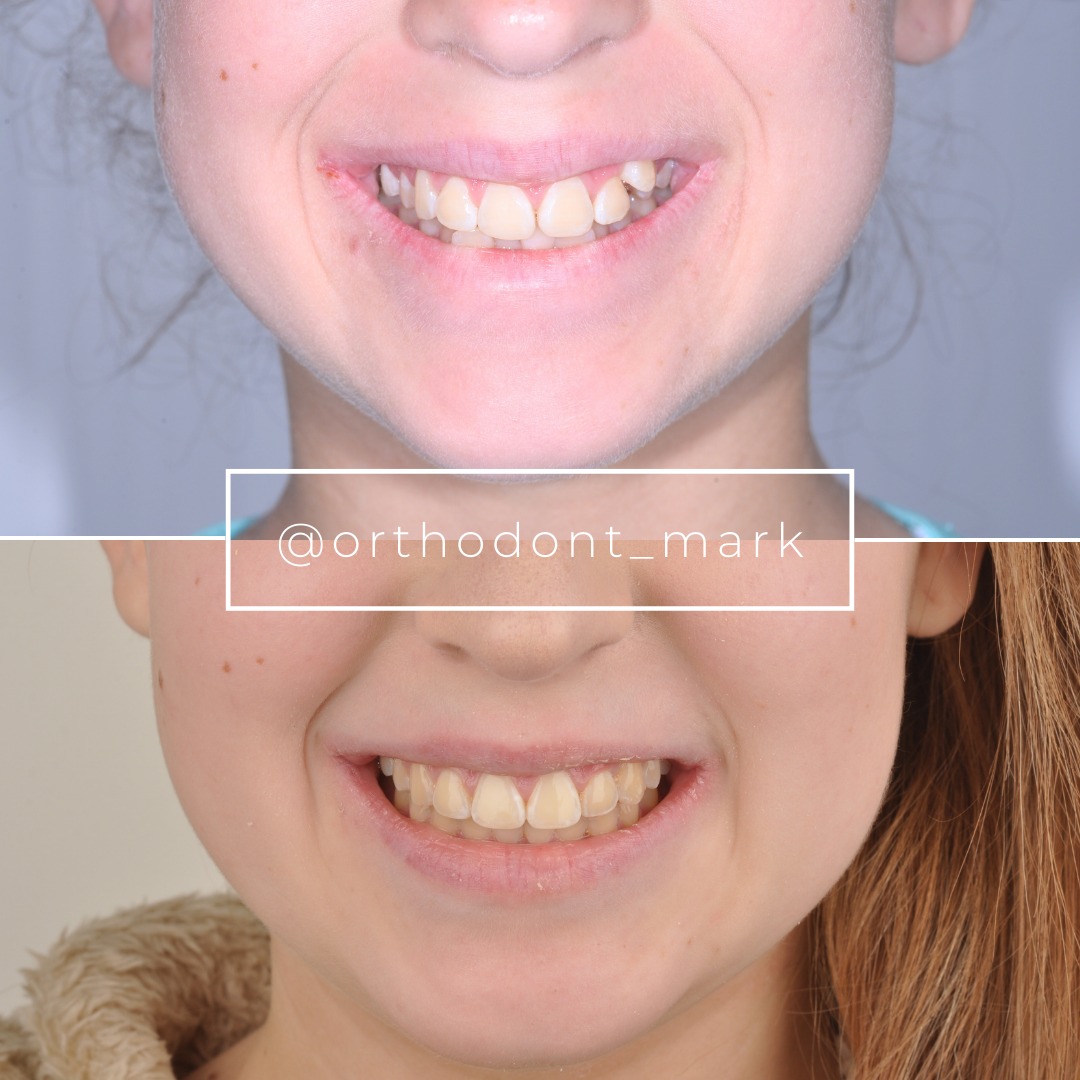

Learn the full MARPE protocol from Dr. Mark Radzhabov
Fundamental course covering CBCT patient selection, miniscrew planning, activation protocols, and 60+ clinical cases. Choose the access level that fits your practice.
Essentials of rapid palatal expansion for practicing orthodontists.
- Core RPE concepts and biomechanics
- 6 structured video lessons
- Clinical decision checklists
- Lifetime access to recordings
Deep-dive into MARPE protocol, diagnostics, and clinical execution.
- 6 modules covering MARPE from A to Z
- CBCT case selection walkthroughs
- Miniscrew placement and activation
- 60+ annotated clinical cases
- Direct Q&A with Dr. Mark Radzhabov
5-element medical consultation framework for dentists and orthodontists.
- Trust-building consultation protocol
- 5 lesson modules
- Templates for treatment plan delivery
- Works with any clinical specialty
Clinical FAQ
How many turns per day should MARPE activation typically follow?
Standard protocol is 0.25 turns per day (one quarter-turn), delivering approximately 0.2 mm of expansion daily. This equates to 1.4 mm per week. Modify to 0.15 turns/day in older patients or those showing excessive tipping.
What is the recommended latency period after miniscrew-assisted palatal expansion screw insertion?
Standard latency is 7–10 days after miniscrew insertion. This interval allows osseointegration and tissue stabilization before active force is applied, reducing implant failure risk and optimizing skeletal response.
When should radiographic monitoring occur during the MARPE activation schedule?
Obtain occlusal radiographs or CBCT at 2, 4, and 8 weeks into active expansion, and upon reaching target expansion. Imaging confirms midpalatal suture opening, detects excessive dentoalveolar tipping, and guides turn schedule adjustments.
How do I differentiate skeletal from dentoalveolar expansion on radiographs?
On occlusal radiographs, measure suture separation at the midpalate and buccal plate position on both sides. Skeletal gain should account for 60–75% of total expansion; if dental tipping exceeds 40%, reduce turn frequency to 0.15 turns/day.
What should a patient do if they skip one or more days of MARPE turns?
Do not attempt to 'catch up' by performing multiple turns on a single day. Resume the daily protocol (0.25 turns) and accept the slight delay in total expansion time. Skipped days add roughly 1–2 weeks to overall treatment duration.
How is miniscrew-assisted rapid palatal expansion different from traditional RPE in terms of clinical outcomes?
MARPE achieves 60–75% skeletal expansion versus RPE's 30–40% skeletal gain. MARPE minimizes dental side effects and achieves true orthopedic widening of the maxilla, making it superior for non-growing and older patients.
What activation protocol modifications are appropriate for adult patients over 45 years?
Consider 0.1 mm/day (0.125 turns) protocol to account for reduced bone turnover and osseointegration capacity in mature patients. Extend latency period to 10–14 days and increase radiographic monitoring frequency.
How long should the MARPE screw remain in place after reaching target expansion?
Retain the screw for 2–3 months during consolidation (no active turns), then keep it in place throughout comprehensive multibracket treatment for anchorage control. Remove after debonding and final retention fabrication. This maximizes stability.
What do I do if radiographs show excessive buccal plate tipping during MARPE activation?
Reduce turn frequency from 0.25 to 0.15 turns/day, add light intermaxillary support, or insert an interproximal distractor to lock skeletal gains. Repeat radiographs after 2 weeks to confirm improved skeletal/dental ratio.
How should I address screw loosening or micromotion during active MARPE expansion?
Reduce activation to 0.15 turns/day for 1–2 weeks to allow inflammation to resolve. If loosening persists, perform CBCT to rule out implant failure. Re-tightening or replacement with restarted latency may be necessary.
Mastering the MARPE activation protocol requires attention to latency timing, consistent daily turns, and integration with radiographic milestones. Dr. Mark Radzhabov emphasizes that success hinges not on aggressive expansion alone, but on coordinated biomechanics and patient compliance monitoring throughout treatment. If you are refining your skeletal expansion orthodontics practice or wish to review complex case selection criteria, consider a clinical consultation or enrollment in the MSE advanced training course offered through Orthodontist Mark.