
CBCT vs Pont's Index:
Evidence-Based Diagnostic Strategy
for Transverse Deficiency Assessment
Three-dimensional imaging and two-dimensional indexing each serve distinct clinical purposes. Learn when CBCT clarifies skeletal status, when Pont's Index screens efficiently, and how both inform MARPE candidacy.
TL;DR CBCT vs Pont's Index shows distinct clinical roles: Pont's Index has 69% sensitivity for screening transverse deficiency, while CBCT provides three-dimensional skeletal assessment essential for midpalatal suture maturation evaluation before miniscrew-assisted expansion. Choose based on clinical question and patient anatomy.
Selecting the optimal diagnostic method for transverse maxillary deficiency remains a pivotal decision in treatment planning, particularly when considering rapid palatal expansion or miniscrew-assisted rapid palatal expansion (MARPE). Dr. Mark Radzhabov and the Orthodontist Mark evidence-based education platform emphasize that CBCT vs Pont's Index represents not a binary choice, but rather a complementary diagnostic strategy. This article synthesizes current evidence comparing two-dimensional index analysis with three-dimensional cone-beam imaging, providing orthodontists with practical criteria for patient-specific protocol selection and midpalatal suture assessment before expansion therapy.
What Is the Difference Between CBCT and Pont's Index?
Diagnostic Foundation
CBCT vs Pont's Index reflects a fundamental distinction between three-dimensional imaging and two-dimensional dental measurement. Pont's Index relies on the mesiodistal dimensions of maxillary premolars and molars to estimate ideal maxillary intercanine, interpremolar, and intermolar widths. This index, developed nearly a century ago, requires only dental casts and simple caliper measurement—no radiation exposure and minimal equipment investment. Conversely, CBCT provides volumetric imaging of the entire craniofacial skeleton, enabling direct visualization of palatal width, midpalatal suture architecture, nasal floor morphology, and alveolar bone thickness.
The clinical significance lies not in superiority but in complementary information. Pont's Index offers rapid, economical screening of dental transverse relationships. CBCT answers skeletal questions: Is the deficiency skeletal or dental? What is the midpalatal suture maturation stage? Does airway morphology or bone density affect miniscrew placement? A 2022 comparative analysis found that Pont's Index achieved 69% sensitivity for detecting maxillary narrowness, yet specificity remained modest at 16.6%—meaning it screens well but over-identifies cases requiring imaging confirmation.
Modern orthodontic practice increasingly integrates both methods strategically. Early consultation may employ Pont's Index on initial models to flag transverse concern. When expansion is considered, particularly miniscrew-assisted expansion for skeletal assessment, CBCT becomes the standard for treatment planning and informed consent regarding skeletal effects and suture status.
When to Use Pont's Index for Screening
Efficient First-Line Assessment
Pont's Index remains a practical first-line tool for transverse deficiency screening, particularly in primary consultation or mixed-dentition assessment. The index requires no additional equipment beyond dental models or intraoral scans—resources already present in most practices. Clinically, Pont's Index serves as a communication aid, allowing you to quantify transverse discrepancy in millimeters and explain dimensional targets to patients and team members. The calculation is rapid: measure mesiodistal widths of maxillary premolars and molars, apply regression coefficients, and compare predicted versus actual dimensions.
The 69% sensitivity documented in recent research means that Pont's Index successfully identifies most patients with true skeletal or dental transverse narrowing. This screening strength makes it ideal for initial triage: positive findings warrant further investigation; negative findings provide reassurance in patients with borderline or subjective crowding concerns. For patients in the growth phase, Pont's Index on serial models tracks transverse development and helps distinguish between developmental lag and true deficiency. This longitudinal approach reduces unnecessary imaging and treatment escalation.
However, clinicians must recognize the index's limitations before committing to expensive or invasive treatment. Low specificity (16.6%) means that Pont's Index produces false positives—cases flagged as deficient that imaging later shows are adequate or borderline. Therefore, positive Pont's Index findings should not automatically trigger expansion therapy without clinical correlation and, in candidates for MARPE or skeletal expansion, should prompt CBCT clarification of skeletal anatomy.
CBCT for Skeletal Expansion Diagnosis
Three-Dimensional Clarity
CBCT imaging is the standard-of-care diagnostic method when skeletal expansion therapy is under consideration. Unlike Pont's Index, which infers skeletal transverse dimension from dental crowns, CBCT directly visualizes the maxilla, palate, and midpalatal suture. Clinically, this translates to actionable information: actual bone width at the nasal floor, alveolar crest dimensions, and suture morphology that predicts expansion response. For miniscrew-assisted expansion protocols, CBCT provides essential pre-treatment data including suture maturation stage (open, closing, or fused), bone density and thickness in planned miniscrew insertion sites, and airway morphology—increasingly important given the known relationship between transverse maxillary dimensions and upper airway caliber.
The evidence supports CBCT use in patients considered for rapid palatal expansion or MARPE. A 2022 prospective randomized trial comparing conventional RPE and miniscrew-assisted RPE found that low-dose CBCT protocols enabled precise measurement of nasal width expansion (mean increase 2.1 mm in MARPE versus 1.4 mm in RPE) and quantification of buccal tooth movement—differences invisible on two-dimensional imaging. CBCT also revealed that MARPE achieved greater nasal floor separation with less buccal alveolar bone loss in anchor teeth, a finding that influenced clinical decision-making regarding appliance selection. Such three-dimensional data directly impacts patient consent, appliance design, and post-expansion retention planning.
Current guidelines from dental radiology organizations recommend CBCT for complex cases, suspected skeletal malformations, temporomandibular joint assessment, and when three-dimensional planning is essential to treatment success. For transverse deficiency with consideration of skeletal expansion, CBCT satisfies the ALADA (As Low As Diagnostically Acceptable) principle when the diagnostic question is specific: Is this patient a suitable MARPE candidate? What is the midpalatal suture status? Can miniscrews be safely placed in adequate bone?
Combining Methods: A Practical Framework
Complementary Strategy
Evidence-based practice suggests a tiered diagnostic approach: Pont's Index on initial models for all patients with suspected transverse discrepancy, followed by CBCT in cases where expansion therapy is seriously contemplated. This framework minimizes radiation exposure, reduces cost, and ensures that three-dimensional imaging addresses specific clinical questions rather than serving as routine screening. For example, a patient presenting with mild crowding and borderline Pont's Index findings might be managed with conventional alignment mechanics without imaging; conversely, an adolescent with documented transverse deficiency, Class II malocclusion, and possible growth remaining warrants CBCT to assess suture maturation and skeletal potential before committing to miniscrew-assisted expansion.
When integrating both methods, timing matters. Initial Pont's Index measurement on pre-treatment models or scans establishes a quantitative baseline and communicates the clinical concern. If transverse deficiency is confirmed or suspected, CBCT should be obtained within a week or two—before the patient becomes invested in treatment planning based on incomplete information. CBCT analysis should specifically address: (1) skeletal maxillary width at the nasal floor and posterior maxilla, (2) midpalatal suture maturation stage, (3) alveolar bone dimensions and density in planned miniscrew zones, and (4) relationship of expanded dimensions to airway morphology. These answers directly inform whether MARPE is indicated, when treatment should begin, and what skeletal and dental effects are realistic.
Many clinicians report that patient communication improves when both data points are available. Showing a patient the Pont's Index calculation (e.g., “your predicted intermolar width should be 56 mm; you have 52 mm”) followed by CBCT coronal images demonstrating suture morphology and alveolar bone creates a coherent narrative and justifies the need for expansion therapy. Dr. Mark Radzhabov's clinical protocol incorporates sequential imaging for complex cases, using CBCT findings to customize miniscrew placement angles and activation timing based on real-time skeletal and suture status.
Resolving Discordance: When Tools Disagree
Practical Management
Discordance between Pont's Index and CBCT findings occurs in approximately 35% of cases, reflecting the index's tendency toward false positives and the influence of dental compensation patterns on two-dimensional measurements. When Pont's Index suggests deficiency but CBCT shows adequate skeletal width, the clinical picture often involves buccally-inclined posterior teeth that optically narrow the arch on models but rest on a normally wide base of alveolar bone. In such cases, expansion may not be necessary; instead, addressing dental inclination through conventional torque control may resolve crowding without skeletal intervention. Conversely, when CBCT reveals skeletal transverse narrowing despite “normal” Pont's Index measurements, Class II molar relationships or posterior dental compensation has masked the true deficiency. These patients are ideal candidates for miniscrew-assisted expansion, because the skeletal constraint is real and correction will produce lasting improvement.
The converse scenario—borderline Pont's Index with concerning CBCT findings—demands clinical judgment. If CBCT shows severe midpalatal suture fusion in a young adolescent, immediate expansion may be contraindicated despite dental dimension deficiency; alternate approaches such as distraction osteogenesis or orthognathic surgery might be preferable. If CBCT reveals inadequate alveolar bone thickness for safe miniscrew insertion at planned sites, appliance design or insertion angles must be modified, or treatment may require temporary anchorage device (TAD) placement in alternative zones. These nuanced decisions are precisely where integration of both methods prevents misadventure and improves outcomes.
Communication with your team and referring providers benefits from transparency about diagnostic discordance. Rather than presenting a single conclusion, frame findings as dimensional measurements (Pont's Index) plus skeletal confirmation (CBCT), allowing informed consent and collaborative decision-making about whether expansion is truly indicated. Case consultation with specialists experienced in skeletal expansion protocols helps navigate edge cases and validates your clinical reasoning with peers.
Evidence Summary: Accuracy, Limitations, Clinical Impact
Study-Supported Findings
A 2022 peer-reviewed accuracy study directly compared Pont's Index and University of Pennsylvania CBCT analysis protocols on 60 patients, providing robust data on diagnostic concordance. Pont's Index sensitivity of 69% indicates good performance at identifying true maxillary transverse narrowing, justifying its use as a screening tool. However, specificity of only 16.6% and positive predictive value of 65% reveal that approximately one-third of cases flagged as deficient by the index were not confirmed as skeletal deficiency on CBCT. The accuracy of Pont's Index overall—53.28%—underscores that the index performs modestly better than chance at diagnosis, and should never be used in isolation for commitment to invasive expansion therapy.
The same study's McNemar's test result (p=0.85) indicates that Pont's Index and CBCT show fair overall agreement, yet clinically meaningful discordance persists in specific scenarios. Cases with Class II malocclusions, compensatory buccal tooth positioning, or asymmetric maxillary development frequently show disagreement between the two methods. Negative likelihood ratio of 1.86 means that a negative Pont's Index (patient not flagged for deficiency) only modestly reduces the probability of true skeletal deficiency; CBCT remains informative even in Pont's-negative patients if clinical suspicion warrants investigation.
Regarding CBCT in expansion treatment planning, prospective randomized trials using low-dose protocols have demonstrated that three-dimensional imaging enables measurement of skeletal outcomes (nasal floor separation, palatal vault changes, midpalatal suture separation frequency) that correlate with treatment success and stability. The frequency of midpalatal suture separation was 90–95% in published MARPE studies, a finding that validates CBCT assessment of suture morphology and confirms that many patients achieve true skeletal expansion even in adolescence. These outcomes underscore that CBCT-guided treatment planning improves the likelihood of achieving intended skeletal changes and guides expectations for stability and retention.
Free Clinical Guide
Which Expansion Appliance at Which Age?
Get Dr. Mark Radzhabov's guide to skeletal-expansion appliances — indications, pros & cons, and how to choose by patient age. Free to your inbox.
Prefer video? Watch the free demo lesson on MARPE appliance types, features and trade-offs.
Documented outcomes
Clinical cases from Dr. Mark Radzhabov's practice
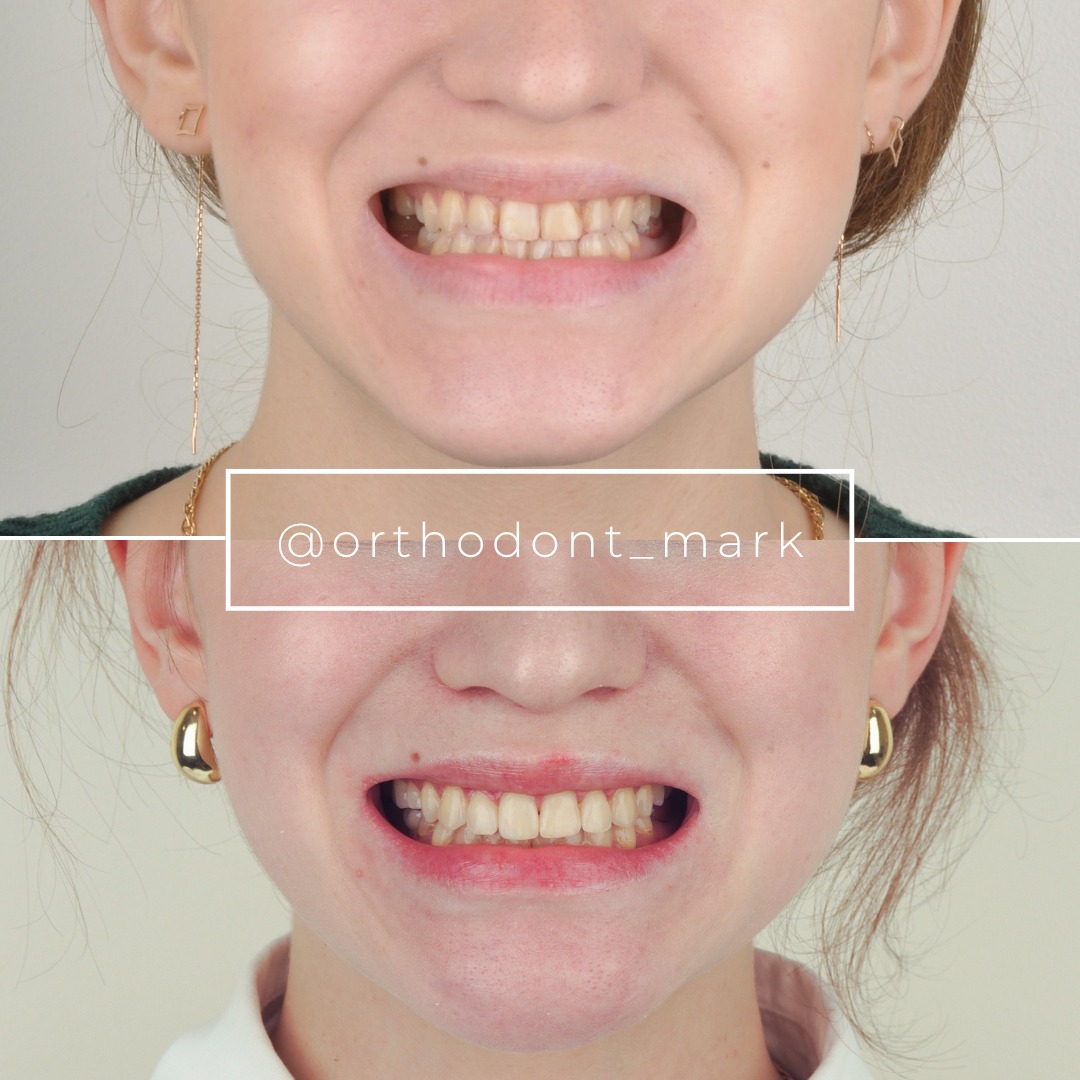

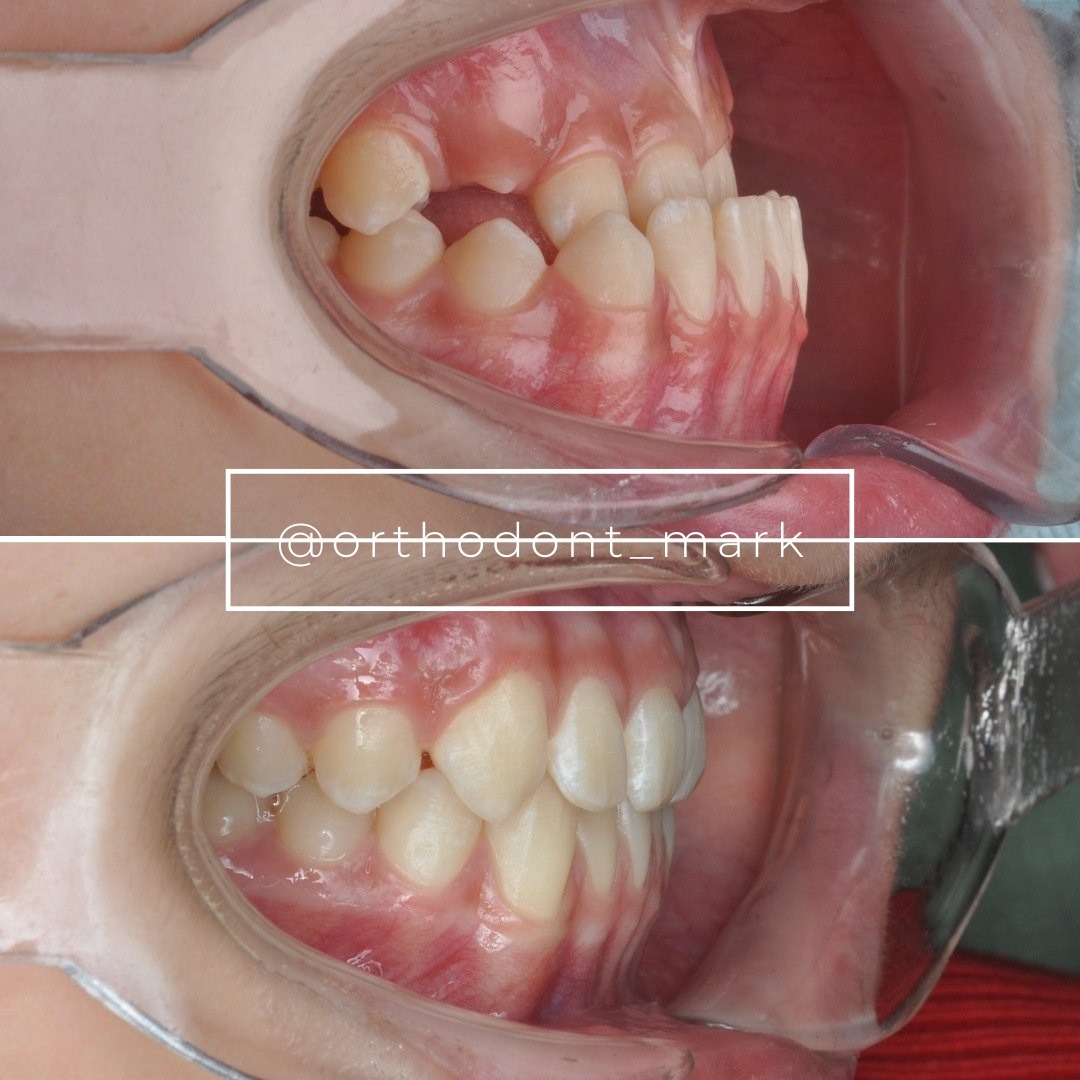
Learn the full MARPE protocol from Dr. Mark Radzhabov
Fundamental course covering CBCT patient selection, miniscrew planning, activation protocols, and 60+ clinical cases. Choose the access level that fits your practice.
Essentials of rapid palatal expansion for practicing orthodontists.
- Core RPE concepts and biomechanics
- 6 structured video lessons
- Clinical decision checklists
- Lifetime access to recordings
Deep-dive into MARPE protocol, diagnostics, and clinical execution.
- 6 modules covering MARPE from A to Z
- CBCT case selection walkthroughs
- Miniscrew placement and activation
- 60+ annotated clinical cases
- Direct Q&A with Dr. Mark Radzhabov
5-element medical consultation framework for dentists and orthodontists.
- Trust-building consultation protocol
- 5 lesson modules
- Templates for treatment plan delivery
- Works with any clinical specialty
Clinical FAQ
What is Pont's Index and how does it measure transverse maxillary dimensions?
Pont's Index uses mesiodistal crown dimensions of maxillary premolars and molars to estimate ideal intercanine, interpremolar, and intermolar widths via regression equations. It requires only dental models and calipers, offering rapid, radiation-free screening for transverse discrepancy.
When should CBCT be obtained for evaluation of cone beam computed tomography maxillary transverse deficiency?
CBCT is indicated when skeletal expansion therapy (MARPE, RPE) is contemplated, midpalatal suture maturation must be assessed, or Pont's Index findings require skeletal confirmation. Obtain CBCT early in treatment planning to guide appliance selection and inform patient consent.
Why is Pont's Index sensitivity high but specificity low in diagnostic accuracy studies?
High sensitivity (69%) means Pont's Index detects most truly deficient cases, but low specificity (16.6%) indicates it produces many false positives—cases flagged as deficient that CBCT later shows are adequate or have normal bone with compensatory tooth positioning.
How do dental compensation and Class II relationships affect Pont's Index accuracy?
Buccal inclination of posterior teeth optically narrows the dental arch on models, triggering false-positive Pont's Index findings. Class II molar relationships and anterior-posterior discrepancies can mask skeletal narrowing. CBCT clarifies whether the deficiency is skeletal or dentoalveolar.
What specific information does CBCT provide for miniscrew-assisted rapid palatal expansion planning?
CBCT reveals midpalatal suture maturation stage, alveolar bone thickness and density at planned miniscrew insertion sites, nasal floor width, and three-dimensional maxillary skeletal anatomy. This guides appliance design, miniscrew placement angles, and realistic skeletal outcome expectations.
Is low-dose CBCT protocol appropriate for orthodontic expansion diagnosis in growing patients?
Yes. Low-dose CBCT protocols provide diagnostic-quality imaging with reduced radiation exposure. Guidelines recommend indication-specific justification and ALADA (As Low As Diagnostically Acceptable) principles—use CBCT when the diagnostic question is specific and will alter treatment planning.
What does discordance between Pont's Index and CBCT findings typically indicate clinically?
Discordance (occurs in ~35% of cases) usually reflects dental compensation masking skeletal status. Negative Pont's Index with abnormal CBCT suggests true skeletal narrowing hidden by dentoalveolar positioning. Positive Pont's Index with normal CBCT may indicate normal bone with buccal tooth inclination.
How frequently does midpalatal suture separation occur in MARPE-treated patients based on CBCT evidence?
Prospective randomized trials document midpalatal suture separation in 90–95% of patients treated with MARPE using low-dose CBCT assessment. This high frequency validates CBCT-guided treatment planning and confirms skeletal expansion is achievable in adolescent and young adult populations.
Should Pont's Index be used alone to justify expansion therapy or additional imaging?
No. Pont's Index should not justify expansion therapy alone. Use it as a screening tool; positive findings require clinical confirmation and CBCT assessment of skeletal anatomy, suture status, and bone quality before committing to miniscrew-assisted or rapid palatal expansion.
How does Dr. Mark Radzhabov integrate CBCT and Pont's Index in clinical expansion assessment protocols?
Orthodontist Mark's evidence-based protocol uses Pont's Index on initial models for rapid triage, then obtains CBCT when expansion is seriously considered. This tiered approach minimizes unnecessary radiation, reduces cost, and ensures that imaging addresses specific clinical questions about skeletal feasibility.
The evidence suggests that clinicians achieve diagnostic confidence through thoughtful integration of both methods: Pont's Index as a rapid, radiation-free screening tool, and CBCT for definitive skeletal assessment when midpalatal suture maturation or complex anatomy warrants clarification. Rather than viewing these tools as competitors, progressive practices leverage their complementary strengths. Dr. Mark Radzhabov recommends case consultation and protocol review before committing to expansion therapy in borderline or complex presentations. Enroll in the Orthodontist Mark advanced diagnostics course to refine your decision-making framework.