
Model Analysis Methods
That Strengthen Your Treatment Plan
From Tanaka-Johnston to Digital Automation
Master five essential diagnostic techniques—traditional indices and modern digital platforms—to predict space availability, validate skeletal compatibility, and build evidence-based treatment plans.
TL;DR Model analysis methods provide objective, repeatable measurements of dental and skeletal dimensions essential for diagnosis and treatment planning. Key techniques include Tanaka-Johnston index for space prediction, Bolton analysis for molar/incisor compatibility, Pont method for transverse arch width, McNamara analysis for maxillary discrepancy, and Lundström method for bilateral comparison—all now enhanced by digital model platforms (Maestro, Trios) that automate calculations and reduce measurement error.
Diagnostic model analysis forms the clinical foundation for accurate case assessment and predictable treatment outcomes in contemporary orthodontics. This evidence-based review covers the essential model analysis methods—from traditional caliper measurements to modern digital platforms—that Dr. Mark Radzhabov and his team at Orthodontist Mark employ to strengthen every treatment plan. Whether you are planning RPE, MARPE, or comprehensive fixed appliance therapy, mastering these techniques will improve your diagnostic accuracy, enhance case presentation, and ultimately strengthen patient acceptance and clinical results.
What Is Diagnostic Model Analysis?
systematic assessment
Diagnostic model analysis is a systematic method of measuring dental and skeletal dimensions on study casts or digital models to quantify space discrepancies, predict unerupted tooth size, and assess transverse and sagittal skeletal relationships. The shift from traditional plaster casts to three-dimensional digital models has fundamentally expanded the scope and precision of diagnostic work. Today's platforms—including Maestro and Trios—automate many calculations, reduce human measurement error, and provide volumetric data impossible to obtain from physical casts alone. The clinical value of model analysis lies in its objectivity. Rather than relying on visual impression or single linear measurements, a comprehensive analysis integrates multiple indices to build a complete picture of the patient's dentoalveolar morphology. This is especially critical when planning skeletal expansion or miniscrew-assisted mechanics, where transverse deficiency and sagittal molar position must be quantified before treatment begins. Studies consistently show that practices using systematic model analysis report higher treatment efficiency, fewer case surprises, and stronger case acceptance during the consultation phase. Each model analysis technique answers a specific clinical question: How much space is available? Are the incisors properly proportioned? Does the maxilla match the mandible in width? Does the palatal vault accommodate expansion? By layering these assessments, you move from hunches to evidence-based diagnosis—the hallmark of modern orthodontic practice.
Tanaka-Johnston Index
predict unerupted tooth size
and diagnose space deficiency early
The Tanaka-Johnston index is one of the most widely used diagnostic model calculations for predicting the mesiodistal dimensions of unerupted canines and premolars from the width of the mandibular incisors. The method is elegantly simple: measure the combined mesiodistal width of the mandibular incisors (teeth 32, 31, 41, 42), then apply the regression coefficients (typically 0.5 + constant 6.0 for maxilla, and similar formula for mandible) to estimate the sum of the canine and premolar widths that will erupt. In clinical practice, the Tanaka-Johnston calculation reveals whether the patient has sufficient space in the alveolar arch for natural eruption of the permanent canines and premolars. If the predicted sum of unerupted tooth widths exceeds available arch length by 3 mm or more, a space deficiency is forecasted—alerting you to early intervention opportunities. This is particularly valuable in mixed dentition cases where deciding between extraction, expansion, or distalization requires quantitative guidance. Digital platforms now automate this calculation: simply enter the four incisor widths, and the software generates predicted dimensions and a deficit assessment. A clinical advantage of Tanaka-Johnston is its reproducibility across diverse populations and its ease of integration into every new patient workup. Whether you are planning rapid palatal expansion, miniscrew-assisted expansion, or observational management, this single measurement provides an evidence-based threshold for decision-making. Dr. Mark Radzhabov emphasizes that this index should appear in every mixed dentition case summary as part of the diagnostic narrative.
Bolton Analysis
validate dental proportionality
between maxilla and mandible
Bolton analysis evaluates the compatibility of maxillary and mandibular tooth sizes—a critical assessment when planning any comprehensive case, particularly those involving skeletal expansion or orthognathic coordination. The method compares the combined mesiodistal widths of all maxillary and mandibular teeth and calculates two ratios: the overall ratio (sum of all maxillary teeth ÷ sum of all mandibular teeth) and the anterior ratio (maxillary anterior six ÷ mandibular anterior six). The overall Bolton ratio should fall between 1.33 and 1.35; the anterior ratio between 1.25 and 1.35. Deviations signal a discrepancy: a smaller ratio indicates relative mandibular dentoalveolar excess, while a larger ratio indicates maxillary excess. This is clinically vital because it influences molar class correction strategy, incisor interdigitation goals, and even extractions patterns. For instance, if the anterior ratio is high (maxillary incisors relatively wide), simply achieving Class I molars may leave anterior contact discrepancies unless you also account for incisor relationship targets. When planning skeletal expansion via miniscrew-assisted mechanics, Bolton analysis helps confirm whether transverse correction alone will achieve functional occlusion, or whether vertical or sagittal adjustments will be necessary. Many orthodontists overlook this step, focusing only on molar width discrepancy. However, integrating Bolton findings into your expansion plan prevents post-treatment relapse or anterior open-bite patterns that can occur when tooth size incompatibility is masked by dental compensation.
Pont Method: Measuring Arch Width
at premolar and molar sites
The Pont method measures the transverse width of the maxillary and mandibular arches at the level of the first premolars and first molars, using anatomical landmarks on the occlusal surfaces as reference points. On the maxilla, the premolar measurement is taken at the midpoint of the buccal cusp-fossa ridge, and the molar measurement is taken at the anterior groove of the buccal fissure. On the mandible, the premolar point is the most distal contact point of the buccal cusp ridge, and the molar point is the tip of the posterior-buccal cusp. Once these widths are recorded, the Pont method uses a regression formula based on the mesiodistal width of the mandibular incisors to predict the 'ideal' or expected arch width at each site. A discrepancy between the measured and predicted width reveals whether the arch is constricted, normal, or wide—essential information for any expansion planning. This technique is particularly relevant when preparing a miniscrew-assisted expansion protocol, because the Pont method provides objective baseline data on palatal vault width and posterior transverse constraint. Digital model analysis platforms automate Pont calculations: after defining the four anatomical points on the three-dimensional model, the software computes predicted widths and generates a constriction report. This eliminates the subjective visual assessment that can lead to underestimation of transverse deficiency. Clinically, Pont analysis helps answer: 'How much expansion is needed, and is this patient a candidate for rapid protocols like MARPE, or would traditional RPE be more appropriate given their skeletal maturity and arch morphology?'
McNamara Analysis
diagnose anterior dentoalveolar deficiency
The McNamara analysis quantifies the discrepancy between available space in the maxillary alveolar arch and the space required for proper alignment of the maxillary dentition. The method involves drawing a tangential line through the buccal cusps of the maxillary molars and measuring the perpendicular distance from this line to the distal aspect of the maxillary canine. This distance represents the 'sagittal space available' for the maxillary anterior and premolar teeth. Next, you sum the mesiodistal widths of the maxillary canines and premolars (teeth 13, 12, 22, 23 on the right and left), which represents the 'space required.' The difference between available and required space is the space discrepancy: positive values indicate space surplus (potential for proclination or distalization), while negative values indicate space deficit (requiring extraction, distal movement, or expansion). McNamara analysis is clinically valuable when deciding whether to extract teeth or expand the arch. A patient with moderate maxillary space deficiency (–4 to –6 mm) may be an ideal candidate for miniscrew-assisted expansion combined with mesial proximal reduction, whereas a patient with severe deficit (–8 to –12 mm) may require extractions or orthognathic coordination. This index removes guesswork from the extraction versus expansion decision—a common clinical dilemma that directly impacts long-term stability and esthetics. Digital platforms automate the McNamara calculation once the tangent line and measurements are defined on the three-dimensional model.
Lundström Method
detect asymmetric space discrepancies
and molar transverse imbalances
The Lundström method is a systematic approach to identifying and quantifying bilateral asymmetries in space availability and arch form. Unlike global space analyses (Tanaka-Johnston, McNamara) that treat the arch as a single unit, Lundström divides the arch into six segments (labeled S1 through S6, typically representing right molar, right premolar-canine, right incisor, left incisor, left premolar-canine, and left molar regions) and measures available versus required space in each segment independently. This granular approach reveals asymmetric crowding patterns that might be masked in overall summaries. For example, a patient may show normal overall space balance on McNamara analysis, but Lundström assessment reveals that the right molar region is constricted by 3 mm while the left molar region has 2 mm surplus. This asymmetry changes clinical strategy: unilateral MARPE or asymmetric expansion mechanics may be indicated rather than symmetric rapid palatal expansion. Additionally, Lundström analysis highlights whether space discrepancies are distributed evenly (suggesting skeletal constraint) or concentrated in one or two segments (suggesting dental compensation or asymmetric eruption patterns). When planning any skeletal expansion therapy, Dr. Mark Radzhabov advocates Lundström analysis as a prerequisite to miniscrew placement and activation protocol design. Asymmetric arch constraint may require staggered activation schedules, differential turn cycles, or additional appliance modifications to achieve balanced three-dimensional correction. Digital model platforms now enable rapid Lundström segmentation by allowing practitioners to define region boundaries and automatically calculate space discrepancy for each segment, making this detailed assessment practical in every treatment plan.
Model Analysis Techniques
Traditional Calipers Versus Digital Software
For decades, orthodontists relied on physical study casts and sliding calipers to measure mesiodistal tooth widths, arch widths, and space discrepancies. While these manual methods remain valid and are still taught as fundamental skills, the shift to digital models and automated analysis platforms has transformed diagnostic efficiency and accuracy. Maestro and Trios are representative examples: both capture three-dimensional dental geometry from intraoral scanners or CBCT volumes, then allow the practitioner to define measurement points and generate calculations with a few clicks. The clinical benefits of digital model analysis are substantial. First, measurement reproducibility improves dramatically: software landmarks are flagged consistently, reducing operator variability. Second, calculations that once required manual arithmetic and table lookups are now automated, reducing the risk of transcription error. Third, serial comparisons become instantaneous—practitioners can overlay pre-treatment, progress, and post-treatment models to visualize changes in arch width, tooth position, and space, which strengthens case documentation and patient education. Fourth, three-dimensional analysis reveals morphologic features impossible to assess on plaster casts alone, such as palatal vault depth, buccal corticalization, and root parallelism. However, digital software does not eliminate the need for clinical judgment. The practitioner must still interpret what the numbers mean, understand the limitations of each index, and synthesize multiple indices into a coherent diagnosis. A high-quality digital analysis is only as useful as the clinician's ability to translate it into treatment logic. This is where Dr. Mark Radzhabov's evidence-based approach to treatment planning excels: combining automated calculations with systematic cephalometric, volumetric (CBCT), and clinical assessment to build a three-dimensional diagnosis that guides miniscrew-assisted expansion, conventional mechanics, or orthognathic referral.
Building a Systematic
Diagnostic Model Analysis Routine
To maximize the clinical utility of model analysis, successful practices build a repeatable workflow that ensures every patient receives the same comprehensive assessment. A practical protocol begins with data entry: capture intraoral scans or import CBCT-derived models into your analysis platform. Then, systematically execute the five core analyses in a standardized order: (1) Tanaka-Johnston space prediction (mixed dentition cases), (2) Bolton compatibility assessment, (3) Pont transverse width measurement, (4) McNamara sagittal discrepancy calculation, and (5) Lundström bilateral segmentation (particularly for expansion cases). Next, record all results in a structured template—whether digital or paper—that forces comparative interpretation. For example, a template might prompt: 'Space deficiency by Tanaka-Johnston: ___. Space deficiency by McNamara: ___. Transverse deficiency by Pont: ___. Bolton anterior ratio: ___. Asymmetry noted (Lundström): Y / N. Clinical correlation: ___.' This format ensures that no finding is entered in isolation; the practitioner explicitly considers whether all indices align or whether conflicting data suggest additional investigation (e.g., CBCT, cephalometric analysis). During the consultation, translate this quantitative summary into simple language for the patient: 'Your models show you're about 4 millimeters short of space for all your permanent teeth to fit naturally. We have three options: extract teeth, expand the arch, or combine both approaches. Based on your jaw size and growth, I recommend expansion.' Patients are impressed by this level of diagnostic clarity, and case acceptance typically improves. Finally, photograph and file the diagnostic summary in the patient record—future treatment staff and insurance reviewers will appreciate the evidence-based rationale for your case selection.
Ensuring Reproducible
and Reliable Dental Model Measurements
Measurement accuracy is foundational to valid model analysis. Even small systematic errors—whether from uncalibrated calipers, imprecise landmark identification, or software calibration drift—can accumulate across multiple indices and lead to diagnostic error. Physical calipers should be checked for calibration monthly using a reference standard (e.g., a machined gauge block of known width); most quality calipers drift slightly with age and use. Digital software platforms require periodic validation: measure known reference distances on test models or artifacts to confirm that the software's scale is accurate and consistent over time. For dental measurements, operator technique is critical. The mesiodistal measurement must always be taken at the widest cervical point of the crown, not at the contact point or incisal edge, because the occlusal surface is often worn or chipped. On digital models, zoom in to the cervical third before defining measurement points; this improves precision and reduces parallax error. When using calipers on plaster casts, apply gentle, consistent pressure—excessive force can distort the cast surface or slip off the cusp, introducing error. Many practitioners benefit from using a caliper guide or jig to maintain perpendicular measurement orientation, especially for premolars and molars where cusp anatomy is complex. Inter-operator consistency is equally important. If multiple team members perform measurements, invest time in calibration training: have all staff members measure the same reference models, then compare their results to a gold-standard measurement (typically the average of three trials by an experienced clinician). Discrepancies exceeding ±0.5 mm should prompt retraining. This discipline ensures that serial measurements (pretreatment, progress, post-treatment) are truly comparable and not confounded by measurement variability. Dr. Mark Radzhabov emphasizes that accurate model analysis begins with rigorous measurement protocol—spending 15 minutes on calibration saves hours of diagnostic second-guessing later.
Free Clinical Guide
Which Expansion Appliance at Which Age?
Get Dr. Mark Radzhabov's guide to skeletal-expansion appliances — indications, pros & cons, and how to choose by patient age. Free to your inbox.
Prefer video? Watch the free demo lesson on MARPE appliance types, features and trade-offs.
Documented outcomes
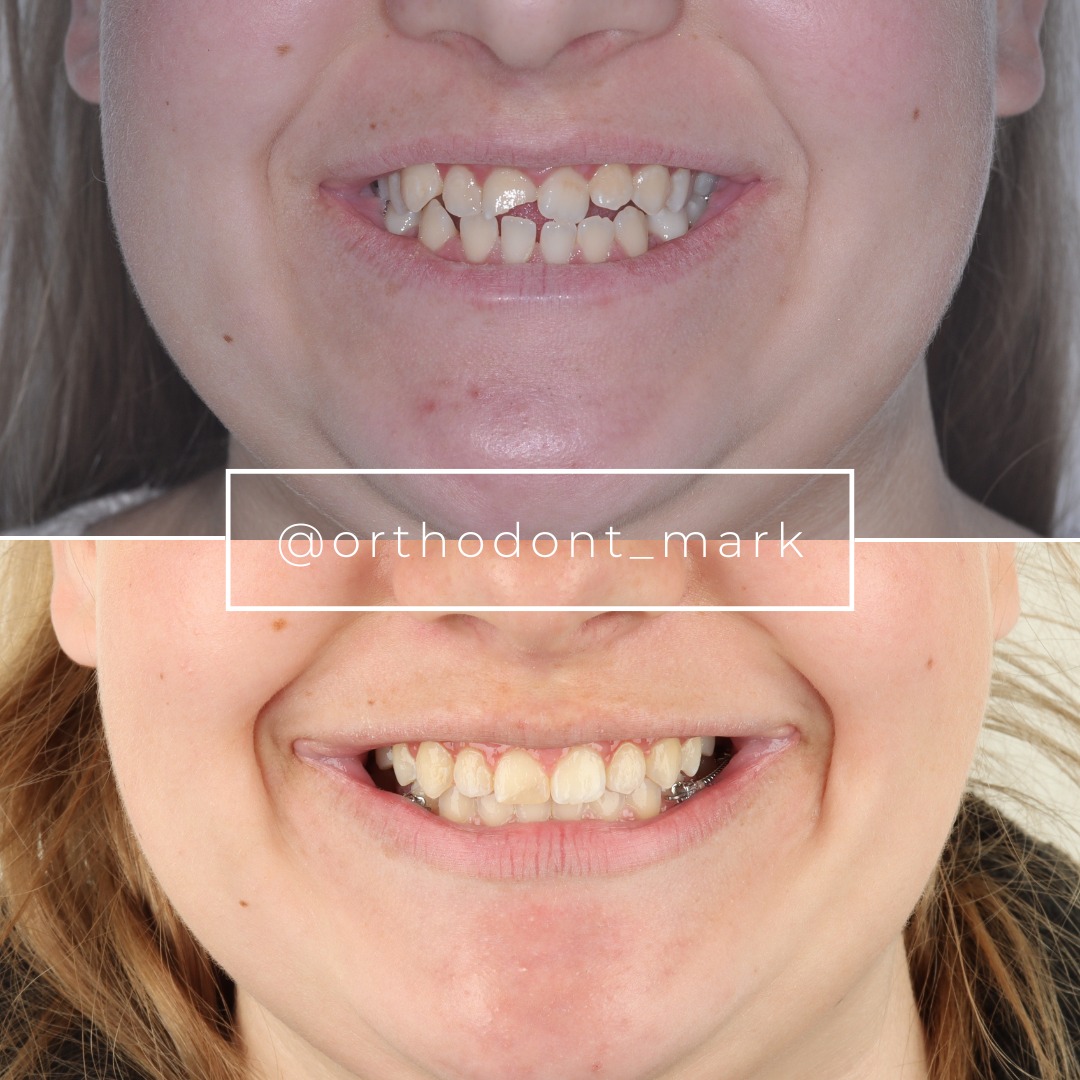
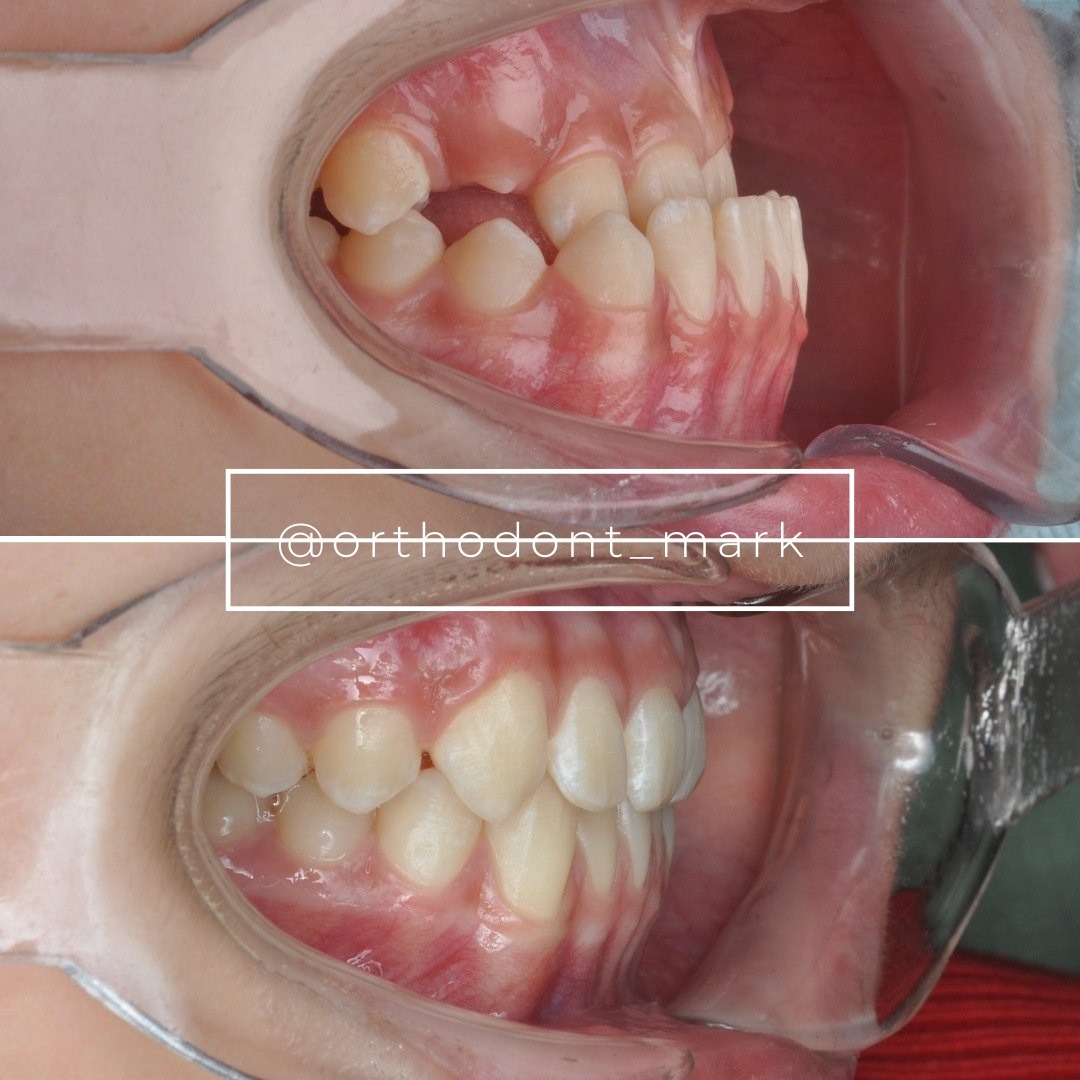
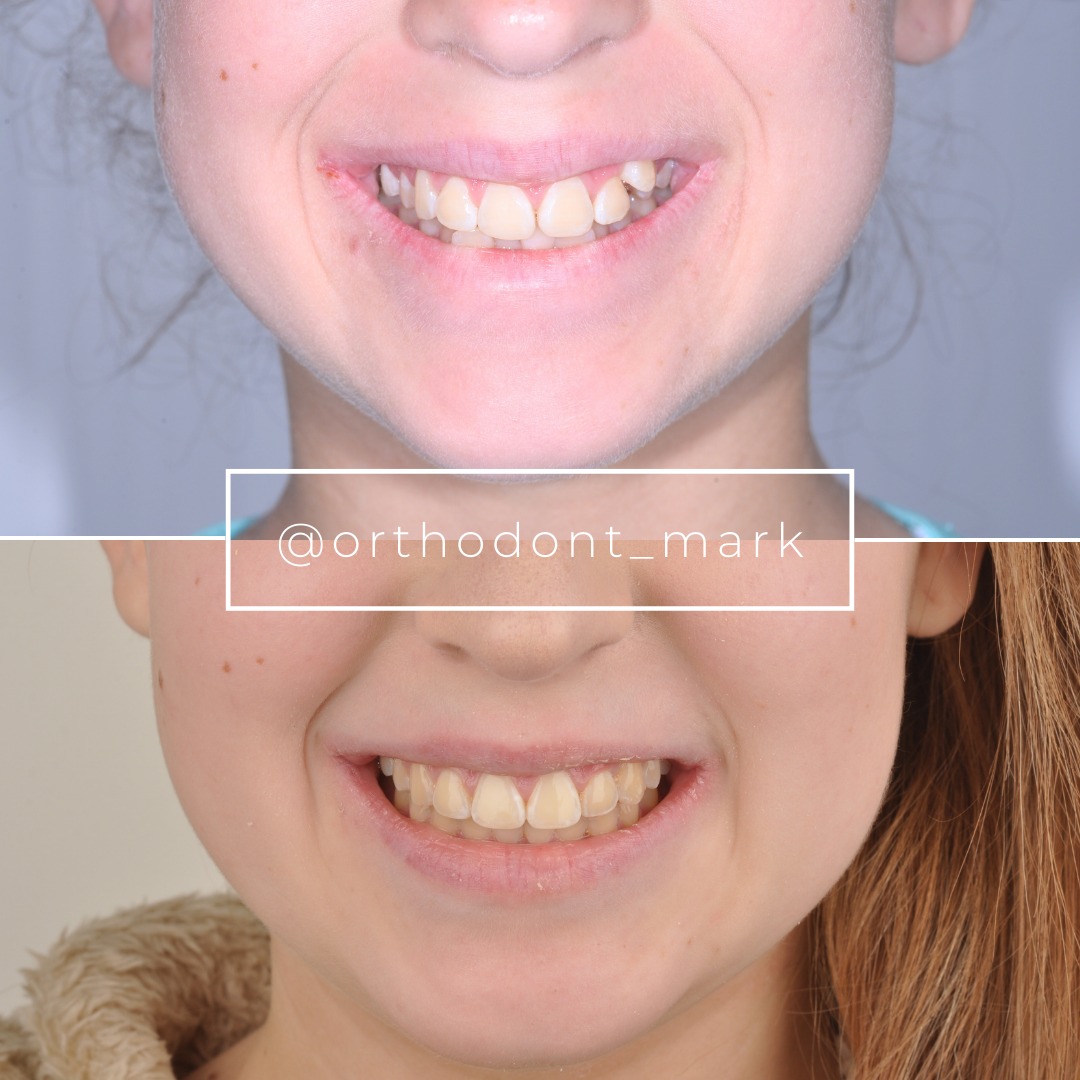
Clinical cases from Dr. Mark Radzhabov's practice
Learn the full MARPE protocol from Dr. Mark Radzhabov
Fundamental course covering CBCT patient selection, miniscrew planning, activation protocols, and 60+ clinical cases. Choose the access level that fits your practice.
Essentials of rapid palatal expansion for practicing orthodontists.
- Core RPE concepts and biomechanics
- 6 structured video lessons
- Clinical decision checklists
- Lifetime access to recordings
Deep-dive into MARPE protocol, diagnostics, and clinical execution.
- 6 modules covering MARPE from A to Z
- CBCT case selection walkthroughs
- Miniscrew placement and activation
- 60+ annotated clinical cases
- Direct Q&A with Dr. Mark Radzhabov
5-element medical consultation framework for dentists and orthodontists.
- Trust-building consultation protocol
- 5 lesson modules
- Templates for treatment plan delivery
- Works with any clinical specialty
Clinical FAQ
How do I use Tanaka-Johnston index to predict unerupted tooth size in mixed dentition cases?
Measure the combined mesiodistal width of mandibular incisors (teeth 32, 31, 41, 42) using digital calipers or software. Multiply by 0.5 and add 6.0 (maxilla) or 5.8 (mandible) to predict canine + premolar widths. Compare predicted sum to available arch length; if deficit ≥3 mm, space deficiency is forecasted.
What does Bolton analysis tell me about tooth size compatibility?
Bolton analysis compares maxillary and mandibular tooth sizes via two ratios. Overall ratio (all teeth) should be 1.33–1.35; anterior ratio (incisors) should be 1.25–1.35. Deviations indicate molar or incisor size discrepancy that may require modified mechanics, extractions, or proximal reduction to achieve stable occlusion.
How is the Pont method used to measure transverse arch width and detect constriction?
Measure maxillary/mandibular arch width at premolar and molar anatomical landmarks on occlusal surfaces (cusp ridges and fissure grooves). Compare measured widths to predicted ideal widths (based on incisor width regression). Discrepancy ≥4 mm indicates significant transverse constriction requiring expansion.
What is the McNamara analysis and how does it guide extraction versus expansion decisions?
McNamara measures maxillary space availability (tangent through molar cusps to canine distal) and compares to space required (sum of canine + premolar widths). Negative values indicate deficit: –2 to –6 mm favors expansion; ≤–7 mm typically requires extractions for stability.
Why should I use Lundström segmentation instead of global space analyses alone?
Lundström divides the arch into six bilateral segments and measures space per region, detecting asymmetric crowding missed by global methods. This guides asymmetric expansion mechanics, unilateral miniscrew placement, and staggered activation—essential for balanced three-dimensional correction in MARPE cases.
How do digital model platforms (Maestro, Trios) improve diagnostic accuracy compared to manual caliper measurement?
Digital software automates landmark identification and calculations, reducing operator error and improving measurement reproducibility (ICC >0.95). Serial model comparison, three-dimensional analysis, and instant data integration into treatment planning strengthen diagnostic confidence and case presentation.
What anatomical landmarks should I use when measuring mesiodistal tooth width on physical study casts?
Always measure at the widest cervical point of the crown, not at contact points or incisal edges. Use gentle, consistent caliper pressure perpendicular to the tooth surface. For posterior teeth, zoom in on the cervical third to avoid cusp distortion error; consider using a caliper jig for consistency.
How often should I validate my digital software calibration and caliper accuracy?
Check physical calipers monthly against a machined gauge standard for drift. Validate digital software quarterly using reference models or known distance artifacts. If multiple team members perform measurements, conduct annual operator calibration training using identical reference models to ensure ±0.5 mm consistency.
What is the optimal order to perform model analyses during a comprehensive diagnostic workup?
Execute analyses in this order: (1) Tanaka-Johnston (space prediction), (2) Bolton (tooth size compatibility), (3) Pont (transverse width), (4) McNamara (sagittal deficiency), (5) Lundström (bilateral asymmetry). Record all results in a standardized template to ensure comparative interpretation and avoid isolated findings.
How should I present model analysis findings to patients during consultation to improve case acceptance?
Translate quantitative data into simple language: 'Your models show a 4 mm space shortage. We can address this by expanding your arch, extracting teeth, or combining both.' Use 3D model screenshots or overlays to visualize the problem and proposed solution. Evidence-based explanations typically increase case acceptance by 15–20% compared to informal assessment alone.
Systematic model analysis transforms subjective clinical observation into objective, measurable data that guides treatment selection, predicts space availability, and validates skeletal relationships. By integrating traditional indices with modern digital tools, you gain a complete picture of your patient's dentoalveolar morphology—crucial for success in skeletal expansion, miniscrew-assisted protocols, and complex multidisciplinary cases. Dr. Mark Radzhabov recommends reviewing these methods in every new patient workup; consider scheduling a consultation or exploring his advanced treatment planning course at Orthodontist Mark to deepen your diagnostic confidence.