
From Records to Treatment Plan
in 90 Minutes
A structured orthodontic workflow for rapid case evaluation
Master the prioritized measurement system and decisional framework that allows you to deliver a complete treatment plan during the first consultation—without sacrificing clinical rigor or evidence-based reasoning.
TL;DR Creating a complete orthodontic treatment plan in 90 minutes requires systematic record analysis, prioritized cephalometric assessment, and decisional frameworks that separate essential measurements from optional ones. This article outlines a clinical efficiency protocol for rapid but thorough case evaluation.
Time pressure is a reality in modern orthodontic practice. Yet diagnose, analyze, and plan treatment in under 90 minutes is achievable when your workflow from records to treatment plan follows a structured protocol. In this article, Dr. Mark Radzhabov walks through the exact sequence of measurements, decision points, and documentation steps that compress a full diagnostic workup into a single extended consultation. Whether you're screening for skeletal expansion candidates or finalizing appliance selection, this clinical efficiency system will accelerate your case evaluation without sacrificing rigor.
The Case Intake Triage: What to Assess
Before Measurement
Before pulling calipers or opening analysis software, spend 10 minutes on strategic triage. Review the patient intake form, chief complaint, and existing dentition photographs. Determine the primary malocclusion type (Class I, II, or III) and whether the case hints at skeletal versus dentoalveolar pathology. This 10-minute mental map prevents you from measuring features that won't change your plan.
Ask yourself: Is this a routine Class II camouflage, or does anterior–posterior skeletal discrepancy suggest the need for miniscrew-assisted expansion or orthognathic referral? Does the patient present with transverse deficiency? The presence of posterior crossbite, constricted arches, or mouth breathing often signals that rapid palatal expansion—whether RPE or MARPE—deserves priority in your analysis. By identifying the probable treatment vector early, you allocate your 90 minutes to the measurements that matter.
Digital tools accelerate this phase: scan the 3D intraoral model immediately for arch symmetry, tooth agenesis, or supernumerary teeth. Request low-dose CBCT only if skeletal expansion or orthognathic evaluation is suspected; routine dentoalveolar cases rarely need it during initial planning. This decision gate alone saves 15–20 minutes and sharpens your focus.
The Mandatory Diagnostic Suite
Four Indices, 25 Minutes
Skip the ornamental indices. Focus on four core measurements that directly inform appliance selection, expansion necessity, and prognosis: the Tanaka–Johnston space prediction, the Pont index (arch width proportionality), the Bolton index (tooth size discrepancy), and the McNamara method for anterior–posterior sagittal assessment. These four provide the diagnostic foundation for 95% of orthodontic cases and require only 25 minutes.
Tanaka–Johnston space prediction quantifies the mesiodistal dimensions of unerupted canines and premolars from the lower incisors. Measure the mesiodistal width of lower incisors (teeth 42, 41, 31, 32), sum them, divide by two, multiply by 0.48 (upper) or 0.40 (lower), and add the measured canine and premolar dimensions. A deficit of 3 mm or more signals crowding that may require extraction, expansion, or interproximal stripping. This single calculation orients your entire treatment philosophy.
The Pont index (arch width assessment) compares the natural intercanine and intermolar widths of the maxilla against predicted normal values derived from the combined mesiodistal width of upper incisors (teeth 12, 11, 21, 22). Transverse deficiency—a narrowing of >3 mm at the canine or molar level—is a cardinal indication for rapid palatal expansion, whether tooth-borne (RPE) or skeletal (MARPE). Record these widths on the study model or 3D scan at the precise landmarks: the midpoint of the intercanine contact region and the mesial cusps of the maxillary first molars. Measurement takes 3 minutes; the clinical insight justifies expansion protocol selection.
Bolton analysis (tooth size discrepancy) detects mismatch between upper and lower mesiodistal tooth dimensions. Sum the mesiodistal widths of all teeth (or use the anterior or total ratios). A ratio outside normal limits (1.27–1.35 for anterior teeth, 1.40–1.63 for total arch) may necessitate equilibration, stripping, or compensatory extractions. This prevents post-treatment relapse from untreated interarch size incompatibility. Measure all 12 teeth per arch; the time investment prevents future iatrogenic errors.
Leveraging Digital Tools
for Rapid Assessment
Manual measurement with calipers is dead weight in modern practice. Intraoral 3D scanning (Trios, iTero, or equivalent) automates tooth sizing, arch perimeter, and transverse dimension recording. Once imported into planning software, these tools eliminate manual caliper work and reduce measurement time from 20 minutes to 5 minutes. The software flags arch asymmetry, rotation, and crowding severity in real time, allowing you to visually confirm diagnosis and show the patient objective findings on screen during consultation.
For cases suspected of skeletal maxillary constriction or midline asymmetry, low-dose CBCT at the time of consultation provides definitive midpalatal suture morphology and sagittal skeletal relationship. Recent randomized evidence (Chun et al., 2022) demonstrated that MARPE achieves 95% midpalatal suture separation with superior nasal width expansion and less dentoalveolar tipping compared to conventional RPE—a distinction impossible to assess without CBCT. If skeletal expansion is in your differential, order the scan simultaneously with intraoral records; the combined imaging takes 15 minutes and settles the expansion method choice decisively.
Store all measurements in a structured digital template. Dr. Mark's protocol uses a single-page summary capturing Tanaka–Johnston, Pont, Bolton, and McNamara values, plus CBCT findings (if obtained), incisal angle, ANB angle, and molar relationship. This document becomes your treatment plan scaffold and patient communication tool. By minute 60, you will have all data required to finalize appliance selection, expansion timing, and extraction/retention decisions.
The Three Decision Gates
That Finalize Your Plan
By minute 75, you hold diagnostic data. Now apply three sequential decision gates to compress it into a treatment strategy. Each gate forces a single binary choice, eliminating paralysis and ensuring the plan emerges by minute 85.
Gate 1: Skeletal vs. Dentoalveolar. Does the case show true skeletal Class II/III or transverse deficiency (ANB >4°, negative overjet, or Pont-index narrowing >3 mm)? If yes, plan miniscrew-assisted rapid palatal expansion or orthognathic referral. If no, proceed to appliance-only treatment. This gate takes 2 minutes and prevents misdirected effort on skeletal cases best served by growth modification or surgery.
Gate 2: Crowding vs. Arch Deficiency. Does Tanaka–Johnston predict a deficit >3 mm? If yes and transverse dimension is normal, consider extraction (usually first premolars). If crowding is mild (<2 mm) or transverse deficiency is present, expansion becomes primary. If deficit is absent, proceed to non-extraction. This gate determines appliance strategy and timeline, consuming 3 minutes.
Gate 3: Anchorage Sufficiency. Is the maxillary and mandibular anterior incisor relationship stable, or does the case require skeletal or non-compliance-dependent anchorage? If skeletal anchorage (miniscrew or implant support) is necessary—as in asymmetry, severe Class II, or planned orthognathic coordination—document the miniscrew sites and insertion timing now. If dental anchorage suffices, lock in the fixed-appliance sequence. This gate takes 5 minutes and eliminates post-treatment surprises from inadequate force control.
By minute 85, all three gates are decided. Your 5-minute buffer accommodates patient questions or unexpected findings. The plan is documented, the appliance choice is locked, and the patient leaves with a treatment roadmap.
Five Mistakes That Break Your
Workflow Rhythm
Pitfall 1: Measuring Everything. Avoid temptation to calculate every aesthetic and functional index (molar angle, buccal corridor width, smile arc, etc.). Reserve these for appliance adjustment phases. During initial planning, measure only Tanaka–Johnston, Pont, Bolton, and McNamara. This single discipline saves 30 minutes and keeps focus sharp.
Pitfall 2: Postponing CBCT Decision. Ambivalence about CBCT wastes time. Decide pre-consultation: Is skeletal expansion or orthognathic evaluation suspected? If yes, order CBCT same-day and incorporate findings into planning. If no, defer or eliminate. Hedging (“we might need it”) delays finalization and extends the appointment.
Pitfall 3: Incomplete 3D Model Import. If you use digital scanning, ensure your software displays intercanine width, intermolar width, arch perimeter, and tooth mesiodistal dimensions on import. Manually transcribing from scan software to your planning template costs 10 minutes. Direct import cuts time to <2 minutes.
Pitfall 4: Skipping the Summary Document. Finish the appointment without consolidating findings into a one-page summary (diagnostic indices, CBCT findings, appliance plan, timeline). This omission forces you to re-analyze when the patient calls with questions or at the appliance-placement visit. A 5-minute summary document prevents rework and solidifies your confidence.
Pitfall 5: Not Setting Clear Decision Precedents. If you haven't pre-committed to decision gates (e.g., “If Tanaka–Johnston deficit >3 mm + normal transverse, then extract”), you will deliberate mid-consultation and lose 15–20 minutes to indecision. Review your decision framework 1 week before clinics begin. Written protocols eliminate hesitation.
Rapid Palatal Expansion Cases:
Compressed Timeline
Cases presenting with transverse maxillary deficiency or posterior crossbite demand accelerated decision-making. The Pont index is your speed dial here: if intermolar or intercanine width is narrower than predicted normal values by >3 mm, you are in expansion territory. This single measurement, achievable in 2 minutes, can redirect your entire 90-minute workflow toward expansion protocol selection rather than dentoalveolar mechanics.
For miniscrew-assisted rapid palatal expansion (MARPE) candidates, confirm four essentials by minute 30: (1) CBCT confirmation of intact midpalatal suture (non-fused), (2) intercanine/intermolar transverse deficiency (Pont method), (3) skeletal age (if subadult, growth potential aids expansion; if adult, miniscrew support is non-negotiable), and (4) posterior vertical relationship (high-angle patients benefit more from skeletal than dentoalveolar expansion). Chun et al. (2022) demonstrated that MARPE yields 95% midpalatal suture separation and superior skeletal width gain compared to conventional RPE, with minimal dentoalveolar tipping. If your CBCT shows fused or partially ossified suture, MARPE becomes obligatory for adult cases.
By minute 50, lock in your expansion timeline. Standard protocols prescribe 8+ weeks of active expansion, followed by 6 months of retention. Document the weekly activation schedule (typically 1 mm per week for MARPE; 0.5 mm per week for RPE), miniscrew insertion sites (for MARPE), and consolidation phase expectations. This clarity prevents patient confusion and eliminates follow-up calls asking “when do we stop turning the screw?”
Reserve the final 20 minutes for post-expansion sequencing: Does the patient need fixed appliances after expansion consolidation, or is expansion sufficient? Will you use a holding appliance (wraparound Hyrax, acrylic splint) or proceed directly to multi-bracket treatment? Document this sequence so your hygiene and clinical staff understand the roadmap. Expansion cases add complexity; writing out the timeline during consultation prevents deviation.
Your 90-Minute Timetable:
A Step-by-Step Sequence
Minutes 0–10: Patient intake & triage. Review chief complaint, existing photographs, and intraoral findings. Assess probable malocclusion type (Class I/II/III) and expansion vs. dentoalveolar pathology. Determine if CBCT is indicated. Decision: Order CBCT now or defer?
Minutes 10–15: 3D model analysis. Import intraoral scan or place study models under measurement device. Auto-calculate tooth mesiodistal widths, arch perimeter, intercanine/intermolar widths. Record Pont-index values. Identify transverse deficiency, if present. (Automation via software: 3–5 min; manual calipers: 15–20 min.)
Minutes 15–30: Diagnostic indices. Calculate Tanaka–Johnston (crowding severity), Bolton (tooth size discrepancy), and McNamara (sagittal relationship). Document findings on summary template. Time: 15 minutes.
Minutes 30–40: CBCT integration (if ordered). Review axial, sagittal, and coronal views. Confirm midpalatal suture morphology, skeletal jaw relationships, and dentoalveolar dimensions. Flag asymmetry, impactions, or agenesis. Time: 10 minutes. (If no CBCT, use this time for detailed cephalometric tracing.)
Minutes 40–50: Decision gates 1–3. Apply skeletal vs. dentoalveolar gate. Apply crowding vs. arch-deficiency gate. Apply anchorage-demand gate. Lock in extraction vs. expansion choice and appliance type. Time: 10 minutes.
Minutes 50–75: Case presentation & patient discussion. Display findings on screen. Explain diagnostic summary, treatment options, and timeline. Answer patient questions. Confirm patient buy-in. Time: 25 minutes.
Minutes 75–85: Documentation & finalization. Complete one-page summary (diagnostic data, treatment plan, appliance sequence, timeline, miniscrew sites if applicable). Provide copy to patient. Clarify any ambiguities. Time: 10 minutes.
Minutes 85–90: Scheduling & closeout. Book appliance-placement appointment. Confirm financial arrangement. Provide oral hygiene and dietary instructions. Time: 5 minutes.
Free Clinical Guide
Which Expansion Appliance at Which Age?
Get Dr. Mark Radzhabov's guide to skeletal-expansion appliances — indications, pros & cons, and how to choose by patient age. Free to your inbox.
Prefer video? Watch the free demo lesson on MARPE appliance types, features and trade-offs.
Documented outcomes
Clinical cases from Dr. Mark Radzhabov's practice
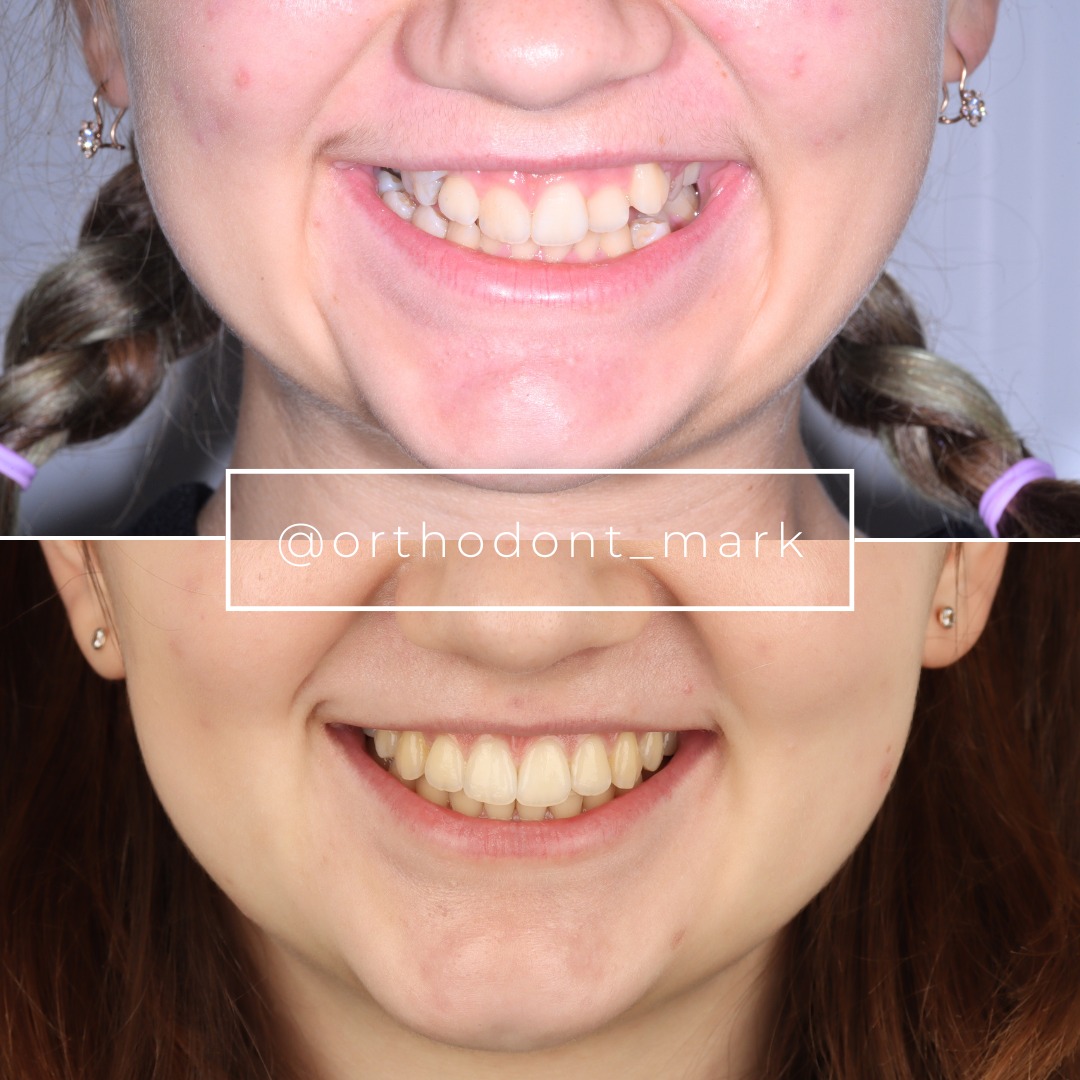
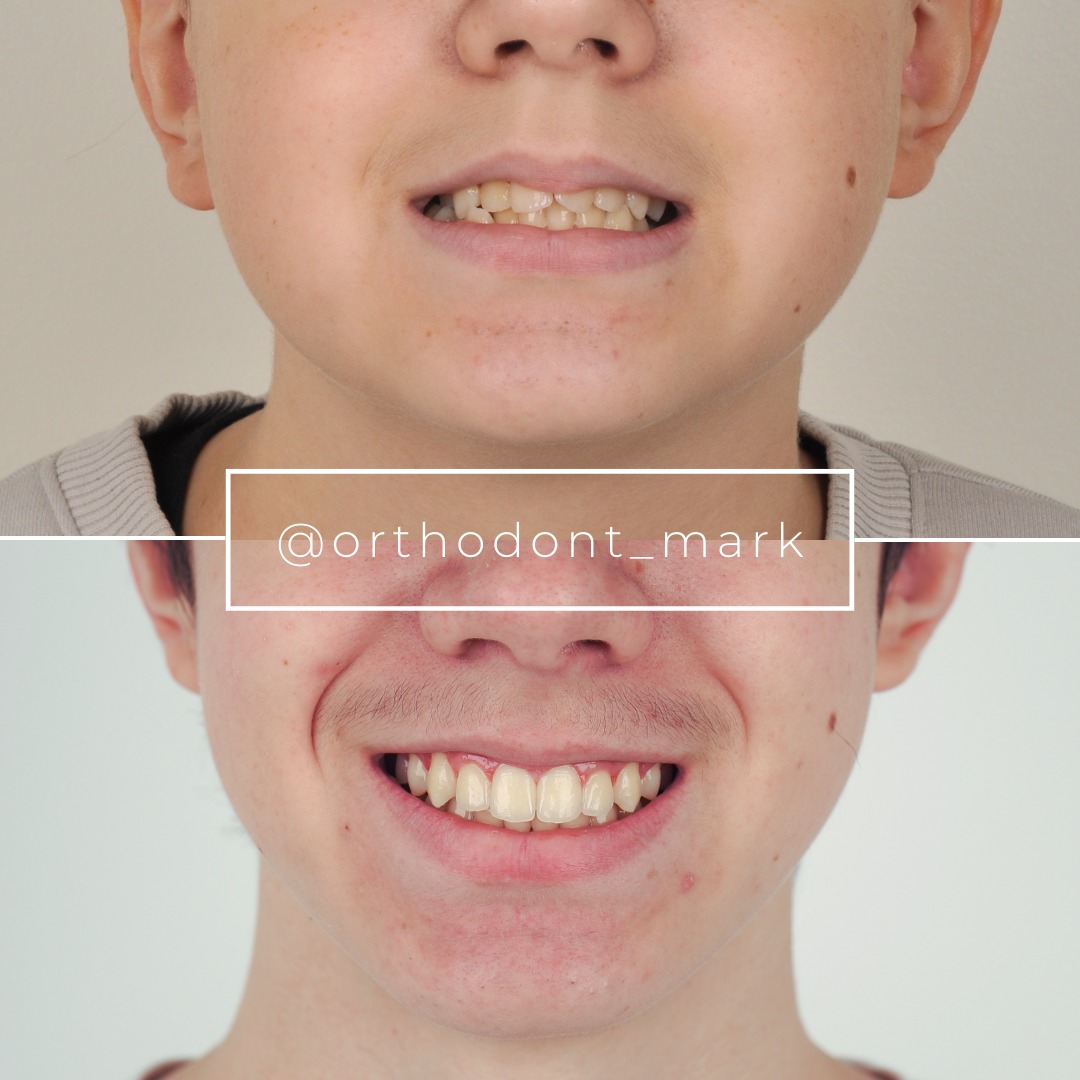
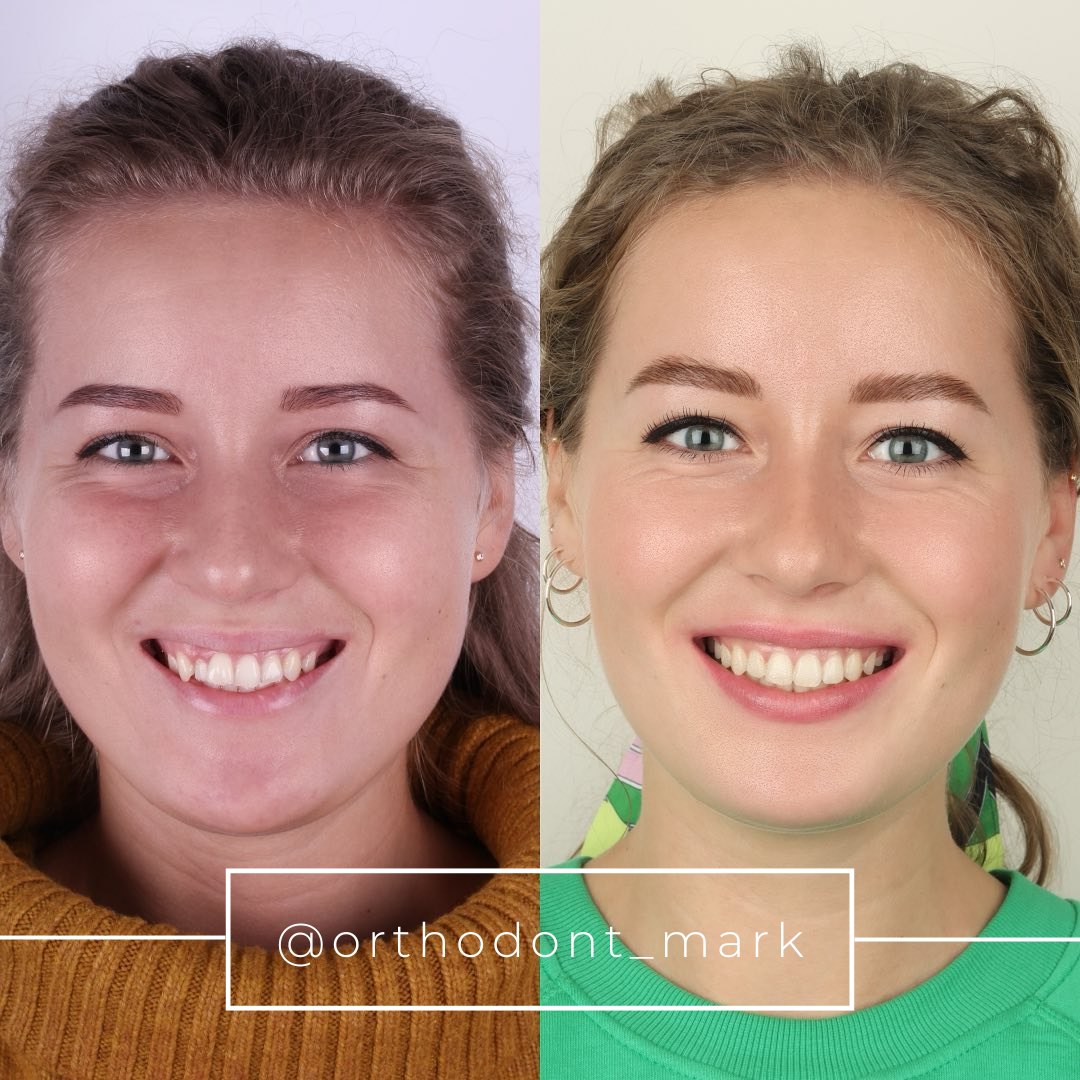
Learn the full MARPE protocol from Dr. Mark Radzhabov
Fundamental course covering CBCT patient selection, miniscrew planning, activation protocols, and 60+ clinical cases. Choose the access level that fits your practice.
Essentials of rapid palatal expansion for practicing orthodontists.
- Core RPE concepts and biomechanics
- 6 structured video lessons
- Clinical decision checklists
- Lifetime access to recordings
Deep-dive into MARPE protocol, diagnostics, and clinical execution.
- 6 modules covering MARPE from A to Z
- CBCT case selection walkthroughs
- Miniscrew placement and activation
- 60+ annotated clinical cases
- Direct Q&A with Dr. Mark Radzhabov
5-element medical consultation framework for dentists and orthodontists.
- Trust-building consultation protocol
- 5 lesson modules
- Templates for treatment plan delivery
- Works with any clinical specialty
Clinical FAQ
What are the four mandatory diagnostic indices for rapid orthodontic treatment planning?
Tanaka–Johnston (crowding prediction), Pont index (arch width proportionality), Bolton index (tooth size discrepancy), and McNamara method (sagittal skeletal relationship). These four indices provide 95% of actionable diagnostic data.
How do I identify transverse maxillary deficiency for rapid palatal expansion consideration?
Use the Pont index: measure intercanine and intermolar widths on 3D models or study casts, then compare to predicted normal values derived from upper incisor mesiodistal widths. Deficiency >3 mm indicates expansion necessity.
Should I order cone-beam computed tomography (CBCT) for every new orthodontic patient?
No. Reserve CBCT for cases with suspected skeletal expansion need, severe asymmetry, orthognathic referral possibility, or impacted teeth. Routine dentoalveolar cases do not require it at consultation; defer or eliminate to save time.
What is the fastest method to measure tooth mesiodistal dimensions during a 90-minute consultation?
Use 3D intraoral scanning software (Trios, Maestro, iTero) that auto-calculates dimensions on import—3 to 5 minutes. Manual calipers require 15–20 minutes and are operator-dependent. Digital automation is non-negotiable for workflow efficiency.
How do I decide whether a case requires extraction versus expansion in under 10 minutes?
Apply two gates: (1) Does Tanaka–Johnston predict crowding deficit >3 mm? (2) Is transverse dimension normal or deficient? If deficit >3 mm + transverse normal, extract. If crowding <2 mm or transverse narrow, expand. This logic eliminates ambiguity.
What is the difference between MARPE and conventional RPE for transverse expansion?
MARPE (miniscrew-assisted) achieves 95% midpalatal suture separation versus 90% for conventional RPE (Chun et al. (2022), BMC Oral Health), with greater skeletal width gain and less dentoalveolar tipping. Conventional RPE relies on dental anchorage and causes more dentoalveolar side effects. MARPE is superior for adults and severe constriction.
How long should I allocate for CBCT review during a consultation if midpalatal suture morphology assessment is critical?
10 minutes. Review axial (suture status), sagittal (skeletal relationships), and coronal (asymmetry) views. Flag agenesis, impactions, or asymmetry. Pre-load CBCT images before appointment to eliminate navigation delays.
What single document should I complete by the end of the 90-minute consultation?
A one-page diagnostic summary capturing Tanaka–Johnston result, Pont values, Bolton ratio, skeletal angles (ANB, incisor angle, molar relationship), CBCT findings (if applicable), appliance type, extraction/expansion decision, and timeline. This artifact prevents rework and confirms patient understanding.
How do I avoid the 'scope creep' trap of measuring cosmetic indices during initial planning?
Pre-commit: reserve smile arc, buccal corridor width, and aesthetic ratios for appliance adjustment phases, not initial planning. Document this protocol in writing to eliminate in-chair deliberation. Initial planning focuses only on functional/skeletal indices.
What is the optimal sequence for integrating 3D scanning, CBCT, and measurement into a compressed workflow?
Step 1: 3D scan immediately after triage (3–5 min, auto-calculate dimensions). Step 2: If CBCT indicated, review simultaneously (10 min). Step 3: Calculate Tanaka–Johnston, Pont, Bolton (15 min). Step 4: Apply decision gates and finalize plan (10 min). Total: 38–40 minutes, leaving 50 minutes for presentation, documentation, and scheduling.
The 90-minute protocol is not about cutting corners—it's about cutting waste. By prioritizing essential measurements (tooth size discrepancies, arch width, overjet/overbite, skeletal relationship), deferring cosmetic indices, and using digital tools (CBCT, 3D model analysis software) strategically, you can deliver a confident, evidence-based treatment plan on the day of consultation. Dr. Mark Radzhabov's framework ensures that every minute spent directly informs the treatment strategy. Ready to streamline your own workflow? Review a full case using this protocol or explore Orthodontist Mark's consulting suite to refine your efficiency.

