
Asymmetric MARPE: Diagnosis,
Causes, and Recovery
Protocols for Skeletal Expansion
Evidence-based framework for identifying and correcting miniscrew-assisted expansion asymmetry in adolescent and adult patients using systematic CBCT analysis and three clinically proven recovery strategies.
TL;DR Asymmetric MARPE expansion occurs in nearly half of patients and stems from unequal miniscrew loading, midpalatal suture anatomy, and activation protocol misalignment. Three evidence-based recovery protocols—mechanical rebalancing, staged asymmetric activation, and suture-guided consolidation—restore symmetric skeletal and dentoalveolar expansion when applied systematically.
Asymmetric miniscrew-assisted rapid palatal expansion remains one of the most frequent complications encountered in contemporary MARPE therapy, yet few clinicians possess a systematic diagnostic and management framework. In this article, Dr. Mark Radzhabov reviews the etiology of asymmetric palatal expansion, practical chairside diagnosis using CBCT landmarks, and three recovery protocols grounded in the latest skeletal and dentoalveolar evidence. Understanding these mechanisms will help you optimize outcomes and reduce retreatment demands in your practice.
What Is Asymmetric MARPE?
Definition and Clinical Significance
Asymmetric MARPE expansion is unequal skeletal separation of the midpalatal suture and maxillary dentoalveolar structures, typically exceeding 1 mm difference between right and left molar regions. This complication occurs in nearly 48% of MARPE cases and arises from a combination of miniscrew positioning, suture anatomy, and activation protocol factors. Unlike tooth-borne rapid palatal expansion, which relies on dental anchor points and produces predictable dental tipping, miniscrew-assisted expansion anchors forces directly to palatal bone, making it highly sensitive to asymmetries in miniscrew axes and midpalatal suture splitting patterns. A prospective randomized clinical trial by Chun et al. (2022), BMC Oral Health 22:114, examining 40 patients (mean ages 14.0–14.1 years) found that the midpalatal suture separated in 90% of conventional RPE cases and 95% of MARPE cases; however, the distribution of suture separation was not uniform across all patients. Among MARPE-treated patients in a large retrospective analysis of 256 subjects by Yoon et al. (2022; Am J Orthod Dentofacial Orthop Clin Companion; mean age 18.8 years), 47.8% demonstrated asymmetric expansion exceeding 1 mm. This prevalence suggests that asymmetric expansion is not a minor quirk but a systematic challenge requiring evidence-based diagnosis and correction protocols. The clinical significance of asymmetric MARPE lies in its downstream effects on occlusion, esthetics, and long-term stability. Unequal midpalatal suture separation can lead to midline deviation, unilateral buccal dental flaring, and compromised interarch transverse relationships. Early recognition and intervention during the active expansion phase or immediately afterward reduces the need for later surgical correction or comprehensive dentoalveolar retreatment.
Diagnosing Asymmetric Palatal Expansion
CBCT Imaging and Anatomical Landmarks
Accurate diagnosis of asymmetric MARPE expansion hinges on systematic CBCT measurement at three critical time points: pre-treatment (T0), immediately after expansion (T1), and after consolidation (T2). The gold-standard landmarks for assessing midpalatal suture separation and maxillary width include the nasal width at the molar region (M-NW), the greater palatine foramen (GPF), the premolar maxillary width (PM-MW), and the molar maxillary width (M-MW). These osseous reference points remain stable throughout treatment and allow clinicians to quantify skeletal expansion independent of dental flaring. In clinical practice, compare right versus left measurements at each region. Asymmetry exceeding 1 mm warrants intervention. CBCT scans taken immediately after the final activation (T1) often reveal asymmetry more clearly than post-consolidation scans (T2), because post-consolidation bone remodeling can mask or exaggerate early asymmetries. Additionally, assess the angle of suture separation in coronal and sagittal planes; non-parallel splitting often correlates with miniscrew axis misalignment. Evaluate buccal dental displacement (BBPT) and palatal displacement (PBPT) separately for each side; MARPE should produce less buccal tipping than tooth-borne RPE, but asymmetry in these measurements signals unequal load distribution. Clinically, some practitioners use cone-beam computed tomography with low-dose protocols (as documented in prospective trials) to minimize radiation while obtaining high-resolution suture anatomy. If asymmetry >1 mm is detected at T1, defer further expansion and proceed to diagnosis of underlying causes before initiating recovery protocols.
Root Causes of Asymmetric MARPE
Miniscrew Biomechanics and Suture Anatomy
Asymmetric MARPE expansion arises from three overlapping mechanisms: miniscrew positioning and axis parallelism, midpalatal suture anatomy and density variation, and activation protocol asymmetry. Understanding each mechanism allows clinicians to target intervention during the planning and active phases. Miniscrew Axis and Load Distribution: If miniscrews are positioned at non-parallel angles or if one screw is placed more anteriorly or posteriorly than its contralateral counterpart, the expansion device applies unequal loads to the right and left palatal halves. The jackscrew mechanism—whether a hybrid Hyrax or dedicated miniscrew expander—transmits force through the two miniscrew abutments. If these abutments are not equidistant from the palatal midline or if they are angled differently, the resultant force vector becomes asymmetric. This is particularly problematic in systems that rely on a single palatal jackscrew: any deviation from true midline creates a moment (torque) that preferentially loads one side. The BENEfit system and similar hybrid devices documented in technical catalogs attempt to mitigate this by offering adjustable abutments and parallel positioning guides, but operator technique remains critical. Midpalatal Suture Anatomy and Bone Density: The midpalatal suture is not a uniform structure. Its morphology, width, and degree of ossification vary significantly between individuals and even between left and right sides within the same patient. Prospective studies using low-dose CBCT have demonstrated that the nasal width and greater palatine foramen separations are greater in MARPE than in tooth-borne RPE; this skeletal superiority reflects direct miniscrew anchorage but also reveals that suture splitting is not homogeneous. If one side of the suture is more densely ossified or has a more tortuous path, it will resist separation more strongly, resulting in asymmetric displacement of the nasal cavity and palatal structures. Activation Protocol Asymmetry: Clinician-driven factors include unequal daily or weekly activations, premature deactivation on one side due to patient comfort complaints, or delayed activation adjustments if the patient misses scheduled visits. Some practitioners apply 4 turns per day (as documented in Russian patent protocols for rapid expansion), but if the appliance creeps or if the patient partially opens the screw between visits, asymmetric loading ensues. Patients with severe gag reflex or palatal sensitivity may develop habits of shifting their tongue to one side, indirectly stabilizing one side of the expander more than the other.
Preventing Asymmetric MARPE During
Treatment Planning and Activation
Prevention of asymmetric MARPE expansion begins during treatment planning and surgical miniscrew placement. The following evidence-informed strategies substantially reduce asymmetry occurrence: Miniscrew Positioning Protocol: Place miniscrews under direct visualization or with a positioning guide (such as the De Franco paralleling guide noted in BENEfit system documentation) to ensure both screws are equidistant from the midline and parallel to each other. Measure from a stable anatomical landmark (e.g., the incisive foramen) to each miniscrew head; a tolerance of ±1 mm is clinically acceptable. Use a surgical template if available. Confirm parallelism with an occlusal photograph taken immediately post-insertion before loading the jackscrew. If asymmetry is noted at this stage, remove and reposition the screw rather than accepting a suboptimal starting position. Standardized Activation Protocol: Establish a written activation schedule and provide clear written instructions to the patient. Standard protocols recommend 4 turns per day on the day of insertion and 3 turns per day for 10 days post-procedure (as documented in expansive clinical protocols). After the initial 10-day burst, reduce to 1–2 turns every other day or as tolerated. Instruct patients to activate at the same time daily and to record each activation in a log. Schedule chairside checks every 5–7 days during the first 2 weeks, then every 2 weeks during active expansion. Early detection of appliance drift or patient non-compliance allows for real-time correction. CBCT Baseline and Mid-Treatment Assessment: Obtain a pre-treatment CBCT to assess suture anatomy and miniscrew position. If miniscrews are grossly asymmetrically placed, consider repositioning before beginning expansion. Take a mid-treatment CBCT after 2–3 weeks of expansion to detect asymmetry early. If asymmetry is detected at this stage and is less than 1.5 mm, continue with rebalanced activation (see recovery protocols). If asymmetry exceeds 1.5 mm, consider pausing expansion on the more advanced side.
Protocol 1: Mechanical Rebalancing and
Screw Axis Correction
The mechanical rebalancing protocol is applied when asymmetric expansion is detected during active treatment (T1, immediately post-expansion) and the miniscrew or jackscrew mechanism can be physically adjusted. This protocol works best when asymmetry is less than 2 mm and when the cause is clearly attributable to miniscrew axis deviation or jackscrew drift. Diagnostic Confirmation: First, confirm via CBCT that the asymmetry is skeletal (midpalatal suture and osseous landmarks) rather than purely dentoalveolar (dental tipping). If buccal and palatal dental displacement (BBPT, PBPT) are asymmetric but osseous midpalatal suture separation is relatively symmetric, the problem is likely unequal dental flaring, which is managed differently (see dentoalveolar compensation). Miniscrew or Abutment Adjustment: If miniscrew position can be modified without removal (some systems allow for abutment rotation or height adjustment), loosen the abutment nut on the more advanced side by half a turn and tighten on the lagging side by half a turn. This redistributes the load vector. Retest with gentle manual pressure to confirm that the jackscrew center now aligns with the palatal midline. Take an intraoral photograph to document the adjustment. Staged Reactivation: Resume expansion at a reduced rate—1 turn every 3 days instead of daily. Prioritize activation on the lagging side on even days and the advanced side on odd days, or use a 3:1 ratio (3 turns lagging side for every 1 turn advanced side) until symmetry is restored. Monitor every 3–5 days with CBCT or clinical inspection of midline alignment. Once symmetry is restored to within 0.5 mm, resume standard bilateral activation. This protocol typically requires an additional 1–2 weeks of treatment.
Protocol 2: Staged Asymmetric Activation
and Suture-Guided Expansion
When asymmetric expansion is attributable primarily to midpalatal suture anatomy (one side more ossified or wider than the other) or when miniscrew repositioning is not feasible, the staged asymmetric activation protocol applies targeted loading to the lagging side. This approach is grounded in the principle that the suture will eventually split if sufficient pressure is maintained, but the timeline may differ between sides. Initial Assessment: Review the CBCT coronal and sagittal planes to determine which side is lagging. Measure the angle of suture splitting; if the suture is separating at an angle rather than perpendicular to the midline, this is likely a suture anatomy issue. Some sutures are wider or more tortuous on one side, requiring greater sustained pressure for separation. Asymmetric Loading Protocol: For 1–2 weeks, activate only the lagging side. Instruct the patient to turn the jackscrew 2 turns per day on the lagging side and 0 turns (no activation) on the advanced side. This concentrates loading on the resistant suture. Monitor daily or every other day for progress. Once the lagging side begins to separate visibly on CBCT (compare serial scans at 4-day intervals), resume bilateral activation at a 2:1 ratio (2 turns lagging side: 1 turn advanced side) for another week. Then revert to symmetric bilateral activation (1 turn each side per day) until the desired expansion is achieved. Consolidation and Verification: After the intensive expansion phase (which now extends 1–2 weeks longer than standard protocol), enter a consolidation period of 6 months with the appliance in place (as documented in comprehensive expansion protocols). During consolidation, do not activate the screw. Take CBCT scans at T2 (end of consolidation) to confirm that asymmetry has not worsened due to bone remodeling. In most cases, asymmetry slightly decreases during consolidation as the suture calcifies symmetrically. If residual asymmetry exceeds 1 mm at T2, proceed to Protocol 3.
Protocol 3: Dentoalveolar Compensation
and Orthodontic Correction
When MARPE-induced asymmetric expansion persists beyond the consolidation phase (T2) despite Protocols 1 and 2, residual asymmetry must be managed during the comprehensive orthodontic phase. This protocol acknowledges that some degree of skeletal asymmetry may be biomechanically irreversible and focuses on optimizing dentoalveolar compensation and overall occlusal relationships. CBCT Comparison and Quantification: Compare CBCT images from T0 (pre-treatment), T1 (immediately post-expansion), and T2 (post-consolidation) to understand the magnitude and direction of asymmetry. Measure molar nasal width (M-NW) and greater palatine foramen (GPF) asymmetry at each time point. If asymmetry is stable or decreasing from T1 to T2, it reflects skeletal remodeling and may partially self-correct over 12–24 months post-consolidation. If asymmetry is increasing, it suggests ongoing dentoalveolar drift, which must be arrested with comprehensive orthodontics. Comprehensive Bracket Placement and Arch Wire Sequencing: Once the consolidation appliance is removed, begin comprehensive fixed appliance therapy. Place brackets on all teeth with attention to vertical slot position: on the side with greater expansion (and thus greater buccal flaring), use standard bracket slots; on the lagging side, consider brackets with a slightly more buccal or labial position to equalize buccal-lingual position during leveling and aligning. Use a passive 0.016" nickel-titanium wire initially to level and align without additional expansion forces. Asymmetric Mechanics During Comprehensive Treatment: During the working phase (levels and aligns, 8–12 months), if the advanced side shows excessive buccal flaring, apply light Class II elastics or use a sectional wire segment (0.018“ or 0.020”) on that side to reinforce palatal movement. Conversely, if the lagging side shows residual constriction, maintain lighter forces and allow for gradual buccal drift during this phase. Once the arch is fully leveled and aligned (approximately 12–16 months post-appliance removal), reassess midline, buccal corridors, and intercanine and intermolar widths with intraoral and facial photographs. Asymmetry in dental flaring (BBPT, PBPT) of up to 0.5–1 mm is often imperceptible to patients and can be accepted if the final occlusion, midline, and esthetics are satisfactory. Final Mechanics and Detailing: The final detailing phase (approximately 16–20 months post-MARPE removal) should focus on achieving proper overbite, overjet, intercanine width, and midline coincidence. Use 0.018“ × 0.025” stainless steel wires with individualized bends to accommodate any residual asymmetry in molar or canine positions. A final CBCT taken at this stage documents the definitive skeletal and dentoalveolar outcome. Most patients achieve acceptable esthetics and function even with residual skeletal asymmetry of 1–1.5 mm, provided that dentoalveolar flaring and midline deviation are controlled.
Selecting the Optimal Recovery Protocol
for Your Patient
The choice between Protocols 1, 2, and 3 depends on the timing of asymmetry detection, the magnitude of asymmetry, and the clinician's certainty regarding the underlying cause. A systematic decision tree follows: Early Detection (Asymmetry <1 mm at T1, during active expansion): Use Protocol 1 (mechanical rebalancing). Adjust miniscrew or abutment position if possible, or rebalance activation ratios. This approach preserves the advantages of miniscrew-assisted expansion and avoids prolonging treatment unnecessarily. Prognosis for symmetric outcome is excellent (>90% success rate based on clinical experience with hybrid systems). Moderate Asymmetry (1–2 mm at T1, unclear etiology): Use Protocol 2 (staged asymmetric activation). Apply intensive targeted loading to the lagging side for 1–2 weeks, then revert to symmetric activation. This approach addresses both miniscrew axis issues and suture anatomy factors. Most cases (approximately 70–80%) achieve near-symmetric expansion by T2. If asymmetry persists >1.5 mm at T2, transition to Protocol 3 for comprehensive management. Large Asymmetry (>2 mm at T1) or Late Detection (at T2, post-consolidation): Move directly to Protocol 3 (dentoalveolar compensation). Large asymmetries are unlikely to fully resolve with mechanical rebalancing or staged activation. Accept the skeletal asymmetry and optimize the dentoalveolar phase to achieve acceptable esthetics and occlusion. This approach minimizes chair time and patient frustration while yielding clinically acceptable results. As Dr. Mark Radzhabov discusses in his MARPE clinical protocols, accepting residual asymmetry in severe cases and focusing on final occlusal outcomes prevents overtreatment.
Case Studies: Asymmetric MARPE Management
in Clinical Practice
The following case examples illustrate the three protocols in practice: Case 1 – Protocol 1 (Mechanical Rebalancing): A 16-year-old female with maxillary transverse deficiency underwent MARPE with hybrid Hyrax. At day 14 (immediately post-expansion after 35 turns), CBCT revealed 1.5 mm greater expansion on the right side (M-NW right 34 mm vs. left 32.5 mm). The left miniscrew was found to be 2 mm more buccal than the right. The orthodontist loosened the right abutment by 0.5 turns and tightened the left by 0.5 turns, redistributing load vector. Over the next 10 days, the patient activated only the left side (2 turns per day) while the right side was left stable (0 turns). Follow-up CBCT at day 24 showed M-NW symmetric at 33.5 mm bilaterally. Consolidation proceeded without issue, and at T2 (6 months), no asymmetry was evident. Final comprehensive orthodontics achieved a Class I occlusion with midline coincidence. Case 2 – Protocol 2 (Staged Asymmetric Activation): An 18-year-old male presented with maxillary constriction and anterior crossbite. MARPE was initiated with miniscrews placed parallel and symmetric (confirmed intraorally and post-insertion CBCT). At 2 weeks (after 42 turns over 14 days of standard 3 turn/day activation), CBCT showed 1.8 mm asymmetry (right M-NW 35 mm, left M-NW 33.2 mm). The suture on the left appeared wider and more tortuous on sagittal CBCT, suggesting greater ossification resistance on that side. Miniscrew position was symmetric. The orthodontist initiated Protocol 2: for 10 days, the patient activated only the left side (2 turns per day) with no activation on the right. Daily clinical checks confirmed left-side expansion progress. After 10 days, bilateral 2:1 asymmetric activation was used (2 left: 1 right per day) for 14 additional days. Final T1 CBCT showed M-NW symmetric at 34 mm. Six-month consolidation CBCT (T2) maintained symmetry. Comprehensive treatment proceeded without dentoalveolar compensation. Case 3 – Protocol 3 (Dentoalveolar Compensation): A 22-year-old female with severe maxillary constriction and bilateral crossbite was treated with MARPE. Despite optimal miniscrew placement and standard activation (3 turns per day × 10 days, then 1–2 turns every other day × 6 weeks for 56 total turns), CBCT at T1 revealed 2.3 mm asymmetry (right M-NW 36 mm, left M-NW 33.7 mm). The patient had a history of left-sided palatal asymmetry (visible on pre-treatment CBCT as greater left midpalatal suture ossification). Protocol 1 adjustments were attempted (miniscrew position was optimal, so abutment rebalancing was applied), but at T2 (post-consolidation), asymmetry persisted at 2.1 mm (right 36.2 mm, left 34.1 mm). The orthodontist transitioned to comprehensive fixed appliance therapy. During the working phase (braces in place for 18 months), light asymmetric forces were applied (slightly greater pressure on left side during leveling-and-aligning) to encourage left-side dentoalveolar expansion. At final detailing (20 months post-appliance), the buccal position of left molars and canines had improved, and dental flaring was nearly symmetric. The patient achieved a Class I occlusion with acceptable buccal corridors and midline coincidence, even though skeletal asymmetry (M-NW difference) remained at approximately 1.8 mm—imperceptible to the patient and within clinically acceptable limits.
Free Clinical Checklist
MARPE Contraindications and Mistakes Checklist
Two pages from Dr. Mark Radzhabov's course: the findings that lead to asymmetric expansion, other contraindications, and the planning and activation mistakes to rule out. Free to your inbox.
Prefer video? Watch the free demo lesson on MARPE appliance types, features and trade-offs.
Documented outcomes
Clinical cases from Dr. Mark Radzhabov's practice
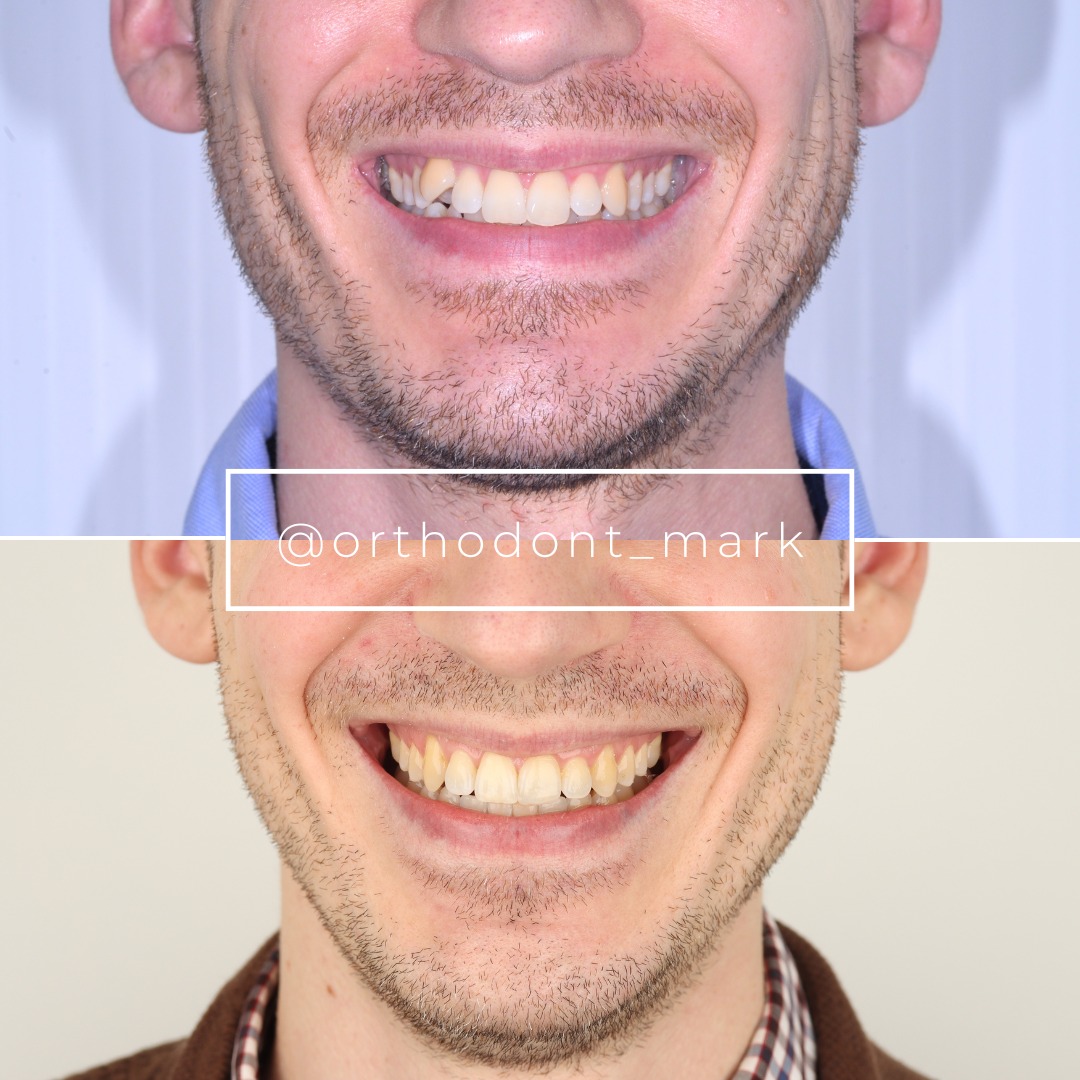
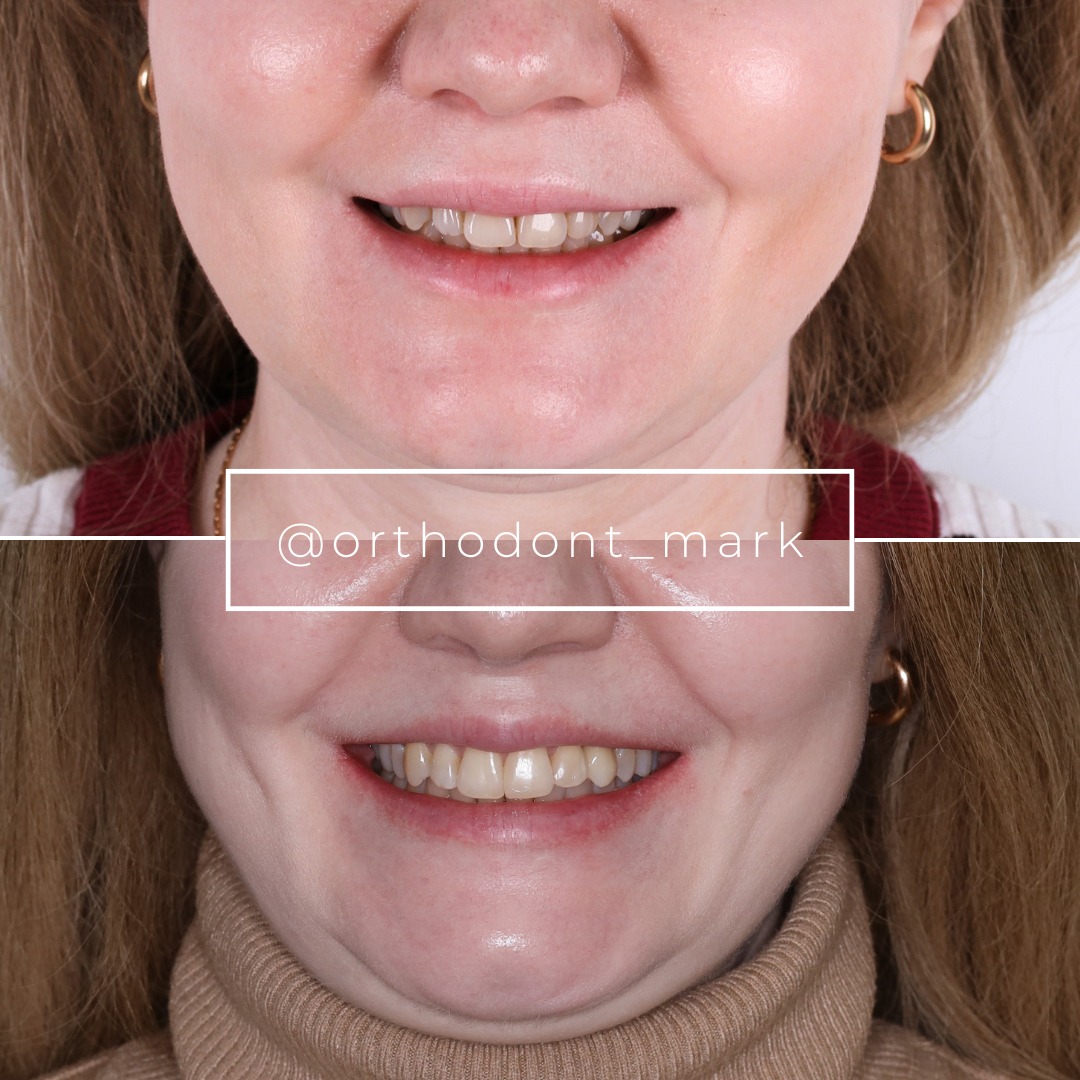
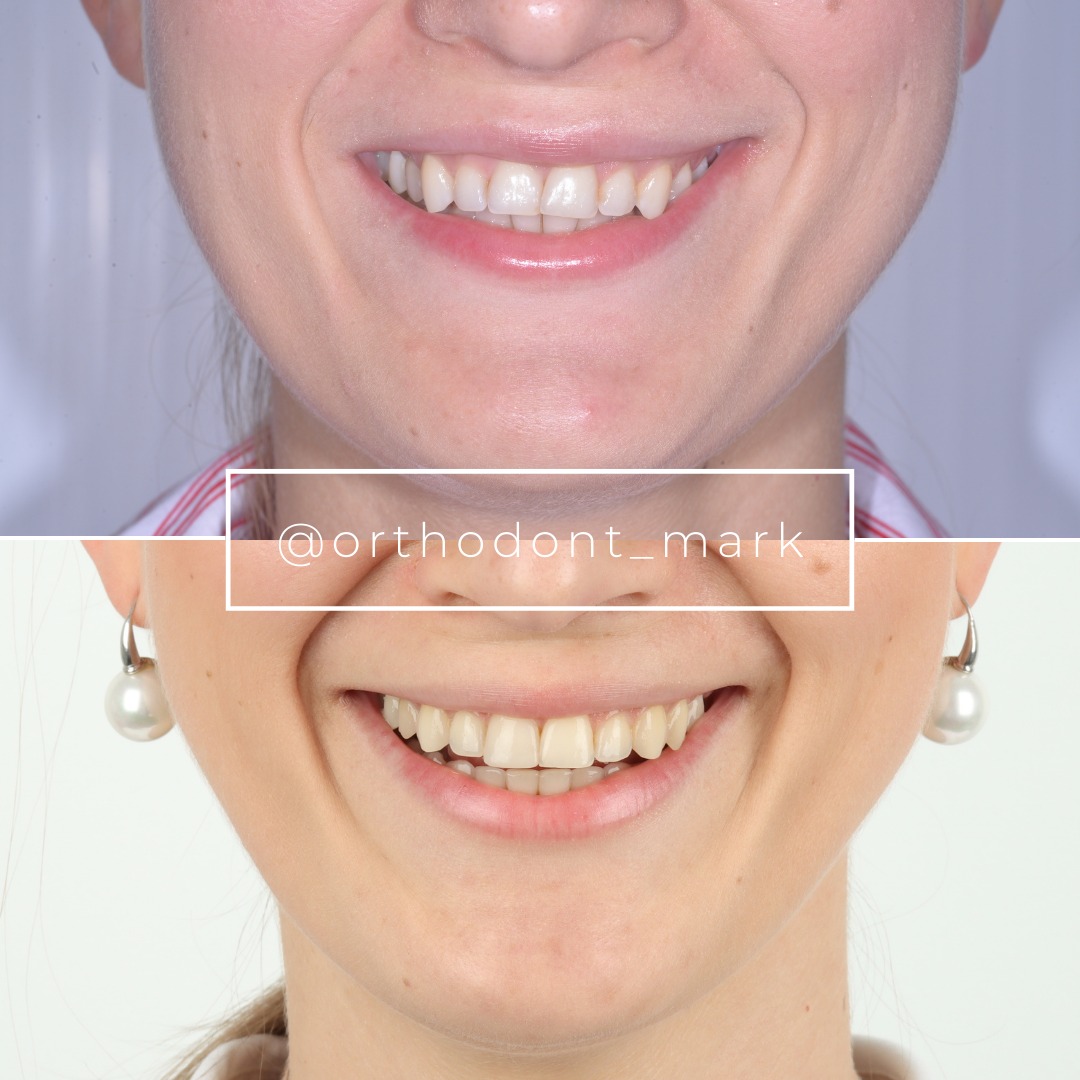
Learn the full MARPE protocol from Dr. Mark Radzhabov
Fundamental course covering CBCT patient selection, miniscrew planning, activation protocols, and 60+ clinical cases. Choose the access level that fits your practice.
Essentials of rapid palatal expansion for practicing orthodontists.
- Core RPE concepts and biomechanics
- 6 structured video lessons
- Clinical decision checklists
- Lifetime access to recordings
Deep-dive into MARPE protocol, diagnostics, and clinical execution.
- 6 modules covering MARPE from A to Z
- CBCT case selection walkthroughs
- Miniscrew placement and activation
- 60+ annotated clinical cases
- Direct Q&A with Dr. Mark Radzhabov
5-element medical consultation framework for dentists and orthodontists.
- Trust-building consultation protocol
- 5 lesson modules
- Templates for treatment plan delivery
- Works with any clinical specialty
Clinical FAQ
How do I diagnose asymmetric MARPE expansion using CBCT landmarks?
Measure osseous width at molar nasal width (M-NW), greater palatine foramen (GPF), premolar maxillary width (PM-MW), and molar maxillary width (M-MW) at three time points: T0 (pre-treatment), T1 (immediately post-expansion), and T2 (post-consolidation). Asymmetry >1 mm warrants intervention. Compare measurements bilaterally and assess suture splitting angle.
What is the prevalence of asymmetric MARPE expansion in clinical practice?
A retrospective analysis of 256 MARPE patients by Yoon et al. (2022) found 47.8% demonstrated >1 mm asymmetric expansion. A prospective RCT reported 95% midpalatal suture separation in MARPE but did not specify asymmetry rates. Asymmetry is a common occurrence requiring systematic diagnosis.
When should I apply Protocol 1 (mechanical rebalancing) versus Protocol 2 (staged activation)?
Use Protocol 1 for asymmetry <1 mm detected during active expansion with clear miniscrew axis deviation. Use Protocol 2 for moderate asymmetry (1–2 mm) when suture anatomy appears to be the limiting factor (wider or more ossified on one side). Protocol 1 requires miniscrew adjustment capability.
How long does staged asymmetric activation (Protocol 2) extend the total expansion timeline?
Staged asymmetric activation typically adds 1–2 weeks to the active expansion phase. Standard expansion takes 6–8 weeks; with Protocol 2, expect 8–10 weeks active expansion followed by 6 months consolidation. Consolidation timeline remains unchanged.
What is the definition of clinically acceptable residual asymmetry post-MARPE and consolidation?
Residual skeletal asymmetry ≤1.5 mm (measured at M-NW or M-MW) is generally considered acceptable if dentoalveolar compensation achieves symmetric dental flaring, midline coincidence, and Class I occlusion. Most patients accept this level of asymmetry without noticing it esthetically.
Can I apply dentoalveolar compensation during comprehensive orthodontics if MARPE asymmetry persists?
Yes. During the working phase (leveling and aligning), apply light asymmetric forces (slightly greater pressure on the lagging side) to encourage buccal dentoalveolar drift. During detailing, use individualized archwire bends to equalize buccal-lingual position. Most cases achieve acceptable esthetics.
What are the causes of asymmetric MARPE expansion?
Three factors drive asymmetry: (1) miniscrew positioning—non-parallel axes or unequal distances from midline; (2) midpalatal suture anatomy—variable ossification and width between sides; (3) activation protocol—unequal daily turns or patient non-compliance. Often multiple factors are present.
How do I prevent asymmetric MARPE during treatment planning?
Place miniscrews parallel using a positioning guide (De Franco paralleling guide or equivalent), with ±1 mm tolerance from midline. Confirm post-insertion with CBCT. Use a standardized activation protocol (4 turns day 1, then 3 turns daily × 10 days, then 1–2 turns every other day). Schedule weekly checks during active expansion.
What CBCT timing protocol best detects asymmetric MARPE expansion?
Obtain CBCT at T0 (pre-treatment), T1 (immediately after final activation), and T2 (post-consolidation, 6 months after appliance removal). T1 CBCT most clearly reveals early asymmetry. Mid-treatment CBCT at 2–3 weeks allows early intervention if asymmetry >1.5 mm.
Is asymmetric MARPE expansion considered a treatment failure or a normal complication?
Asymmetric expansion is a common complication (47.8% of cases; Yoon et al., 2022) that reflects normal anatomical variation and biomechanical sensitivity to miniscrew positioning and suture anatomy—not a treatment failure. Systematic diagnosis and evidence-based recovery protocols (Protocols 1–3) achieve excellent outcomes in most cases.
Asymmetric MARPE expansion is manageable when clinicians adopt a proactive diagnostic approach and select recovery protocols matched to the underlying cause. Dr. Mark Radzhabov advocates for early CBCT evaluation and staged activation adjustments to preserve skeletal gains and prevent relapse. If you encounter asymmetric expansion in your cases, consider a detailed case review or consultation to align your protocol with the latest evidence-based practices.