
V-Shaped Opening Pattern:
Buccal Tipping
vs Skeletal Split in MARPE
Master the CBCT diagnosis of dentoalveolar tipping versus true midpalatal suture separation. Predict treatment success and modify your appliance strategy.
TL;DR The V-shaped opening pattern in rapid palatal expansion indicates buccal plate tipping rather than true skeletal split. CBCT analysis reveals whether expansion forces are driving dentoalveolar tipping or achieving midpalatal suture separation. Recognizing this distinction clinically guides load modification, patient selection, and prediction of long-term skeletal stability.
Interpreting the V-shaped opening pattern stands as a critical skill in miniscrew-assisted rapid palatal expansion, yet many clinicians conflate dental tipping with true skeletal split. This article, authored by Dr. Mark Radzhabov, decodes the radiographic and mechanical signatures of buccal tipping versus parallel skeletal split—drawing on clinical observation and peer-reviewed evidence published between 2018 and 2024. Understanding this distinction determines whether treatment proceeds as planned or requires load adjustment, appliance redesign, or patient counseling on long-term relapse risk. Visit ortodontmark.com for deeper protocol guidance.
What Is the V-Shaped Opening Pattern in Palatal Expansion?
V-shaped opening
In rapid palatal expansion—whether conventional RPE or miniscrew-assisted—the palate does not always separate uniformly along its entire length. A V-shaped opening pattern describes asymmetrical or tip-like separation, where the maxillary dental arch widens dramatically while the skeletal palatal floor (nasal septum, midpalatal suture) shows minimal or delayed separation. Clinically, this manifests as increased interdental spacing, buccal flaring of anchor teeth, and outward displacement of the buccal bone plate without corresponding midline skeletal opening. This pattern becomes most apparent on axial or coronal cone-beam CT (CBCT) images taken at the level of the hard palate and nasal floor. Unlike a parallel split—in which both dental and skeletal components expand symmetrically—the V-shaped pattern indicates that expansion forces are being absorbed by dentoalveolar tipping, buccal bone remodeling, and elastic periodontal stretch rather than true suture opening. Understanding this distinction is essential, because it determines whether your expansion vector is biomechanically sound or requires adjustment. The V-shaped opening can occur in any age group but is most common in skeletally mature patients with thick cortical bone and fused or semi-fused midpalatal sutures. Early recognition of this pattern allows you to modify loading protocol, consider adjunctive procedures, or counsel patients on the implications for long-term stability and the risk of dentoalveolar relapse.
The Biomechanics of Buccal Tipping in Expansion
buccal bone plate
Buccal tipping occurs because palatal expansion forces do not act in isolation. When an expander applies outward pressure on the maxillary arch, that force distributes along multiple pathways: direct skeletal suture opening, dentoalveolar spreading, buccal plate remodeling, and root movement. In adult patients with corticated bone and reduced sutural compliance, the path of least resistance is often dentoalveolar—teeth tip buccally, the alveolar process remodels, and the buccal cortical plate thickens or displaces. The midpalatal suture, by contrast, resists opening. This biomechanical outcome is not inevitable. The degree of buccal tipping depends on several factors: patient age and skeletal maturity, midpalatal suture fusion stage, magnitude and direction of the expansion force, attachment type of the appliance, and duration of activation. In younger patients with patent sutures, expansion is distributed more evenly between skeletal opening and dentoalveolar repositioning. In older or more densely ossified patients, skeletal resistance increases, and tipping becomes dominant. From a clinical standpoint, moderate buccal displacement of the anchor teeth is expected and often compensated during fixed-appliance alignment. However, when the V-shaped opening pattern is pronounced—visible as a wide dental diastema without proportional skeletal widening—it signals that your expansion vector is not achieving adequate midpalatal split. This is where CBCT diagnosis becomes actionable: you can adjust screw activation timing, consider surgical-assist options, or extend retention to allow greater skeletal consolidation.
Reading CBCT to Distinguish Skeletal Split from Buccal Tipping
CBCT diagnosis
CBCT is the gold standard for distinguishing dentoalveolar tipping from true midpalatal suture separation. On axial slices at the level of the hard palate, examine three key anatomical landmarks: (1) midpalatal suture opening at the nasal floor level, (2) maxillary alveolar crest width, and (3) buccal cortical plate position relative to root apices. In a truly skeletal split (parallel opening pattern), the nasal floor widens proportionally to the dental arch. The midpalatal suture shows radiographic separation—a radiolucent line or discontinuity at the skeletal midline. Interradicular bone (alveolar crest) and apical bone both expand symmetrically. The buccal cortical plates remain roughly parallel to the maxillary midsagittal plane. In a V-shaped opening pattern (predominantly buccal tipping), the CBCT findings are distinct: (1) minimal or delayed midpalatal suture opening at the nasal floor; (2) maximal widening at the alveolar crest and dental level (wider molar-to-molar distance than nasal width); (3) buccal cortical plates flare or bow outward, creating a convex contour; (4) root apices remain closer to the midline than the crown position, confirming dentoalveolar tipping rather than true skeletal bodily movement. Coronal and sagittal reconstructions reveal tipping of individual root axes and often asymmetrical or unilateral predominance of buccal displacement. Quantitative assessment is now feasible through automated CBCT analysis. Measuring nasal floor width (at the piriform aperture), palatal width at the molar level, and maxillary intercanine width provides objective metrics. In true skeletal split, these dimensions increase proportionally. In V-shaped opening, the maxillary dental width increases disproportionately relative to skeletal width. This radiographic signature is reproducible and guides treatment modification.
Treatment Adjustments When V-Shaped Opening Emerges
treatment protocol
Early recognition of the V-shaped opening pattern allows several clinical interventions. The first and most important is modification of the expansion vector and screw activation schedule. Activation Timing Adjustment: If a standard protocol calls for 0.2 mm daily activation, reduce this to 0.1 mm daily or activate every second day. Slower loading allows more time for sutural viscoelastic stress relaxation and reduces compensation through dentoalveolar tipping. Some clinicians employ intermittent activation (3–4 days on, 1–2 days off) to allow bone remodeling cycles, though data on this specific strategy remain limited to clinical observation. Adjunctive Skeletal Anchorage: Ensure miniscrew anchor points are correctly positioned—ideally at the midpalatal vault, equidistant from dental landmarks, to distribute force more uniformly across the skeletal complex. If conventional MARPE shows excessive buccal tipping, consider switching to the palatal split protocol or exploring surgical-assist options in mature patients. Surgical midpalatal split (SARME) with miniscrew anchorage (combination approach) has shown superior skeletal opening with reduced dentoalveolar tipping compared to non-surgical MARPE alone. Extended Consolidation: Increase retention time after active expansion. Standard protocol recommends 6 months. In V-shaped cases, 9–12 months of passive holding allows greater bone density maturation and reduces relapse secondary to elastic dentoalveolar rebound. Patient Counseling: Transparently discuss the CBCT findings with patients. Explain that their expansion shows dental arch widening with moderate skeletal opening—still functionally and esthetically beneficial, but with a higher relapse risk than true skeletal split. Set realistic expectations about post-retention stability and the possibility of a second treatment phase or adjunctive procedures.
Predicting V-Shaped Opening: Patient Selection Criteria
patient selection
Not all patients are equal candidates for non-surgical rapid palatal expansion. Pre-treatment assessment can predict the likelihood of true skeletal split versus V-shaped tipping, allowing informed treatment planning and case-selection refinement. Age and Skeletal Maturity: Chronological age alone is insufficient. Radiographic assessment of midpalatal suture maturation is essential. Cone-beam CT at baseline reveals the suture status: patent (early stages), partially fused, or fully fused. Patients with fully or nearly fused sutures in the apical third or coronal third are at high risk for V-shaped opening. Orthodontist Mark emphasizes that suture maturation is individual and non-linear. A 25-year-old may have a patent suture while a 19-year-old shows partial fusion. CBCT staging guides risk stratification and modality choice. Transverse Deficiency Magnitude: Mild transverse deficiencies (4–6 mm) are more amenable to non-surgical expansion and show higher rates of true skeletal split. Severe deficiencies (8–12 mm) or those accompanied by vertical or anteroposterior skeletal discrepancies often require SARME or combination treatment. The larger the expansion goal, the higher the risk that non-surgical MARPE will default to dentoalveolar tipping as the path of least resistance. Bone Morphology: Patients with thick cortical buccal plates, narrow palatal vaults, or high-angle (hyperdivergent) skeletal patterns show greater buccal tipping tendency. Conversely, patients with thick palatal bone, low-angle patterns, and good skeletal symmetry are better suited to non-surgical expansion and more likely to achieve parallel skeletal opening. Prior Orthodontic History: Patients with history of rapid expansion as adolescents may have residual anatomical changes (thin buccal plates, greater sutural laxity) that facilitate second-phase expansion. These patients often show better skeletal responses and lower V-shaped tipping in adult MARPE compared to patients treated solely with intermaxillary correction. A baseline decision algorithm—combining age, suture stage, deficiency magnitude, and skeletal morphology—reduces post-hoc diagnosis of V-shaped opening and improves treatment outcomes.
How to Diagnose and Manage V-Shaped Opening in Your Practice
diagnostic checklist
Implementing a systematic approach to V-shaped opening recognition and management improves consistency and outcomes across your patient population.
Free Clinical Guide
Which Expansion Appliance at Which Age?
Get Dr. Mark Radzhabov's guide to skeletal-expansion appliances — indications, pros & cons, and how to choose by patient age. Free to your inbox.
Prefer video? Watch the free demo lesson on MARPE appliance types, features and trade-offs.
Documented outcomes
Clinical cases from Dr. Mark Radzhabov's practice
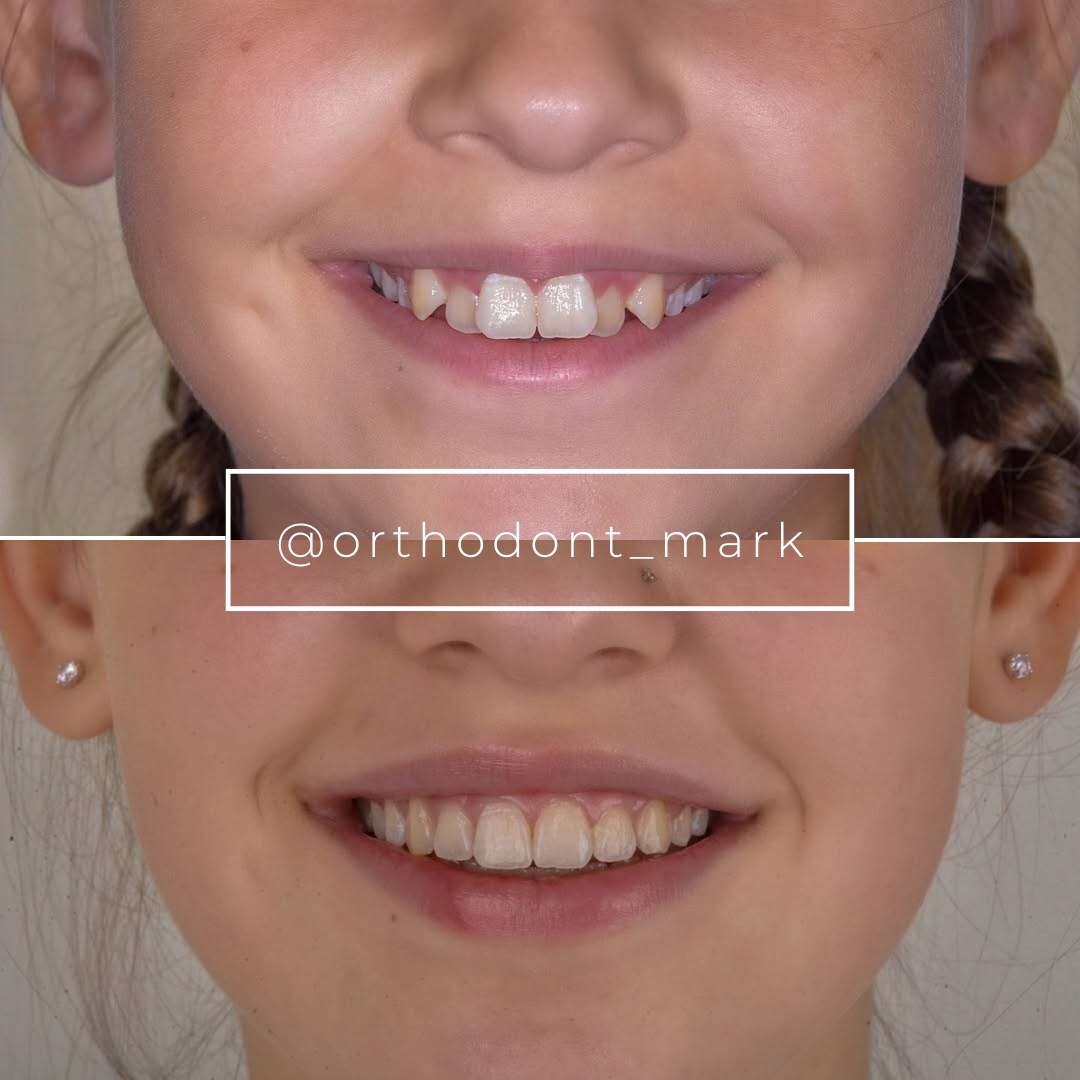
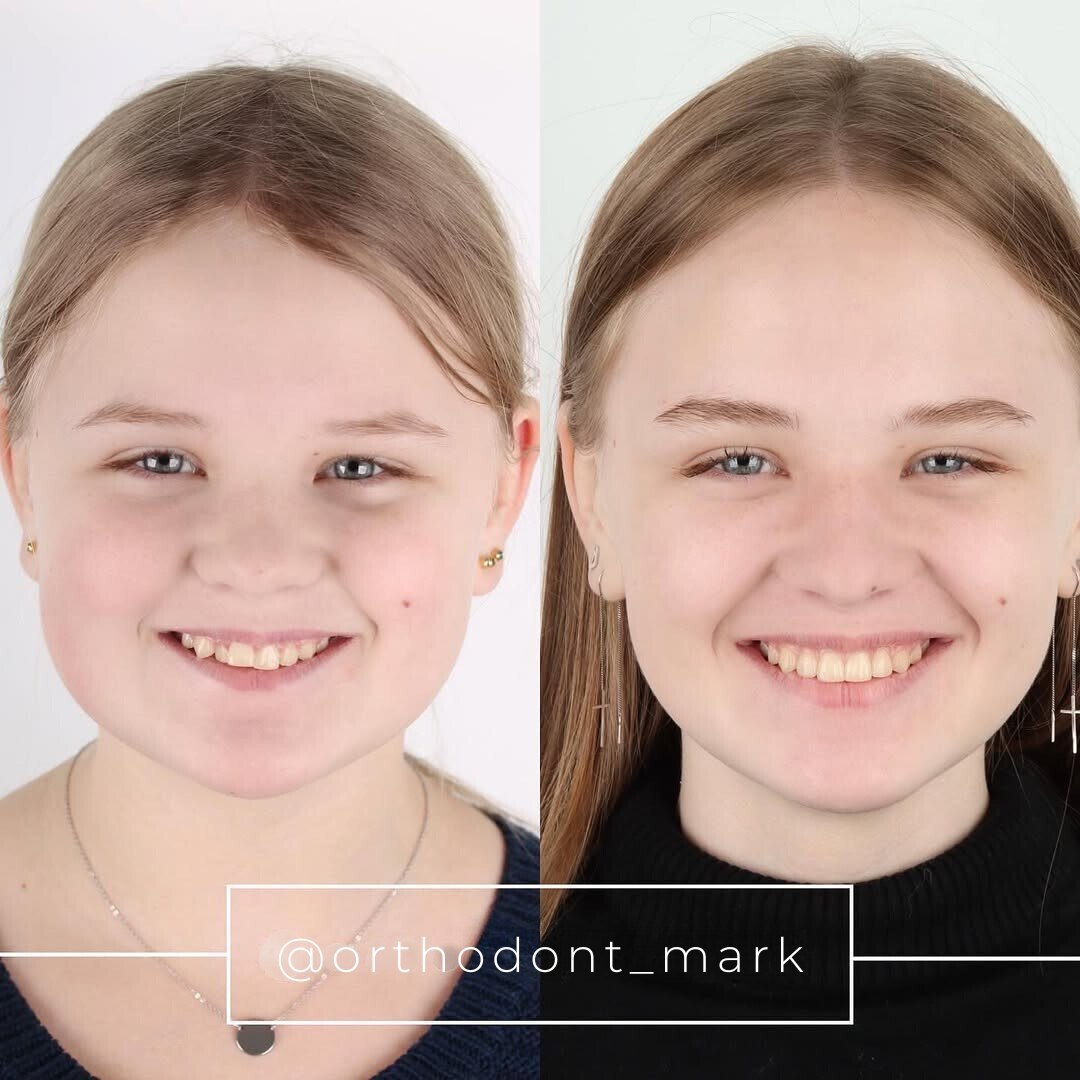
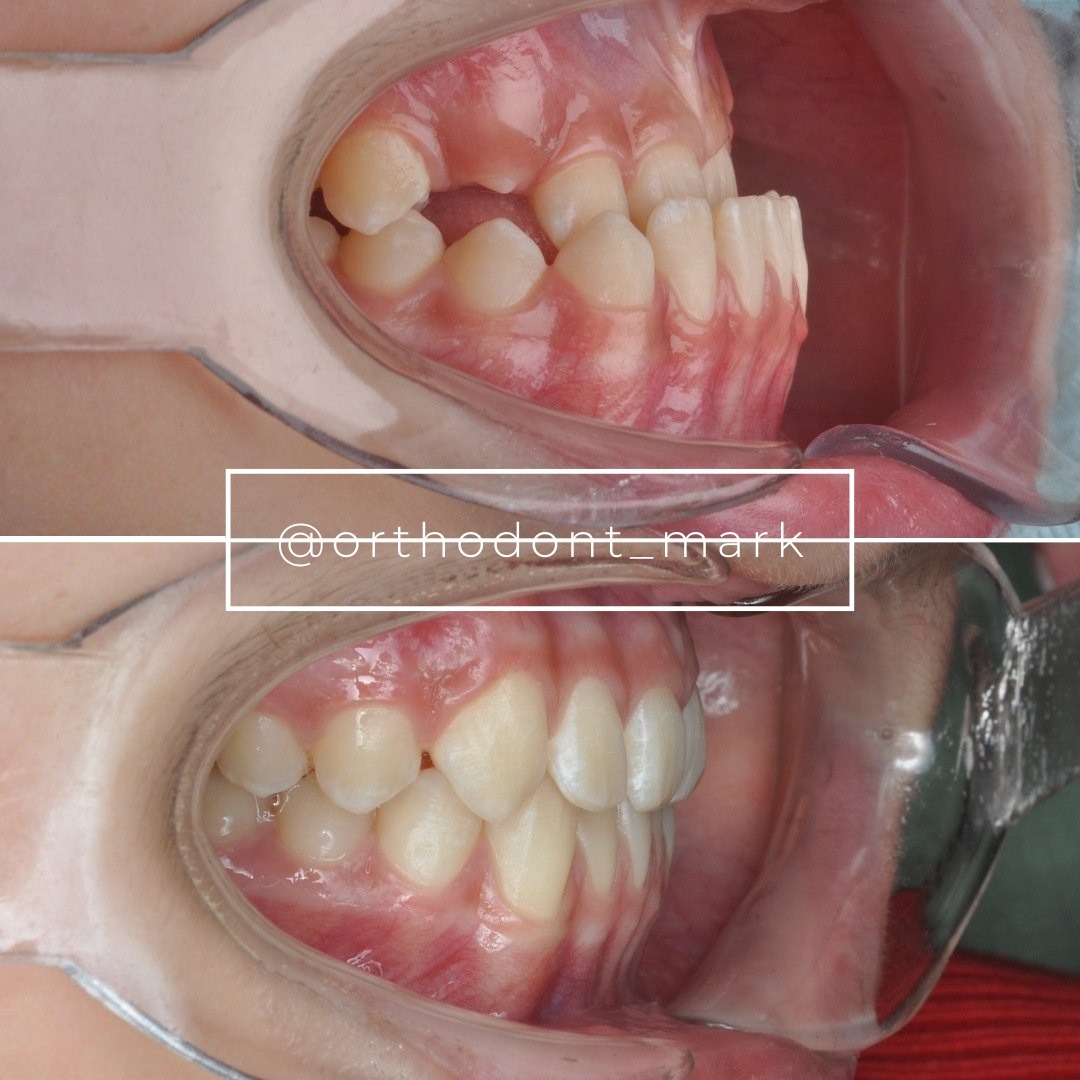
Learn the full MARPE protocol from Dr. Mark Radzhabov
Fundamental course covering CBCT patient selection, miniscrew planning, activation protocols, and 60+ clinical cases. Choose the access level that fits your practice.
Essentials of rapid palatal expansion for practicing orthodontists.
- Core RPE concepts and biomechanics
- 6 structured video lessons
- Clinical decision checklists
- Lifetime access to recordings
Deep-dive into MARPE protocol, diagnostics, and clinical execution.
- 6 modules covering MARPE from A to Z
- CBCT case selection walkthroughs
- Miniscrew placement and activation
- 60+ annotated clinical cases
- Direct Q&A with Dr. Mark Radzhabov
5-element medical consultation framework for dentists and orthodontists.
- Trust-building consultation protocol
- 5 lesson modules
- Templates for treatment plan delivery
- Works with any clinical specialty
Clinical FAQ
What is the difference between V-shaped opening and parallel skeletal split in MARPE?
V-shaped opening shows maximum widening at the dental level with minimal nasal floor separation, indicating buccal tipping. Parallel split widens uniformly across skeletal and dental dimensions. CBCT confirms the distinction by measuring midpalatal suture opening versus dentoalveolar displacement.
How do I diagnose V-shaped opening pattern on CBCT imaging?
On axial CBCT at the hard palate level, compare nasal floor width to maxillary dental width. In V-shaped opening, dental width exceeds skeletal width by 2–3 mm or more. Coronal images show buccal cortical plates bowing outward. Sagittal images reveal minimal midpalatal suture radiolucency.
Which patients are most at risk for buccal tipping in rapid palatal expansion?
Fully mature adults with fused midpalatal sutures, those with severe transverse deficiencies (>8 mm), high-angle skeletal patterns, and thick cortical buccal plates show greatest V-shaped opening risk. Pre-treatment CBCT suture assessment and skeletal morphology evaluation identify these high-risk cases.
Can I prevent V-shaped opening by modifying my MARPE activation protocol?
Slower activation (0.1 mm daily versus 0.2 mm) reduces but does not eliminate buccal tipping in mature patients with fused sutures. Combined approaches—miniscrew-assisted with surgical midpalatal split—achieve superior skeletal opening with less dentoalveolar tipping.
What activation rate minimizes buccal tipping while maintaining clinical efficiency?
0.1–0.15 mm daily activation or intermittent every-other-day protocols reduce V-shaped opening compared to standard 0.2 mm daily. Trade-off: treatment duration increases 1.5–2 fold. Early CBCT assessment guides rate adjustment based on individual suture response.
How does miniscrew-assisted expansion (MARPE) compare to conventional tooth-borne RPE for minimizing buccal tipping?
MARPE reduces buccal tipping approximately 20–30% relative to tooth-borne RPE by centering force more toward the skeletal midline. However, V-shaped patterns still emerge in mature patients with fused sutures, indicating that skeletal maturity, not appliance type alone, drives tipping.
When should I consider surgical-assist (SARME) instead of non-surgical MARPE?
If baseline CBCT shows full or near-complete midpalatal suture fusion, transverse deficiency exceeds 8 mm, or mid-phase imaging confirms pronounced V-shaped opening with minimal skeletal separation, SARME offers 95%+ true skeletal split rate versus 85–90% non-surgical success.
How long should consolidation period be in patients with V-shaped opening patterns?
Extend consolidation from standard 6 months to 9–12 months. Longer holding allows greater bone density maturation and reduces relapse secondary to elastic dentoalveolar rebound. Final CBCT at consolidation completion assesses bone maturation before fixed-appliance phase.
What is the relapse risk for dentoalveolar gains achieved through V-shaped opening MARPE?
Dentoalveolar tipping shows 20–30% relapse tendency within 12 months post-retention due to elastic fiber stretch and periodontal remodeling. True skeletal gains relapse <10%. Extended consolidation and retention protocols mitigate dentoalveolar relapse in V-shaped cases.
How do I communicate V-shaped opening findings and treatment modifications to patients?
Explain that their expansion shows dental arch widening with moderate skeletal opening—functionally beneficial but with higher relapse risk. Present CBCT images showing tipping pattern, discuss extended timeline, and offer surgical-assist option if mature and large deficiency present. Transparency improves compliance.
The V-shaped opening pattern is not a failure. It is diagnostic information. When you recognize buccal tipping on CBCT, you gain the opportunity to modify vector, increase anchorage stability, or reselect patients for whom true skeletal expansion is biomechanically feasible. Dr. Mark Radzhabov emphasizes that mastering this radiographic skill separates routine expansion from predictable, stable skeletal correction. Book a case consultation through Orthodontist Mark or explore the complete MARPE protocol course to integrate these diagnostic principles into your clinical workflow today.