
Cortical Bone Thickness Maps:
Choosing the Right MARPE Insertion Site
Evidence-based protocol for miniscrew placement
Master the CBCT analysis workflow that separates successful miniscrew-assisted rapid palatal expansion from anatomical complications. Dr. Mark Radzhabov's guide to three-dimensional bone mapping.
TL;DR Cortical bone thickness maps generated from CBCT imaging are essential for identifying safe, anatomically favorable miniscrew insertion sites in MARPE therapy. Adequate cortical engagement at the palatal vault and nasal floor—typically 2–3 mm of cortical bone—supports bicortical stability and reduces complications during rapid palatal expansion.
Miniscrew placement success in MARPE depends critically on understanding the three-dimensional anatomy of the hard palate. Cortical bone thickness assessment via CBCT is now standard practice in evidence-based skeletal expansion protocols. In this article, Dr. Mark Radzhabov reviews how to generate and interpret cortical bone thickness maps, anatomical landmarks for safe insertion, and the clinical workflow for identifying the right MARPE insertion site—essential knowledge for residents and practicing orthodontists seeking to optimize skeletal expansion outcomes.
Understanding Cortical Bone Architecture
in the Hard Palate
The hard palate presents a complex three-dimensional anatomy that must be fully appreciated before miniscrew insertion. The midpalatal suture divides the palate into left and right halves, and cortical bone thickness varies considerably across anteroposterior and mediolateral dimensions. At the palatal vault, cortical bone is generally thicker in the posterior region; the anterior palate, particularly near the anterior nasal spine, often exhibits thinner cortical layers and greater proximity to nasal mucosa and vascular structures. The nasal floor, which provides a secondary insertion site for bicortical engagement, has its own thickness profile that must be independently assessed.
Recent comparative studies highlight why anatomical precision matters. When bone-borne maxillary expanders achieve bicortical engagement of both the palatal vault and nasal floor—a hallmark of devices such as the MSE—skeletal contribution to expansion increases significantly compared to tooth-borne or hybrid approaches. Research using cone-beam computed tomography demonstrated that bone-borne devices produce greater nasal width expansion and more pure skeletal opening of the midpalatal suture. This superior skeletal response is directly linked to the stability and precise positioning of miniscrews within adequate cortical bone.
Clinically, inadequate cortical bone at an insertion site compromises primary stability of the miniscrew, leading to micromotion, inflammatory response, and potential fixture failure. Additionally, placement in thin or cancellous regions increases risk of damage to adjacent anatomical structures—the vascular bundle in the greater palatine canal, nasal mucosa, or even roots of nearby teeth. A cortical bone thickness map allows you to avoid these pitfalls before the surgical step.
How to Generate and Read
Cortical Bone Thickness Maps
Modern CBCT software provides tools to measure cortical bone thickness directly from axial, coronal, and sagittal slices, and many programs now offer color-coded thickness maps that display the distribution of cortical bone across the entire palate in a single overlay. The workflow begins with proper CBCT acquisition: a high-resolution scan with slice thickness ≤0.5 mm is necessary to resolve cortical boundaries accurately. Reorientation of the volume is essential—align the scan to a true coronal plane perpendicular to the midpalatal suture and a true axial plane parallel to the hard palate surface.
Once reoriented, axial slices should be reviewed from anterior to posterior in 1 mm increments. At each level, identify the inner (cancellous) and outer (cortical) bone boundaries. Most software allows manual or semi-automated tracing of the cortical outline, which then calculates thickness. Pay particular attention to the palatal vault proper (central region between the roots of the maxillary molars and premolars), the lateral aspects of the palate, and the nasal floor. Record measurements at multiple anteroposterior positions: anterior nasal spine region, canine region, premolar region, and molar region. This spatial mapping reveals zones of adequate cortical thickness (typically ≥2.0–2.5 mm) where bicortical engagement is feasible, and zones where only monocortical engagement or alternative sites are prudent.
Color-coded thickness maps are particularly useful for surgical planning. Zones appearing in green or blue typically indicate adequate cortical thickness; yellow or orange zones warrant caution; red zones signal inadequate bone and should be avoided. Save these maps and annotate proposed insertion sites directly onto the color overlay before miniscrew placement, ensuring the surgical team has clear visual reference during the procedure.
Identifying Safe Insertion Zones
Using Anatomical Landmarks
The midpalatal suture itself is the primary anterior boundary. Miniscrews should not be placed directly into the suture, as this region is radiolucent (cancellous) and offers poor cortical engagement. Instead, place miniscrews lateral to the suture, typically 4–6 mm on either side, depending on interarch width. The lateral wall of the nasal cavity serves as a medial boundary; stay sufficiently lateral to avoid perforation of the nasal floor. Posteriorly, the greater palatine foramen and canal represent a critical anatomical limit—this vascular and nerve bundle must be identified on axial and coronal slices and respected with a safety margin of at least 3–5 mm.
The palatal vault itself, in the region between the maxillary first and second molars, typically offers the most robust cortical bone thickness in most patients. Measurement at the molar region often reveals 3–4 mm of cortical thickness, providing excellent bicortical potential. The premolar region may be slightly thinner but still adequate in most cases. Anterior to the canines, cortical thickness frequently diminishes; anterior sites are less favorable and are avoided unless posterior anatomy is severely compromised.
Coronal slices are invaluable for assessing the nasal floor cortical thickness, which is a secondary insertion site for bicortical screws. A well-defined nasal floor cortical layer (typically 1.5–2.5 mm) confirms that bicortical engagement is anatomically feasible. If the nasal floor is thin or poorly corticated in your patient, plan for monocortical palatal vault engagement or consider alternative expansion approaches. Document these findings in the treatment record and discuss with your surgical team before the procedure begins.
Step-by-Step Protocol for MARPE
Site Selection and Planning
Step 1: Pre-operative CBCT Acquisition. Order a high-resolution CBCT with minimum slice thickness of 0.5 mm and FOV encompassing the entire maxilla and nasal region. Ensure patient positioning is stable and head upright; any tilt or rotation will compromise slice plane accuracy. Request native DICOM files, not just the reconstructed images, so you retain full control of reorientation in your planning software.
Step 2: Reorientation and Measurement. Import the DICOM dataset into your CBCT analysis software. Reorient the volume using the following landmarks: align the axial plane to be parallel to the hard palate surface (typically use the maxillary incisor edges or the first molar cusps as reference), and align the coronal plane perpendicular to the midpalatal suture. Once reoriented, systematically measure cortical thickness at the following sites: anterior nasal spine level, canine level, premolar level (first and second), and molar level (first and second). At each level, measure thickness at midline-adjacent (lateral to suture, 4–6 mm from midline) and at lateral aspects (10–12 mm from midline). Create or export the color-coded thickness map.
Step 3: Marking Insertion Sites. On the color thickness map and on coronal/axial slices, mark two provisional miniscrew insertion sites (left and right sides, typically in the molar or premolar region, depending on your device design). Verify that each site has ≥2.0 mm cortical thickness for reliable primary stability. If your protocol requires bicortical engagement, also confirm nasal floor thickness and the absence of anatomical obstacles. Consider patient age, skeletal maturity, and the specific MARPE device design (MSE vs. bone-borne vs. hybrid configuration) when finalizing site selection.
Step 4: Surgical Communication. Share the annotated CBCT slices, color-coded map, and a brief written summary with your surgical team. Include measurements, proposed sites, and any anatomical red flags (thin cortical zones, proximity to foramina, asymmetries). Clarify expected miniscrew trajectory, depth, and angulation. Dr. Mark Radzhabov's clinical practice emphasizes this pre-operative briefing as essential to synchronized surgical execution and complication prevention.
Step 5: Post-operative Verification. After miniscrew insertion, obtain a periapical or occlusal radiograph to confirm screw position, depth, and orientation. If bicortical engagement was planned, a second intraoral or limited-field CBCT may be warranted to verify nasal floor penetration. Document position relative to landmarks and compare to your pre-operative plan. Any significant deviation should be noted and reflected upon for future cases.
Avoiding Complications During
Miniscrew-Assisted Expansion
Inadequate Cortical Engagement: The most frequent error is placing a miniscrew in a region of insufficient cortical bone, resulting in primary instability and high failure rates. Always verify ≥2.0 mm cortical thickness at your chosen site before insertion. If your patient's anatomy does not support adequate cortical thickness at traditional sites (molar and premolar regions), do not force placement in thin bone. Instead, consider monocortical alternatives or discuss with the patient the option of conventional RPE or staged surgical-assisted expansion (SARPE) for adults.
Proximity to Vascular Structures: The greater palatine foramen and canal run posterolateral in the palate. Injury to the greater palatine artery and nerve results in hemorrhage, pain, and possible paresthesia. Measure the distance from your proposed insertion site to the foramen on both axial and coronal slices. Maintain at least a 3–5 mm safety margin. If your patient has an unusually medial or anterior foramen position, adjust your site selection accordingly.
Nasal Floor Perforation: If bicortical engagement is planned, penetration of the nasal floor cortex into the nasal cavity will cause inflammation, drainage, and potential implant failure. Always confirm adequate nasal floor thickness (≥1.5 mm) and use intraoperative depth gauges or imaging to control penetration depth. Some clinicians prefer monocortical palatal vault engagement when nasal floor thickness is borderline.
Asymmetrical Placement: Placing miniscrews at different distances from the midline on left and right sides creates biomechanical imbalance and eccentric expansion forces. Use your CBCT plan to ensure bilaterally symmetric positioning. Mark your surgical sites with the same anteroposterior and mediolateral coordinates on both sides.
Failure to Account for Patient Age and Skeletal Maturity: Younger patients with open sutures may have different cortical thickness profiles and higher tolerance for expansion. Adult patients with completely fused sutures may require deeper engagement or alternative approaches. Review skeletal maturity indicators (cervical vertebral stage, hand-wrist radiographs, or clinical history) and adjust your bone thickness targets and insertion strategy accordingly. Research indicates that MARPE effectiveness and skeletal response vary significantly with age group.
Cortical Bone Demands Vary by
Expander Configuration
Bone-borne maxillary expanders (BAME), which use four miniscrews anchored entirely to the palatal and nasal floor cortices without tooth contact, have the most stringent cortical bone requirements. These devices demand robust bicortical engagement at all four screw sites to distribute force evenly and resist torque. If your patient does not have adequate cortical thickness at four symmetrically positioned sites, a bone-borne approach may not be feasible; hybrid designs may be safer.
Hybrid devices, such as the MSE (Maxillary Skeletal Expander), combine miniscrew anchorage with dental band engagement, reducing the cortical bone load per screw. These appliances typically require only two miniscrews with adequate cortical support, and the dental component shares load distribution. Cortical thickness requirements are somewhat less demanding than pure bone-borne designs, but adequate bone mapping remains essential to ensure primary stability and predictable skeletal response.
Tooth-borne rapid palatal expanders (RPE) or SARPE (surgically-assisted RPE) do not require miniscrew placement and bypass cortical bone assessment entirely; however, these approaches produce greater dental tipping and dentoalveolar rather than purely skeletal effects. Clinical evidence indicates that miniscrew-assisted devices generate greater skeletal contributions to expansion, making the cortical bone assessment worthwhile for appropriate candidates.
Your choice of device should follow from your cortical bone analysis, not precede it. Begin with a thorough CBCT assessment and cortical thickness mapping. If four robust bicortical sites are available, a bone-borne design is ideal. If only two or three sites meet criteria, a hybrid design is prudent. If cortical anatomy is severely compromised, discuss alternative approaches with the patient, including conventional RPE, delayed SARPE, or skeletal expansion at a later developmental stage.
Free Clinical Guide
Which Expansion Appliance at Which Age?
Get Dr. Mark Radzhabov's guide to skeletal-expansion appliances — indications, pros & cons, and how to choose by patient age. Free to your inbox.
Prefer video? Watch the free demo lesson on MARPE appliance types, features and trade-offs.
Documented outcomes
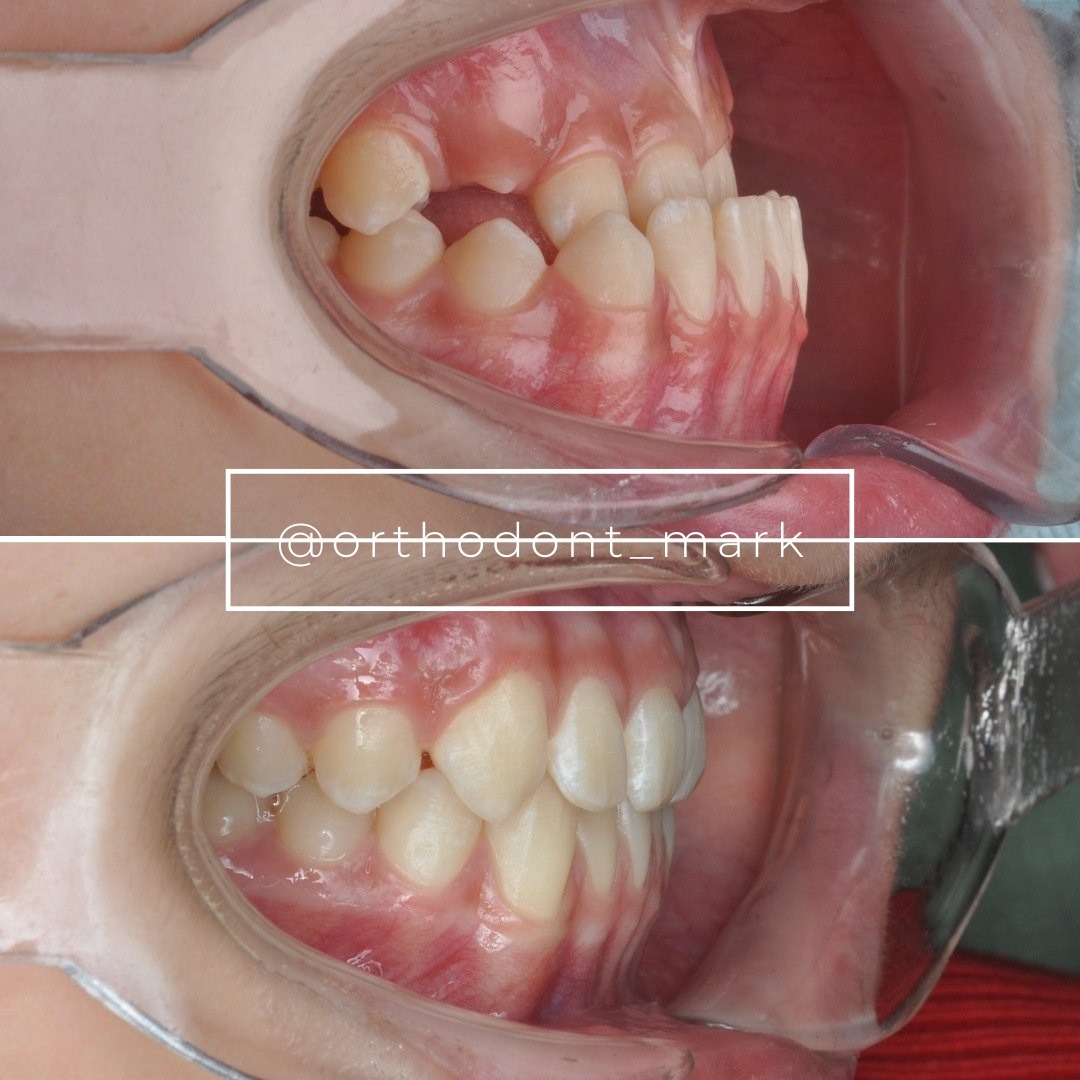
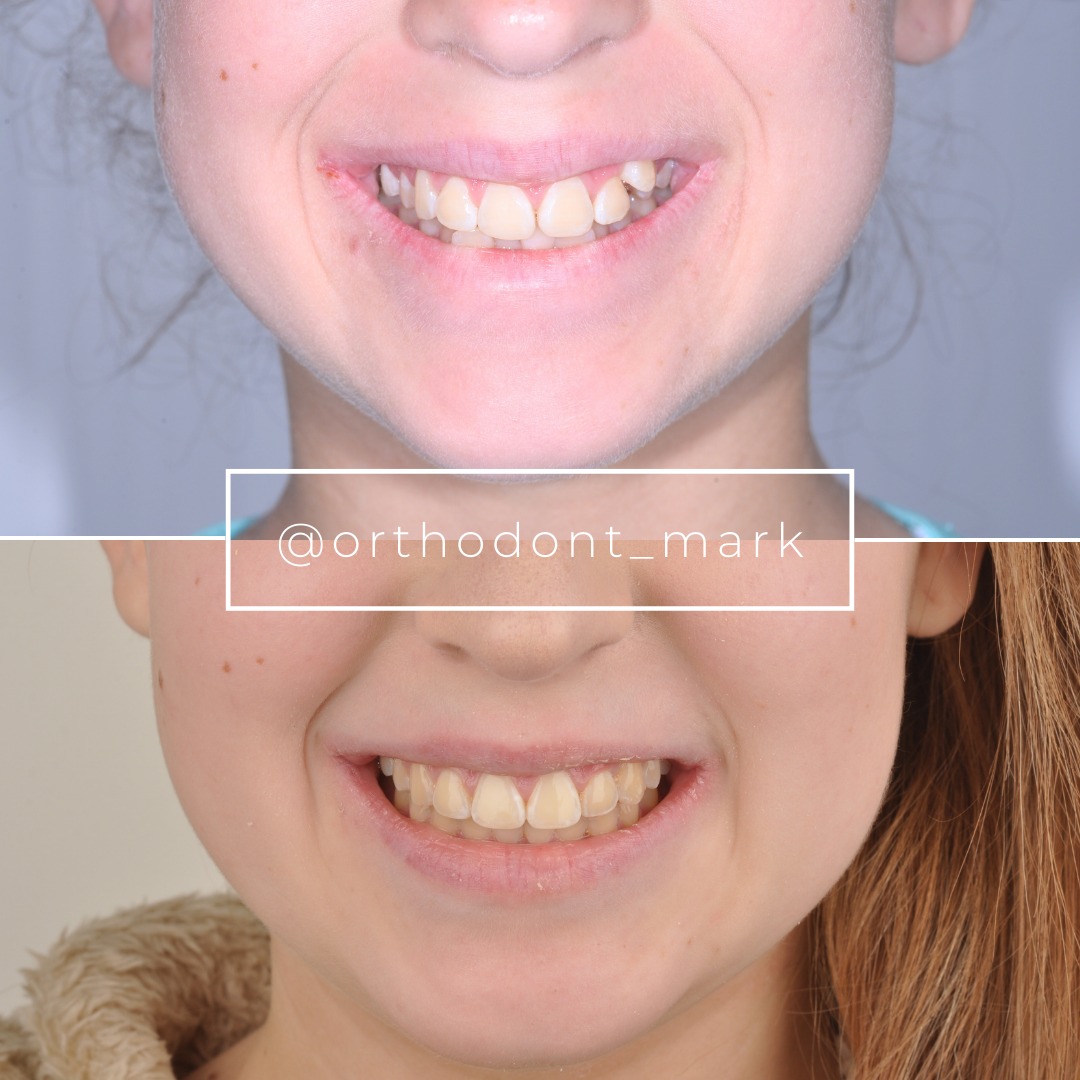
Clinical cases from Dr. Mark Radzhabov's practice

Learn the full MARPE protocol from Dr. Mark Radzhabov
Fundamental course covering CBCT patient selection, miniscrew planning, activation protocols, and 60+ clinical cases. Choose the access level that fits your practice.
Essentials of rapid palatal expansion for practicing orthodontists.
- Core RPE concepts and biomechanics
- 6 structured video lessons
- Clinical decision checklists
- Lifetime access to recordings
Deep-dive into MARPE protocol, diagnostics, and clinical execution.
- 6 modules covering MARPE from A to Z
- CBCT case selection walkthroughs
- Miniscrew placement and activation
- 60+ annotated clinical cases
- Direct Q&A with Dr. Mark Radzhabov
5-element medical consultation framework for dentists and orthodontists.
- Trust-building consultation protocol
- 5 lesson modules
- Templates for treatment plan delivery
- Works with any clinical specialty
Clinical FAQ
What is the minimum cortical bone thickness required for a miniscrew in MARPE?
Cortical thickness ≥2.0 mm is generally considered adequate for monocortical engagement; 2.5–3.0 mm is preferred for bicortical engagement of both palatal vault and nasal floor. Thinner cortical regions are associated with higher failure rates and primary instability.
How do I measure cortical bone thickness on CBCT for miniscrew insertion site selection?
Import DICOM files into CBCT analysis software, reorient the volume parallel to the hard palate and perpendicular to the midpalatal suture, then measure cortical layer thickness on axial slices at 1 mm intervals across multiple anteroposterior levels (canine to molar regions). Use color-coded thickness maps for visual planning.
What is the safe distance from a miniscrew to the greater palatine foramen during MARPE placement?
Maintain a minimum safety margin of 3–5 mm from any proposed miniscrew insertion site to the foramen opening. Verify foramen position on coronal slices and locate it relative to your planned sites to avoid vascular and nerve injury.
Can I use MARPE if cortical bone is thin in the molar region?
If molar and premolar regions lack adequate cortical thickness (>2.0 mm), consider alternative sites more anteriorly, alternative device designs (hybrid vs. bone-borne), or alternative expansion modalities (RPE, SARPE, or delayed treatment). Do not place miniscrews in inadequate bone.
Does nasal floor cortical thickness need to be assessed separately for bicortical MARPE?
Yes. Nasal floor cortical thickness must be measured independently on coronal slices. Adequate thickness (≥1.5–2.0 mm) confirms feasibility of bicortical engagement. If nasal floor is thin, plan for monocortical palatal vault engagement only.
How does CBCT cortical bone mapping differ between bone-borne and hybrid MARPE devices?
Bone-borne devices (BAME) require four miniscrew sites with robust cortical engagement; hybrid designs (MSE) typically require only two miniscrews. Hybrid devices tolerate slightly thinner cortical bone because dental bands share load distribution.
What is the anteroposterior position for optimal miniscrew insertion in the palate?
Optimal sites are typically in the molar (4–6 mm lateral to suture, at first molar level) or premolar regions. Avoid anterior nasal spine region and anterior palate where cortical thickness diminishes. Use CBCT to confirm adequate thickness at your specific anatomical level.
Should bilateral miniscrews be placed at identical distances from the midline and foramina?
Yes. Bilateral symmetry reduces biomechanical imbalance and eccentric expansion forces. Use pre-operative CBCT measurements to ensure left and right miniscrews are positioned at the same anteroposterior level and equidistant from the midline and greater palatine foramen.
What imaging finding contraindicates miniscrew placement at a proposed MARPE site?
Cortical thickness <1.5 mm, proximity <3 mm to the greater palatine foramen, proximity <2 mm to the nasal floor (for monocortical designs), or radiographic evidence of previous surgical trauma or bone defect at the site are all relative or absolute contraindicators.
How should I document and communicate cortical bone thickness findings to my surgical team before MARPE insertion?
Provide annotated CBCT images (axial and coronal at proposed sites), color-coded thickness map overlay, specific measurements (in mm) at bilateral sites, distance to foramina, and proposed screw trajectory, depth, and angulation. A brief pre-operative briefing ensures coordinated surgical execution.
Selecting the optimal MARPE insertion site requires integration of anatomical knowledge, CBCT visualization, and a systematic approach to cortical bone assessment. By investing time in detailed three-dimensional bone analysis before miniscrew placement, you reduce the risk of anatomical complications and maximize the skeletal component of maxillary expansion. Dr. Mark Radzhabov's clinical practice emphasizes this preparatory step as foundational to predictable, safe outcomes. Consider a case review or consultation to refine your MARPE planning workflow.