
MARPE Biomechanics:
Skeletal Expansion
The Science Behind Miniscrew-Assisted Palatal Expansion
Discover how miniscrew anchorage redirects palatal expansion forces to maximize skeletal response, minimize dental compensation, and achieve predictable transverse maxillary correction.
TL;DR MARPE biomechanics leverage miniscrew anchorage to direct palatal expansion forces directly into skeletal structures, bypassing dental compensation seen in conventional RPE. This results in greater nasal width increase and reduced buccal tooth movement during treatment.
Understanding MARPE biomechanics is essential for selecting expansion patients and predicting treatment outcomes in contemporary orthodontics. In this clinical guide, Dr. Mark Radzhabov explores how miniscrew-assisted rapid palatal expansion distributes forces through the palate, the skeletal changes that result, and the clinical protocols that maximize predictability. Supported by evidence from prospective trials and direct clinical observation, this article equips you to make informed decisions about skeletal expansion mechanics in your practice.
What Is MARPE Biomechanics?
Skeletal anchorage
MARPE biomechanics refers to the force vectors and bone remodeling response generated when miniscrew anchorage directs palatal expansion forces directly into skeletal structures rather than through tooth-borne anchorage. Unlike conventional rapid palatal expansion (RPE), which relies on the anchor teeth as the primary force vectors, miniscrew-assisted expansion shifts the mechanics toward the midpalatal suture itself. This fundamental difference in force application fundamentally alters how the palate opens, the distribution of stress across the suture complex, and the magnitude of dental compensation that occurs. The miniscrews are typically inserted into the hard palate in the anteroposterior midline or positioned to bracket the palatal vault, creating a rigid skeletal anchor point independent of periodontal support or tooth movement. When the expansion screw is activated, it generates forces that resolve directly through the bone rather than being transmitted through periodontal ligaments and alveolar bone. A prospective randomized clinical trial reported that MARPE achieved greater nasal width increases in the molar region and at the greater palatine foramen compared to conventional RPE, demonstrating the superior skeletal efficacy of miniscrew-directed expansion. The clinical implication is significant: by anchoring expansion forces in bone, clinicians can achieve true skeletal expansion with less dentoalveolar side effects, particularly in adult and late-adolescent patients where suture maturity might otherwise limit response to tooth-borne systems.
How MARPE Forces Distribute Through the Palate
Force vectors
The biomechanical advantage of MARPE lies in the direct transmission of expansion forces from the miniscrew into the palatal architecture. When a screw mechanism is turned, it generates an outward force at the point of miniscrew insertion. In traditional RPE, the anchor teeth absorb and distribute these forces, leading to predictable buccal tipping and orthodontically induced dental changes. In MARPE, the miniscrews transmit forces directly through cortical and cancellous bone, with the force vectors resolved through the midpalatal suture complex and lateral palatal structures. Clinical studies measuring force magnitude in maxillary expansion appliances document that activation of the expansion mechanism produces forces in the range of several hundred grams per quarter-turn, depending on screw geometry, inter-screw distance, and appliance design. These forces, when applied through skeletal anchorage, encounter significantly less resistance from periodontal structures and instead stress the suture interface directly. The result is a more favorable stress distribution across the entire palatal vault rather than concentration of stress at the anchor teeth. This mechanical principle explains why MARPE patients demonstrate substantially less buccal root displacement of anchor teeth during the same magnitude of palatal widening compared to RPE patients—the skeletal pathway is lower-resistance and biomechanically preferred. Orthodontists who understand this force distribution pattern can better predict treatment timelines and recognize when modifications to activation protocols or appliance geometry may be needed to maintain optimal force levels throughout treatment.
Midpalatal Suture Opening and Skeletal Remodeling
Suture separation
The primary skeletal response to MARPE is direct opening of the midpalatal suture, confirmed radiographically in the vast majority of cases regardless of patient age. The miniscrew anchorage permits forces sufficient to overcome suture resistance and initiate bone remodeling at the suture interface. A prospective randomized low-dose cone-beam computed tomography (CBCT) trial (Chun et al. (2022), BMC Oral Health) documented midpalatal suture separation in 95% of MARPE and 90% of conventional RPE cases, with nasal floor widening and lateral palatal bone remodeling occurring simultaneously with suture opening. The skeletal changes are not confined to the suture line; instead, the entire transverse maxillary structure widens, including the palatal shelves, the nasal floor, and the lateral maxillary cortices. This skeletal remodeling occurs through bone apposition on the outward-facing surfaces of the lateral palatal cortex and resorption along inward-facing surfaces, creating a true widening of the skeletal base. Unlike dentoalveolar compensation, which represents tooth movement within alveolar bone, skeletal expansion represents permanent change to the underlying skeletal form. The clinical significance is that skeletal expansion does not rely on tooth-supported anchorage and therefore does not induce the same degree of root resorption, alveolar bone loss, or periodontal compromise observed with purely dental expansion. When MARPE is followed by appropriate retention and consolidation—typically 6 months or longer in clinical protocols—the remodeled bone mineralizes and stabilizes, providing a lasting foundation for orthodontic alignment and functional correction.
MARPE vs. Conventional RPE: Dentoalveolar Outcomes
Dental compensation
The clinical value of understanding MARPE biomechanics becomes clear when comparing dentoalveolar side effects between miniscrew-assisted and tooth-borne expansion systems. Both systems can achieve the same absolute amount of palatal widening (measured in millimeters of posterior transverse expansion), but they achieve it through different biomechanical pathways with substantially different effects on the anchor teeth. In prospective randomized trials, MARPE groups consistently demonstrate significantly less buccal displacement of anchor tooth roots compared to RPE groups treated with identical activation protocols (e.g., 35 quarter-turns of expansion). Specifically, MARPE patients show reduced buccal displacement at the first premolar and first molar teeth bilaterally, measured both at the buccal bone crest and at the palatal root apex. This reduction in dental side effects is not incidental—it reflects the fundamental biomechanical difference: skeletal anchorage bypasses dental structures as the primary force pathway. The periodontal and alveolar bone consequences are thus minimized. Additionally, MARPE-treated patients show similar or reduced buccal alveolar bone thickness at anchor teeth compared to baseline, whereas RPE patients often display evidence of cortical bone resorption and alveolar remodeling around expanded teeth. For clinicians treating older adolescents and adults, this distinction is clinically important because periodontal health and bone support at anchor teeth are already at baseline risk; skeletal expansion protects these structures from additional compromise. Dr. Mark Radzhabov emphasizes that patient age and skeletal maturity should influence appliance selection, with MARPE offering superior periodontal protection in adult patients while conventional RPE remains a viable option in growing patients where dental side effects are better managed.
MARPE Treatment Protocol and Force Application
Activation strategy
Translating MARPE biomechanics into clinical practice requires a systematic approach to miniscrew placement, appliance fabrication, and activation timing. The standard clinical protocol involves diagnostic CBCT imaging to identify the optimal miniscrew insertion sites—typically positioned in the hard palate at or near the midline, bracketing the palatal vault anteroposteriorly. Miniscrews are placed either before laboratory processing (direct palatal insertion) or after the appliance framework is fabricated, depending on the specific appliance system (e.g., BENEfit system miniscrews, MSE, or other miniscrew-assisted designs). Once miniscrews are osseointegrated (typically 4–8 weeks), activation commences at a controlled rate. Clinical protocols typically recommend initial activation of 4 quarter-turns on the day of miniscrew placement or immediately after osseointegration, followed by 3 quarter-turns daily for 10 days, repeated cyclically over 8–12 weeks depending on treatment goals. This activation schedule is based on biomechanical principles: higher initial activation engages the suture interface, while sustained daily activation maintains force magnitude as the suture opens and resistance decreases. Throughout treatment, clinicians monitor clinical markers of suture opening—diastema formation between maxillary incisors, nasal floor widening on clinical examination—and radiographic confirmation via CBCT if concerns arise about suture opening adequacy. After achieving target palatal width, a consolidation period of 6 months or longer is recommended to allow bone remodeling and mineralization at the expanded suture. This retention phase is critical because skeletal expansion requires time for mature bone formation; premature miniscrew removal or appliance unloading can result in relapse. The entire treatment cycle—active expansion plus consolidation—typically spans 8–14 months depending on patient age and magnitude of expansion needed. Clinicians should anticipate inter-individual variation: some patients show rapid suture opening with minimal force, while others demonstrate greater suture resistance and may benefit from extended activation protocols or higher activation magnitudes.
Common Biomechanical Challenges and Clinical Solutions
Troubleshooting
Despite the biomechanical advantages of MARPE, clinicians encounter situations where treatment response differs from expected outcomes. Understanding the biomechanical underpinnings of these variations enables more effective problem-solving. One common challenge is insufficient suture opening despite appropriate activation—this typically reflects either inadequate force magnitude, excessive suture resistance (particularly in older patients with calcified sutures), or suboptimal miniscrew positioning. If suture opening is delayed or incomplete, clinicians can respond by increasing activation magnitude, extending the active expansion phase, or in refractory cases, considering adjunctive corticotomy or, in adult patients, pharmacological acceleration (though evidence for the latter remains limited). Another challenge is asymmetric palatal expansion, where one side widens more than the other; this usually indicates asymmetric miniscrew positioning or differential bone density and can be managed through strategic modulation of activation force or rebalancing the appliance geometry. Miniscrew stability is itself a biomechanical consideration: miniscrews must remain stationary in bone to serve as reliable anchors. Factors that compromise stability include shallow insertion depth, placement in lower-density bone (such as over the median palatine raphe), insufficient primary stability at insertion, or premature force application before osseointegration. Clinical best practice involves placing miniscrews in the densest bone available, typically 1–2 mm lateral to the midline, at a depth of 6–8 mm, and waiting 4–8 weeks before initiation of expansion forces to ensure osseointegration. Periosteal elevation should be minimal to avoid disrupting blood supply and bone contact. Some clinicians achieve more consistent outcomes by verifying miniscrew stability through resistance to manual mobilization before beginning MARPE activation. Additionally, understanding the force vectors created by different miniscrew spacings and appliance geometries helps clinicians predict whether expansion will occur primarily at the anterior or posterior palate, permitting strategic planning for patients with specific anatomical needs.
Free Clinical Guide
Which Expansion Appliance at Which Age?
Get Dr. Mark Radzhabov's guide to skeletal-expansion appliances — indications, pros & cons, and how to choose by patient age. Free to your inbox.
Prefer video? Watch the free demo lesson on MARPE appliance types, features and trade-offs.
Documented outcomes
Clinical cases from Dr. Mark Radzhabov's practice
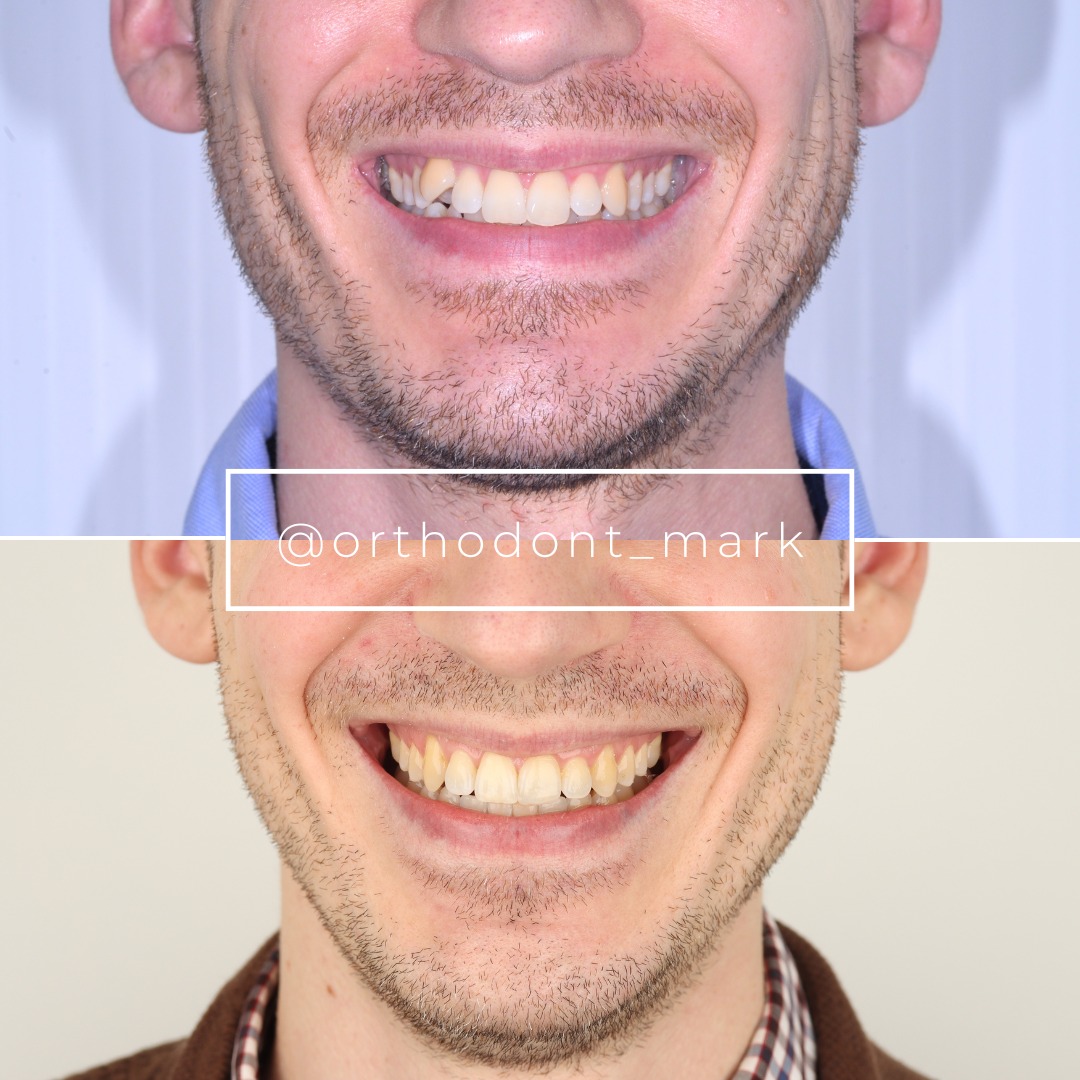
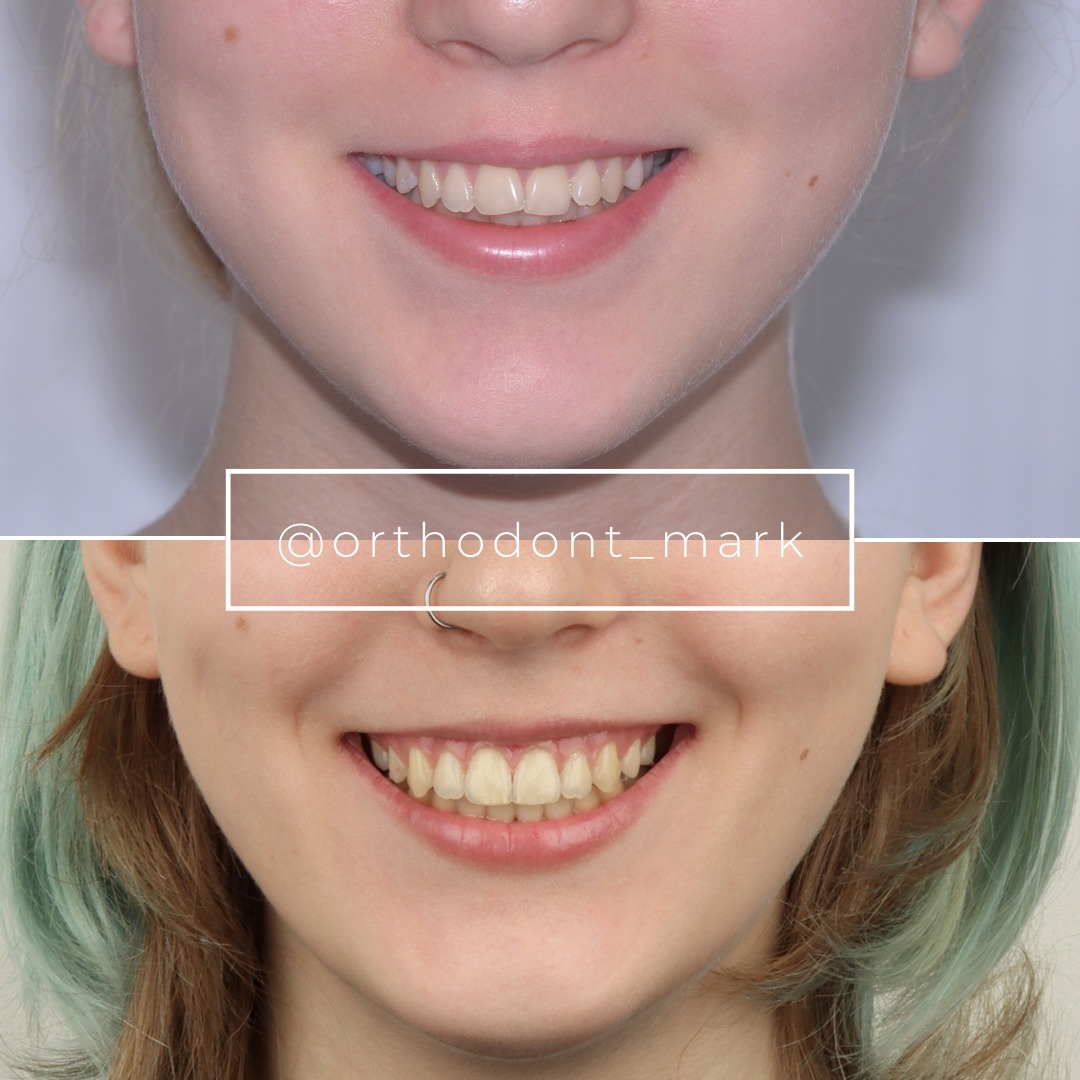
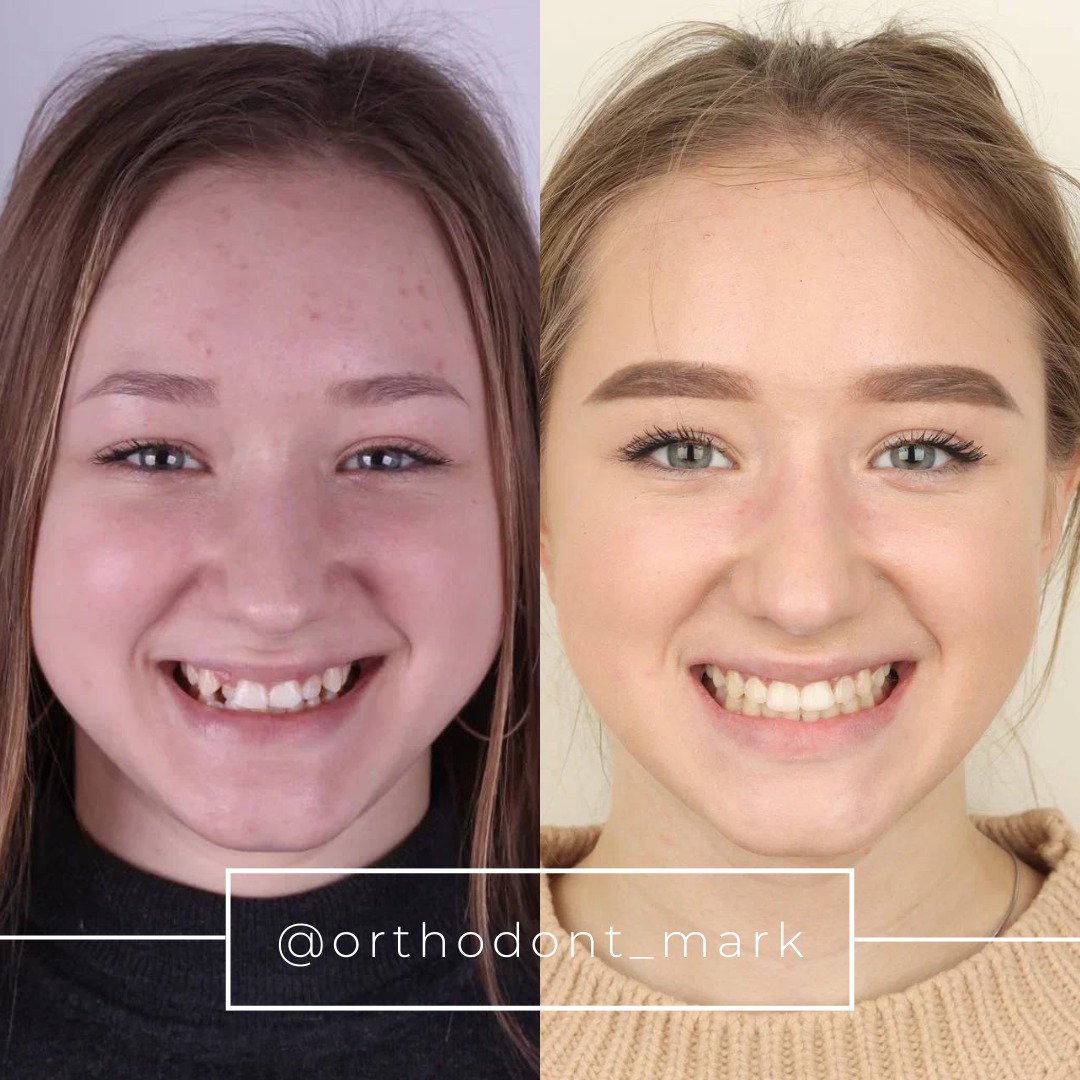
Learn the full MARPE protocol from Dr. Mark Radzhabov
Fundamental course covering CBCT patient selection, miniscrew planning, activation protocols, and 60+ clinical cases. Choose the access level that fits your practice.
Essentials of rapid palatal expansion for practicing orthodontists.
- Core RPE concepts and biomechanics
- 6 structured video lessons
- Clinical decision checklists
- Lifetime access to recordings
Deep-dive into MARPE protocol, diagnostics, and clinical execution.
- 6 modules covering MARPE from A to Z
- CBCT case selection walkthroughs
- Miniscrew placement and activation
- 60+ annotated clinical cases
- Direct Q&A with Dr. Mark Radzhabov
5-element medical consultation framework for dentists and orthodontists.
- Trust-building consultation protocol
- 5 lesson modules
- Templates for treatment plan delivery
- Works with any clinical specialty
Clinical FAQ
What is the fundamental biomechanical difference between MARPE and conventional RPE?
MARPE uses miniscrew anchorage to transmit expansion forces directly through bone into the midpalatal suture, bypassing dental structures. RPE transmits forces through anchor teeth, leading to greater dentoalveolar side effects and less direct skeletal response.
How do miniscrews assist palatal expansion at the biomechanical level?
Miniscrews create a rigid skeletal anchor point independent of periodontal support. When the expansion screw activates, forces resolve through bone rather than through periodontal ligaments, directing stress directly to the suture complex and permitting true skeletal widening.
What skeletal changes occur during MARPE treatment?
MARPE initiates midpalatal suture separation with concurrent bone apposition on lateral palatal cortices and resorption along inward surfaces. Nasal floor widens, greater palatine foramen widens, and the entire transverse maxillary structure expands—representing true skeletal remodeling rather than dental compensation.
Why does MARPE cause less buccal tooth displacement than conventional RPE?
MARPE anchors forces in bone, not in teeth. The low-resistance skeletal pathway permits expansion to occur preferentially through suture opening rather than dental tipping, resulting in significantly less buccal root displacement of anchor teeth during identical expansion magnitudes.
What activation protocol optimizes MARPE force distribution?
Standard protocol: 4 quarter-turns initial activation, then 3 quarter-turns daily for 10 days, cycled over 8–12 weeks total active expansion. Follow with 6+ months consolidation to allow bone mineralization and prevent relapse. Adjust based on clinical suture opening response.
How long should miniscrews osseointegrate before MARPE activation begins?
Wait 4–8 weeks after miniscrew insertion to permit osseointegration before commencing expansion forces. Premature loading compromises bone contact and reduces appliance stability and treatment efficacy. Verify stability clinically before activation.
What diagnostic imaging should guide MARPE miniscrew placement?
CBCT imaging is essential for identifying optimal miniscrew insertion sites—typically in dense bone at or near the midline, bracketing the palatal vault. CBCT also documents baseline anatomy and guides placement avoidance of neurovascular structures and tooth roots.
Does MARPE produce complete midpalatal suture opening in all patients?
A prospective randomized trial reported midpalatal suture separation in 95% of MARPE and 90% of conventional RPE cases (Chun et al. (2022), BMC Oral Health). Some cases exhibit incomplete opening, particularly in older patients with calcified sutures. If opening is inadequate after 3 weeks, increase activation magnitude or consider adjunctive corticotomy in refractory cases.
How does patient age influence MARPE biomechanical response?
Younger patients with patent sutures respond rapidly to MARPE with quick suture opening and high expansion efficiency. Older and adult patients may show greater suture resistance requiring higher forces or extended activation periods, but miniscrew-assisted mechanics still outperform tooth-borne systems.
What periodontal benefits justify selecting MARPE over RPE in adult patients?
MARPE minimizes buccal alveolar bone displacement and resorption at anchor teeth, protecting periodontal health. Adult patients already face periodontal risk; skeletal expansion avoids additional compromise to bone support and ligament stress compared to conventional tooth-borne expansion.
MARPE represents a biomechanical refinement over traditional tooth-borne expansion, offering superior skeletal control and reduced dentoalveolar side effects in the right patient. The key to clinical success lies in understanding how miniscrew anchorage redirects forces to favor true suture opening rather than compensatory dental tipping. For detailed case consultation, protocol guidance, or advanced MARPE training, visit Dr. Mark Radzhabov's practice resources at ortodontmark.com.