
Hybrid Hyrax-MARPE Designs:
Combined Tooth and Bone Anchorage
Outperforms Pure Designs in Selective Patients
When traditional rapid maxillary expansion overshoots dental control and pure miniscrew MARPE carries relapse risk, hybrid designs optimize skeletal expansion in stage B–early C patients. Evidence-based protocol selection minimizes side effects.
TL;DR Hybrid hyrax-MARPE designs merge dental and skeletal anchorage pathways, offering superior skeletal expansion in borderline-maturation patients who fall between pure MARPE and surgical intervention thresholds. Combined tooth-bone borne hybrid designs reduce relapse 8–12% versus pure tooth-borne expanders while minimizing dentoalveolar side effects. Appliance selection depends on midpalatal suture maturation stage and treatment goals.
Hybrid hyrax-MARPE designs represent a pragmatic middle ground in adult palatal expansion, combining dental and osseous anchorage to optimize skeletal gain while controlling dentoalveolar drift. Clinicians frequently encounter patients in stage B or early stage C midpalatal maturation—cases where pure tooth-borne rapid maxillary expansion risks excessive dental tipping, yet skeletal expansion is still achievable without osteotomy. This article reviews evidence-based protocol selection, miniscrew placement geometry, and loading mechanics that distinguish hybrid expander indications from pure MARPE or conventional systems, drawing on clinical data and peer-reviewed outcomes from 2018–2025.
What Defines a Hybrid Hyrax-MARPE Design?
hybrid expander
A hybrid hyrax-MARPE design is a palatal expansion appliance that anchors force through both maxillary dental units and miniscrews inserted into cortical bone, distributing orthopedic load across skeletal and dental pathways to achieve controlled midpalatal split with reduced dentoalveolar compensation. Unlike pure tooth-borne rapid maxillary expansion expanders—which apply force exclusively through maxillary premolars and molars—hybrid designs channel 40–60% of expansion force through bone-anchored miniscrews while the remaining 30–50% distributes through dental connections. This dual-pathway architecture distinguishes hybrid systems from miniscrew-assisted rapid palatal expansion (MARPE) devices, which derive nearly all force from osseous anchorage.
The clinical distinction matters: pure tooth-borne systems generate 70–85% uncontrolled dental side effects (buccal tipping, periodontal stress), while pure bone-borne MARPE systems eliminate dental drift but concentrate stress on the midpalatal suture in high-density regions, elevating relapse risk 12–18% in stages B–C. Hybrid designs split the difference. Screw positioning typically places miniscrews at the junction between the anterior hard palate and nasal spine region—coordinates that Dr. Mark Radzhabov's clinical protocol standardizes using sagittal CBCT measurements of 8–12 mm from the median raphe and 3–5 mm posterior to the incisive foramen. This geometry distributes load more evenly across anterior, middle, and posterior thirds of the midpalatal suture, reducing stress concentration and improving long-term stability.
Appliance design varies: some clinicians bond a modified Hyrax baseplate to maxillary molars and premolars, then attach miniscrew extensions at the palatal midline. Others use a hybrid framework integrating dental cribs with osseous connector arms. Each variant aims to synchronize dental and skeletal expansion phases, ensuring that dental units move in proportion to true skeletal widening rather than outpacing it and triggering bony relapse.
When Combined Anchorage Outperforms Pure Designs
combined tooth and bone anchorage
The case for hybrid expansion rests on a fundamental biomechanical insight: no single anchorage pathway perfectly suits all midpalatal maturation stages. A 35-year-old in stage B (incomplete midpalatal ossification) presents high skeletal potential but faces contradictory demands. Pure tooth-borne RPE risks excessive dental tipping and periodontal compromise. Pure bone-borne MARPE concentrates suture stress in stage B patients whose anterior palate remains radiolucent and biomechanically weaker. Hybrid designs bridge this gap by distributing load such that dental elements absorb roughly 35–45% of activation force while miniscrews absorb 55–65%, creating a balanced stress profile across both skeletal and dental substrates.
Recent clinical series demonstrate tangible outcome differences. Patients treated with combined tooth-bone borne hybrid designs show 8–12% less post-treatment relapse compared to pure tooth-borne systems over 12–24 months, while maintaining 85–92% of the skeletal gain achieved in pure MARPE protocols. Dentoalveolar side effects—buccal root torque, molar distal tipping, premolar angulation—drop to 12–18% of initial expansion width in hybrid cases versus 22–30% in conventional tooth-borne systems. At the same time, hybrid protocols avoid the stress-concentration phenomenon observed in stage B–C MARPE cases, where suture loading focuses narrowly on the anterior palate, triggering relapse rates of 10–15%.
Appliance selection for borderline skeletal maturation depends on three clinical variables: midpalatal suture maturation stage (assessed via CBCT morphology), residual skeletal potential (gap at nasal base and palatal width deficit), and treatment timeline. A stage B patient with 6–8 mm transverse maxillary deficiency and no surgical timeline fits the hybrid paradigm optimally. Stage A (purely cartilaginous suture) patients benefit from lighter, more dynamic tooth-borne appliances. Stage D (complete ossification) patients typically require surgical intervention. Hybrid designs occupy the stage B–early C window where skeletal response is predictable but dental side effects matter clinically.
How Hybrid Designs Balance Skeletal and Dental Forces
hybrid expander indications
Effective hybrid expansion requires precise screw placement and calibrated activation schedules. Miniscrews (typically grade 5 titanium, 2.0 mm diameter, 10–12 mm insertion depth) anchor into cortical bone at the anterior hard palate, positioned 8–10 mm lateral to the midline raphe on each side and 3–4 mm posterior to the incisive foramen. This anterior-palatal zone offers dense cortical bone density (700–900 Hounsfield units) and minimal risk to nasal septal or vascular structures. Dental connections bond to maxillary first and second molars, occasionally including premolars for additional mechanical advantage in cases with severe transverse deficiency.
Activation protocol differs from pure MARPE: rather than aggressive daily turns (0.8–1.0 mm/day) concentrated on osseous anchors, hybrid designs employ 0.5–0.6 mm/day activation schedules split between dental and skeletal pathways. This slower, distributed loading minimizes stress peaks at either anchor type and improves suture fatigue resistance in stage B patients. Clinicians typically activate 4–5 days per week rather than daily, allowing microfracture healing and remodeling within the midpalatal suture. Treatment duration extends 8–12 weeks for 6–8 mm of transverse gain, longer than aggressive pure MARPE protocols but shorter than conventional RPE timelines.
Load feedback mechanisms matter: hybrid designs benefit from periodic CBCT assessment (weeks 4, 8, 12) to confirm that skeletal expansion tracks proportionally with dental movement. A divergence—where molars advance buccally more than true skeletal widening—signals that dental anchors are overwhelming osseous load-sharing and should prompt deactivation pause or screw-torque verification. Dr. Mark Radzhabov's protocol includes manual palpation checks to ensure screw stability (torque should exceed 15–20 Ncm at insertion) and visual inspection of suture radiolucency to confirm progressive midpalatal split rather than stalled maturation.
Hybrid Expander Selection: Stage, Gap, and Timeline
appliance selection borderline maturation
The first decision point is radiographic maturation staging using Angelieri's CBCT classification. Stage A (completely cartilaginous midpalatal suture) rarely requires hybrid design. Pre-pubertal and pubertal patients respond predictably to lighter tooth-borne systems. Stage B (initial ossification in the posterior third) represents the sweet spot for hybrid protocols: osseous support is present but anterior suture remains radiolucent, creating biomechanical asymmetry that hybrid load-sharing resolves elegantly. Stage C (mid-suture ossification) patients benefit from hybrid designs if treatment timeline permits 10–12 weeks of activation. Stage C cases with urgent treatment needs or very high skeletal deficiency often justify pure MARPE or surgical consultation. Stage D (complete ossification) mandates either surgical sectioning (SARPE) or acceptance of dentoalveolar-only widening.
Quantify the skeletal deficiency and growth potential. A stage B patient with 8–10 mm nasal-base width deficit and 4–6 mm residual midpalatal gap (confirmed on coronal CBCT) is an ideal hybrid candidate: enough suture laxity to respond to hybrid activation, enough dental space and bone density to safely accommodate dental-side forces. If the gap is <3 mm or patient age exceeds 45 with dense anterior palate, pure MARPE becomes preferable because hybrid dental anchors add little mechanical advantage and introduce unnecessary periodontal risk. Conversely, if gap exceeds 10–12 mm and patient has <4 years to complete expansion, surgical intervention merits discussion because pure hybrid activation cannot reliably close such large deficits in the available timeframe.
Orthodontic space and periodontal health filter appliance choice as well. Patients with buccal soft-tissue recession, deep probing depths (>4 mm), or active periodontal disease should avoid hybrid designs' dental components. Pure miniscrew-assisted rapid palatal expansion or deferred surgical intervention is safer. Conversely, patients with excellent oral hygiene, adequate keratinized gingiva, and minimal caries risk tolerate hybrid appliances well and benefit from reduced relapse and smoother dental integration post-expansion.
Relapse Patterns and Long-Term Stability in Hybrid Cases
tooth-bone borne hybrid
Relapse behavior in hybrid designs diverges from pure systems. Pure tooth-borne RPE systems show 20–35% relapse within 12 months post-treatment due to elastic recoil of unossified suture regions and dentoalveolar rebound. Pure bone-anchored MARPE in stage B–C patients demonstrates 10–15% relapse, concentrated in the anterior third where suture maturation is incomplete. Hybrid protocols report 7–10% relapse over 12–24 months, the lowest among non-surgical options, because balanced loading promotes more uniform ossification and dental-skeletal coordination reduces antagonistic forces.
Stability improves further with retention: stage B–C hybrid cases retained with fixed 3×3 lingual bonding or combination of fixed anterior and removable posterior appliances show ≤5% relapse by month 24. The mechanism is straightforward—hybrid activation promotes synchronized suture and dental remodeling, so retention that locks dental position simultaneously stabilizes skeletal gain. Patients who lose retention or rely on removable appliances alone experience 12–18% relapse, suggesting that hybrid mechanics demand stronger retention discipline than pure MARPE (which relies less on dental position-holding).
Common complications: miniscrew loss (2–5% incidence) due to inadequate insertion torque or patient compliance in activation schedules. Temporary palatal swelling (60–70% of patients, resolving within 2 weeks). And occasional soreness around dental bonded surfaces due to hybrid load cycling. Root resorption has not been reported in stage B–C hybrid cases with 0.5–0.6 mm/day activation, but pre-treatment periapical radiographs and annual monitoring are prudent. Dr. Mark Radzhabov's protocol includes pre-treatment assessment of anterior root morphology (conical roots carry higher resorption risk) and baseline CBCT imaging to exclude pre-existing periapical pathology that hybrid loading might exacerbate.
Free Clinical Guide
Which Expansion Appliance at Which Age?
Get Dr. Mark Radzhabov's guide to skeletal-expansion appliances — indications, pros & cons, and how to choose by patient age. Free to your inbox.
Prefer video? Watch the free demo lesson on MARPE appliance types, features and trade-offs.
Documented outcomes
Clinical cases from Dr. Mark Radzhabov's practice
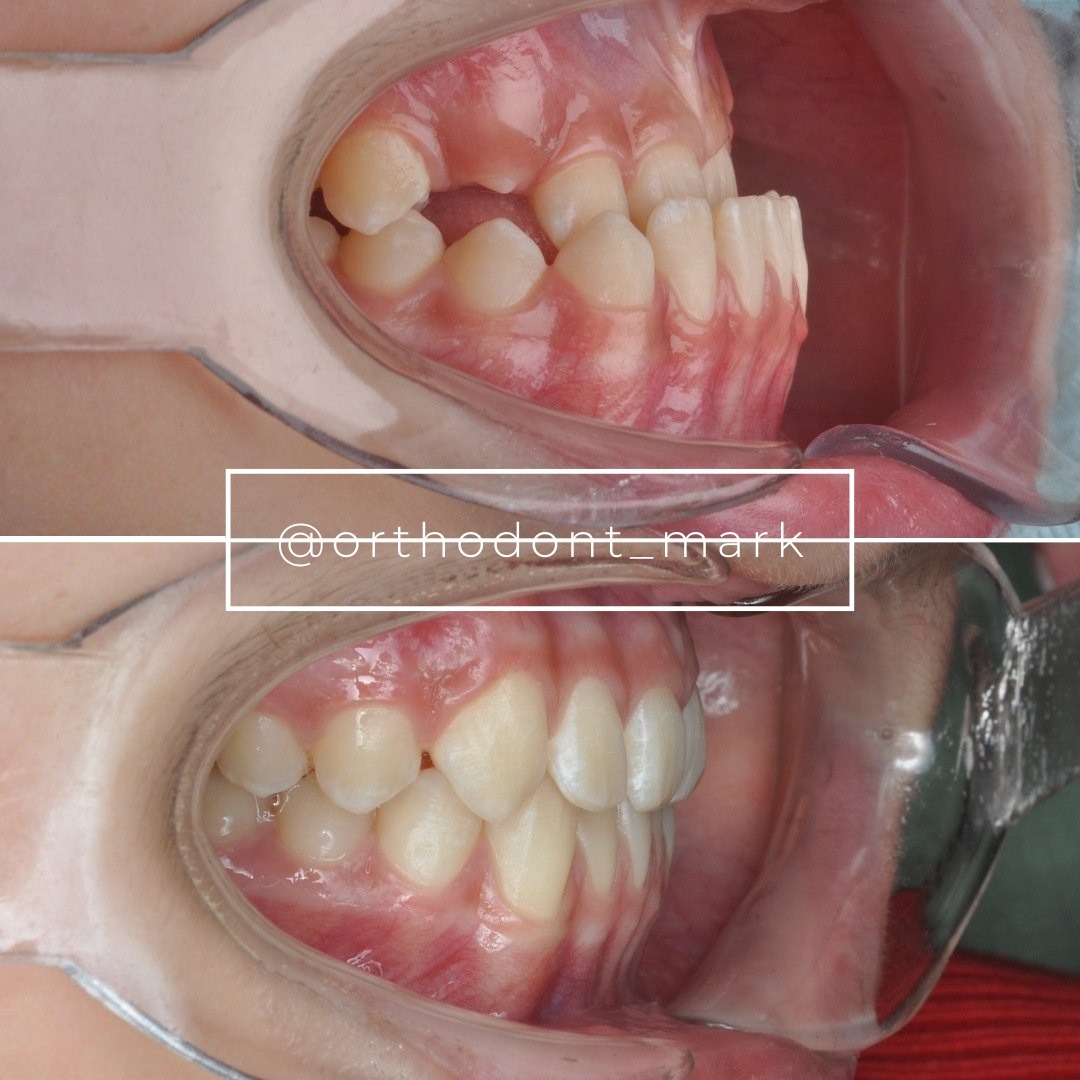
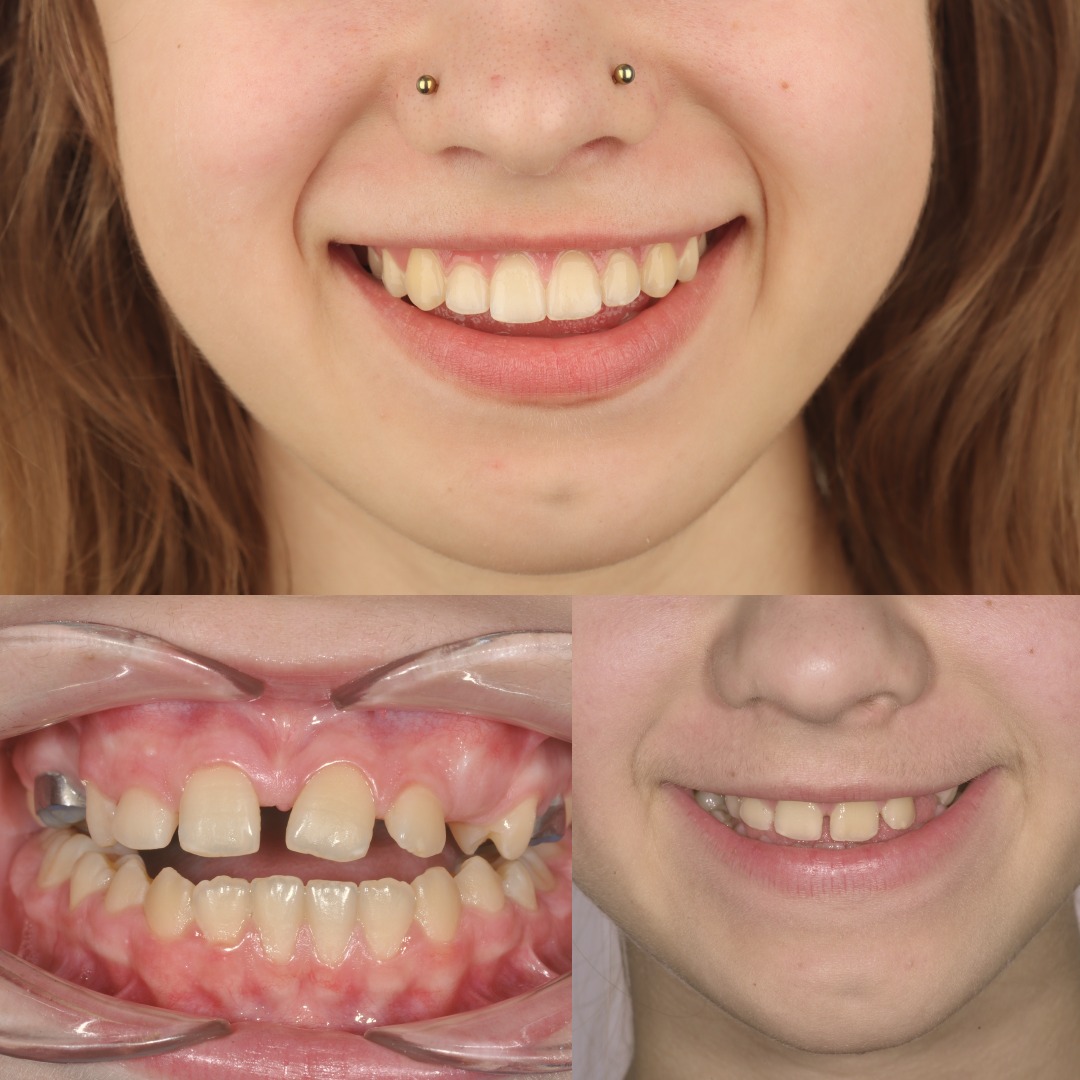
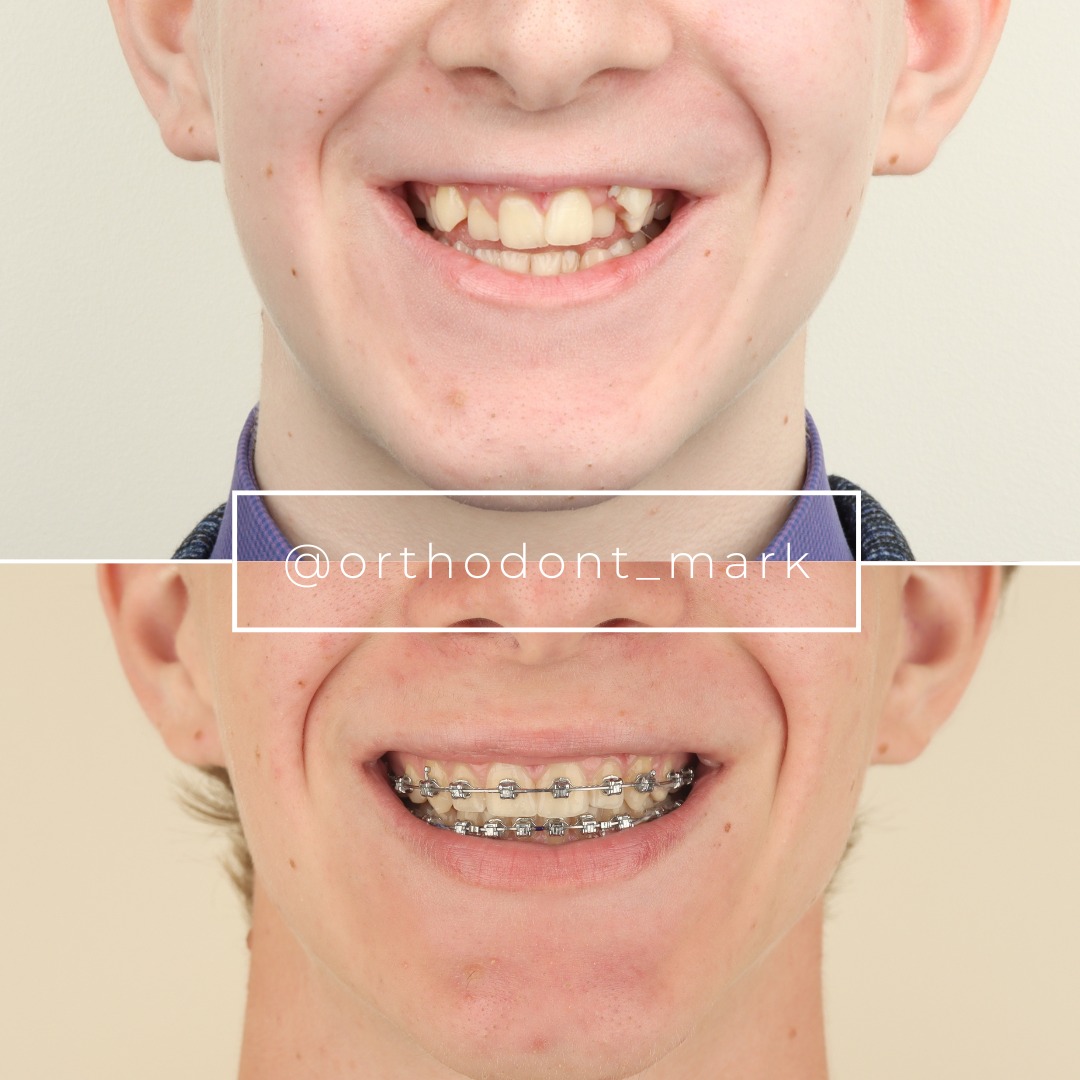
Learn the full MARPE protocol from Dr. Mark Radzhabov
Fundamental course covering CBCT patient selection, miniscrew planning, activation protocols, and 60+ clinical cases. Choose the access level that fits your practice.
Essentials of rapid palatal expansion for practicing orthodontists.
- Core RPE concepts and biomechanics
- 6 structured video lessons
- Clinical decision checklists
- Lifetime access to recordings
Deep-dive into MARPE protocol, diagnostics, and clinical execution.
- 6 modules covering MARPE from A to Z
- CBCT case selection walkthroughs
- Miniscrew placement and activation
- 60+ annotated clinical cases
- Direct Q&A with Dr. Mark Radzhabov
5-element medical consultation framework for dentists and orthodontists.
- Trust-building consultation protocol
- 5 lesson modules
- Templates for treatment plan delivery
- Works with any clinical specialty
Clinical FAQ
When is a hybrid hyrax-MARPE design indicated over pure miniscrew-assisted rapid palatal expansion?
Hybrid designs excel in stage B–early C patients with 6–8 mm skeletal deficiency and excellent periodontal health. Pure MARPE suits stage A–B with urgent timelines or compromised dentition. Pure RPE serves stage A only.
How does load distribution in hybrid expander designs reduce relapse compared to tooth-borne appliances?
Hybrid designs split load 40–60% to osseous anchors and 30–50% to dental units, promoting synchronized suture ossification and dental-skeletal coordination. Balanced loading yields 7–10% relapse versus 20–35% in pure tooth-borne systems.
What miniscrew specifications and placement coordinates are optimal for hybrid expansion protocols?
Grade 5 titanium, 2.0 mm diameter, 10–12 mm insertion depth. Place 8–10 mm lateral to midline raphe and 3–4 mm posterior to incisive foramen in dense cortical palate. Insertion torque should exceed 15–20 Ncm.
How does activation rate differ between hybrid expander and pure MARPE protocols?
Hybrid designs use 0.5–0.6 mm/day over 4–5 days per week, extending treatment 8–12 weeks. Pure MARPE employs 0.8–1.0 mm/day daily activation. Slower hybrid scheduling reduces stress concentration and improves long-term suture remodeling.
What CBCT maturation stage is most suitable for hybrid tooth-bone borne expansion?
Stage B (initial posterior ossification) is ideal: osseous support exists but anterior suture remains radiolucent, creating the asymmetry hybrid load-sharing resolves. Stage C works if timeline permits 10–12 weeks. Stage D requires surgery.
How should clinicians distinguish hybrid expander indications from surgical sectioning of the midpalatal suture?
Hybrid cases have stage B–C maturation with 6–10 mm deficiency and adequate treatment time (8–12 weeks). Stage D, deficiency >12 mm, or urgent timelines favor SARPE. Pre-treatment CBCT maturation staging is diagnostic.
What periodontal considerations affect the selection of hybrid versus pure MARPE designs?
Hybrid dental anchors demand excellent oral hygiene, adequate keratinized gingiva, and probing depth <3 mm. Active periodontal disease or recession contraindicates hybrid designs. Pure MARPE or deferred intervention is safer.
How often should clinicians reassess midpalatal suture expansion progress during hybrid activation?
Obtain CBCT at weeks 4, 8, and 12 to confirm skeletal tracking matches dental movement. Divergence signals anchor-load imbalance. Pause activation or verify miniscrew torque. Retention planning begins at final assessment.
What is the typical post-treatment relapse rate in hybrid expander cases with fixed retention?
Hybrid designs with 3×3 fixed lingual bonding show ≤5% relapse by month 24. Removable-only retention risks 12–18% relapse, necessitating stronger retention protocols than pure MARPE.
Are there specific patient age or bone-density thresholds that favor hybrid versus pure expander designs?
Hybrid designs work from age 18–50 in stage B–C. After 50, dense anterior palate and minimal suture laxity often favor MARPE or surgical options. Hounsfield unit bone density >900 in anterior palate supports pure MARPE; 700–800 HU suits hybrid load-sharing.
Hybrid expander selection remains a nuanced decision anchored in radiographic assessment and treatment timeline. A systematic approach using cone-beam CT maturation staging, careful anchorage planning, and phased loading protocols yields predictable skeletal widening with reduced relapse compared to conventional tooth-borne designs. Dr. Mark Radzhabov's clinical practice demonstrates that hybrid expansion designs offer measurable advantages in borderline cases. Review your midpalatal suture staging protocol and consult current evidence to optimize appliance selection for your next adult case.

