
MARPE anchorage hierarchy:
ranking every support structure
from cortical bone to alveolar anchors
Master the biomechanical ranking of palatal support structures to achieve true skeletal expansion, prevent dental tipping, and customize load distribution for each patient's anatomy.
TL;DR MARPE anchorage hierarchy ranks support structures by biomechanical efficiency: cortical bone in the T-Zone (anterior palate) provides optimal stability, followed by zygomatic buttress anchorage, pterygoid plate engagement, and supplemental alveolar bone. Success depends on bone quality, miniscrew placement precision, and age-related skeletal maturation. Understanding this ranking prevents dental side effects and improves skeletal response.
Anchorage control remains fundamental to successful orthodontic expansion, yet clinicians often overlook the biomechanical hierarchy that determines MARPE outcome. In this article, Dr. Mark Radzhabov examines the MARPE anchorage hierarchy—a systematic ranking of every anatomical support structure from cortical palatal bone to alveolar anchors—drawing on contemporary evidence and clinical case documentation. The goal is to help you select the optimal anchorage strategy for each patient, predict load distribution, and avoid unwanted dental tipping or gingival recession. This is clinical decision-making grounded in skeletal anatomy.
What is the MARPE anchorage hierarchy?
anatomical ranking
The MARPE anchorage hierarchy is a clinically derived ranking system that organizes all palatal and maxillary support structures according to their biomechanical contribution to expansion. Unlike traditional tooth-borne rapid palatal expansion, which distributes force through dental roots and leads to unwanted dentoalveolar side effects, bone-borne miniscrew systems allow you to load anchorage in a precise anatomical sequence. The hierarchy reflects decades of clinical observation and biomechanical testing: each structure offers distinct advantages and limitations depending on cortical density, depth, and proximity to the expansion vector.
This ranking matters because inadequate anchorage selection leads to loss of skeletal control. When you load weak alveolar bone or rely too heavily on immature cortical zones, you invite dentoalveolar tipping, buccal bone loss, and gingival recession—the very complications MARPE was designed to eliminate. Conversely, anchoring in high-density cortical zones minimizes micromotion, preserves skeletal integrity, and enables true transverse maxillary widening. The hierarchy also accounts for age-dependent maturation: younger patients benefit from different load vectors than skeletally mature adults.
Understanding this framework transforms how you evaluate CBCT scans, position miniscrews, and predict tissue response. Dr. Mark Radzhabov's clinical research emphasizes that miniscrew placement precision within optimal bone zones is the single greatest predictor of skeletal expansion success. This section establishes the anatomical and biomechanical principles underlying the full hierarchy.
Anterior palate cortical bone:
the T-Zone
optimal miniscrew placement region
The anterior palate cortical bone, bounded by the T-Zone (transverse midline intersecting with the anterior-posterior sagittal axis), represents the highest-rank anchorage structure for all MARPE systems. This zone exhibits maximal cortical thickness, minimal marrow space, and superior screw stability compared to any other location on the palate. Miniscrews inserted in this region experience the lowest insertion torque loss over time, highest resistance to micromotion, and most predictable osseointegration.
Clinical evidence supports T-Zone primacy: multiple CBCT studies confirm that cortical bone density in the anterior palate (depth 8–14 mm from the surface) provides superior purchase for miniscrew support compared to lateral palatal zones or posterior regions. The paramedian positioning—approximately 6–8 mm lateral to the midline—avoids major vessels and maximizes interradicular space while maintaining cortical engagement. Loading the anterior palate cortical bone first ensures that initial expansion forces encounter maximum resistance, distributing load evenly to secondary structures.
For clinical application, Dr. Mark Radzhabov recommends bilateral miniscrew placement in the T-Zone as the mandatory first step in all MARPE cases, regardless of age or appliance design. CAD/CAM surgical guides now permit precise three-dimensional positioning, allowing insertion in a single appointment. The anterior palate cortical zone absorbs approximately 60–70% of total expansion force in well-designed systems, leaving secondary structures to accommodate residual loads without dentoalveolar compromise.
Zygomatic buttress and pterygoid plate anchorage:
secondary skeletal support
load sharing and force distribution
When anterior palate cortical bone reaches optimal loading capacity, zygomatic buttress anchorage and pterygoid plate engagement emerge as the secondary tier. The zygomatic buttress—the thickened cortical zone lateral to the piriform aperture where the zygomatic process articulates with the maxilla—provides additional load-sharing capacity when miniscrews or extended appliance arms engage this region. Pterygoid plate anchorage, achieved through posterior palatal miniscrews or indirect force transmission via tissue remodeling, offers a third supplemental anchor point.
Hybrid expansion systems (Hybrid Hyrax, MSE) deliberately engage multiple anchorage tiers simultaneously to distribute forces across broader skeletal surface areas. Buccal extensions that contact the zygomatic buttress reduce load concentration on palatal miniscrews and slow the rate of midpalatal suture separation—a clinically important feature in adults where rapid suture opening may exceed skeletal adaptation capacity. This hierarchical loading appears to improve surgical outcomes in older patients and reduce dentoalveolar side effects.
In practice, recognizing zygomatic buttress anchorage means positioning appliance arms or lateral miniscrews to engage cortical zones at the zygomatic-maxillary junction. This requires careful CBCT analysis and three-dimensional treatment planning. Studies of hybrid systems show that adding zygomatic engagement increases skeletal widening while decreasing buccal bone loss and gingival recession compared to tooth-borne RPE controls.
Alveolar bone and transpalatal suture anchorage:
load-sharing in mature patients
conditional use based on skeletal maturity
Alveolar bone—the cancellous and cortical zones surrounding tooth roots—occupies the third tier of the MARPE anchorage hierarchy. Unlike the dense cortical palate, alveolar bone exhibits variable density and lower resistance to minuscrew insertion torque. In younger patients with open midpalatal sutures and high skeletal responsiveness, alveolar engagement is minimal because palatal anchorage alone achieves full sutural separation. In mature adults (age 40+), however, alveolar supplementation becomes increasingly important because cortical palatal bone alone may insufficient to overcome suture interdigitation and advanced maturation.
Transpalatal suture engagement—the structural involvement of the transverse palatal suture as a load-bearing pathway—represents a tertiary mechanism in fully mature patients. A 2023 CBCT study examining suture maturation in females found that the transpalatal suture closes sequentially between ages 13–17 years, with 78–85% closure by age 15. In these patients, relying on transpalatal suture separation becomes unreliable, necessitating greater emphasis on cortical palatal anchorage and earlier consideration of surgical intervention if skeletal expansion is essential.
Dr. Mark Radzhabov's clinical teaching emphasizes age-stratified anchorage selection: patients under 16 years rely primarily on Tier 1 (anterior palate cortical bone) with minimal Tier 3 involvement. Patients aged 16–25 require balanced Tier 1 and Tier 2 engagement. Patients over 30 benefit from maximal Tier 1 density, selective zygomatic supplementation, and realistic acceptance that suture separation success rates decline to 61% in males and 94% in females.
Applying the MARPE anchorage hierarchy:
step-by-step clinical integration
from diagnosis to activation
Applying the MARPE anchorage hierarchy begins with systematic CBCT analysis. First, measure cortical bone depth and density in the anterior palate T-Zone bilaterally. Depths under 7 mm contraindicate miniscrew insertion in that region and require alternative positioning. Second, identify zygomatic buttress cortical zones and assess whether hybrid geometry can engage this secondary tier without vascular compromise. Third, evaluate midpalatal suture maturation using established staging criteria (pre-sutural, early separation, mid-separation, advanced, fused). Fourth, determine patient age and chronological maturity—this single variable drives the entire load hierarchy.
In patients under 16 years: Load exclusively from Tier 1 (anterior palate cortical bone). Standard MARPE or MSE protocols with palatal miniscrews and minimal dental contact typically achieve full midpalatal separation. Alveolar engagement is unnecessary and may cause unwanted dentoalveolar effects. Activation rates of 0.5 mm per week typically yield visible diastema and radiographic suture separation within 4–6 weeks.
In patients aged 16–25 years: Begin with Tier 1 loading, then progressively engage Tier 2 (zygomatic-maxillary zones) if initial suture response plateaus. Hybrid expanders with buccal contact become valuable. Monitor suture separation radiographically every 2 weeks. If separation slows or stops, increase load distribution to secondary structures rather than increasing activation frequency. Success rates in this cohort remain high (>85%) when load hierarchy is observed.
In patients over 30 years: Maximize Tier 1 cortical density through precise miniscrew positioning, engage Tier 2 fully via hybrid geometry, and prepare patients for realistic expectations. A 2022 clinical study found that suture separation success dropped to 61% in males over 30 years, even with optimal miniscrew placement. In these cases, Dr. Mark Radzhabov recommends earlier consultation with maxillofacial surgery for possible SARPE if suture maturation imaging suggests advanced ossification. Some clinicians employ slow-expansion protocols (0.25 mm every 3 days) to maximize biologic adaptation in mature bone.
Avoiding anchorage selection errors:
clinical complications and prevention
what happens when hierarchy is ignored
The most common anchorage error is misplacing miniscrews outside the T-Zone into zones of lower cortical density or excessive marrow space. This leads to screw micromotion, loss of insertion torque over time, increased dentoalveolar loading, and premature treatment failure. Clinically, you may observe minimal diastema formation, incomplete suture separation on radiographs, and progressive buccal bone loss despite extended activation periods. Prevention requires mandatory CBCT-guided insertion with surgical guides. Freehand placement in zones of presumed density is unreliable.
A second common error is relying on dental anchorage (tooth contact, clasps, or indirect support) in patients who require pure skeletal expansion. Even with miniscrews present, if the appliance geometry permits substantial tooth contact or clasp retention, load migration occurs toward the lower-stiffness dental anchor points, negating the benefits of bone-borne design. This causes the very dental tipping and root resorption that MARPE aims to eliminate. MSE and Hybrid Hyrax systems deliberately minimize dental contact. Confirm your appliance design and ensure clear separation between the miniscrew-loading arm and any dental clasps.
Third, ignoring age-dependent maturation and applying identical protocols to 15-year-old and 45-year-old patients produces drastically different outcomes. Young patients may experience excessive rapid suture separation and midline instability. Mature patients experience treatment stagnation and suture non-separation. Dr. Mark Radzhabov emphasizes that realistic pretreatment imaging and counseling based on age-stratified success data prevent patient frustration and treatment abandonment. A brief conversation about lower success rates in males over 30 years sets proper expectations and allows collaborative decision-making about MARPE vs. SARPE.
Free Clinical Guide
Which Expansion Appliance at Which Age?
Get Dr. Mark Radzhabov's guide to skeletal-expansion appliances — indications, pros & cons, and how to choose by patient age. Free to your inbox.
Prefer video? Watch the free demo lesson on MARPE appliance types, features and trade-offs.
Documented outcomes
Clinical cases from Dr. Mark Radzhabov's practice
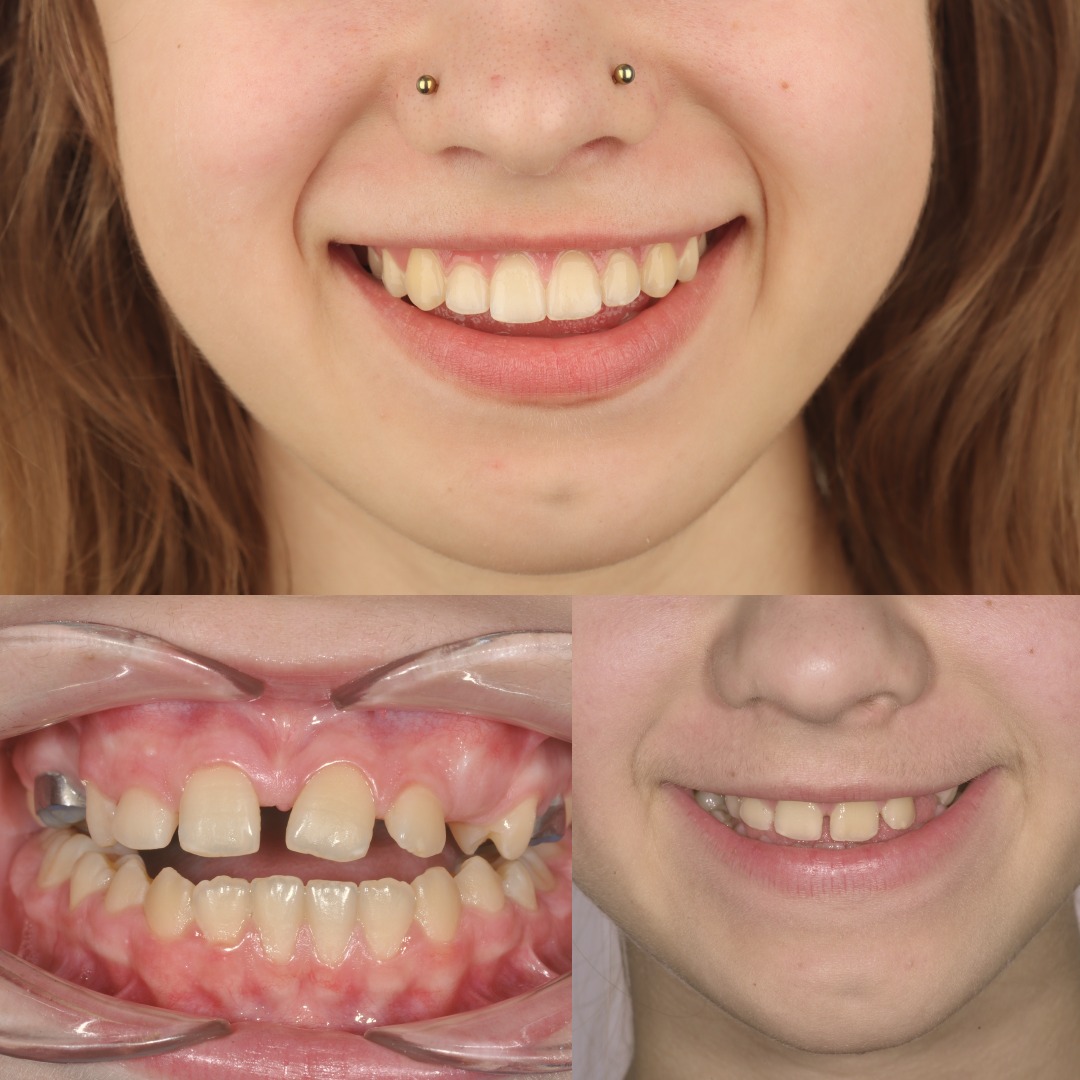
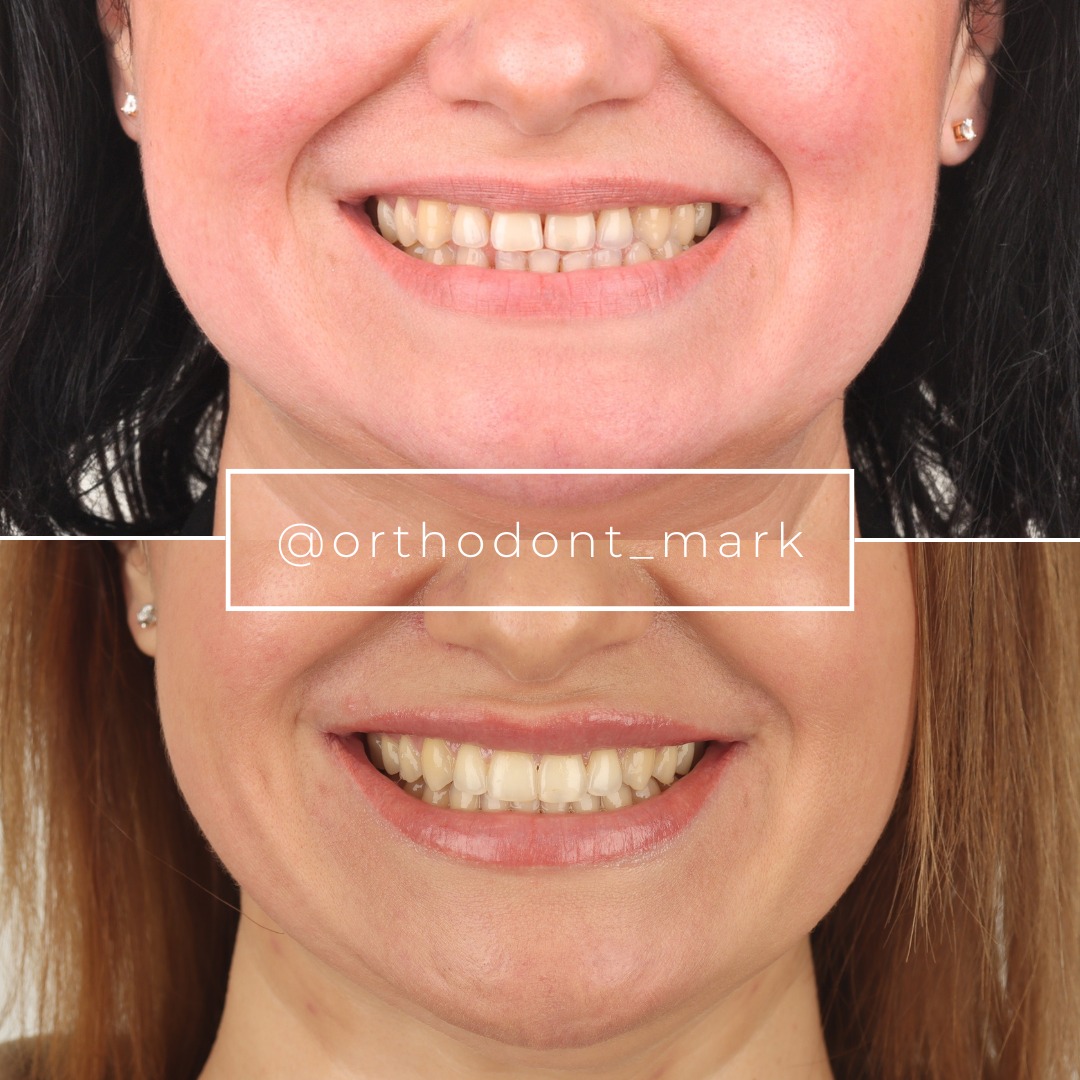
Learn the full MARPE protocol from Dr. Mark Radzhabov
Fundamental course covering CBCT patient selection, miniscrew planning, activation protocols, and 60+ clinical cases. Choose the access level that fits your practice.
Essentials of rapid palatal expansion for practicing orthodontists.
- Core RPE concepts and biomechanics
- 6 structured video lessons
- Clinical decision checklists
- Lifetime access to recordings
Deep-dive into MARPE protocol, diagnostics, and clinical execution.
- 6 modules covering MARPE from A to Z
- CBCT case selection walkthroughs
- Miniscrew placement and activation
- 60+ annotated clinical cases
- Direct Q&A with Dr. Mark Radzhabov
5-element medical consultation framework for dentists and orthodontists.
- Trust-building consultation protocol
- 5 lesson modules
- Templates for treatment plan delivery
- Works with any clinical specialty
Clinical FAQ
What is the T-Zone in MARPE miniscrew placement, and why does it matter?
The T-Zone is the anterior palate region at the intersection of the sagittal midline and a transverse line connecting the first molars, bounded approximately 6–8 mm lateral to the midline. It exhibits maximal cortical bone density and thickness, providing optimal miniscrew stability and load-bearing capacity for expansion forces. CBCT studies confirm this zone yields highest insertion torque retention and lowest micromotion over time.
How do I assess whether a patient's anterior palate cortical bone is adequate for MARPE without surgical guides?
Measure cortical bone depth from the palatal surface to cancellous bone on CBCT axial slices at the planned miniscrew sites. Depths of 8–14 mm indicate suitable cortical engagement. Assess bone density (Hounsfield units >600 indicate high cortical quality). If depth is <7 mm or density is poor, reposition the screw more posteriorly or consider alternative anchorage zones before insertion.
In what cases does zygomatic buttress anchorage become mandatory rather than supplemental?
Zygomatic buttress engagement becomes primary when patients are skeletally mature (age >30), male sex, or show advanced midpalatal suture ossification on CBCT. Hybrid expanders with buccal contact engaging the zygomatic-maxillary junction provide essential load sharing. In younger patients with open sutures, this tier remains optional.
What is the clinical significance of the 61% male vs. 94% female difference in MARPE suture separation success?
Sex-dependent suture maturation occurs in both males and females, with males showing more advanced interdigitation of the midpalatal suture at equivalent ages. Jeon et al. (2022), Clinical Oral Investigations studied 215 patients aged 6–60 years and found 61.05% skeletal separation success in males against 94.17% in females, suggesting biological sex influences suture ossification rate. Counsel male patients >30 years about realistic expectations.
How should I modify MARPE activation protocol based on patient age and the anchorage hierarchy?
In patients <16 years, use standard 0.5 mm/week activation; Tier 1 palatal engagement alone suffices. Ages 16–25, increase monitoring frequency; if suture separation slows, engage Tier 2 (hybrid geometry) rather than faster turns. Ages >30, use 0.25–0.35 mm/week slower expansion to maximize biologic adaptation and consider SARPE if CBCT shows advanced suture maturation.
What CBCT findings suggest that a patient should be counseled toward SARPE rather than MARPE?
Advanced midpalatal suture maturation (stages D or E, representing >80% ossification), male sex, age >35 years, and cortical palatal bone depth <8 mm are red flags. Govaerts et al. (2023), Journal of Orofacial Orthopedics found closed midpalatal sutures (stages D and E) in 61% of 15-year-old females. In mature adults, realistic imaging review before treatment initiation prevents disappointment and allows timely SARPE referral.
Is dental anchorage ever appropriate in MARPE systems, or should it be completely avoided?
Dental anchorage should be minimized in pure MARPE/MSE systems designed for skeletal expansion. Any tooth contact or clasp support reduces load to cortical bone anchorage and increases dentoalveolar side effects (tipping, root resorption, gingival recession). Modern MSE and Hybrid Hyrax designs deliberately exclude dental contact. Confirm your appliance geometry permits clean separation between miniscrew arms and teeth.
How does miniscrew insertion torque relate to long-term stability in the MARPE anchorage hierarchy?
Initial insertion torque >15 Ncm in dense cortical bone (Tier 1, T-Zone) predicts superior long-term stability and minimal micromotion during expansion. Lower insertion torque indicates suboptimal cortical engagement and increased risk of screw loosening, dentoalveolar load migration, and treatment failure. If insertion torque is <12 Ncm, reposition the screw or reconsider appliance selection.
What is the clinical significance of load migration away from Tier 1 cortical anchorage?
When miniscrews in optimal cortical bone are inadequately loaded (due to appliance geometry, patient non-compliance with activation, or competing dental contact), expansion forces migrate toward lower-stiffness alveolar bone and teeth, causing the dentoalveolar side effects (tipping, root loss, recession) that bone-borne expansion was designed to prevent. Monitor radiographs every 2–3 weeks to ensure symmetrical midline diastema and suture separation indicating balanced Tier 1 loading.
How does Dr. Mark Radzhabov's anchorage hierarchy framework differ from traditional RPE treatment planning?
Traditional tooth-borne RPE distributes forces through dental roots without cortical bone prioritization, accepting dentoalveolar side effects as inevitable. Dr. Radzhabov's hierarchy framework systematically ranks skeletal structures by cortical density and biomechanical capacity, using miniscrews to load optimal zones first and minimize dental involvement. This evidence-based approach reduces unwanted dental effects while improving predictable skeletal expansion success.
Mastering the MARPE anchorage hierarchy transforms treatment predictability and patient safety. By ranking support structures according to cortical density, anatomical position, and biomechanical capacity, you can customize load distribution, anticipate complications, and achieve true skeletal expansion without dental compromise. Dr. Mark Radzhabov's clinical framework—T-Zone primacy, zygomatic supplementation, and age-sensitive maturation assessment—equips you to evaluate every case before appliance insertion. Ready to refine your MARPE protocol? Schedule a case consultation or enroll in the full MSE mastery course at ortodontmark.com today.