
Chairside MARPE Fabrication:
Realities & Workflows
How to build palatal expanders in-office
Eliminate laboratory dependency and cost while maintaining rigorous control over miniscrew positioning, expansion screw alignment, and construct integrity.
TL;DR Chairside MARPE fabrication eliminates laboratory delay and dependency, requiring meticulous screw positioning, accurate analog documentation, and immediate clinical verification. Success depends on precise miniscrew placement protocol, symmetric expansion screw centering, and early detection of construct errors before patient delivery.
Chairside appliance fabrication for MARPE has emerged as a viable alternative to traditional laboratory workflows, offering orthodontists greater control over precision, timeline, and cost. Dr. Mark Radzhabov reviews the realities of in-office miniscrew-assisted rapid palatal expansion construction—from impression capture and screw analog placement to bonding and clinical insertion. This article provides a practical decision framework: which cases justify in-office fabrication, what materials and instruments are essential, and which common errors occur when the lab is bypassed. For clinicians considering lab-independent orthodontics, understanding both the advantages and technical pitfalls is critical to patient safety and treatment success.
What Is Chairside MARPE Fabrication?
in-office construction
Chairside appliance fabrication represents a shift from the traditional send-and-receive laboratory model to clinician-controlled, in-office assembly and bonding. Rather than submitting an impression and CBCT to a lab technician, the orthodontist captures anatomic landmarks, confirms miniscrew position via radiograph, and bonds the expansion mechanism directly to the maxillary occlusal surface or palatal vault. The primary advantage is speed: a MARPE appliance can be inserted at the same appointment as miniscrew placement or within one clinical visit, rather than waiting 10–14 days for laboratory turnaround. A secondary advantage is control: if the screw position is suboptimal on the pre-fabrication radiograph, the clinician can modify the construct in real time rather than rejecting a finished appliance. However, chairside MARPE fabrication demands a higher baseline of technical skill and instrumentation than ordering a finished appliance. The clinician must verify miniscrew position in three dimensions, document screw anatomy with transfer caps or analogs, prepare the palatal vault surface, and ensure that the expansion screw sits parallel to the midpalatal suture and equidistant from the anterior and posterior palatal vault walls. Any error in screw centering or in the perpendicularity of the expansion mechanism will produce asymmetric expansion forces or anterior-posterior tilt, potentially driving unfavorable skeletal and dentoalveolar changes. The clinical reality is that chairside MARPE fabrication works best when preceded by systematic planning: CBCT analysis of screw angulation, accurate impression technique with transfer cap positioning, and immediate in-office verification before bonding. Practices without this infrastructure often experience higher rates of remake, adjustment, or—in worst cases—screw repositioning mid-treatment.
Miniscrew Placement & Screw Analog Documentation
Critical foundation
The miniscrew placement protocol is the single most consequential step in chairside MARPE fabrication. Placement must occur at the junction of the hard palate and palatal vault, typically in the midpalatine region between the maxillary molars and premolars, angled perpendicular to the sagittal plane and parallel to the midpalatal suture. The optimal insertion site balances skeletal anchorage potential with ease of screw accessibility and the need to avoid major vascular and nerve structures. Immediately after miniscrew insertion, the clinician must capture the screw position with either transfer caps (which remain in the impression) or laboratory analogs (which are seated into the screw and then transferred to a plaster model). Transfer cap technique is less precise because the cap height and geometry may not exactly match the screw head. Laboratory analogs are superior but require the clinician to possess a stock of different screw dimensions and analog heights. Either way, the documented screw position on the working model serves as the spatial reference for all subsequent appliance construction. If the analog is mispositioned on the model, the entire appliance will be fabricated offset, and chairside modification becomes impossible without complete remake. CBCT imaging before appliance fabrication adds an extra layer of verification. A cross-sectional slice through the screw placement site confirms that the screw is fully buried in bone, not impinging the nasal floor or extending into the palatal mucosa. Coronal and sagittal views verify that the screw angulation is truly perpendicular to the sagittal plane. Even a 5–10° deviation will drive the expansion mechanism off-axis and produce unequal bilateral expansion forces. For practices committed to chairside MARPE fabrication, CBCT verification is non-negotiable.
Expansion Screw Centering & Palatal Vault Anatomy
Precision alignment
Once the working model is finalized with accurate miniscrew analogs, the clinician (or technician performing chairside construction) must select the appropriate expansion screw—typically a Hyrax-type screw or specialized miniscrew-compatible mechanism—and center it symmetrically on the palatal vault. The screw must be positioned parallel to the midpalatal suture, not perpendicular to it. Any perpendicular misalignment will create asymmetric vector forces. The distance from the screw to the palatal mucosa should be 3–5 mm to avoid impingement during activation, and the expansion mechanism should lie in the midsagittal plane when viewed from above. In chairside fabrication, this centering task is performed either by the orthodontist with simple acrylic and hand tools or by a technician present in the operatory. The advantage is that errors can be corrected immediately: if the screw is off-center, it is removed, the acrylic is modified, and the screw is reset in the correct position. In laboratory fabrication, a misaligned screw often goes undetected until clinical insertion, requiring remake at considerable cost and delay. The anchor teeth—typically the maxillary molars and premolars—provide dental support for the palatal appliance body. If the appliance is bonded directly to occlusal surfaces, the clinician must ensure that bracket placement and appliance geometry do not compromise access for oral hygiene or interfere with normal mastication. Alternatively, the appliance may be retained via clasps or circumferential bands, reducing direct bonding area but potentially improving cleanability and reducing iatrogenic caries risk. Skeletal expansion in the molar region requires that the screw be positioned as far posterior as anatomically feasible while maintaining adequate bone stock and sufficient mucosal clearance. Anterior positioning of the screw results in anterior-weighted expansion forces, which can drive anterior maxillary expansion and forward repositioning—sometimes desirable in patients with posterior transverse maxillary deficiency and anterior open bite, but often undesirable in those seeking purely orthopedic maxillary widening at the level of the greater palatine foramina.
In-Office Verification & Initial Activation
First clinical insertion
After bonding the appliance, the clinician performs a systematic verification sequence before sending the patient home. First, the screw is activated gently (one-quarter turn) to confirm that the mechanism functions smoothly and that no adhesive has cured onto the screw threads. Second, the appliance body is inspected for gaps, sharp margins, or occlusal prematurities that may cause tissue trauma or bite discomfort. Third, the patient is shown activation technique using the appropriate key or driver, and the clinician confirms understanding and comfort level before dismissing. Initial activation protocols typically follow a 4-turn-per-day schedule for 10 days, followed by a 3-turn-per-day maintenance phase for up to 8 weeks or longer, depending on treatment goals and radiographic evidence of midpalatal suture separation. This timing parallels conventional RPE protocols and reflects the biological lag between mechanical force application and osteoclastic remodeling of the suture. A 2020 prospective trial using low-dose CBCT reported that miniscrew-assisted rapid palatal expansion produced greater nasal width at the molar region compared to conventional tooth-borne RPE at equivalent turn amounts, suggesting that skeletal load distribution is indeed superior when miniscrew anchoring decouples dental from skeletal forces. For chairside-fabricated appliances, the clinician should schedule a 48-hour post-insertion follow-up to assess for unexpected tissue irritation, screw loosening, or appliance displacement. This early checkpoint is more critical in in-office appliances because there is no interim technician-to-clinician communication to catch fabrication errors before clinical insertion. If the appliance is misaligned or the screw is off-center, evidence of this malposition often emerges within 48 hours as asymmetric mucosal blanching, uneven palatal contact, or patient-reported lateral pressure sensations.
Chairside Fabrication Errors & Prevention
Avoid costly remakes
The transition from laboratory to chairside MARPE fabrication introduces new failure modes that laboratory-dependent practices may not encounter. The most common error is screw analog misplacement on the working model. If the analog is seated at the wrong height, sits at an angle, or is positioned buccally or lingually off the true miniscrew insertion point, the entire appliance will be fabricated offset. This error is often not detected until clinical insertion, when the appliance will not seat fully or will sit asymmetrically on the palatal vault. Remake is the typical outcome, resulting in 1–2 weeks of delay and significant added cost. A second major error is improper screw centering during appliance fabrication. Even when analogs are placed correctly on the model, careless positioning of the expansion screw or drift during resin curing can result in an off-axis mechanism. This is particularly common in analog methods when acrylic is hand-sculpted around the screw without rigorous verification of symmetry and parallelism to the midpalatal suture. Digital fabrication methods (CAD/CAM or 3D printing of the appliance body) reduce this risk by embedding the screw position in a virtual model before physical fabrication, but chairside orthodontists often lack access to this technology. A third pitfall is inadequate mucosal clearance. If the expansion screw or appliance body sits too close to the hard palate or impinges the mucosa, the patient will experience pain, tissue ulceration, or infection risk—potentially requiring early appliance removal. This is particularly problematic in chairside construction because there is no opportunity to verify mucosal fit on a plaster model before bonding. The first evidence of contact may be patient discomfort 24–48 hours post-insertion. Prevention relies on systematic checklists: verify analog placement against CBCT before fabrication, measure screw-to-midline distance on the plaster model from two perpendicular angles, confirm mucosal clearance in situ with a probe or mirror before bonding, and perform the 48-hour verification appointment without exception. Practices that integrate CBCT planning into their chairside workflow report significantly lower remake rates and better long-term construct stability.
Instruments & Materials for In-Office Construction
Equip the chair
Successful chairside MARPE fabrication requires a minimum set of instruments and materials that many general orthodontic offices already possess, but may need to supplement. Core items include: high-speed and low-speed handpieces for adjusting acrylic and composite, a micromotor or hand driver for screw activation testing, accurately scaled plaster working models with seated analogs, light-cured or auto-polymerizing resin for appliance body fabrication, expansion screws (typically Hyrax-type or miniscrew-compatible), anchor bands or bonded tubes if using band-supported construction, composite or flowable resin for direct bonding to tooth surfaces, and precision measuring tools (calipers, ruler) for verifying screw position and mucosal clearance. The PSM BENEfit system exemplifies a comprehensive chairside-compatible instrumentation approach, offering modular components (screw options, abutments, temporary pontics) that allow in-office customization based on individual patient anatomy. However, not all practices require full-system investment. Many successfully use conventional Hyrax screws paired with simple acrylic and self-cured resin to fabricate appliance bodies that are adequate for single-case or low-volume practices. A critical decision is whether to use analog methods (hand-sculpted acrylic around a seated miniscrew) or digital methods (CAD/CAM design and 3D printing of the appliance body, with the screw inserted post-fabrication). Analog methods are cheaper, faster (can be completed in 15–30 minutes in the operatory), and easier to modify on the fly. Digital methods require an in-office 3D printer or outsourcing to a digital lab partner, adding cost and delay, but produce appliances with superior precision in screw centering, better surface finish, and easier patient cleanability. For solo practitioners or small practices, analog chairside fabrication is more practical. For large practices or those performing frequent MARPE cases, digital fabrication may justify the capital investment.
Free Clinical Guide
Which Expansion Appliance at Which Age?
Get Dr. Mark Radzhabov's guide to skeletal-expansion appliances — indications, pros & cons, and how to choose by patient age. Free to your inbox.
Prefer video? Watch the free demo lesson on MARPE appliance types, features and trade-offs.
Documented outcomes
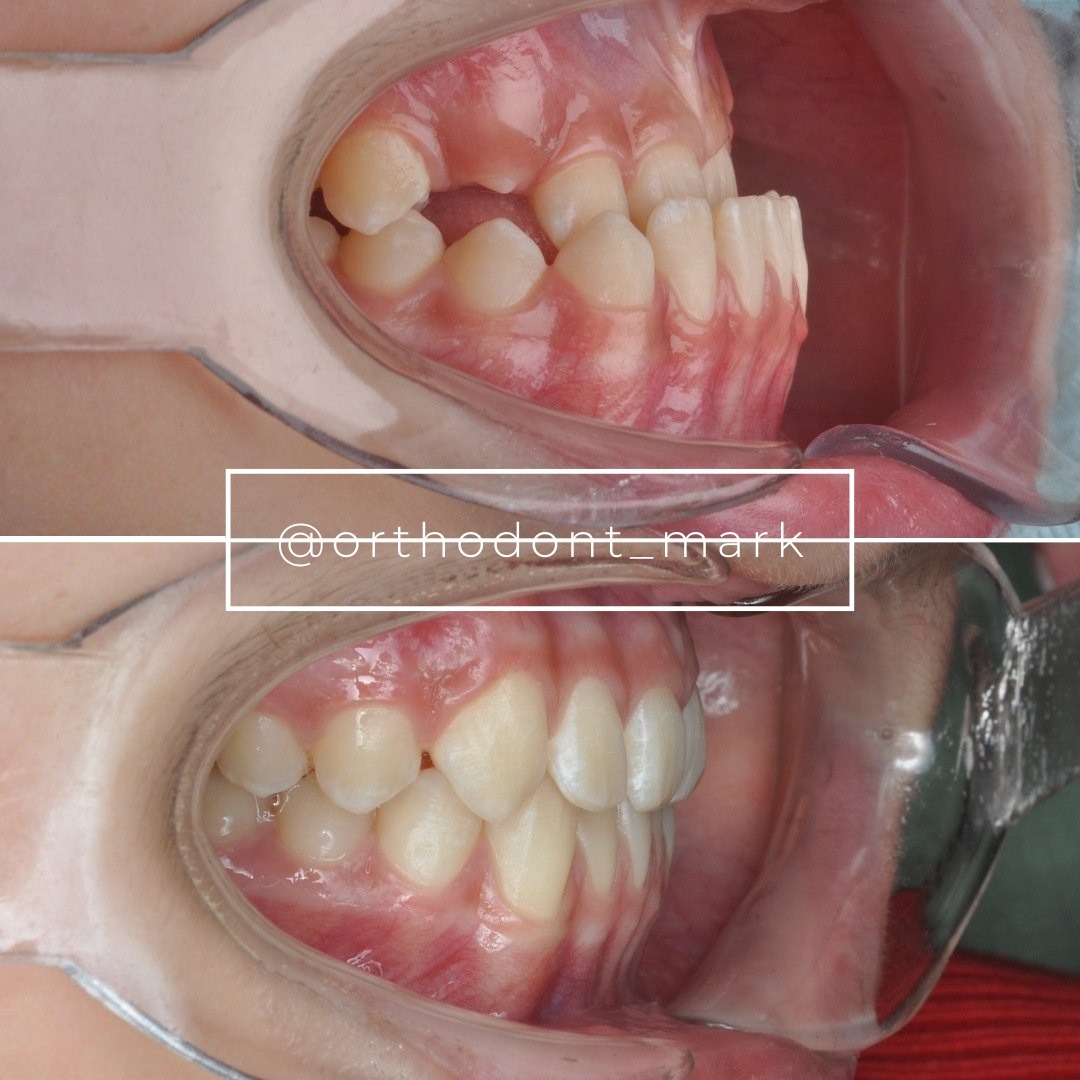
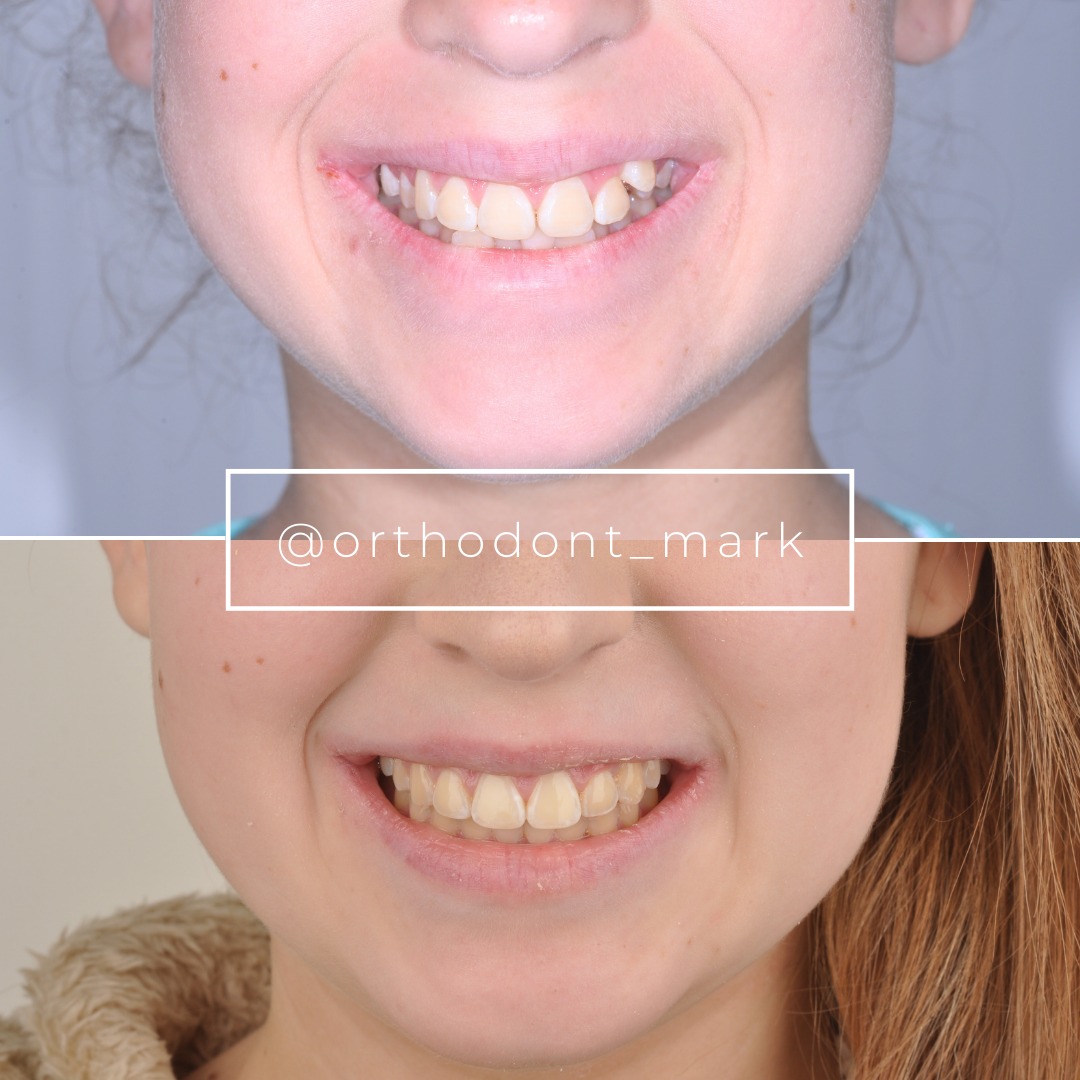
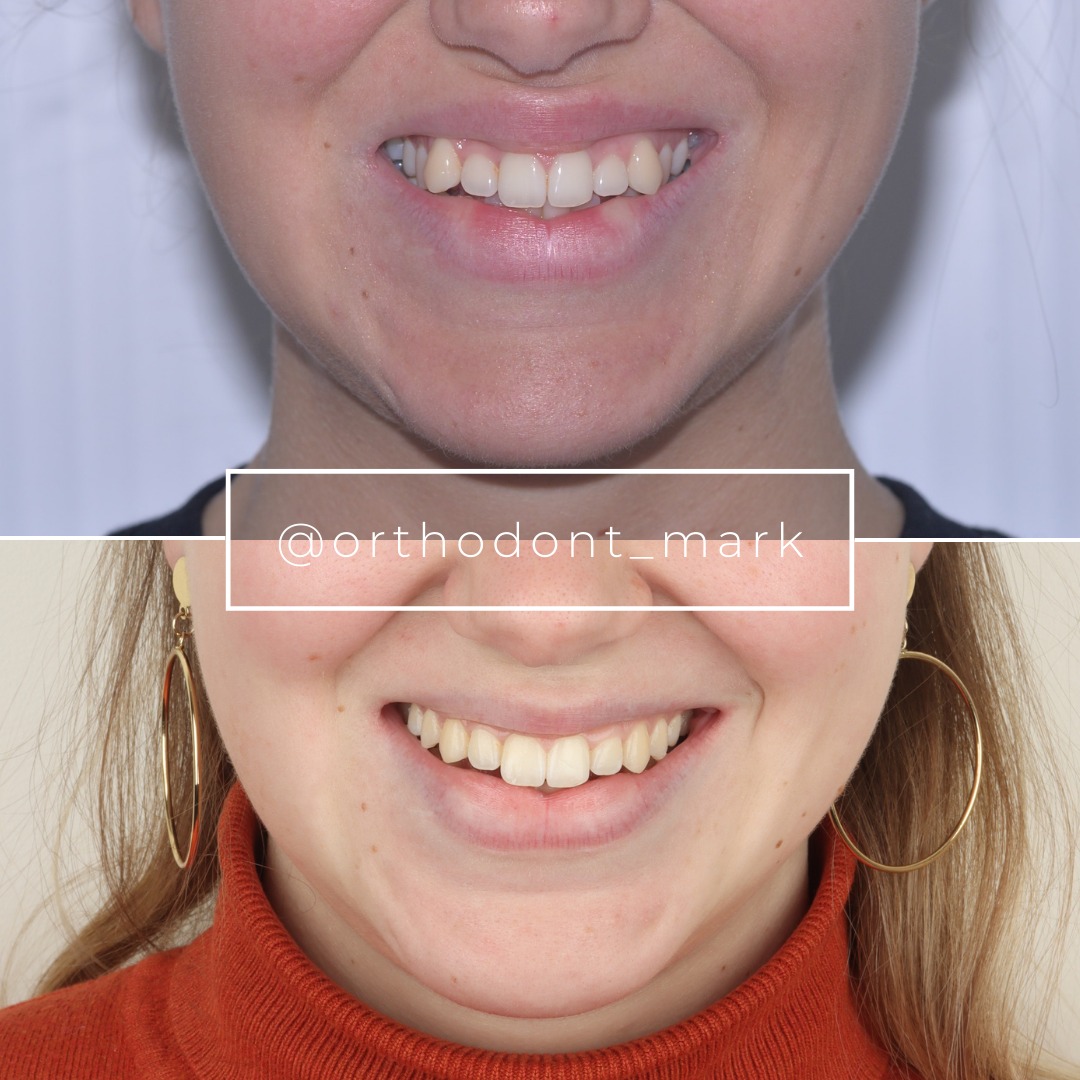
Clinical cases from Dr. Mark Radzhabov's practice
Learn the full MARPE protocol from Dr. Mark Radzhabov
Fundamental course covering CBCT patient selection, miniscrew planning, activation protocols, and 60+ clinical cases. Choose the access level that fits your practice.
Essentials of rapid palatal expansion for practicing orthodontists.
- Core RPE concepts and biomechanics
- 6 structured video lessons
- Clinical decision checklists
- Lifetime access to recordings
Deep-dive into MARPE protocol, diagnostics, and clinical execution.
- 6 modules covering MARPE from A to Z
- CBCT case selection walkthroughs
- Miniscrew placement and activation
- 60+ annotated clinical cases
- Direct Q&A with Dr. Mark Radzhabov
5-element medical consultation framework for dentists and orthodontists.
- Trust-building consultation protocol
- 5 lesson modules
- Templates for treatment plan delivery
- Works with any clinical specialty
Clinical FAQ
What is the main advantage of chairside MARPE fabrication over laboratory outsourcing?
Chairside construction eliminates 10–14 day laboratory turnaround, allows real-time error correction before bonding, and gives the clinician direct control over screw positioning and appliance alignment. This results in faster patient insertion and lower remake rates when workflows are systematic.
How should miniscrew analogs be positioned on the working model before appliance fabrication?
Analogs must be seated at the exact depth and angulation of the clinical miniscrew, verified against CBCT cross-sections. Misplacement—even by 1–2 mm or a few degrees—will cause the entire appliance to be fabricated offset, requiring remake at clinical insertion.
What is the ideal expansion screw position relative to the midpalatal suture?
The screw must be parallel to the midpalatal suture and positioned symmetrically in the midsagittal plane. Perpendicular or lateral misalignment drives asymmetric expansion forces and anterior-posterior tilt, compromising skeletal expansion and increasing dentoalveolar side effects.
How much mucosal clearance should be maintained between the appliance and the hard palate?
A minimum of 3–5 mm clearance is recommended to prevent impingement during activation and avoid tissue ulceration. Inadequate clearance is a leading cause of early appliance removal and patient discomfort in chairside-fabricated appliances.
Should CBCT imaging be performed before chairside appliance fabrication?
Yes. CBCT verification of miniscrew depth, angulation, and relationship to the nasal floor and palatal vault is non-negotiable for chairside practices. Detection of misalignment before fabrication allows screw repositioning and prevents costly remakes.
What activation protocol should be used after chairside MARPE insertion?
Standard protocols use 4 turns per day for 10 days, followed by 3 turns per day for 6–8 weeks or until CBCT evidence of midpalatal suture separation is confirmed. This timeline parallels conventional RPE and reflects biological suture remodeling kinetics.
Can chairside MARPE appliances be fabricated using analog methods without CAD/CAM or 3D printing?
Yes. Analog methods using hand-sculpted acrylic or composite around a seated miniscrew are faster, cheaper, and easier to modify in-office. Digital fabrication offers superior precision but requires additional equipment and delay. Choose based on practice volume and precision requirements.
What is the most common chairside MARPE fabrication error, and how can it be prevented?
Screw analog misplacement on the working model is the most frequent error. Prevention requires CBCT verification against the clinical screw position, double-checking analog height and angle before fabrication begins, and systematic visual inspection at clinical insertion.
Why should a 48-hour post-insertion follow-up appointment be scheduled after chairside MARPE placement?
Early follow-up detects positioning errors—asymmetric palatal contact, off-axis screw loading, mucosal impingement—that would otherwise go undiagnosed until mid-treatment adjustment or patient complaint. This checkpoint is more critical for in-office appliances due to lack of interim technician verification.
How does miniscrew-assisted expansion differ biomechanically from conventional tooth-borne RPE?
MARPE decouples skeletal and dental forces by anchoring directly to bone, producing greater nasal width at equivalent expansion amounts and less buccal anchor tooth displacement. CBCT evidence shows midpalatal suture separation in 95% of MARPE and 90% of conventional RPE cases (Chun et al. (2022), BMC Oral Health), but MARPE geometry favors pure orthopedic expansion.
Chairside MARPE fabrication is technically achievable but demands a higher standard of precision planning and clinical verification than laboratory-dependent workflows. The investment in proper instrumentation, accurate impression protocols, and systematic screw positioning validation directly correlates with construct stability and clinical outcomes. Dr. Mark Radzhabov recommends a hybrid workflow for most practices: in-office screw placement and diagnostic verification paired with selective laboratory support for complex cases or technician expertise gaps. To review your current MARPE protocol or discuss transition to chairside fabrication, schedule a consultation with the Orthodontist Mark team at ortodontmark.com.