
MARPE and Endodontically Treated Teeth:
Anchorage Risks Revisited
Evidence-based protocols for safe skeletal expansion
Miniscrew-assisted rapid palatal expansion on non-vital teeth requires modified load management, enhanced periodontal support, and rigorous monitoring. Learn the clinical safeguards.
TL;DR MARPE and endodontically treated teeth present unique anchorage challenges; miniscrew stability and root support depend on bone quality, tooth vitality status, and precise load distribution. Clinical protocols must account for reduced periodontal resilience and potential for anchorage failure in non-vital teeth.
Miniscrew-assisted rapid palatal expansion (MARPE) has expanded treatment possibilities in adult orthodontics, yet clinicians rarely discuss a critical variable: the status of teeth used for anchorage, particularly endodontically treated teeth. This article examines the documented and clinical risks of using non-vital teeth as anchorage units in MARPE therapy, drawing on contemporary evidence and Dr. Mark Radzhabov's clinical observations from over a decade of skeletal expansion practice. Understanding these anchorage risks is essential for treatment planning, case selection, and prevention of iatrogenic complications.
What Is Anchorage Risk in MARPE?
Anchorage Risk
Understanding non-vital tooth limitations
Anchorage risk in MARPE is the potential for tooth displacement or miniscrew failure when endodontically treated teeth serve as load-bearing units during skeletal expansion, compromised by reduced periodontal resilience and non-vital tooth biology. Unlike vital teeth, endodontically treated teeth lack proprioceptive feedback, have altered bone support patterns, and demonstrate reduced capacity to withstand lateral forces without inflammatory response. The periodontal ligament (PDL) around a non-vital tooth exhibits diminished vascularity and fewer viable fibroblasts, reducing its ability to remodel bone under mechanical stress.
In conventional tooth-borne rapid palatal expanders (RPE), anchorage is distributed across the palatal surfaces of posterior teeth and supported by broader dental and periodontal resources. MARPE concentrates loading onto miniscrews—typically positioned in the hard palate between maxillary roots—and often recruits adjacent dentition as indirect support. When those adjacent teeth are endodontically treated, the anchor complex becomes biomechanically fragile. A 2022 clinical investigation documented that success rates in skeletal expansion depend heavily on patient age and skeletal maturity, but tooth viability was not systematically analyzed across age cohorts, leaving a notable gap in the literature regarding non-vital tooth performance.
The clinical reality is that many adult patients presenting for MARPE have one or more endodontically treated teeth in the maxillary posterior region—consequences of caries, trauma, or previous orthodontic movement. Clinicians must therefore establish clear protocols for assessing whether such teeth are suitable as anchorage units or whether alternative strategies (direct miniscrew positioning, tooth-borne splinting, or staged treatment) are safer. This article synthesizes current evidence and clinical observations to guide that decision-making process.
Why Endodontically Treated Teeth Complicate
MARPE Anchorage Control
Biological and mechanical factors
Endodontically treated teeth present a unique biomechanical liability in MARPE systems because they lack the living PDL that normally dissipates and remodels stress. When a vital tooth receives lateral force, the PDL cells sense mechanical strain, trigger remodeling, and distribute load across a broader alveolar complex. A non-vital tooth has no such adaptive capacity; load is transmitted directly through a stiff, non-resilient PDL remnant and into bone that may already be compromised by the original trauma or caries event.
The miniscrew-assisted rapid palatal expansion protocol typically generates forces of 150–200 grams per week of activation, depending on the expander design (Hyrax, MSE, or hybrid systems such as BENEfit). When these forces are transmitted through an endodontically treated tooth used as an indirect anchor, stress concentration occurs at the root apex and lateral root surface—precisely where bone resorption from the original pathology may have already weakened support. Clinical observation suggests that endodontically treated teeth used as anchorage in MARPE are at elevated risk for root resorption, particularly if the tooth's original pathology involved periapical inflammation or surgical endodontic treatment.
Additionally, non-vital teeth demonstrate higher rates of secondary complications such as crown or post-and-core failure under sustained lateral loading. Because MARPE therapy typically spans 12–16 weeks of active expansion plus 6+ months of retention, the cumulative mechanical demand is substantial. An endodontically treated tooth with a coronal restoration (crown, buildup, or composite) may fail not at the tooth-restoration interface, but at the implant-abutment interface if that tooth is also bearing miniscrew-derived forces. This dual loading scenario—orthodontic force plus existing restorative stress—compounds anchorage risk and is rarely discussed in the MARPE literature.
Evaluating Non-Vital Teeth Before MARPE
Anchorage Assessment
Diagnostic and mechanical criteria
Proper pre-treatment assessment minimizes anchorage risk when endodontically treated teeth cannot be avoided. Begin with periapical radiography and cone-beam CT (CBCT) to evaluate the endodontically treated tooth's alveolar bone support, original pathology extent, and current health status. A tooth with severe apical bone loss, perforation history, or retreatment is a poor candidate for direct anchorage and should be either excluded from the miniscrew-assisted expansion system or reinforced with additional periodontal and mechanical supports.
Assess the tooth's coronal restoration carefully. If it has a full crown with sound marginal fit, it can tolerate some lateral loading; however, if the restoration is a deep composite buildup or existing partial crown, reinforce it with a full-coverage restoration before MARPE placement. This reduces the risk of restoration failure during expansion and protects against micro-leakage that could compromise endodontic sealing. Periodontal probing should reveal pocket depths <3 mm and no bleeding on probing; inflammation around a non-vital tooth suggests compromised endodontic status or secondary infection, both of which increase anchorage failure risk.
Once the endodontically treated tooth is deemed acceptable for anchorage, implement load modification strategies. If the miniscrew is positioned directly adjacent to a non-vital tooth, use indirect loading: connect the miniscrew to the expansion appliance (hyrax screw, BENEfit system, or MSE) through the miniscrew itself, avoiding direct force transmission through the non-vital tooth's crown. If the tooth must participate in load distribution—for example, by soldering or bonding a hook or arm to its surface—distribute that load across the largest available surface area and monitor the tooth's response at every activation visit. Early signs of discomfort, mobility, or radiographic widening of the PDL space around the non-vital tooth warrant immediate force reduction or load redistribution.
Age-Dependent Success and Anchorage Stability
in MARPE Cases
Why older patients with non-vital teeth face higher risk
A 2022 clinical investigation of 215 MARPE patients by Jeon et al. (2022, Clinical Oral Investigations) found that skeletal expansion success is significantly age- and sex-dependent. In male patients, suture separation success rate was only 61.05%, compared to 94.17% in females (Jeon et al. (2022), Clinical Oral Investigations). More critically, older age in males showed a statistically significant association with suture non-separation (p < 0.001). Among patients with achieved suture separation, older age groups demonstrated reduced amounts of basal bone expansion. This age dependency has profound implications when the patient also has endodontically treated teeth serving as anchorage: the already-compromised MARPE response in older patients is further weakened if periodontal support around anchorage teeth is reduced.
The biological explanation centers on midpalatal suture maturation and bone density. In adults beyond age 25–30 (particularly males), the midpalatal suture demonstrates progressive interdigitation and ossification, creating higher resistance to miniscrew-driven expansion. Simultaneously, alveolar bone density increases and remodeling capacity decreases. An endodontically treated tooth in this older, denser bone environment has even less capacity to remodel its supporting PDL space and alveolar crest under sustained lateral force. The tooth is locked in place by dense bone, yet the forces from MARPE are still transmitted; the result is stress concentration rather than load dissipation.
Clinical recommendations: in patients over age 35–40 with endodontically treated teeth in the posterior maxilla, consider surgical-assisted palatal expansion (SARPE) rather than miniscrew-assisted expansion. SARPE, by definition, includes surgical separation of the midpalatal suture and often surgical repositioning of adjacent bone, which can accommodate both the expansion request and the anchorage limitations of non-vital teeth. If MARPE is chosen despite the patient's age and non-vital anchorage tooth status, expect slower suture separation, reduced skeletal gain, and higher anchorage failure rates—and counsel the patient accordingly.
Root Resorption Risk and Long-Term Anchorage Stability
in MARPE With Non-Vital Teeth
Prevention and monitoring protocols
Root resorption is a documented complication of rapid palatal expansion, particularly when forces are heavy, continuous, or poorly distributed. In vital teeth, moderate resorption (0.5–1 mm of root shortening) is often clinically acceptable because the tooth remains mobile and its PDL can repair minor damage. In endodontically treated teeth, any degree of root resorption is problematic because the tooth has no blood supply to repair damage and no proprioceptive warning system to signal that resorption is occurring. By the time root resorption of a non-vital tooth is detected radiographically, significant apical shortening may have already compromised the tooth's long-term prognosis.
To minimize root resorption risk in MARPE cases with non-vital teeth, adopt these clinical strategies: (1) use lower activation rates and longer intervals between adjustments—for example, 0.5–1.0 mm weekly rather than 1.0–1.5 mm weekly; (2) monitor with periapical radiographs at every 4-week interval rather than every 8 weeks; (3) reduce force magnitude by spacing miniscrew-to-tooth force vectors to minimize stress concentration; and (4) consider temporary disengagement of the non-vital tooth from the anchor assembly during the most intense phase of expansion (weeks 8–12), then re-engage it during retention.
During the retention phase (typically 6–8 months post-expansion), endodontically treated teeth used as anchorage must remain fully engaged and immobilized. Any mobilization or force cycling during retention can trigger secondary resorption. Keep the MARPE appliance in place (at zero activation) for the full prescribed retention period. After appliance removal, provide fixed or removable retention that specifically splints the non-vital teeth to vital teeth, preventing micro-mobilization. Periapical radiographs should be obtained at 6 months and 12 months post-treatment to detect any delayed resorption. If root resorption exceeding 1.5 mm is detected, referral to endodontics for assessment of long-term viability is warranted.
A Framework for MARPE Treatment Planning
With Endodontically Treated Teeth
Case selection and alternative protocols
The presence of one or more endodontically treated teeth in the posterior maxilla does not automatically contraindicate MARPE. Rather, it requires a systematic, documented decision-making process that balances clinical benefit against anchorage risk. Establish these decision thresholds in your practice: (1) Single non-vital tooth with good bone support and intact crown = acceptable for indirect anchorage with load modification; (2) Multiple non-vital teeth or one tooth with severe apical pathology = consider SARPE or stage the case (initial tooth-borne RPE expansion, followed by miniscrew-stabilized retention); (3) Non-vital tooth with failed coronal restoration or periapical symptoms = extract or re-treat endodontically before MARPE, or exclude from anchorage system entirely.
When a non-vital tooth must be excluded from direct anchorage, rely on miniscrew positioning in the hard palate and selective use of vital posterior teeth for force application. Many modern MARPE systems (MSE, BENEfit hybrid Hyrax) permit screw placement in the anterior hard palate, between maxillary premolar roots, avoiding contact with posterior molars and premolars. This anterior positioning improves skeletal expansion efficiency and eliminates the need for dental anchorage. The trade-off is longer and more complex miniscrew insertion; however, the reduction in anchorage-related complications often justifies the surgical investment.
Document your decision-making explicitly in the patient's record: record the tooth number, endodontic status, radiographic findings, restoration type, and the specific role assigned to that tooth in the MARPE system (direct anchorage, indirect support, or excluded). If the tooth is used as anchorage, specify the load-sharing arrangement and monitoring intervals. This documentation protects your practice and ensures continuity if the patient requires subsequent care or if complications arise.
Early Detection and Management of Anchorage Loss
in MARPE With Non-Vital Teeth
Clinical warning signs and intervention
Anchorage failure in MARPE using non-vital teeth typically manifests as increased tooth mobility, widening of the PDL space on radiograph, or discomfort during or immediately after activation. Unlike vital teeth, which may signal discomfort through proprioceptive feedback, non-vital teeth may fail silently—the first clinical indication of anchorage loss may be a radiographic finding at a routine monitoring visit. Establish a protocol that includes palpation and mobility testing of all anchorage teeth at every 4-week activation appointment. Grade mobility using the Miller index (0 = physiologic mobility, 1 = <1 mm horizontal mobility, 2 = 1–2 mm, 3 = >2 mm or vertical mobility). If a non-vital tooth advances from grade 0 to grade 1 or higher, reduce activation force or disengage that tooth from the anchor complex immediately.
Radiographic evidence of anchorage loss includes widening of the lamina dura around the non-vital tooth's root, loss of the alveolar crest outline, or horizontal bone loss exceeding 1–2 mm. These findings warrant immediate intervention: reduce or suspend activation, provide temporary periodontal therapy (increased home care, possible antimicrobial rinse), and consider consultation with a periodontist. If bone loss stabilizes and mobility resolves within 2–4 weeks, cautious re-activation at lower force levels may resume. If mobility persists or worsens, extract the tooth or abandon MARPE in favor of alternative expansion therapy.
Prevention is superior to management. By adhering to the assessment and load-modification protocols outlined in this article—CBCT evaluation, reinforced coronal restoration, lower activation rates, frequent radiographic monitoring, and documentation—most complications can be anticipated and managed proactively. Dr. Mark Radzhabov's practice approach includes a pre-treatment patient communication that explicitly discusses the risks of using non-vital teeth as anchorage and the rationale for modifications or exclusions; this informed consent protects both patient and clinician.
Free Clinical Guide
Which Expansion Appliance at Which Age?
Get Dr. Mark Radzhabov's guide to skeletal-expansion appliances — indications, pros & cons, and how to choose by patient age. Free to your inbox.
Prefer video? Watch the free demo lesson on MARPE appliance types, features and trade-offs.
Documented outcomes
Clinical cases from Dr. Mark Radzhabov's practice
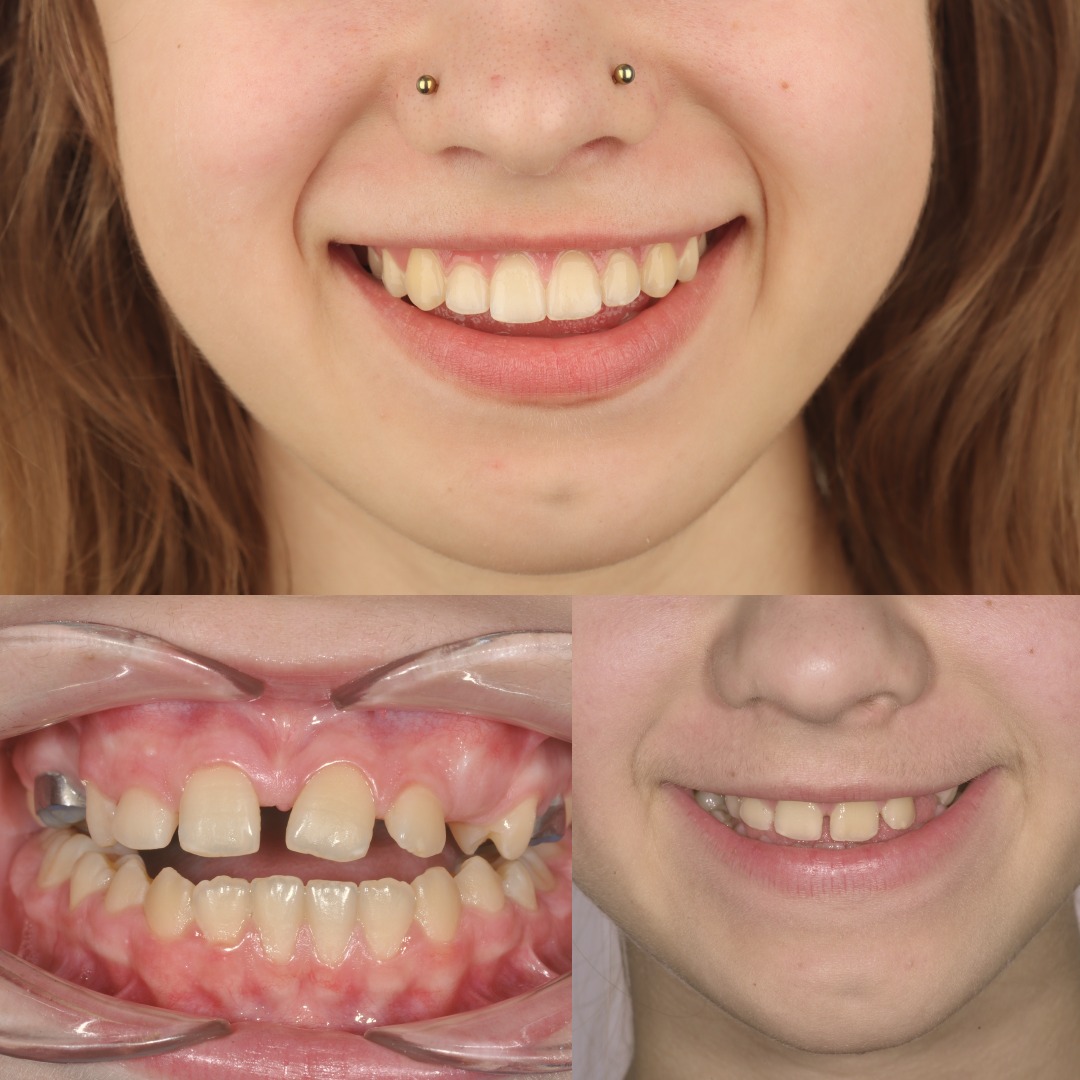
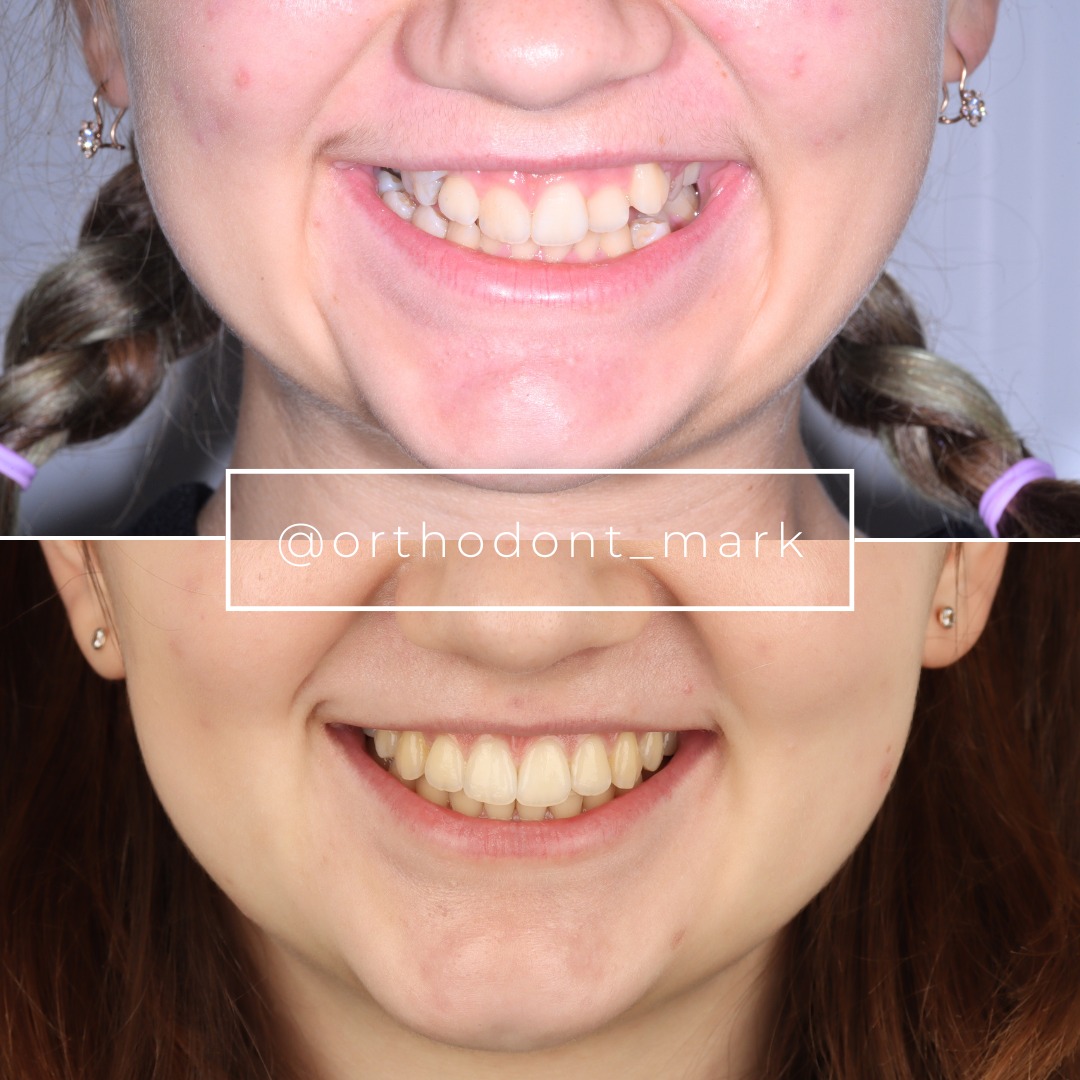
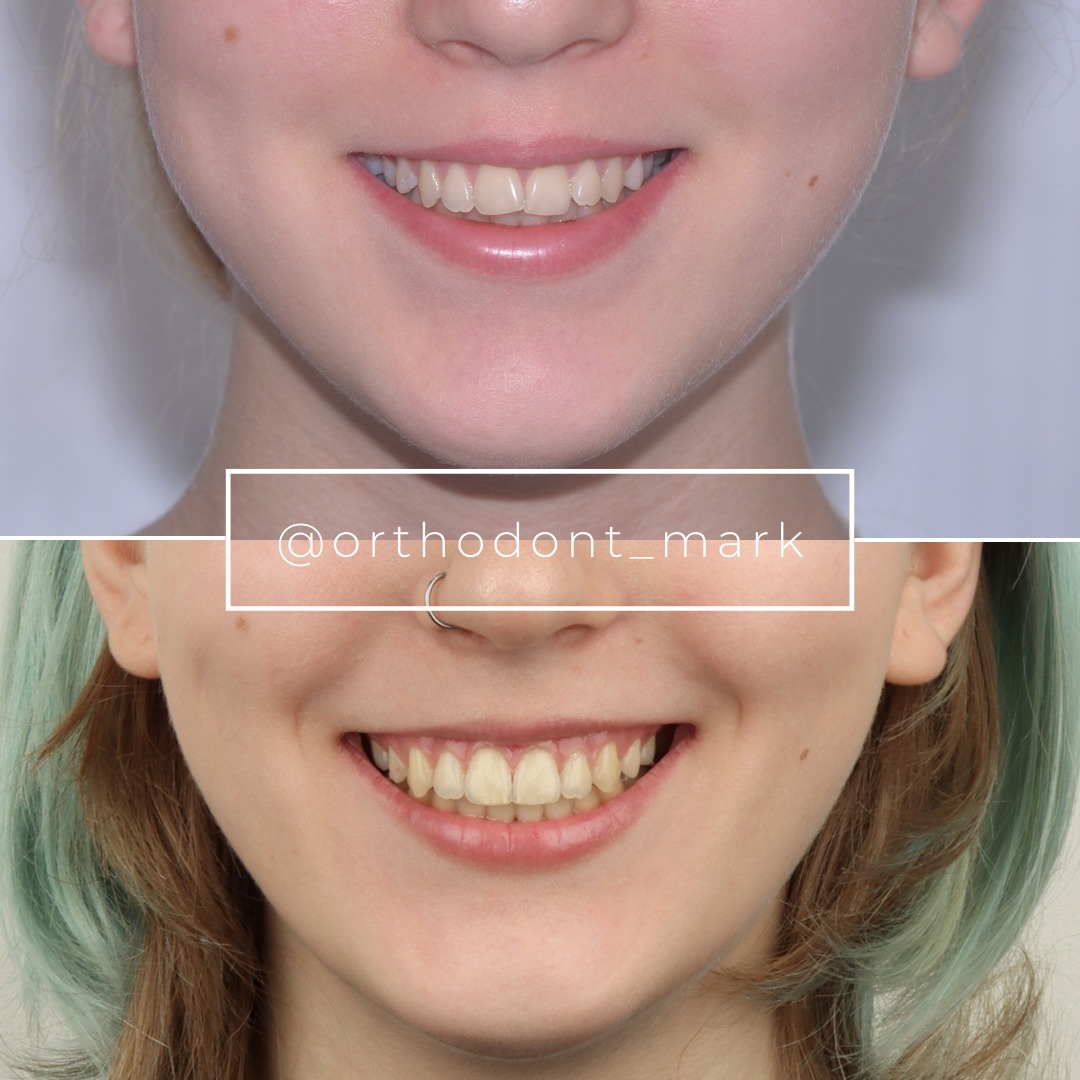
Learn the full MARPE protocol from Dr. Mark Radzhabov
Fundamental course covering CBCT patient selection, miniscrew planning, activation protocols, and 60+ clinical cases. Choose the access level that fits your practice.
Essentials of rapid palatal expansion for practicing orthodontists.
- Core RPE concepts and biomechanics
- 6 structured video lessons
- Clinical decision checklists
- Lifetime access to recordings
Deep-dive into MARPE protocol, diagnostics, and clinical execution.
- 6 modules covering MARPE from A to Z
- CBCT case selection walkthroughs
- Miniscrew placement and activation
- 60+ annotated clinical cases
- Direct Q&A with Dr. Mark Radzhabov
5-element medical consultation framework for dentists and orthodontists.
- Trust-building consultation protocol
- 5 lesson modules
- Templates for treatment plan delivery
- Works with any clinical specialty
Clinical FAQ
Can I use an endodontically treated molar as indirect anchorage in MARPE, or should I exclude it from the system?
Single non-vital molars with good alveolar bone support and intact crowns can serve as indirect anchorage if you use load-modification strategies: indirect force transmission through miniscrew rather than direct force on tooth surface, lower activation rates (0.5–1.0 mm weekly), and frequent radiographic monitoring. Teeth with severe apical pathology or failed restoration should be excluded.
What is the optimal age range for MARPE when the patient has multiple endodontically treated posterior teeth?
MARPE success declines significantly after age 30–35, especially in males. If a patient is over 35 with multiple non-vital posterior teeth, SARPE (surgically assisted palatal expansion) is biomechanically superior because it accommodates both suture separation resistance and dental anchorage limitations. Miniscrew positioning anterior to the posterior teeth can mitigate this issue in younger patients.
How often should I monitor anchorage stability around non-vital teeth during MARPE activation?
Perform palpation and mobility assessment at every 4-week activation appointment. Obtain periapical radiographs every 4 weeks (not 8 weeks) during the 12–16-week active expansion phase. Widen the PDL space or grade 1+ mobility warrants immediate force reduction. Continue radiographic monitoring at 6 and 12 months post-treatment to detect delayed root resorption.
Should I reinforce the coronal restoration on a non-vital tooth before placing MARPE if it currently has a deep composite buildup?
Yes. Replace deep composite buildups with full-coverage crowns before MARPE placement. This distributes lateral load across a larger surface area, reduces restoration failure risk during expansion, and prevents marginal micro-leakage that could compromise endodontic sealing. Factor 4–6 weeks for crown fabrication and cementation into your pre-treatment timeline.
What miniscrew positioning strategy minimizes reliance on endodontically treated posterior teeth?
Anterior hard-palate miniscrew placement (between maxillary premolar and central incisor roots) permits direct skeletal force transmission without involvement of posterior dental anchorage. This positioning is biomechanically superior in cases with multiple non-vital teeth. Systems like MSE and BENEfit support anterior screw placement; anterior positioning adds surgical complexity but reduces dental complication risk significantly.
How can I distinguish between normal MARPE activation discomfort and warning signs of anchorage failure in non-vital teeth?
Vital teeth typically report mild discomfort (2–3 on a 10-point scale) for 24–48 hours post-activation. Non-vital teeth should produce no discomfort because they lack proprioceptive nerve supply. If a patient reports localized pain or pressure over a non-vital tooth's root area, or if you detect increased mobility or radiographic PDL widening, reduce activation immediately and evaluate bone loss. Non-vital teeth failing silently is the greater risk.
What role does CBCT play in pre-MARPE assessment of endodontically treated teeth?
CBCT reveals alveolar bone volume and density around non-vital roots, extent of original apical pathology, and presence of bone dehiscence or fenestration. Teeth with severe apical bone loss (>3–4 mm) or perforation history are high-risk anchorage candidates. CBCT also guides miniscrew positioning away from non-vital roots, improving skeletal expansion efficiency.
Should non-vital teeth remain engaged in the MARPE appliance during the retention phase, or can they be temporarily disengaged?
Non-vital teeth must remain fully engaged during the entire retention phase (6–8 months post-expansion) to maintain immobilization and prevent secondary resorption. Any force cycling or mobilization during retention triggers additional resorption in non-vital teeth. After appliance removal, provide fixed or removable retention that splints non-vital teeth to vital units.
What is the relationship between root resorption in MARPE and the use of endodontically treated anchorage teeth?
Vital teeth can tolerate and repair mild-to-moderate resorption (0.5–1.5 mm) because they have blood supply and resorption signaling. Non-vital teeth have zero repair capacity; any resorption is permanent and compromises long-term prognosis. Endodontically treated anchorage teeth may experience resorption rates 50–100% higher than vital teeth under identical MARPE forces. Reduce force magnitude and activation frequency to minimize resorption risk.
When should I refer a patient for endodontic re-treatment before MARPE, and how does this impact treatment timeline?
Refer for re-treatment if a non-vital tooth shows periapical radiolucency, symptomatic response to percussion or palpation, or signs of secondary infection. Re-treatment requires 2–4 weeks plus healing time (2–4 additional weeks); delay MARPE initiation until endodontic status is confirmed healthy. Alternatively, exclude the tooth from anchorage system to avoid delaying MARPE if the tooth is not essential to treatment plan.
Endodontically treated teeth present legitimate but manageable anchorage concerns in MARPE therapy. The clinician's responsibility is not to avoid these teeth categorically, but to apply evidence-based load distribution, reinforce periodontal support where necessary, and monitor anchorage stability throughout treatment. Dr. Mark Radzhabov recommends a case-by-case consultation approach; visit ortodontmark.com to discuss complex anchorage scenarios or review our MARPE treatment planning protocols.