
MARPE as a Lever System:
Torque, Tipping, and Control
The biomechanics that determine skeletal response
Master the mechanical principles behind miniscrew-assisted rapid palatal expansion. Learn how lever geometry, force vectors, and screw placement control torque and optimize skeletal outcomes.
TL;DR MARPE functions as a multi-point lever system where miniscrew anchorage and palatal vault geometry determine force distribution, torque magnitude, and tipping behavior. Unlike tooth-borne RPE, skeletal-anchored expansion reduces dentoalveolar side effects and improves midpalatal suture separation when screw placement and activation protocols account for mechanical advantage and force vector orientation.
Miniscrew-assisted rapid palatal expansion (MARPE) represents a fundamental shift in how orthodontists can manage transverse maxillary deficiency—especially in patients where conventional tooth-borne expansion creates unacceptable dental side effects. In this article, Dr. Mark Radzhabov examines MARPE as a lever system, exploring the biomechanics of torque control, miniscrew placement geometry, and force distribution across the palate. Understanding these mechanical principles—grounded in contemporary clinical evidence and refined through over a decade of direct patient treatment—allows practitioners to predict skeletal response, minimize unwanted tipping, and optimize expansion efficiency for both adolescent and adult patients.
What Is a Lever System in MARPE?
Lever system
And how it differs from tooth-borne expansion
A lever system in MARPE consists of three fundamental components: two miniscrew anchor points (typically palatal) and a central expansion screw that applies force across the midpalatal suture. Unlike conventional tooth-borne rapid palatal expansion (RPE), where the expansion force is transmitted through maxillary first molars and premolars, MARPE bypasses dental roots entirely. This geometric arrangement creates a direct skeletal lever, with the miniscrews acting as fixed fulcra and the expansion mechanism generating a force vector oriented perpendicular to the sagittal plane.
The mechanical advantage of this system hinges on two variables: the distance between the miniscrews (moment arm length) and the magnitude of force applied at the expansion screw. A longer moment arm—achieved when miniscrews are placed more posteriorly and laterally—amplifies the turning effect (torque) transmitted to palatal structures. Conversely, screws placed too close together or too medially create a shorter moment arm and reduce skeletal leverage, increasing the risk of unwanted dentoalveolar side effects. The vertical and anteroposterior position of the miniscrews also determines whether the expansion force creates pure transverse opening or introduces secondary tipping movements at the anchor teeth.
Clinical observation across hundreds of MARPE cases demonstrates that skeletal response quality depends critically on understanding these lever mechanics. When practitioners account for palatal vault height, midline suture anatomy, and screw positioning relative to the expansion appliance, the system operates with predictable force distribution. When placement is suboptimal, even aggressive activation protocols produce minimal skeletal separation and excessive dental tipping—a clinical failure mode that is largely preventable through proper biomechanical planning.
Torque, Tipping, and Control in MARPE Placement
Torque control
Predicting and managing unwanted movements
Torque in a MARPE system refers to the rotational moment generated by the offset between the miniscrew anchors and the application point of expansion force. When miniscrews are positioned at the same vertical level as the expansion screw, the torque applied to palatal bone is minimal and expansion force is primarily transverse. However, when miniscrews sit higher or lower than the expansion mechanism, a vertical component of torque is introduced. This secondary torque can tip the anterior palate downward or upward, creating undesired changes in palatal inclination and vertical maxillary relationships.
The magnitude of unwanted torque depends on three factors: (1) the vertical separation between miniscrew heads and the expansion screw application point, (2) the anteroposterior distance between them (which affects rotational mechanics around the sagittal plane), and (3) the activation increment per turn. In clinical practice, miniscrew heights between 12–16 mm from the palatal surface are optimal for most anatomies, positioning the screws slightly below or level with the center of resistance of the palatal complex. Placement deeper than 16 mm introduces excessive vertical leverage. Placement shallower than 12 mm increases risk of screw failure due to reduced bone engagement and higher stress concentration at the cortical interface.
Control of tipping behavior also requires attention to activation protocol. Rapid activation (more than 1 mm per week) magnifies both skeletal response and dental side effects. Moderate activation (0.5–1.0 mm per week over 8 weeks or longer) allows bone remodeling to keep pace with screw movement and reduces compensatory tipping. Dr. Mark Radzhabov's clinical approach emphasizes measuring palatal anatomy via CBCT before screw placement, calculating the optimal vertical and horizontal vector for each patient, and then staging activation in 3–4 turns per week rather than daily turns, permitting the lever system to distribute force more evenly across palatal structures.
How Miniscrew Position Determines Mechanical Advantage
mechanical advantage
Maximizing skeletal expansion and minimizing dental side effects
The moment arm in MARPE is the perpendicular distance from the line of action of the expansion force to the center of resistance (or fulcrum) of the palatal complex. Longer moment arms generate greater rotational effect on skeletal structures. Shorter moment arms shift the mechanical burden to the anchor teeth and adjacent alveolar bone. To optimize the lever system for skeletal response, miniscrews should be placed as far posterior and lateral as the palatal anatomy allows—typically in the region between the premolar apices and the first molar apices, and 2–3 mm lateral to the midpalatine raphe.
Anteroposterior screw spacing is equally critical. When both miniscrews are placed at a similar anteroposterior level (parallel to the frontal plane), the expansion force creates a symmetric, perpendicular opening of the midpalatal suture. When one screw is positioned more anteriorly or posteriorly, the force vector becomes oblique, introducing a component of rotation around the vertical axis. This can create asymmetric palatal expansion and uneven suture separation. Clinical studies and prospective trials recommend bilateral, symmetric placement with the two screws forming a horizontal line roughly parallel to the posterior hard palate and perpendicular to the sagittal plane.
Vertical depth of screw placement—measured from the palatal mucosal surface to the tip of the screw—also affects force distribution. Screws placed too superficially (< 6 mm) fail due to cortical stress and insufficient bone anchorage. Screws placed too deep (> 20 mm) may penetrate the nasal cavity or reduce the mechanical efficiency of the lever by positioning the anchor points too far from the vault architecture. Optimal depth is 8–12 mm, placing the screw head in the cortical zone while anchoring the thread deeply enough to resist the shear forces generated during expansion activation.
Force Vectors and Skeletal Response in Expansion
force vector
Aligning activation direction with anatomic target
The force vector in MARPE is the direction and line of action of the expansion force as it is applied to the palate through the central screw mechanism. In an ideal system, this vector is perpendicular to the midpalatal suture and passes through or very close to the center of resistance of the palatal complex. When the force vector deviates from perpendicular, secondary rotational moments are introduced, creating undesired tipping and asymmetric suture opening. Clinically, this manifests as uneven widening across the vault (greater expansion in the molar region than the premolar region, or vice versa) and possible clockwise or counterclockwise rotation of the palate in the frontal plane.
Force magnitude also interacts with vector orientation to determine skeletal outcome. Studies comparing conventional RPE and MARPE have shown that skeletal-anchored systems achieve greater increase in nasal width at the molar region and greater palatine foramen separation with the same number of activation turns, indicating that the skeletal lever system transmits force more efficiently to deep palatal structures. This enhanced skeletal transmission is a direct result of the miniscrew anchors bypassing dental roots and directing force through bone-to-bone interfaces. However, this efficiency is only realized when screw placement geometry is optimized and the activation vector aligns with anatomic objectives.
Practical protocol in contemporary MARPE treatment includes pre-treatment CBCT analysis to measure midpalatal suture anatomy, palatal vault height, and screw positioning zones. Many practitioners now use computer-guided drilling or three-dimensional surgical templates to ensure bilateral symmetry and optimal vertical/anteroposterior angles. Post-placement radiographs (periapical or CBCT) confirm screw position relative to anatomic landmarks. This planning step, though additional cost and chairtime, reduces complications and dramatically improves the mechanical efficiency and predictability of the expansion phase.
Operationalizing Lever Principles in MARPE Activation
MARPE activation
Converting theory into staged, predictable treatment
Translating lever system biomechanics into a clinical activation protocol requires a systematic approach. First, establish baseline screw position via immediate post-placement imaging (periapical radiographs or CBCT). Confirm bilateral symmetry, vertical depth, and anteroposterior alignment. Measure the distance from miniscrew heads to the expansion screw application point, and document any vertical offset that might introduce unwanted torque. This baseline geometry then informs the activation schedule and force magnitude applied.
Second, select an activation increment appropriate to the patient's skeletal maturity and palatal anatomy. For adolescents with open or partially fused midpalatal sutures, 0.75–1.0 mm per week (approximately 3–4 turns per week) over 8–10 weeks is standard. For skeletally mature adults or patients with dense bone, slightly slower activation (0.5–0.75 mm per week) may improve skeletal separation and reduce anchor tooth tipping. Each activation should be recorded in patient records (date, number of turns, patient tolerance), allowing practitioners to track cumulative expansion and identify activation lag if suture separation is not progressing as expected on periodic radiographs.
Third, integrate radiographic checkpoint imaging at key milestones. Radiographs or CBCT at 4 weeks, 8 weeks (mid-expansion), and immediately post-expansion allow assessment of midpalatal suture separation progress and early detection of asymmetry or unexpected tipping. If expansion is stalling—often a sign of screw failure, incomplete suture separation, or inadequate force transmission—adjustment of activation strategy or consideration of surgical adjuncts (laser-assisted corticotomy) can be made before completing the expansion phase. Fourth, establish a consolidation and retention protocol, typically 6 months of passive retention with the device in situ (for MARPE-only cases) or transition to a skeletal-anchored splint or fixed palatal bar (for cases requiring subsequent orthodontic treatment).
Minimizing Torque Errors and Tipping Complications
tipping complications
Recognizing and correcting suboptimal lever geometry
Unwanted dental tipping and incomplete skeletal separation are the most common mechanical failures in MARPE practice, and both stem from suboptimal lever system design. Excessive buccal tipping of anchor teeth—documented in some patient cases as a 15–20° increase in molar buccolingual inclination over the expansion phase—indicates either inadequate miniscrew depth, excessive vertical offset between screws and expansion application point, or overly aggressive activation. Dental tipping reduces the mechanical efficiency of the system by shifting the fulcrum away from skeletal structures and onto the root apices, introducing unnecessary periodontal stress and risking eventual screw failure due to rocking movements.
Asymmetric palatal expansion—greater widening on one side than the other—signals misaligned miniscrews or asymmetric force vector application. This is preventable through pre-placement imaging and bilateral symmetric screw positioning. If asymmetry becomes apparent during the expansion phase (visible on periapical radiographs or reported by the patient as uneven pressure), activation should be paused, screw positioning verified, and the expansion vector reassessed. In some cases, temporary deactivation of one screw and isolated activation of the other can correct developing asymmetry.
Screw failure (loosening, fracture, or loss of anchorage) often results from inadequate bone engagement or excessive lever stress. Prevention requires adequate initial screw insertion torque (typically 35–50 Ncm for palatal miniscrews, depending on bone density and screw diameter), verification of bilateral engagement in cortical bone, and avoidance of overactivation. If a screw begins to loosen (patient reports clicking or appliance movement), immediate imaging and reassessment are warranted. Proceeding with activation on a loose screw risks sudden failure mid-treatment, forcing restart or escalation to surgical options. Orthodontist Mark's clinical practice emphasizes that routine screw integrity checks—gentle per-turn palpation of the miniscrew head and periodic radiographic confirmation—are inexpensive insurance against these complications.
Free Clinical Guide
Which Expansion Appliance at Which Age?
Get Dr. Mark Radzhabov's guide to skeletal-expansion appliances — indications, pros & cons, and how to choose by patient age. Free to your inbox.
Prefer video? Watch the free demo lesson on MARPE appliance types, features and trade-offs.
Documented outcomes
Clinical cases from Dr. Mark Radzhabov's practice
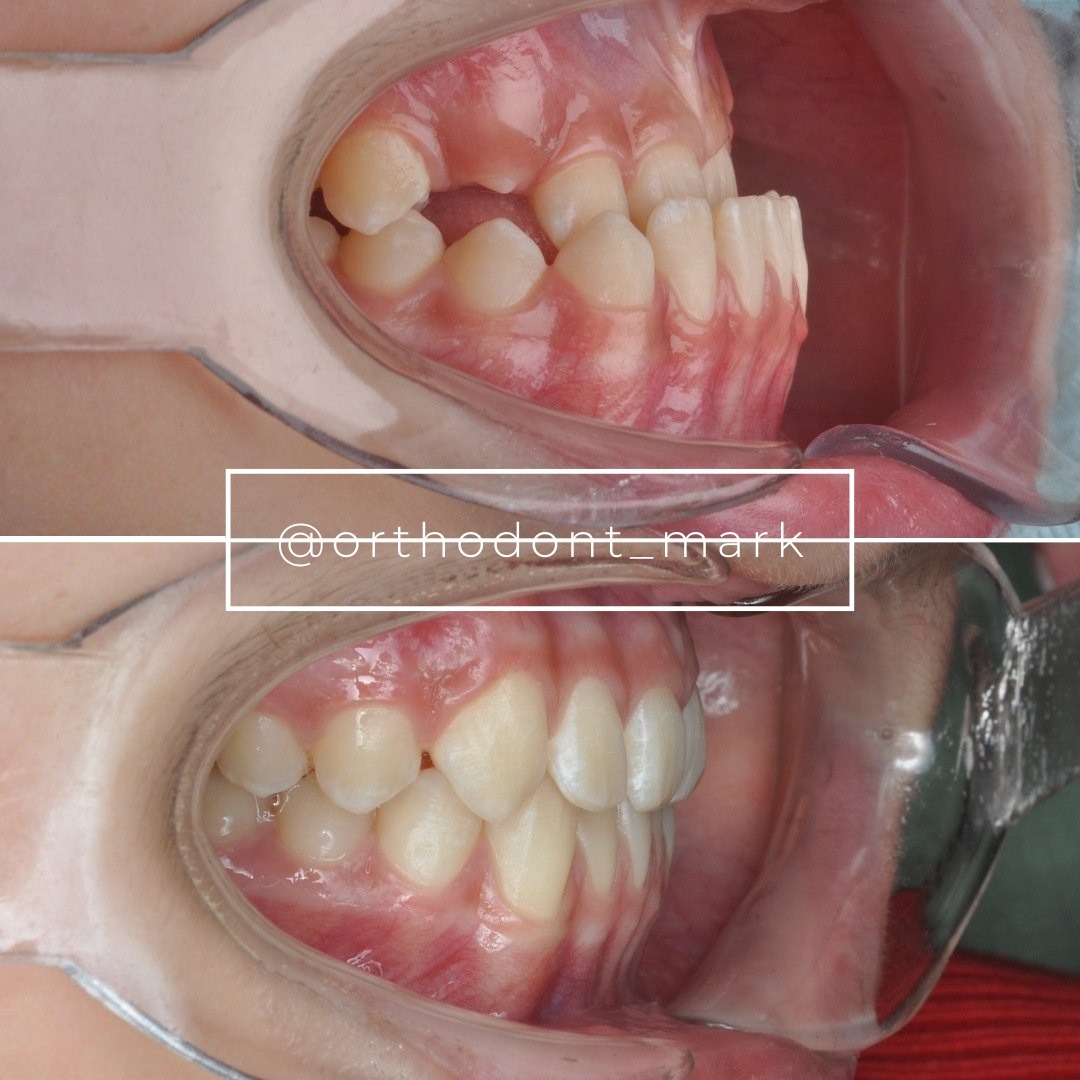
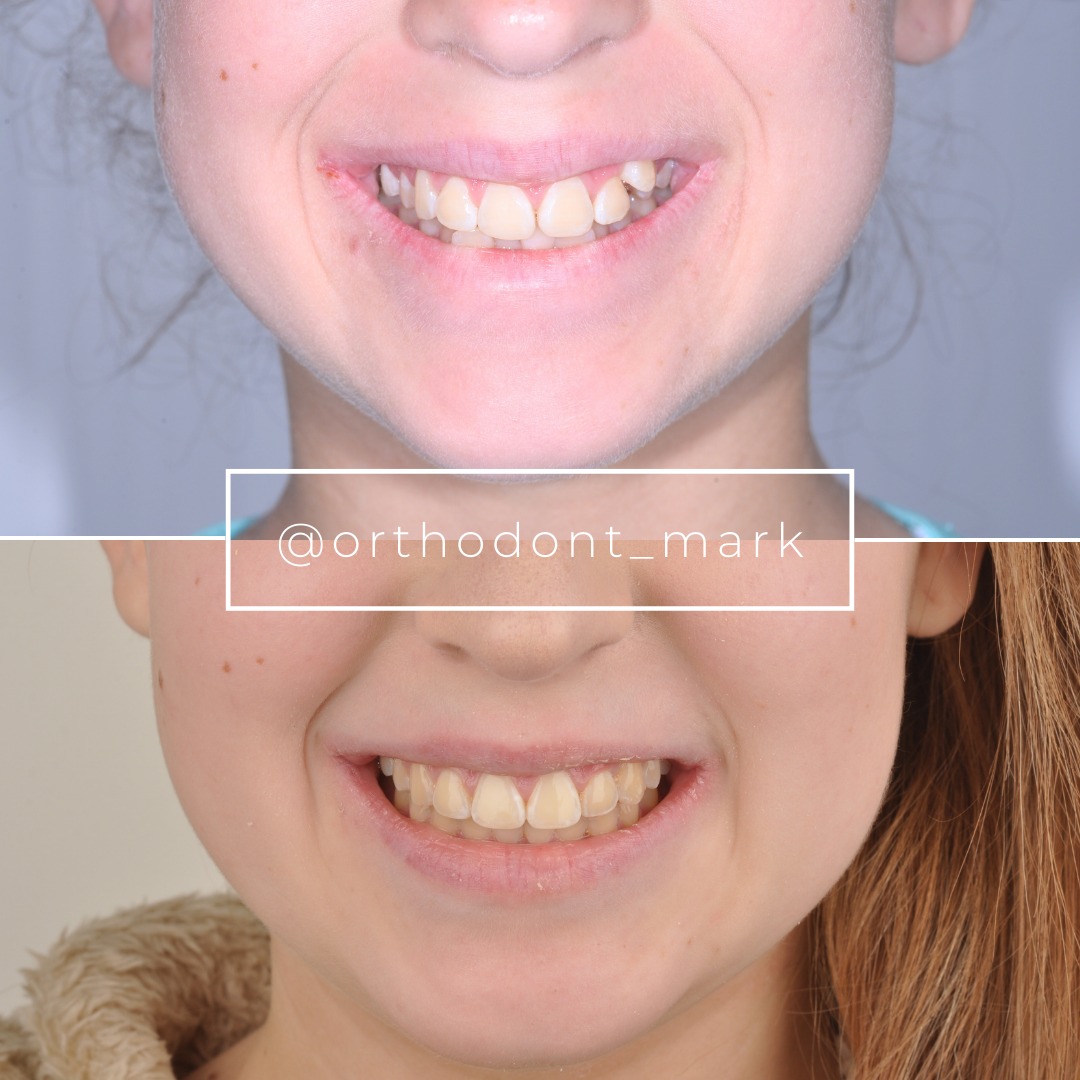
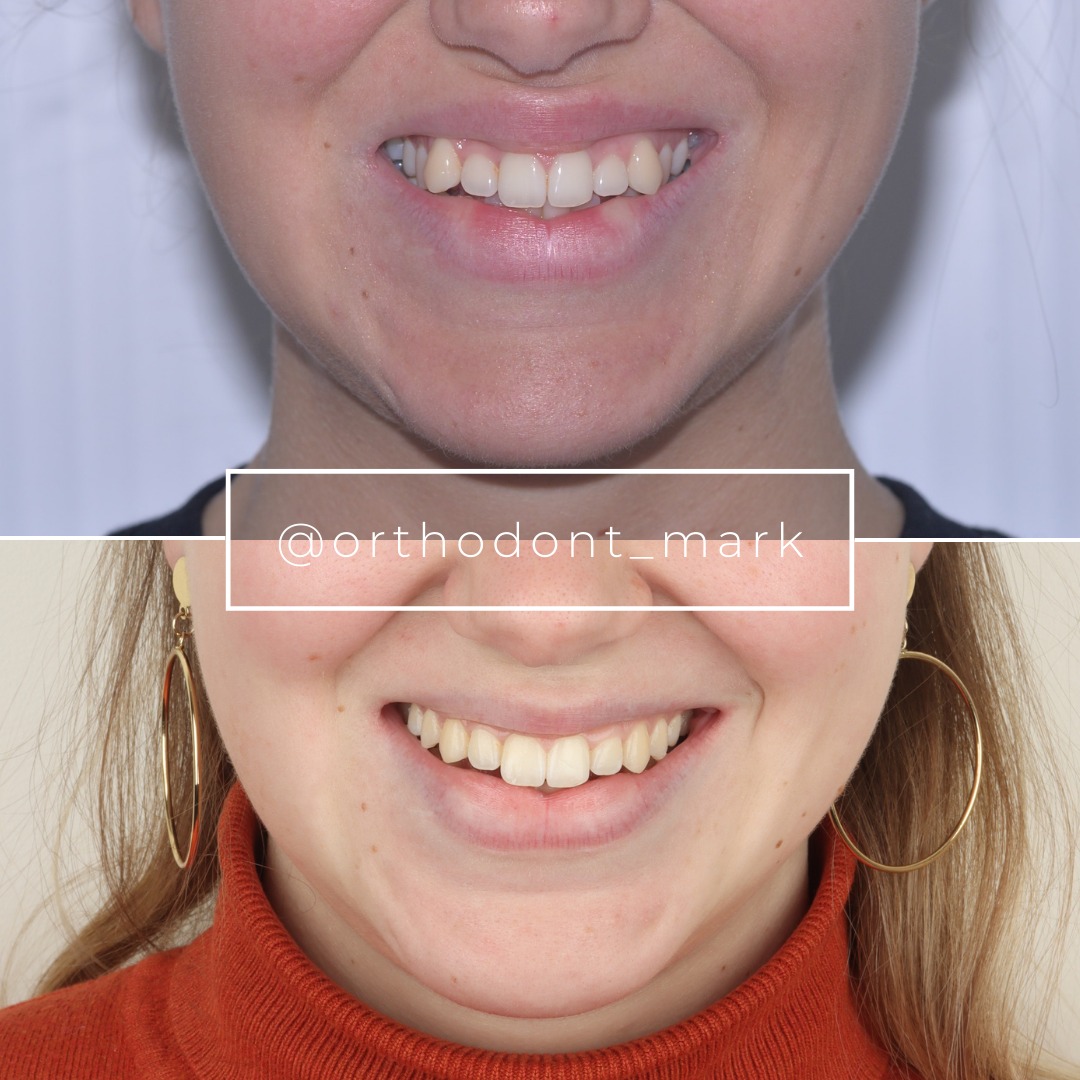
Learn the full MARPE protocol from Dr. Mark Radzhabov
Fundamental course covering CBCT patient selection, miniscrew planning, activation protocols, and 60+ clinical cases. Choose the access level that fits your practice.
Essentials of rapid palatal expansion for practicing orthodontists.
- Core RPE concepts and biomechanics
- 6 structured video lessons
- Clinical decision checklists
- Lifetime access to recordings
Deep-dive into MARPE protocol, diagnostics, and clinical execution.
- 6 modules covering MARPE from A to Z
- CBCT case selection walkthroughs
- Miniscrew placement and activation
- 60+ annotated clinical cases
- Direct Q&A with Dr. Mark Radzhabov
5-element medical consultation framework for dentists and orthodontists.
- Trust-building consultation protocol
- 5 lesson modules
- Templates for treatment plan delivery
- Works with any clinical specialty
Clinical FAQ
What is the optimal moment arm length for a MARPE lever system in palatal expansion?
Moment arm length is determined by miniscrew spacing and positioning. Bilateral posterior-lateral placement (near premolar and molar apices, 2–3 mm lateral to raphe) creates a 25–35 mm moment arm, optimizing skeletal leverage. Screws placed too close together reduce mechanical advantage and increase dental side effects.
How does vertical miniscrew offset affect torque and tipping in MARPE?
Vertical offset between miniscrew heads and the expansion screw application point introduces a torque component perpendicular to transverse expansion. Optimal placement positions screws 12–16 mm above the palatal surface, roughly level with the palatal vault center. Greater offset increases unwanted palatal tilting and dentoalveolar side effects.
What activation schedule minimizes tipping while achieving skeletal expansion?
Moderate activation (0.5–1.0 mm per week, or 3–4 turns weekly) over 8–10 weeks is clinically optimal. Faster rates increase dental tipping and stress on miniscrews. Slower rates prolong treatment but improve bone remodeling. Patient tolerance and bone density should guide final protocol selection.
How do I detect asymmetric palatal expansion during MARPE treatment?
Asymmetry appears as uneven widening on periapical radiographs or patient-reported differential pressure across the palate. Causes include misaligned miniscrews or asymmetric force vector. Pause activation, verify screw positioning via imaging, and consider selective single-screw activation to correct deviation.
What miniscrew depth range prevents failure while maintaining skeletal leverage?
Optimal palatal miniscrew depth is 8–12 mm, ensuring cortical bone anchorage and sufficient mechanical efficiency. Depths < 6 mm risk early failure; depths > 20 mm may penetrate nasal cavity or reduce lever effectiveness. Measure depth via periapical or CBCT imaging immediately post-placement.
Can MARPE leverage be used in skeletally mature adults, or is it limited to adolescents?
MARPE is highly effective in adults when the midpalatal suture shows partial or complete ossification. Skeletal-anchored mechanics bypass dental roots, making it superior to tooth-borne RPE in mature patients. Adult expansion may require slightly slower activation (0.5–0.75 mm/week) to accommodate denser bone.
How does miniscrew anteroposterior positioning affect expansion symmetry?
Bilateral symmetric anteroposterior placement (both screws parallel to frontal plane) ensures perpendicular, symmetric suture opening. Asymmetric placement (one screw anterior, one posterior) creates oblique force vectors and uneven expansion. Pre-placement imaging and surgical guides help ensure bilateral symmetry.
What role does palatal vault height play in MARPE lever system design?
Palatal vault height determines the distance between miniscrew heads and the center of resistance of palatal bone. Higher vaults require deeper screw placement and larger moment arms. CBCT pre-treatment analysis should measure vault height and guide screw positioning for each patient's unique anatomy.
How do I know if miniscrew anchorage is failing during MARPE activation?
Signs of failure include patient-reported clicking or appliance movement, visible screw loosening on radiographs, cessation of expansion progress, or sudden loss of insertion torque on palpation. Pause activation immediately, image the screw, and reassess engagement. Proceed only if anchorage is confirmed intact.
What is the relationship between force magnitude and skeletal versus dental response in MARPE?
Skeletal-anchored systems transmit force more efficiently to bone than tooth-borne RPE. However, excessive force or suboptimal screw geometry increases anchor tooth tipping and side effects. Moderate, staged activation with periodic radiographic monitoring allows bone remodeling to keep pace with expansion, optimizing skeletal response and minimizing dental complications.
Mastering MARPE's lever mechanics transforms expansion from a trial-and-error protocol into a predictable, mechanically sound treatment modality. The key is recognizing that miniscrew position, palatal vault architecture, and force magnitude work together as an integrated system—not as independent variables. If you are treating patients with maxillary constriction or exploring miniscrew-assisted skeletal expansion strategies, Dr. Mark Radzhabov invites you to review detailed case presentations and biomechanical protocols through the Orthodontist Mark learning platform, where evidence-based MARPE principles are applied in real clinical scenarios.