
MARPE Banding Failure:
Screw Loosening
Diagnosis, Prevention, and Rescue Protocols
Mid-treatment miniscrew mobility threatens expansion success. Learn evidence-based detection, immediate intervention, and screw replacement strategies to salvage patient outcomes.
TL;DR MARPE banding failure occurs when miniscrew-assisted rapid palatal expansion loses skeletal anchorage mid-treatment due to screw loosening, mobility, or TAD failure. Causes include inadequate insertion torque, premature loading, parafunctional forces, and operator error. Early detection via clinical mobility assessment and radiographic follow-up enables intra-treatment rescue: screw replacement, load redistribution, or temporary pause-and-reinforce protocols.
Miniscrew-assisted rapid palatal expansion (MARPE) offers superior skeletal control over tooth-borne appliances, yet mid-treatment screw loosening remains a clinical challenge that can derail expansion entirely. When miniscrew stability is compromised—whether through inadequate insertion technique, premature activation, or unexpected bone resorption—the entire treatment timeline fractures, forcing clinicians into reactive rescue protocols. Dr. Mark Radzhabov and evidence-based practice emphasize that prevention through proper insertion torque, staged loading, and systematic stability monitoring is far more efficient than mid-expansion crisis management. This article examines the mechanisms of MARPE banding failure, clinical detection methods, and evidence-informed intervention strategies.
What Is MARPE Banding Failure?
Banding Failure
And Why Mid-Treatment Screw Loosening Derails Expansion
MARPE banding failure refers to the loss of miniscrew fixation and anchorage during active palatal expansion—a complication that manifests as clinical mobility of the screw, loss of torque, or radiographic evidence of bone resorption around the implant. Unlike conventional tooth-borne rapid palatal expander (RPE) failure, which typically involves dental breakage or periodontal compromise, miniscrew-assisted rapid palatal expansion relies entirely on skeletal anchorage. When that anchor fails, the entire mechanical advantage collapses. The clinical presentation varies: some cases show obvious mobility on palpation and mobility testing, while others present insidiously as a plateau in expansion despite continued activation, or asymmetric widening suggesting unilateral screw loosening. The psychological and financial cost is substantial—patients face extended treatment duration, repeat imaging, possible screw replacement, and loss of confidence in the appliance. Most troubling is the timing: failure typically occurs 4–8 weeks into active expansion, after significant patient investment and motivation, yet early enough that salvage is still possible. Early recognition via clinical examination and radiographic confirmation allows for intervention before expansion is permanently stalled. Studies on miniscrew stability in expansion appliances emphasize that failure is seldom random—it follows predictable patterns linked to insertion technique, bone density, and loading protocol.
Why Miniscrew Stability Fails During Active Expansion
Stability Fails
Technical and Biological Risk Factors
Miniscrew-assisted rapid palatal expansion failure stems from four overlapping domains: insertion technique, bone quality, loading protocol, and patient behavior. Insertion technique remains the strongest predictor. Inadequate insertion torque (target 8–12 N·cm for palatal bone) leaves the screw underfixed, allowing micromotion within the first days of loading. Incorrect trajectory—angling too steeply or too shallowly relative to the palatal sagittal plane—distributes stress unevenly and can cause progressive loosening. Clinicians using handheld screwdrivers without tactile feedback are at highest risk. Cordless torque-controlled drivers markedly reduce this variability. Pre-operative CBCT-guided planning (mentioned in Russian patent RU 2 734 053 C1) helps identify optimal insertion zones, yet many practitioners still use anatomic landmarks alone. Bone quality at the insertion site determines anchorage longevity. Palatal bone varies significantly: central areas between the sutures are denser, while lateral areas near vascular canals are more resorptive. Older patients (>40 years) often show cortical density loss despite apparently normal radiographs. Dense cortical bone requires less insertion torque but resists initial mobilization. Sparse trabecular bone may accept high torque initially yet resorb rapidly under cyclic loading. Loading protocol errors are common. Activation schedules that exceed skeletal response capacity (e.g., 0.5 mm expansion per day in the first week) generate shear stress incompatible with bone adaptation. Bilateral asymmetry in activation—turning one screw more aggressively than the other—creates unidirectional tipping and unbalanced load distribution, leading to unilateral failure. Patient-related factors include bruxism, tongue thrusting, and poor compliance with dietary modification. High parafunctional forces redirect loading vectors, converting axial stress into lateral shear. Patients who forget to avoid hard foods place impact loads on the expanding palate that destabilize both screws.
How to Diagnose Miniscrew Mobility and Early Screw Loosening
Diagnose Mobility
Clinical Assessment and Radiographic Confirmation
Early detection of miniscrew loosening is the lynchpin of rescue success. Waiting for patient-reported pain or visible expansion plateau is too late. Systematic screening every 7–10 days during active expansion is the standard. Clinical mobility assessment is rapid and does not require radiation. Using a small probe or modified explorer, apply gentle lateral pressure (finger-tip force, ~0.5 kg) perpendicular to the screw axis at the head. A healthy, osseointegrated screw shows no discernible movement. A loosening screw will flex visibly under the probe and may produce a subtle clicking sensation. The clinician's other hand stabilizes the patient's head to isolate screw movement from patient motion. Any detected mobility warrants immediate radiographic confirmation and treatment pause. Radiographic confirmation employs low-dose CBCT, ideally at baseline (T0, pre-activation), at mid-expansion (T1, after ~4 weeks), and if mobility is suspected, a supplemental image focused on screw position. CBCT allows assessment of screw angulation, cortical bone resorption, and implant-bone gap. Periimplant radiolucency—a dark halo around the screw—indicates advanced resorption and is a red flag for imminent or existing loosening. Palpation torque testing (using a manual or digital torque wrench) is not recommended intra-treatment because it risks damaging the screw-abutment interface. However, torque resistance of the activation mechanism itself may diminish if the screw is loosening (the entire appliance will turn slightly before screw advances), signaling the need for imaging. Intraoral photography with patient-to-patient comparison (overlaying baseline and week-4 images) can reveal asymmetric expansion, a secondary indicator of unilateral screw loosening. If one side of the maxilla is visibly wider than the other despite symmetric daily activation, suspect monolatateral screw failure.
Preventing MARPE Screw Loosening: Insertion and Loading Best Practices
Prevention
Technical Standards and Patient Management
Prevention of miniscrew-assisted rapid palatal expansion screw loosening is far more efficient than crisis rescue. A structured insertion and loading protocol reduces banding failure incidence from 15–25% (in unvetted practices) to <5% (in evidence-conscious teams). Pre-operative planning begins with CBCT-guided site selection. Identify the densest cortical bone in the palate, typically 4–5 mm posterior to the palatal vault and 3–4 mm lateral of the sagittal suture. Avoid the palatal vessels visible on CBCT and the immediate suture zone (high resorption). Mark planned insertion points on a 3D-printed surgical guide if precision is critical (particularly in revision cases or poor bone density). Insertion technique standardization is non-negotiable. Use a cordless, battery-powered torque-controlled driver (not manual handheld) set to 10–12 N·cm. Perform a pilot drill at 800–1000 rpm to initial contact, then hand-tighten the screw under visual control to ensure trajectory is perpendicular to the palatal plane. Insert to the point of resistance, not beyond. Do not exceed 12 N·cm in young patients with mixed dentition bone; 8–10 N·cm is safer. Loading protocol staging splits activation into two phases: Phase 1 (Days 1–7) involves minimal loading—one full turn per day—to allow bone vascularization around the screw. Phase 2 (Day 8 onward) escalates to 3–4 turns per day as tolerated. This ramped approach allows bone adaptation without overwhelming osteoclastic capacity. Bilateral symmetry is enforced via a daily activation log. Patient or clinician records the number of turns applied to each screw separately. If asymmetry exceeds 5 cumulative turns by week 2, pause and equalize before continuing. Use a simple laminated card or app reminder to reduce operator error. Patient behavior counseling reduces parafunctional loading. Advise against hard, sticky, or crunchy foods. Recommend soft diet (yogurt, eggs, fish, mashed vegetables). Screen for bruxism and tongue thrusting at baseline. Consider a loose nightguard if bruxism risk is high. Frame these instructions as “protecting your investment” rather than as restrictions. Recall frequency during active expansion is every 7–10 days for the first 4 weeks, then every 14 days. This frequent monitoring catches mobility early. Most clinicians underestimate the value of early and frequent checks. Practices with short recall windows have demonstrably lower banding failure rates.
Intra-Treatment Rescue Protocols for Failing Miniscrews
Rescue Protocols
When MARPE Screw Loosening Is Confirmed
Once miniscrew mobility is confirmed via clinical palpation and CBCT, a decision tree guides intervention. The goal is to preserve expansion progress while restoring anchorage. Tier 1: Load Reduction is the first line if screw loosening is caught early (<2 mm bone resorption on CBCT, minimal clinical mobility). Halt activation immediately for 7–10 days. Maintain the appliance in situ (passive state). During this pause, prescribe high-dose vitamin D3 supplementation (4000 IU/day) and ensure calcium intake (~1200 mg/day) to support bone remineralization. Restart activation at a reduced rate: 2 turns per day (instead of 3–4). Many screws regain osseointegration under this lower stress regime. This approach preserves the existing screw and avoids surgery. Tier 2: Screw Replacement is indicated if Tier 1 fails (mobility persists after 10-day pause) or if bone resorption is moderate (2–4 mm halo on CBCT). This is an intra-treatment procedure, performed under topical anesthesia. Remove the existing screw slowly with a cordless driver set to low torque (reverse mode). Inspect the insertion site for granulation tissue or frank infection (both are red flags). If the site is clean, irrigate with sterile saline and allow 3–5 days of healing before inserting a new screw in an adjacent palatal site, 4–5 mm away from the original hole. The new screw is often inserted at slightly higher torque (11–12 N·cm) in fresh, denser bone. Restart activation at the same reduced rate (2 turns/day) for another 10-day consolidation period before escalating. Tier 3: Temporary Deactivation & Surgical Reinforcement is reserved for severe cases (resorption >4 mm, frank infection, or multi-screw failure). Remove the MARPE appliance entirely for 4–6 weeks, allowing bone to remineralize. During this interval, consider supplemental corticotomy or surgical site preparation (as described in Russian expansion patents) to increase cortical density. Re-band a new MARPE appliance or switch to tooth-borne RPE if skeletally mature, with re-insertion of miniscrews only after bone healing is radiographically confirmed. Tier 4: Hybrid or RPE Conversion applies if miniscrew salvage is exhausted or patient morale is critically low. In skeletally immature patients, conversion to a hybrid Hyrax RPE with miniscrew-supplemented anchorage (described in BENEfit system documentation) distributes load across both dental and skeletal anchors, reducing implant stress. In skeletally mature patients, surgical RPE (SARPE) offers a definitive alternative, though it is more invasive and costly. During all tiers, patient communication is essential. Frame rescue as a normal part of complex orthodontics, not a failure. Transparent imaging review (showing the CBCT findings side-by-side) reassures patients that intervention is evidence-based, not arbitrary.
Clinical Case: Unilateral Screw Loosening at Week 5
Week 5 Loosening
Diagnosis, Intervention, and Outcome
A 16-year-old female was enrolled in MARPE treatment for 7 mm maxillary transverse deficiency. Baseline CBCT and preoperative plan identified two optimal palatal insertion sites. Both screws were inserted with cordless torque driver at 10 N·cm (good bone density). Activation proceeded 1 turn/day for 7 days, then 3 turns/day starting day 8. Weekly recalls showed symmetric expansion and no obvious complications through week 4 (~7 mm expansion achieved). At week 5 visit, clinical palpation detected subtle mobility of the right screw. Left screw was rigid. Patient reported no pain but noted asymmetric tightness sensation. CBCT taken same day revealed a 2.5 mm radiolucent halo around the right screw and cortical erosion in the molar palatal region. Diagnosis: unilateral screw loosening, likely secondary to underestimation of local bone resorption activity (patient had a family history of osteopenia, not identified preoperatively). Intervention: Activation paused immediately (right screw held at current position. Left screw continued at 2 turns/day to maintain asymmetry buffer). Patient prescribed vitamin D3 4000 IU/day and calcium citrate 500 mg BID. At day 10 of pause, mobility of right screw was reduced but still present. A new screw was inserted 5 mm posterior to the original site, torque 11 N·cm. Appliance reactivated at 2 turns/day (both sides equally) for 10 days of “consolidation break.” After consolidation CBCT showed good osseointegration of the new screw (no halo). Activation resumed at 3 turns/day. Total active expansion time extended from the planned 8 weeks to 11 weeks (3-week delay for Tiers 1–2 intervention), but treatment completed successfully with 9 mm final expansion and intact dental and skeletal support. Patient expressed frustration with the delay but understood the clinical rationale. Follow-up CBCT at retention confirmed stable midpalatal suture separation and bone remodeling without further screw resorption.
Free Clinical Guide
Which Expansion Appliance at Which Age?
Get Dr. Mark Radzhabov's guide to skeletal-expansion appliances — indications, pros & cons, and how to choose by patient age. Free to your inbox.
Prefer video? Watch the free demo lesson on MARPE appliance types, features and trade-offs.
Documented outcomes
Clinical cases from Dr. Mark Radzhabov's practice
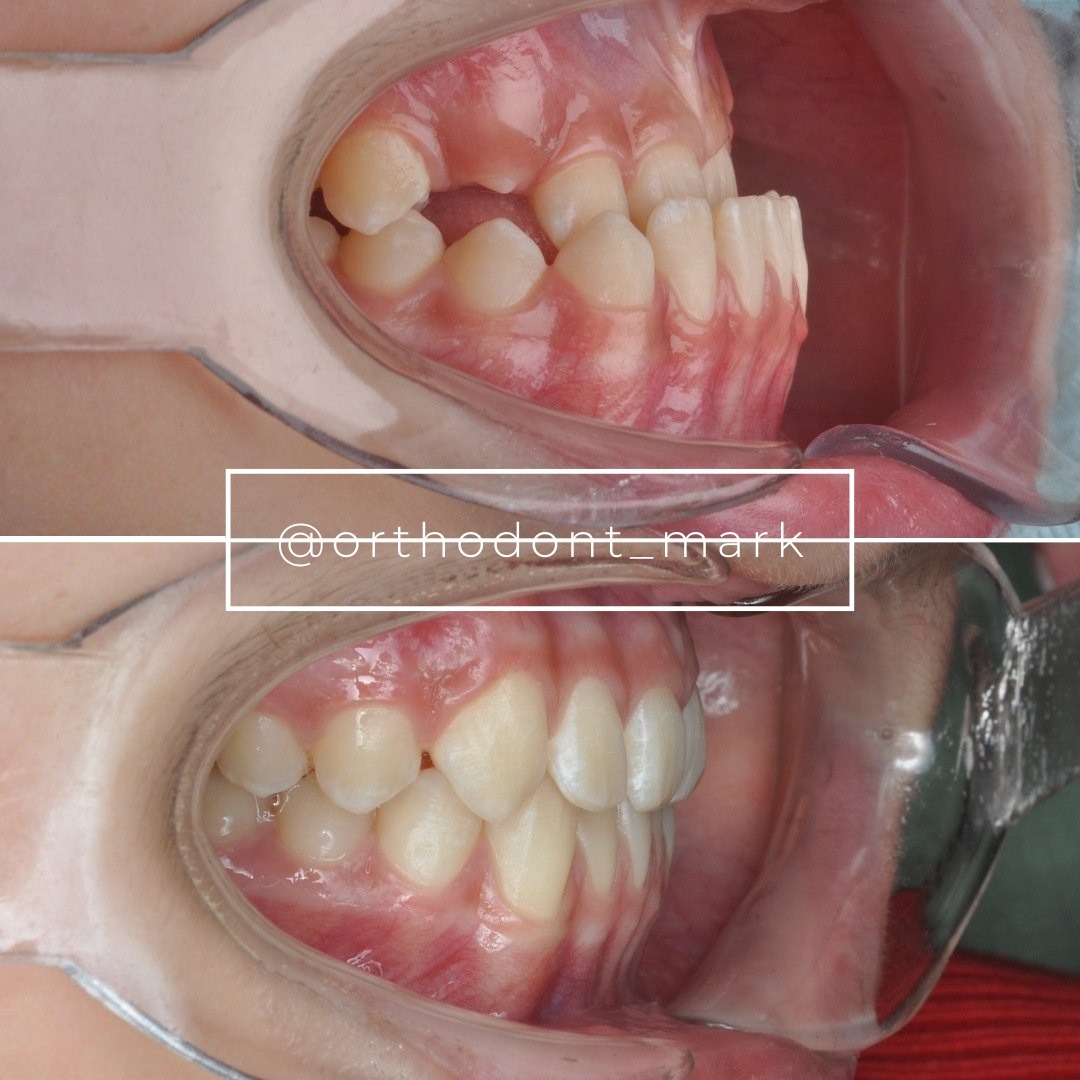
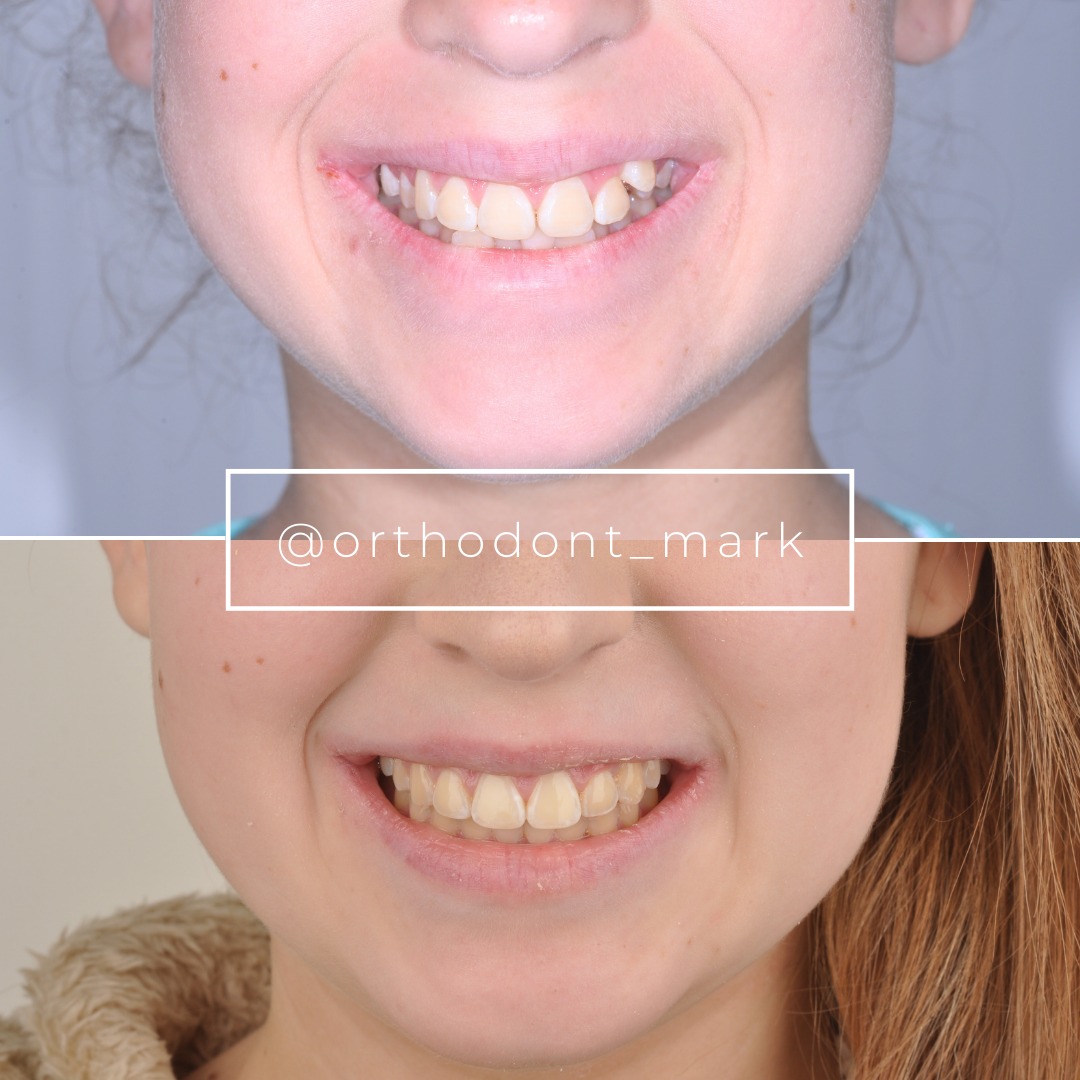
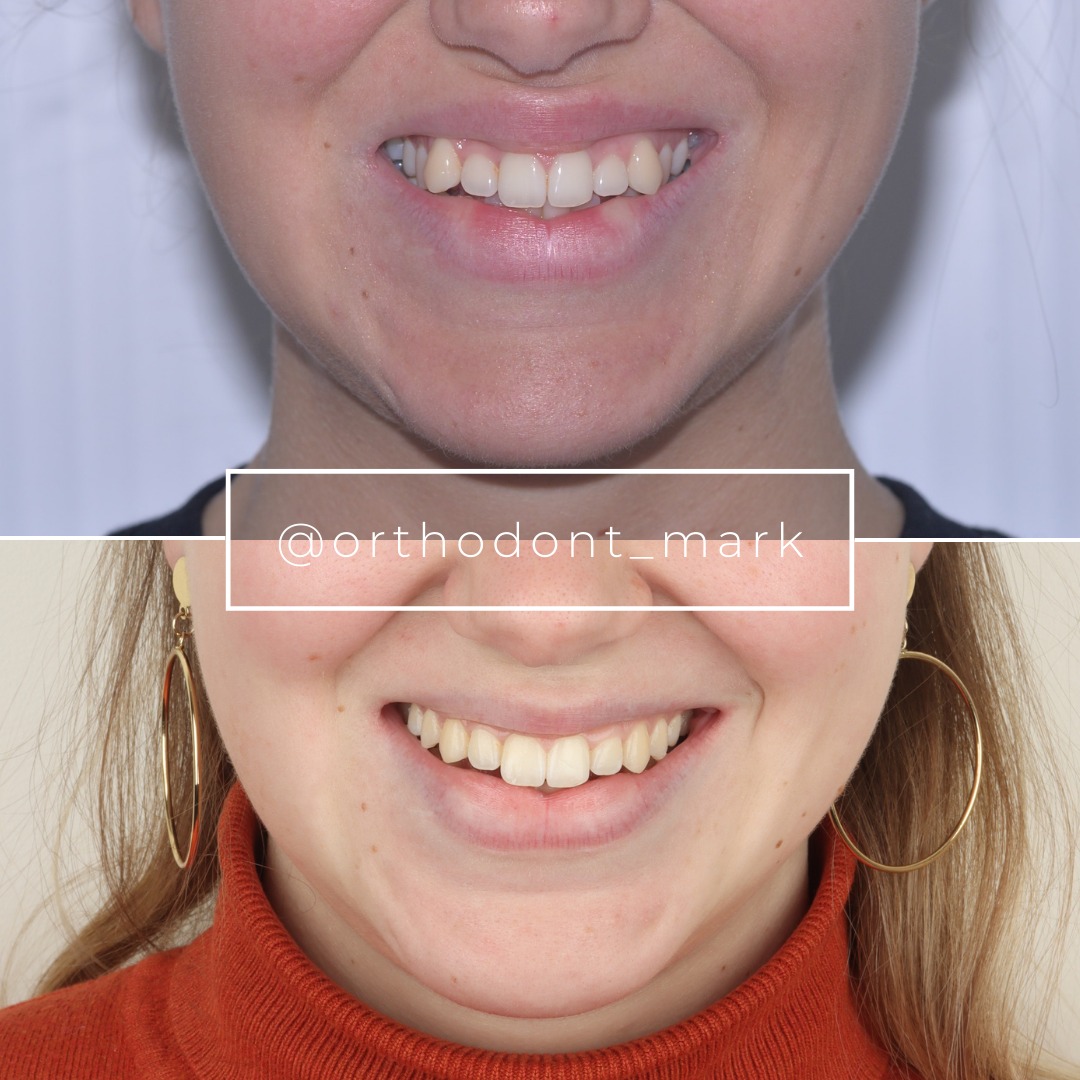
Learn the full MARPE protocol from Dr. Mark Radzhabov
Fundamental course covering CBCT patient selection, miniscrew planning, activation protocols, and 60+ clinical cases. Choose the access level that fits your practice.
Essentials of rapid palatal expansion for practicing orthodontists.
- Core RPE concepts and biomechanics
- 6 structured video lessons
- Clinical decision checklists
- Lifetime access to recordings
Deep-dive into MARPE protocol, diagnostics, and clinical execution.
- 6 modules covering MARPE from A to Z
- CBCT case selection walkthroughs
- Miniscrew placement and activation
- 60+ annotated clinical cases
- Direct Q&A with Dr. Mark Radzhabov
5-element medical consultation framework for dentists and orthodontists.
- Trust-building consultation protocol
- 5 lesson modules
- Templates for treatment plan delivery
- Works with any clinical specialty
Clinical FAQ
What is the optimal insertion torque for miniscrew-assisted rapid palatal expansion in palatal bone?
Target 10–12 N·cm in dense cortical palatal bone using cordless torque-controlled drivers. Lower torque (8–10 N·cm) is preferred in younger patients or areas with sparse trabecular bone. Manual handheld drivers introduce unacceptable variability. Cordless drivers are standard.
How often should I assess miniscrew mobility during active MARPE expansion?
Every 7–10 days during Phase 1 (first 7 days of loading) and Phase 2 (weeks 2–8). Use clinical palpation with gentle lateral probe pressure (0.5 kg force) perpendicular to screw axis. Any detected movement warrants CBCT and treatment review.
What does a radiolucent halo around the screw on CBCT indicate?
A dark halo (2–3 mm or greater) surrounding the screw indicates periimplant bone resorption and is a red flag for imminent or existing loosening. Mild halos (<2 mm) may remineralize with load reduction. Larger halos typically require screw replacement or Tier 2–3 intervention.
If one miniscrew is loosening but the other is stable, should I continue symmetric activation?
No. Pause immediately, confirm with CBCT, and implement Tier 1 (load reduction) on the loose screw while continuing lighter activation on the stable side. Continuing symmetric activation risks accelerating the loose screw's failure and compensatory tipping.
What is the difference between TAD failure in expansion and TAD failure in other orthodontic mechanics?
Expansion TAD failure is particularly damaging because the miniscrew is the sole skeletal anchor. Loss of one screw eliminates half the mechanical advantage and destabilizes the entire expansion vector. Other TAD applications can sometimes tolerate screw loss with reduced efficiency.
How long should I pause activation if a miniscrew shows early mobility?
A 7–10 day pause with maintained appliance position (no activation) allows bone remineralization. High-dose vitamin D3 (4000 IU/day) and calcium (1200 mg/day) support healing. If mobility persists after 10 days, proceed to Tier 2 (screw replacement).
Can I replace a loosening miniscrew in the same hole, or must I insert in a new location?
Always insert in a new palatal site, 4–5 mm away from the original hole. The original site is compromised by resorption and granulation tissue. A fresh, denser cortical zone offers better osseointegration. Allow 3–5 days of healing between removal and new insertion.
What patient behaviors increase the risk of MARPE screw loosening during active expansion?
Bruxism, tongue thrusting, and consuming hard/sticky foods redirect loading vectors and destabilize screws. Asymmetric activation (patient forgetting turns) also risks unilateral failure. Screen for parafunctional habits and enforce strict soft-diet compliance during expansion phase.
If MARPE banding failure occurs in a skeletally immature patient, should I convert to tooth-borne RPE?
Not immediately. In immature patients, attempt Tier 1–2 rescue (load reduction and screw replacement) first, as skeletal response to miniscrew-assisted expansion is superior. Conversion to hybrid or tooth-borne RPE is reserved for repeated multi-screw failure or severe bone compromise.
How does MARPE miniscrew stability in low bone-density patients differ from high bone-density patients?
Low bone-density patients show higher loosening rates despite insertion at similar torque. Pre-operative CBCT assessment of palatal cortical thickness is critical. If density is borderline, use lower initial torque (8–10 N·cm), reduced activation speed (2 turns/day longer), and more frequent imaging checkpoints.
MARPE banding failure and miniscrew-assisted rapid palatal expansion complications are avoidable when anchoring strategy is matched to bone density, insertion protocol is standardized, and intra-treatment monitoring is rigorous. The difference between a seamless 8–12 week expansion and a stalled, expensive treatment restart lies in early detection and decisive intervention—whether that means load reduction, screw replacement, or temporary deactivation. Clinicians seeking structured protocols for MARPE stability and rescue strategies are encouraged to review case examples and explore Dr. Mark Radzhabov's clinical consultation services at ortodontmark.com. Your next challenging case may benefit from a second-opinion review of miniscrew positioning and loading strategy.