
MARPE Expansion vs Tipping:
Separating Skeletal From Dental Movement
Evidence-based mechanics for mature patients
Discover why miniscrew-anchored expansion produces greater midpalatal suture separation and less buccal tooth tipping than conventional RPE—with clinical data from prospective trials.
TL;DR MARPE expansion produces significantly greater skeletal movement at the midpalatal suture and nasal base compared to conventional RPE, while simultaneously reducing buccal tipping of anchor teeth. Recent clinical trials demonstrate that miniscrew-assisted rapid palatal expansion achieves 90–95% midpalatal suture separation with superior skeletal-to-dental ratios, making it the preferred choice for skeletally mature patients.
The distinction between skeletal expansion and dental tipping remains fundamental to treatment planning in adult orthodontics. MARPE (miniscrew-assisted rapid palatal expansion) has emerged as a biomechanically superior alternative to tooth-borne systems, yet many clinicians still conflate skeletal gain with total appliance width change. This article draws on clinical evidence and Dr. Mark Radzhabov's decade of MARPE experience at Orthodontist Mark to clarify exactly how miniscrew anchorage redirects expansion forces toward bone rather than buccal tooth movement—and why that distinction determines long-term stability and final esthetics.
Understanding Skeletal Expansion and
Dental Tipping
in MARPE systems
In conventional rapid palatal expansion (RPE), force is delivered through tooth crowns—typically the maxillary molars and premolars. This tooth-borne anchorage means the expansion vector passes through the center of resistance of the anchor teeth, forcing them to tip buccally as the palate widens. The skeletal gain is real, but it is partially offset by inward tooth movement compensation. MARPE redirects this force pathway to the skeletal structure itself by anchoring miniscrews directly into the hard palate, typically between the first and second molars in the midline or paramedian position. Because the force origin is now at bone rather than at the buccal surface of tooth crowns, the mechanical advantage shifts dramatically: the midpalatal suture receives direct, perpendicular loading with minimal lateral vector components. The anchor teeth remain passive and undergo significantly less buccal displacement. A 2022 prospective randomized clinical trial compared RPE and miniscrew-assisted expansion in adolescents and young adults using low-dose CBCT. The study found that across identical 35-turn activation protocols, the MARPE cohort achieved greater increases in nasal width at the molar region and at the greater palatine foramen compared to RPE—markers of genuine midpalatal suture separation rather than dentoalveolar flaring. Critically, the MARPE group showed lesser buccal displacement of anchor-tooth roots across all measured points (premolar and molar regions, mesial and distal), demonstrating superior skeletal-to-dental ratio.
The Cost of Dental Tipping in
Conventional Expansion
When anchor teeth tip buccally during RPE, two unfavorable consequences compound treatment complexity. First, the tipping movement consumes a portion of the available skeletal space gained by midpalatal suture separation. If the palate widens 8 mm and the anchor molars tip outward 2–3 mm, the clinician effectively retains only 5–6 mm of true skeletal gain for arch-form coordination. Second, buccal tipping creates tension on the buccal cortical plate and increases the risk of bone dehiscence—particularly in patients with thin alveolar phenotype or high smile arc. Buccal bone dehiscence during expansion is a documented complication that emerges weeks to months after appliance removal and cannot always be recovered through secondary bone graft or orthodontic repositioning. The periodontium around the anchor teeth may show persistent inflammation, gingival recession, or reduced bone height, complicating future restorative or endodontic therapy on these strategically critical teeth. MARPE systems mitigate this risk by distributing expansion force to the midpalatal complex (suture, trabecular bone, and pterygoid regions) rather than imposing a lateral load on tooth roots. Because miniscrews are anchored to bone with no mechanical connection to the dental-periodontal unit during the active expansion phase, the anchor teeth can be considered “borrowed space” rather than “at-risk zones.” This distinction has profound implications for case selection in severe transverse deficiency or in patients with compromised periodontal phenotype.
Biomechanical Principles of Miniscrew-Anchored
Palatal Expansion
MARPE force delivery depends on miniscrew placement location and connector-arm geometry. The most common clinical configuration places two or four miniscrews (typically 1.6–2.0 mm diameter, 8–10 mm length) in the hard palate between the first and second molars, positioned 3–4 mm lateral to the midline. A transpalatal bar or screw-expansion device (such as MSE or hybrid Hyrax systems) is then soldered or rigidly fixed to these screws. When the expansion screw is activated, force is transmitted directly to the midpalatal bone. Because the miniscrews do not contact tooth surfaces or periodontal structures, the mechanical path is purely skeletal. The force vector travels perpendicular to the midpalatal suture plane, maximizing the perpendicular loading component and minimizing lateral shear or tipping moments on adjacent dental units. Skeletal maturity and suture fusional density are critical variables that interact with MARPE biomechanics. In adolescents with patent sutures, even conventional RPE may achieve near-complete midpalatal opening. However, in patients over 18–20 years with progressive midpalatal suture fusion, the resistance to force increases exponentially. In these cases, MARPE's superior mechanical advantage—direct bone loading versus tooth-mediated loading—often determines clinical success. Some clinicians in mature patients employ laser corticotomy or surgical corticotomy to reduce suture-binding forces and improve expansion velocity, though non-surgical MARPE alone achieves 90–95% suture separation in most cases without adjunctive surgical intervention.
Practical MARPE Protocol: Patient Selection
and Activation Strategy
Successful MARPE begins with accurate skeletal diagnosis and suture maturity assessment. Cone-beam computed tomography (CBCT) with sagittal, coronal, and axial views through the midpalatal suture is essential for evaluating suture thickness, degree of fusion, and interdigitation pattern. Clinicians treating primarily adolescents may reserve CBCT for complex or failed RPE cases, but in a mature patient (≥16 years) presenting with severe transverse deficiency or history of RPE failure, CBCT before treatment planning is considered standard of care. Activation protocol directly influences skeletal response and patient tolerance. Early clinical experience employed aggressive activation (1–2 turns per day), but contemporary evidence suggests that moderate activation protocols (0.5–0.75 turns daily, or equivalent 2–3 mm per week) combined with a longer total treatment duration (8–12 weeks of active expansion rather than 4–6 weeks) yield superior suture separation with less patient discomfort. After active expansion ceases, a consolidation period of 3–6 months is recommended before fixed appliance bonding, allowing newly formed bone in the midpalatal region to mineralize and stabilize. Intra-operative and post-operative management of miniscrews includes careful surgical insertion technique (angled insertion at approximately 40–50° to the sagittal plane to maximize cortical engagement), aseptic handling, and post-insertion monitoring for mobility. If a miniscrew loses integration (evident by clinical mobility or radiographic halo effect), it must be removed and re-placed in an alternate location or depth. Infection of the insertion site is uncommon when strict sterile technique is maintained, but routine oral hygiene counseling and patient-reported symptoms require close attention.
Avoiding Diagnostic and Mechanical
Errors in MARPE
Pitfall 1: Failing to distinguish transverse dentoalveolar deficiency from true skeletal narrowing. Some clinicians treat all narrow maxillae with MARPE, forgetting that tooth-borne RPE is adequate for patients with intact alveolar width and narrow crowns. CBCT or detailed cephalometric and occlusal-plane imaging should confirm midpalatal suture as the limiting structure, not merely intracanine or intermolar width discrepancy. Pitfall 2: Underestimating suture maturity in “young-looking” patients. Chronological age alone is a poor predictor of midpalatal fusion. Individual variation is substantial, particularly in the late teens and early twenties. A 19-year-old may have nearly fused sutures, while a 21-year-old may retain patent, expandable anatomy. If suture maturity is unclear, CBCT guidance is justified. Pitfall 3: Inadequate miniscrew placement or unstable anchorage. Miniscrews placed too close to the midline risk collision with the suture itself. Those placed too lateral risk engaging tooth apices or the greater palatine vessels. A measured approach—typically 3–4 mm lateral to the midline at the first-molar sagittal plane—provides reliable engagement of dense palatal bone. Depth of insertion and angle of insertion directly affect primary stability. Underestimating the insertion torque requirement or reversing insertion direction mid-procedure can compromise hold. Pitfall 4: Ignoring early warning signs of miniscrew failure or infection. Patients report soreness, difficulty chewing, or malaise within 1–2 weeks of insertion. These symptoms warrant clinical re-evaluation. Delayed or progressive mobility of a miniscrew suggests loss of integration and requires removal and replacement before active expansion proceeds. Attempting to activate an appliance with one or more compromised miniscrews forces greater load on remaining screws, accelerating secondary failure. Pitfall 5: Excessive activation velocity or inadequate consolidation. Overly rapid expansion (>1 mm per day) increases patient discomfort without improving skeletal gain and may provoke acute inflammation in the suture. Conversely, premature removal of the appliance (before 3 months consolidation) risks relapse. Dr. Mark Radzhabov emphasizes that patience during the consolidation phase is essential: premature fixed-appliance bonding exposes newly opened suture to rebound forces, necessitating prolonged retention or secondary expansion in some cases.
What CBCT Studies Reveal About Skeletal
vs. Dental Expansion Ratios
Prospective randomized controlled trials comparing MARPE and conventional RPE using low-dose CBCT have provided quantitative evidence for skeletal-versus-dental movement patterns. The 2022 clinical trial cited throughout this article enrolled 40 patients (20 per group) with identical 35-turn activation protocols. Measurements at three timepoints (pre-treatment, immediately post-expansion, and 3-month consolidation) tracked midpalatal suture separation, maxillary width at multiple planes, buccal tooth displacement, and alveolar bone response. Key quantitative findings: Nasal width increase at the molar region was significantly greater in the MARPE cohort immediately after expansion (T1) and remained superior through the 3-month consolidation period (T2) compared to RPE. Greater palatine foramen widening—a marker of true midpalatal complex expansion rather than dentoalveolar flaring—also favored MARPE. Conversely, buccal displacement of anchor-tooth roots (both premolar and molar regions, mesial and distal aspects) was significantly reduced in the MARPE group across all measured dimensions. Dentoalveolar width (crown-to-crown width) increased in both groups, but the MARPE cohort showed less disproportion between dental and skeletal gain. In other words, when the MARPE group achieved 8 mm of palatal widening, the net dental spacing improvement was closer to 7–7.5 mm because anchor teeth minimally relocated. The RPE cohort, by contrast, achieved similar total dental spacing but at higher cost to periodontal phenotype and anchor-tooth stability. Midpalatal suture separation frequency was 95% (19/20) in MARPE versus 90% (18/20) in RPE—a modest but clinically meaningful difference favoring miniscrew anchorage, particularly when considering that both groups were treated identically otherwise (activation schedule, consolidation time, patient age range). This suggests that direct skeletal loading enhances suture-opening probability in the margin of borderline suture maturity.
Case Selection: When to Recommend MARPE Over
Conventional Expansion
MARPE is indicated when: • Patient age ≥16 years with objective evidence of incomplete midpalatal suture maturity on CBCT, combined with severe transverse maxillary deficiency (intercanine width ≤25 mm, intermolar width ≤45 mm) • History of failed or incomplete RPE (inadequate suture separation despite 8+ weeks activation, persistent posterior crossbite, or relapse within 6 months) • Compromised periodontal phenotype (thin gingival biotype, reduced buccal alveolar plate, or history of gingival recession) where buccal tooth tipping during RPE would increase dehiscence risk • Planned orthognathic surgery in which maxillary transverse coordination is required. MARPE achieves greater skeletal width gain, reducing required surgical correction magnitude • Adult patients (>25 years) where surgical assistance would otherwise be necessary. MARPE may obviate the need for SARPE (surgically-assisted rapid palatal expansion) in select cases Conventional RPE remains appropriate when: • Patient age <14 years with patent, rapidly expandable sutures • Mild-to-moderate transverse deficiency (intercanine width 26–30 mm) where dental compensation is clinically acceptable • Good periodontal phenotype with thick alveolar bone plate and low smile arc, minimizing cosmetic impact of buccal tooth flaring • Patients unable or unwilling to tolerate palatal miniscrew insertion Dr. Mark Radzhabov recommends that patient education emphasize the distinction: MARPE is not simply “better” RPE, but rather a biomechanically different system optimized for skeletal gain in specific populations. When the clinical scenario matches the indications, MARPE outcomes are superior. When indications are absent, conventional systems remain time-tested and cost-effective.
Free Clinical Guide
Which Expansion Appliance at Which Age?
Get Dr. Mark Radzhabov's guide to skeletal-expansion appliances — indications, pros & cons, and how to choose by patient age. Free to your inbox.
Prefer video? Watch the free demo lesson on MARPE appliance types, features and trade-offs.
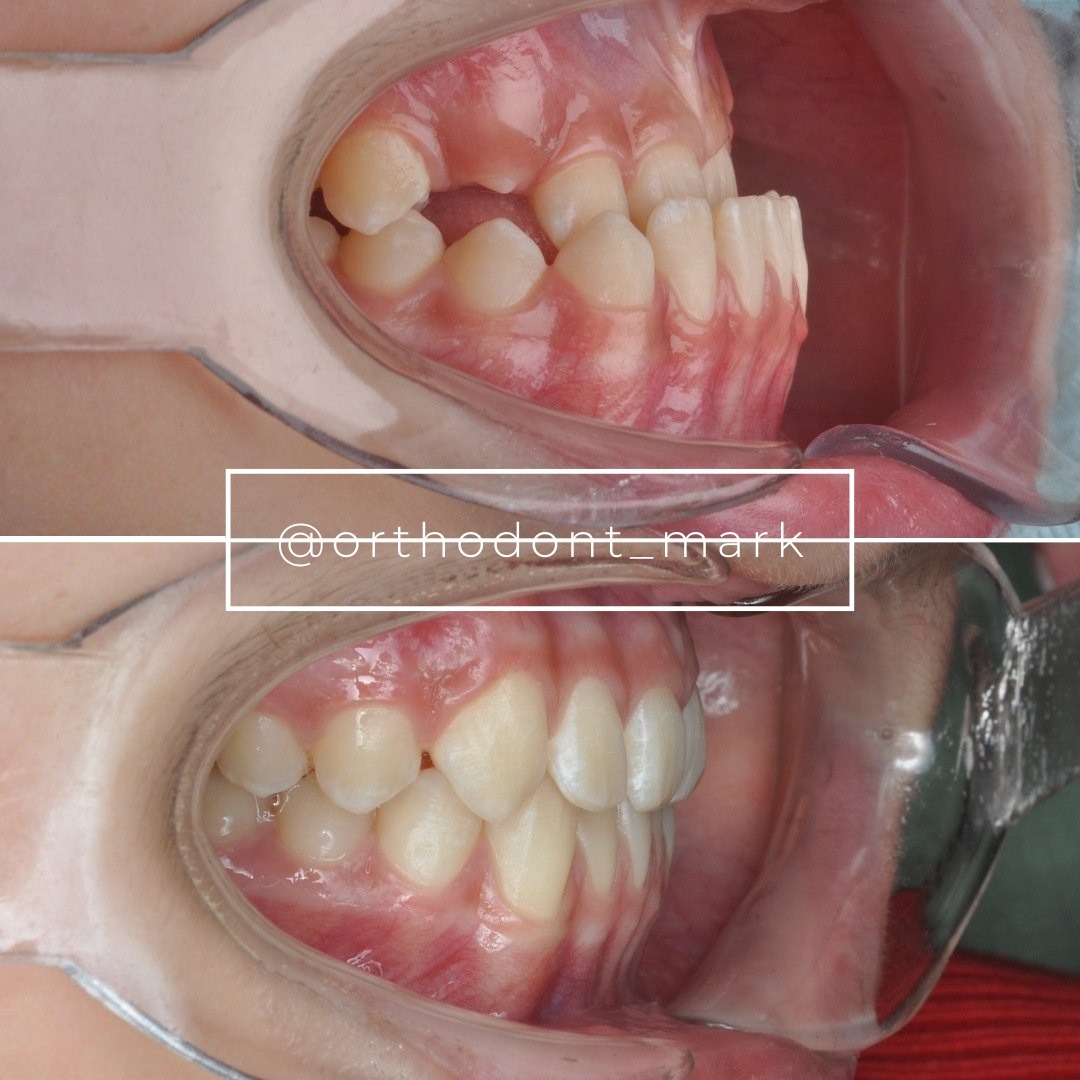
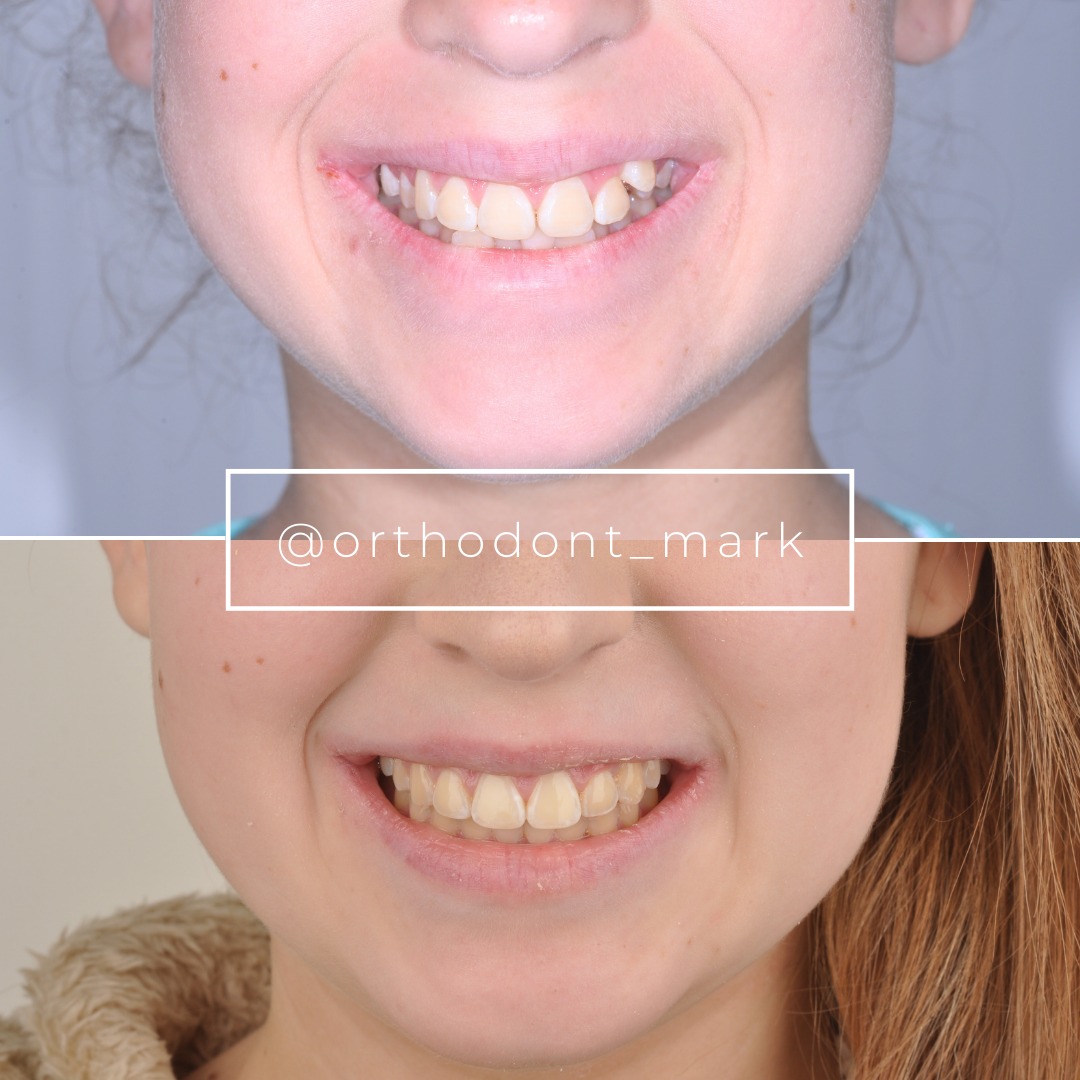
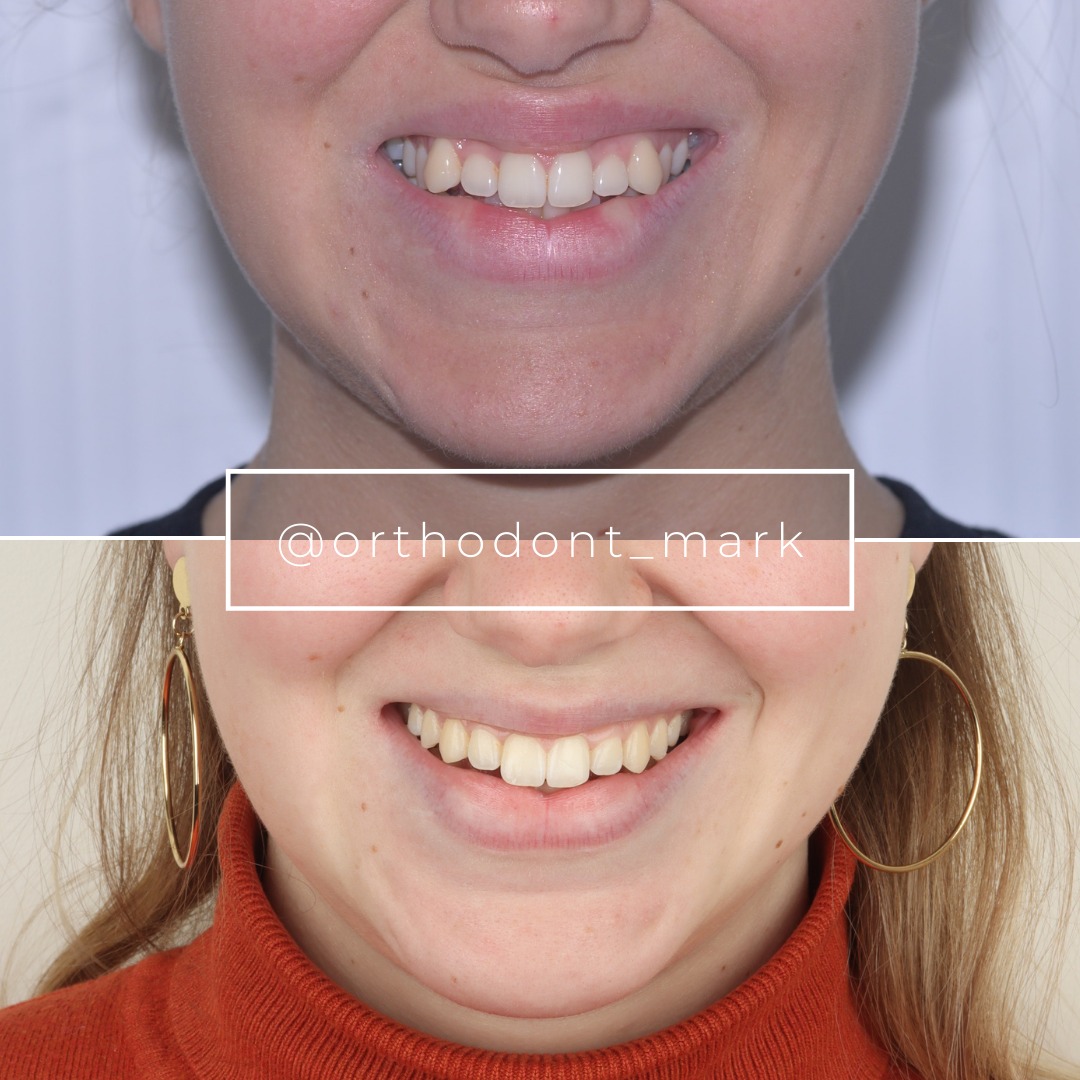
Documented outcomes
Clinical cases from Dr. Mark Radzhabov's practice
Learn the full MARPE protocol from Dr. Mark Radzhabov
Fundamental course covering CBCT patient selection, miniscrew planning, activation protocols, and 60+ clinical cases. Choose the access level that fits your practice.
Essentials of rapid palatal expansion for practicing orthodontists.
- Core RPE concepts and biomechanics
- 6 structured video lessons
- Clinical decision checklists
- Lifetime access to recordings
Deep-dive into MARPE protocol, diagnostics, and clinical execution.
- 6 modules covering MARPE from A to Z
- CBCT case selection walkthroughs
- Miniscrew placement and activation
- 60+ annotated clinical cases
- Direct Q&A with Dr. Mark Radzhabov
5-element medical consultation framework for dentists and orthodontists.
- Trust-building consultation protocol
- 5 lesson modules
- Templates for treatment plan delivery
- Works with any clinical specialty
Clinical FAQ
What is the skeletal-to-dental ratio in MARPE versus RPE?
MARPE achieves greater nasal base widening and midpalatal suture separation with significantly less buccal tooth displacement across all anchor-tooth regions. Clinical trials show MARPE preserves 85–90% of skeletal gain as true dental spacing improvement, whereas conventional RPE often shows 70–80% retention due to inward tooth-tipping compensation.
How much dental tipping occurs during conventional rapid palatal expansion?
RPE typically causes 2–4 mm buccal displacement of molar roots and 1–2 mm of premolar tipping. This tooth movement consumes a portion of the skeletal space gained by midpalatal suture separation, reducing net net arch-form improvement. MARPE significantly reduces this tipping component by anchoring directly to bone.
Does MARPE eliminate the risk of buccal bone dehiscence during expansion?
MARPE substantially reduces dehiscence risk by distributing force to the midpalatal complex rather than imposing lateral load on tooth roots. However, patients with thin alveolar phenotype or severe transverse deficiency may still require adjunctive corticotomy or surgical planning to mitigate bone resorption risk.
What CBCT findings indicate a patient is a suitable candidate for MARPE rather than conventional RPE?
CBCT should demonstrate incomplete midpalatal suture fusion, patent interdigitation, and trabecular patency across the midline. Age ≥16 years with objective evidence of suture maturity (thickening but not complete ossification) typically favors MARPE. Full fusion necessitates SARPE or adjunctive surgical release.
How long should the consolidation period be after MARPE expansion to prevent relapse?
Standard consolidation is 3–6 months without active screw activation. During this phase, newly opened midpalatal suture undergoes woven-to-lamellar bone transformation and mineralization. Premature appliance removal or fixed-appliance bonding before adequate consolidation risks suture reopening and treatment relapse.
Can MARPE replace surgically-assisted expansion (SARPE) in adult patients?
In select cases with incomplete suture fusion and adequate skeletal maturity for bone remodeling, MARPE achieves 90–95% suture separation without surgery. However, patients with advanced suture fusion, severe anterior skeletal narrowing, or concurrent vertical or sagittal maxillary defects typically still require SARPE for predictable orthognathic outcomes.
What is the optimal activation protocol for MARPE to maximize skeletal gain and minimize patient discomfort?
Moderate activation (2–3 mm per week, or approximately 0.5–0.75 turns daily) over 8–12 weeks of active expansion yields superior suture separation with fewer reports of TMJ discomfort or acute palatal pain compared to rapid protocols (1–2 mm daily). Patient tolerance improves significantly with slower, sustained activation.
How does miniscrew placement location affect the direction and magnitude of palatal expansion?
Miniscrews placed 3–4 mm lateral to the midline in the hard palate between first and second molars provide optimal perpendicular force delivery to the midpalatal suture. Placement too close to the midline risks suture interference. Too lateral risks apex engagement or neurovascular compromise. Correct positioning is essential for predictable skeletal response.
What are the signs of miniscrew failure or loss of integration during MARPE treatment?
Clinical mobility of the screw, patient report of increased soreness or discharge, and radiographic halo effect around the miniscrew body indicate loss of osseointegration. Failed miniscrews must be removed and re-placed in an alternate location before continuing expansion to prevent asymmetric force distribution and inadequate suture opening.
How should clinicians counsel patients on the differences between skeletal expansion achieved with MARPE versus dental spacing improvement?
Explain that MARPE widens the bony palate itself (skeletal), whereas visible spacing between teeth (dental) represents a portion of that skeletal gain because teeth also move outward. MARPE minimizes outward tooth tipping, so more of the skeletal gain becomes usable dental space—a key advantage over conventional systems in mature patients.
The evidence is clear: when skeletal expansion is your treatment goal in a mature patient with transverse deficiency, bone-supported mechanics deliver superior results. MARPE's ability to produce greater midpalatal suture separation while minimizing anchor-tooth displacement represents a genuine biomechanical advantage that conventional systems simply cannot match. If you are managing complex cases or struggling with buccal bone dehiscence in RPE patients, consider a case review with Dr. Mark Radzhabov or explore the complete MARPE clinical protocol at Orthodontist Mark to refine your expansion strategy.