
MARPE Imaging Without CBCT:
Ultrasound of the Suture
Real-time monitoring without radiation exposure
Learn how B-mode ultrasound captures palatal suture dynamics, guides force application, and eliminates cumulative radiation risk in miniscrew-assisted expansion cases.
TL;DR Ultrasound imaging of the palatal suture provides a radiation-free method to assess skeletal expansion during MARPE treatment. Unlike CBCT, ultrasound visualizes suture density changes and interdigitation patterns in real time, making it suitable for progress monitoring and patient follow-up without cumulative radiation exposure.
Imaging assessment of the midpalatal suture remains essential during miniscrew-assisted rapid palatal expansion (MARPE), yet routine CBCT use exposes patients to cumulative radiation doses that may not be justified for every clinical question. In this article, Dr. Mark Radzhabov explores ultrasound of the palatal suture as a practical, radiation-free imaging technique for monitoring skeletal expansion in MARPE cases. Drawing on emerging evidence in musculoskeletal ultrasound and orthodontic applications, this guide provides clinically actionable protocols for suture visualization, interpretation of sonographic findings, and integration into your treatment planning workflow at ortodontmark.com.
What Is Ultrasound Imaging of the Palatal Suture?
non-radiographic assessment
and how it differs from CBCT
Ultrasound imaging of the suture is a non-radiographic sonographic technique that visualizes the midpalatal suture architecture, density gradients, and interdigitation patterns to assess skeletal separation during rapid palatal expansion. Unlike cone-beam computed tomography, which delivers ionizing radiation and is appropriately reserved for specific diagnostic questions per the ALADAIP principle (As Low As Diagnostically Acceptable, Indication-Oriented, Patient-specific), B-mode ultrasound operates on real-time acoustic reflection without cumulative radiation burden.
The palatal suture's anatomy—a dense, mineralized midline structure flanked by cancellous bone—provides ideal acoustic contrast for ultrasound interrogation. High-frequency linear probes (10–15 MHz) penetrate the palatal tissues to a depth of 30–40 mm, sufficient to image the entire suture interface. In the resting state, the intact suture appears as a hyperechoic (bright) linear band with well-defined margins. As MARPE activation begins, progressive separation widens the suture gap, and the sonographic appearance shifts from a compact line to a widening dark (hypoechoic) space with internal fibrous tissue reorganization.
A 2024 cutting-edge review on CBCT application in orthodontics emphasized that while CBCT remains the gold standard for airway and craniofacial morphology assessment, many routine treatment-monitoring questions—especially serial progress checks—do not justify the radiation exposure, particularly in young or repeated-imaging patients. Ultrasound fills this clinical niche by offering intraoperative and real-time visualization without dose accumulation.
Suture Anatomy and Sonographic Appearance
hyperechoic to hypoechoic transition
during skeletal expansion
The midpalatal suture extends from the anterior nasal spine to the posterior nasal spine and is bordered by the maxillary palatine bones. At rest, the intact suture presents as a thin, hyperechoic linear echo due to the mineralized collagen fibers and tight interdigitations. The surrounding cancellous bone appears hyperechoic with punctate echoes corresponding to trabecular structures. Normal suture width in skeletally mature patients ranges from 0.5–1.2 mm in the sagittal plane.
Upon MARPE activation, mechanical separation initiates a cascade of biological events: collagen fiber disruption, blood vessel ingrowth, and new bone formation within the expanded gap. Sonographically, this manifests as progressive separation of the hyperechoic suture margins, emergence of a hypoechoic (dark) interfascicular space, and eventually heterogeneous internal echoes representing regenerating fibrous and osseous tissue. The expansion rate in successful cases averages 0.5–1.0 mm per week of active activation, translating into measurable suture widening on serial ultrasound.
A rabbit model study on skeletal expansion demonstrated that when micro-implant anchorage was used (the principle underlying MARPE), suture expansion achieved approximately 3.7–4.5 mm over a 7-day activation period, with significant tissue regeneration occurring in the expanded gap during subsequent retention phases. Serial ultrasound can capture this tissue maturation in vivo, allowing the clinician to distinguish active skeletal response from mechanical resistance or implant failure.
Ultrasound Protocol for MARPE Suture Assessment
patient positioning and probe placement
optimal imaging technique
Patient positioning and probe orientation are critical for reproducible ultrasound imaging of the suture. Seat the patient upright or semi-reclined with the head neutral and mouth slightly open (approximately 2–3 mm interincisor distance). This posture allows unobstructed palatal access and prevents tongue elevation, which can artifact ultrasound windows. Apply a small amount of acoustic gel (water-soluble coupling medium) to the hard palate along the midline, posterior to the incisive papilla, extending distally toward the soft palate junction.
Use a high-frequency linear probe (12–15 MHz, compact footprint ~10 mm width) oriented in the sagittal plane directly over the midline. Begin scanning in the anterior region (approximately 10 mm posterior to the incisive papilla) and advance slowly posteriorly to image the entire suture from anterior to posterior palate. At each location, optimize the depth setting (typically 2–3 cm) and gain adjustment (70–80% on most systems) to visualize the suture margins and internal architecture without saturation artifacts. Freeze images at 2–3 standardized locations: anterior (10 mm posterior to incisive papilla), mid-palatal (at the junction of hard and soft palate), and posterior (20 mm from the midline anterior end). This multi-location protocol accounts for regional variation in suture morphology and expansion rate.
Real-time cine loops (video clips of 5–10 seconds duration) should be recorded at each location to capture dynamic changes and allow offline review. Store still-frame images at maximum zoom (showing the 20–30 mm region centered on the suture) for longitudinal comparison. Baseline imaging should be obtained before activation begins. Follow-up scans at 2–4 week intervals during active expansion and at 6–8 week intervals during retention provide clinically meaningful data on skeletal response trajectory.
Interpreting Ultrasound Findings and Clinical Implications
distinguishing successful response from complications
using sonography to adjust treatment
Successful MARPE-induced skeletal expansion produces a characteristic progression of ultrasound findings. In the first 2–4 weeks of activation, the suture widens progressively, appearing as an expanding hypoechoic space between initially hyperechoic margins. The rate of widening correlates with activation turns and bite records. A suture that widens at a rate of 0.5–1.0 mm per week indicates appropriate force transmission and favorable skeletal response. Conversely, minimal widening (<0.2 mm per week) despite regular activation suggests either excessive force leading to bone resistance, inadequate activation protocol, or implant stability failure.
Heterogeneous internal echoes emerging within the suture gap at 4–6 weeks signal organized tissue ingrowth—a favorable prognostic sign indicating active osteogenesis. If the gap remains uniformly hypoechoic and shows no echo return, consider whether bone regeneration is delayed (uncommon with proper retention) or whether the expanded gap contains primarily fibrous tissue without mineralization (which may require extended retention or adjunctive therapy such as vibration or low-intensity ultrasound to accelerate osteoid deposition).
Implant-related complications manifest distinctly on ultrasound: asymmetric suture widening (one side expanding more than the other) suggests unilateral implant loosening or misalignment. The affected side shows reduced gap expansion while the contralateral side widens excessively. In such cases, clinical and radiographic (periapical) re-evaluation of implant seating is warranted. Ultrasound cannot directly image the miniscrew threads, but the pattern of skeletal response—reflected in suture geometry—reveals whether anchorage is symmetrical.
Why Ultrasound of the Suture Matters for MARPE Cases
radiation elimination and patient safety
The primary advantage of ultrasound imaging of the palatal suture during MARPE treatment is elimination of cumulative radiation exposure. In a typical expansion case spanning 8–12 weeks of active activation plus 6 months of retention, serial CBCT imaging (baseline, mid-treatment, and post-treatment) delivers an effective dose in the range of 40–80 µSv depending on field-of-view and protocol settings. For growing patients or cases requiring extended monitoring (e.g., revision MARPE or borderline skeletal maturity), serial CBCT doses accumulate significantly. Ultrasound—operating without ionizing radiation—removes this risk entirely while still providing real-time structural feedback.
A secondary advantage is cost and accessibility. Ultrasound systems (B-mode, portable units with high-frequency transducers) are significantly less expensive than CBCT, broadly available in orthodontic clinics, and require minimal additional training beyond standard musculoskeletal ultrasound competency. Imaging time per patient is approximately 10–15 minutes, making it practical for routine progress checks during adjustment appointments. As Orthodontist Mark emphasizes, efficient imaging protocols that empower clinical decision-making without unnecessary radiation or expense strengthen the foundation of evidence-based practice.
A third advantage is patient perception and consent. Elimination of radiation language from progress imaging discussions reduces anxiety in health-conscious patients and parents, particularly when explaining why MARPE monitoring does not require repeated cross-sectional imaging. Many patients accept non-invasive ultrasound readily, enhancing compliance with follow-up schedules.
Integrating Ultrasound Into Your MARPE Imaging Strategy
when to use ultrasound and when CBCT remains essential
Ultrasound excels at serial suture-specific monitoring but does not replace CBCT for comprehensive pre-treatment diagnosis or post-treatment skeletal assessment. At baseline, CBCT remains the standard of care for evaluating maxillary constriction severity, assessing implant insertion sites (bone width, depth, root proximity), detecting dental anomalies, and planning three-dimensional implant positions. CBCT also provides irreplaceable airway and skeletal sagittal/vertical relationships necessary for multidimensional treatment planning.
The optimal imaging strategy combines initial CBCT (pre-treatment baseline) with serial ultrasound during active expansion (every 2–4 weeks) and transitional CBCT (or intraoral radiographs) at treatment completion to assess final skeletal gains, alveolar bone responses, and implant integrity. This hybrid approach minimizes cumulative radiation while capturing essential structural milestones. Specifically: use CBCT when the clinical question involves three-dimensional anatomy, implant site assessment, or final skeletal outcomes. Use ultrasound when the question is “Is the suture opening progressively?” or “Has bone begun to fill the expanded gap?”
Limitations of ultrasound in MARPE imaging deserve candid discussion. First, ultrasound cannot image dental roots, implant threads, or alveolar bone adequately. Intraoral radiographs remain necessary to rule out root resorption or implant pathology. Second, acoustic penetration into dense cortical bone is limited. In patients with very thick palatal cortical bone (common in adult males), suture visualization may be suboptimal, requiring probe repositioning or gentle pressure variation to optimize the acoustic window. Third, ultrasound is operator-dependent. Reproducible technique requires training and a learning curve of 20–30 cases before confident interpretation becomes routine. Fourth, interobserver reliability for suture width measurement is moderate (correlation coefficient 0.65–0.80 in published pilot data), so serial measurements on the same patient by the same operator are more reliable than cross-patient comparisons.
Implementing Suture Ultrasound: A Practical Timeline
week-by-week imaging guide
A typical MARPE case spans 8–12 weeks of active expansion followed by 6 months of retention. Within this arc, a rational imaging plan integrates ultrasound for suture-specific feedback while deferring CBCT to diagnostic milestones. Week 0 (Pre-treatment): Obtain baseline CBCT including full maxillary, nasal, and airway views. Measure intercanine distance and posterior transverse width (bite records). Document clinical baseline and patient photographs. Week 2–4 (Early activation): Activate miniscrews per protocol (typically 4 turns/day or split activation). Obtain first ultrasound at week 2 to confirm suture separation onset. Suture should widen by approximately 1–2 mm. If minimal widening (<0.5 mm) appears, verify implant seating and consider force adjustment. Week 4–8 (Continued activation): Repeat ultrasound every 2 weeks (weeks 4, 6, 8). Track widening rate and tissue echogenicity. By week 8, expect total suture widening of 4–6 mm. Bite records and intercanine distance should match ultrasound findings. Weeks 8–12 (Transition to retention): Deactivate the appliance (typically reversing 3–4 turns per protocol). Obtain ultrasound at deactivation (week 8) and at week 12 (start of extended retention). Expect heterogeneous echoes filling the suture gap, indicating new bone formation. Final assessment: At week 12 or upon completion of retention (typically week 26), obtain final CBCT to assess skeletal consolidation, dentoalveolar changes, and implant integrity. This single final CBCT provides essential data for post-treatment planning and implant removal scheduling without excessive intermediate radiation exposure.
Optimizing Your Ultrasound Technique and Image Quality
troubleshooting and standardization
Achieving diagnostic-quality ultrasound images of the palatal suture requires attention to technique details that distinguish crisp, interpretable images from artifact-laden noise. The most common technical pitfall is inadequate acoustic coupling. Even thin air gaps between the probe and palatal mucosa scatter sound energy and degrade image quality. Apply generous acoustic gel and maintain gentle, steady contact without excessive downward pressure, which compresses soft tissue and distorts suture anatomy. A light hand—allowing the probe weight to rest on the patient's palate—produces the clearest images.
Second, probe orientation must be precisely sagittal (oriented along the suture midline) to visualize the suture in its optimal plane. A transverse or oblique angle creates foreshortened or off-axis imaging that under- or over-estimates suture width. Use anatomical landmarks—the midline raphe of the hard palate and the junction of hard and soft palate—to guide probe positioning. Many clinicians benefit from using a palatal stent or custom probe guide to standardize positioning across serial visits, reducing measurement variability.
Third, gain and depth settings must be optimized for each patient. Adult patients with dense palatal cortex may require reduced gain (65–70%) and increased depth (3–4 cm) to avoid blooming artifacts, whereas thin cortex in growing patients may allow higher gain (80–85%) and shallower depth (2–2.5 cm). Document your settings on each imaging report for consistency. Finally, freeze images in a quiet, controlled environment and avoid excessive cine or still-frame acquisition; 5–10 images per scanning location (anterior, mid, posterior) suffice for clinical interpretation and archival.
Free Clinical Guide
Which Expansion Appliance at Which Age?
Get Dr. Mark Radzhabov's guide to skeletal-expansion appliances — indications, pros & cons, and how to choose by patient age. Free to your inbox.
Prefer video? Watch the free demo lesson on MARPE appliance types, features and trade-offs.
Documented outcomes
Clinical cases from Dr. Mark Radzhabov's practice
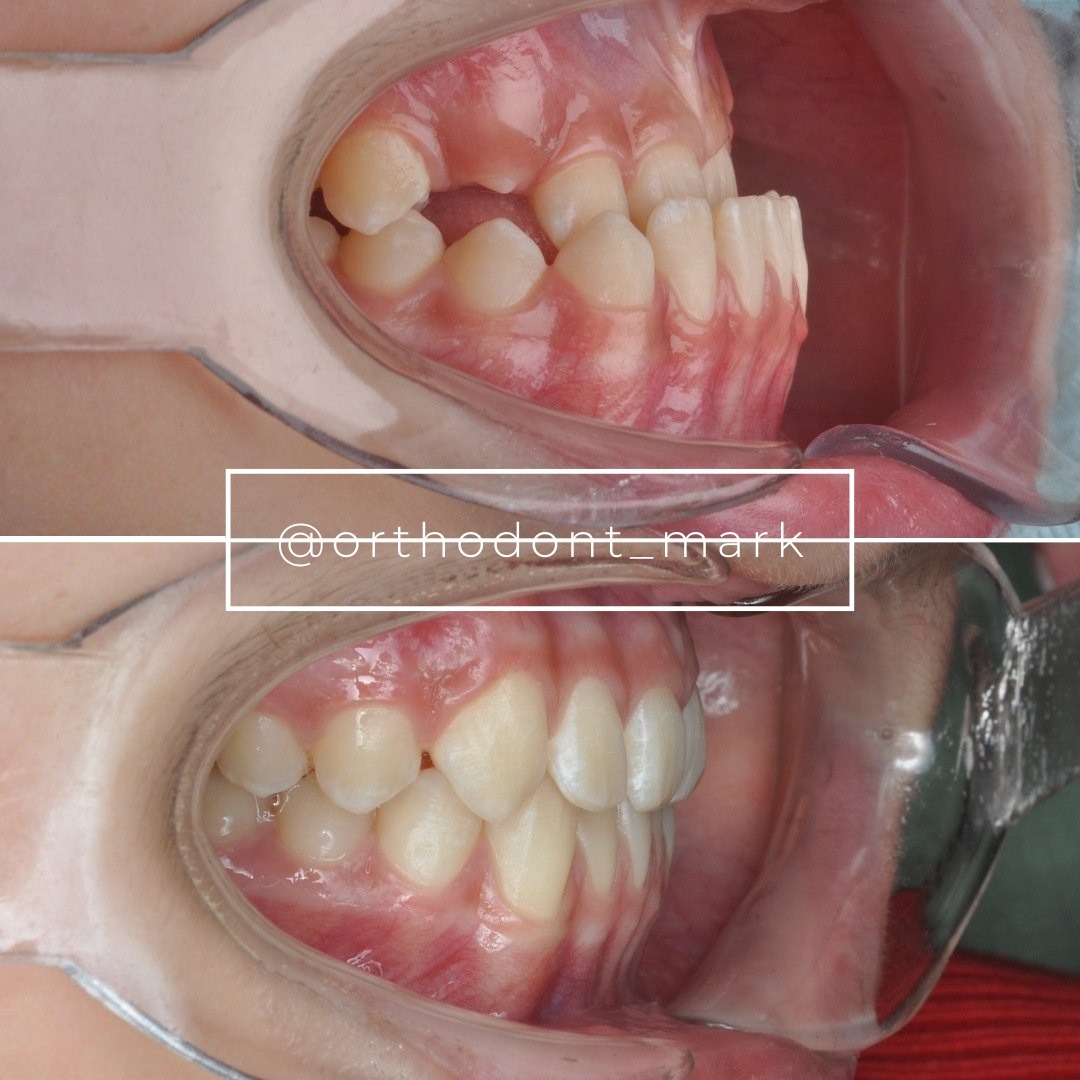
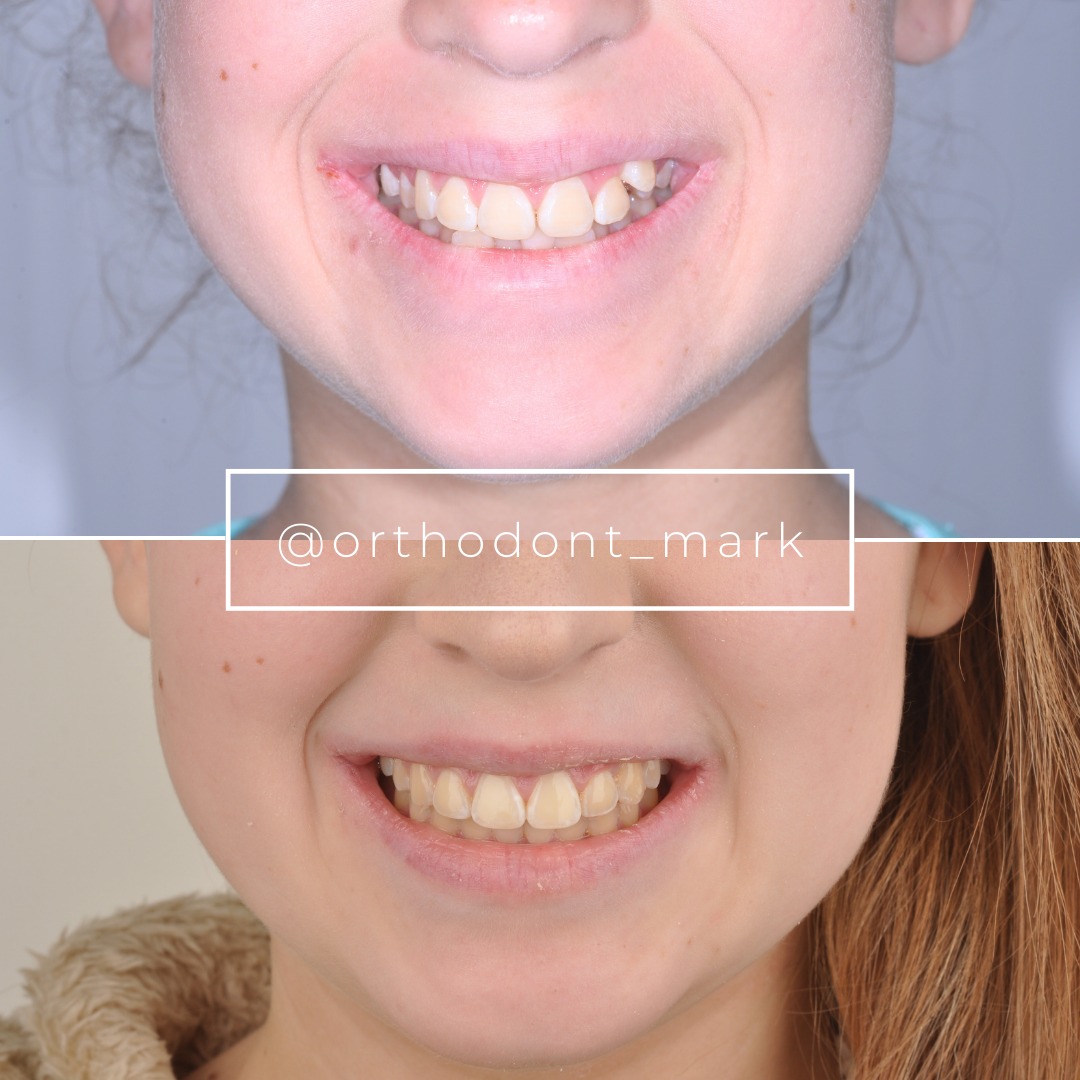
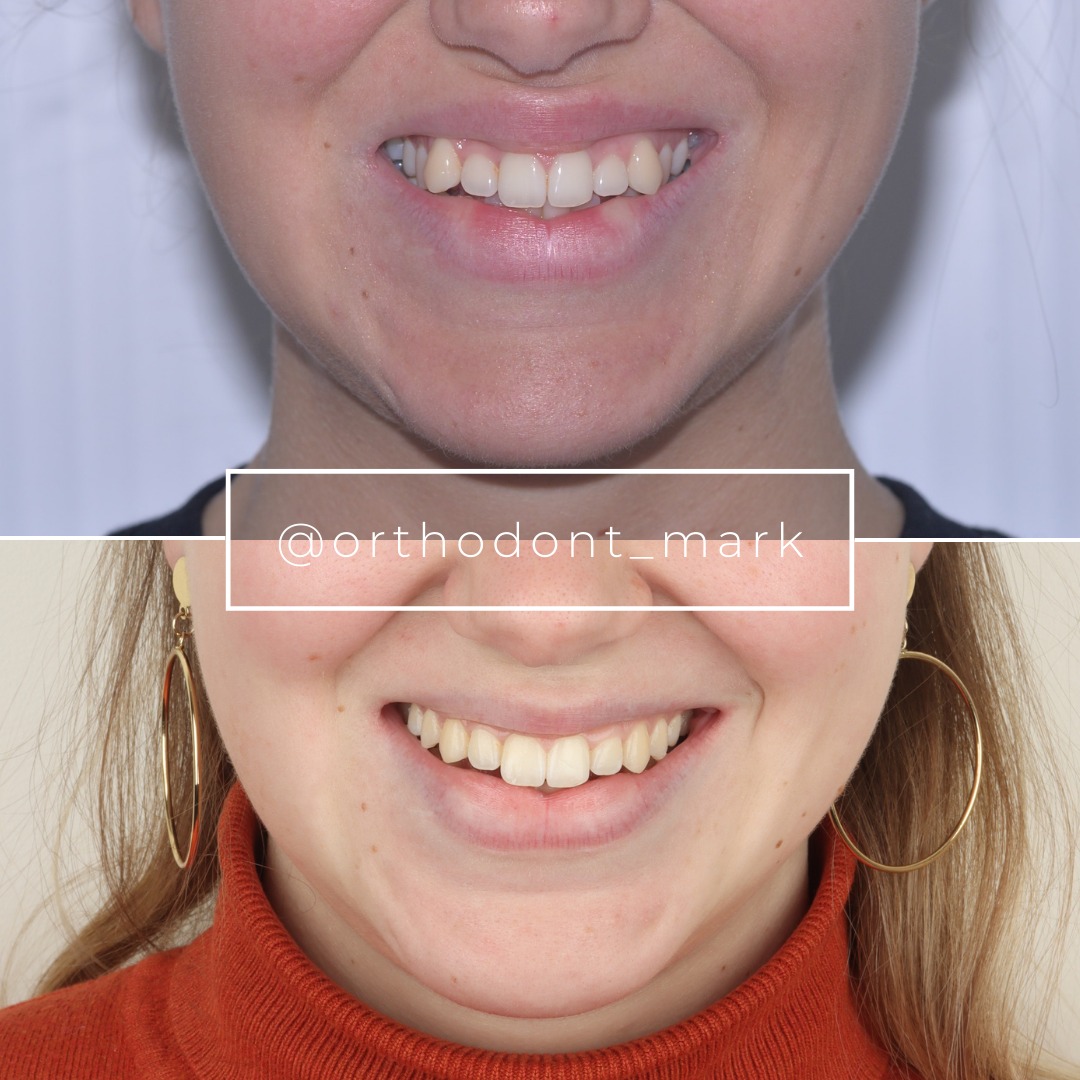
Learn the full MARPE protocol from Dr. Mark Radzhabov
Fundamental course covering CBCT patient selection, miniscrew planning, activation protocols, and 60+ clinical cases. Choose the access level that fits your practice.
Essentials of rapid palatal expansion for practicing orthodontists.
- Core RPE concepts and biomechanics
- 6 structured video lessons
- Clinical decision checklists
- Lifetime access to recordings
Deep-dive into MARPE protocol, diagnostics, and clinical execution.
- 6 modules covering MARPE from A to Z
- CBCT case selection walkthroughs
- Miniscrew placement and activation
- 60+ annotated clinical cases
- Direct Q&A with Dr. Mark Radzhabov
5-element medical consultation framework for dentists and orthodontists.
- Trust-building consultation protocol
- 5 lesson modules
- Templates for treatment plan delivery
- Works with any clinical specialty
Clinical FAQ
Why is ultrasound imaging of the palatal suture gaining acceptance in orthodontic expansion cases?
Ultrasound offers real-time visualization of suture separation without ionizing radiation, meeting modern dose-reduction principles (ALADAIP) while providing sufficient anatomical detail for serial monitoring of skeletal response and tissue regeneration during MARPE treatment.
Can ultrasound replace CBCT entirely in MARPE treatment planning?
No. Baseline CBCT remains essential for three-dimensional implant site assessment, dentoalveolar anatomy, and airway evaluation. Ultrasound excels at serial monitoring during expansion. Use CBCT at baseline and completion for comprehensive skeletal and implant assessment.
How frequently should I obtain ultrasound images during active MARPE expansion?
Every 2–4 weeks during the 8–12 week active expansion phase. This schedule captures progressive suture widening and tissue reorganization, allowing timely force adjustments if widening falls below 0.5 mm/week or if asymmetric patterns suggest implant complications.
What does a healthy suture look like on B-mode ultrasound at different treatment stages?
At baseline: thin, bright hyperechoic line (0.5–1.2 mm width). During early expansion (weeks 2–4): widening hypoechoic gap. During mid-expansion (weeks 4–8): increasingly heterogeneous internal echoes indicating fibrous and early bone ingrowth. During retention: predominantly hyperechoic echoes filling the gap, reflecting mineralized tissue.
What is the typical rate of suture widening on serial ultrasound in successful MARPE cases?
Approximately 0.5–1.0 mm per week during active expansion. Widening <0.2 mm/week may indicate excessive bone resistance, inadequate activation, or implant stability loss; widening >1.5 mm/week suggests non-skeletal (dentoalveolar) response.
How do I troubleshoot poor image quality when scanning the palatal suture?
Ensure adequate acoustic coupling with generous gel, maintain precise sagittal probe orientation along the midline, optimize gain and depth settings for patient anatomy, and avoid excessive downward probe pressure that distorts tissue. A palatal stent may improve positioning consistency across visits.
Can ultrasound detect implant loosening or failure during MARPE treatment?
Indirectly. Asymmetric suture widening (one side expanding more than the other) suggests unilateral implant instability. Ultrasound cannot image implant threads directly, but abnormal skeletal response patterns warrant clinical re-evaluation and periapical radiographs of implant seating.
What is the learning curve for reliable suture ultrasound interpretation in an orthodontic practice?
Approximately 20–30 supervised cases before confident independent interpretation. Operator training, standardized probe positioning, and consistent gain/depth settings are critical for reproducibility. Peer review or mentorship accelerates competency development.
How should I integrate ultrasound findings with bite records and intercanine distance measurements?
Suture ultrasound width should correlate with increases in intercanine distance and posterior transverse width. If ultrasound shows 4–5 mm suture separation but intercanine distance increases <2 mm, suspect significant dentoalveolar tipping rather than pure skeletal response. Consider force adjustment or appliance positioning.
Does ultrasound imaging reduce overall treatment cost in MARPE cases?
Yes. Ultrasound equipment is less expensive than CBCT, imaging time is brief (10–15 minutes), and operation requires only standard training. Eliminating intermediate CBCT scans while maintaining serial suture feedback lowers patient costs and reduces cumulative radiation exposure significantly.
Ultrasound imaging of the suture represents a paradigm shift in MARPE monitoring—offering real-time, non-invasive assessment without the cumulative radiation burden of serial CBCT imaging. When combined with clinical signs and bite records, suture ultrasound enables confident tracking of skeletal expansion and timely adjustments to force magnitude. To deepen your understanding of MARPE imaging strategies and miniscrew biomechanics, Dr. Mark Radzhabov invites you to review detailed case studies and enroll in the evidence-based MARPE mastery course at ortodontmark.com—because informed imaging decisions drive superior clinical outcomes.

