
Virtual Pre-Insertion Planning
Screw You Don't Place
Digital Design, Skeletal Precision
Master CBCT-based miniscrew positioning to eliminate chairside placement errors and ensure symmetric, bone-borne expansion in every MARPE case.
TL;DR Virtual pre-insertion planning for MARPE involves CBCT imaging, 3D miniscrew positioning, and digital workflow design before appliance fabrication. This approach reduces laboratory errors, ensures optimal screw symmetry parallel to the midpalatal suture, and improves skeletal expansion outcomes by eliminating chairside placement guesswork. Planning occurs during the analog or digital fabrication phase, not after insertion.
The miniscrew placement error is the one error you cannot fix chairside—a misaligned screw repositioned post-insertion compromises the entire expansion vector and biomechanics of your MARPE system. This article examines virtual pre-insertion planning: how to leverage CBCT imaging, digital fabrication workflows, and 3D miniscrew positioning to eliminate placement uncertainty before your laboratory ever casts the first model. Dr. Mark Radzhabov explains why planning the screw you never place—virtually, in advance—is the most reliable way to ensure symmetric, skeletal-level expansion in your adult and growing patients. Drawing on clinical protocol and current evidence, this piece offers an actionable framework for integrating digital design into your MARPE treatment workflow.
What Is Virtual Pre-Insertion Planning
for MARPE?
Virtual pre-insertion planning is the use of CBCT imaging and 3D digital design to determine optimal miniscrew position, depth, and angulation before MARPE fabrication or chairside insertion, ensuring symmetric skeletal expansion and eliminating placement error. Unlike conventional analog methods where the technician positions miniscrews reactively on the cast, virtual planning establishes the screw position in three dimensions before the appliance is fabricated. This workflow applies to both pin-first and pin-last MARPE designs and integrates seamlessly with analog or fully digital laboratory protocols.
The core principle: the miniscrew placement error is the single most costly error in MARPE treatment. A screw that is off-angle, asymmetric, or positioned too close to the palatal mucosa cannot be corrected after insertion without full appliance remake. Virtual planning moves that critical decision from the operatory—where you have limited visibility and cannot assess the full three-dimensional anatomy—to the planning phase, where CBCT slices, sagittal and coronal views, and 3D reconstructions allow you to optimize every millimeter before fabrication begins.
This approach is not new in oral surgery or implantology, where guided implant placement has reduced errors for decades. MARPE represents a natural extension of this principle: if you can plan a 4-mm implant in bone-dense posterior maxilla, you can certainly plan a 10-mm miniscrew in palatal mucosa adjacent to the midpalatal suture. The difference is that your planning decision directly governs the biomechanics of skeletal expansion, making precision non-negotiable.
Why Miniscrew Symmetry Drives
Skeletal Expansion
Success
The midpalatal suture is not a point. It is a three-dimensional structure running anteroposterior through the hard palate, with variable width, interdigitation, and density depending on patient age and skeletal maturity. When miniscrews are placed asymmetrically—one anterior or rotated, one posterior or tilted—the expansion force is no longer perpendicular to the suture midline. The result is unequal stress distribution, non-uniform suture separation, and compensatory alveolar tipping rather than skeletal movement.
Clinical evidence shows that suture separation is age- and sex-dependent, with lower success rates in older males and greater suture separation in younger patients and females across all age groups. Optimizing screw position cannot overcome age-related suture fusion, but symmetry maximizes the mechanical advantage your expansion force has access to. A well-positioned screw pair, parallel to the suture and equidistant from the midline, ensures that activation force is distributed evenly across the entire suture width, increasing the probability of clean separation rather than localized microfracturing.
Virtual planning allows you to measure the exact distance from the bilateral posterior nasal spine, verify that each screw axis is parallel to the palatal plane and the suture, and confirm that the screw seats are at equal distances from the mucosa. These measurements are impossible to execute with precision chairside, even with surgical guides. CBCT-based planning followed by clear technician documentation (whether analog or digital) is the only reliable method to guarantee this symmetry before the appliance leaves the lab.
Digital Workflow: CBCT Imaging to
Technician Specification
The virtual pre-insertion planning workflow begins with high-quality CBCT imaging acquired in a consistent head position and FOV that captures the full hard palate from anterior nasal spine to posterior nasal spine and bilateral pterygoid plates. The DICOM data is imported into your planning software (proprietary MSE software or open-source tools) where you identify the midpalatal suture centerline on axial slices, mark the planned screw positions bilaterally, and verify angulation on sagittal and coronal reconstructions.
Key measurements during virtual planning include: (1) distance from bilateral posterior nasal spine and/or anterior nasal spine to the midline (to ensure symmetric placement); (2) screw depth relative to the palatal mucosa surface and underlying bone density (typically 6–10 mm of bone engagement, with at least 2–3 mm clearance from mucosa); (3) angle of the screw relative to the palatal plane and midpalatal suture (ideally perpendicular to the suture, parallel to the palatal plane). And (4) distance from the planned screw seats to the nearest tooth roots, palatal vessels, and the pterygoid plates.
Once planning is complete, create a clear specification document for your laboratory technician. If using analog fabrication, provide the CBCT scans, a printed or digital diagram of planned screw positions on the dental cast (with laboratory analogs or transfer caps pre-positioned), and written notes on the required screw angulation and depth. If using fully digital design, export the planned positions as STL or CAD files and request that the digital model align the miniscrew seats to match your virtual plan. In both cases, the appliance should arrive at your office with miniscrews already positioned. Your chairside insertion is verification and final seating, not placement.
Common Pre-Insertion Planning Errors
and How to Avoid Them
Error 1: Inadequate CBCT data. Requesting a panoramic radiograph or relying on existing CBCT from initial diagnosis is insufficient. Pre-insertion planning requires high-resolution, artifact-free imaging of the palate with clear visualization of bone density, the midpalatal suture, and the bilateral posterior nasal spine region. If the referring CBCT is older than 3 months or of poor quality, obtain a fresh low-dose cone-beam acquisition specifically for MARPE planning.
Error 2: Ambiguous technician communication. Telling your laboratory “place the screws symmetrically” without CBCT data or measurement landmarks is a recipe for imprecision. Instead
Incorporating Virtual Planning into Your
Analog or Digital Lab
Workflow
Virtual pre-insertion planning is agnostic to your laboratory method—analog hand-fabrication or fully digital CAD/CAM—but the implementation differs. In an analog workflow, you acquire CBCT, plan the screw positions on DICOM slices, print or screenshot the planned positions, and provide these to your technician along with the cast and transfer caps or laboratory analogs. The technician uses your specifications to position the miniscrews on the cast before acrylic processing. Your appliance arrives with the screws in place. You verify fit and symmetry chairside.
In a fully digital workflow, you send the CBCT DICOM files to your laboratory software partner, who segments the palate and midpalatal suture, imports the data into CAD, and uses your planned screw coordinates to position the miniscrew seats in the virtual model. The lab then mills or 3D-prints the appliance with embedded screw seats, and miniscrews are inserted into those seats before shipping. This method offers higher precision and repeatability, but requires a laboratory equipped with digital design software and milling capabilities.
Regardless of method, document your planning in the patient record. Save CBCT slices showing planned screw positions, annotate the specifications, and photograph the appliance once it arrives to confirm compliance with your plan. This documentation serves two purposes: it creates a reference for future cases and provides a defense against patient claims of misalignment if complications arise. It also establishes a feedback loop—if your technician consistently positions screws off-axis, you have objective data to address the training gap.
Cost and turnaround time are practical considerations. Virtual planning adds 15–30 minutes to your treatment planning phase but eliminates the cost of a remake—typically $500–$1500 depending on lab fees. A single avoided chairside repositioning or appliance remake justifies the minimal planning investment. Most CBCT software tools are included free with imaging center subscriptions. CAD planning may incur a separate fee if using a high-end digital lab, but this is offset by reduced error rates and improved case predictability.
How Virtual Planning Improves
Expansion Outcomes
The relationship between miniscrew positioning precision and skeletal expansion outcomes is indirect but robust. Studies comparing MARPE (which emphasizes bone-borne force) to conventional tooth-borne RPE show that MARPE achieves greater skeletal nasal width gain, greater molar maxillary width increase, and less buccal flaring of anchor teeth—but only when miniscrews are correctly positioned and activated symmetrically. Asymmetric placement negates these advantages, devolving MARPE into tooth-borne expansion with added morbidity.
Virtual planning ensures three biomechanical prerequisites: (1) symmetric force application—both screws engage bone equally and apply force perpendicular to the midpalatal suture; (2) optimal load distribution—force is transmitted across the entire suture width, maximizing stress concentration at the suture-bone interface rather than localized microfracturing. And (3) predictable vector—expansion is purely transverse, not combined with extrusive or anterior component that would indicate poor screw alignment or inadequate bone engagement.
The clinical outcome is faster, more complete suture separation, particularly in patients over age 15 where suture resistance increases significantly. In the post-consolidation phase (3 months after active expansion), MARPE appliances with precisely positioned miniscrews show stable bone width gains with minimal relapse, whereas cases with asymmetric screw placement often exhibit dentoalveolar compensation (tipping) that requires prolonged fixed appliance correction.
Age-dependent success in suture separation underscores that optimizing every controllable variable—including screw positioning—becomes more critical as patients age. While virtual planning cannot overcome skeletal maturity or suture fusion, it maximizes the mechanical advantage your expansion force has access to, pushing the age envelope for non-surgical expansion success.
Pre-Insertion Planning Checklist:
From CBCT to Chairside
Use this checklist to ensure your virtual pre-insertion planning is complete and accurate before sending your case to the laboratory.
Free Clinical Guide
Which Expansion Appliance at Which Age?
Get Dr. Mark Radzhabov's guide to skeletal-expansion appliances — indications, pros & cons, and how to choose by patient age. Free to your inbox.
Prefer video? Watch the free demo lesson on MARPE appliance types, features and trade-offs.
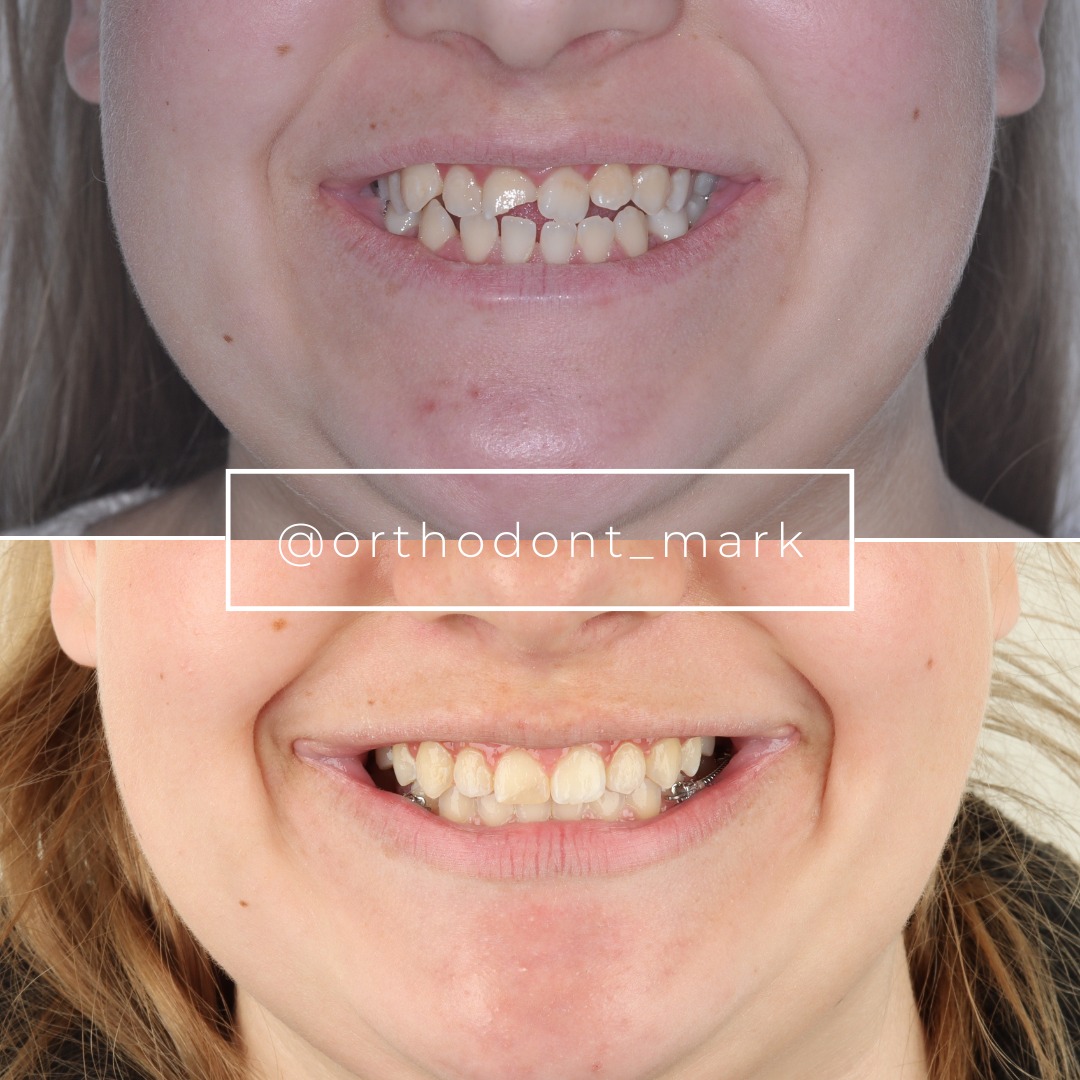
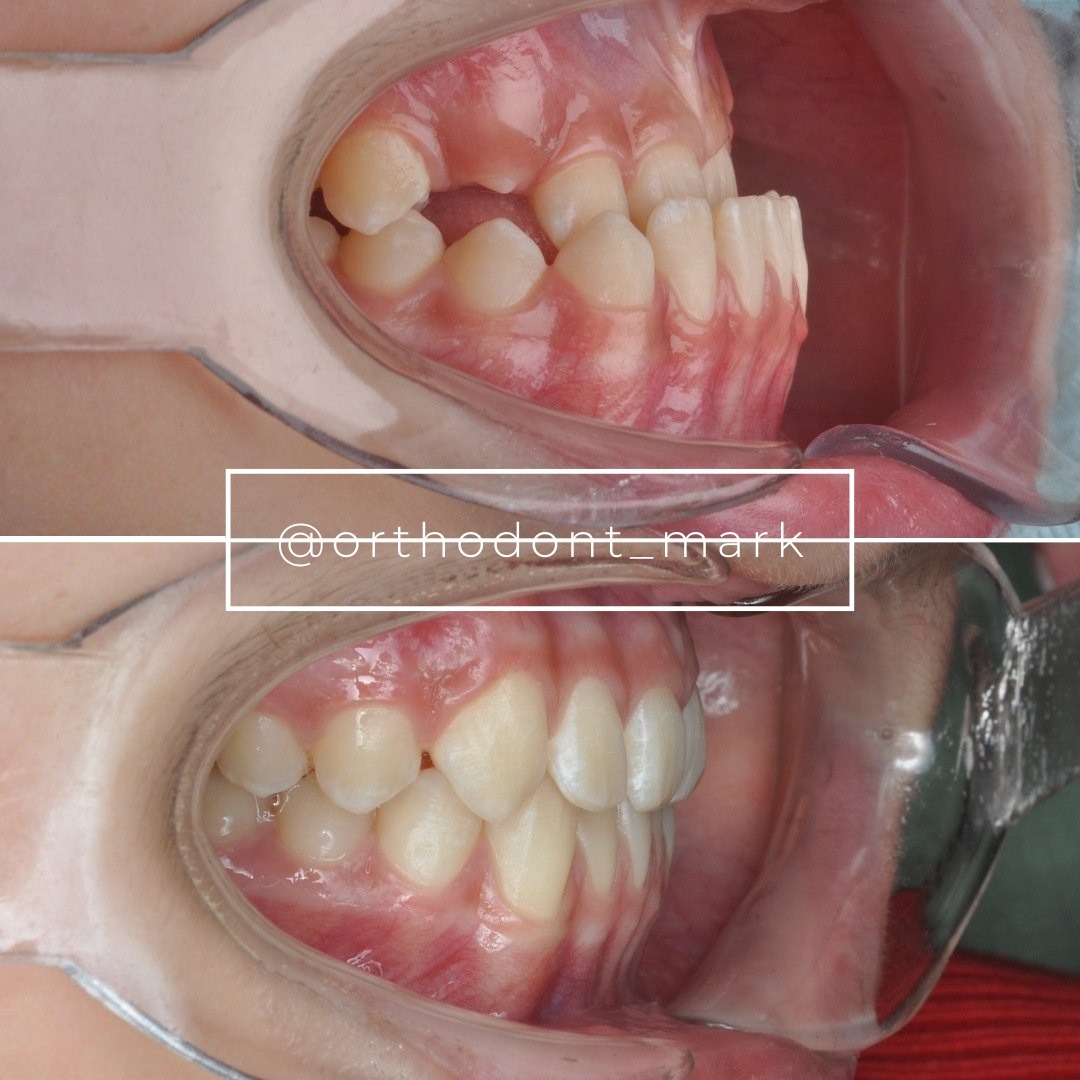
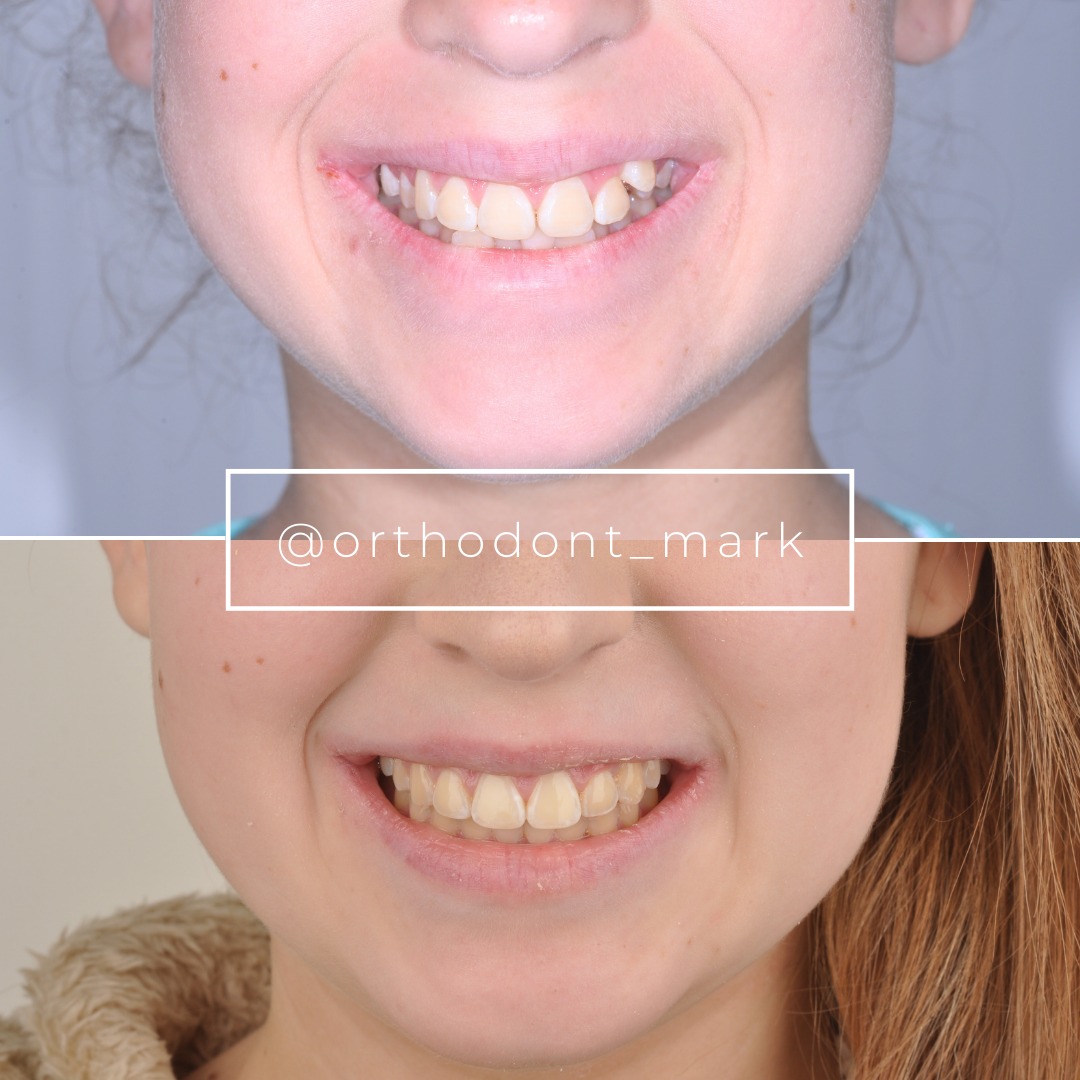
Documented outcomes
Clinical cases from Dr. Mark Radzhabov's practice
Learn the full MARPE protocol from Dr. Mark Radzhabov
Fundamental course covering CBCT patient selection, miniscrew planning, activation protocols, and 60+ clinical cases. Choose the access level that fits your practice.
Essentials of rapid palatal expansion for practicing orthodontists.
- Core RPE concepts and biomechanics
- 6 structured video lessons
- Clinical decision checklists
- Lifetime access to recordings
Deep-dive into MARPE protocol, diagnostics, and clinical execution.
- 6 modules covering MARPE from A to Z
- CBCT case selection walkthroughs
- Miniscrew placement and activation
- 60+ annotated clinical cases
- Direct Q&A with Dr. Mark Radzhabov
5-element medical consultation framework for dentists and orthodontists.
- Trust-building consultation protocol
- 5 lesson modules
- Templates for treatment plan delivery
- Works with any clinical specialty
Clinical FAQ
What is virtual pre-insertion planning for MARPE, and why is it different from conventional placement?
Virtual planning uses CBCT imaging and 3D design to determine optimal miniscrew position, depth, and angulation before fabrication, eliminating chairside placement guesswork. Conventional placement relies on intraoperative improvisation with limited visibility and no pre-defined vector, often resulting in asymmetry.
How does miniscrew symmetry affect skeletal expansion outcomes in MARPE?
Symmetric, perpendicular miniscrews distribute expansion force evenly across the midpalatal suture, maximizing suture separation probability. Asymmetric screws create unequal stress and compensatory alveolar tipping, negating the skeletal advantage of bone-borne expansion.
What CBCT measurements are essential for pre-insertion planning?
Measure bilateral distance from posterior nasal spine to planned screw seats (ensure equal), verify 6–10 mm palatal bone engagement, confirm 2–3 mm mucosal clearance, and check screw-axis parallelism to midpalatal suture and palatal plane on axial, sagittal, and coronal slices.
How do I communicate my virtual plan to an analog laboratory?
Provide: high-resolution CBCT slices marked with planned screw positions, written dimensional specifications (e.g., 'X mm from posterior nasal spine, parallel to suture'), photographs of planned positions overlaid on the cast, and laboratory analogs or transfer caps pre-positioned on the stone model.
What is the difference in virtual planning workflow between analog and digital labs?
Analog labs use printed CBCT landmarks and dimensions to position screws manually on the cast. Digital labs import DICOM data into CAD software and mill appliances with screw seats aligned to your planned coordinates. Both achieve high precision. Digital labs offer slightly higher repeatability.
How much additional treatment planning time does virtual pre-insertion planning add?
Typically 15–30 minutes per case for CBCT review, measurement, and technician specification. This investment is justified by eliminating the cost of a remake ($500–$1500) or chairside repositioning complications.
Can virtual planning overcome age-related suture fusion in older patients?
No. Virtual planning cannot reverse biological suture resistance with age. However, it maximizes your expansion force's mechanical advantage, increasing suture separation success in patients 25–40 who would otherwise require surgical assistance.
What pre-chairside inspection should I perform on the fabricated MARPE appliance?
Place appliance on cast under magnification. Verify bilateral miniscrew positioning matches your CBCT plan, confirm screws are parallel to suture and palatal plane, and check mucosal clearance. If discrepancies exist, contact technician immediately for remake rather than delivering to patient.
How does virtual planning integrate with fully digital MSE workflows?
Export planned miniscrew positions from CBCT software as STL or CAD coordinates. Send DICOM files and position data to digital lab. They segment palate, import coordinates into CAD, mill appliance with embedded screw seats, and deliver appliance with miniscrews pre-seated.
What documentation should I retain for virtual pre-insertion planning cases?
Save annotated CBCT slices showing planned screw positions, written specifications, lab communication emails, pre-delivery photographs of appliance verification, and pre-treatment CBCT images. This creates a reference library and legal protection against misalignment claims.
Virtual pre-insertion planning transforms MARPE from a chairside improvisation into a precisely engineered procedure, reducing the most costly errors in your laboratory workflow. By committing to digital CBCT-based miniscrew positioning, analog or digital model preparation, and clear technician documentation before fabrication begins, you shift control of accuracy from the placement moment to the design phase—where corrections are rapid and cost-effective. Dr. Mark Radzhabov advocates this protocol as standard of care for skeletal expansion in both growing and skeletally mature patients. To refine your MARPE protocol with evidence-based digital planning, review completed cases or schedule a consultation at ortodontmark.com.