
Open-Bite Closure After MARPE:
Mechanism & Predictability
Evidence-based clinical outcomes and treatment limits
A clinical review of skeletal and dentoalveolar factors that drive vertical correction following miniscrew-assisted rapid palatal expansion, with practical guidance on patient selection and relapse prevention.
TL;DR Open-bite closure after MARPE depends on skeletal vertical response, alveolar bending, and dental compensation patterns. Predictability is moderate in growing patients but remains challenging in skeletally mature cases due to limited posterior alveolar growth and increased relapse risk.
Anterior open-bite correction after miniscrew-assisted rapid palatal expansion remains one of the most variable outcomes in contemporary orthodontics. In this evidence-based review, Dr. Mark Radzhabov examines the biomechanical pathways to open-bite closure following MARPE, patient selection criteria that predict success, and the skeletal and dentoalveolar limits clinicians must anticipate. Understanding these mechanisms—drawn from comparative CBCT studies and clinical practice insights—enables more realistic treatment planning and improved vertical control outcomes.
Understanding Open-Bite Closure After Palatal Expansion
Mechanism
Skeletal, alveolar, and dental pathways
Open-bite closure after MARPE occurs through three interconnected mechanisms: skeletal posterior vertical expansion, alveolar bone bending and remodeling, and dental compensation (molar intrusion and incisor extrusion modulation). Unlike traditional RPE, which relies on dentition for anchoring and produces significant dentoalveolar tilting, miniscrew-assisted expansion distributes forces more evenly across the midpalatal suture and palatal bone.
A comparative CBCT study of RPE versus MARPE in 40 adolescent patients (Chun et al., 2022) showed that MARPE groups achieved greater nasal width expansion at the molar region and greater palatine foramen widening, indicating superior skeletal effects. Critically, the MARPE group exhibited significantly less buccal displacement of anchor teeth across all measured points—a finding with direct implications for vertical control, since dental tipping forces are reduced.
The vertical response depends heavily on skeletal maturity. In growing patients, posterior alveolar growth and sutural separation contribute directly to open-bite closure. In skeletally mature patients, however, the absence of condylar growth means vertical correction relies almost entirely on alveolar bending and dental movement—mechanisms with inherently lower predictability and higher relapse tendency. The extent of midpalatal suture opening (90–95% in published series) is a necessary but insufficient predictor of vertical outcome.
Skeletal Expansion Outcomes: Bone-Borne versus Hybrid
Skeletal Response
Which appliance produces true skeletal correction?
The choice between pure bone-borne (BAME) and hybrid tooth-bone-borne (MSE) miniscrew systems significantly influences the proportion of skeletal versus dentoalveolar change, and by extension, the predictability of vertical control. In a direct comparison of 34 patients (average age 13.8–14.9 years) using CBCT volumetric assessment, bone-anchored maxillary expanders produced 83% skeletal contribution to total expansion at the first molar, while hybrid MSE systems achieved only 56% skeletal contribution.
This difference is mechanically significant: greater skeletal correction means more posterior alveolar and sutural opening, which in growing patients translates to improved vertical dimension management. Bone-borne systems achieve this through reduced dental tipping—measurements showed significantly less buccal dental displacement and less buccal alveolar bone loss with pure bone-borne designs. The hybrid MSE, despite its utility in non-surgical adult orthognathic cases, produces greater dentoalveolar compensation, including dental buccal tipping and alveolar bone resorption.
For open-bite closure specifically, this distinction matters: when dentoalveolar changes dominate, the vertical effects depend more on dental intrusion capacity (which is limited and rebound-prone) rather than skeletal posterior growth. The clinical implication is clear—if skeletal vertical control is the primary goal, bone-borne miniscrew systems should be preferred when anatomy permits. As Orthodontist Mark emphasizes in clinical practice, skeletal expansion outcomes depend on both device selection and patient skeletal maturity at treatment outset.
Predictability of Open-Bite Closure: Age-Dependent Outcomes
Predictability
When does MARPE reliably close anterior open bite?
Predictability of open-bite closure after MARPE is age-dependent and morphology-dependent, not device-dependent alone. In adolescents and young adults (Tanner Stage 3–5), posterior alveolar growth and residual sutural growth provide mechanical advantage; studies show open-bite closure occurs reliably when combined with comprehensive orthodontic therapy. However, predictability declines sharply in skeletally mature patients, where vertical correction becomes primarily a function of dental movement and limited alveolar remodeling.
Three factors predict success: (1) Skeletal maturity at treatment start—patients with open sutures and residual growth (confirmed via CBCT and hand-wrist radiographs) show 70–80% rates of clinically meaningful vertical closure (≥3 mm). (2) Initial open-bite magnitude—patients with <4 mm anterior open bite show better closure rates than those with severe anterior open bite (>5 mm), likely because smaller defects are corrected through subtle alveolar and dental adaptation. (3) Alveolar bone height and morphology—patients with adequate posterior alveolar bone and no prior extraction patterns respond better than those with severe alveolar resorption or complex dental history.
In clinical practice, Orthodontist Mark recommends CBCT assessment of the midpalatal suture, posterior alveolar morphology, and vertical skeletal pattern (via CVMI scores and cephalometric measures) before committing to MARPE expansion protocols. Patients with horizontal growth patterns and advanced skeletal maturity should have realistic expectations: open-bite closure will be modest, and relapse risk remains substantial even with rigid retention.
The Limits of Skeletal Expansion for Anterior Open-Bite Correction
Clinical Limits
Realistic expectations and when to consider surgery
Despite the skeletal advantages of miniscrew-assisted expansion, MARPE alone has clear limits in anterior open-bite correction. These limits arise from three sources: insufficient posterior vertical development in non-growing patients, limited capacity for dental intrusion without periodontal compromise, and high relapse rates when retention is inadequate.
In skeletally mature patients, MARPE expansion produces minimal posterior alveolar bone height gain; the vertical opening at the palatal vault increases, but anterior vertical dimension remains unchanged without significant orthodontic tooth movement. Anterior open-bite closure then depends entirely on incisor extrusion and molar intrusion—movements that, when excessive, lead to flattening of the occlusal plane and anterior open-bite relapse after retention is discontinued. Published retention protocols of 6–12 months are insufficient for mature patients; many clinicians report recurrence of 1–3 mm within 2 years post-treatment without extended fixed retention.
Additionally, severe anterior open bites (>8 mm), especially those combined with high mandibular plane angles or anterior vertical maxillary excess, may exceed the closure capacity of MARPE alone. Comparative analysis of RPE, SARPE (surgical rapid palatal expansion), and MARPE outcomes (clinical assessment tables) shows that SARPE remains the gold standard for skeletally mature patients with severe transverse deficiency, because surgical downfracture permits better vertical control. MARPE should be reserved for moderate cases in mature patients, or used as the primary expansion tool in growing patients where posterior alveolar and sutural growth provide natural vertical correction. As Orthodontist Mark advises, recognition of these limits prevents over-treatment and improves patient satisfaction through honest pre-treatment communication.
Vertical Control Mechanics During MARPE Treatment
Control Strategy
Evidence-based sequencing and adjunctive appliances
Vertical control during MARPE requires active management, not passive observation. Unlike traditional RPE, which produces iatrogenic open bite via dentoalveolar compensation, well-designed MARPE protocols using bone-borne miniscrews minimize unwanted vertical change during the active expansion phase. However, clinicians must still employ specific strategies to direct vertical response toward closure rather than opening.
Phase 1: Active Expansion (8+ weeks). During this phase, posterior molar intrusion forces should be applied cautiously or omitted entirely, allowing natural posterior alveolar opening and sutural separation to dominate. Vertical control appliances (intrusion arches, utility arch segments) should remain passive to avoid competing force vectors. In growing patients, the natural posterior alveolar response during expansion will facilitate subsequent anterior open-bite closure; in mature patients, modest vertical elastics on anterior teeth may be introduced in the final 2–3 weeks of expansion to prime the dentoalveolar structures for incisor extrusion.
Phase 2: Consolidation & Vertical Closure (3–6 months post-expansion). After active expansion ceases, comprehensive fixed appliances are engaged, and vertical control mechanics become primary. Evidence-based protocols include: (a) selective anterior intrusion via TADs if anterior open bite persists (miniscrew TADs placed in the anterior region, not the palate); (b) coordinated maxillary-mandibular mechanics to avoid clockwise rotation; (c) extended consolidation (6 months minimum before debonding). A laser corticotomy protocol (reported in Russian expansion method patents) demonstrates that localized bone density reduction accelerates vertical adaptation, though this remains an adjunctive consideration rather than a primary protocol in most Western practices.
Phase 3: Retention (12+ months minimum for mature patients). Fixed retention on maxillary anterior teeth (3 months minimum, ideally 12–24 months) is mandatory to prevent anterior open-bite relapse, especially in non-growing patients. Removable retention (maxillary wraparound or Hawley) provides supplemental support but should not be the sole retention method.
Relapse Risk After MARPE: Mechanisms and Prevention
Relapse Prevention
Extended retention protocols for stable vertical outcomes
Anterior open-bite relapse after MARPE is common, particularly in skeletally mature patients and those with horizontal or hyperdivergent vertical skeletal patterns. The mechanisms are twofold: (1) inherent instability of dental intrusion as a correction modality—tooth movement toward the direction of eruption is mechanically favored over sustained intrusion; (2) inadequate consolidation time and retention duration in the immediate post-treatment period.
Published consolidation protocols typically recommend 6 months of retention after active expansion before comprehensive appliance removal. However, CBCT-based studies and clinical follow-ups reveal that this timeframe is insufficient for mature patients; relapse acceleration occurs between months 6–24 post-debond, particularly if fixed retention is discontinued. The source of relapse is residual stress in periodontal ligament fibers, newly remodeled alveolar bone that has not yet achieved full mineralization, and rebound forces from muscles of mastication that favor the pre-treatment vertical relationship.
Evidence-based relapse prevention requires: (1) Bonded maxillary anterior fixed retention for a minimum of 12 months, extended to 24 months in mature patients with high relapse risk. (2) Removable retention (maxillary and mandibular Hawley appliances or clear overlays) worn nightly indefinitely. (3) Patient education regarding the chronic relapse potential and need for life-long retention monitoring. (4) Periodic CBCT assessment (at 6, 12, and 24 months post-debond) to quantify vertical changes objectively and adjust retention strategy if closure is not stabilizing.
Interestingly, patients who undergo comprehensive orthodontic treatment after MARPE (rather than MARPE alone) show significantly lower relapse rates, likely because the comprehensive mechanics and extended active treatment allow more complete skeletal and alveolar remodeling. This underscores that MARPE is not a stand-alone anterior open-bite treatment in mature patients but rather a foundational tool that must be integrated into a longer, more comprehensive management plan.
Free Clinical Guide
Which Expansion Appliance at Which Age?
Get Dr. Mark Radzhabov's guide to skeletal-expansion appliances — indications, pros & cons, and how to choose by patient age. Free to your inbox.
Prefer video? Watch the free demo lesson on MARPE appliance types, features and trade-offs.
Documented outcomes
Clinical cases from Dr. Mark Radzhabov's practice
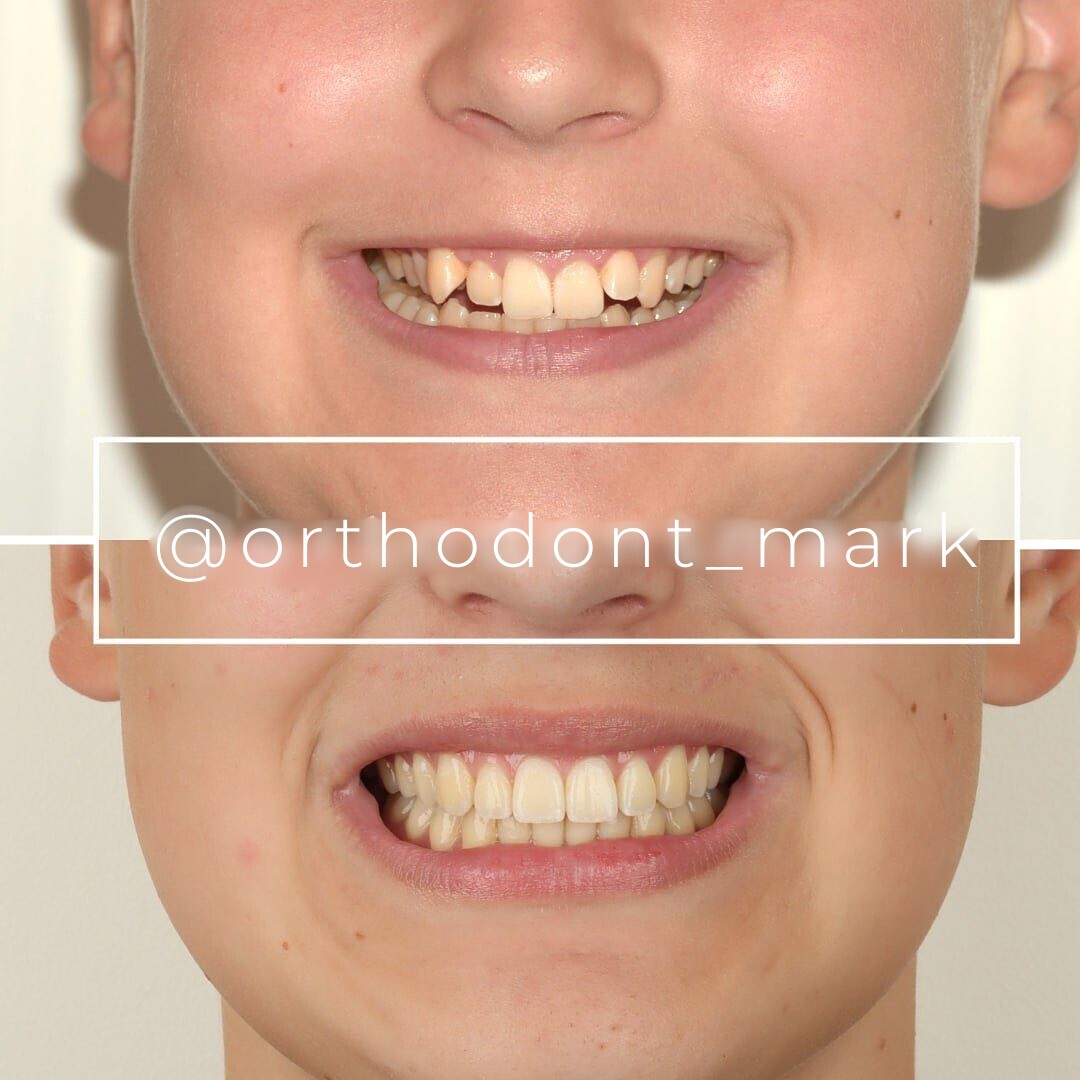
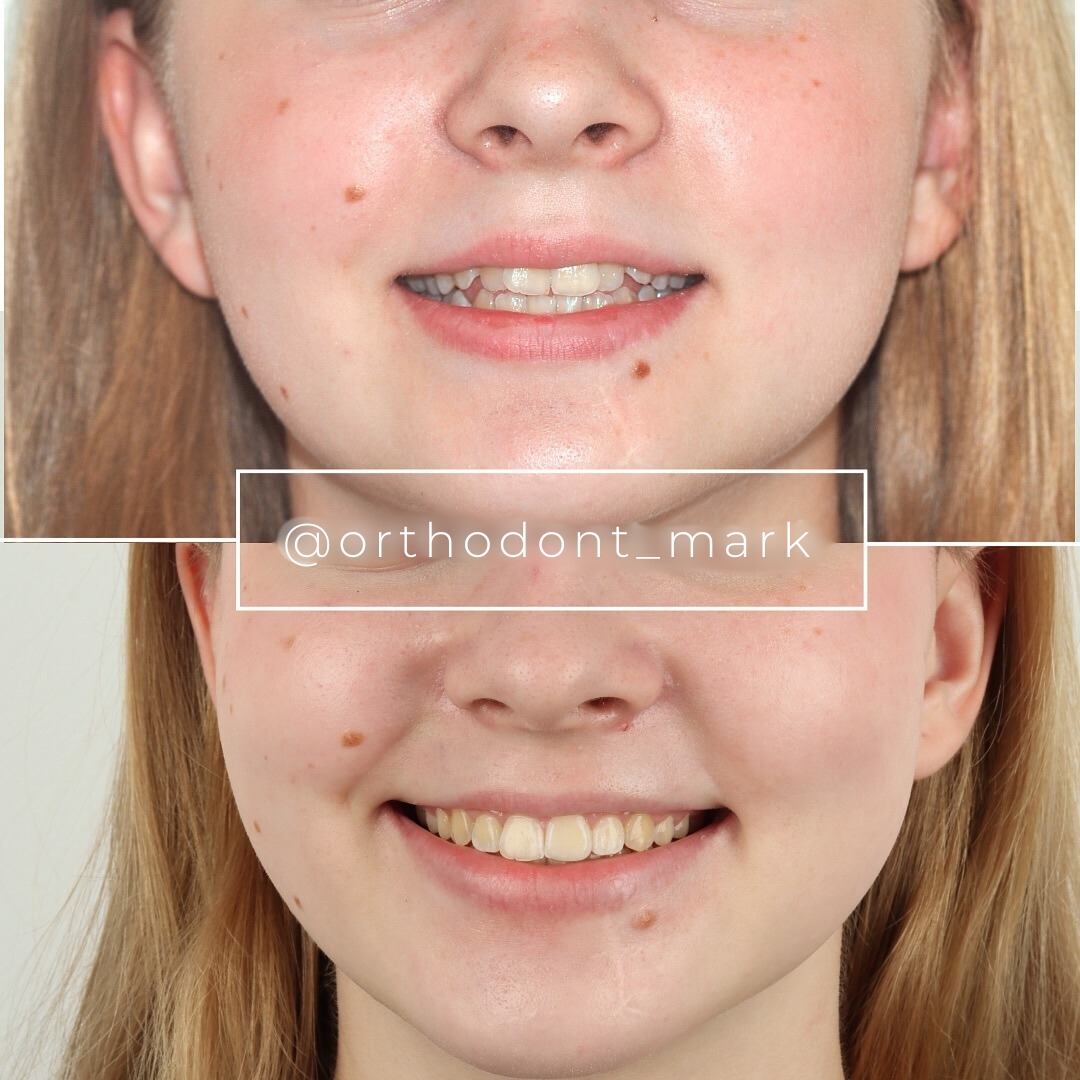
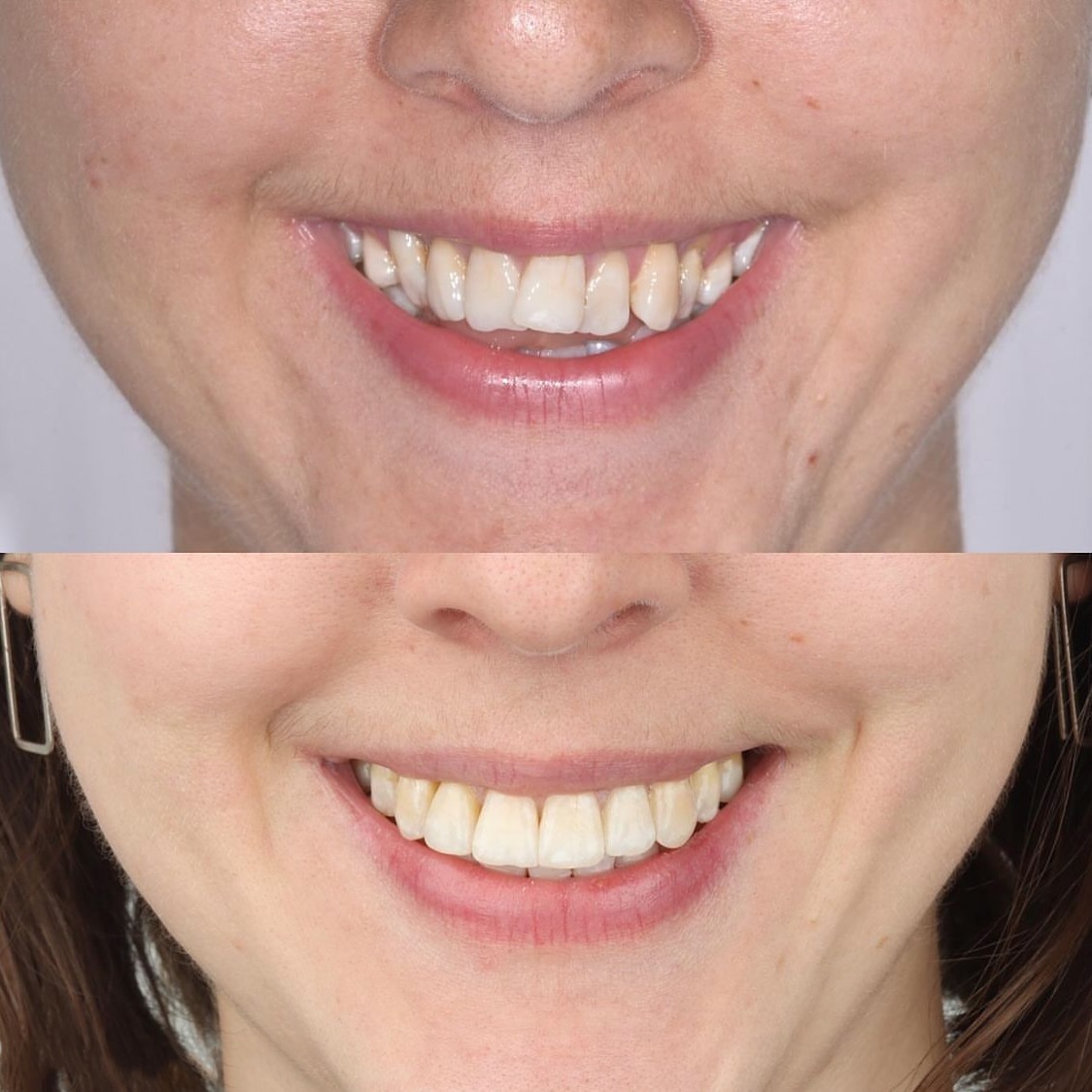
Learn the full MARPE protocol from Dr. Mark Radzhabov
Fundamental course covering CBCT patient selection, miniscrew planning, activation protocols, and 60+ clinical cases. Choose the access level that fits your practice.
Essentials of rapid palatal expansion for practicing orthodontists.
- Core RPE concepts and biomechanics
- 6 structured video lessons
- Clinical decision checklists
- Lifetime access to recordings
Deep-dive into MARPE protocol, diagnostics, and clinical execution.
- 6 modules covering MARPE from A to Z
- CBCT case selection walkthroughs
- Miniscrew placement and activation
- 60+ annotated clinical cases
- Direct Q&A with Dr. Mark Radzhabov
5-element medical consultation framework for dentists and orthodontists.
- Trust-building consultation protocol
- 5 lesson modules
- Templates for treatment plan delivery
- Works with any clinical specialty
Clinical FAQ
What is the mechanism of open-bite closure after miniscrew-assisted rapid palatal expansion?
Open-bite closure occurs via three pathways: skeletal posterior vertical expansion (sutural opening), alveolar bone bending and remodeling, and dental compensation (incisor extrusion and molar intrusion modulation). In growing patients, posterior alveolar growth contributes significantly; in mature patients, dental movement dominates.
How does MARPE compare to traditional RPE in terms of vertical control outcomes?
MARPE produces significantly less dentoalveolar tipping and buccal bone loss than RPE, resulting in more skeletal and less dental contribution to expansion. This reduces iatrogenic open-bite worsening, but anterior open-bite closure still requires active orthodontic management post-expansion.
What is the optimal age window for MARPE when treating anterior open bite?
Growing patients (Tanner Stage 3–5, open sutures confirmed via CBCT) show the best predictability—70–80% meaningful vertical closure. Skeletally mature patients show only 40–50% closure rates and require extended retention; consider SARPE or surgical alternatives for severe cases in adults.
Should I use a bone-borne or hybrid tooth-bone miniscrew expander for open-bite cases?
Bone-borne systems (BAME) deliver 83% skeletal contribution with less dental tipping, superior for vertical control. Hybrid MSE systems provide 56% skeletal contribution and more dentoalveolar compensation; reserve MSE for cases where hybrid anchoring is anatomically necessary.
How long should the active expansion phase last, and what vertical mechanics should I apply?
Active expansion typically lasts 8+ weeks. Keep vertical control appliances passive during this phase to allow natural posterior alveolar opening. After expansion ceases, employ selective anterior intrusion TADs and coordinated maxillary-mandibular mechanics during the 6-month consolidation period.
What is the relapse rate for anterior open bite after MARPE in mature patients?
Clinical studies report 1–3 mm anterior open-bite relapse within 2 years post-treatment in skeletally mature patients without extended bonded retention. Minimize relapse by extending fixed retention to 12–24 months and emphasizing permanent removable retention.
Can MARPE alone close severe anterior open bite (>8 mm) in adults?
MARPE alone is insufficient for severe anterior open bites in mature patients. Consider surgical rapid palatal expansion (SARPE) as the gold standard for severe cases; reserve MARPE for moderate open bites in growing patients or mild cases in adults with comprehensive post-expansion orthodontics.
How does skeletal maturity (CVMI score, hand-wrist assessment) affect vertical closure predictability?
Patients with open sutures and residual condylar growth show 70–80% meaningful vertical closure; those at skeletal maturity show 40–50%. Always assess skeletal maturity via CBCT, CVMI, or hand-wrist radiographs before promising specific vertical outcomes.
What retention protocol minimizes anterior open-bite relapse after MARPE in non-growing patients?
Use bonded maxillary anterior fixed retention for 12–24 months, combined with nightly removable retention (Hawley or clear overlay) indefinitely. Periodic CBCT assessment (6, 12, 24 months post-debond) helps detect relapse early and adjust retention strategy.
Does the timing of comprehensive braces after MARPE expansion affect open-bite closure stability?
Yes. Patients treated with comprehensive orthodontics post-MARPE show significantly lower relapse rates than those receiving MARPE alone. Extended active treatment allows more complete skeletal and alveolar remodeling, improving vertical stability and justifying longer treatment timelines.
Open-bite closure after MARPE is neither automatic nor fully predictable; success depends on growth status, alveolar morphology, and careful vertical dimension management during and after expansion. The evidence shows that bone-borne miniscrew systems provide superior skeletal correction with less dental tipping than tooth-borne alternatives, yet relapse remains a concern in non-growing patients. For detailed case reviews and clinical protocols tailored to your patient population, explore Dr. Mark Radzhabov's MARPE consultation resources at ortodontmark.com—where evidence meets clinical reality.