
RPE Force Mapped to
Erupting Teeth
Timing Around Eruption
Clinical protocol for positioning rapid palatal expansion forces in the mixed dentition phase. Avoid dental damage while maximizing skeletal separation.
TL;DR RPE force mapped to erupting teeth requires precise timing around permanent tooth eruption sequences in mixed dentition. Forces applied during active eruption may disrupt root development or create unwanted dentoalveolar side effects. Clinical evidence shows that strategic force application avoids erupting teeth while directing expansion to the midpalatal suture, maximizing skeletal response and minimizing dental complications in young patients.
Rapid palatal expansion force mapping presents one of the most nuanced challenges in mixed-dentition orthodontics. As teeth erupt sequentially through the alveolar crest, the regional biomechanical environment shifts continuously—making static appliance placement and loading strategies potentially risky for developing root systems. In this article, Dr. Mark Radzhabov examines how to time RPE force application around erupting teeth, drawing on clinical evidence and radiographic protocols used in contemporary MARPE practice. The goal is clear: achieve robust midpalatal suture separation while preserving erupting tooth vitality and normal root morphology through careful force vector planning and appliance positioning.
What Is RPE Force Mapping in the Context of
Erupting Teeth
RPE force mapped to erupting teeth refers to the deliberate positioning and vector control of expansion forces to avoid direct contact with teeth actively migrating through the alveolar crest during mixed dentition. The midpalatal suture separates most effectively when loading is applied at or near the skeletal axis of rotation. However, in young patients, maxillary permanents—particularly first and second molars, premolars, and canines—occupy the molar and anterior regions where conventional Hyrax expanders exert the highest compressive forces. The biological challenge is twofold. First, erupting teeth have incomplete root formation and open apices, making them susceptible to ankylosis, root resorption, and devitalization if subjected to sustained or excessive buccopalatal compression during their eruptive window. Second, the periodontal ligament space is wider and the lamina dura less defined in newly erupted teeth, reducing their capacity to withstand horizontal force without loss of vitality. Force application during peak eruption velocity (typically 1–3 mm per year of apical migration) can disrupt normal odontoblastic function and compromise long-term endodontic health. Clinical radiographic assessment of eruption stage before appliance insertion is therefore not optional—it is essential for safe force mapping. Panoramic radiographs and periapical views must identify which permanents are in pre-eruptive, eruptive, or post-eruptive phases. This information dictates appliance design, insertion site, and activation protocol for miniscrew-assisted rapid palatal expansion devices.
Mapping the Maxillary Eruption Sequence:
Risk Zones for RPE Force
The maxillary eruption sequence in permanent dentition typically follows a predictable pattern: central incisors (6–7 years), lateral incisors (7–8 years), first premolars (9–10 years), second premolars (10–12 years), canines (11–12 years), and second molars (12–13 years). However, this timeline shows significant individual variation—up to 18 months deviation is within normal limits. When RPE or miniscrew-assisted expansion is planned during mixed dentition, each tooth's current eruptive status must be classified: fully erupted (root apex closed or nearly closed), actively erupting (crown fully emerged, but apical migration continuing), or pre-eruptive (in follicle stage, not yet visible in oral cavity). Expanding forces applied across actively erupting zones create several risks. Buccopalatal forces on teeth mid-eruption can increase lateral pressure on the follicle, delaying emergence or causing ectopic eruption pathways. In young patients, intrusive forces (common with tooth-borne RPE and conventional Hyrax designs) on newly erupted molars may depress crowns into sockets and interrupt eruptive drive. Skeletal expansion that skews maxillary width asymmetrically can also cause differential vertical eruption among molars, creating transverse cants and posterior open bites. For this reason, skeletal expansion protocols favor miniscrew anchorage placed above the level of root apices, directing forces through the palatal vault rather than through erupting molar zones. Periapical and occlusal radiographs obtained immediately before miniscrew insertion should annotate the exact eruption stage of first molars, second molars, and any unerupted premolars or canines.
Strategic Force Application Around Erupting Teeth:
The Miniscrew-Assisted Approach
Miniscrew-assisted rapid palatal expansion (MARPE) offers a distinct advantage over tooth-borne RPE when navigating mixed-dentition cases with concurrent eruption. Because skeletal anchorage is placed directly into the palatal bone—typically in the anterior or mid-palatal region, posterior to the nasal spine—forces can be directed purely sagittally (perpendicular to the midpalatal suture) without buccopalatal vector components that would compress erupting teeth. The clinical protocol begins with a pre-insertion radiographic survey: panoramic radiograph to identify eruption stages, occlusal radiograph for molar root development, and if available, CBCT to visualize palatal bone density and confirm miniscrew insertion sites are clear of unerupted tooth follicles. Miniscrew placement coordinates are selected to maximize distance from erupting apices—typically at the intersection of the midpalatal suture and a line connecting the palatal cusps of first molars (roughly 6–8 mm anterior to molar contact points). This location provides optimal mechanical advantage and nearly eliminates direct force on erupting dentition. Once placed, the miniscrew is connected to a Hyrax expander arm or custom hybrid device. In mixed dentition cases, the expander teeth should be selected carefully: fully erupted primary molars, or if erupted and stable, first permanent molars. Activation protocols typically begin 1–2 weeks post-insertion to allow bone integration. Activation is modest in early stages (0.25 mm every 2–4 days rather than daily 0.25 mm turns) to allow erupting teeth time to adapt their eruption vectors without deflection. Radiographic follow-up every 3–4 weeks documents midpalatal suture separation and monitors any deflection or compression of erupting premolars or canines. If deflection occurs, force reduction and temporary appliance pause are indicated. Dr. Mark Radzhabov emphasizes that successful force mapping requires clinician awareness of the patient's current eruption timeline—not just age in years, but radiographic documentation of each permanent tooth's position and root development stage. This detail transforms expansion from a generic protocol into a personalized biomechanical strategy.
Optimal Expansion Timing:
When to Begin Treatment
The age window for non-surgical RPE and miniscrew-assisted expansion is constrained by two competing factors: eruption stage and midpalatal suture maturation. Ideally, expansion should begin no earlier than age 7–8 (when permanent central incisors are erupted and stable) and complete before age 15, when midpalatal suture interdigitation increases resistance significantly. This 7–15 year window corresponds roughly to the developmental period when erupting permanents are most actively migrating and the palatal suture retains maximal compliance. Within this window, timing around specific eruption events can optimize outcomes. For patients aged 8–10 years (early mixed dentition, primary second molars and first permanent molars erupted), RPE or MARPE initiated before first premolar eruption (age 9–10) avoids direct force contact with that tooth class. Similarly, expansion completed by age 12–13 (before canine and second molar eruption peaks) reduces post-expansion vertical effects on these teeth. If transverse deficiency is mild-to-moderate, initiation at age 9–10 with 6–9 months of active expansion followed by retention allows full stabilization before puberty. For patients presenting late in mixed dentition (age 13–14), the clinical picture becomes more complex. Suture maturation progresses rapidly. Female patients show significant midpalatal suture closure by age 15. If expansion is indicated, MARPE with skeletal anchorage offers superior force control and lower risk to erupting teeth compared to conventional RPE, because forces remain off-skeletal and do not rely on dental stability. However, late-starting cases (age 14+) should include baseline CBCT assessment of suture maturation to determine whether non-surgical expansion is realistic or if surgical assistance (SARPE) is appropriate. This decision is not age-dependent alone but requires individual radiographic assessment of suture closure stage.
Preventing Complications:
Common Pitfalls and Solutions
Even with careful force mapping, erupting teeth can experience unwanted effects if expansion is not monitored systematically. The most common complications are root resorption in erupting premolars and canines (caused by sustained lateral force during active eruption), ectopic eruption or vertical deflection (when asymmetric or buccopalatal forces redirect eruptive pathways), and ankylosis (rare but catastrophic, when erupting tooth loses vitality and fuses to alveolar bone). To mitigate these risks, clinicians should implement a multi-point monitoring protocol. First, obtain occlusal radiographs every 3–4 weeks during active expansion phase to verify that erupting teeth maintain normal eruption vectors and that no compression or crowding of tooth follicles is evident. If an erupting tooth is deflected or if follicular space narrows, reduce activation force immediately (if MARPE, pause or reduce turn frequency. If RPE, consider appliance removal). Second, conduct clinical palpation of palatal soft tissues to rule out miniscrew mobility or soft-tissue pressure—either sign indicates loss of skeletal anchorage and necessitates repeat imaging or screw repositioning. Third, educate patients and parents on dietary modification (soft food only during active phase) to avoid tipping forces from chewing. Specific to mixed dentition, clinicians must acknowledge that erupting teeth have limited periodontal support and are inherently mobile. RPE or MARPE forces should never assume erupting molars or premolars as rigid anchors. Instead, design expander mechanics to minimize buccopalatal loading on those teeth. If conventional Hyrax attachment to erupting first molars is unavoidable, consider covering the appliance bonding pads with composite interim crowns to distribute force over a wider area and reduce localized stress concentration. For canine and premolar eruption zones, ensure miniscrew placement is remote (5+ mm) from developing follicles. If CBCT shows close proximity, select an alternative miniscrew site or delay expansion until that tooth completes eruption. When erupting tooth deflection is detected radiographically, decision-making depends on severity and timing. Minor deflection (1–2 mm lateral deviation) often resolves spontaneously once expansion stops and normal eruptive drive resumes. Retain the appliance but halt activation. Moderate deflection (3–5 mm, with follicle compression) warrants appliance removal, a 4–8 week pause, and reassessment before re-insertion. Severe deflection with loss of follicular outline suggests ankylosis risk. Remove appliance immediately and refer for surgical assessment.
Case Selection and Force Loading Strategy
in Mixed Dentition
Not every mixed-dentition patient with transverse deficiency is a candidate for immediate RPE. Strategic case selection based on eruption stage, skeletal maturity, and severity of deficiency ensures maximal treatment success and minimal complications. Dr. Mark Radzhabov recommends a decision tree: If transverse deficiency is mild (≤2 mm), patient is age 8–9, and all maxillary permanent teeth through first molars are erupted, conventional tooth-borne RPE is appropriate—rapid, low cost, and effective. If deficiency is moderate (2–4 mm), patient age 9–12, and second premolars or canines are still erupting, miniscrew-assisted expansion is preferred because it avoids force vectors on those erupting teeth. If deficiency is severe (>4 mm) or patient age is 13+, obtain pre-treatment CBCT to assess suture maturation. If suture is >60% closed, discuss surgical co-treatment or defer expansion until definitive orthognathic surgery planning. Once a patient is selected, force protocol must balance skeletal response with eruption safety. For MARPE in patients age 9–12 with active eruption, begin expansion at 0.25 mm every 4 days (rather than daily 0.25 mm). This slower pace allows erupting teeth to maintain eruptive trajectory while bone remodels around the miniscrew. Monitor radiographs every 3 weeks. If erupting teeth show lateral deflection >2 mm or follicular compression, reduce force further or pause for 2–4 weeks. Typical expansion extent in mixed dentition is 6–8 mm over 4–6 months. Larger expansions (>8 mm) increase risk to erupting apices and should only be attempted if patient is >age 12 and all maxillary permanents are fully erupted. Post-expansion retention is critical. After active expansion ceases, maintain the appliance in situ for 3–6 months to allow bone consolidation around the suture and to stabilize erupting tooth positions. Premature removal (within 2 weeks of completing activation) frequently results in partial relapse (1–2 mm) and delayed or ectopic eruption of any teeth that were near miniscrew or Hyrax arms during active phase. For long-term retention, a circumferential palatal bar or wrap-around design (such as a Bonded Lingual Retainer) is preferred over removable appliances, because it maintains suture separation passively while allowing unobstructed eruption of remaining maxillary permanents.
Clinician Checklist:
Safe Force Mapping Protocol
Free Clinical Guide
Which Expansion Appliance at Which Age?
Get Dr. Mark Radzhabov's guide to skeletal-expansion appliances — indications, pros & cons, and how to choose by patient age. Free to your inbox.
Prefer video? Watch the free demo lesson on MARPE appliance types, features and trade-offs.
Documented outcomes
Clinical cases from Dr. Mark Radzhabov's practice
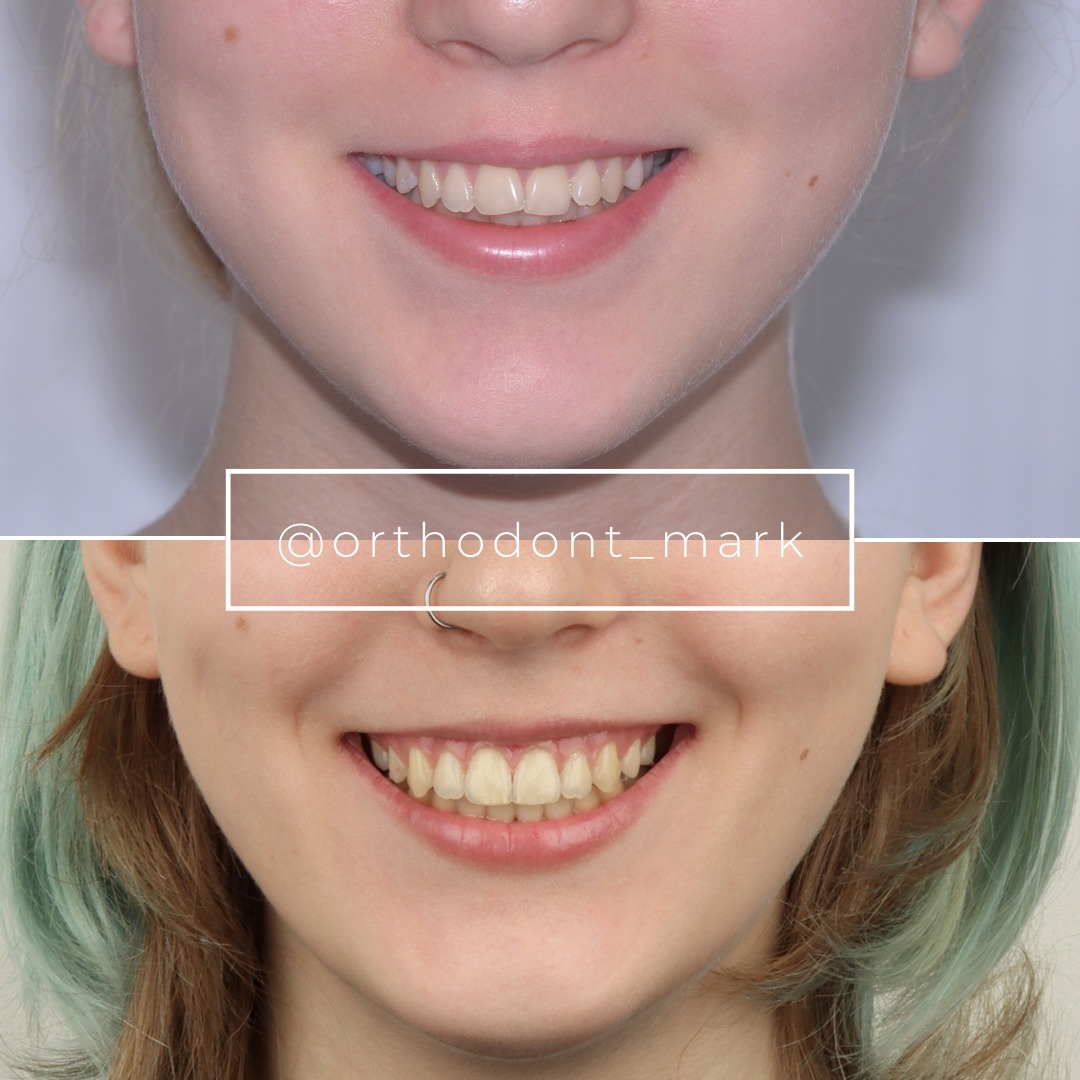
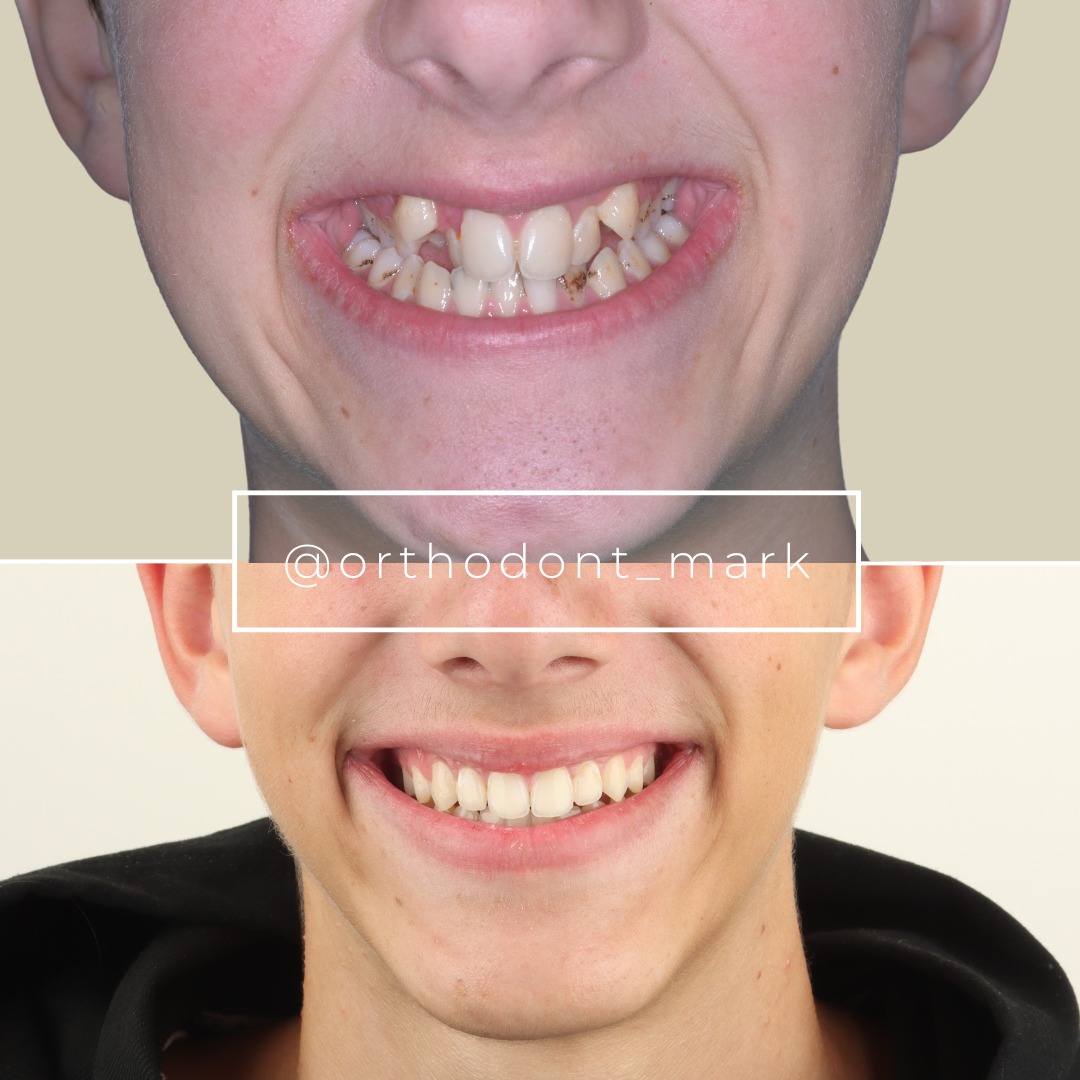
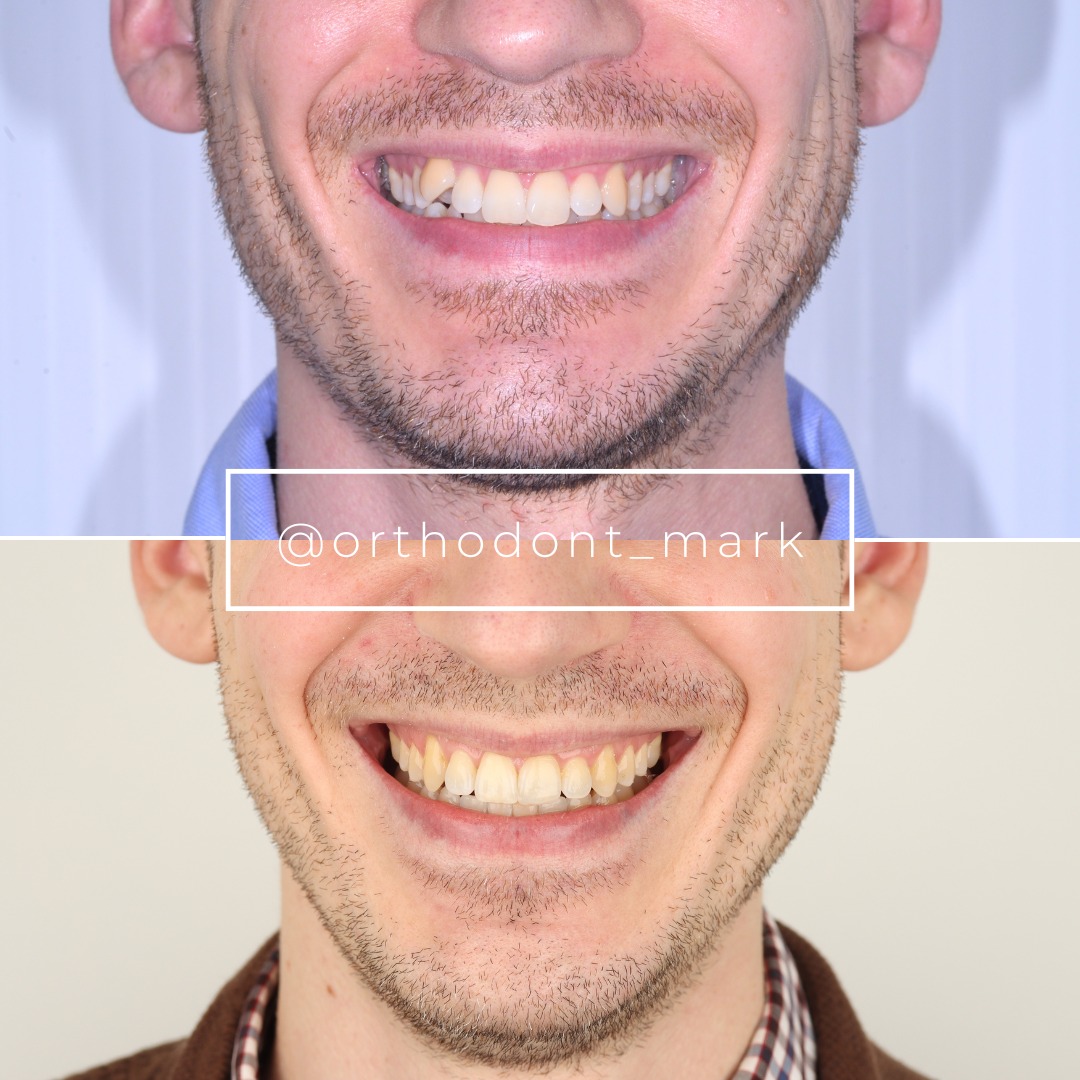
Learn the full MARPE protocol from Dr. Mark Radzhabov
Fundamental course covering CBCT patient selection, miniscrew planning, activation protocols, and 60+ clinical cases. Choose the access level that fits your practice.
Essentials of rapid palatal expansion for practicing orthodontists.
- Core RPE concepts and biomechanics
- 6 structured video lessons
- Clinical decision checklists
- Lifetime access to recordings
Deep-dive into MARPE protocol, diagnostics, and clinical execution.
- 6 modules covering MARPE from A to Z
- CBCT case selection walkthroughs
- Miniscrew placement and activation
- 60+ annotated clinical cases
- Direct Q&A with Dr. Mark Radzhabov
5-element medical consultation framework for dentists and orthodontists.
- Trust-building consultation protocol
- 5 lesson modules
- Templates for treatment plan delivery
- Works with any clinical specialty
Clinical FAQ
What is the optimal age window for RPE or miniscrew-assisted rapid palatal expansion to avoid complications from erupting teeth?
Age 8–15 years is optimal: permanent central incisors are erupted by age 8 (stable anchors), and midpalatal suture remains compliant until age 15. Begin expansion before first premolar eruption (age 9) if possible. Complete before canine-second molar eruption peaks (age 12–13) to minimize post-expansion eruption complications.
How should force magnitude differ when maxillary first molars are actively erupting versus fully erupted?
During active eruption, reduce force to 0.25 mm every 4 days (vs. 0.25 mm daily when all teeth erupted) to allow erupting molar roots time to develop apically without interruption. Slower activation reduces resorption and ankylosis risk. Accelerate only after periapical radiograph confirms root apex closure.
What radiographic findings indicate that an erupting tooth is experiencing unacceptable deflection from RPE or MARPE forces?
Lateral deviation >2 mm from predicted eruption path, follicle compression or loss of normal lamina dura outline, or arrest of apical migration (root development stalled) signal excessive force. Pause or reduce activation immediately. If deflection exceeds 3–5 mm, remove appliance and reassess after 4–8 week break.
Can miniscrew placement and force mapping account for unerupted premolars or canines during MARPE?
Yes. CBCT or high-quality occlusal radiographs must map follicle positions before miniscrew insertion. Maintain minimum 5 mm distance. Select miniscrew coordinates above the palatal rugae or in mid-palatal regions remote from developing tooth buds. If follicles are too close, defer expansion or select alternative site.
How long should expansion appliances (RPE or MARPE) be retained after active expansion ends in mixed dentition?
Retain 3–6 months post-activation minimum. This allows bone consolidation around the midpalatal suture and permits eruption of remaining permanent teeth to complete without appliance-related deflection. Use fixed palatal bars rather than removable devices for stable retention.
What is the clinical difference between applying RPE forces on erupting maxillary molars versus fully erupted molars?
Erupting molars have incomplete root formation and wider periodontal ligament space, making them prone to resorption, intrusion, and loss of vitality under sustained buccopalatal forces. Fully erupted molars with closed apices tolerate higher force magnitudes and faster activation without pulpal or endodontic risk.
At what age does midpalatal suture maturation make non-surgical RPE or MARPE unlikely to succeed?
Female patients by age 15 and male patients by age 16–17 show significant suture interdigitation and closure stages (D–E). Success rates drop sharply. Surgical co-treatment (SARPE) is recommended. Individual CBCT assessment of suture maturation is essential for final decision-making.
How should practitioners manage asymmetric maxillary expansion that deflects one side's erupting teeth but not the other?
Asymmetric deflection signals unbalanced miniscrew insertion or unequal force distribution. Obtain occlusal and periapical radiographs to confirm miniscrew angulation and suture separation symmetry. Adjust subsequent activations to balance forces. If deflection persists, reposition miniscrew or consult oral surgery.
What clinical signs indicate that a miniscrew used for MARPE is losing osseointegration during mixed-dentition expansion?
Visible screw mobility (patient reports clicking or rocking sensation), soft-tissue redness or discharge around screw head, or sudden loss of force transmission (appliance moves but suture does not separate on radiograph). These findings require immediate radiographic assessment and possible screw repositioning or replacement.
Should erupting second molars (age 12–13) be incorporated into RPE/MARPE appliance mechanics, or kept clear of forces?
Keep clear of direct forces. Second molars erupt latest and have longest eruptive pathway (through age 13). Use only fully erupted first molars or primary molars as appliance teeth. Design expander mechanics to ensure second molar follicle remains 5+ mm clear of miniscrew or Hyrax arms to avoid deflection or ankylosis.
Successful RPE force application in mixed dentition depends on understanding the eruption window and positioning forces to spare erupting teeth from direct compression. Clinicians who map force vectors around emerging permanents—rather than across them—report fewer developmental anomalies and stronger skeletal outcomes. Dr. Mark Radzhabov recommends a case-by-case radiographic assessment before appliance insertion and systematic force monitoring throughout active expansion. If you manage mixed-dentition patients with transverse deficiency, review your current force mapping protocol through our clinical consultation service or explore the MARPE skeletal expansion case library.