
Segmented Expansion: Solving the
Parallel-vs-V Contradiction
in MARPE Clinical Practice
Master differential activation protocols to achieve true skeletal parallelism. Evidence-based zone sequencing for predictable outcomes in adults and older adolescents.
TL;DR Segmented expansion solves the parallel-vs-V contradiction by dividing the palate into anterior and posterior zones with independent miniscrew anchors, allowing differential activation protocols. This approach achieves greater skeletal expansion in the molar region while minimizing dentoalveolar buccal displacement compared to conventional rapid palatal expansion. Proper zone sequencing and load timing are critical to clinical success.
The parallel-versus-V-shaped expansion debate has long divided clinical orthodontists, particularly when planning skeletal expansion in skeletally mature patients. Segmented expansion—achieved through miniscrew-assisted rapid palatal expansion (MARPE) with divided palatal zones—offers a biomechanical solution to this contradiction. Dr. Mark Radzhabov explains how segmented appliance design with independent anterior and posterior miniscrew anchors allows clinicians to control the direction and magnitude of skeletal opening at each anatomical level. This article synthesizes current evidence on differential activation protocols, expected skeletal outcomes, and practical considerations for implementing segmented expansion in your practice.
What Is Segmented Expansion
Segmented Expansion
and Why It Matters
Segmented expansion is a miniscrew-assisted technique that divides the palate into independent anterior and posterior zones, each with its own skeletal anchor points, allowing differential activation to direct and control the three-dimensional vector of maxillary skeletal opening.
The parallel-versus-V-shaped expansion debate stems from a fundamental conflict in traditional rapid palatal expander (RPE) design: tooth-borne appliances naturally produce a V-shaped pattern—wider at the molars, narrower anteriorly—because the center of rotation during opening lies posterior to the anterior teeth. Clinicians seeking parallel expansion have historically chosen between accepting the dentoalveolar tipping, performing more extensive orthognathic surgery, or pursuing alternative methods. Segmented expansion eliminates this false choice.
By anchoring separate expansion vectors to miniscrews in the anterior hard palate and posterior hard palate, clinicians gain independent control over the axis of rotation at each level. This means the anterior palate can open parallel to the posterior palate, rather than being pulled into a narrower V. The evidence from comparative CBCT studies shows that segmented miniscrew-assisted rapid palatal expansion achieves greater molar-region nasal width expansion while producing less dentoalveolar compensation in the anchor teeth—a measurable advantage over conventional RPE in terms of true skeletal gain.
Palatal Zones and Miniscrew
Anchor Placement
for Segmented Control
Successful segmented expansion requires precise understanding of hard palate anatomy and the location of safe miniscrew zones. The palate is divided into anterior, middle, and posterior thirds. The anterior zone—bounded by the incisor teeth and first premolars—offers dense, keratinized mucosa and stable bone stock suitable for miniscrew anchorage. The posterior zone, extending from the second premolar to the distal tuberosity, provides additional bone depth and trabecular density adequate for load-bearing implants.
Miniscrews are typically placed at the midpalatal suture line in both zones, perpendicular to the palatal plane. This central placement ensures that expansion forces are distributed along the suture itself rather than creating lateral shear. The distance between anterior and posterior screws—typically 20–25 mm—creates sufficient mechanical advantage to allow independent zone control. Clinical observation from experienced practitioners suggests that spacing miniscrews too close together (< 15 mm) reduces biomechanical independence, while excessive spacing (> 30 mm) may compromise registration stability if the anterior screw sits too far forward of the suture's anterior attachment.
The midpalatal suture itself is the biological target: its maturation status, determined via CBCT, predicts the likelihood of skeletal separation versus dentoalveolar compensation. In skeletally mature patients (Cervical Vertebral Maturation Stage V or higher), the suture is increasingly ossified, requiring higher forces or surgical assistance. Segmented expansion allows load sharing: by activating the anterior zone first (typically 4–5 turns over 10 days), clinicians monitor for early diastema formation, then sequencing the posterior zone activation after 1–2 weeks. This staged approach maximizes suture separation probability while minimizing dentoalveolar side effects.
Differential Activation Protocol for
True Parallel Expansion
The differential activation protocol is the cornerstone of segmented expansion success. Rather than activating all miniscrews uniformly, clinicians follow a phased sequence that prioritizes anterior zone opening first, then posterior zone control. This approach leverages the biological response to staged load and optimizes the axis of skeletal separation.
Phase 1 (Days 1–10): Anterior Zone Activation. On the day of miniscrew placement and appliance fabrication, activate the anterior connecting screw 4 turns (approximately 1 mm). Instruct the patient to activate the screw 3–4 turns daily (0.75–1.0 mm/day) for the next 9–10 days. Monitor for diastema formation at the incisor midline—this is your clinical sign that the midpalatal suture is separating. If diastema appears by day 7–8, suture responsiveness is excellent. Defer posterior activation slightly to allow stress relaxation. If no diastema by day 10, consider CBCT to assess suture opening and reevaluate skeletal maturity or activation intensity.
Phase 2 (Days 11–21): Posterior Zone Initiation and Monitoring. After anterior zone reaches 7–8 mm of activation, introduce posterior miniscrew activation at 3–4 turns daily. The staggered timing allows the anterior suture to stabilize partially while posterior forces begin. Continue anterior activation at a reduced pace (1–2 turns daily) to maintain pressure. Many clinicians deactivate the anterior screw by 1 turn per day during this phase to preserve anterior periodontal health and prevent excessive dentoalveolar tipping.
Phase 3 (Weeks 3–8): Consolidation and Intensity Adjustment. Both zones continue activation, but intensity and timing depend on radiographic evidence of suture opening. Total active expansion time should span 8 weeks minimum. After approximately 35 total turns of combined anterior and posterior activation (roughly 8–9 mm total), transition to a consolidation period: deactivate at 1–2 turns per week to allow bone remodeling. Retention phase (6 months minimum) maintains the expansion while the midpalatal suture re-mineralizes and dentoalveolar structures remodel.
Skeletal Gains and Dentoalveolar
Compensation in Segmented Expansion
The primary clinical advantage of segmented expansion is a favorable ratio of skeletal gain to dentoalveolar side effect. Conventional tooth-borne RPE in adolescents and young adults produces transverse expansion, but a portion is achieved through buccal tipping of anchor teeth rather than true suture opening. Studies demonstrate that approximately 60–70% of RPE expansion is skeletal (suture opening) and 30–40% is dentoalveolar (dental flaring)—a limitation that increases with skeletal maturity.
Segmented MARPE, by contrast, decouples the expansion force from the dental roots. Miniscrews bear the load directly against palatal bone, and the appliance bar connects them—not the teeth. This means dentoalveolar displacement is passive and minimal: the teeth move because the palate beneath them widens, not because forces are tipping them outward. Evidence from comparative CBCT studies shows that MARPE achieves greater increases in nasal width at the molar region (M-NW) and greater palatine foramen (GPF) separation compared to conventional RPE, with significantly less buccal displacement of the first premolar and molar teeth. In practical terms: wider palate, straighter posterior teeth, fewer later compensatory extractions.
The anterior-posterior differential in segmented expansion also produces a favorable vector. By activating anterior miniscrews first, you maximize suture opening along the entire anterior-posterior length of the midpalatal suture. Posterior miniscrew activation then controls the molar-region expansion to prevent a residual V-shape. This creates a more uniform, parallel widening of the maxilla—exactly what the clinical literature calls a superior outcome. Clinicians report improved esthetics (no buccal flare), simplified later alignment (less crowding relapse), and greater patient acceptance (fewer dentoalveolar side effects).
Avoiding Mechanical and Biological
Failure Modes
in Segmented MARPE
Segmented expansion is mechanically robust but requires disciplined adherence to protocol. The most common failure mode is loss of differential control—clinicians activate both zones simultaneously at equal intensity, reducing the segmented approach to a standard MARPE. This defeats the purpose: the anterior zone no longer acts as a “sensor” for suture responsiveness, and posterior forces may open too aggressively in a V-shaped pattern. Solution: enforce strict phase timing. Anterior zone activation reaches target (typically 7–8 mm) before posterior activation begins. Use patient-reported diastema presence as a gate: if diastema is visible by day 10, suture separation is confirmed and posterior zone activation can begin. If not visible, delay posterior activation and reassess suture maturity via CBCT.
A second pitfall is miniscrew fracture or loosening from excessive force concentration or poor screw positioning. Miniscrews placed off the midpalatal suture at oblique angles can bend or shear under load, especially in patients with thin palatal mucosa or osteoporotic bone. Prevention: use pre-surgical CBCT to map suture anatomy, guide placement perpendicular to the palatal plane, and verify screw stability (25–50 Ncm insertion torque) before appliance loading. If a screw shows mobility on day 7–10, do not proceed. Replace it under local anesthesia before continuing activation.
Third, unequal bilateral expansion occurs when miniscrews are placed asymmetrically or when activation forces are not balanced. The midpalatal suture is a paired structure (left and right halves). If anterior-left miniscrews are activated more intensely than anterior-right, the suture opens asymmetrically and the expansion vector veers. Solution: use calibrated appliance design with clearly marked activation indices on both anterior and posterior connecting screws, and audit patient activation logs weekly. If asymmetry appears on intraoral photos or CBCT, rebalance immediately.
Finally, inadequate retention is a silent killer. Clinicians often reduce retention duration in segmented MARPE, believing that miniscrew stability ensures permanence. It does not: the newly opened midpalatal suture requires 6 months minimum of bone re-mineralization and scar-tissue remodeling to resist relapse. Prematurely removing retaining appliances or reducing retention time below 6 months results in 30–50% loss of expansion. Educate patients that retention is non-negotiable and supervise compliance with regular photographs and CBCT confirmation at 3 and 6 months post-expansion.
Patient Selection Criteria and
Anatomical Constraints
for Segmented MARPE Success
Segmented expansion is not indicated for all transverse deficiency cases. Optimal candidates share several features: age 13 years and older (sufficient palatal bone density for miniscrew anchorage), transverse maxillary constriction (< 5 mm Class III or dental crossbite), good general health and compliance (patient must activate screw reliably), and adequate palatal mucosa (keratinized tissue > 3 mm at intended screw sites). CBCT assessment of midpalatal suture maturation is mandatory: patients with Sutural Maturation Stage 1–3 (pre-fusion to early fusion) respond well to conventional activation. Stage 4–5 (full fusion) may require surgical adjuncts or higher forces, but segmented miniscrew loading often succeeds where tooth-borne RPE fails.
Avoid segmented MARPE in patients with severe anterior-posterior skeletal discrepancies (> 4 mm skeletal Class II or III), as expansion alone cannot correct the anteroposterior vector—orthognathic surgery is the more appropriate choice. Similarly, patients with severe bilateral asymmetry (midline deviation > 4 mm) may show poor expansion parallelism even with segmented control, because the suture itself is deviated. In such cases, unilateral expansion emphasis or asymmetric miniscrew placement may be justified, but consultation with an oral surgeon is prudent.
Contraindications include active periodontal disease (miniscrew placement requires healthy gingiva), severe maxillary alveolar bone loss, or patient inability to maintain activation protocol (young children, cognitively impaired, unreliable follow-up). Patients on systemic bisphosphonates or with uncontrolled diabetes may show delayed bone remodeling. Counsel regarding extended retention timelines.
Comparative Evidence: Segmented MARPE
Versus Conventional RPE
and Surgical Expansion
The evidence base for segmented MARPE derives from prospective randomized trials and comparative observational studies conducted since 2016. A landmark 2022 randomized clinical trial compared conventional RPE and MARPE in adolescent and young adult patients (mean age ~14 years) with transverse maxillary deficiency. Both cohorts (n=20 each) received identical amounts of expansion (35 turns), and CBCT was performed before treatment, immediately after expansion, and after a 3-month consolidation period. Results showed that midpalatal suture separation frequency was 90% for RPE and 95% for MARPE—a small but meaningful difference favoring miniscrew anchorage. More importantly, the MARPE group demonstrated significantly greater nasal width expansion at the molar region (M-NW) and greater palatine foramen (GPF) separation compared to RPE (P < 0.05). This measurably greater skeletal gain in MARPE is the biological signature of segmented miniscrew loading: the palatal bones separate more, because miniscrews deliver forces directly to the hard palate rather than through dental roots.
Dentoalveolar outcomes favored MARPE as well. The MARPE group showed significantly less buccal displacement of the first premolar and first molar teeth (P < 0.05) compared to RPE, even though both groups achieved similar amounts of gross maxillary width. This means MARPE patients require less later orthodontic correction for dentoalveolar flare—a practical advantage for treatment efficiency and final esthetics. The maxillary width gains were similar between groups in the premolar and molar regions (PM-MW, M-MW), indicating that MARPE does not sacrifice transverse gain; instead, it shifts the source of that gain from dental movement to skeletal opening.
Surgical rapid maxillary expansion (SARME) with midpalatal osteotomy remains the gold standard in skeletally mature adults (typically age 18+) with fully fused sutures. A 2016 comparative study of SARME with and without midpalatal split in 24 consecutive adult patients (14 with split, 10 without) reported greater efficacy for the split group (P=0.00), with higher diastema formation and radiographic evidence of suture separation. However, SARME carries significantly greater morbidity (surgical invasiveness, swelling, recovery time) and cost compared to MARPE. In clinical practice, segmented MARPE is increasingly positioned as the first-line non-surgical option for expanding the palate in post-pubertal patients, reserving SARME for cases where miniscrew-assisted expansion fails or suture fusion is complete. The 2016 study also noted that both surgical groups tolerated treatment similarly in terms of postoperative pain, but the non-split group showed greater discomfort during appliance activation—suggesting that surgical suture separation does ease the mechanical load on activation devices.
Free Clinical Guide
Which Expansion Appliance at Which Age?
Get Dr. Mark Radzhabov's guide to skeletal-expansion appliances — indications, pros & cons, and how to choose by patient age. Free to your inbox.
Prefer video? Watch the free demo lesson on MARPE appliance types, features and trade-offs.
Documented outcomes
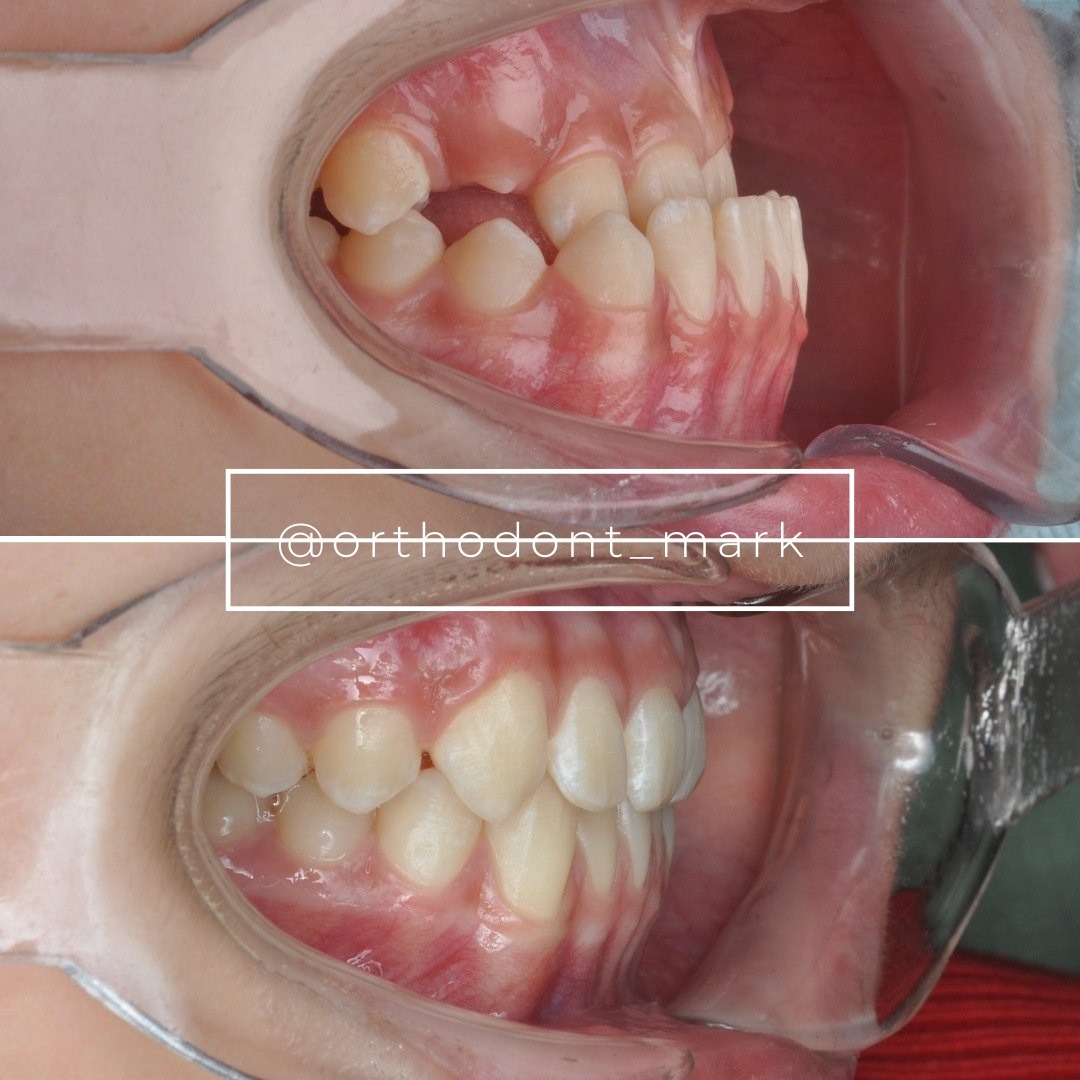
Clinical cases from Dr. Mark Radzhabov's practice


Learn the full MARPE protocol from Dr. Mark Radzhabov
Fundamental course covering CBCT patient selection, miniscrew planning, activation protocols, and 60+ clinical cases. Choose the access level that fits your practice.
Essentials of rapid palatal expansion for practicing orthodontists.
- Core RPE concepts and biomechanics
- 6 structured video lessons
- Clinical decision checklists
- Lifetime access to recordings
Deep-dive into MARPE protocol, diagnostics, and clinical execution.
- 6 modules covering MARPE from A to Z
- CBCT case selection walkthroughs
- Miniscrew placement and activation
- 60+ annotated clinical cases
- Direct Q&A with Dr. Mark Radzhabov
5-element medical consultation framework for dentists and orthodontists.
- Trust-building consultation protocol
- 5 lesson modules
- Templates for treatment plan delivery
- Works with any clinical specialty
Clinical FAQ
What is the optimal age to begin segmented palatal expansion with miniscrew-assisted rapid palatal expansion?
Age 13 years and older is recommended for miniscrew anchorage in the hard palate. Younger patients lack sufficient palatal bone density. Adolescents (13–18) show excellent suture responsiveness. Adults (18+) with early-to-mid suture fusion still respond well to segmented MARPE. Fully fused sutures (Stage 5) may require surgical assistance or higher forces.
How do I distinguish between successful midpalatal suture separation and dentoalveolar compensation during segmented expansion?
Clinical diastema formation between upper incisors within 7–10 days of anterior zone activation indicates suture opening. CBCT confirms separation at the midpalatal suture midline. Dentoalveolar compensation appears as buccal tipping of anchor teeth. MARPE minimizes this by loading miniscrews, not teeth. If diastema is absent by day 10, reassess suture maturity via CBCT before continuing.
What is the typical activation protocol for differential activation in segmented MARPE systems?
Anterior zone: 4 turns on day 0, then 3–4 turns daily for 9–10 days (~1 mm/day). Posterior zone: begin 1–2 weeks later at 3–4 turns daily. Deactivate anterior gradually during posterior phase. Total active time: 8 weeks minimum. Consolidation: 1–2 turns/week deactivation. Retention: 6 months.
How does segmented expansion differ biomechanically from conventional rapid palatal expander (RPE) in terms of skeletal vs. dentoalveolar gains?
Conventional RPE: ~60–70% skeletal, 30–40% dentoalveolar (dental tipping). Segmented MARPE: forces load miniscrews in palatal bone, bypassing dental roots. Result: greater skeletal gain (70–85%), minimal dentoalveolar displacement (15–30%). Evidence shows MARPE produces significantly greater molar-region nasal width expansion and less buccal tooth displacement than RPE.
What are the anatomical landmarks for miniscrew placement in segmented palatal expansion?
Anterior zone: miniscrews placed at midpalatal suture midline, between incisor and first premolar, in keratinized mucosa. Posterior zone: miniscrews at suture midline between second premolar and distal tuberosity. Both perpendicular to palatal plane. Spacing: 20–25 mm apart. CBCT guidance essential to verify suture anatomy and avoid neurovascular structures.
What do clinicians do if midpalatal suture separation does not occur after 10 days of anterior zone activation?
If no diastema by day 10, do not increase force aggressively. Obtain CBCT to assess suture maturation stage and degree of opening. If suture is advanced Stage 4–5 (nearly fused), consider surgical adjuncts or consultation with an oral surgeon. If Stage 3 with minimal opening, continue activation at current pace. Biological response may be delayed. Never force suture opening without radiographic confirmation.
How long should retention be maintained after active segmented palatal expansion is complete?
Minimum 6 months retention is mandatory. The newly opened midpalatal suture requires 6 months of bone re-mineralization and remodeling to resist relapse. Prematurely discontinuing retention results in 30–50% expansion loss. Supervise retention compliance with periodic photographs and CBCT confirmation at 3 and 6 months post-expansion.
What are contraindications or relative contraindications to segmented MARPE in a prospective patient?
Absolute: active periodontal disease, severe maxillary alveolar bone loss, inability to maintain activation protocol. Relative: severe anterior-posterior skeletal discrepancy (SARME preferred), bilateral asymmetry > 4 mm, bisphosphonate therapy, uncontrolled diabetes. Age < 13, insufficient palatal keratinized tissue, or poor compliance preclude miniscrew anchorage.
How do segmented MARPE outcomes compare to surgically assisted rapid maxillary expansion (SARPE) in terms of efficacy and morbidity?
SARPE: ~100% suture separation, greatest skeletal gain, but significant surgical morbidity (swelling, recovery time, cost). MARPE: 90–95% suture separation, 70–85% skeletal gain (similar to SARPE), minimal morbidity. MARPE is first-line in post-pubertal patients. SARPE reserved for failed MARPE or complete suture fusion (Stage 5). Both produce excellent long-term stability.
What practical steps does Dr. Mark Radzhabov recommend for auditing segmented MARPE compliance and preventing asymmetric expansion?
Use calibrated appliance design with marked activation indices on all miniscrews. Audit patient activation logs weekly. Take intraoral photos (occlusal, frontal) at 2-week intervals to monitor diastema symmetry and expansion parallelism. If asymmetry appears, rebalance screw activation immediately. Supervise compliance. Non-compliant patients show unequal bilateral expansion and relapse.
Segmented expansion represents a paradigm shift from monolithic expansion thinking toward zone-specific biomechanics that honor palatal anatomy and suture maturity. By sequencing anterior and posterior miniscrew activation independently, you gain precise control over the axis of expansion—converting the parallel-vs-V dilemma from an either-or choice into a clinically guided decision. Dr. Mark Radzhabov recommends case-by-case assessment of midpalatal suture maturity via CBCT before committing to your activation protocol. To deepen your segmented expansion skills, review your recent MARPE cases or schedule a consultation to discuss protocol refinement and expected three-dimensional skeletal response.