
MARPE Resident Training:
Competency-Based Curriculum
A Four-Stage Framework for Clinical Mastery
Evidence-based milestones, supervised skill progression, and validated assessment checkpoints to prepare residents for independent miniscrew-assisted rapid palatal expansion practice.
TL;DR A competency-based curriculum for MARPE resident training establishes measurable clinical milestones across patient selection, miniscrew placement, expansion mechanics, and radiographic assessment. This framework ensures residents transition from supervised simulation to independent clinical practice with validated skeletal and dentoalveolar outcomes, reducing complications and accelerating expertise in miniscrew-assisted rapid palatal expansion.
Teaching MARPE to orthodontic residents requires a structured, evidence-based competency framework that moves beyond passive observation to active clinical mastery. Dr. Mark Radzhabov has developed and refined a resident training curriculum that integrates miniscrew biomechanics, patient selection criteria, radiographic interpretation, and complication management into measurable learning objectives. This article outlines the four-stage competency-based curriculum for MARPE resident training, with specific clinical protocols, assessment checkpoints, and decision trees that prepare residents for independent practice. The goal is to establish a standardized training pathway that leverages current evidence on skeletal expansion mechanics while building the judgment needed to handle complex cases and unexpected midpalatal suture patterns.
What Is a Competency-Based Curriculum
for MARPE Resident Training?
A competency-based curriculum for MARPE resident training is a structured educational framework that establishes measurable clinical milestones, supervised skill progression, and validated assessment checkpoints to prepare orthodontic residents for independent miniscrew-assisted rapid palatal expansion practice. Unlike traditional apprenticeship models, competency-based curricula define exactly what residents must demonstrate—from initial patient selection and informed consent through miniscrew placement biomechanics, expansion activation protocols, and radiographic interpretation of midpalatal suture separation. The rationale is straightforward: MARPE involves irreversible skeletal changes, requires precise miniscrew angulation and positioning, and demands real-time decision-making under clinical uncertainty. Residents who train under a standardized competency framework show faster progression to independent practice, lower complication rates, and greater confidence in case selection and troubleshooting. A competency-based approach also creates measurable documentation for institutional accreditation and program evaluation, showing that residents have achieved validated clinical and radiographic endpoints. This framework combines simulation-based learning (virtual implant placement, radiographic assessment of CBCT anatomy), supervised direct clinical experience, and case-based learning with structured feedback. Each stage—orientation, guided practice, supervised independent practice, and mastery—has explicit success criteria that both resident and supervisor understand before the patient enters the treatment room.
Orientation and Simulation-Based Learning
Building anatomical literacy
Stage 1 is entirely pre-clinical and focuses on cognitive and psychomotor preparation. Residents begin with high-resolution CBCT anatomy review—studying palatal depth, midpalatal suture morphology, vascular patterns, and root proximity on at least 20 pre-treatment scans before ever handling a miniscrew. This step is essential because miniscrew positioning depends on precise three-dimensional understanding of the anatomy above and below the oral surface. Next, residents complete simulation-based learning: virtual miniscrew placement exercises using software (such as dental implant planning platforms adapted for miniscrew positioning), physical 3D-printed palates with embedded miniscrews for drilling and insertion practice, and radiographic interpretation modules in which residents measure midpalatal suture width, identify nasal floor expansion, and assess dentoalveolar versus skeletal contributions to maxillary width from CBCT images at pre-expansion, post-expansion, and consolidation phases. Residents also study the evidence: they review peer-reviewed papers on skeletal and alveolar changes in MARPE compared to conventional rapid palatal expansion (RPE), understand the biomechanical differences between pure bone-borne expanders and hybrid tooth-bone appliances, and internalize the age-dependent effectiveness of expansion protocols. Stage 1 concludes with a written examination on anatomy, radiographic interpretation, and protocol knowledge, and a hands-on simulation of miniscrew insertion into a 3D-printed model using actual operative instruments.
Guided Clinical Practice Under Direct Supervision
Case-by-case skill building
Stage 2 begins with real patients and direct, real-time supervision. The resident observes the attending clinician perform two complete MARPE cases (patient consultation, treatment planning on CBCT, miniscrew placement, and initial activation), then co-treats two cases: the resident performs miniscrew placement while the attending guides and intervenes as needed. Communication during this phase is critical—the attending voices clinical reasoning aloud, explaining why a particular screw angle was chosen, how the miniscrew handles depend on cortical bone quality, and what intraoperative signs indicate proper seating. Once the resident demonstrates competence in miniscrew placement (straight trajectory, no deviation from planned position, appropriate torque application, and stable final position), he or she transitions to independently placing miniscrews under attending supervision—meaning the supervisor is present in the operatory, observes the entire procedure, and intervenes only if safety or anatomy is compromised. At this checkpoint, residents must successfully place at least 5 miniscrews with an attending evaluation of placement accuracy, insertion technique, and patient communication. Stage 2 also includes supervised initial activation protocols: the resident learns to calculate appropriate activation rates based on patient age, bone density, and midpalatal suture morphology. Activates the expansion screw under supervision. And interprets the patient's response and comfort during and after the first 2–4 weeks. Residents practice the decision to advance, maintain, or slow activation based on clinical signs (palatal blanching, root divergence on periapical radiographs, patient pain reports) and understand when to order follow-up CBCT for suture assessment.
Supervised Independent Practice and Case-Based Learning
Building clinical judgment
Stage 3 is where residents manage their own MARPE cases with structured oversight. The resident independently treats 8–12 cases: leads patient consultation, performs patient selection and informed consent, plans miniscrew position on CBCT, places miniscrews independently (with the attending available if complications arise), and manages all activation phases, radiographic assessment, and retention decisions. However, every case is reviewed with the attending on a defined schedule—consultation notes reviewed before treatment, miniscrew placement radiographs reviewed within 48 hours, post-expansion CBCT reviewed with attending interpretation of midpalatal suture separation and skeletal changes, and consolidation/retention plans documented and critiqued. Case-based learning conferences are central to Stage 3. Residents present challenging cases: incomplete midpalatal suture separation despite adequate activation, asymmetric expansion, unexpected dentoalveolar tilting, or miniscrew migration. The attending asks directed questions—“What patient age and bone density did you document? What does the post-expansion CBCT show about suture opening pattern? Did you consider slowing activation or ordering additional imaging?”—forcing the resident to link clinical observation to evidence and anatomy. Residents at this stage also mentor Stage 1 and Stage 2 residents, reinforcing their own learning and beginning to develop teaching skills. They lead a journal club discussing recent skeletal expansion research and contribute to case documentation for quality improvement or research purposes, understanding how their clinical decisions generate evidence for future residents.
Mastery: Independent Practice and Mentorship
Becoming an educator
Stage 4 is achieved when the resident demonstrates independent mastery of MARPE across diverse patient populations and complex presentations. At this level, the resident independently manages all MARPE cases—including patient selection decisions, informed consent, CBCT analysis, miniscrew placement planning and execution, activation protocols, radiographic interpretation, and retention decisions—without requiring case-by-case supervisor review. However, the resident maintains involvement in a defined quality assurance process: case documentation, radiographic outcomes, and complication tracking are reviewed quarterly to ensure consistency and identify opportunities for improvement. More importantly, Stage 4 residents transition to mentorship roles. They actively teach Stage 1 and Stage 2 residents, explaining clinical reasoning, modeling communication skills, and providing feedback on simulation and early clinical cases. Dr. Mark Radzhabov emphasizes that teaching deepens expertise: residents who articulate “why we are placing the miniscrew at this angle given this patient's midpalatal suture anatomy” internalize the evidence and build the adaptive reasoning needed to handle outlier cases. Stage 4 residents also begin to engage with program improvement and research. They may conduct retrospective case reviews to compare skeletal and dentoalveolar outcomes across cohorts treated with different activation protocols, propose quality improvement initiatives to reduce miniscrew mobility or optimize consolidation timing, or contribute case series to the literature. By this stage, the resident has treated 25+ MARPE cases, assessed at least 50+ post-expansion CBCT scans, and developed reliable judgment in patient selection, complication recognition, and adaptive treatment planning.
Competency Milestones and Validation
Measurable endpoints
Competency progression requires explicit, measurable validation at each stage. Stage 1 completion is confirmed by written examination (minimum 80% score on anatomy, CBCT interpretation, and protocol questions), successful simulation-based miniscrew placement on 3D-printed models (judged by an attending using a standardized scoring rubric for trajectory, depth, angulation, and torque), and demonstrated CBCT interpretation accuracy (resident measures midpalatal suture width, nasal floor expansion, and dentoalveolar tipping on 10 post-expansion scans and is compared against attending measurements). Stage 2 completion requires placement of at least 5 miniscrews under direct supervision with attending sign-off on placement accuracy and technique, completion of 2 co-treated cases with documented attending feedback on diagnosis, treatment planning, and patient communication, and independent activation of 2–3 cases with supervisor review of activation timing and radiographic assessment. Stage 3 completion requires independent management of 8–12 cases with a case-by-case review meeting signed off by the attending, a score of ≥85% on a case-based examination (written scenarios of MARPE patients with CBCT and clinical photographs. Resident proposes diagnosis, activation protocol, and troubleshooting), and demonstration of mentorship of at least one Stage 1 or 2 resident with documented feedback. Stage 4 validation occurs through quarterly outcome review: miniscrew placement success rate (≥95%), midpalatal suture separation rate (≥90% by post-expansion CBCT), and complication rate (≤5%, excluding patient-related factors). Residents who achieve these benchmarks are certified as independent MARPE practitioners and formally recognized as mentors for incoming residents.
Implementing the Curriculum in Your Program
Step-by-step roadmap
Implementing a competency-based MARPE resident training curriculum requires deliberate planning and resources. First, establish a simulation laboratory with at least three high-quality 3D-printed palatal models, dental implant planning software adapted for miniscrew positioning, and a set of actual miniscrews and insertion instruments. Residents spend 4–6 weeks in Stage 1. Budget 2–3 hours per week for CBCT anatomy review and 2–3 hours per week for simulation. Second, create written competency checklists and sign-off forms for each stage. These documents specify the skill, the success criterion (e.g., “miniscrew placed within 2 mm of planned position as measured on post-operative radiograph”), the method of assessment (direct observation, radiographic measurement, or written examination), and spaces for resident and supervisor signatures and dates. Checklists should be reviewed with residents before Stage 1 begins so there is no ambiguity about expectations. Third, identify a dedicated MARPE case queue or external referral partnerships to ensure consistent case volume. Residents need at least 2–3 cases per month during Stages 2 and 3 to maintain skills and reach the 25+ case minimum by program end. If your clinic has limited volume, partner with nearby practices, dental schools, or orthodontic residencies to arrange mentored case rotations. Fourth, schedule structured case review meetings: 30-minute supervision visits for Stage 2, and 60-minute case conferences for Stage 3 (in which the resident presents the case, attends shows the CBCT and radiographs, and both discuss clinical reasoning). Budget 2–3 hours per week of attending time for supervision and feedback. Finally, document all case outcomes: maintain a spreadsheet of miniscrew placement success, midpalatal suture separation rates, post-expansion dentoalveolar measurements, and complication incidence. These data serve as objective evidence of resident progress and program quality.
Pitfalls to Avoid When Training MARPE Residents
Shortcut-free learning
A frequent error in resident training is skipping simulation-based learning and moving directly to patient treatment. Supervising a resident's first miniscrew placement in a patient's palate without prior simulation practice is inefficient and increases risk of misplacement, excessive bleeding, or patient distress. Simulation does not replace clinical experience, but it compresses the learning curve and ensures residents understand anatomy and instrumentation before handling real anatomy. Commit to Stage 1 even if it means a 2–3 month delay in the resident's first patient case. Second, avoid inconsistent supervision standards. If Stage 2 resident A receives in-operatory supervision for all 5 placements, but Stage 2 resident B is supervised only intermittently, both residents may not reach the same competency level. Use standardized checklists and attend all Stage 2 placements yourself, even if briefly. This consistency also models the attending's own clinical standards and prevents residents from developing idiosyncratic or unsafe techniques. Third, do not conflate case volume with competency. A resident who independently manages 10 cases but lacks radiographic literacy—cannot reliably interpret midpalatal suture opening on CBCT, misses asymmetric expansion, or activates cases inappropriately—has not achieved mastery. Every case should include deliberate feedback on decision-making, not just technical execution. Spend time analyzing post-expansion CBCT with each resident, explaining what you see (“This patient shows 85% skeletal, 15% dentoalveolar contribution”), and asking the resident what activation adjustments might be needed in the next phase. Fourth, avoid teaching MARPE in isolation. Contextual learning—connecting MARPE to conventional RPE, MSE versus BAME differences, and age-dependent effectiveness—deepens understanding. Help residents understand why MARPE is chosen for a specific patient (age, bone density, severity of transverse deficiency) and how the expected skeletal outcome differs from other expansion modalities. Finally, do not forget mentorship in Stage 4. Residents who teach others consolidate their own knowledge and develop the adaptive expertise needed to handle rare or complex cases.
Free Clinical Guide
Which Expansion Appliance at Which Age?
Get Dr. Mark Radzhabov's guide to skeletal-expansion appliances — indications, pros & cons, and how to choose by patient age. Free to your inbox.
Prefer video? Watch the free demo lesson on MARPE appliance types, features and trade-offs.
Documented outcomes
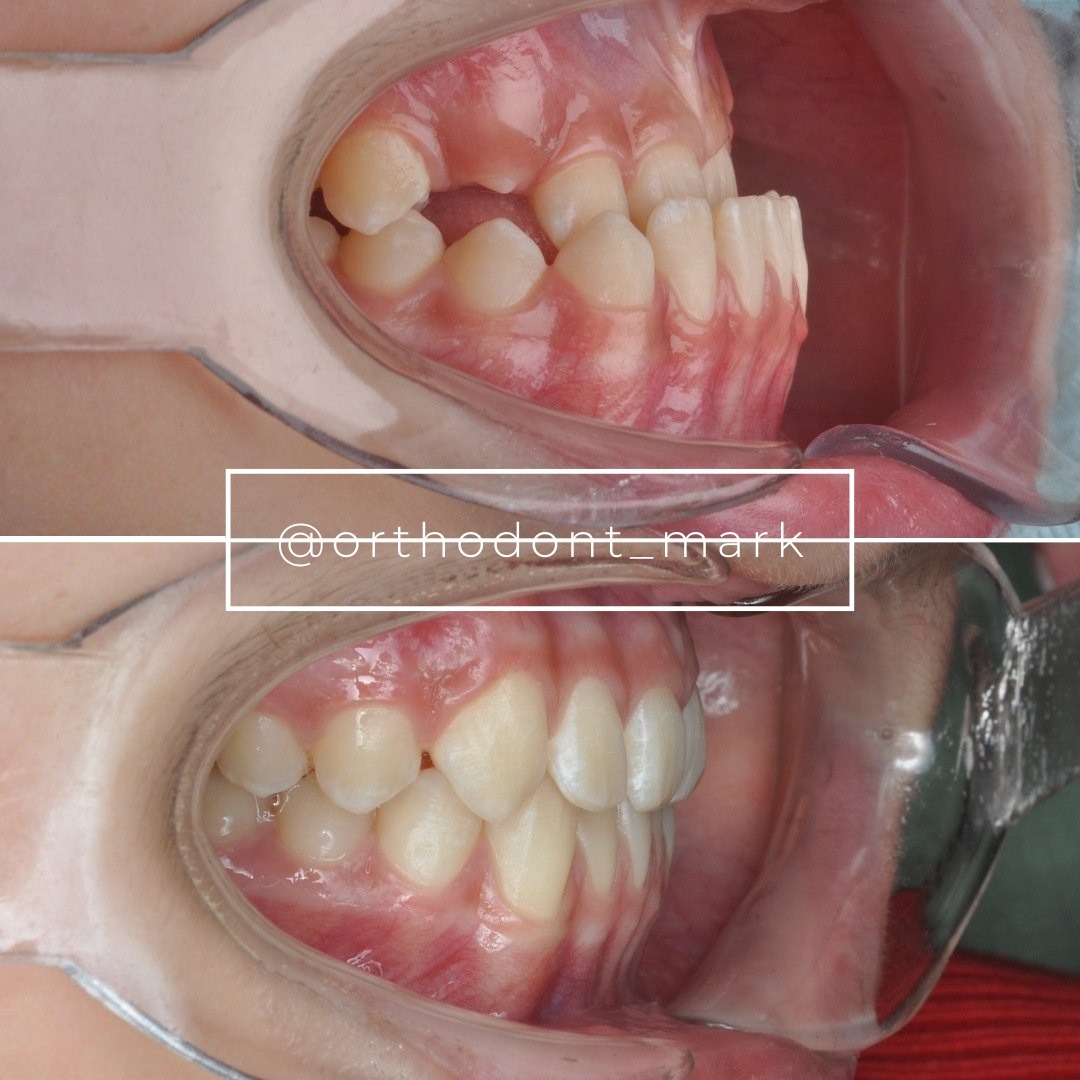
Clinical cases from Dr. Mark Radzhabov's practice


Learn the full MARPE protocol from Dr. Mark Radzhabov
Fundamental course covering CBCT patient selection, miniscrew planning, activation protocols, and 60+ clinical cases. Choose the access level that fits your practice.
Essentials of rapid palatal expansion for practicing orthodontists.
- Core RPE concepts and biomechanics
- 6 structured video lessons
- Clinical decision checklists
- Lifetime access to recordings
Deep-dive into MARPE protocol, diagnostics, and clinical execution.
- 6 modules covering MARPE from A to Z
- CBCT case selection walkthroughs
- Miniscrew placement and activation
- 60+ annotated clinical cases
- Direct Q&A with Dr. Mark Radzhabov
5-element medical consultation framework for dentists and orthodontists.
- Trust-building consultation protocol
- 5 lesson modules
- Templates for treatment plan delivery
- Works with any clinical specialty
Clinical FAQ
What is the optimal age to begin MARPE resident training within a residency program?
Ideally, residents begin MARPE training in year 2 of a 3-year program. This timing allows Stage 1 completion before year-end, Stage 2–3 throughout year 2, and Stage 4 mastery during year 3, ensuring graduating residents are competent independent practitioners.
How many MARPE cases must a resident complete to achieve independent practice competency?
A minimum of 25 cases with documented supervision and quarterly outcome review is recommended. Clinical observation shows residents who treat 25+ cases develop reliable judgment in patient selection, miniscrew placement, activation timing, and radiographic interpretation needed for safe independent practice.
What CBCT measurements should residents master during competency-based curriculum training?
Residents must reliably measure midpalatal suture width, nasal floor expansion, maxillary skeletal width at molar and premolar regions, and dental tipping angles. Competency is validated when resident measurements agree with attending measurements within ±1 mm and ±2 degrees on 10 consecutive post-expansion scans.
How do you assess miniscrew placement accuracy in residents during training?
Post-operative radiographs (periapical and occlusal) and follow-up CBCT are compared against pre-operative planned positions. Success criteria: miniscrew within 2 mm of planned position, appropriate cortical bone engagement, no root or sinus penetration, and confirmed stable positioning at 2-week follow-up.
What expansion activation protocol should residents initially follow?
Stage 2 residents follow protocol guidance from the attending: typically 4 turns on day of placement, then 3 turns daily for 10 days (if age <18), or modified for adults based on bone density. Residents learn to adjust based on clinical signs (palatal blanching, patient comfort) and CBCT suture assessment.
How often should residents and supervisors review MARPE cases during Stage 3?
Stage 3 requires case review at four critical timepoints: pre-treatment (diagnosis and planning review), within 48 hours post-placement (radiograph and technique feedback), post-expansion at T1 (CBCT assessment of suture and skeletal changes), and at consolidation (T2) before retention. Quarterly outcome review tracks overall success metrics.
What is the role of simulation-based learning in miniscrew-assisted expansion resident training?
Simulation compresses the learning curve for anatomical understanding and miniscrew insertion technique. Residents practice on 3D-printed models before patient contact, achieving competency in straight trajectory, appropriate depth, and torque application—reducing errors and anxiety during initial clinical placements.
How should resident training address patient selection criteria for MARPE?
Competency includes assessing transverse maxillary deficiency severity, skeletal maturity (hand radiographs and cervical vertebral maturation staging), bone density (CBCT Hounsfield units), and midpalatal suture morphology. Stage 2–3 residents lead case selection discussions with attending feedback on appropriateness.
What documentation is essential for MARPE resident competency validation?
Competency validation requires signed supervisor checklists at each stage, radiographic measurements (post-operative placement accuracy), post-expansion CBCT outcomes (suture separation and skeletal contribution), case presentation notes, and a spreadsheet tracking miniscrew success rate, suture separation rate, and complication incidence across all resident cases.
How do you transition a Stage 3 resident to independent Stage 4 MARPE practice?
Transition occurs when the resident achieves 8–12 independent cases with consistent outcomes (≥90% suture separation, ≥95% miniscrew success, ≤5% complications), demonstrates reliable radiographic interpretation, and shows mentorship capability. A formal sign-off meeting with program leadership and final outcome review confirm Stage 4 independence.
A well-structured competency-based curriculum for MARPE resident training transforms clinical outcomes and resident confidence. By anchoring instruction to measurable milestones—from initial patient consultation through post-expansion retention—programs can systematically reduce complications and accelerate the transition to independent practice. Dr. Mark Radzhabov recommends starting with simulation-based learning and graduated supervision, then progressing to case-based learning with real-time feedback. If you are developing or refining a resident training program in your institution, consider scheduling a consultation to discuss curriculum alignment and assessment strategies tailored to your clinic's case volume and teaching resources.