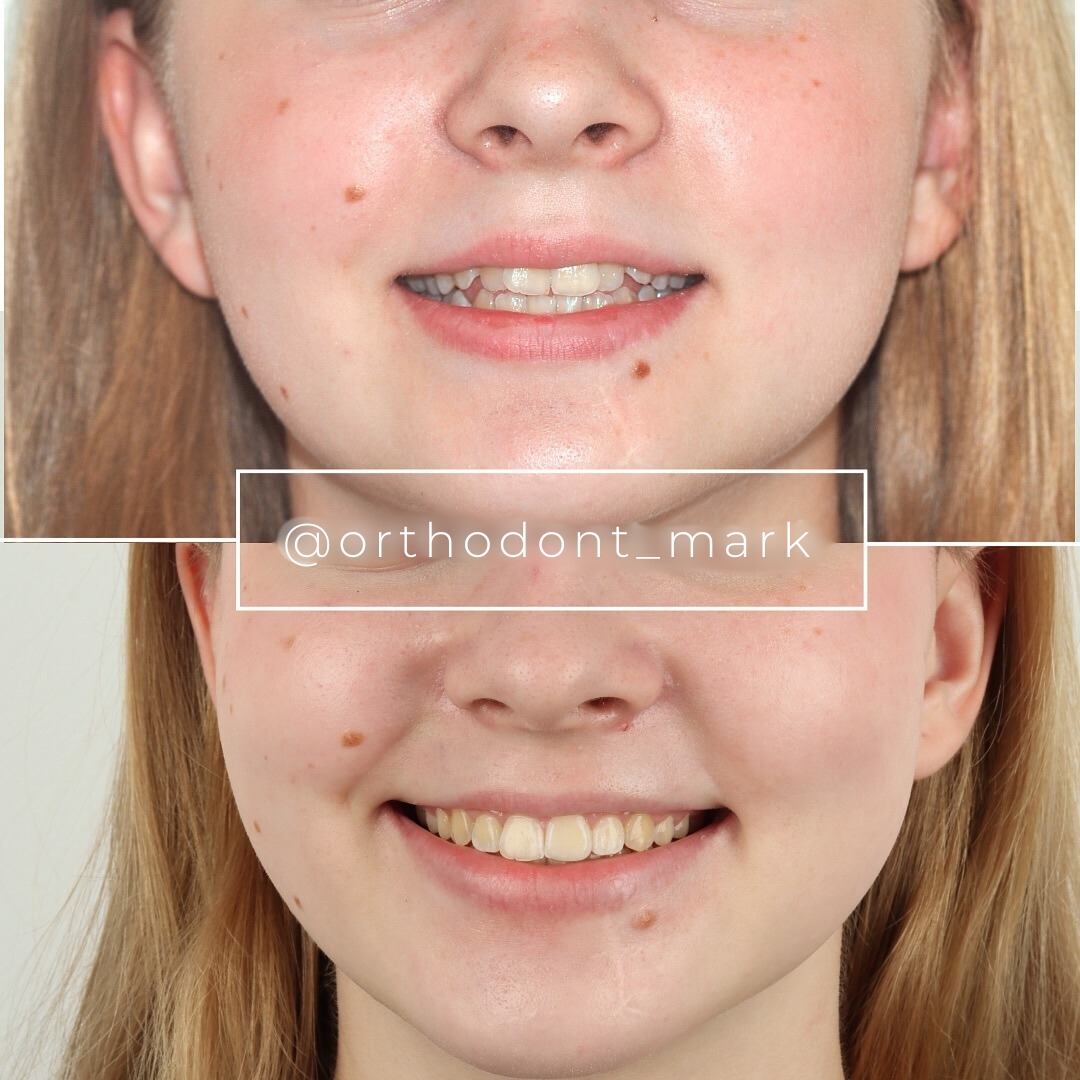
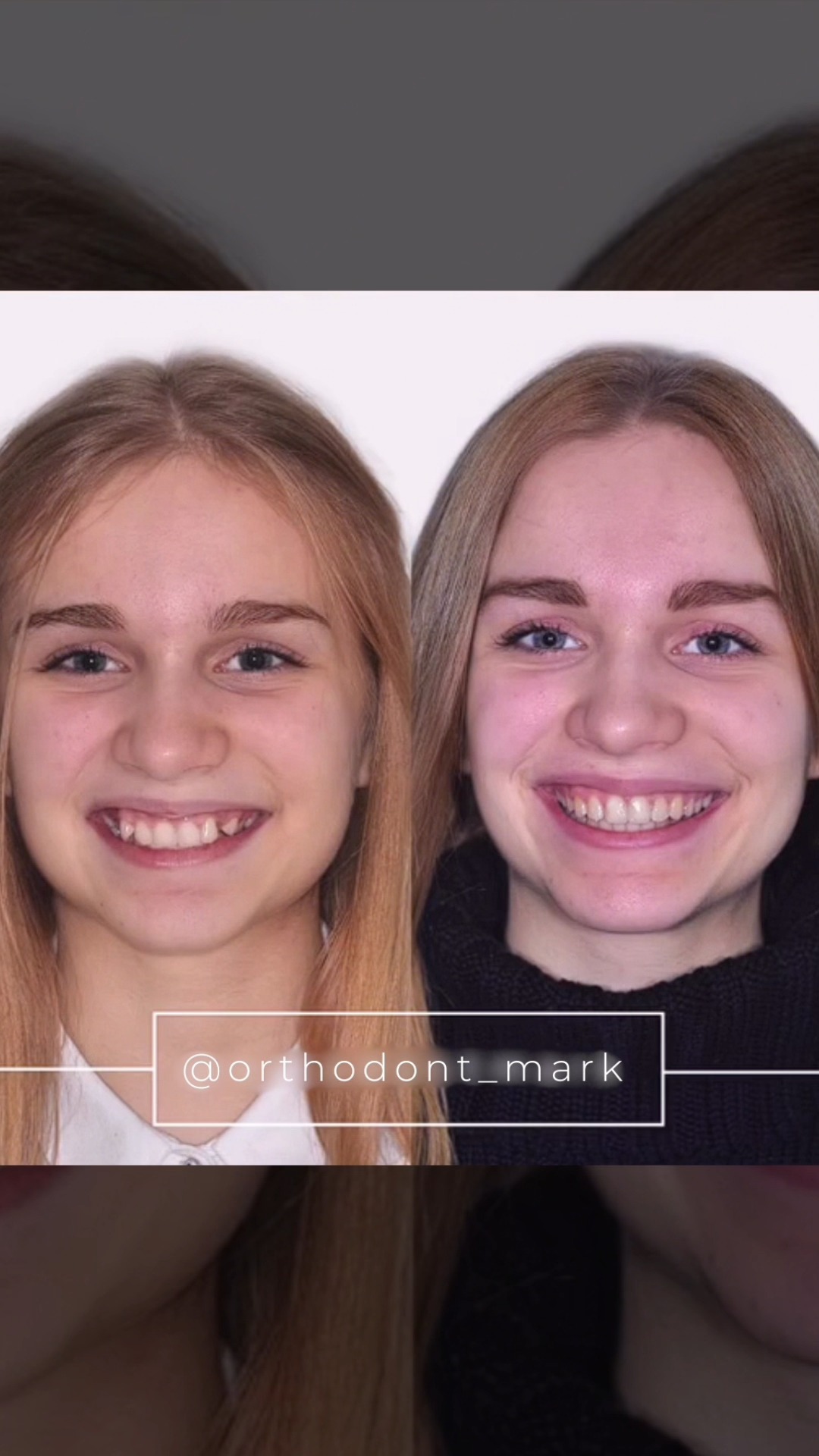
Initial situation
- Treatment with a previous specialist had not been effective
- Mesial bite
- Reverse overlap in the anterior region
The decision
The treatment plan combined the MARPE appliance with Face Mask therapy to target the skeletal component of the mesial bite. This approach was selected to achieve a maximum skeletal effect rather than relying on dental compensation alone.
Because the patient is still growing, treatment includes an element of future fixation, and monitoring continues as growth progresses.
Combining MARPE with Face Mask therapy targets the skeletal component of a mesial bite rather than compensating at the dental level alone.
The result
The combined approach achieved a maximum skeletal effect in addressing the mesial bite and reverse anterior overlap. Because the patient is still growing, the clinician continues to monitor the case, with a future fixation phase planned as part of long-term management.
In a growing patient with a skeletal mesial bite, combining MARPE with Face Mask therapy can achieve a stronger skeletal correction than dental compensation, provided growth is monitored through to fixation.
About skeletal expansion & MARPE
This case illustrates a skeletal approach to correcting a mesial bite in a growing patient. Rather than relying on dental compensation, MARPE combined with Face Mask therapy targets the underlying skeletal discrepancy directly, aiming for a maximum skeletal effect. Continued growth monitoring allows the clinician to plan a future fixation phase, reflecting how transverse and sagittal skeletal diagnostics inform long-term treatment planning in cases where a previous approach had not succeeded.
Questions clinicians ask
Why was Face Mask therapy combined with MARPE in this case?
The mesial bite had a skeletal component that had not responded to previous treatment, so Face Mask therapy was combined with MARPE to maximize the skeletal effect rather than relying on dental compensation.
Why does treatment continue as the patient grows?
Because the patient is still growing, the clinician continues to monitor skeletal changes and plans a future fixation phase to help maintain the correction achieved.
What can be done when a previous treatment approach has not worked?
Reassessing the skeletal component of a malocclusion, as in this case, can reveal an alternative treatment path when a prior approach has fallen short.
Learn the decision-making behind cases like this
Get Dr. Mark Radzhabov's free guide to skeletal-expansion appliances — which appliance to choose at which age — plus a free introductory MARPE lesson.
Get the Free Guide →More clinical cases
Original case shared by Dr. Mark Radzhabov on Instagram @orthodont_mark · Published for professional education.