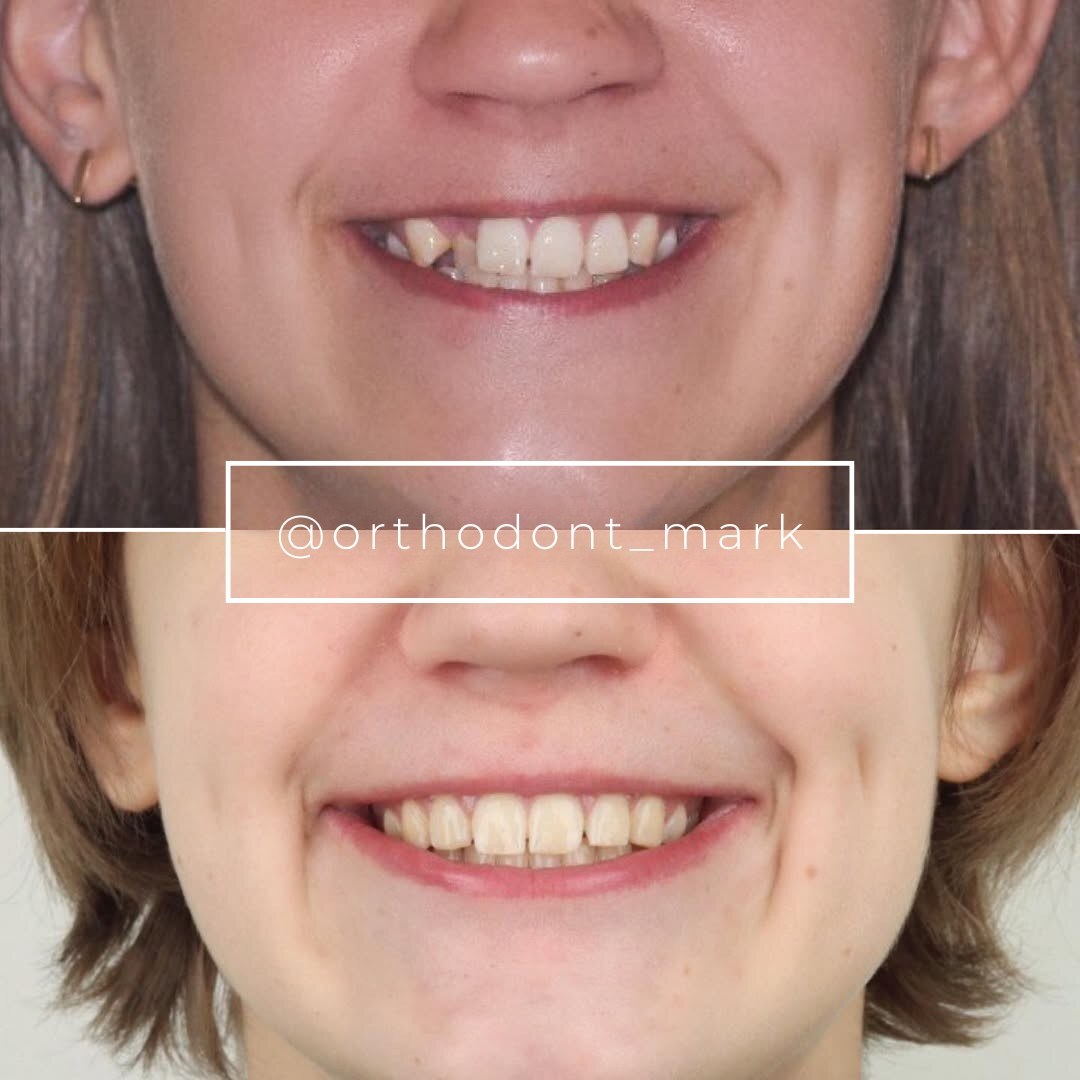
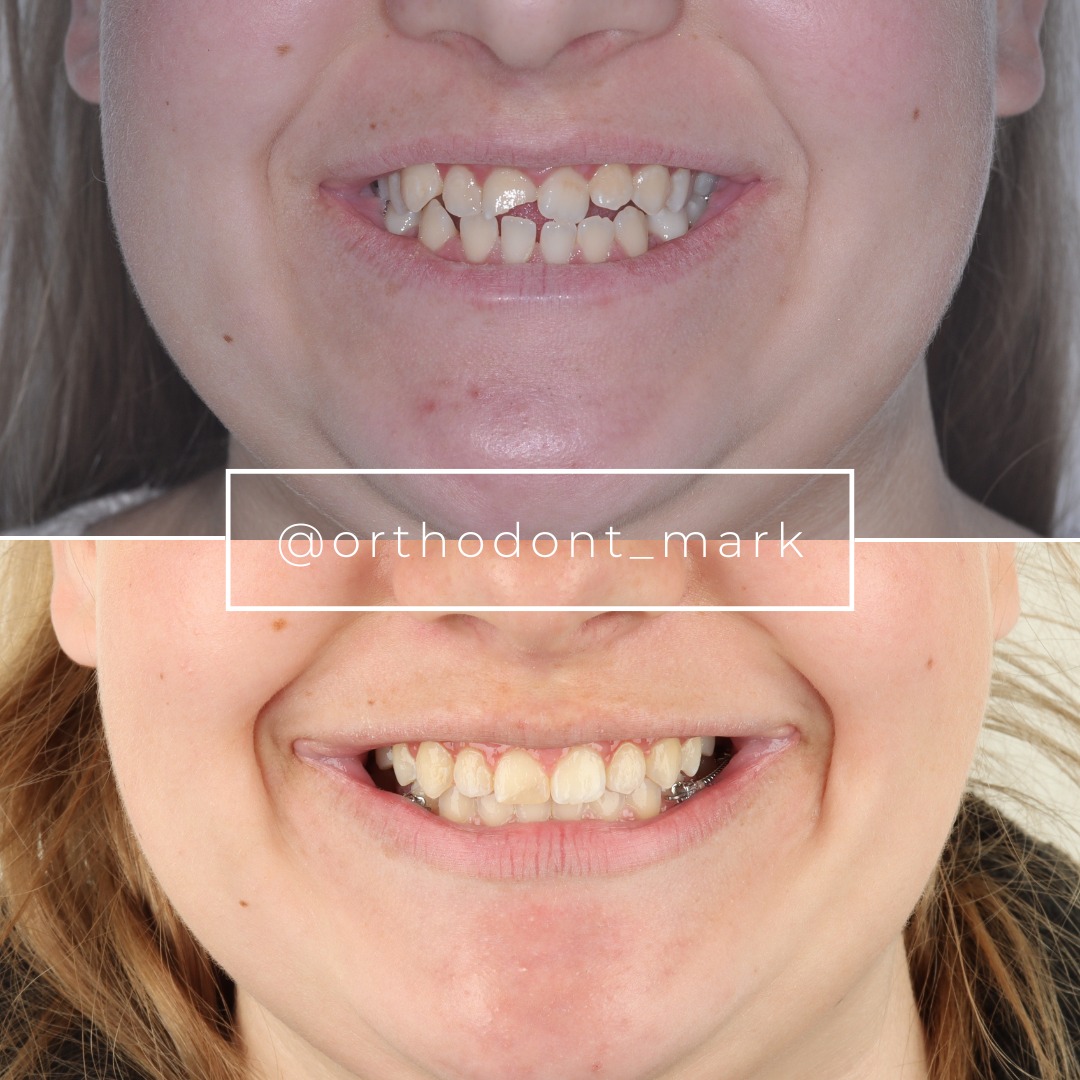
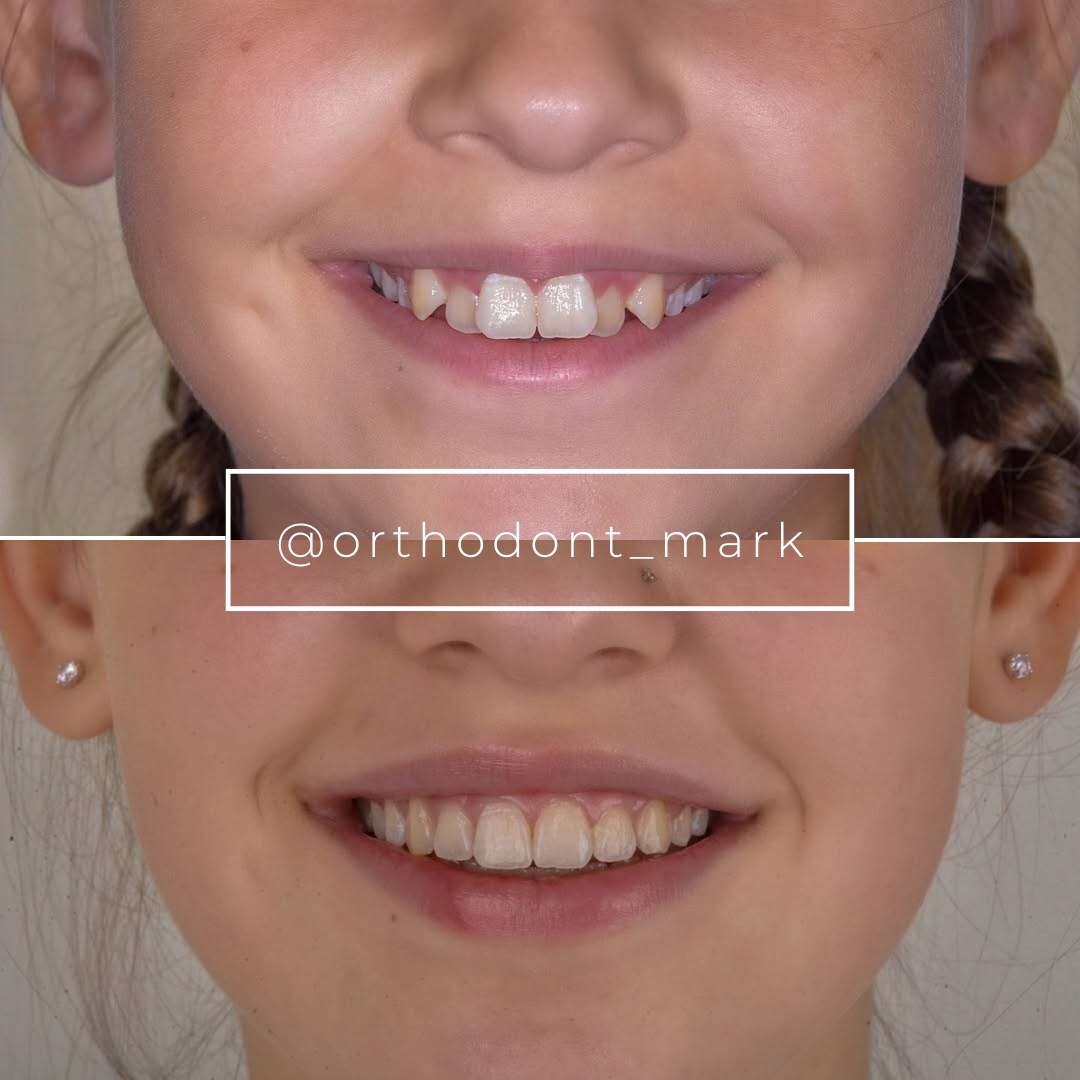
Initial situation
- Crooked teeth as the main complaint
- Lack of space for the canines
The decision
Treatment used a Damon bracket system over approximately 26 months, with active use of interproximal enamel reduction (IPR) alongside the brackets to align the teeth without extraction.
Space deficiency around the canines does not automatically call for extraction when IPR can be used effectively.
The result
The final result was aesthetic, harmonious, and attractive. Two years later, the alignment remained stable with no aesthetic changes, and the periodontium and soft tissues had adapted well to the new interproximal contacts.
IPR can resolve canine space deficiency and crowding without extraction, and periodontal adaptation should be confirmed at follow-up rather than assumed.
About skeletal expansion & MARPE
This case addresses arch-length deficiency around the canines through interproximal reduction rather than transverse skeletal expansion, but both approaches share the goal of creating adequate space without unnecessary extraction. Deciding how to gain space, through expansion, IPR, or extraction, depends on the amount of deficiency and the diagnostic limits of each method. In cases like this, clinicians typically reassess the periodontal and interproximal tissues at follow-up to confirm the space-gaining approach has been well tolerated.
Questions clinicians ask
How does IPR create space for a displaced canine?
IPR removes small, controlled amounts of enamel between adjacent teeth, creating space that can be used to help align a canine without needing extraction.
Is IPR safe for long-term periodontal health?
When performed within established limits, IPR is generally well tolerated, though follow-up is used to confirm the periodontium has adapted well to the new contacts.
Why follow up two years after treatment for a case like this?
A two-year follow-up helps confirm that the alignment and interproximal tissue health have remained stable well after active treatment ended.
Learn the decision-making behind cases like this
Get Dr. Mark Radzhabov's free guide to skeletal-expansion appliances — which appliance to choose at which age — plus a free introductory MARPE lesson.
Get the Free Guide →More clinical cases
Original case shared by Dr. Mark Radzhabov on Instagram @orthodont_mark · Published for professional education.