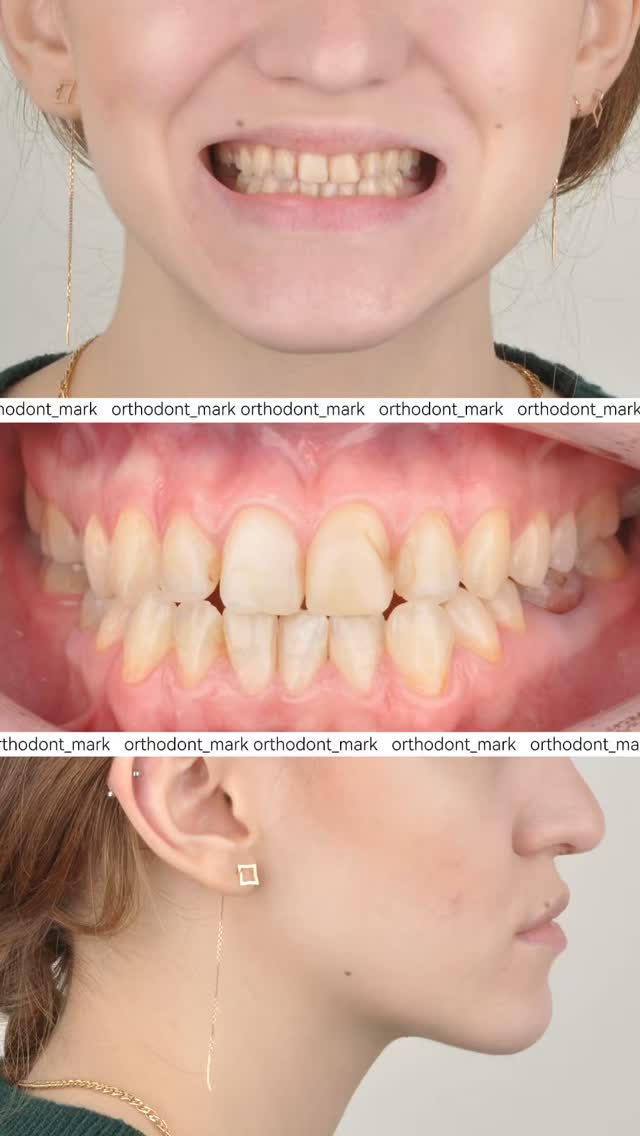
Initial situation
- Dental crowding
- Canine infraposition
- Midline deviation
- Dental arch asymmetry
- Tooth displacement
- Retruded mandible and chin
The decision
The case is shown here as a before/after outcome. The treatment plan followed standard staged assessment of the crowding, canine position, midline, and arch asymmetry described in the initial presentation.
The result
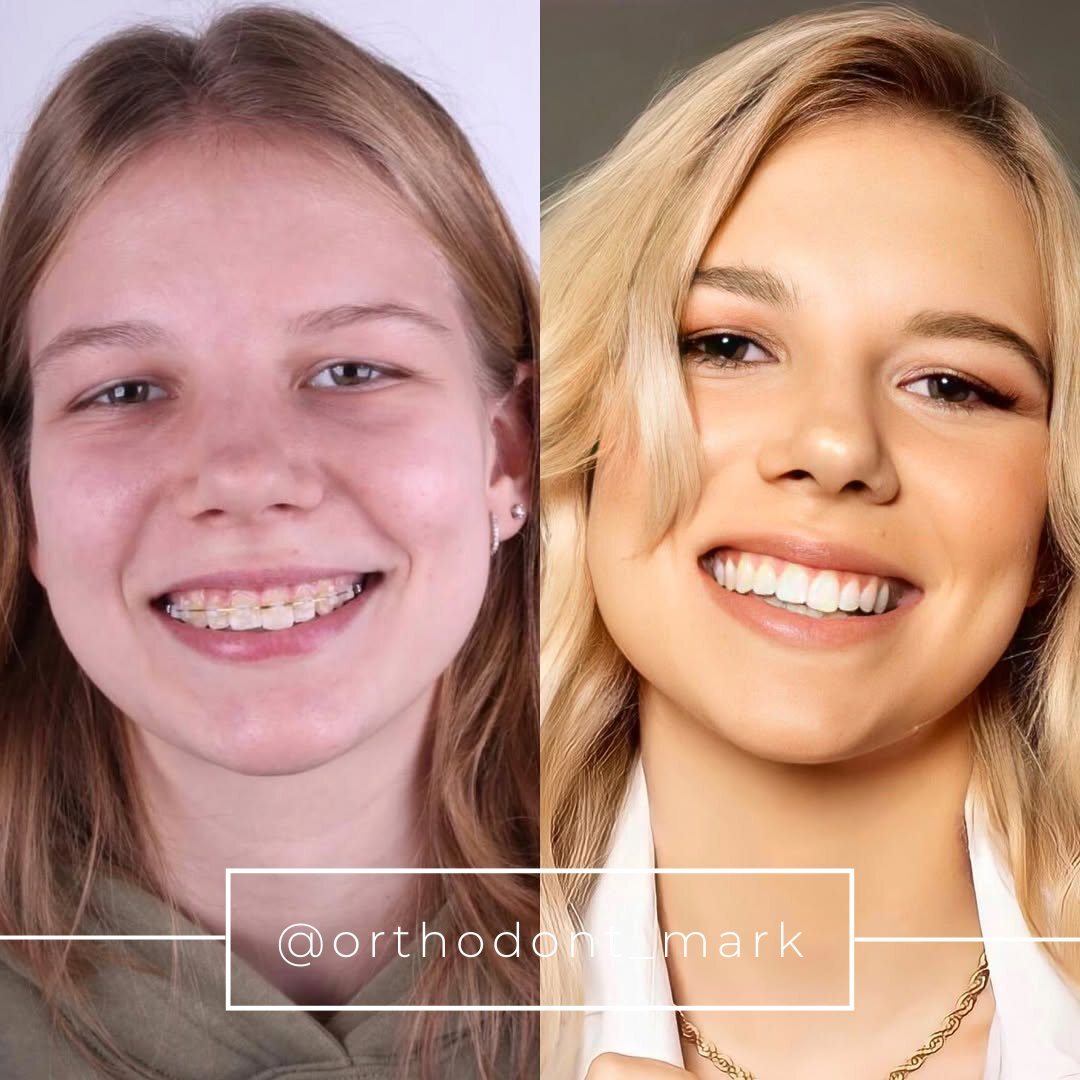
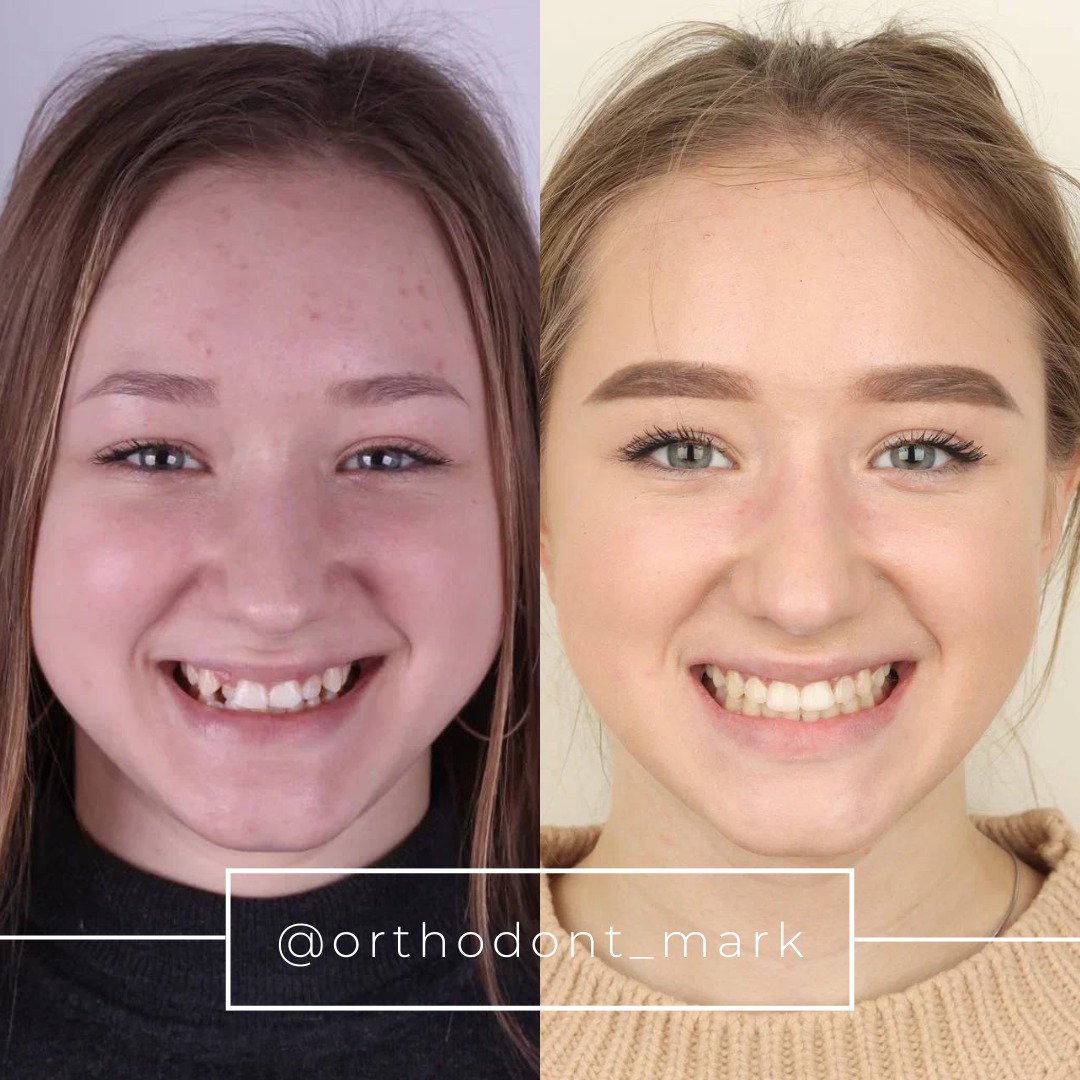
The patient finished treatment with a wide, open, and symmetrical smile.
Combined crowding, canine infraposition, and midline or arch asymmetry can be addressed together within a single comprehensive treatment plan.
About skeletal expansion & MARPE
Cases that combine crowding with an infraposed canine, midline deviation, and arch asymmetry require a plan that treats these findings as related rather than separate problems. Staged assessment, evaluating arch symmetry, tooth position, and midline relationship together, helps clinicians sequence tooth movement so that the final result is balanced rather than only locally corrected. General transverse and sagittal evaluation supports this kind of integrated planning.
Questions clinicians ask
What is canine infraposition?
Canine infraposition refers to a canine that sits lower than the adjacent teeth in the arch, one of the initial findings in this case.
Was the mandibular retrusion addressed directly?
A retruded mandible and chin were part of the initial presentation, and the patient's overall result was a wide, symmetrical smile.
What kind of result was achieved?
The patient achieved a wide, open, and symmetrical smile at the end of treatment.
Learn the decision-making behind cases like this
Get Dr. Mark Radzhabov's free guide to skeletal-expansion appliances — which appliance to choose at which age — plus a free introductory MARPE lesson.
Get the Free Guide →More clinical cases
Original case shared by Dr. Mark Radzhabov on Instagram @orthodont_mark · Published for professional education.