
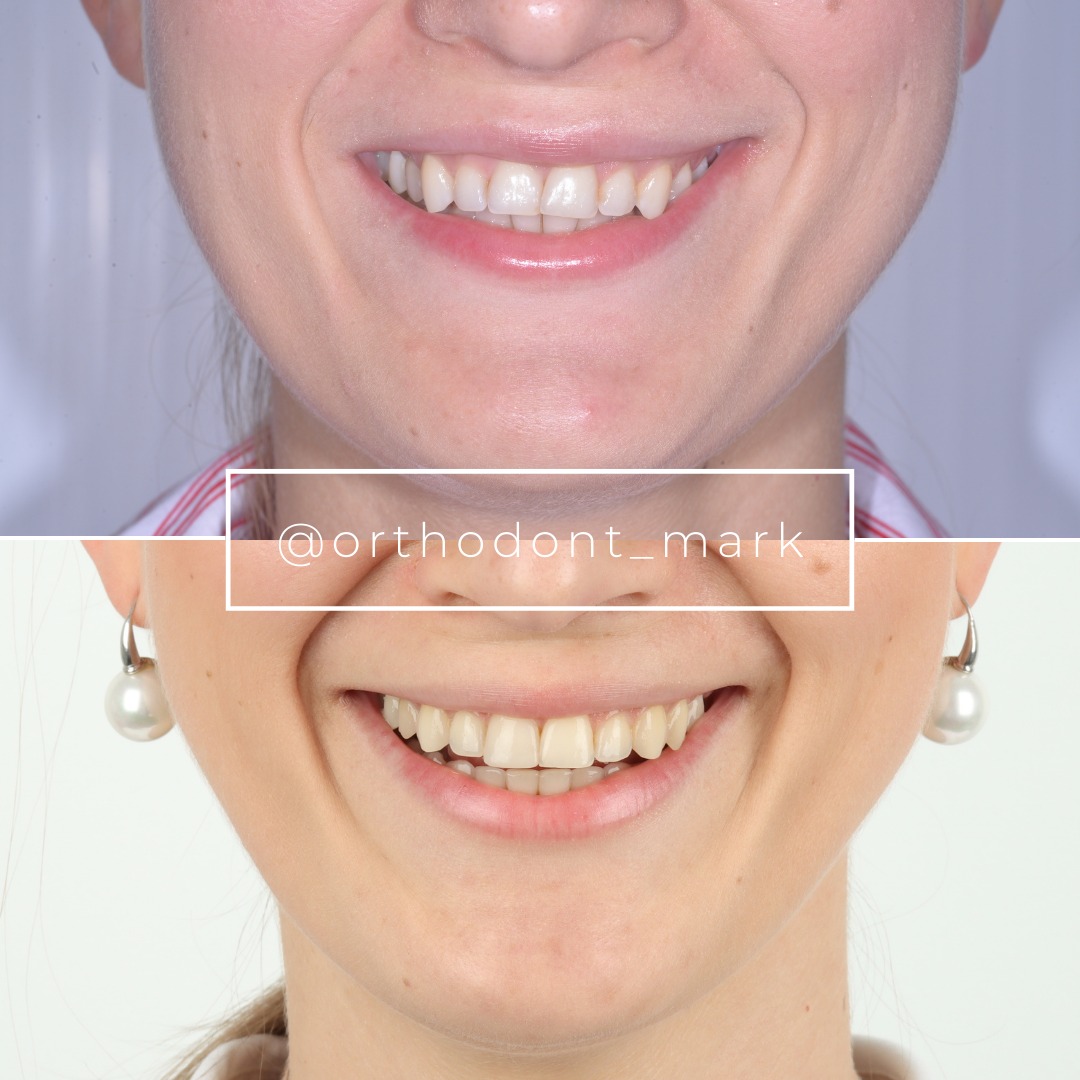
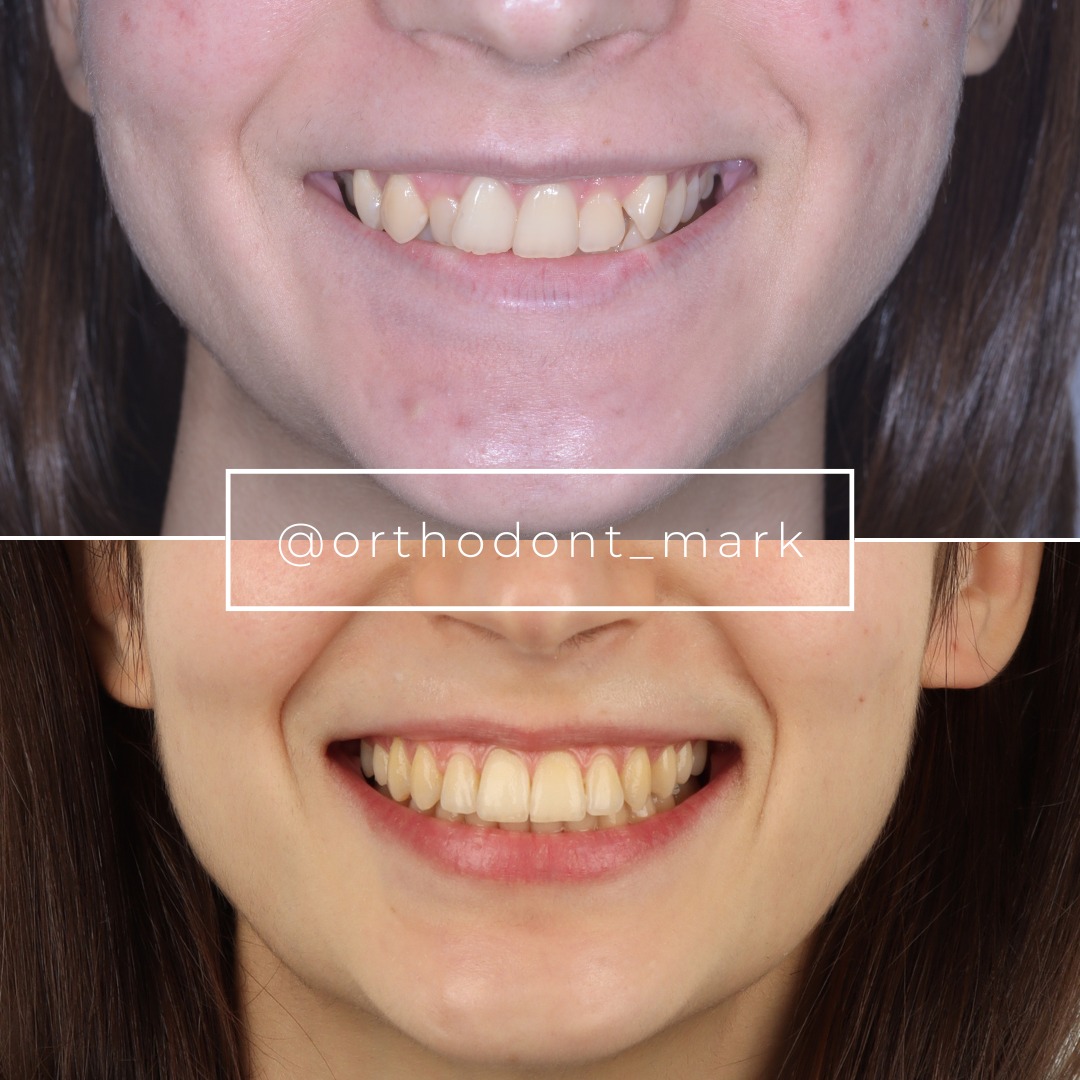
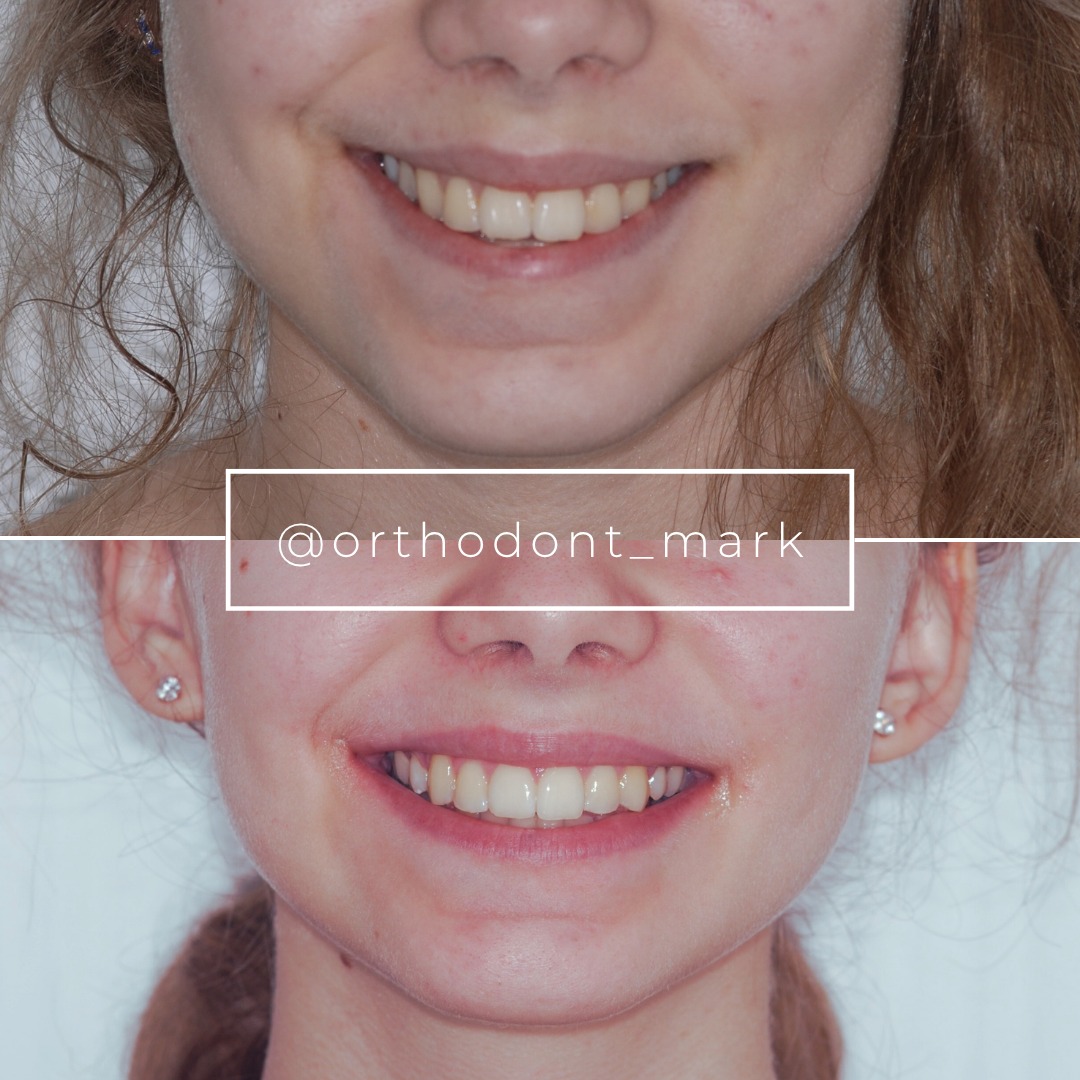
Initial situation
- Crooked teeth and spacing between the upper incisors
- Self-consciousness and discomfort about the smile
- Full distal bite (Class II) with an initial sagittal gap
The decision
To achieve a stable result, treatment proceeded with extractions on the upper arch, using the Damon bracket system.
As the patient's wisdom teeth began erupting during the teenage years, anchorage was lost, so a micro-implant (TAD) was placed on the left side to maintain proper tooth movement mechanics. This extended the treatment time but preserved control and helped prevent relapse.
Anchorage loss from erupting wisdom teeth was managed with a TAD rather than compromising the mechanics of the plan.
The result
The treatment achieved a wide, harmonious, even smile with a corrected bite and restored smile symmetry, along with the patient's renewed confidence in her smile.
In teenage patients, anchorage should be monitored throughout treatment since erupting third molars can compromise mechanics, and a TAD can preserve the original plan without abandoning the extraction decision.
About skeletal expansion & MARPE
This case combines an extraction decision with skeletal anchorage support, illustrating how anchorage planning is as important as appliance selection. A Class II correction with a sagittal gap benefits from close monitoring of anchorage sources throughout treatment, particularly in growing patients where third molar eruption can shift the mechanics. In cases like this, clinicians typically build in a TAD or similar reinforcement as a contingency rather than a last resort.
Questions clinicians ask
Why did wisdom tooth eruption affect anchorage in this case?
Erupting third molars can push against the posterior segment of the arch, reducing the anchorage available to control other tooth movements.
When is a TAD used instead of standard anchorage methods?
A TAD is typically added when conventional anchorage is at risk of being lost, allowing the clinician to maintain the original mechanics without redesigning the plan.
Does an extraction decision limit smile width and symmetry?
Not inherently. With correct space management and anchorage control, extraction cases can still achieve a wide, symmetric, and harmonious smile.
Learn the decision-making behind cases like this
Get Dr. Mark Radzhabov's free guide to skeletal-expansion appliances — which appliance to choose at which age — plus a free introductory MARPE lesson.
Get the Free Guide →More clinical cases
Original case shared by Dr. Mark Radzhabov on Instagram @orthodont_mark · Published for professional education.

