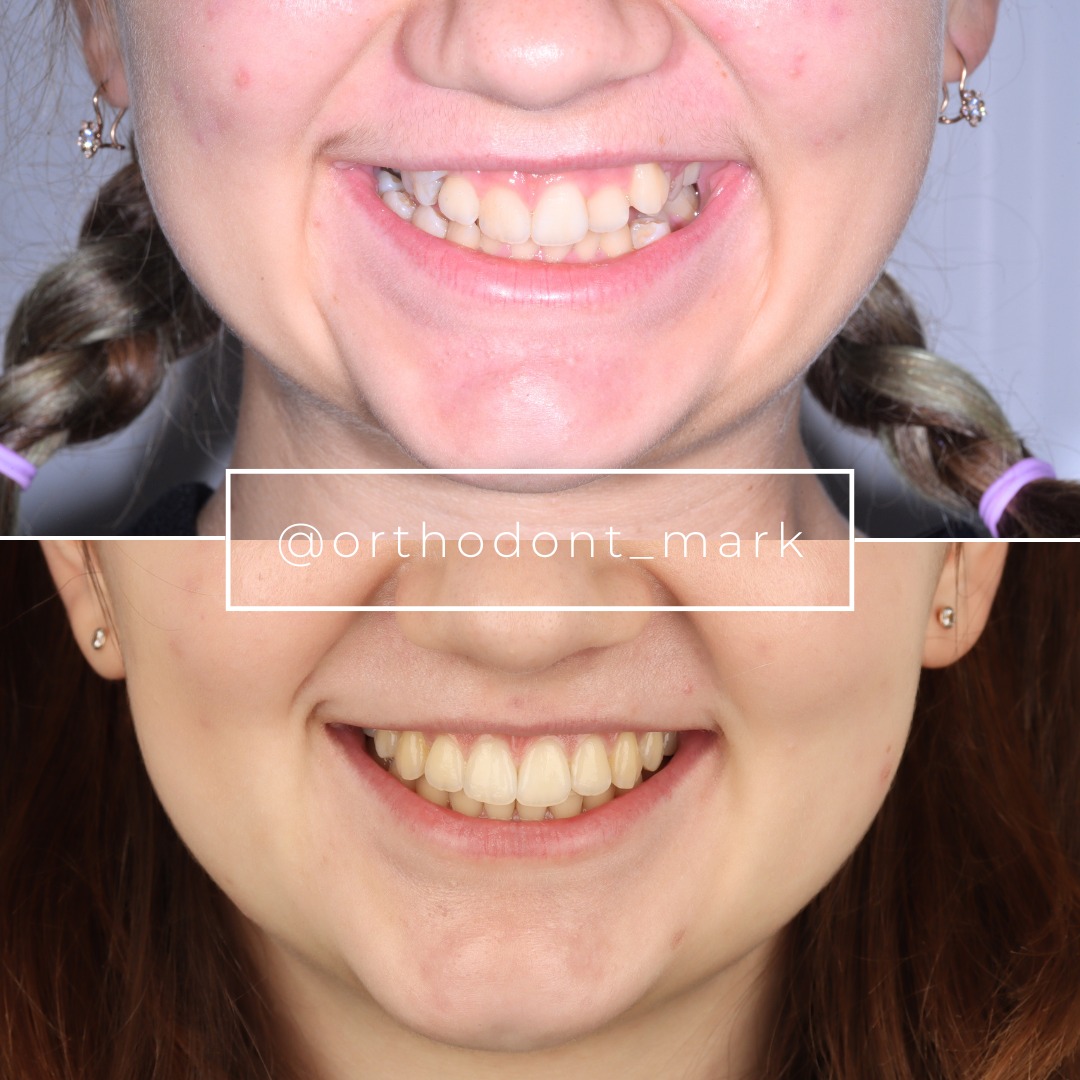
Initial situation
- Significant crowding in the lower arch
- Lack of space for the canine, the main concern for the patient's mother
The patient had previously been treated by the same clinician; during the mixed dentition stage, skeletal expansion was performed with a Haas appliance in the Marco Ross modification, though space for the canine remained insufficient afterward.
The decision
A second phase of treatment was initiated during the permanent dentition stage, using a Damon Q bracket system. Because early intervention had already addressed much of the skeletal component, this clinical situation became relatively simple and predictable. Total treatment duration for this phase was 18 months.
Early skeletal expansion can make a later, second-phase alignment case simpler and more predictable.
The result
Treatment achieved a beautiful and harmonious result. Timely early intervention allowed the overall orthodontic treatment to be faster, more predictable, and more efficient.
Sequencing early skeletal expansion with a later, predictable alignment phase demonstrates the long-term value of two-phase orthodontic planning.
About skeletal expansion & MARPE
Two-phase treatment planning rests on the idea that skeletal problems are best addressed while growth can still be guided, even if some dental issues, like canine space deficiency, persist afterward and need a second round of correction. In cases like this, clinicians typically evaluate at the mixed dentition stage whether skeletal expansion now will simplify the alignment phase later, once permanent teeth are present. When that early groundwork is done well, the second phase tends to be shorter, more predictable, and less complex than treating the same problem from scratch.
Questions clinicians ask
Why was treatment split into two phases?
Early skeletal expansion with a Haas appliance addressed transverse deficiency, but space for the canine remained insufficient, requiring a second phase during the permanent dentition stage.
What was used in the second phase of treatment?
A Damon Q bracket system was used, with a total treatment time of 18 months for that phase.
How did early intervention affect the second phase?
Because the skeletal component had already been addressed, the second phase became relatively simple, predictable, and efficient.
Learn the decision-making behind cases like this
Get Dr. Mark Radzhabov's free guide to skeletal-expansion appliances — which appliance to choose at which age — plus a free introductory MARPE lesson.
Get the Free Guide →More clinical cases
Original case shared by Dr. Mark Radzhabov on Instagram @orthodont_mark · Published for professional education.