
Adding MARPE to an Established Practice
Learning Pathway
Case Volume and Referral Thresholds from Published Guidance
A peer-reviewed framework covering appliance selection, age-dependent expansion patterns, and the referral criteria that protect both patient outcomes and practice reputation.
TL;DR Adding MARPE to an established practice requires mapping case-selection criteria, appliance biomechanics, and referral thresholds before treating the first patient. Published evidence documents meaningful differences in anchor-tooth displacement between MARPE and RPE. Age-dependent expansion patterns shift from parallel to V-shaped after age 12, per Kinzinger et al. (2022), directly shaping case selection.
Deciding to add miniscrew-assisted rapid palatal expansion to an established orthodontic practice is rarely a single-moment choice. It demands a structured understanding of case selection, appliance mechanics, and the point at which a case exceeds non-surgical capability. Dr. Mark Radzhabov at ortodontmark.com has reviewed the published clinical literature to map a practical learning pathway — covering appliance force profiles, age-dependent skeletal responses, and the imaging criteria that separate straightforward MARPE candidates from those requiring surgical referral. This article synthesizes that guidance into a decision-ready framework for practicing clinicians.
Why Appliance Force Profile Matters Before You Place a Single Miniscrew
Adding MARPE to a practice is the process of integrating miniscrew-assisted rapid palatal expansion — a bone-borne skeletal expansion modality — into an existing clinical workflow through deliberate case selection, appliance training, and defined referral thresholds. Before a clinician can choose between available bone-borne systems, understanding the force ranges each screw design actually delivers is non-negotiable. In vitro mechanical testing by Camporesi et al. (2013) found that Hyrax and A2620 screws developed forces exceeding 20 kg, while Palatal Split screws developed approximately 16 kg. Those differences are not trivial at the midpalatal suture: a screw that delivers force well above the physiological threshold for sutural distraction versus one that sits at the lower end of the range will produce different tissue responses, particularly in less compliant sutures. Camporesi et al. (2013) also documented that RPE appliances produce expansion forces ranging from 7.54 to 15.8 kg. Understanding where your chosen device sits within — or outside — that range helps calibrate activation protocols and informs the consent conversation about expected skeletal versus dental response. Clinicians adding MARPE services should map each appliance in their inventory against these published force benchmarks before finalizing a preferred system.
How Expansion Geometry Changes with Patient Age and Why It Drives Case Selection
One of the most actionable findings for clinicians building a MARPE case-selection protocol comes from age-stratified dental cast analysis. Kinzinger et al. (2022) studied 60 patients in three equal groups of 20 and found that the pattern of maxillary expansion shifts meaningfully with age: children under 10 years show parallel expansion, while adolescents aged 12 and older produce V-shaped expansion, where anterior gain exceeds posterior gain. This geometric shift carries direct clinical implications. A patient presenting with posterior transverse deficiency who is already past age 12 may not receive the posterior correction they need from a standard activation protocol designed around parallel expansion assumptions. Recognizing this discrepancy before treatment — rather than mid-course — is precisely the kind of case-selection intelligence that separates a practitioner who has mapped the learning pathway from one who has not. For the clinician adding MARPE services, this evidence argues for age-stratified case review as a standard intake step. Plotting expected expansion geometry against the patient's arch morphology and deficiency location before appliance bonding prevents mid-treatment surprises and clarifies which cases warrant early referral to a surgeon.
Which CBCT Checkpoints and Comparison Data Should Anchor Your MARPE Protocol
A defined imaging schedule is not optional during the learning pathway — it is the mechanism by which a clinician confirms sutural response and catches complications before they compound. Chun et al. (2022) used CBCT imaging at baseline, immediately after 35 turns of expansion, and after a 3-month consolidation period, providing a replicable checkpoint framework that practitioners can adapt directly into their own protocol documentation. On the question of anchor-tooth collateral effects — a concern that legitimately slows some clinicians from committing to MARPE — Chun et al. (2022) found that MARPE produced significantly less buccal displacement of anchor teeth compared to RPE during both expansion and consolidation phases. For a practice whose existing caseload includes borderline patients where dental tipping would compromise a pre-existing restorative or periodontal situation, this distinction is clinically meaningful. Building the miniscrew-assisted expansion protocol around these published checkpoints — rather than adapting an RPE workflow — also shortens the feedback loop during the first cases. When a clinician knows in advance that the consolidation phase runs three months and that sutural fill should be visible on CBCT by that point, each case becomes a deliberate learning event rather than an improvised one. Reviewing documented before/after outcomes before treating independently reinforces appropriate expectations for both clinician and patient.
When Does the Evidence Indicate a Case Exceeds Non-Surgical MARPE Capability?
Referral Threshold
Every clinician adding MARPE to their practice needs a pre-defined referral ceiling — a set of case characteristics that trigger a surgical consultation rather than a bone-borne expansion attempt. Without that ceiling, the learning curve extends into territory where patient outcomes deteriorate rather than improve. The age-dependent expansion geometry data from Kinzinger et al. (2022) provides one axis: patients whose skeletal maturity has produced a heavily fused midpalatal suture, combined with a deficiency that requires significant posterior correction, sit at the edge of non-surgical capability. The published shift to V-shaped expansion after age 12 means that posterior transverse deficiency in older adolescents or adults may not resolve adequately without surgical assistance, regardless of activation protocol. Appliance force data from Camporesi et al. (2013) provides a second axis: when the forces required to mobilize a resistant suture approach or exceed the output of high-force screws like Hyrax at over 20 kg, patient discomfort and anchor-site stress both escalate. Mapping these two axes — expansion geometry expectation versus suture compliance — onto each new case before bonding is the operational definition of a mature MARPE case-selection protocol.
Free Clinical Guide
Which Expansion Appliance at Which Age?
Get Dr. Mark Radzhabov's guide to skeletal-expansion appliances — indications, pros & cons, and how to choose by patient age. Free to your inbox.
Prefer video? Watch the free demo lesson on MARPE appliance types, features and trade-offs.
Documented outcomes
Clinical cases from Dr. Mark Radzhabov's practice
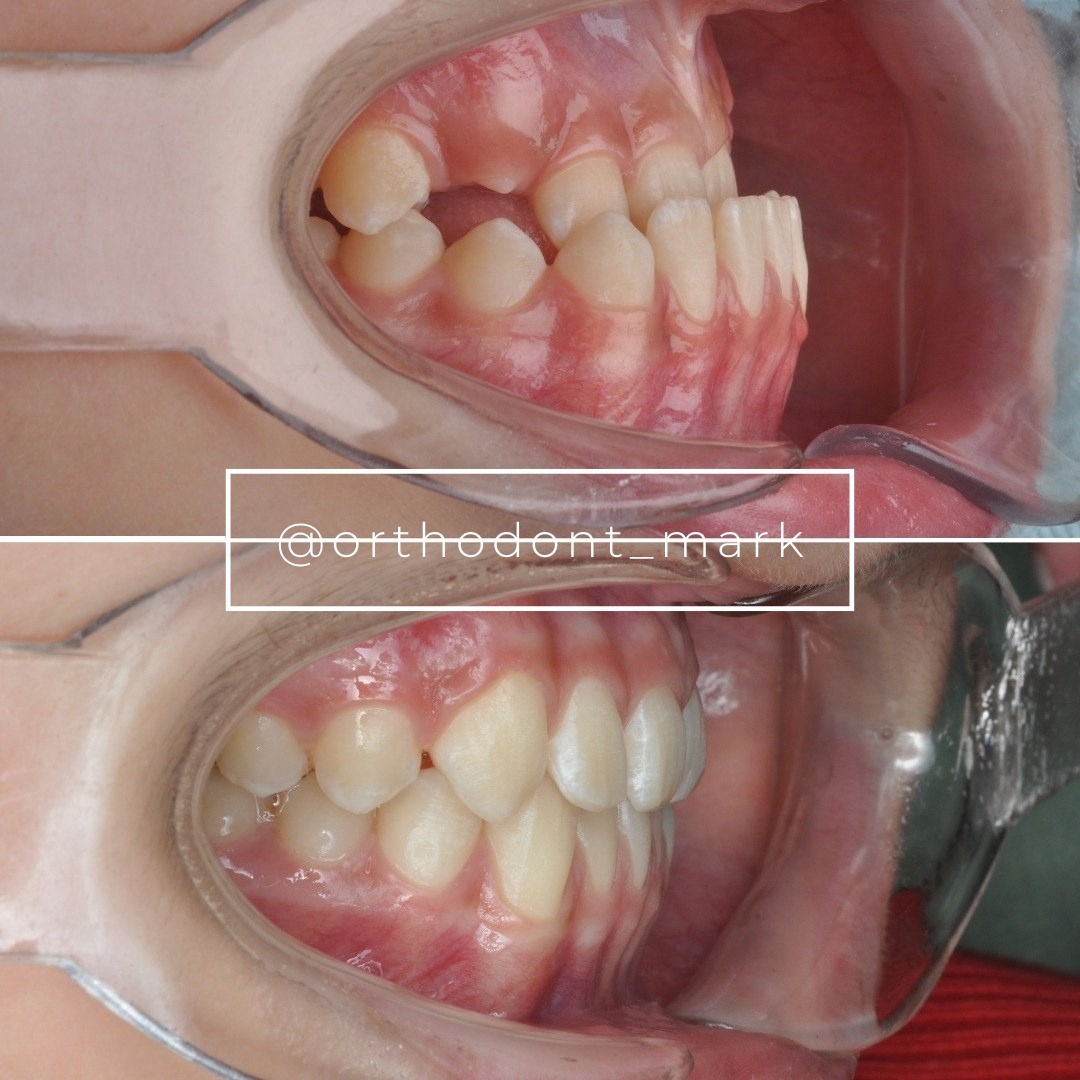
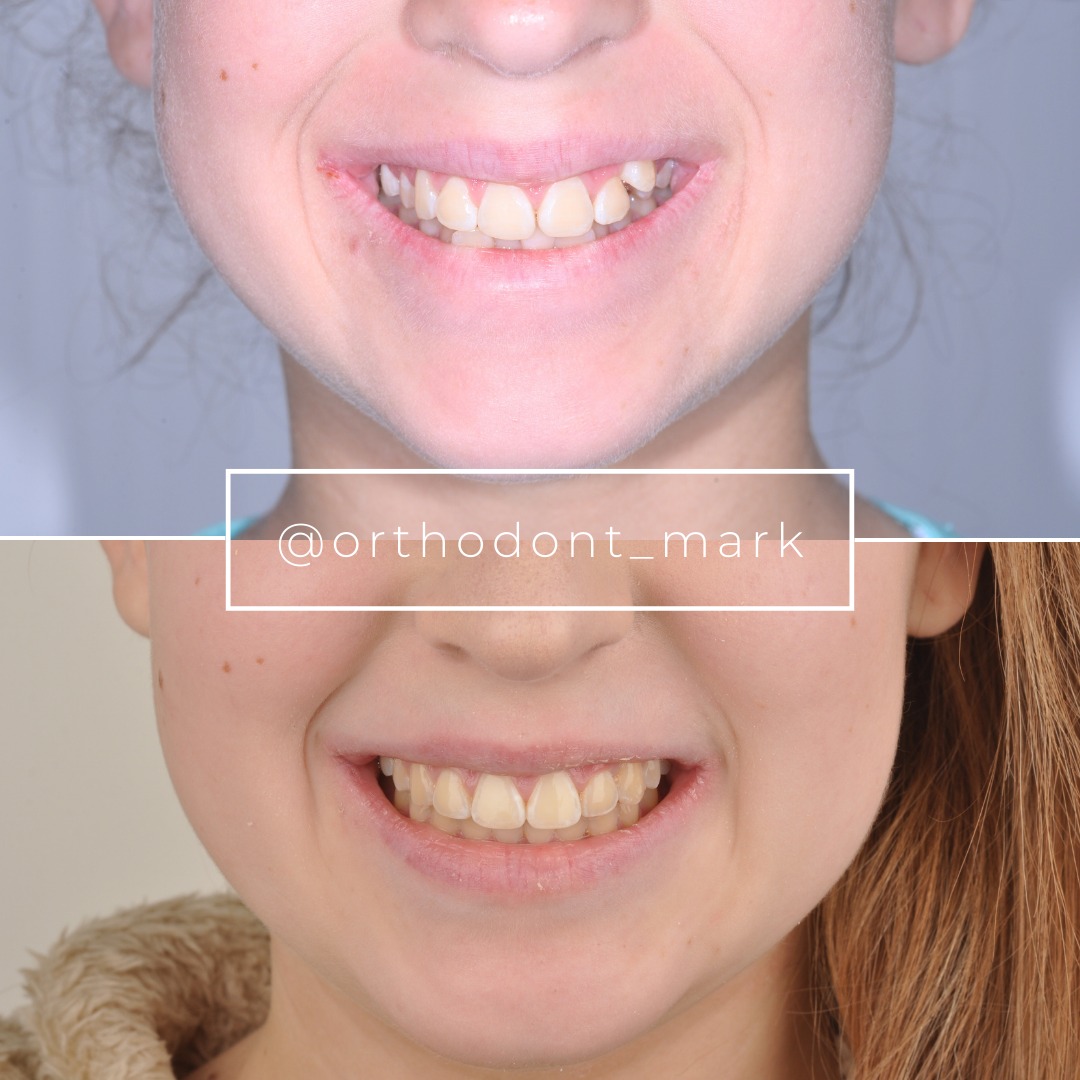
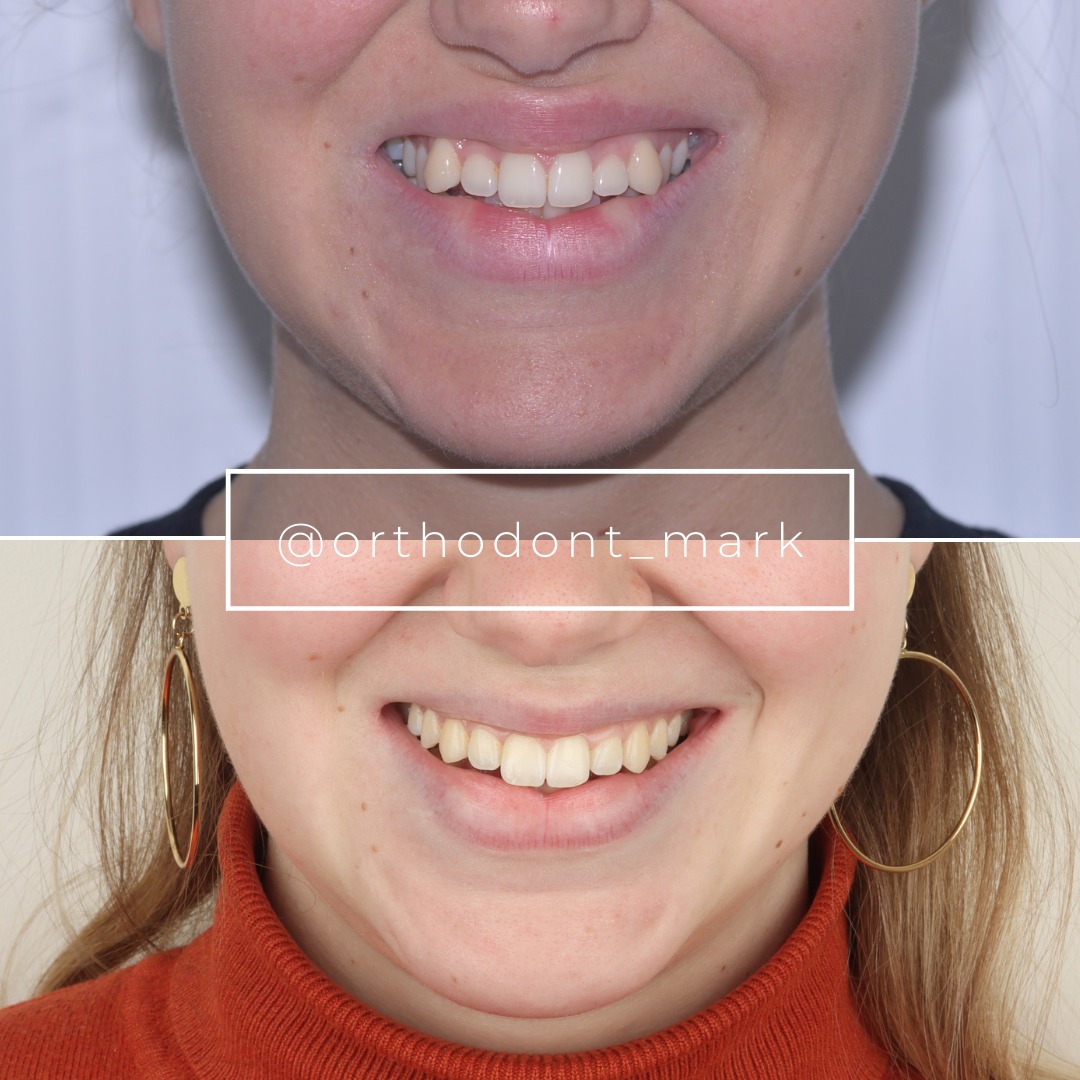
Learn the full MARPE protocol from Dr. Mark Radzhabov
Fundamental course covering CBCT patient selection, miniscrew planning, activation protocols, and 60+ clinical cases. Choose the access level that fits your practice.
Essentials of rapid palatal expansion for practicing orthodontists.
- Core RPE concepts and biomechanics
- 6 structured video lessons
- Clinical decision checklists
- Lifetime access to recordings
Deep-dive into MARPE protocol, diagnostics, and clinical execution.
- 6 modules covering MARPE from A to Z
- CBCT case selection walkthroughs
- Miniscrew placement and activation
- 60+ annotated clinical cases
- Direct Q&A with Dr. Mark Radzhabov
5-element medical consultation framework for dentists and orthodontists.
- Trust-building consultation protocol
- 5 lesson modules
- Templates for treatment plan delivery
- Works with any clinical specialty
Clinical FAQ
What published case-selection criteria should guide adding MARPE to an established practice?
Age-dependent expansion geometry is a primary filter: Kinzinger et al. (2022) showed that patients under 10 expand in parallel while those 12 and older show V-shaped patterns with less posterior gain. Appliance force range and suture compliance provide additional selection axes before committing to non-surgical expansion.
How does MARPE differ from RPE in anchor-tooth displacement during the learning curve?
Chun et al. (2022) found MARPE produced significantly less buccal displacement of anchor teeth than RPE during both expansion and consolidation. For cases where adjacent restorative or periodontal conditions make dental tipping high-risk, this distinction is a meaningful selection criterion.
What CBCT imaging schedule does published evidence support for an initial MARPE protocol?
Chun et al. (2022) imaged patients at baseline, immediately after 35 turns of expansion, and after a 3-month consolidation period. Adopting this checkpoint structure during the learning pathway provides objective sutural and anchor-tooth data at each critical stage.
At what age does expansion geometry shift in a way that changes MARPE case planning?
Kinzinger et al. (2022) identified the shift at age 12: patients this age and older produce V-shaped expansion where anterior gain exceeds posterior gain, in contrast to the parallel expansion pattern seen in children under 10. This directly affects case selection for patients with predominantly posterior transverse deficiency.
What force ranges should a clinician expect from RPE screws when comparing appliance options?
Camporesi et al. (2013) measured RPE expansion forces from 7.54 to 15.8 kg across tested appliances. Hyrax and A2620 screws exceeded 20 kg, while Palatal Split screws reached approximately 16 kg — differences that matter when matching appliance output to suture compliance.
When should a clinician refer a transverse deficiency case for surgically assisted expansion rather than attempting MARPE?
Cases combining posterior transverse deficiency with skeletal maturity present the clearest referral signal: Kinzinger et al. (2022) documented reduced posterior correction in patients 12 and older. When suture resistance appears to exceed available appliance force ceilings per Camporesi et al. (2013), surgical referral is appropriate.
How does published evidence inform the consolidation phase when integrating MARPE into practice?
Chun et al. (2022) used a 3-month consolidation period with CBCT confirmation of sutural bone fill. Adopting a defined consolidation window rather than relying on clinical impression alone reduces uncertainty during the early cases and provides objective removal criteria.
What is the clinical significance of V-shaped versus parallel expansion when planning MARPE case volume startup?
Kinzinger et al. (2022) showed that the expansion pattern is age-dependent: parallel in children under 10, V-shaped from age 12 onward. Clinicians building initial case volume should select patients whose deficiency location matches the expected expansion geometry to maximize early predictability.
How does screw design selection factor into a structured MARPE training pathway?
Camporesi et al. (2013) showed meaningful force differences across screw designs, with some exceeding 20 kg and others reaching approximately 16 kg. Selecting a screw whose output matches the patient's suture compliance profile is a trainable decision — one that structured MARPE training should address explicitly.
Which miniscrew-assisted expansion protocol steps most directly reduce dental side effects compared to tooth-borne expanders?
The bone-borne force path of MARPE bypasses primary anchorage through the premolars and molars, which is why Chun et al. (2022) measured significantly less buccal anchor-tooth displacement with MARPE than RPE. Consistent miniscrew placement and load distribution are the protocol steps that preserve this advantage.
Integrating miniscrew-assisted rapid palatal expansion into an established practice is a stepwise clinical process anchored in appliance biomechanics, patient age, and honest referral thresholds — not case volume alone. Evidence confirms that appliance choice alters both force delivery and anchor-tooth response, and that expansion geometry shifts meaningfully with skeletal maturity. Clinicians who build these distinctions into their case-selection protocol before treating the first patient will find the transition far smoother. Dr. Mark Radzhabov offers structured MARPE training and case review support at ortodontmark.com for orthodontists ready to formalize that pathway. Key sources: Chun et al. (2022), BMC Oral Health, doi:https://doi.org/10.1186/s12903–022-02138-w. Kinzinger et al. (2022), doi:https://doi.org/10.1007/s00056–022-00429-z. Camporesi et al. (2013), BioMedical Engineering OnLine, doi:http://www.biomedical-engineering-online.com/content/12/1/128.