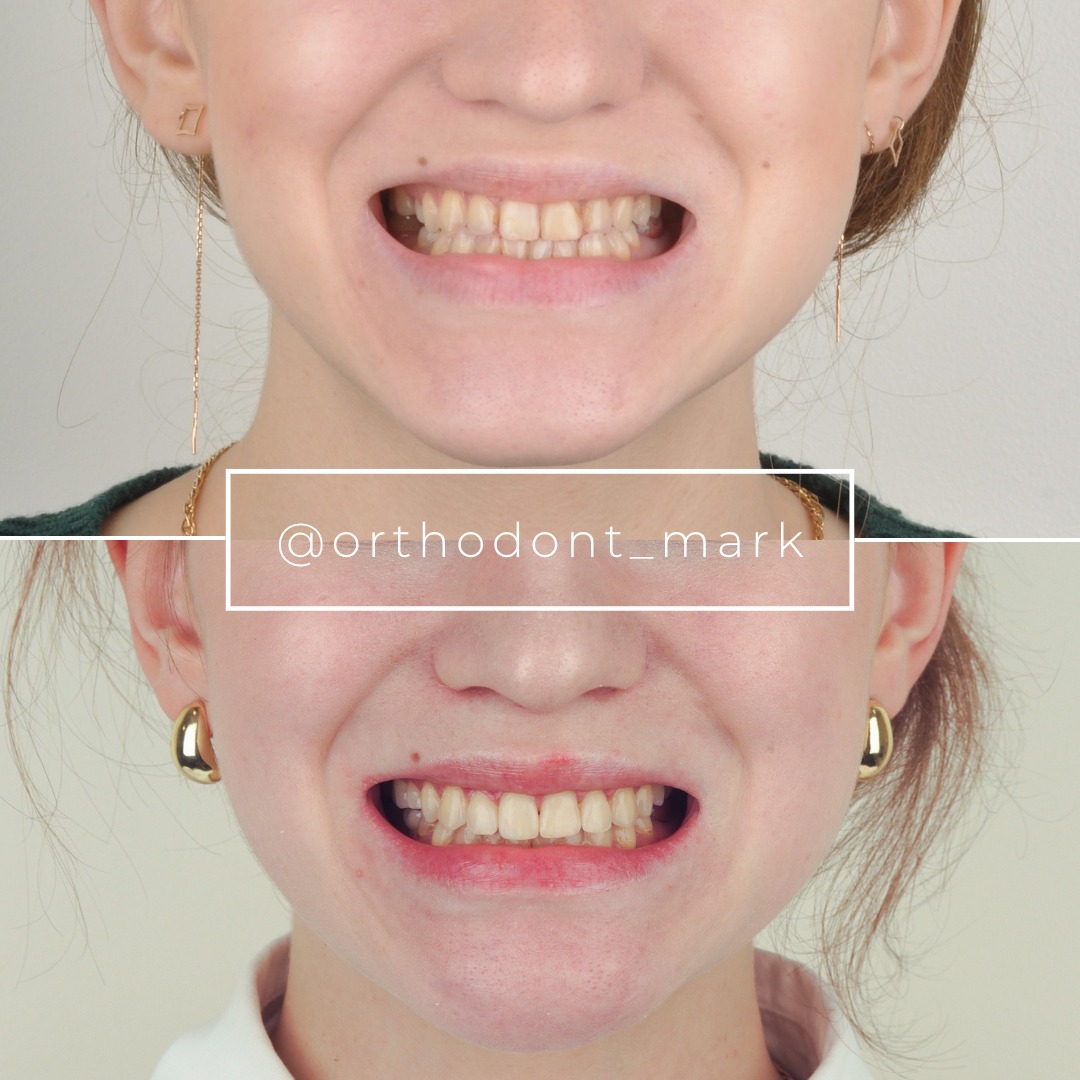
Initial situation
- Arch form requiring gradual, wire-driven expansion and alignment
The decision
Treatment used the Damon bracket system with a slow, controlled expansion approach, relying on the mechanics of the archwires themselves to gradually align and develop the arch, rather than more active or forced expansion methods.
Letting the archwires do the work, slowly and predictably, can be as effective as a more active mechanical approach.
The result
Treatment was completed in 20 months with the Damon bracket system and a neat, slow expansion, letting the archwires do the work.
A slow expansion strategy with the Damon system, letting the archwires do the work, can achieve efficient arch alignment without more aggressive mechanics.
About skeletal expansion & MARPE
This case demonstrates dental arch expansion achieved through archwire mechanics. The distinction matters diagnostically, since dental expansion addresses different limitations than a true skeletal correction and is suited to cases where the arch form itself, rather than the underlying skeletal base, needs development. In cases like this, clinicians typically confirm through diagnostic records that the limitation is dental rather than skeletal before choosing a slower, wire-driven approach.
Questions clinicians ask
What does it mean to let the archwires do the work in slow expansion?
It refers to relying on the archwire's own mechanical properties to gradually move and align teeth, rather than adding extra active force.
How is dental arch expansion different from skeletal expansion?
Dental expansion moves teeth within the existing bone, while skeletal expansion, such as with an RPE or MARPE, aims to widen the underlying bone itself.
Why might a clinician choose a slower expansion approach?
A slower, controlled approach can reduce relapse risk and be gentler on the periodontal tissues compared with faster, more forceful expansion.
Learn the decision-making behind cases like this
Get Dr. Mark Radzhabov's free guide to skeletal-expansion appliances — which appliance to choose at which age — plus a free introductory MARPE lesson.
Get the Free Guide →More clinical cases
Original case shared by Dr. Mark Radzhabov on Instagram @orthodont_mark · Published for professional education.