
MARPE Jackscrew Material Selection:
NiTi vs Stainless Steel
Force-Delivery and Fatigue Evidence
A peer-reviewed comparison of nickel-titanium and stainless steel expansion screws — force profiles, fatigue thresholds, and clinical decision criteria for MARPE protocol design.
TL;DR MARPE jackscrew material selection directly influences force consistency, fatigue resistance, and skeletal outcomes. Stainless steel delivers high, relatively constant force per activation turn, while nickel-titanium offers a flatter load-deflection curve. Evidence from Chun et al. (2022) and Sarraj et al. (2021) frames how appliance design and material interact with suture response during expansion.
When a patient presents with posterior crossbite and a compressed maxillary arch, the choice of expansion appliance goes beyond bone-borne versus tooth-borne anchorage — it extends to the mechanical properties of the jackscrew itself. MARPE jackscrew material selection determines how force is generated, sustained, and transmitted across the midpalatal suture with every activation turn. Dr. Mark Radzhabov at ortodontmark.com examines the fatigue and force-delivery evidence for nickel-titanium and stainless steel jackscrews so clinicians can make a materially informed protocol decision rather than defaulting to convention.
Why Does Jackscrew Alloy Composition
Change What the Suture Receives?
A MARPE jackscrew is the threaded activation mechanism at the core of a miniscrew-assisted rapid palatal expander, responsible for converting each quarter-turn activation into a measurable lateral force transmitted through bone-borne miniscrew anchorage to the midpalatal suture. The alloy from which that screw body is machined sets the modulus of elasticity, the yield strength, and — critically — the fatigue life across hundreds of cumulative activation cycles. These are not interchangeable properties. Choosing between nickel-titanium and stainless steel is a biomechanical commitment made at appliance fabrication that cannot be corrected chairside. Stainless steel jackscrews possess a high modulus of elasticity, meaning each incremental turn produces a steep, predictable force increment with minimal elastic rebound between activations. That stiffness favors high-force protocols where the clinician requires a near-linear relationship between activation count and delivered load. In a standardized protocol such as the one studied by Chun et al. (2022) — which used 35 turns of the activation screw as the identical expansion dose across comparison groups — a stainless steel body will maintain near-constant inter-turn force throughout that sequence without significant relaxation. Nickel-titanium, by contrast, exhibits superelastic behavior: its load-deflection curve flattens substantially once the alloy enters the martensitic transformation range, delivering a more sustained, lower-amplitude force over a wider deflection arc. This property is clinically relevant when the treatment goal is a gentler, biologically modulated load to the suture — particularly in borderline-maturity cases where abrupt peak forces risk cortical resistance rather than suture displacement. The tradeoff is reduced maximum force output per turn and greater sensitivity to oral temperature variation, which shifts the transformation range and can make force delivery less reproducible across sessions.
Which Force Profile Achieves
Reliable Midpalatal Suture Opening?
The clinical endpoint that validates any jackscrew force profile is confirmed midpalatal suture displacement — not simply arch width increase, which conflates dental tipping with true skeletal change. Bone-borne miniscrew anchorage, regardless of screw alloy, directs force more centrally through the palate than a purely tooth-borne band design, and that mechanical advantage is reflected in dental side-effect data. Chun et al. (2022) demonstrated that MARPE produced significantly less buccal displacement of anchor teeth during expansion and consolidation compared to RPE (P < 0.05), a difference attributable to the direct skeletal load path rather than to any particular jackscrew alloy. Skeletal width response also extends superiorly. Chun et al. (2022) reported that MARPE produced greater increases in nasal width at the molar region and at the greater palatine foramen compared to RPE during and after expansion (P < 0.05). This nasal-floor-level dimensional change is a marker of true basal bone displacement rather than pure dental compensation — it confirms that the force delivered by the bone-borne system reached the skeletal architecture well beyond the dentoalveolar process. When appliance design is optimized further, suture separation outcomes become highly consistent. Sarraj et al. (2021) reported that complete midpalatal suture separation was achieved in 100% of patients using both the MSE and BAME appliances — a finding that underscores how appliance geometry and anchorage configuration, rather than alloy alone, govern the probability of full suture displacement. The practical implication is that jackscrew material selection operates within a system: the most fatigue-resistant, force-consistent alloy still requires sound miniscrew placement, appropriate suture staging, and correct activation cadence to deliver those skeletal results.
How Does Cyclic Activation Stress
Fatigue Each Alloy Differently?
A rapid palatal expansion protocol demands not a single force event but a repeating sequence of activations — each one imposing a stress cycle on the jackscrew body at the threaded interface and at the barrel-end junction points. Fatigue failure in orthodontic hardware characteristically initiates at stress-concentration zones: thread roots, notch transitions, and weld points between dissimilar metals. Understanding where each alloy is vulnerable informs both appliance specification and chairside monitoring. Stainless steel's high tensile strength and work-hardening capacity give it excellent resistance to low-cycle, high-stress fatigue — the regime most relevant to palatal expansion, where cumulative activation counts are modest but individual turn forces can be substantial. Corrosion fatigue is the principal durability concern in the oral environment. Surface integrity must be maintained to prevent the pitting that nucleates fatigue cracks. Grade 5 titanium alloy components in the miniscrew body adjacent to the jackscrew present a galvanic consideration when stainless steel hardware is used, and clinicians should confirm from the manufacturer that the complete appliance assembly has been validated for that mixed-metal environment. Nickel-titanium's superelastic plateau confers an inherent tolerance for cyclic deformation: the alloy can absorb substantial strain without permanent set, which is why NiTi archwires survive millions of flex cycles in laboratory testing. However, nickel release under cyclic stress in the moist, saline oral milieu remains a documented concern. Patients with known nickel sensitivity require alloy-specific informed consent before a NiTi jackscrew is placed. For expansion protocols where activation continues over several weeks — as in the 35-turn sequence studied by Chun et al. (2022) — the clinician should specify a jackscrew rated for that full activation range with a defined safety margin beyond the planned dose.
Integrating Jackscrew Alloy Choice Into
Your MARPE Activation Protocol
Force delivery consistency matters most at the suture level, not at the screw body — and the suture's biological response depends on the peak force generated, the inter-activation interval, and the cumulative displacement achieved before consolidation. A stainless steel jackscrew in a bone-borne frame delivers a high, relatively constant force increment per turn, which suits aggressive expansion protocols in younger patients with more compliant suture tissue. The same force magnitude applied to a more fused suture risks cortical fracture rather than controlled separation, making material selection inseparable from suture maturation staging. The miniscrew-assisted palatal expansion protocol distributes force directly to the palatal bone rather than through the periodontal ligament of banded teeth, and that mechanical advantage — confirmed by the reduced buccal displacement data of Chun et al. (2022) — is present regardless of whether the jackscrew body is NiTi or stainless. However, the extent of nasal and basal skeletal change documented by Chun et al. (2022) (P < 0.05 for nasal width and greater palatine foramen dimensions) was achieved within the context of that bone-borne load path, not in isolation from it. Clinicians selecting a NiTi screw for its gentler force profile should confirm that the resulting peak force remains sufficient to drive the suture open rather than simply maintaining a sub-threshold load that produces dental rather than skeletal movement. For orthodontists adding MARPE to their practice, reviewing a rapid palatal expander anchorage comparison between tooth-borne and bone-borne designs clarifies the baseline from which material-specific optimizations are built. The activation cadence, consolidation timing, and retention protocol should all be specified before the jackscrew alloy is selected — because the alloy's mechanical properties must serve the protocol, not the other way around.
How Should Clinicians Systematize
Jackscrew Material Selection Decisions?
A disciplined selection framework reduces the risk of choosing a jackscrew by habit rather than by biology. Four variables should be documented before specifying the screw alloy: suture maturation stage on CBCT, planned activation turn count and cadence, patient nickel-sensitivity status, and the manufacturer's validated activation range for the specific device. None of these variables can be retrospectively corrected once the appliance is bonded. Suture maturation staging on CBCT remains the most actionable pre-treatment variable because it predicts the force threshold required for separation. A densely fused suture demands higher sustained force — favoring a stainless steel body rated well above the planned activation dose. A partially open suture in a younger patient may respond adequately to the gentler NiTi force plateau, reducing the risk of abrupt cortical overload. Sarraj et al. (2021) reported complete suture separation in 100% of patients across both MSE and BAME appliance groups, an outcome that reflects rigorous case selection rather than the assumption that any screw in any patient will produce that result. Finally, appliance-level documentation should accompany every MARPE case: record the jackscrew model, alloy specification, rated activation range, and lot number at bonding appointment. Should a device malfunction mid-protocol — a stripped barrel, a cracked body, a loosened miniscrew — having that specification on file allows the clinician to request an identical replacement rather than substituting an appliance with a different force profile mid-treatment. For practitioners building a reproducible MARPE workflow, structured MARPE training that addresses material specification, miniscrew site selection, and activation records is the most efficient path from first case to consistent outcomes.
Free Clinical Guide
Which Expansion Appliance at Which Age?
Get Dr. Mark Radzhabov's guide to skeletal-expansion appliances — indications, pros & cons, and how to choose by patient age. Free to your inbox.
Prefer video? Watch the free demo lesson on MARPE appliance types, features and trade-offs.
Documented outcomes
Clinical cases from Dr. Mark Radzhabov's practice
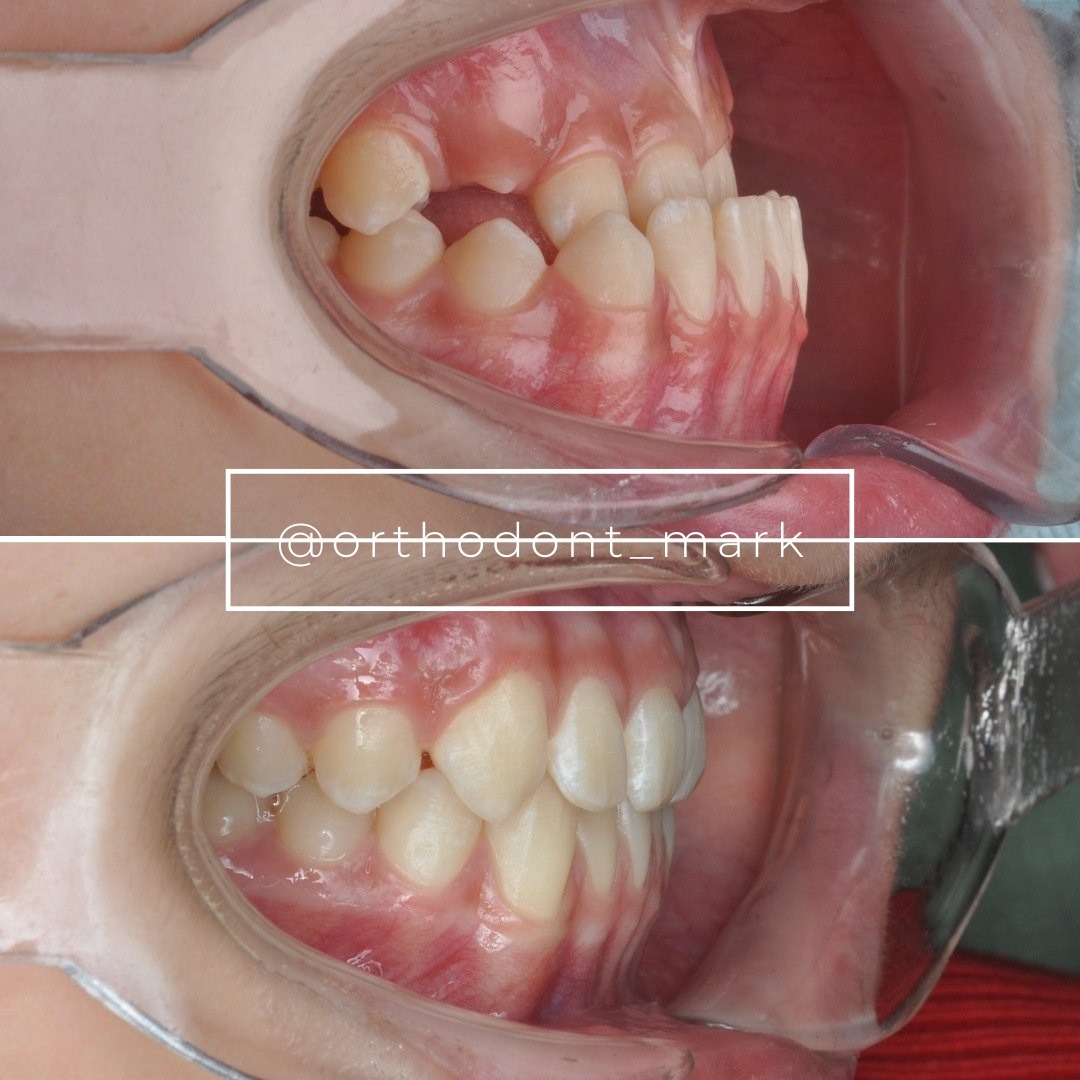
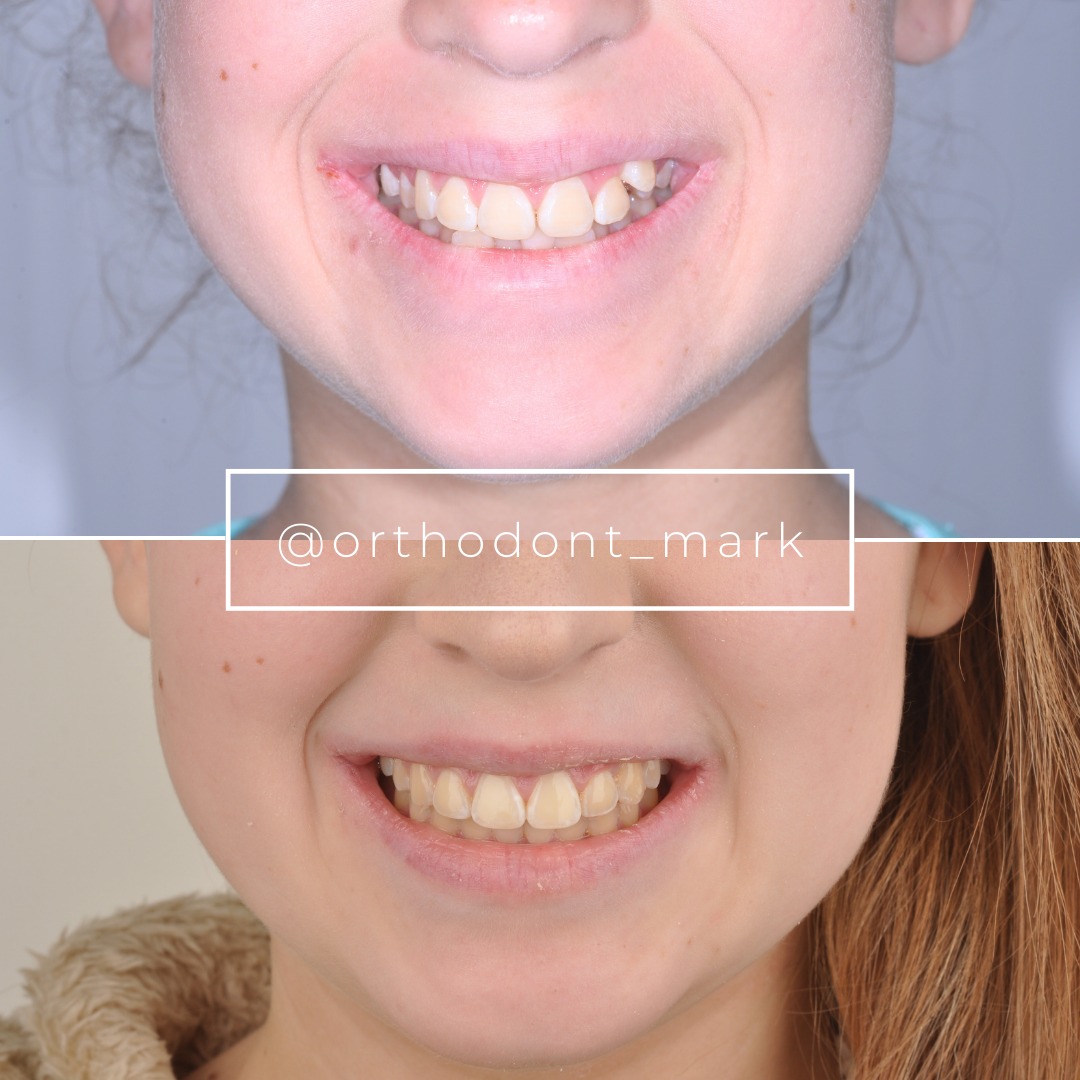
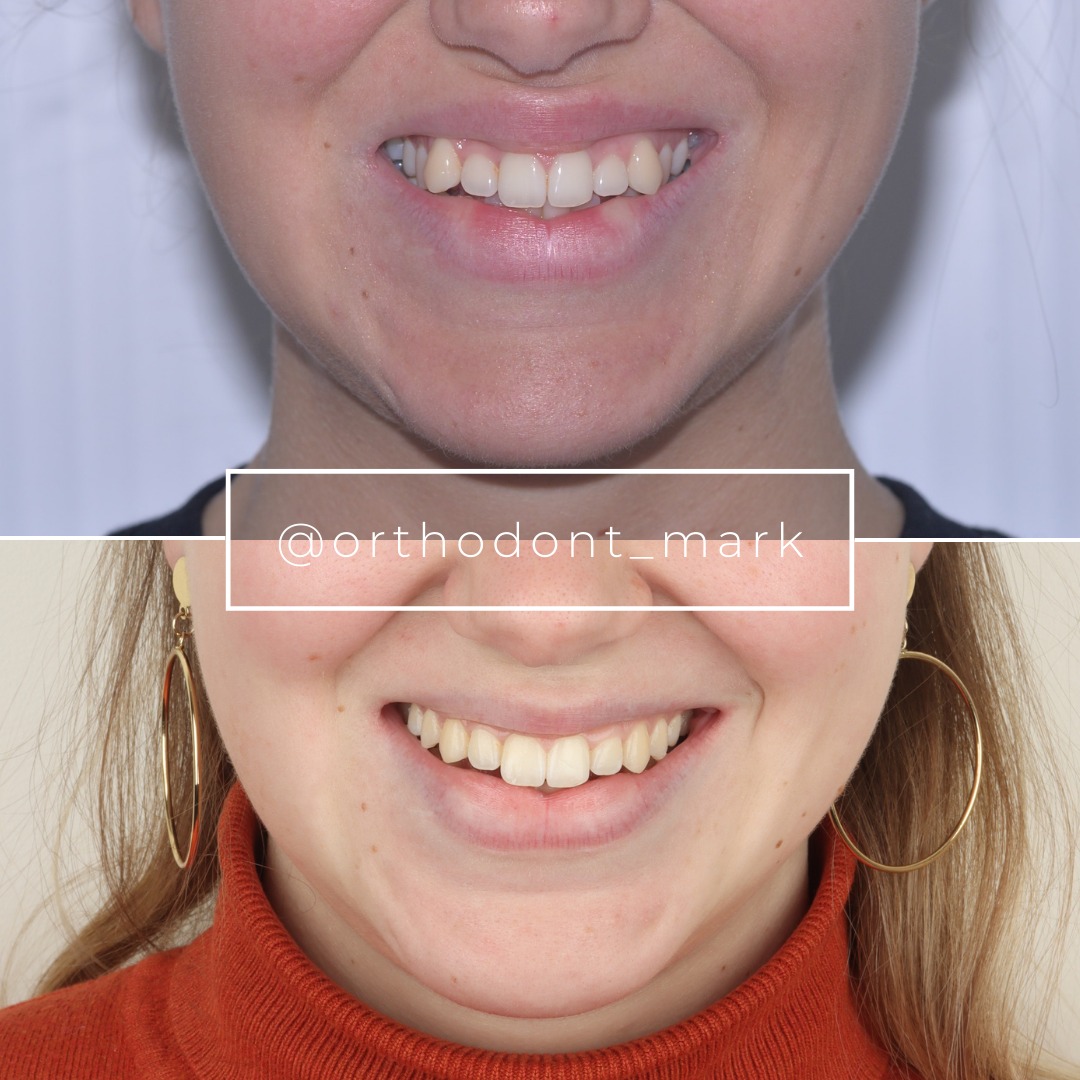
Learn the full MARPE protocol from Dr. Mark Radzhabov
Fundamental course covering CBCT patient selection, miniscrew planning, activation protocols, and 60+ clinical cases. Choose the access level that fits your practice.
Essentials of rapid palatal expansion for practicing orthodontists.
- Core RPE concepts and biomechanics
- 6 structured video lessons
- Clinical decision checklists
- Lifetime access to recordings
Deep-dive into MARPE protocol, diagnostics, and clinical execution.
- 6 modules covering MARPE from A to Z
- CBCT case selection walkthroughs
- Miniscrew placement and activation
- 60+ annotated clinical cases
- Direct Q&A with Dr. Mark Radzhabov
5-element medical consultation framework for dentists and orthodontists.
- Trust-building consultation protocol
- 5 lesson modules
- Templates for treatment plan delivery
- Works with any clinical specialty
Clinical FAQ
How does nickel-titanium jackscrew performance in palatal expansion differ from stainless steel in terms of force delivery?
Nickel-titanium delivers a flatter, sustained force via its superelastic plateau, while stainless steel produces a steeper force increment per activation turn. The clinical relevance depends on suture maturation stage and planned activation cadence — neither alloy is universally superior.
What fatigue failure modes are most clinically relevant in orthodontic expansion jackscrews?
Fatigue cracks in stainless steel screws initiate at thread roots and barrel-end stress concentrations. Corrosion pitting in the oral environment accelerates crack nucleation. NiTi is more deformation-tolerant cyclically but raises nickel ion release concerns under repeated loading in sensitive patients.
Does MARPE jackscrew alloy selection affect buccal anchor-tooth displacement during expansion?
Anchor-tooth displacement is primarily governed by the bone-borne versus tooth-borne load path, not jackscrew alloy. Chun et al. (2022) showed MARPE produced significantly less buccal displacement than RPE (P < 0.05), an effect attributable to miniscrew anchorage, not screw material.
How many activation turns should an expansion screw be rated for in a standard MARPE protocol?
Chun et al. (2022) used 35 turns as the standardized expansion dose in their RPE-versus-MARPE trial. Clinicians should specify a jackscrew rated beyond that dose with a defined safety margin. The manufacturer's validated activation range must exceed the planned protocol turn count.
Can complete midpalatal suture separation be achieved reliably with bone-borne expanders in adults?
Sarraj et al. (2021) reported complete midpalatal suture separation in 100% of patients using both MSE and BAME appliances. That outcome reflects rigorous case selection and CBCT-based staging. It should not be assumed universally without pre-treatment suture maturity assessment.
What CBCT criteria should guide jackscrew force-profile selection before MARPE placement?
Suture fusion density on CBCT predicts resistance to lateral force. Dense or fully fused sutures require higher-force stainless steel screws. Partially patent sutures in younger patients may tolerate the lower plateau force of a NiTi jackscrew. Staging should be documented in the treatment record.
How does MARPE compare to RPE for nasal width and basal skeletal changes?
Chun et al. (2022) demonstrated that MARPE produced significantly greater nasal width increases at the molar region and at the greater palatine foramen compared to RPE (P < 0.05), confirming that the bone-borne load path drives skeletal change beyond the dentoalveolar process.
Is nickel sensitivity a contraindication to NiTi jackscrew use in MARPE appliances?
Documented nickel allergy is a clinical contraindication requiring alloy substitution or explicit informed consent before NiTi jackscrew placement. Cyclic oral stress accelerates nickel ion release from NiTi hardware. Sensitivity screening should occur at the case-planning stage, not at bonding.
What documentation should accompany a MARPE appliance at bonding to protect mid-protocol continuity?
Record jackscrew model, alloy designation, rated activation range, and lot number at the bonding appointment. If the device fails mid-protocol, this specification allows replacement with an identical appliance, preserving the original force-delivery profile and avoiding unintended protocol changes.
Does the MSE appliance achieve skeletal expansion outcomes comparable to BAME in terms of suture separation?
Sarraj et al. (2021) found that both MSE and BAME appliances achieved complete midpalatal suture separation in 100% of patients in their CBCT comparative study. The equivalence suggests appliance geometry and anchorage configuration are the dominant variables, not inter-system jackscrew differences alone.
Selecting between a nickel-titanium and a stainless steel jackscrew is not a secondary detail — it is a primary biomechanical decision that shapes suture response, dental side-effect risk, and long-term stability of the expansion gained. Clinicians who pair that material decision with rigorous case selection, CBCT-guided suture staging, and a disciplined activation protocol position their patients for the most predictable skeletal outcome. Dr. Mark Radzhabov encourages orthodontists to review their next MARPE candidate against the imaging and mechanical criteria discussed here, and to explore structured MARPE training at ortodontmark.com to build a reproducible clinical workflow. Key sources: Chun et al. (2022), BMC Oral Health, doi:10.1186/s12903–022-02138-w. Sarraj et al. (2021), APOS Trends in Orthodontics, doi:10.25259/APOS_160_2020.