
Class II Subdivision Transverse Expansion:
Sequencing
Asymmetric Correction With MARPE and MSE
Evidence-based appliance selection and expansion timing for unilateral maxillary constriction in subdivision cases.
TL;DR Managing the transverse component in Class II subdivision requires sequencing asymmetric expansion before or concurrent with sagittal correction. MARPE and MSE appliances achieve reliable skeletal widening, with bone-borne designs reducing buccal dental tipping compared to conventional RPE. Deficiency thresholds and suture status determine whether expansion alone or surgical assistance is indicated.
Class II subdivision transverse expansion presents a sequencing challenge that many clinicians underestimate: the asymmetric maxillary constriction driving the molar midline shift must be addressed in the correct treatment order, or sagittal mechanics will compound the dental compensation already present. At ortodontmark.com, Dr. Mark Radzhabov reviews how appliance selection, expansion timing, and imaging criteria interact when planning asymmetric skeletal expansion alongside Class II correction. This article distills the current peer-reviewed evidence into a decision framework orthodontists can apply directly to case selection and protocol design.
How Does Unilateral Constriction Create the Subdivision Pattern?
Class II subdivision with unilateral maxillary constriction is a malocclusion pattern in which a transverse skeletal discrepancy on one side contributes directly to the midline shift and molar asymmetry that define the subdivision. The critical diagnostic step is distinguishing a true skeletal width asymmetry from a dental compensation that merely mimics one. CBCT assessment of the midpalatal suture, cortical bone density at the paramedian region, and palatal vault morphology collectively determine whether expansion will produce a genuine skeletal response or simply tip teeth further buccally. A rigorous inclusion threshold matters at the case-selection stage. Sant'Ana et al. (2016) set their study entry criterion at a transverse maxillary skeletal deficiency greater than 5 mm, which provides a defensible minimum for distinguishing patients who need active expansion from those whose transverse discrepancy falls within dental compensation range. Applying a comparable threshold in clinical practice prevents over-treatment of borderline asymmetries while ensuring that patients with true constriction are not managed with sagittal mechanics alone. The asymmetric nature of subdivision cases adds a layer of complexity absent in symmetric constriction: the affected side often shows greater suture interdigitation and denser cortical bone than the contralateral side, making uniform force distribution across the palate harder to achieve with tooth-borne appliances. Identifying this asymmetry on pretreatment CBCT before appliance selection is therefore a non-negotiable step in the diagnostic workup.
Why Does Bone-Borne Force Path Matter in Asymmetric Expansion?
Appliance anchorage type determines how expansion force distributes across the maxillary complex, and that distinction is amplified in subdivision cases where one side resists more than the other. Conventional tooth-borne RPE transfers activation force through the premolar and molar brackets, which generates buccal tipping of anchor teeth proportional to the resistance encountered. When one side of the palate is denser or more fused, this tipping effect concentrates on the less resistant side, worsening the dental asymmetry the clinician is trying to correct. Bone-borne MARPE addresses this directly by delivering force to the palatal cortex through miniscrews rather than through the dentition. Chun et al. (2022) demonstrated that the MARPE group showed significantly less buccal displacement of anchor teeth during expansion and consolidation compared to the RPE group (p < 0.05). In an asymmetric case, that reduction in dental tipping is not merely aesthetic — it preserves the tooth position needed for accurate post-expansion occlusal assessment and for placing Class II mechanics that act on properly positioned anchor units. For the MARPE asymmetric correction protocol, anterior palate placement of miniscrews is favored because the anterior palate offers adequate bone availability and favorable safety margins relative to nasal floor anatomy, as documented by Giudice et al. (2020). In subdivision cases, screw positioning can be adjusted slightly toward the more constricted side to bias the force vector, though symmetric activation schedules are still applied to the expander itself.
When Should Expansion Precede Class II Mechanics in Subdivision?
Expansion First
The sequencing question in Class II subdivision transverse expansion is whether to correct the width discrepancy before, during, or after addressing the sagittal component. The structural argument for expansion first is straightforward: Class II elastics and fixed functional appliances apply forces through the dentition, and if those teeth sit on a constricted, asymmetric basal bone, the sagittal correction is built on a foundation that will limit its stability. Achieving skeletal width symmetry before applying sagittal mechanics allows the dentition to settle into a corrected arch relationship rather than adapt around a persistent transverse discrepancy. MSE and MARPE appliances are particularly suited to this sequencing approach because they produce greater skeletal expansion at the level of nasal width and the molar region, as shown by Chun et al. (2022), compared to conventional RPE. That skeletal gain — rather than dental tipping — is what provides the stable transverse base that subsequent Class II mechanics require. When the subdivision molar relationship persists after expansion, the clinician can then apply asymmetric Class II mechanics with greater confidence that the anchor position is skeletally supported. In cases where suture maturation or bone density suggests borderline suitability for non-surgical expansion, Sarraj et al. (2021) found that both MSE and BAME achieved complete midpalatal suture separation in 100% of their patients, reinforcing that well-anchored bone-borne systems can deliver reliable skeletal outcomes when cases are selected appropriately. That reliability is especially valuable in subdivision cases, where partial or asymmetric expansion would leave residual transverse discrepancy and complicate subsequent sagittal treatment.
Which Subdivision Cases Cross the Threshold Into Surgical Expansion?
Surgical Threshold
Bone-borne expansion is not universally sufficient, and the subdivision case with advanced suture maturation on the more constricted side represents a specific risk for failure or asymmetric response. Sant'Ana et al. (2016) demonstrated that surgically assisted rapid maxillary expansion can be performed with or without midpalatal split in adult patients, but that the approach including midpalatal split showed significantly greater efficacy (p = 0.00), confirming that cortical resistance at the suture is a determinable mechanical barrier rather than a probabilistic variable. For the practicing orthodontist, this means that the surgical decision in subdivision cases is not simply about age — it is about the structural resistance the specific suture presents. A patient whose CBCT shows dense, bridged bone in the posterior and middle thirds of the midpalatal suture on the more constricted side presents qualitatively different biomechanical demands than a patient whose suture remains relatively patent, even when the two patients are the same age. Reviewing the evidence-based framework for MARPE asymmetric correction against surgical criteria helps clinicians set a defensible referral threshold before treatment begins rather than after an appliance has failed. The Sant'Ana et al. (2016) cohort included adults with a mean age of 24.29 years (range 18.3 to 31.8 years), spanning the age window most commonly considered borderline for non-surgical expansion. That the midpalatal split group showed significantly superior efficacy in this population underscores that suture morphology — not age alone — drives the outcome, and that surgical planning should be available as an integrated part of the Class II subdivision treatment sequence rather than a last resort.
Free Clinical Guide
Which Expansion Appliance at Which Age?
Get Dr. Mark Radzhabov's guide to skeletal-expansion appliances — indications, pros & cons, and how to choose by patient age. Free to your inbox.
Prefer video? Watch the free demo lesson on MARPE appliance types, features and trade-offs.
Documented outcomes
Clinical cases from Dr. Mark Radzhabov's practice
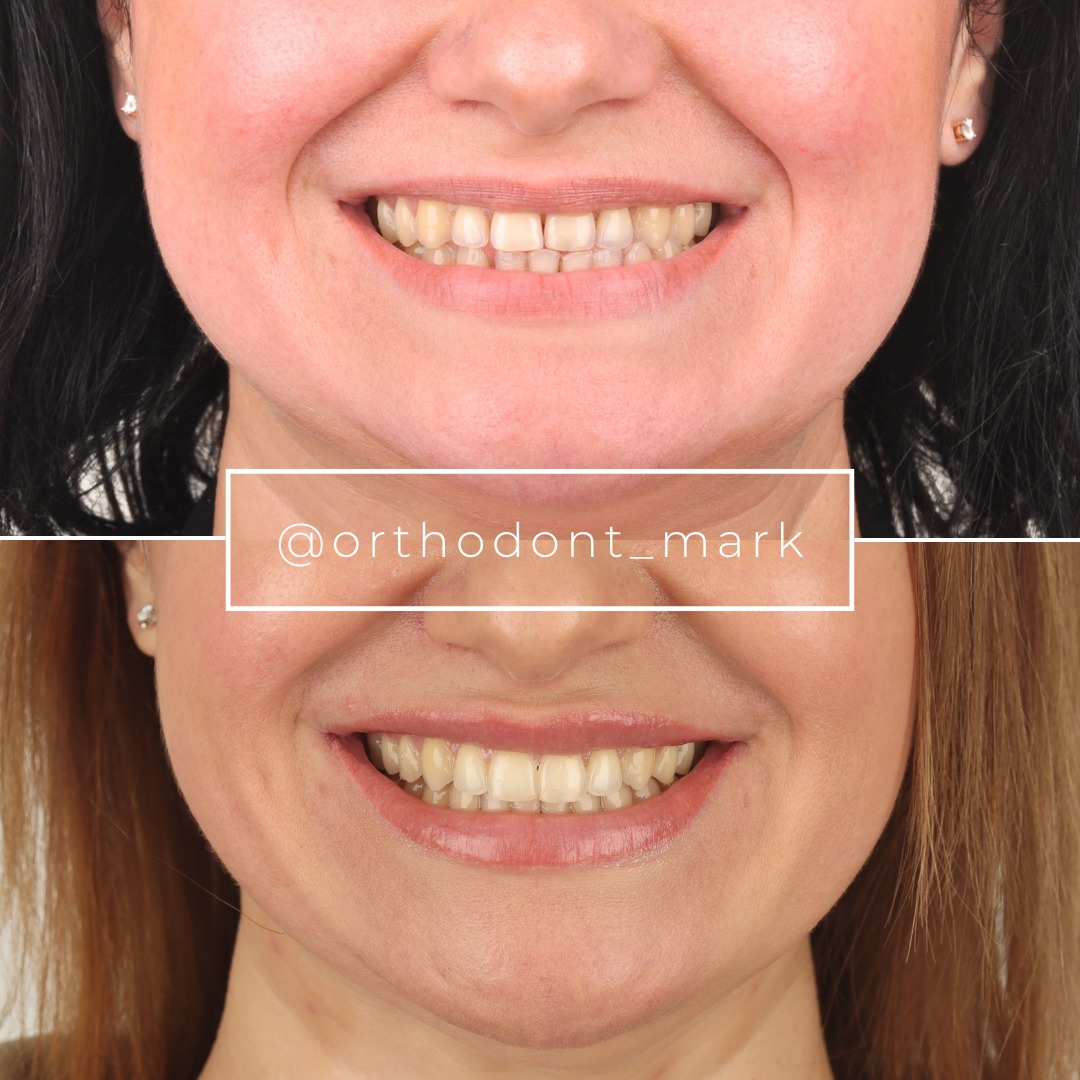
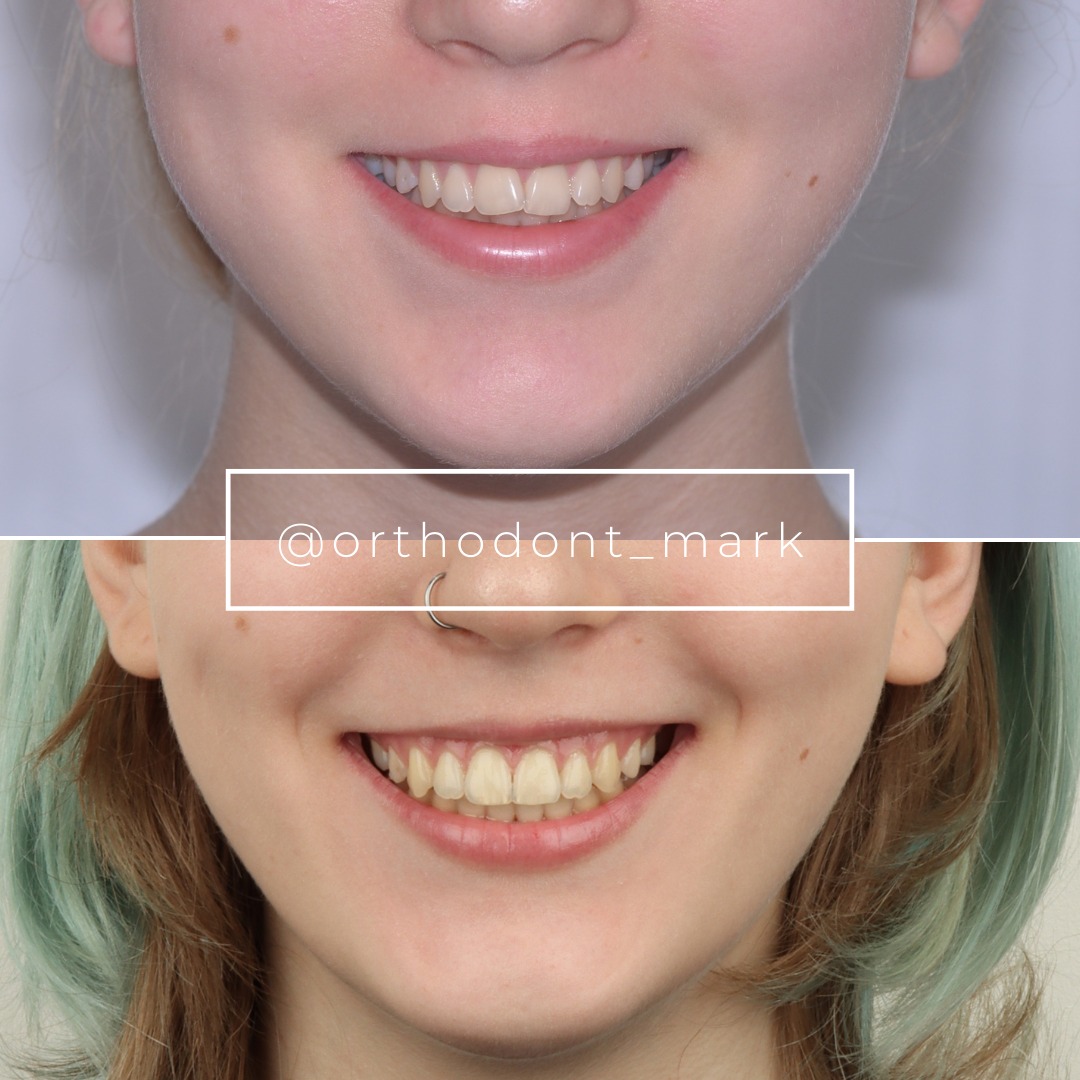
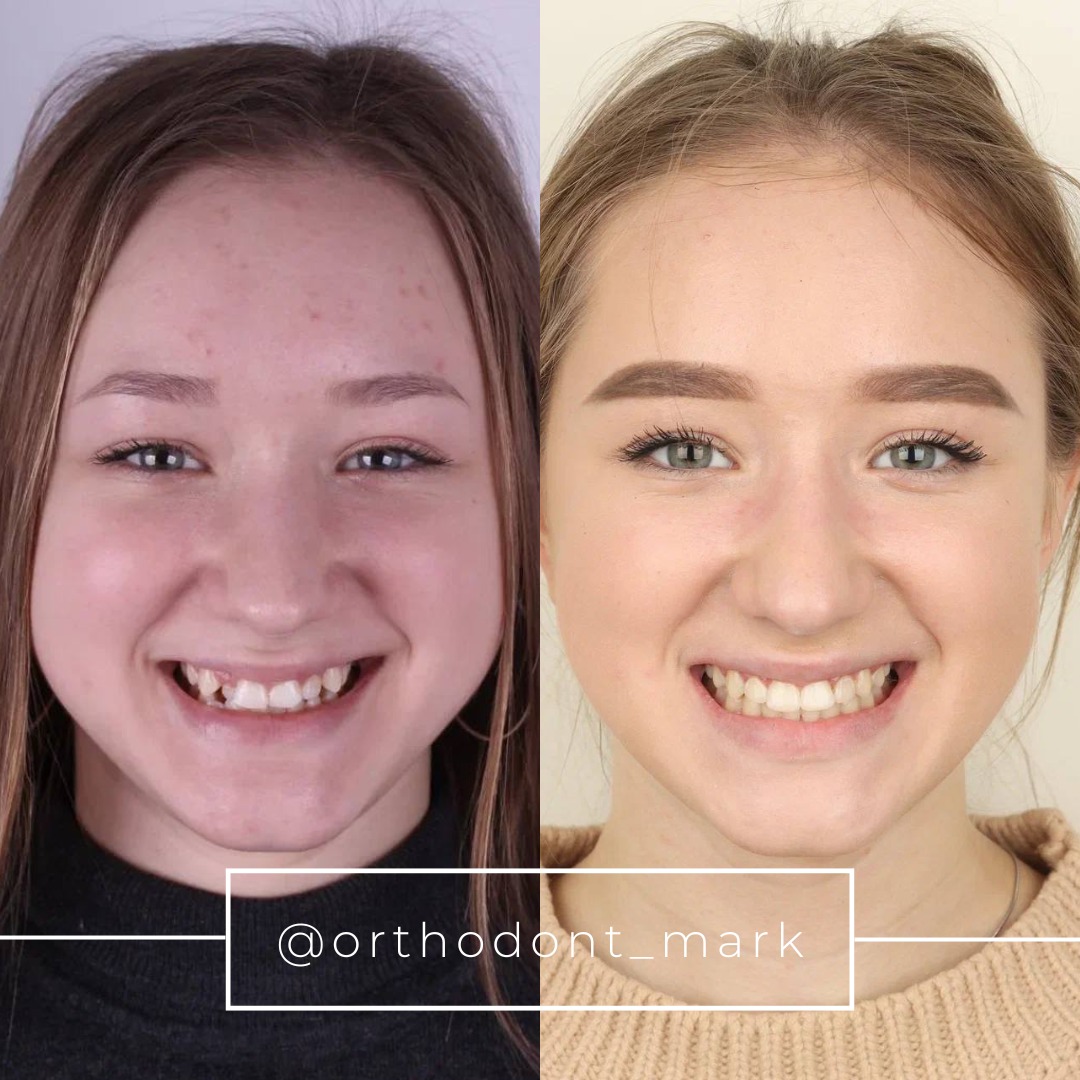
Learn the full MARPE protocol from Dr. Mark Radzhabov
Fundamental course covering CBCT patient selection, miniscrew planning, activation protocols, and 60+ clinical cases. Choose the access level that fits your practice.
Essentials of rapid palatal expansion for practicing orthodontists.
- Core RPE concepts and biomechanics
- 6 structured video lessons
- Clinical decision checklists
- Lifetime access to recordings
Deep-dive into MARPE protocol, diagnostics, and clinical execution.
- 6 modules covering MARPE from A to Z
- CBCT case selection walkthroughs
- Miniscrew placement and activation
- 60+ annotated clinical cases
- Direct Q&A with Dr. Mark Radzhabov
5-element medical consultation framework for dentists and orthodontists.
- Trust-building consultation protocol
- 5 lesson modules
- Templates for treatment plan delivery
- Works with any clinical specialty
Clinical FAQ
How do I sequence asymmetric expansion with Class II subdivision correction to avoid compounding dental compensation?
Complete skeletal expansion before introducing sagittal mechanics. Correcting the transverse discrepancy first establishes a symmetric basal bone foundation, so Class II elastics or functional appliances act on properly positioned anchor teeth rather than further displacing already-compensated dentition.
What is the minimum transverse skeletal deficiency threshold that justifies active expansion in subdivision cases?
Sant'Ana et al. (2016) required a deficiency greater than 5 mm as their inclusion criterion. Applying a comparable threshold separates patients needing skeletal expansion from those whose transverse discrepancy falls within dental compensation range and can be managed differently.
Does MARPE produce less buccal tooth displacement than RPE during expansion in adult subdivision patients?
Yes. Chun et al. (2022) found that MARPE produced significantly less buccal displacement of anchor teeth during expansion and consolidation compared to conventional RPE (p < 0.05), which is clinically important when those teeth will later serve as Class II mechanics anchors.
How does MARPE compare to MSE for achieving complete suture separation in asymmetric maxillary constriction?
Sarraj et al. (2021) found both MSE and BAME achieved complete midpalatal suture separation in 100% of patients. Both are bone-borne systems that bypass dental anchorage, making either viable for asymmetric cases when case selection is appropriate.
When does the clinical picture in Class II subdivision warrant surgical expansion rather than MARPE?
When CBCT confirms dense cortical bridging across the midpalatal suture, non-surgical expansion becomes unreliable. Sant'Ana et al. (2016) showed SARME with midpalatal split was significantly more effective than without (p = 0.00), establishing the split technique as the benchmark once suture resistance is confirmed.
Where is the preferred insertion site for MARPE miniscrews in subdivision cases with asymmetric palatal bone density?
Giudice et al. (2020) favor the anterior palate for miniscrew placement due to adequate bone availability and favorable safety margins. In asymmetric cases, positioning can be biased slightly toward the more constricted side to adjust the force vector without changing activation rate.
Does resolving the transverse asymmetry in Class II subdivision sometimes reduce the apparent sagittal discrepancy?
Qualitatively, yes. Unilateral maxillary constriction shifts the dental midline and can create or exaggerate a molar Class II relationship on the affected side. Correcting the transverse component first allows reassessment of the true sagittal component before committing to Class II mechanics.
What age range is represented in the surgical expansion evidence for adult transverse correction?
Sant'Ana et al. (2016) enrolled adults ranging from 18.3 to 31.8 years with a mean of 24.29 years. This spans the window most relevant to borderline expansion decisions, though suture morphology on CBCT remains the primary determinant regardless of age.
How does suture maturation affect expansion predictability in subdivision cases with unilateral constriction?
Advanced interdigitation or cortical bridging on the more constricted side increases resistance disproportionately, risking asymmetric skeletal response or appliance failure. CBCT assessment of both sides of the suture before appliance placement is essential for predicting whether bone-borne expansion will produce symmetric results.
What is the clinical rationale for bone-borne versus tooth-borne expanders in asymmetric maxillary constriction?
Tooth-borne RPE transfers activation force through the dentition, concentrating buccal tipping on the side offering less resistance. Bone-borne systems like MARPE deliver force directly to palatal cortex, distributing load more evenly and preserving anchor tooth position — a meaningful advantage in asymmetric Class II subdivision cases.
Managing the transverse component in Class II subdivision demands appliance choices grounded in skeletal evidence rather than convenience. When unilateral constriction drives midline deviation, expansion sequenced ahead of sagittal mechanics reduces compensatory dental tipping and improves the predictability of subsequent Class II correction. For cases where bone-borne expansion proves insufficient, surgical assistance remains a defined and evidence-supported pathway. Clinicians seeking structured guidance on applying these protocols are encouraged to review the case library and training resources at ortodontmark.com, where Dr. Mark Radzhabov presents the clinical decision framework in detail. Key sources: Sant'Ana et al. (2016), Int. J. Oral Maxillofac. Surg., doi:10.1016/j.ijom.2016.03.005. Chun et al. (2022), BMC Oral Health, doi:10.1186/s12903–022-02138-w. Sarraj et al. (2021), APOS Trends in Orthodontics, doi:10.25259/APOS_160_2020.