
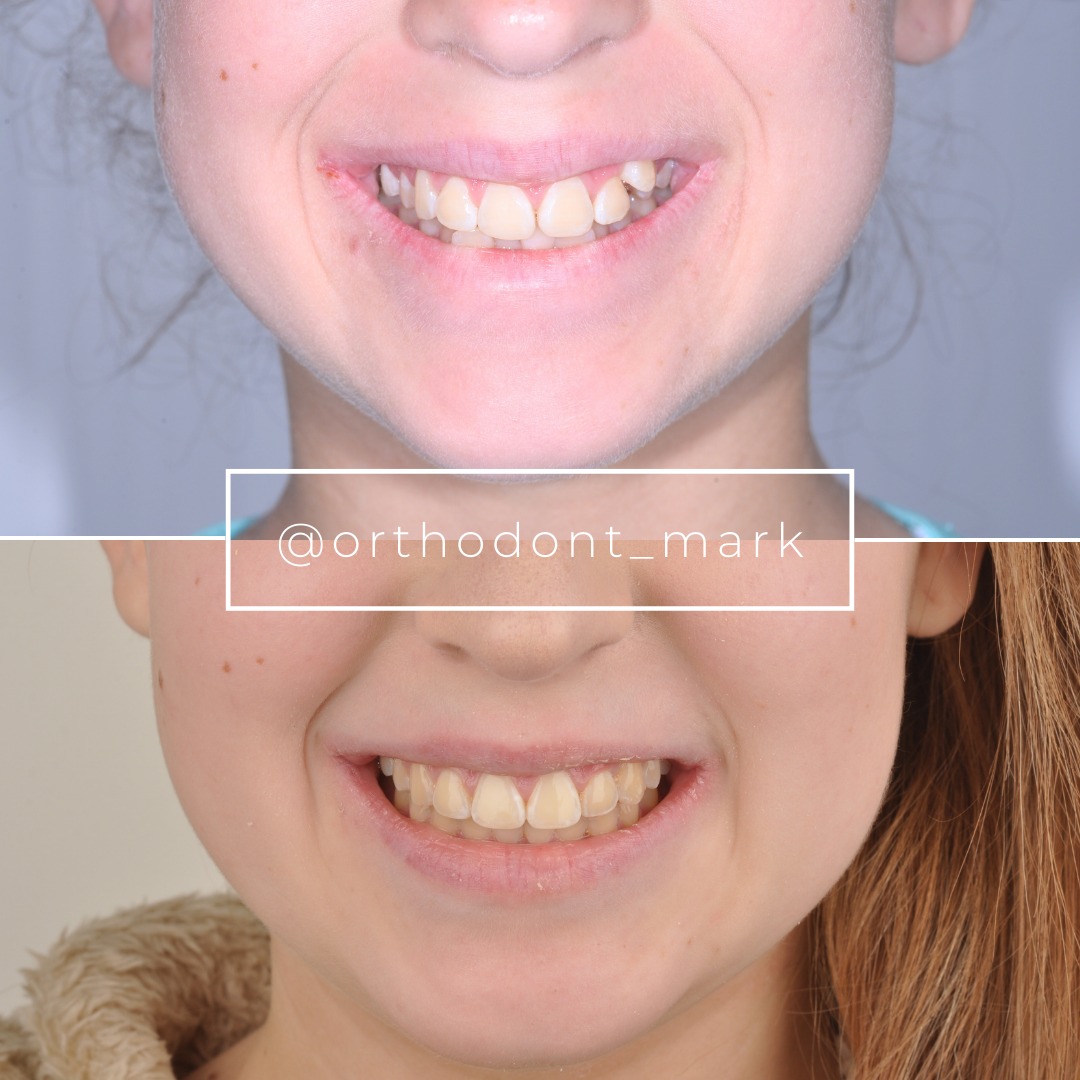
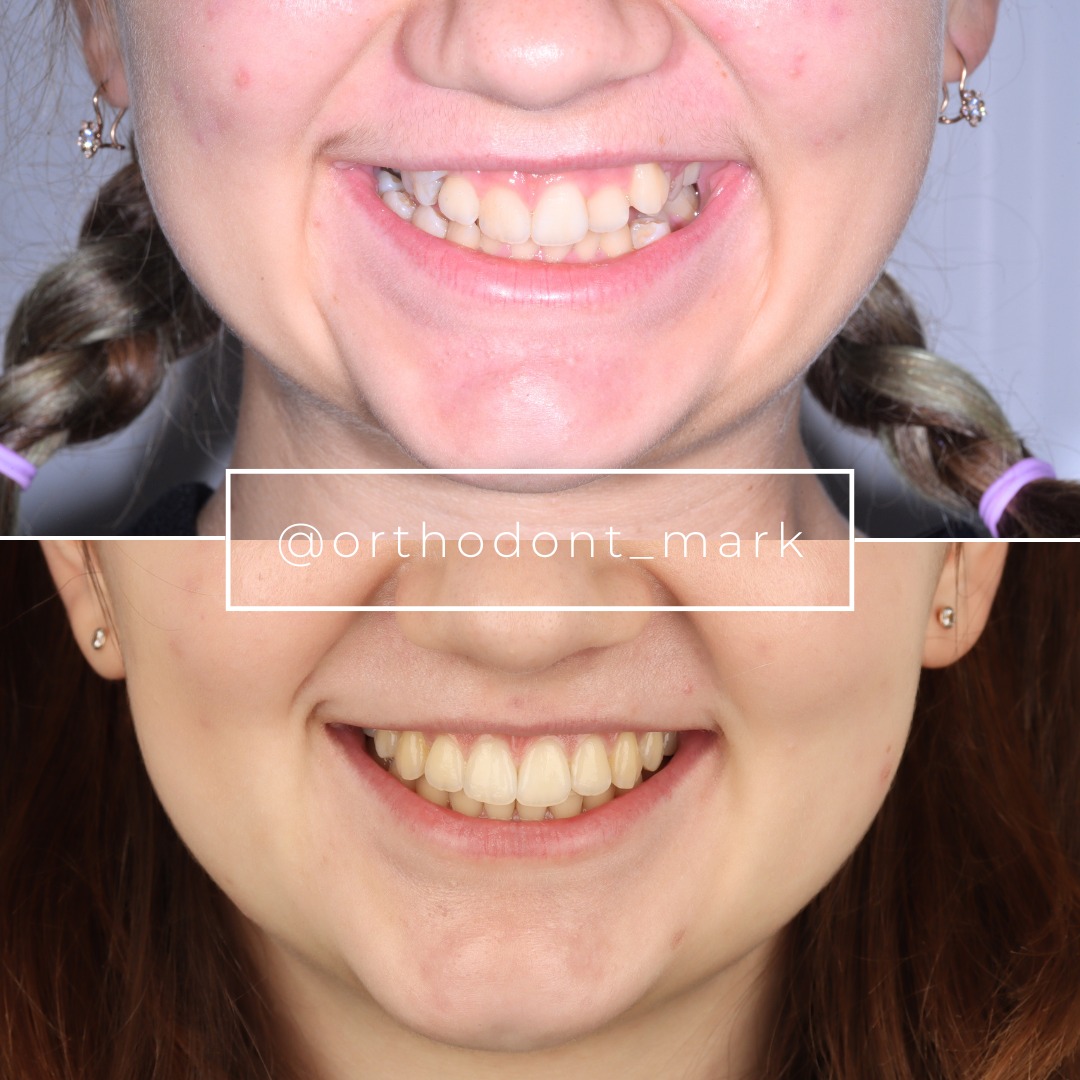
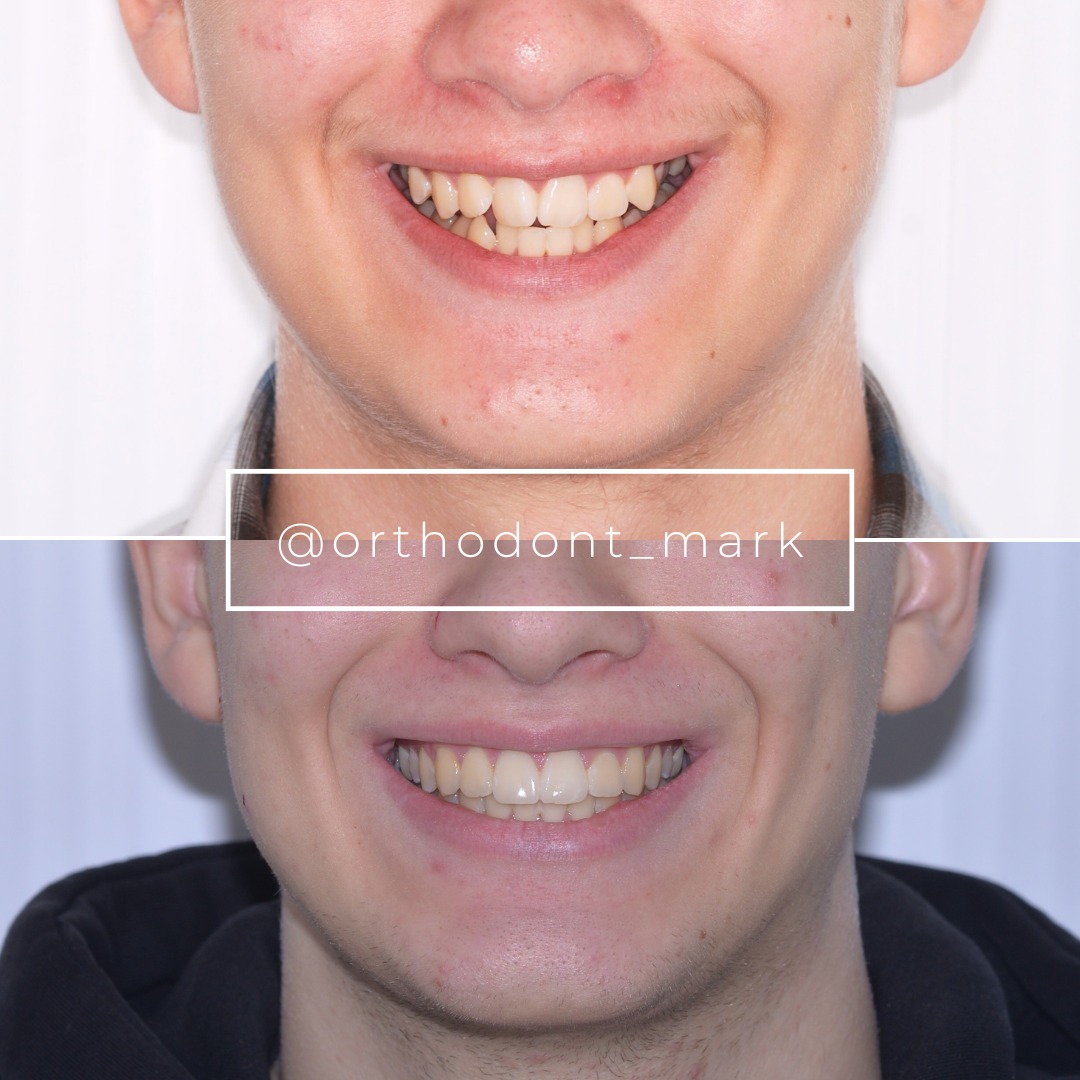
Initial situation
- Skeletal Class III malocclusion
- Edge-to-edge bite
- Pronounced spacing (diastemas)
The decision
The main goal was to correct excessive protrusion and incisor inclination, not only align the teeth. Treatment was carried out using a fixed appliance system over approximately 3 years, with sequential distalization of the lower arch using mini-implant anchorage to allow controlled tooth movement without compromising biomechanics. Given the relapse-prone nature of diastemas, fixed retainers were placed and the patient continues to wear a night-time aligner.
Interdental spacing is one of the most relapse-prone presentations in orthodontics and calls for a deliberate retention strategy.
The result
Treatment produced a stable outcome. Two years after completion, the result shows full stability and preserved esthetics.
Skeletal Class III cases with diastemas benefit from mini-implant-anchored distalization paired with a dual retention strategy of fixed retainers and a night-time aligner.
About skeletal expansion & MARPE
Skeletal Class III malocclusion combined with diastemas presents two separate relapse risks: the sagittal skeletal discrepancy and the inherent instability of interdental spacing. In cases like this, clinicians typically plan anchorage carefully, since achieving controlled distalization without unwanted side effects often requires supplemental support such as mini-implants. Because spacing tends to relapse quickly without intervention, retention planning, combining fixed and removable elements, is treated as an integral part of the overall strategy rather than a final afterthought.
Questions clinicians ask
What was the initial diagnosis in this case?
The patient presented with a skeletal Class III malocclusion, an edge-to-edge bite, and pronounced diastemas.
Why was mini-implant anchorage used?
It allowed sequential distalization of the lower arch with controlled tooth movement, avoiding unwanted biomechanical side effects.
How was relapse of the diastemas prevented?
Fixed retainers were placed and the patient continues to wear a night-time aligner, given how relapse-prone interdental spacing tends to be.
Learn the decision-making behind cases like this
Get Dr. Mark Radzhabov's free guide to skeletal-expansion appliances — which appliance to choose at which age — plus a free introductory MARPE lesson.
Get the Free Guide →More clinical cases
Original case shared by Dr. Mark Radzhabov on Instagram @orthodont_mark · Published for professional education.

