
MARPE Fee Structure:
Chair Time
Lab Cost and How to Price Expansion
Evidence-based guide to calculating miniscrew-assisted expansion fees — from CBCT suture staging through consolidation imaging.
TL;DR MARPE fee structure pricing must account for miniscrew placement chair time, appliance lab cost, and the imaging workload that suture staging demands. Clinicians who price expansion without factoring CBCT-guided case selection and consolidation visits consistently undercharge. Understanding what the biology costs you operationally is the foundation of defensible MARPE pricing.
Pricing MARPE treatment is one of the practice decisions orthodontists get wrong most consistently — not because the clinical protocol is unclear, but because the true resource cost is invisible until a fee is already set. The MARPE fee structure encompasses far more than the appliance itself: it includes pre-treatment CBCT acquisition and suture staging, miniscrew placement appointments, activation visits, consolidation imaging, and the lab fee for a bone-borne expander that often exceeds conventional RPE fabrication cost significantly. Dr. Mark Radzhabov at ortodontmark.com examines how evidence on suture biology, anchor-tooth outcomes, and age-related expansion patterns should directly inform how orthodontists calculate and present expansion fees.
Why Does MARPE Fee Structure
Differ
From Standard RPE Pricing?
MARPE fee structure is the full accounting of chair time, imaging, lab fabrication, miniscrew placement, activation, and consolidation costs that an orthodontic practice must price accurately to deliver skeletal expansion profitably and ethically. Conventional RPE pricing is built around a band-and-cement appointment and a series of short activation visits. MARPE introduces three additional cost layers that most fee schedules fail to capture: pre-treatment CBCT interpretation for suture staging, the surgical placement appointment for palatal miniscrews, and post-expansion cone-beam verification. The appliance itself carries a meaningfully higher lab cost than a banded RPE. Bone-borne expanders require precision-milled or cast frameworks, palatal miniscrew sleeves, and often customized activation arms — fabrication complexity that legitimate dental laboratories charge accordingly. Orthodontists who transplant their RPE lab fee directly onto a MARPE case are already pricing below cost before a single clinical hour is logged. The imaging obligation separates MARPE from simpler expansion modalities at the diagnostic stage. Suture staging from CBCT — assessing midpalatal and adjacent suture density to determine whether bone-borne force can produce a true skeletal split — is a professional service requiring measurable interpretation time. That interpretation time, whether performed in-house or outsourced to a radiologist, belongs in the treatment fee.
How Suture Maturation Evidence
Shapes
Your Case Selection and Pricing Risk
Case selection is the single largest variable in MARPE profitability because a case that requires surgical escalation after failed expansion represents an unplanned cost absorbed by the practice. Govaerts et al. (2023) found that at age 15 years, 61% of female subjects showed closed midpalatal sutures (stages D and E), meaning the majority of adolescent females presenting at that age already demonstrate suture architecture that makes non-surgical expansion less predictable. This single finding has direct pricing implications: the younger the patient, the lower the risk of escalation. The higher the suture maturity stage, the more the fee should account for the possibility of re-planning. Govaerts et al. (2023) also reported that the pterygomaxillary suture showed 83–100% closure in females aged 13–17 years. Because pterygomaxillary resistance affects lateral displacement of the maxillary complex during expansion, its early closure in this age range has real implications for the clinical hours required to achieve target arch width — and therefore for total chair-time costs. Observers in that study recommended surgical palatal expansion beginning at 15.1 years for orthodontists and 14.8 years for maxillofacial surgeons, thresholds that should trigger a fee conversation about SARPE or MARPE-plus-osteotomy rather than standalone miniscrew expansion. A practice that prices all palatal expansion cases identically regardless of suture stage is effectively subsidising high-complexity cases with low-complexity ones. Stratifying fees by suture maturity — using CBCT staging as the gateway — is both clinically defensible and economically rational. Bone-borne palatal expansion protocol demands this level of diagnostic rigour before a fee is communicated.
Mapping MARPE Chair Time
Across
the Full Treatment Arc
A complete MARPE treatment arc — from diagnostic CBCT to post-consolidation records — involves more discrete appointments than most RPE protocols. Chun et al. (2022) structured their prospective randomized trial around 35 turns of activation with imaging at baseline, immediately after expansion, and at 3 months post-expansion. That imaging schedule mirrors the minimum clinical touchpoints a practice must plan for: pre-treatment, post-activation, and consolidation-phase evaluation. Three CBCT time-points alone represent significant radiographer, clinician, and operatory overhead. Activation visits are short but frequent, and in bone-borne protocols each visit carries a brief screw-stability check that adds minutes per appointment. Multiply those minutes across the full activation cycle and the cumulative chair time is material. Practices that schedule MARPE activation at the same slot length as a standard RPE check are leaving the operatory underutilized while the next patient waits — an invisible scheduling cost that compounds over a full week of expansion cases. Consolidation imaging is the appointment most commonly omitted from MARPE fee planning. Verifying suture separation, assessing the fill-in of the midpalatal diastema, and confirming miniscrew integrity before removal requires dedicated clinical time and often a follow-up cone-beam scan. That visit should be itemized in the treatment contract from the outset, not added as an afterthought. Clinicians learning to build these steps systematically will find structured MARPE training and case mentorship invaluable before launching an expansion program.
Does Anchor-Tooth Preservation
Justify
a Premium MARPE Fee to Patients?
One evidence-based argument for communicating a higher MARPE fee to patients — or rather, for justifying it to the referring dentist — is the demonstrably reduced dental side-effect profile. Chun et al. (2022) found that MARPE resulted in significantly less buccal displacement of anchor teeth compared to conventional RPE during both the expansion and consolidation periods. That outcome has downstream value: preserved tooth position reduces the risk of buccal bone dehiscence, limits the need for restorative compensation, and shortens the comprehensive mechanics phase that follows expansion. In fee terms, avoided complications are real savings for the patient even if they are invisible at the time of signing the treatment contract. Presenting miniscrew-assisted expansion not merely as 'a different expander' but as a protocol that protects the periodontium of posterior anchor teeth gives the higher fee a clinical rationale the tooth-borne rapid palatal expander comparison cannot match. Practices that make this distinction clearly in their case presentations report fewer fee objections on complex adult expansion cases. Kinzinger et al. (2022) found that younger patients showed greater posterior arch width increase while older patients showed comparatively greater anterior width increase after rapid maxillary expansion. This age-related differential response means that the anatomical outcome of expansion is not uniform across the age range — a finding that should inform how practices frame expected skeletal gain when discussing fees with patients at different stages of skeletal maturity. Promising a uniform expansion result regardless of age introduces both a clinical and a medico-legal risk.
How Should Orthodontists Calculate
Profitable
MARPE Palatal Expansion Pricing?
A defensible MARPE pricing model starts with a component-by-component cost audit rather than a market-rate comparison to neighbouring practices. The components are: CBCT acquisition cost (or referral fee), suture staging time, lab fee for the bone-borne appliance, placement appointment overhead, activation visit overhead per turn cycle, consolidation imaging, and miniscrew removal. Each carries a real resource cost. None should be absorbed silently into a flat expansion fee modelled on RPE. Suture maturity staging is particularly important as a fee stratification criterion. A patient presenting with early-stage suture architecture — where the midpalatal suture remains radiographically open and responsive — carries lower clinical risk and a more predictable treatment arc than a patient near the surgical threshold. Govaerts et al. (2023) identified that observers recommended surgical expansion at ages as low as 14.8 years in some assessments, meaning that the window between 'safe for MARPE' and 'needs surgical planning' is narrow, and mispricing either category creates financial exposure. Practices considering miniscrew-assisted expansion for the first time should model at least two fee tiers: one for growing or early-stage patients where skeletal response is more predictable, and one for late-stage or borderline adult patients where additional imaging, longer consolidation, and possible surgical escalation must be priced in from the outset. Orthodontic expansion appliance lab fees should be renegotiated with your laboratory to reflect bone-borne complexity before any patient fee is finalized.
Free Clinical Guide
Which Expansion Appliance at Which Age?
Get Dr. Mark Radzhabov's guide to skeletal-expansion appliances — indications, pros & cons, and how to choose by patient age. Free to your inbox.
Prefer video? Watch the free demo lesson on MARPE appliance types, features and trade-offs.
Documented outcomes
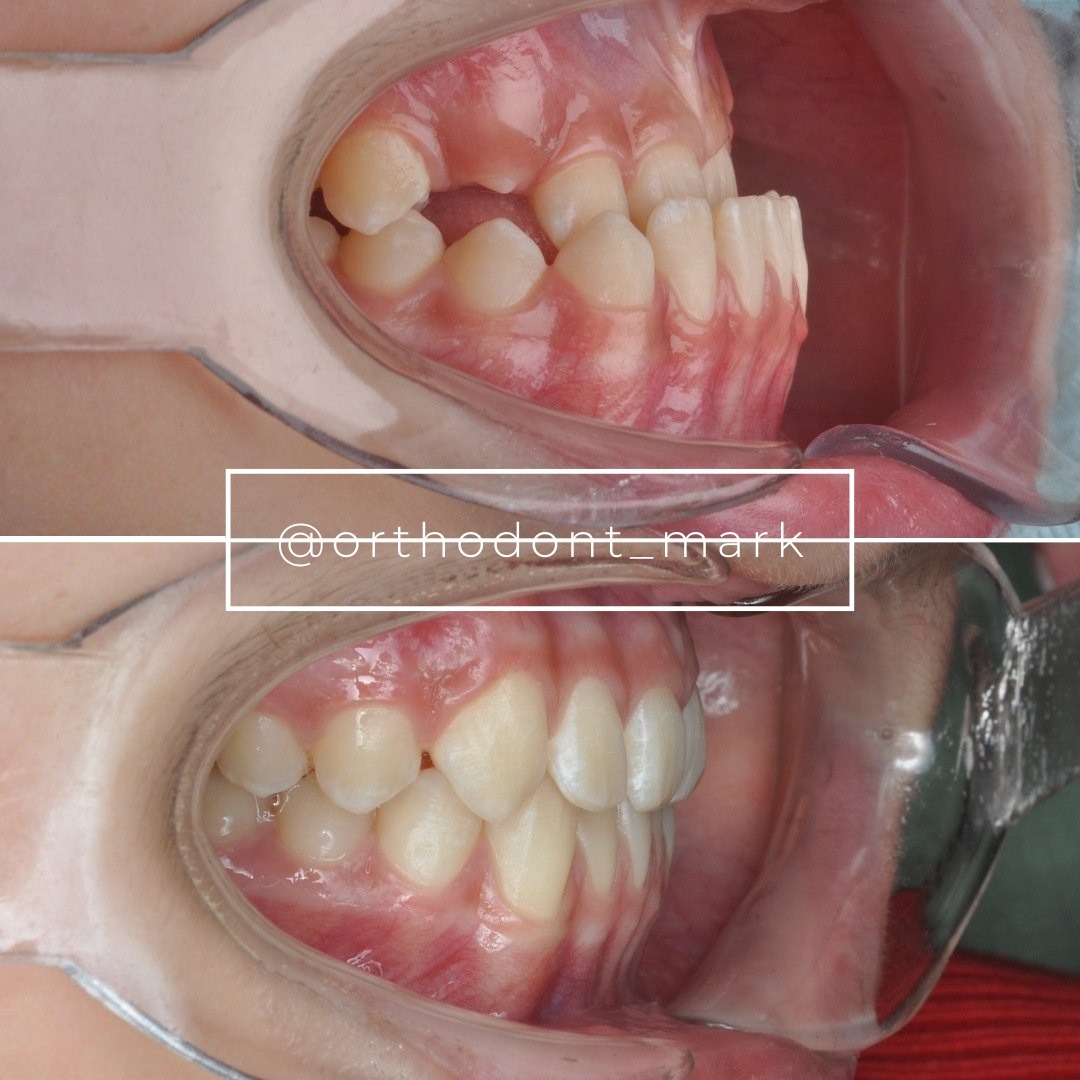
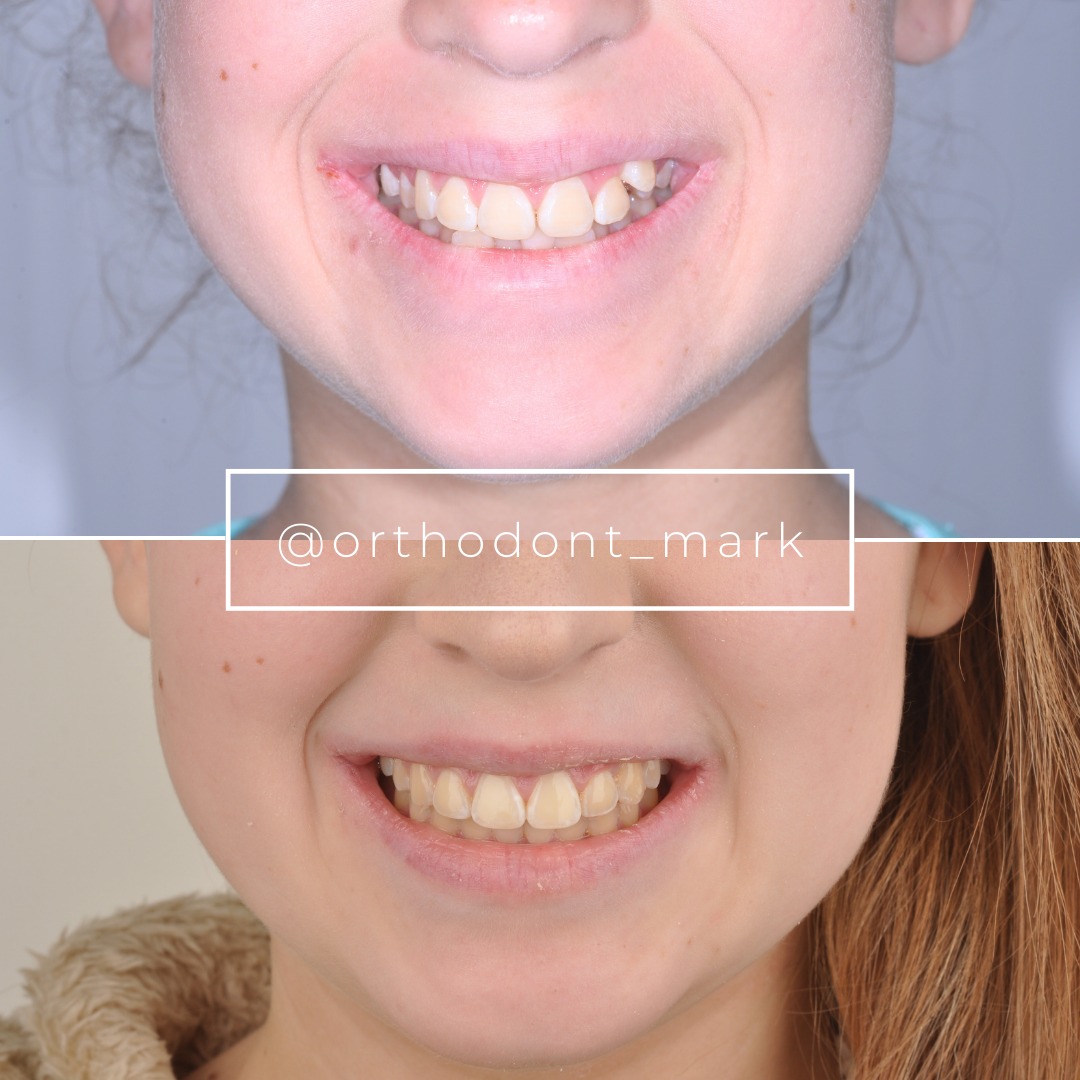
Clinical cases from Dr. Mark Radzhabov's practice

Learn the full MARPE protocol from Dr. Mark Radzhabov
Fundamental course covering CBCT patient selection, miniscrew planning, activation protocols, and 60+ clinical cases. Choose the access level that fits your practice.
Essentials of rapid palatal expansion for practicing orthodontists.
- Core RPE concepts and biomechanics
- 6 structured video lessons
- Clinical decision checklists
- Lifetime access to recordings
Deep-dive into MARPE protocol, diagnostics, and clinical execution.
- 6 modules covering MARPE from A to Z
- CBCT case selection walkthroughs
- Miniscrew placement and activation
- 60+ annotated clinical cases
- Direct Q&A with Dr. Mark Radzhabov
5-element medical consultation framework for dentists and orthodontists.
- Trust-building consultation protocol
- 5 lesson modules
- Templates for treatment plan delivery
- Works with any clinical specialty
Clinical FAQ
What components belong in a MARPE fee structure that RPE pricing omits?
MARPE fee structure must include CBCT acquisition and suture staging interpretation, miniscrew placement as a discrete surgical appointment, bone-borne appliance lab cost, and consolidation imaging with screw removal — all resource layers absent from standard RPE pricing models.
How does suture maturity staging affect miniscrew-assisted expansion pricing risk?
Govaerts et al. (2023) found that 61% of females at age 15 already showed closed midpalatal sutures. Late-stage suture maturity increases the likelihood of surgical escalation, which represents unplanned practice cost. Fee stratification by suture stage protects against this.
Is the lab cost for a bone-borne palatal expander higher than for a conventional RPE?
Yes. Bone-borne expanders require precision-milled or cast frameworks, miniscrew sleeves, and customized activation arms. Fabrication complexity meaningfully exceeds banded RPE, and lab fees should be renegotiated with your laboratory before setting patient fees.
How many clinical appointments should an orthodontist budget for MARPE chair time?
At minimum: a CBCT staging consultation, a placement appointment, activation visits across the expansion cycle, a post-expansion imaging review, and a consolidation-and-removal appointment. Chun et al. (2022) used three CBCT time-points — baseline, post-expansion, and three months — as a clinical reference arc.
Can anchor-tooth outcomes justify a premium fee for MARPE over RPE in practice communications?
Clinically yes. Chun et al. (2022) demonstrated significantly less buccal displacement of anchor teeth with MARPE versus RPE. Reduced periodontal risk and preserved tooth position are measurable advantages that support a higher fee when discussing options with referring dentists.
At what patient age does MARPE pricing risk increase due to suture closure?
Govaerts et al. (2023) found that observers recommended surgical palatal expansion starting at 15.1 years for orthodontists and 14.8 years for maxillofacial surgeons. Cases near or above these thresholds carry escalation risk and warrant a higher-complexity fee tier.
How should differential skeletal response by age influence MARPE expansion pricing?
Kinzinger et al. (2022) found that younger patients gain more posterior arch width while older patients gain more anteriorly. Outcome expectations differ by age, so fee discussions and treatment contracts should reflect this variation rather than promising a uniform skeletal result.
Should orthodontists itemize consolidation imaging separately in the MARPE treatment contract?
Yes. Post-expansion cone-beam verification to confirm suture separation and assess miniscrew integrity is a clinical procedure requiring dedicated chair time and often a radiograph. Itemizing it upfront prevents fee disputes and ensures the step is never omitted for cost reasons.
How do pterygomaxillary suture closure rates affect MARPE case selection and fee planning?
Govaerts et al. (2023) reported 83–100% pterygomaxillary suture closure in females aged 13–17. High resistance in this suture reduces lateral displacement efficiency, potentially lengthening the treatment arc and increasing the total chair time that must be priced into the expansion fee.
Where can orthodontists access structured guidance on MARPE fee structure and case planning?
Orthodontist Mark at ortodontmark.com offers structured MARPE training covering case selection, appliance protocol, and practice economics, alongside direct case consultation for clinicians pricing or planning their first miniscrew-assisted expansion cases.
Pricing miniscrew-assisted expansion without a clear clinical framework produces fees that neither reflect practice overhead nor protect the patient's outcome. The evidence on suture maturation timing, differential skeletal response by age, and anchor-tooth preservation under bone-borne loading gives orthodontists concrete criteria for both case selection and fee justification. Dr. Mark Radzhabov encourages clinicians to review their current MARPE fee structure against these biological variables and, where uncertainty remains, to submit a case for structured consultation at ortodontmark.com before finalizing a treatment contract. Key sources: Chun et al. (2022), BMC Oral Health, doi:10.1186/s12903–022-02138-w. Govaerts et al. (2023), Journal of Orofacial Orthopedics, doi:10.1007/s00056–023-00487-x. Kinzinger et al. (2022), doi:10.1007/s00056–022-00429-z.