
Post-Expansion Molar Uprighting:
Buccal Root Torque
Correction After Skeletal Transverse Gain
A sequencing protocol for posterior torque control after MARPE, grounded in alveolar remodeling evidence. Built for the clinician managing the finishing phase.
TL;DR Post-expansion molar uprighting requires deliberate sequencing of buccal root torque correction after skeletal transverse gain is confirmed. MARPE produces distinct alveolar bone changes—including buccal cortical thinning—that directly govern when and how posterior torque control mechanics should begin. Imaging-guided timing protects root structure and maximizes finishing stability.
Skeletal transverse gain from miniscrew-assisted expansion does not automatically translate into well-positioned posterior teeth. The alveolar envelope remodels in ways that create a genuine clinical challenge: buccal root torque correction after MARPE must be sequenced carefully or finishing mechanics will work against a changing bony substrate. Dr. Mark Radzhabov at ortodontmark.com addresses this gap directly, synthesizing peer-reviewed evidence on post-expansion dentoalveolar adaptation to give clinicians a protocol-ready framework for molar uprighting after skeletal expansion.
Why Does Skeletal Transverse Gain Complicate
Molar Positioning
in the Finishing Phase?
Post-expansion molar uprighting is the deliberate correction of buccal root torque in posterior teeth following skeletal transverse gain, sequenced to align with the alveolar remodeling cycle that MARPE or similar bone-borne expanders initiate. The problem is not simply that molars tip buccally during expansion—that is expected and manageable. The deeper issue is that the bony support for those roots changes character during and after expansion, and applying torquing mechanics before the alveolus stabilizes risks root proximity to a thinned buccal cortex. Lim et al. (2017) documented that MARPE caused buccal alveolar bone thickness reduction alongside an increase in palatal bone thickness. This asymmetric remodeling response means the very surface toward which you intend to torque the buccal root is transiently compromised. Initiating aggressive third-order mechanics into a thinned buccal cortex before consolidation is complete invites dehiscence risk and undermines the long-term periodontal envelope that skeletal expansion was meant to improve. A second finding from Lim et al. (2017) compounds the picture: MARPE caused apical movement of the alveolar crest at the first premolar. Crestal migration at the premolar region shifts the effective root-to-bone ratio and alters the mechanical advantage of any torquing couple applied through a bracket or auxiliary. Clinicians who ignore this change and apply standard finishing torque prescriptions risk introducing forces that exceed the local bone's adaptive capacity. Understanding the remodeling trajectory—not just the immediate post-expansion radiograph—is therefore the foundation of rational molar uprighting sequencing. The clinical sequence must be driven by biology, not by an arbitrary wait period or a fixed treatment timeline.
How Does Suture Opening Quality Predict
Dentoalveolar Adaptation
After MARPE vs. RPE?
Before sequencing buccal root torque correction, the clinician needs confidence that true skeletal widening—not purely dental tipping—occurred. Suture separation quality is the first filter. Chun et al. (2022) reported that midpalatal suture separation occurred in 95% of MARPE patients and 90% of RPE patients, establishing that bone-borne appliances achieve a marginally higher and more consistent split rate. This distinction matters for finishing because a true sutural opening produces a different dentoalveolar response than predominantly dental expansion. Chun et al. (2022) also demonstrated that MARPE produced greater increases in molar nasal width and greater palatine foramen measurements than RPE at a statistically significant threshold (p < 0.05). The greater skeletal displacement associated with MARPE means the posterior dentoalveolar adaptation—buccal root exposure, alveolar crest remodeling, periodontal fiber reorganization—is correspondingly larger in magnitude. A finishing protocol calibrated for RPE outcomes will under-correct the torque deficit after MARPE. For the uprighting sequence, these numbers carry a direct clinical implication: the greater the verified skeletal component of expansion, the more substantial the buccal root torque correction required, and the more critical it becomes to confirm alveolar consolidation before third-order mechanics begin. CBCT assessment of the buccal cortical plate at the molar root apices provides the most direct information about consolidation status and should guide activation timing rather than a calendar-based wait alone.
When Surgical Assistance Precedes Expansion: Does the
Molar Uprighting
Protocol Change?
Not every adult expansion case is MARPE-only. Sant'Ana et al. (2016) conducted a comparative study of 24 adult patients, assigning 14 to surgically assisted expansion with midpalatal osteotomy and 10 to the same protocol without osteotomy. The group receiving the midpalatal split showed statistically significantly greater expansion efficacy (p = 0.00), confirming that cortical resistance at the midpalate is a primary barrier to skeletal separation in adults aged 18.3 to 31.8 years (mean 24.29 ± 3.48 years, Sant'Ana et al. (2016)). For the molar uprighting sequence, the surgical route has a distinct implication: the osteotomy disrupts cortical continuity deliberately, and the healing and consolidation timeline differs from the miniscrew-driven suture opening of non-surgical MARPE. Post-surgical alveolar remodeling may progress more rapidly in some regions and more slowly in others, depending on the extent of the cortical release and the patient's individual healing capacity. Initiating buccal root torque correction before the surgically altered alveolus has consolidated introduces the same dehiscence risk as early post-MARPE torquing—but the anatomical context is different and requires separate assessment. Clinicians managing molar uprighting after surgically assisted expansion should treat the CBCT at the conclusion of the retention-consolidation phase as the true starting point for finishing mechanics, irrespective of the calendar elapsed since surgery. The magnitude of skeletal gain documented by Sant'Ana et al. (2016) in patients receiving the midpalatal split underscores that these cases carry a larger transverse correction to distribute across the posterior dentition, and the torque deficit will typically be greater than in a straightforward non-surgical MARPE case.
What Is the Optimal Sequencing Window for
Buccal Root Torque Correction
After Skeletal Expansion Is Confirmed?
The sequencing of posterior torque control after MARPE should be understood as a multi-gate process, not a single activation event. The first gate is radiographic confirmation of suture opening—the presence of a low-density midpalatal gap on CBCT indicating active separation. The second gate is the onset of consolidation: new bone density filling the sutural gap, which signals that the skeletal framework is becoming competent to transmit torquing loads without uncontrolled alveolar deflection. The third gate—and the one most often skipped—is cortical assessment at the molar buccal aspect. Because Lim et al. (2017) demonstrated that buccal alveolar bone thins after MARPE while the palatal side thickens, a post-expansion CBCT slice through the molar furcation and root apex provides direct evidence of whether the buccal cortex has recovered sufficient thickness to safely accept an outward torquing force. Clinicians should identify the thickness of buccal bone at the first molar root apex on axial CBCT before activating any torque auxiliary, and they should compare this against the pre-expansion baseline if one is available. Once the three gates are passed, the actual mechanics of molar uprighting after skeletal transverse gain can begin. Staged torque application—using progressively stiffer rectangular archwire sequences or auxiliaries that deliver controlled third-order force—distributes the mechanical load across the remodeling alveolus without overwhelming any single cortical surface. Reviewing post-expansion molar positioning against the expanded skeletal base, rather than against pre-treatment dental norms, ensures that the finishing target reflects the new anatomy. This is an area where structured MARPE training for posterior torque sequencing provides clinicians with the decision framework that individual case experience alone cannot efficiently build.
Which Post-Expansion Finishing Errors Undermine
Transverse Gain
and How Are They Avoided?
The most frequent sequencing error in post-expansion molar uprighting is initiating buccal root torque correction contemporaneously with appliance removal, before any CBCT-based assessment of the alveolar remodeling status. Clinicians who treat the end of the expansion phase as the start of finishing mechanics fail to account for the transient vulnerability of the buccal cortex documented by Lim et al. (2017). The result is not always catastrophic, but it consistently produces a narrower biological safety margin and can manifest as fenestrations or root proximity to the buccal cortex that complicate long-term periodontal health. A second error is applying torque correction symmetrically when the suture has opened asymmetrically. Chun et al. (2022) showed that MARPE produces greater increases in molar nasal width and palatine foramen dimensions than RPE, but the distribution of that expansion is not guaranteed to be perfectly bilateral. CBCT assessment of left and right molar alveolar width independently, rather than relying on midline or average measurements, allows the clinician to differentiate the side requiring greater torque correction from the side where the buccal root is already well-positioned relative to the expanded skeletal base. A third pitfall involves the premolar region specifically. The apical crestal migration at the first premolar identified by Lim et al. (2017) can mislead a clinician who reads only a panoramic radiograph: the crest may appear normal on a flat projection while CBCT reveals significant apical displacement in the buccal dimension. Using panoramic imaging alone to clear a case for full posterior torquing is therefore inadequate after MARPE. Axial and coronal CBCT slices through the premolar furcation are the minimum standard before beginning mechanics in that region.
Free Clinical Guide
Which Expansion Appliance at Which Age?
Get Dr. Mark Radzhabov's guide to skeletal-expansion appliances — indications, pros & cons, and how to choose by patient age. Free to your inbox.
Prefer video? Watch the free demo lesson on MARPE appliance types, features and trade-offs.
Documented outcomes
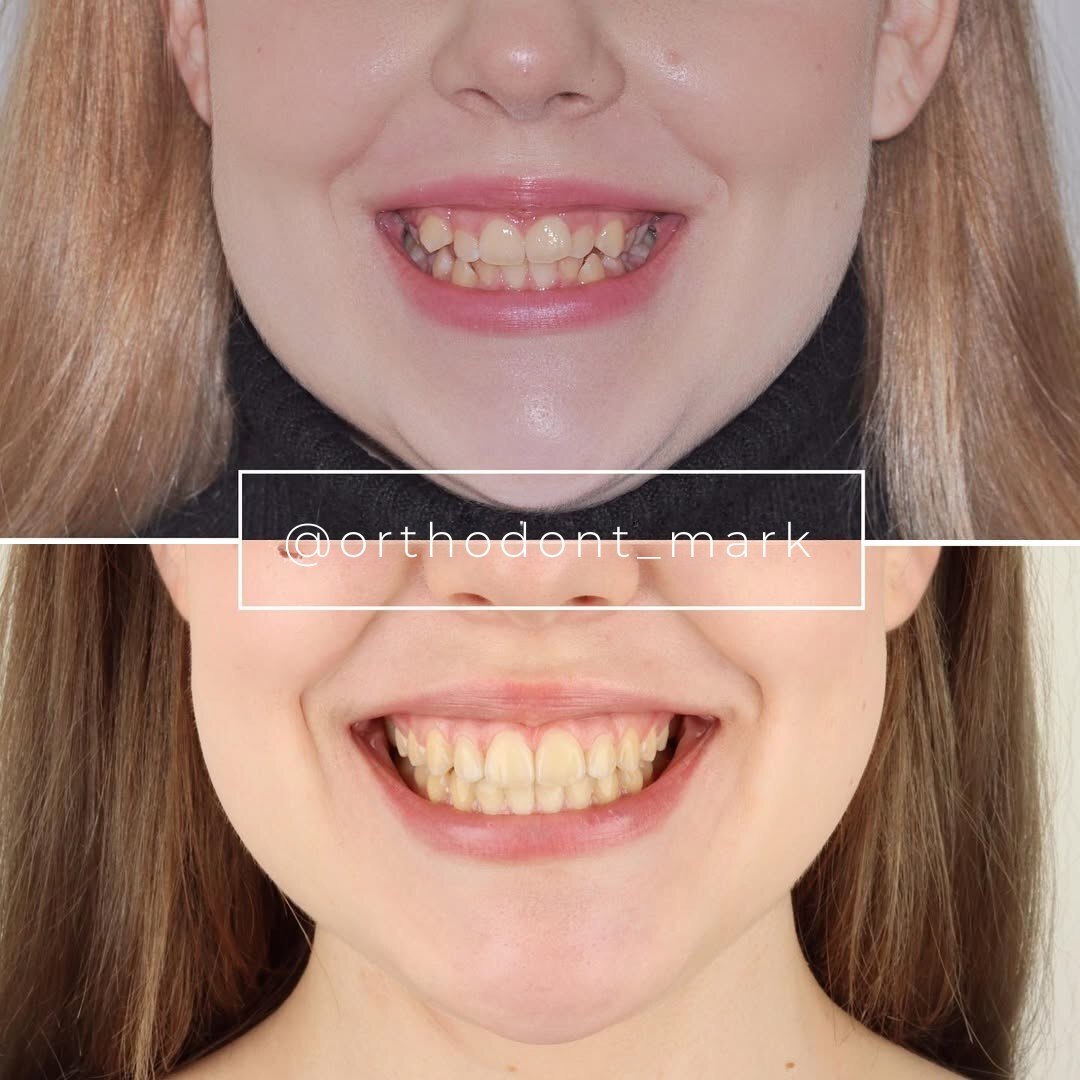
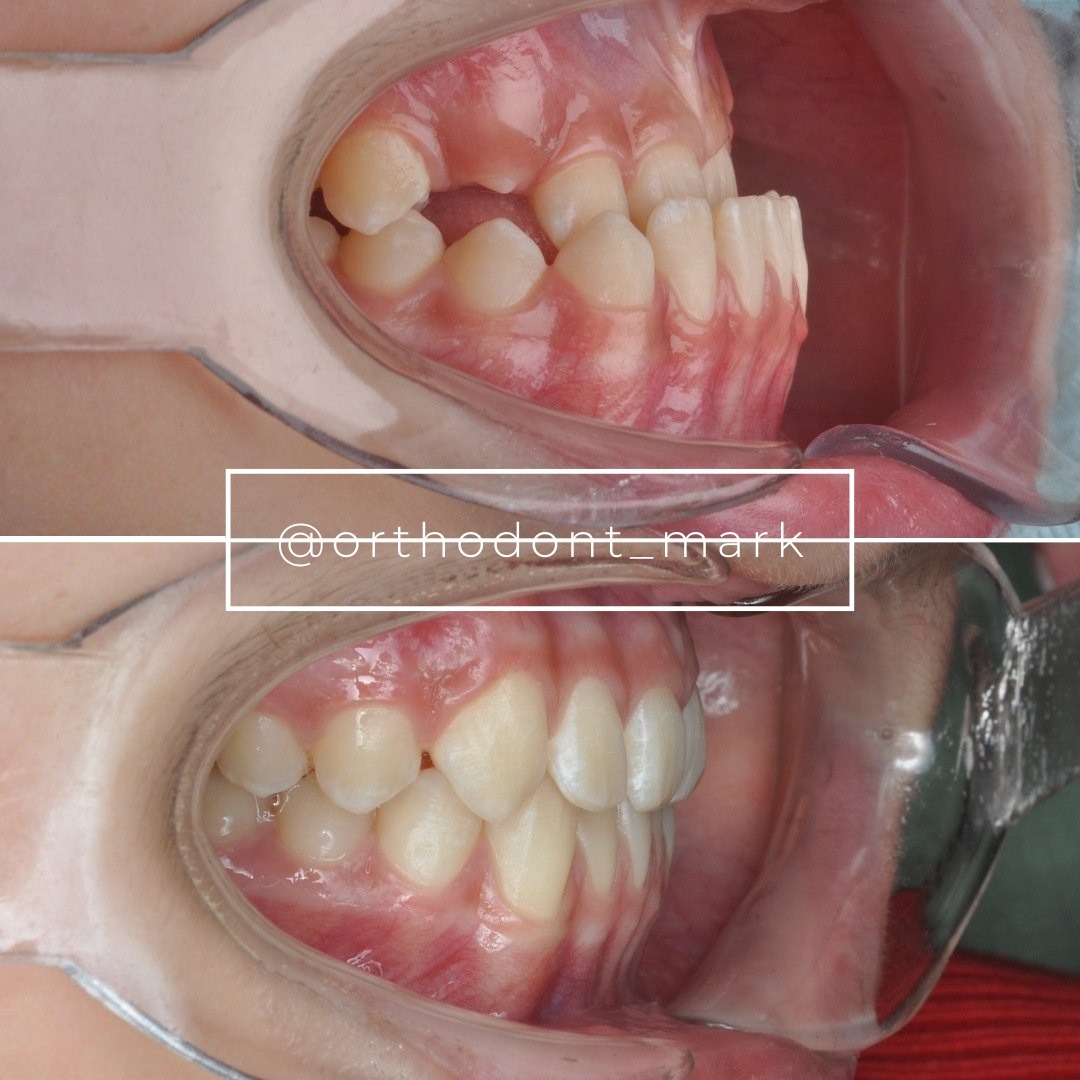
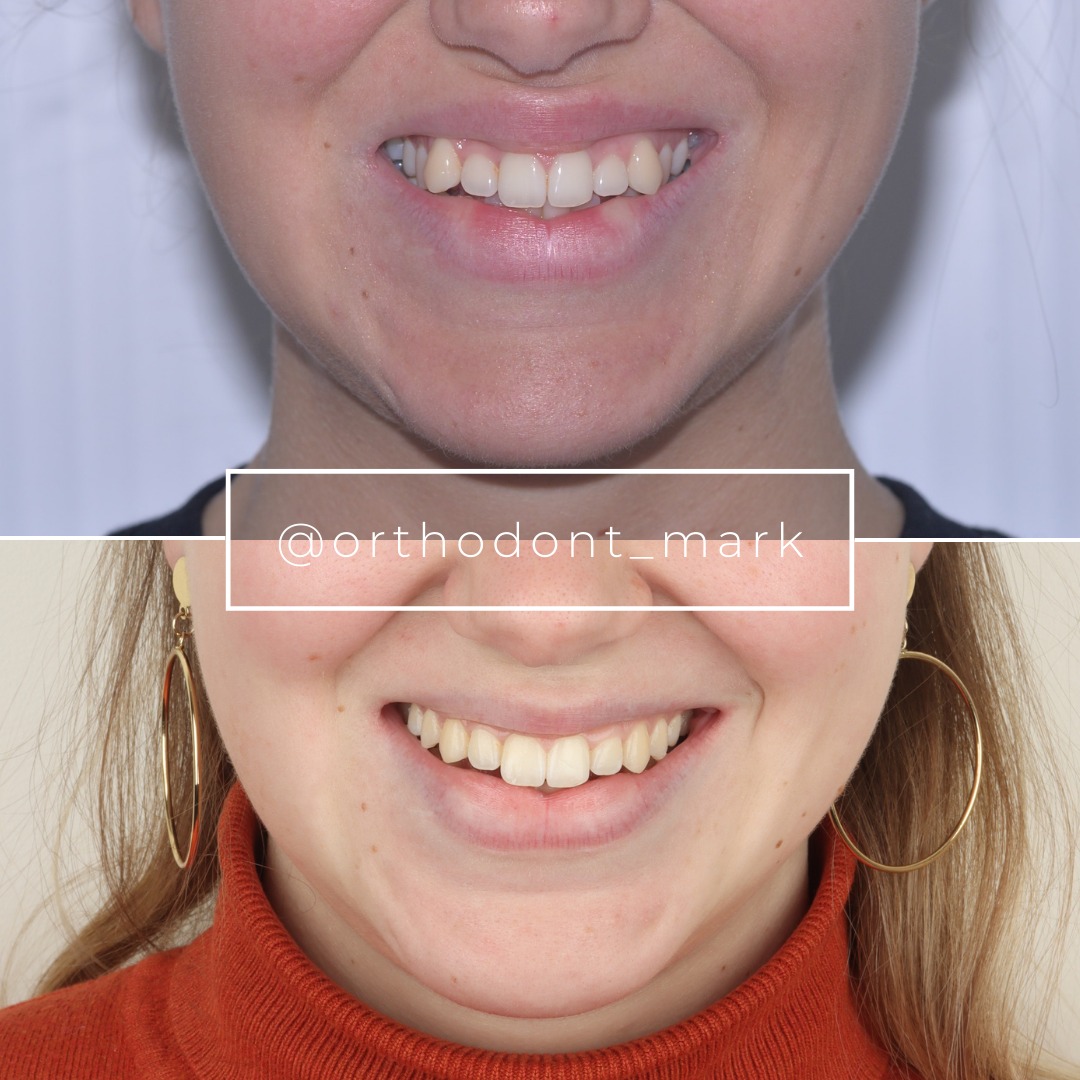
Clinical cases from Dr. Mark Radzhabov's practice
Learn the full MARPE protocol from Dr. Mark Radzhabov
Fundamental course covering CBCT patient selection, miniscrew planning, activation protocols, and 60+ clinical cases. Choose the access level that fits your practice.
Essentials of rapid palatal expansion for practicing orthodontists.
- Core RPE concepts and biomechanics
- 6 structured video lessons
- Clinical decision checklists
- Lifetime access to recordings
Deep-dive into MARPE protocol, diagnostics, and clinical execution.
- 6 modules covering MARPE from A to Z
- CBCT case selection walkthroughs
- Miniscrew placement and activation
- 60+ annotated clinical cases
- Direct Q&A with Dr. Mark Radzhabov
5-element medical consultation framework for dentists and orthodontists.
- Trust-building consultation protocol
- 5 lesson modules
- Templates for treatment plan delivery
- Works with any clinical specialty
Clinical FAQ
When is it safe to begin buccal root torque correction after MARPE expansion?
Initiate torque correction only after passing three CBCT gates: confirmed suture opening, early consolidation density filling the midpalatal gap, and adequate buccal cortical thickness at molar root apices. Lim et al. (2017) documented buccal alveolar thinning post-MARPE, making cortical assessment the critical final checkpoint before torquing mechanics begin.
How does post-expansion molar uprighting differ between MARPE and RPE cases?
MARPE produces greater skeletal width and more pronounced alveolar remodeling than RPE, as shown by Chun et al. (2022). This larger skeletal displacement creates a greater buccal root torque deficit and a more significant period of buccal cortical vulnerability, requiring more staged torque correction and stricter CBCT monitoring than RPE finishing typically demands.
What CBCT landmarks should I assess before initiating posterior torque control after skeletal expansion?
Assess buccal cortical thickness at the first molar root apex on axial slices, alveolar crest level at the first premolar on coronal slices, and midpalatal gap density. Lim et al. (2017) identified both buccal cortical thinning and apical crestal migration after MARPE—both require direct CBCT evaluation before third-order mechanics are activated.
Does suture separation rate affect the finishing protocol for molar positioning after expansion?
Yes. Chun et al. (2022) reported midpalatal suture separation in 95% of MARPE and 90% of RPE patients. A confirmed split indicates true skeletal gain requiring substantial torque correction. An incomplete or failed separation means the width is primarily dental, and the finishing mechanics target and magnitude change entirely.
How does apical alveolar crest migration at the first premolar affect molar uprighting sequencing?
Lim et al. (2017) documented apical crest movement at the first premolar after MARPE. This alters root-to-bone ratio and effective bracket torque leverage in adjacent molar regions. Adjust bracket positioning and auxiliary selection to reflect the migrated crest level rather than using pre-expansion anatomical norms as the mechanical reference.
Is panoramic radiography sufficient to clear a case for post-expansion posterior torque correction?
No. Apical alveolar crest migration and buccal cortical thinning documented by Lim et al. (2017) are poorly captured on panoramic projection. Axial and coronal CBCT slices through the premolar furcation and molar root apices are the minimum imaging standard before initiating third-order finishing mechanics after MARPE.
How does surgically assisted expansion change the molar uprighting timeline compared to non-surgical MARPE?
Sant'Ana et al. (2016) showed that midpalatal osteotomy produces statistically significantly greater expansion efficacy in adults, meaning the skeletal displacement—and consequent torque deficit—is larger. Healing timelines differ from non-surgical MARPE, so CBCT-based consolidation assessment at the end of retention, not calendar time, should gate the start of torque correction.
Should buccal root torque correction be applied symmetrically after bilateral MARPE expansion?
Not automatically. Chun et al. (2022) demonstrated MARPE produces greater molar nasal width and palatine foramen increases than RPE, but bilateral symmetry of expansion is not guaranteed. Assess left and right molar alveolar width independently on CBCT and tailor torque correction magnitude per side to reflect the actual expansion achieved on each half.
What archwire sequencing strategy best manages dentoalveolar recovery after MARPE?
Staged rectangular archwire progression—advancing through progressively stiffer cross-sections—distributes third-order torquing load across the remodeling alveolus without exceeding buccal cortical capacity. Activating full-dimension wires into brackets immediately post-expansion risks root proximity to the transiently thinned buccal cortex identified by Lim et al. (2017).
How does the skeletal versus dental component of expansion affect the magnitude of buccal root torque correction needed?
Greater verified skeletal gain demands proportionally greater buccal root torque correction. Chun et al. (2022) confirmed MARPE achieves more true skeletal width than RPE. This larger transverse displacement produces a correspondingly larger angular buccal root deviation that must be resolved through deliberate, staged third-order mechanics before retention and debond.
Correcting buccal root torque after skeletal transverse gain is not a simple finishing step—it demands an understanding of how MARPE restructures the alveolar envelope before any torquing force is applied. The apical and crestal changes documented in the literature set the biological boundaries of your mechanics window. Dr. Mark Radzhabov encourages clinicians to review their post-expansion CBCT before initiating posterior torque correction and to bring complex sequencing questions to a structured case consultation. Key sources: Sant'Ana et al. (2016), Int. J. Oral Maxillofac. Surg., doi:10.1016/j.ijom.2016.03.005. Lim et al. (2017), Korean J Orthod, doi:10.4041/kjod.2017.47.5.313. Chun et al. (2022), BMC Oral Health, doi:10.1186/s12903–022-02138-w.