
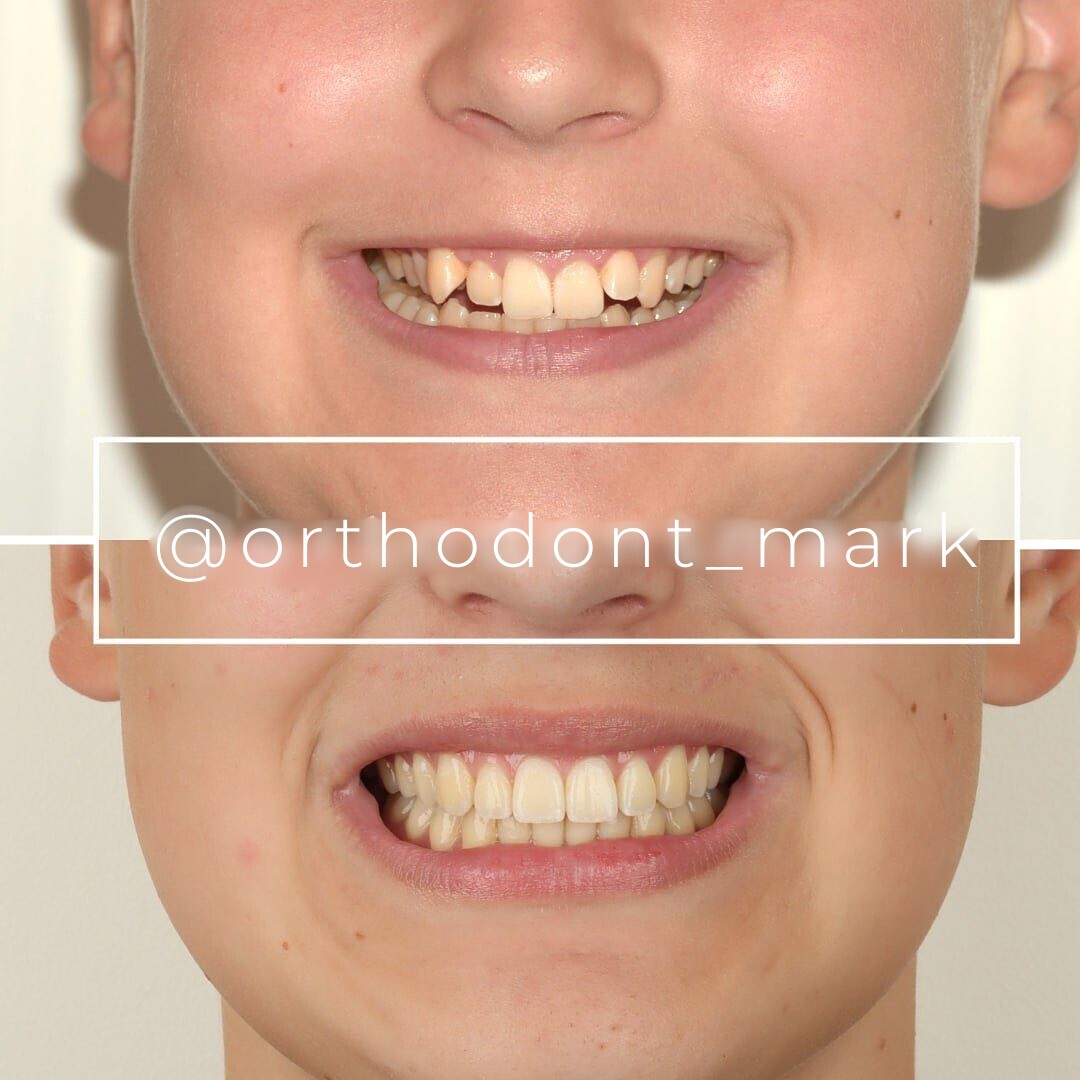
Initial situation
- Narrowing of the maxillary and mandibular bases
- Supraposition of the maxillary canines
- Displacement of the smile midline
- Displacement of the maxillary lateral incisors
- Crowding
- Partial crossbite
- Lack of interlocking in the canine region
The decision
Aligner therapy was selected to address the combined presentation of arch narrowing, maxillary canine supraposition, midline displacement, crowding, and partial crossbite. The approach targeted correction of tooth position and arch form in a single coordinated sequence.
A narrow, crowded arch with canine supraposition can be corrected with aligners alone when diagnosis and mechanics are aligned.
The result
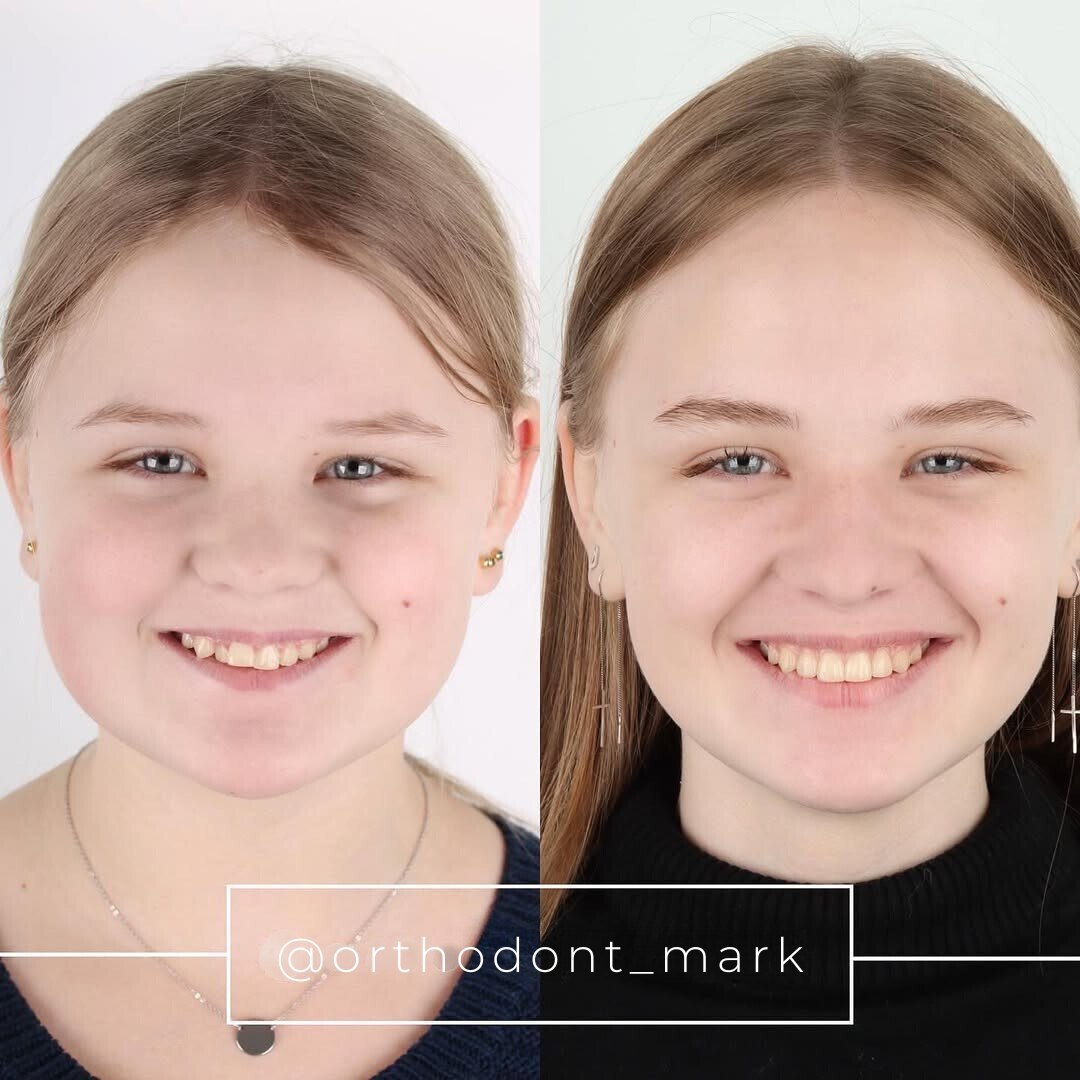
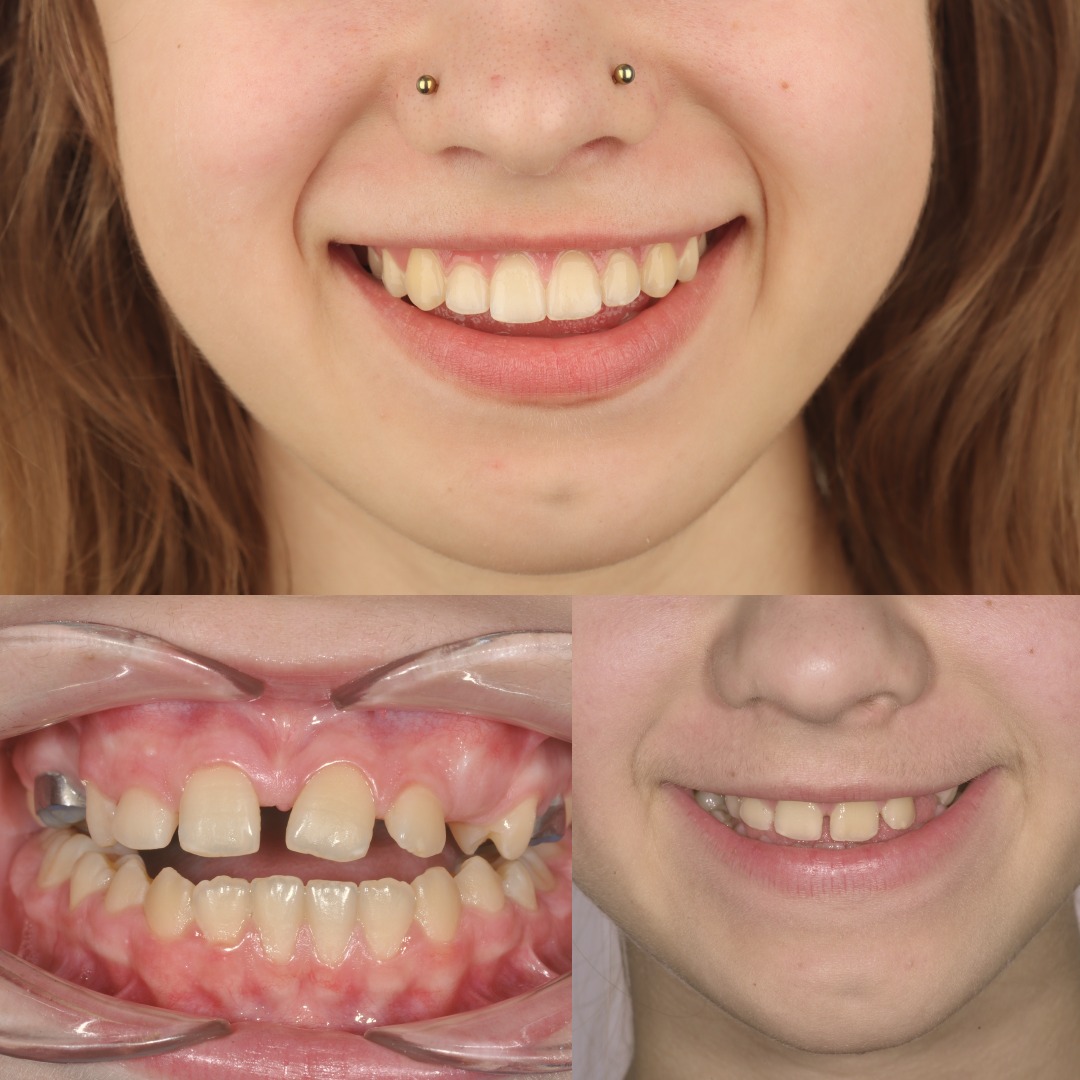
The narrowing of the maxillary and mandibular bases was resolved, along with the maxillary canine supraposition and midline displacement. Crowding and partial crossbite were corrected, and normal interlocking was established in the canine region, producing an even, symmetrical smile.
This case illustrates that a multi-component malocclusion combining transverse constriction, crowding, and canine positioning can be corrected within a single aligner-based treatment sequence.
About skeletal expansion & MARPE
Narrow maxillary and mandibular bases combined with canine supraposition and midline displacement highlight the importance of evaluating transverse dimension alongside dental alignment before treatment planning. In cases like this, clinicians typically assess arch width, canine position, and midline coordination as part of a staged diagnostic workup, since transverse discrepancies can influence both esthetic outcomes and functional occlusion. Recognizing these interactions early supports more predictable, non-invasive correction strategies.
Questions clinicians ask
What was the initial diagnosis in this case?
The patient presented with narrowing of the maxillary and mandibular bases, maxillary canine supraposition, midline displacement, crowding, and partial crossbite with a lack of canine interlocking.
How was the malocclusion treated?
The case was managed with aligner therapy targeting arch form, tooth position, and midline correction.
What does this case demonstrate for orthodontic diagnosis?
It shows that multiple transverse and dental alignment problems can be assessed and addressed together as part of a coordinated treatment plan.
Learn the decision-making behind cases like this
Get Dr. Mark Radzhabov's free guide to skeletal-expansion appliances — which appliance to choose at which age — plus a free introductory MARPE lesson.
Get the Free Guide →More clinical cases
Original case shared by Dr. Mark Radzhabov on Instagram @orthodont_mark · Published for professional education.