
MARPE staff roles workflow
without blurred accountability
for records, teaching, and monitoring
Define reproducible staff tasks while preserving orthodontist control of diagnosis, activation changes, and complication management.
TL;DR MARPE staff roles workflow assigns records preparation, patient teaching, and observation without transferring diagnosis or treatment decisions. The orthodontist interprets imaging, approves appliance design, determines activation changes, and evaluates complications. Staff can make each visit reproducible by documenting resistance, diastema timing, discomfort, hygiene concerns, appliance damage, and TAD stability for prompt clinician review.
A patient returns after activation reporting incisor pressure, while the assistant notices a newly visible diastema and uncertainty about screw resistance. That moment tests whether the MARPE staff roles workflow is clear or merely assumed. Dr. Mark Radzhabov at ortodontmark.com frames delegation around repeatable records, precise instruction, and escalation to the orthodontist before protocol decisions drift. Clinicians should read this guide to define who prepares information, who teaches mechanics, and who owns the clinical judgment at each checkpoint.
Where does delegated
MARPE support
end and orthodontic judgment begin?
MARPE staff roles workflow is a clinician-led system for delegating records, activation teaching, and monitoring while retaining diagnostic and treatment decisions with the orthodontist. Residents or assistants can prepare presentations, calculations, and materials in Dr. Radzhabov’s diagnostic process. The doctor processes that information and communicates directly about treatment. This division is especially important when records reveal a finding that could alter appliance selection or activation. The orthodontist should retain responsibility for reviewing the health history, facial and intraoral examination, imaging choice, suture assessment, appliance design, TAD site, and any change to the loading plan. Scope-of-practice requirements remain jurisdiction-specific. The office protocol should never imply that a delegated task authorizes diagnosis or independent treatment direction.
Which records make
activation follow-up
clinically actionable?
A skeletal expansion records workflow should capture the patient’s stated concern, health history, chronic conditions, ENT history, medications, and prior anesthesia experience before treatment planning. Dr. Radzhabov also uses visual and intraoral examination findings, teeth and soft-tissue status, photographs, models, and indicated imaging. The delegated record is not a conclusion. It is a structured handoff: whether the patient reports pain, where it is felt, when a diastema became visible, how difficult activation feels, whether hygiene is manageable, and whether any TAD or appliance component appears mobile or damaged. Chun et al. (2022) allocated 40 patients between RPE and MARPE groups, with 20 patients in each group. Their low-dose CBCT sequence was obtained before treatment, immediately after expansion, and after a 3-month consolidation period following 35 turns. That structure supports the practical value of time-stamped records rather than retrospective recollection.
How should staff deliver
activation instruction
without changing the prescription?
The orthodontist prescribes the appliance-specific activation schedule. Staff can demonstrate the key, confirm that the patient or caregiver can repeat the technique, and provide the written instruction already approved by the clinician. Hyrex, MSE, and other screws differ in pitch, so a generic turning script is unsafe. In Dr. Radzhabov’s Benefit protocol, the standard starting instruction is a quarter-turn once daily, with escalation only when the clinician’s stated response criterion is met. A diastema is treated as a meaningful clinical sign, and the patient should be warned about it before activation begins. Staff should not improvise around resistance. Their task is to document the report and alert the orthodontist. Dr. Radzhabov pauses expansion when resistance is strong so bone tissue and TADs can adjust, then reassesses the course rather than forcing progress.
Which monitoring signals should
trigger clinician review
during expansion?
Monitoring is not merely asking whether the patient completed turns. The chairside team should record the ease of screw activation, incisor-area discomfort, diastema appearance, mucosal condition, hygiene barriers, appliance integrity, and TAD stability. These observations give the orthodontist the information needed to continue, pause, or revise the plan. Overfrequent activation of orthodontic expanders is described as a cause of mucosal lesions by Bud et al. (2023). That finding supports a clear escalation pathway when soft tissue becomes irritated rather than a staff-led decision to compensate with additional or altered activation. At follow-up, Dr. Radzhabov checks TAD stability and reminds the patient about hygiene, including irrigator use. If a TAD becomes mobile, inflammation appears, or the appliance deforms, the issue belongs in an urgent clinician review queue rather than routine administrative follow-up.
How can a team audit
MARPE handoffs
before errors reach the chair?
Use a single checklist across consultation, TAD placement, appliance delivery, activation follow-up, and retention. It should identify the clinician who approved the plan, the staff member who delivered instruction, the exact patient report, and the escalation outcome. This makes responsibility visible without manufacturing extra clinical steps. Device mechanics matter to delegation. Camporesi et al. (2013) found that tested 10 mm screws produced 0.8 mm per full activation turn through 4 activations of 0.2 mm. The team must therefore confirm the appliance model and prescribed turn unit rather than assuming that every expander behaves identically. After the target width is reached, Dr. Radzhabov maintains the appliance while adaptation proceeds and continues feedback and stability monitoring. A consistent handoff protects against the common operational failure: treating retention as an administrative endpoint instead of an active clinical phase.
Free Clinical Guide
Which Expansion Appliance at Which Age?
Get Dr. Mark Radzhabov's guide to skeletal-expansion appliances — indications, pros & cons, and how to choose by patient age. Free to your inbox.
Prefer video? Watch the free demo lesson on MARPE appliance types, features and trade-offs.
Documented outcomes
Clinical cases from Dr. Mark Radzhabov's practice
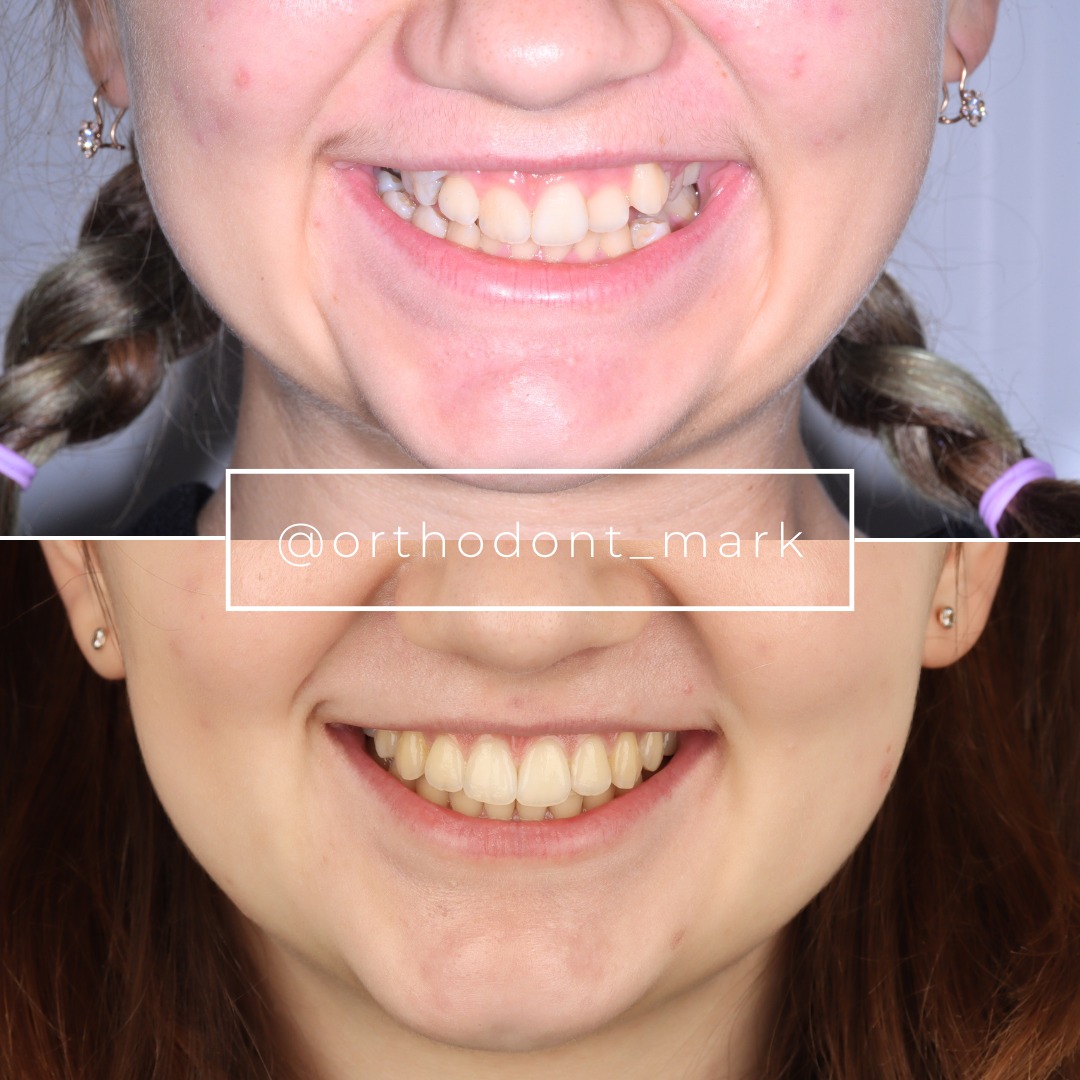
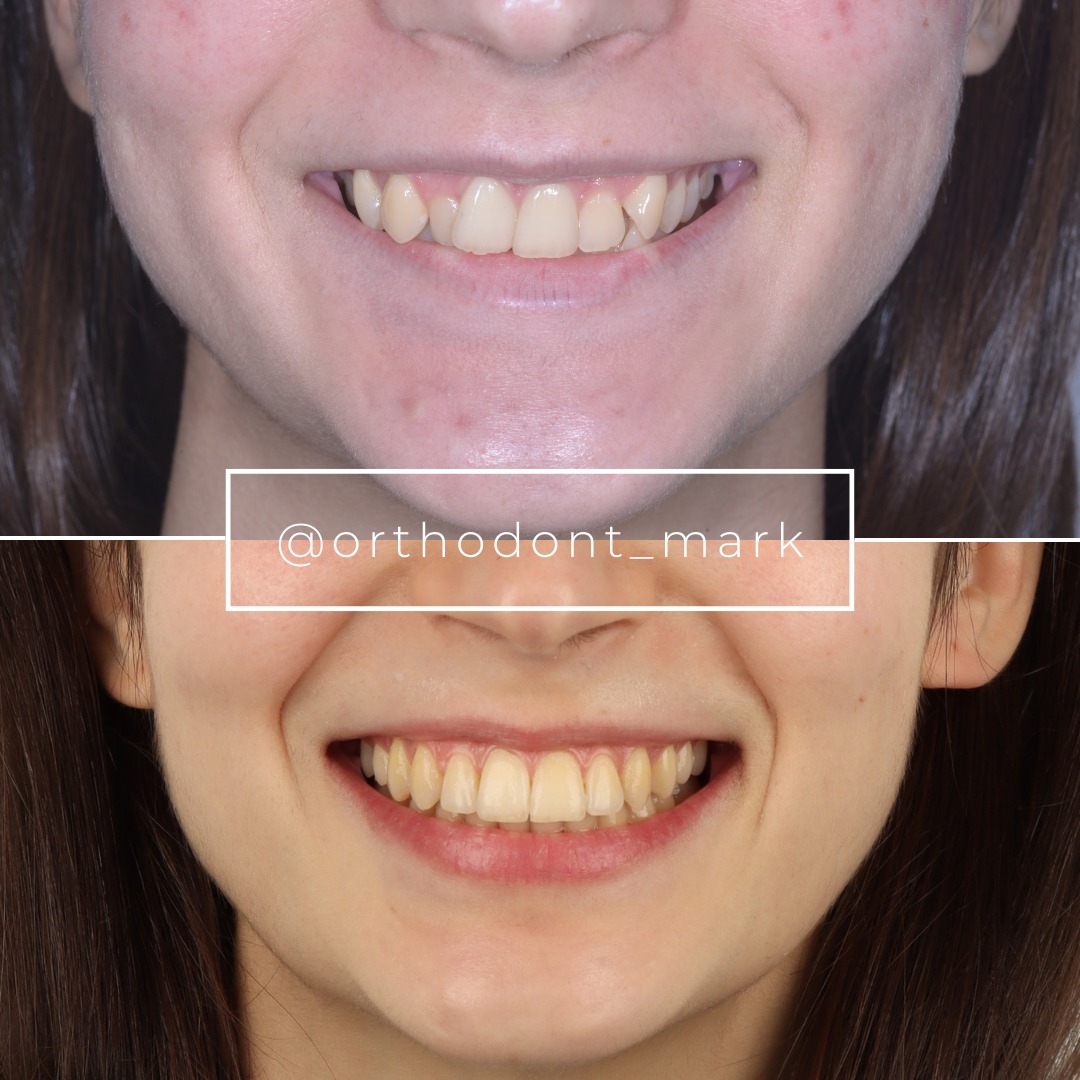
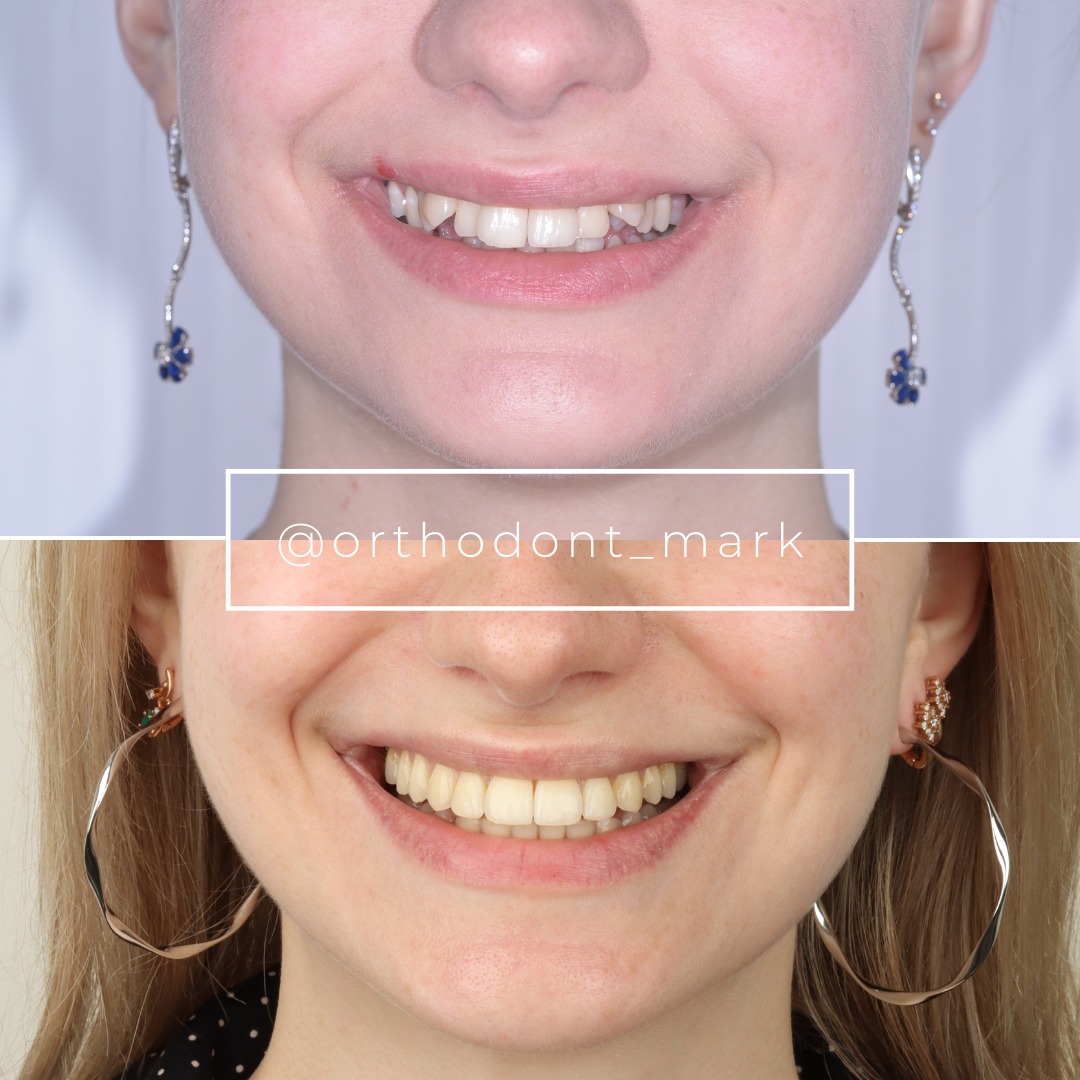
Learn the full MARPE protocol from Dr. Mark Radzhabov
Fundamental course covering CBCT patient selection, miniscrew planning, activation protocols, and 60+ clinical cases. Choose the access level that fits your practice.
Essentials of rapid palatal expansion for practicing orthodontists.
- Core RPE concepts and biomechanics
- 6 structured video lessons
- Clinical decision checklists
- Lifetime access to recordings
Deep-dive into MARPE protocol, diagnostics, and clinical execution.
- 6 modules covering MARPE from A to Z
- CBCT case selection walkthroughs
- Miniscrew placement and activation
- 60+ annotated clinical cases
- Direct Q&A with Dr. Mark Radzhabov
5-element medical consultation framework for dentists and orthodontists.
- Trust-building consultation protocol
- 5 lesson modules
- Templates for treatment plan delivery
- Works with any clinical specialty
Clinical FAQ
What MARPE tasks can an orthodontic assistant perform within scope of practice?
An orthodontic assistant can prepare records, reinforce clinician-approved activation teaching, collect symptom reports, and document observations when permitted locally. The orthodontist retains diagnosis, imaging interpretation, appliance selection, activation changes, and complication decisions.
How should staff provide palatal expander activation instructions to patients?
Staff should demonstrate the clinician-prescribed key motion on the actual appliance, use teach-back, give written instructions, and document questions. They should escalate strong resistance, pain, mobility, inflammation, or breakage rather than modifying the schedule.
Which records should be delegated during a MARPE consultation intake workflow?
Delegable preparation includes health-history materials, photographs, scans or impressions, model calculations, and presentation materials. The orthodontist reviews the information, performs the diagnostic interpretation, and decides whether skeletal expansion is indicated.
How can an orthodontic team monitor MARPE expansion safely and consistently?
Use a charted checklist for screw resistance, discomfort, diastema timing, mucosal condition, hygiene, appliance integrity, and TAD stability. Route any concerning change to the orthodontist for assessment before further protocol decisions.
What is the assistant role in MARPE activation and follow-up appointments?
The assistant supports appliance-specific teaching, teach-back, record collection, hygiene reinforcement, and clinician-directed follow-up. The assistant does not independently prescribe activation, judge expansion success, or decide whether resistance warrants a protocol change.
How should MSE clinical team coordination differ from BENEfit coordination?
The team must follow the manufacturer-specific installation sequence. Dr. Radzhabov describes TAD placement before appliance delivery with BENEfit, whereas MSE is placed first and TADs are inserted through the appliance.
Which observations require escalation in a MARPE monitoring protocol?
Escalate strong activation resistance, persistent pain, mucosal inflammation, TAD mobility, appliance deformation, breakage, or uncertainty about the prescribed turns. These findings may require orthodontist-directed reassessment rather than routine continuation.
Can staff explain a diastema during skeletal expansion?
Staff can reinforce the orthodontist’s pre-approved explanation that a diastema may appear during expansion and record when it appeared. They should avoid presenting it as an independent diagnosis or guarantee of successful skeletal response.
How should a practice document delegating expansion tasks?
Document the orthodontist-approved prescription, staff member delivering instruction, teach-back completion, patient-reported symptoms, observed appliance and tissue findings, and the clinician’s response to escalated concerns.
Why does a palatal expander activation instructions sheet need appliance identification?
Different expanders have different screw pitches and activation behavior. Camporesi et al. (2013) showed that tested screws produced appliance-specific expansion per activation, so an instruction sheet must identify the actual device and clinician-prescribed turn schedule.
A reliable MARPE workflow does not turn staff into independent prescribers. It gives the orthodontist cleaner information and the patient consistent instruction. Dr. Mark Radzhabov’s protocol places diagnosis, appliance selection, activation adjustment, and complication decisions with the treating clinician. Use a case review or structured MARPE training to rehearse the handoffs before introducing them into daily scheduling. Key sources: Chun, 2022, BMC Oral Health, doi:10.1186/s12903–022-02138-w. Bud, 2023, Biomedicines, doi:10.3390/biomedicines11123246.