
MARPE Case Review Referral Criteria:
Red-Flag
Documentation for Borderline Expansion Cases
A peer-reviewed framework for identifying when borderline MARPE cases require documented referral — before appliance placement, not after a complication.
TL;DR MARPE case review referral criteria give clinicians a structured framework for flagging borderline expansion decisions before they become complications. Suture maturation, appliance force mechanics, and age-dependent expansion patterns each contribute distinct red flags. When documented criteria exceed clinical comfort, formal peer review protects both the patient and the practitioner.
Borderline MARPE cases occupy a clinically uncomfortable middle ground — suture staging is ambiguous, skeletal age conflicts with chronological age, and the consequences of an underpowered or misdirected expansion force reach far beyond the palate. At ortodontmark.com, Dr. Mark Radzhabov has built a structured approach to MARPE case review referral criteria specifically to address this decision gap, pulling from peer-reviewed mechanical testing, prospective trials, and age-stratified imaging studies. This article gives practicing orthodontists a documented red-flag checklist they can apply before committing a borderline case to an expansion protocol — or routing it toward surgical consultation.
Why Borderline MARPE Cases Demand Documented
Referral Criteria
Rather Than Clinical Intuition Alone
A MARPE case review referral criterion is a documented clinical or radiographic threshold that, when met or exceeded in a borderline expansion candidate, obligates formal peer consultation before treatment proceeds. The challenge is that “borderline” is not a diagnosis — it is a convergence of ambiguous signals that individually might not trigger concern but collectively indicate elevated risk. Without written criteria, referral decisions default to intuition, which is neither auditable nor transferable to associates or residents. The foundational problem is that expansion appliances deliver substantial mechanical forces that the suture either dissipates productively or resists destructively, depending on maturation stage. Camporesi et al. (2013) measured forces exceeding 20 kg from Hyrax and A2620 screws, while Palatal Split screws generated approximately 16 kg. These are not trivial loads. When suture biology is uncertain, delivering peak force without documented justification represents an undisclosed risk — precisely the scenario that peer review is designed to intercept. Building a referral trigger list requires understanding what makes a case genuinely borderline versus simply complex. A complex case has a clear path. A borderline case has two plausible paths with meaningfully different risk profiles. The referral criterion framework asks clinicians to specify, in advance, which combination of findings crosses into the second category and therefore warrants external input before the activation sequence begins.
What Separation Rates Reveal About
Expansion Case
Selection Pressure
Referral criteria only hold clinical weight when anchored to outcomes that distinguish successful from failed expansion attempts. Chun et al. (2022) reported midpalatal suture separation in 90% of RPE cases and 95% of MARPE cases in a prospective randomized clinical trial. That gap — while statistically meaningful at p = 0.05 — also confirms that a non-trivial proportion of cases, regardless of appliance type, will not achieve full suture separation. Those are the cases that referral criteria are designed to identify prospectively. The same prospective randomized clinical trial by Chun et al. (2022) found that MARPE produced significantly less buccal displacement of anchor teeth compared to RPE, a finding with direct implications for case selection. When a patient presents with thin buccal bone, compromised periodontium on anchor teeth, or a history of previous tooth-borne expansion, the risk profile shifts toward the minority of cases where buccal displacement becomes clinically significant. Documenting this risk before appliance placement — and routing it for review — is precisely what a red-flag criterion framework enables. For residents and clinicians early in their MARPE experience, these separation and displacement figures establish a useful mental calibration: the protocol works at high rates in well-selected cases, but the selection step itself is where errors accumulate. A borderline MARPE expansion referral should be triggered whenever the clinician cannot confidently place the patient within the profile that produced the favorable outcome data.
How Age-Dependent Expansion Patterns
Generate
Distinct Red Flags at Each Developmental Stage
Age-stratified expansion behavior provides some of the most actionable inputs for borderline MARPE case documentation. Kinzinger et al. (2022) studied morphological changes during RME across three groups: under 10 years, 10–12 years, and 12 years and older, each with 20 patients, using CBCT and dental cast analysis. The data showed that palatal width expansion pattern shifts with age — younger patients exhibit greater posterior expansion, while older adolescents demonstrate proportionally greater anterior expansion. This anatomical divergence directly affects where suture stress concentrates and where the risk of asymmetric opening or cortical resistance is highest. For a clinician building referral criteria, this age-stratified pattern means that a patient presenting at the boundary between two developmental windows — the transition from late mixed dentition into early adolescence, for example — warrants explicit documentation of which expansion pattern is expected and whether the appliance design is calibrated for it. Kinzinger et al. (2022) make clear that expansion mechanics are not uniform across age groups, so assuming a single protocol applies across the developmental spectrum is itself a red flag worthy of peer review. Practical documentation should therefore include the patient's estimated skeletal maturation stage alongside chronological age, the expected anterior-versus-posterior expansion gradient, and an explicit notation of whether those two variables are concordant. Discordance — an older adolescent skeletal profile in a younger chronological patient, or vice versa — qualifies as a borderline condition requiring formal peer consultation before proceeding. Clinicians seeking a systematic approach to structured MARPE training and protocol development will find that building these criteria into case intake workflows dramatically reduces post-hoc complications.
Matching Expansion Screw Mechanics to
Borderline
Palatal Expansion Case Profiles
Appliance mechanics represent an underutilized input in borderline MARPE referral documentation. Standard expansion screws measure 10 mm with each full turn delivering 0.8 mm of expansion via 4 activations of 0.2 mm each, as characterized by Camporesi et al. (2013). This mechanical precision matters when counseling a borderline case: an activation schedule that is appropriate for a pliable, actively maturing suture may be excessive for a patient whose suture staging is ambiguous. The screw's mechanical output does not adjust to biological resistance — the clinician must make that judgment prospectively. Camporesi et al. (2013) subjected each expansion screw type to 10 repetitions of mechanical testing, establishing that measured force output is reproducible and device-specific rather than variable by technique. This means that if a screw generating forces exceeding 20 kg is selected for a case where suture resistance is uncertain, the force delivery cannot be moderated through activation rate alone — the device itself determines the upper bound. Documenting appliance selection rationale in the context of estimated suture resistance is therefore a core component of any red-flag referral criterion set. For miniscrew-assisted expansion specifically, the force distribution advantage over tooth-borne designs comes with a prerequisite: the palatal bone quality and insertion site must support the anchor load. When bone density at the planned insertion sites is not confirmed by CBCT, or when the clinician is uncertain whether the available cortical thickness will maintain stable miniscrew torque, those conditions constitute documented referral triggers. Submitting a borderline expansion case for consultation before screw placement preserves the option for protocol adjustment rather than reactive management after a complication has developed.
Free Clinical Guide
Which Expansion Appliance at Which Age?
Get Dr. Mark Radzhabov's guide to skeletal-expansion appliances — indications, pros & cons, and how to choose by patient age. Free to your inbox.
Prefer video? Watch the free demo lesson on MARPE appliance types, features and trade-offs.
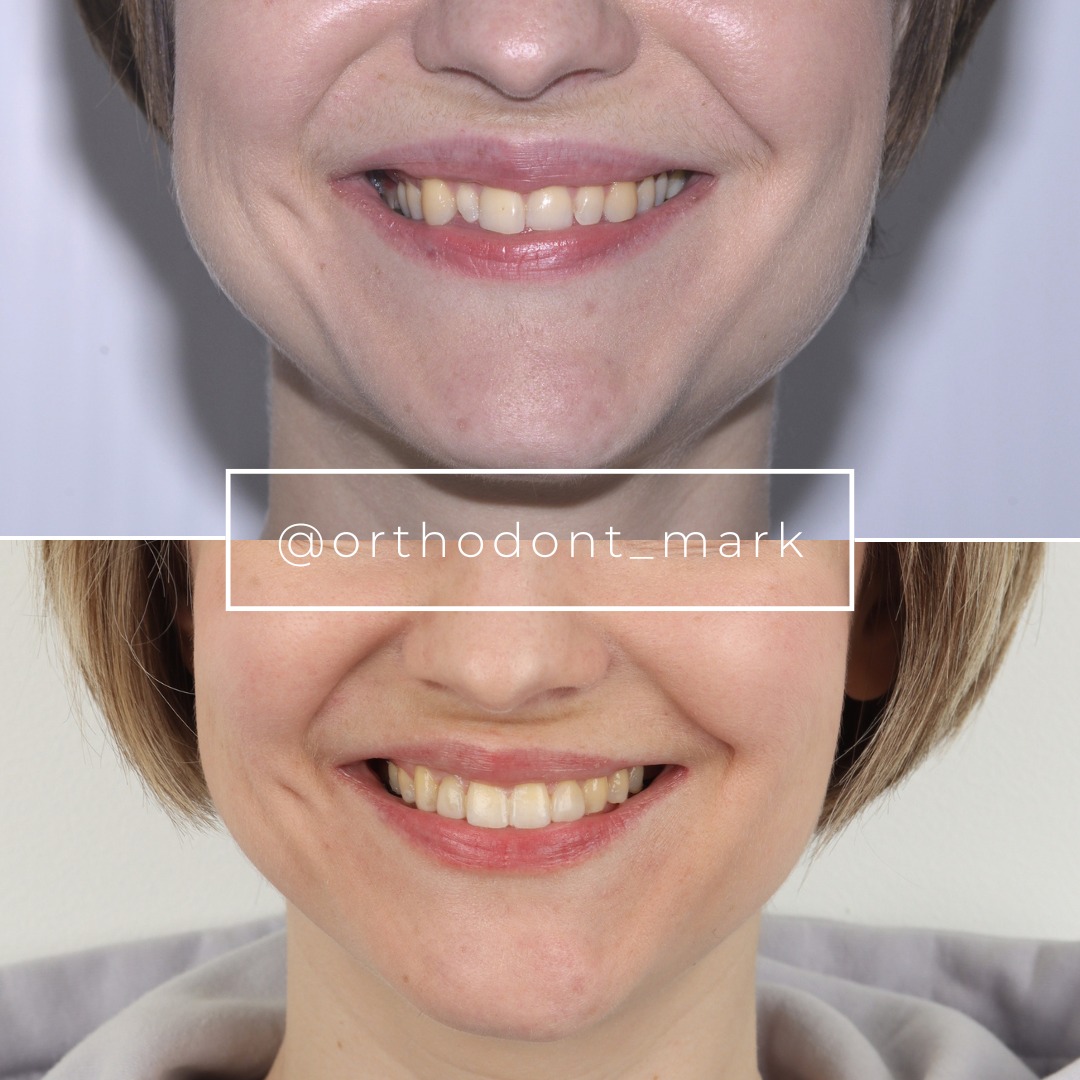
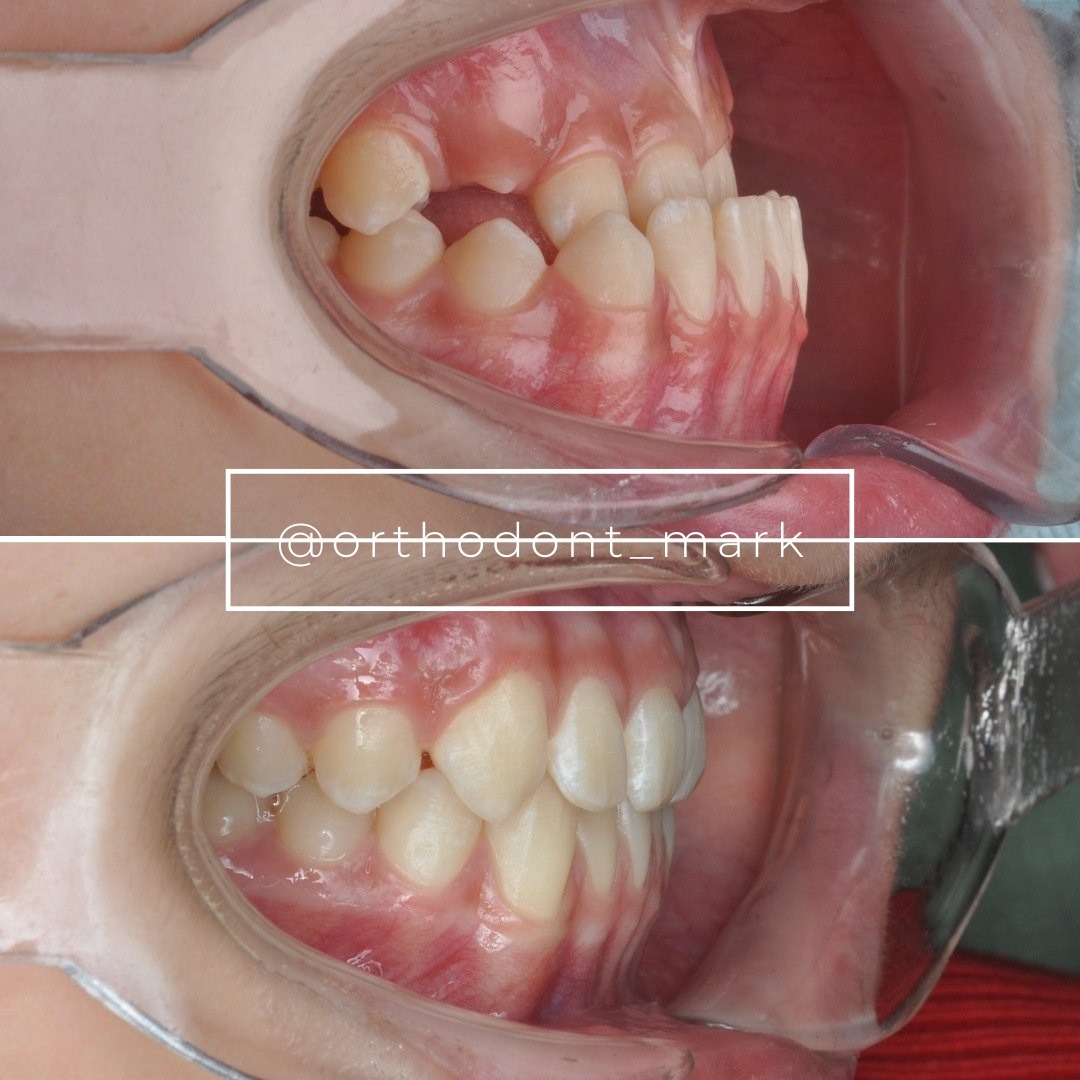
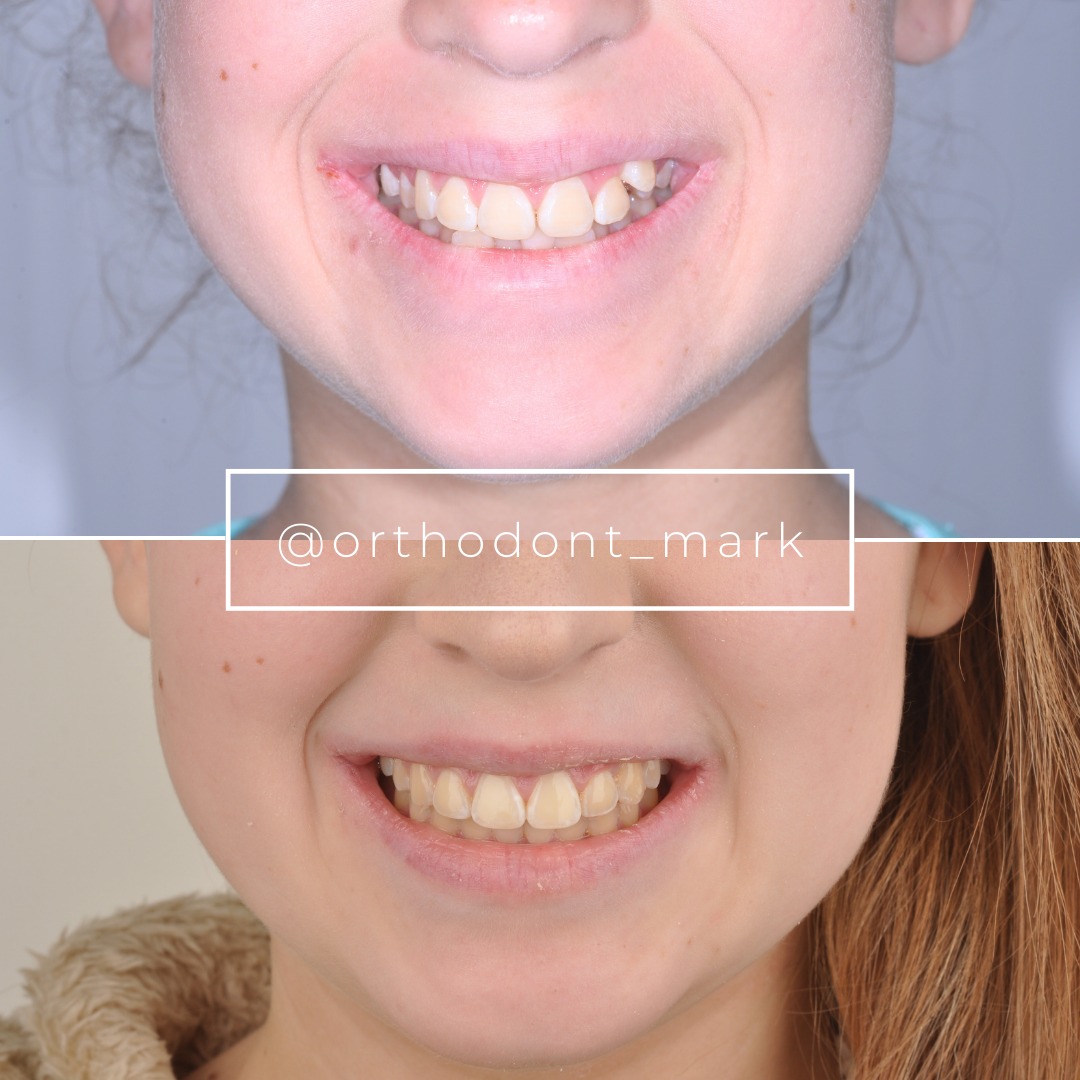
Documented outcomes
Clinical cases from Dr. Mark Radzhabov's practice
Learn the full MARPE protocol from Dr. Mark Radzhabov
Fundamental course covering CBCT patient selection, miniscrew planning, activation protocols, and 60+ clinical cases. Choose the access level that fits your practice.
Essentials of rapid palatal expansion for practicing orthodontists.
- Core RPE concepts and biomechanics
- 6 structured video lessons
- Clinical decision checklists
- Lifetime access to recordings
Deep-dive into MARPE protocol, diagnostics, and clinical execution.
- 6 modules covering MARPE from A to Z
- CBCT case selection walkthroughs
- Miniscrew placement and activation
- 60+ annotated clinical cases
- Direct Q&A with Dr. Mark Radzhabov
5-element medical consultation framework for dentists and orthodontists.
- Trust-building consultation protocol
- 5 lesson modules
- Templates for treatment plan delivery
- Works with any clinical specialty
Clinical FAQ
What are the primary MARPE case review referral criteria a clinician should document before treatment?
Core referral criteria include unresolved suture maturation staging, chronological–skeletal age mismatch, uncertain insertion site bone density, and appliance force output that is disproportionate to estimated suture resistance. Each criterion should be recorded in the case file before appliance placement, not retrospectively.
How does MARPE compare to RPE in suture separation rates, and does that difference affect referral thresholds?
Chun et al. (2022) reported suture separation in 95% of MARPE cases and 90% of RPE cases. The difference narrows in borderline suture staging scenarios, where the mechanical advantage of bone-borne force delivery matters most — making precise case selection, and timely referral when uncertain, especially important.
At what point does buccal anchor tooth displacement become a referral-level concern in expansion planning?
Chun et al. (2022) found significantly less buccal tooth displacement with MARPE versus RPE. When a patient presents with thin buccal bone, periodontal compromise on anchor teeth, or prior failed tooth-borne expansion, the displacement risk shifts enough to warrant documented peer review before appliance selection is finalized.
How should age-dependent expansion patterns factor into borderline MARPE referral documentation?
Kinzinger et al. (2022) showed that younger patients expand more posteriorly while older adolescents expand more anteriorly. When a patient's skeletal and chronological age suggest different expansion gradients, document the discordance explicitly — it qualifies as a referral trigger because the expected stress distribution is genuinely uncertain.
What appliance force data should be included in a borderline expansion case referral document?
Camporesi et al. (2013) characterized Hyrax and A2620 screws generating forces exceeding 20 kg, with Palatal Split designs producing approximately 16 kg. Record the specific screw selected, its expected force output, and the clinical rationale for why that output is appropriate for the patient's estimated suture resistance.
How do standard expansion screw mechanics translate into activation protocol decisions in borderline cases?
Camporesi et al. (2013) established that a standard 10 mm expansion screw delivers 0.8 mm per full turn through 4 activations of 0.2 mm each. In borderline cases, document why the intended activation frequency is matched to suture pliability — slowing the schedule does not change the per-activation mechanical load delivered to the suture.
When should a resident or early-career orthodontist route a MARPE case for peer review versus proceeding independently?
Any case where the clinician cannot confidently assign a suture maturation stage, predict the anterior-posterior expansion gradient, or justify appliance force selection against bone density data should be escalated. The peer review threshold should be lower early in a MARPE learning pathway, not higher.
What documentation format is most defensible when recording red-flag expansion referral criteria?
A structured checklist format that records suture staging findings, skeletal versus chronological age, planned appliance and its published force range, insertion site bone density assessment, and the name of the reviewing clinician. Each field should be completed before the appointment where the appliance is placed.
Can miniscrew insertion site uncertainty alone justify MARPE referral, even if suture staging appears favorable?
Yes. If CBCT does not confirm adequate cortical bone thickness at planned miniscrew sites, anchor stability is uncertain regardless of suture biology. An unstable anchor alters force distribution across the palate, making the suture assessment effectively moot. Document and escalate independently of suture staging.
How do expansion force ranges from mechanical testing inform MSE case consultation decisions?
Camporesi et al. (2013) measured a force range of 7.54 to 15.8 kg across tested appliance types. When planning MSE in a borderline candidate, mapping the specific device's output against that range and against the patient's estimated suture resistance provides quantitative grounds for consultation rather than relying on subjective clinical impression alone.
Documented referral criteria are not a hedge against clinical confidence — they are the infrastructure of defensible, reproducible case selection. When appliance force data, suture morphology, and age-stratified expansion patterns converge on ambiguity, the evidence-based response is structured peer review rather than protocol override. Dr. Mark Radzhabov encourages clinicians to treat every borderline MARPE case as an opportunity to sharpen their diagnostic reasoning. Submit a case for a structured MARPE case review consultation or explore the MARPE clinical training curriculum at ortodontmark.com to build the documentation habits that distinguish excellent outcomes from avoidable setbacks. Key sources: Chun et al., 2022, BMC Oral Health, doi:10.1186/s12903–022-02138-w. Camporesi et al., 2013, BioMedical Engineering OnLine. Kinzinger et al., 2022, Journal of Orofacial Orthodontics, doi:10.1007/s00056–022-00429-z.