
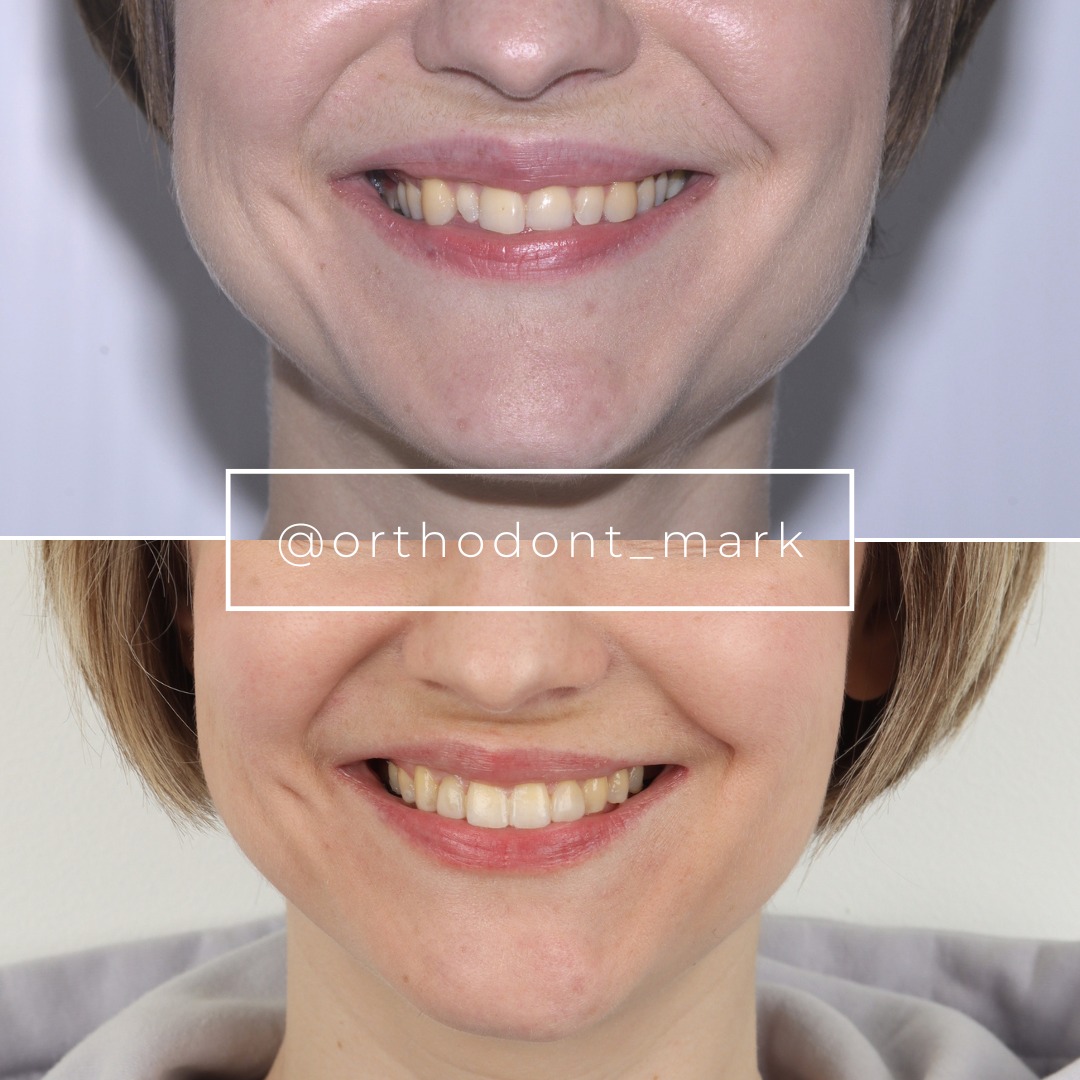
Initial situation
- Canine dystopia
- Marked mesialization of the teeth in the first segment, resulting from early loss of the fifth primary tooth
The primary tooth had been extracted during childhood well before its expected exfoliation time, which altered arch dynamics in that segment.
The decision
More than 3.5 mm of distalization was required to create adequate space for the canine. Treatment was carried out with the Damon bracket system in combination with a microimplant and VectorTAS mechanics, allowing controlled distal movement to recover the needed space. Total treatment duration was 26 months.
Significant, microimplant-anchored distalization can recover canine space without compromising the stability of the final result.
The result
Treatment achieved proper tooth alignment, functional occlusion, and an esthetically pleasing smile without compromising stability. Seven years after treatment completion, the result remains stable, and the patient is satisfied.
Microimplant-anchored distalization mechanics, such as VectorTAS, can reliably recover canine space lost to early primary tooth extraction, with results that hold up over years of follow-up.
About skeletal expansion & MARPE
Early loss of a primary tooth can quietly reshape arch dynamics well before a permanent canine ever erupts, producing mesialization and dystopia that are only fully appreciated later. In cases like this, clinicians typically assess how much space has been lost and whether it can be recovered through controlled distalization rather than extraction or substitution. Anchorage choice matters: microimplant-supported mechanics allow larger, more predictable tooth movements while limiting unwanted reciprocal effects on adjacent teeth.
Questions clinicians ask
What caused the canine dystopia in this case?
Early loss of a primary tooth, extracted well before its expected exfoliation time, led to mesialization of adjacent teeth and canine dystopia.
How was space recovered for the canine?
More than 3.5 mm of distalization was achieved using the Damon bracket system with a microimplant and VectorTAS mechanics.
How stable was the result over time?
The result remained stable seven years after treatment completion, with the patient satisfied with the outcome.
Learn the decision-making behind cases like this
Get Dr. Mark Radzhabov's free guide to skeletal-expansion appliances — which appliance to choose at which age — plus a free introductory MARPE lesson.
Get the Free Guide →More clinical cases
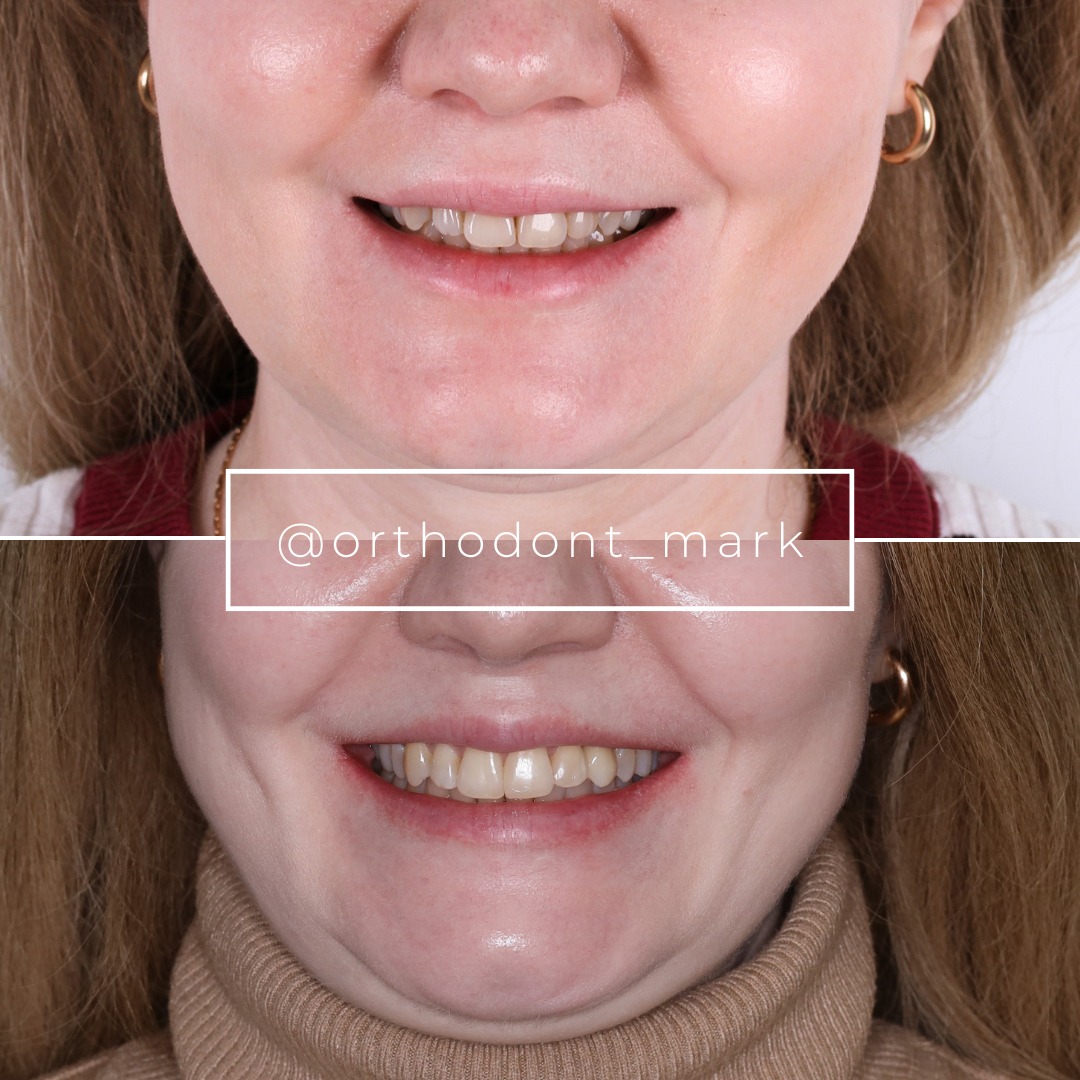
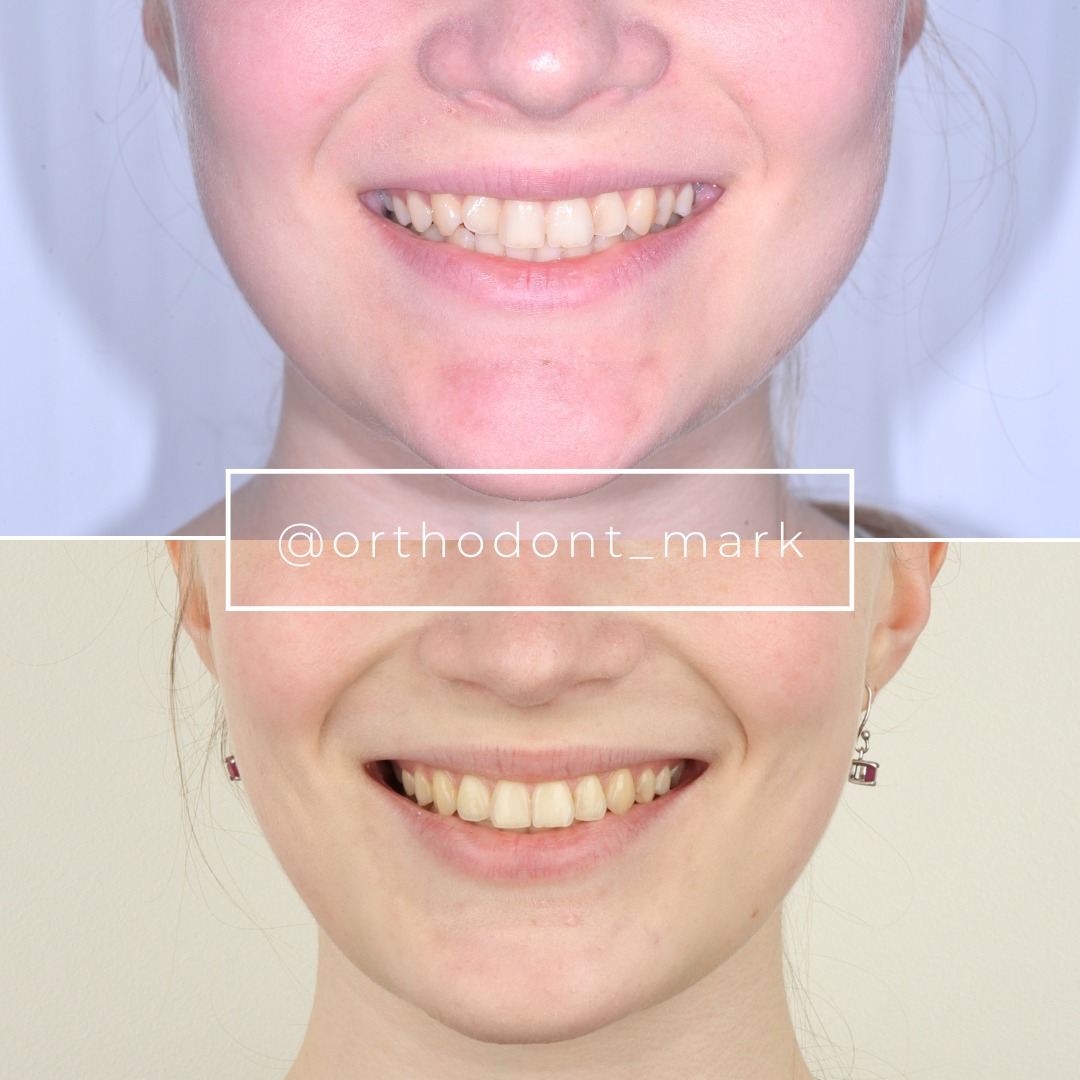
Original case shared by Dr. Mark Radzhabov on Instagram @orthodont_mark · Published for professional education.