
Initial situation
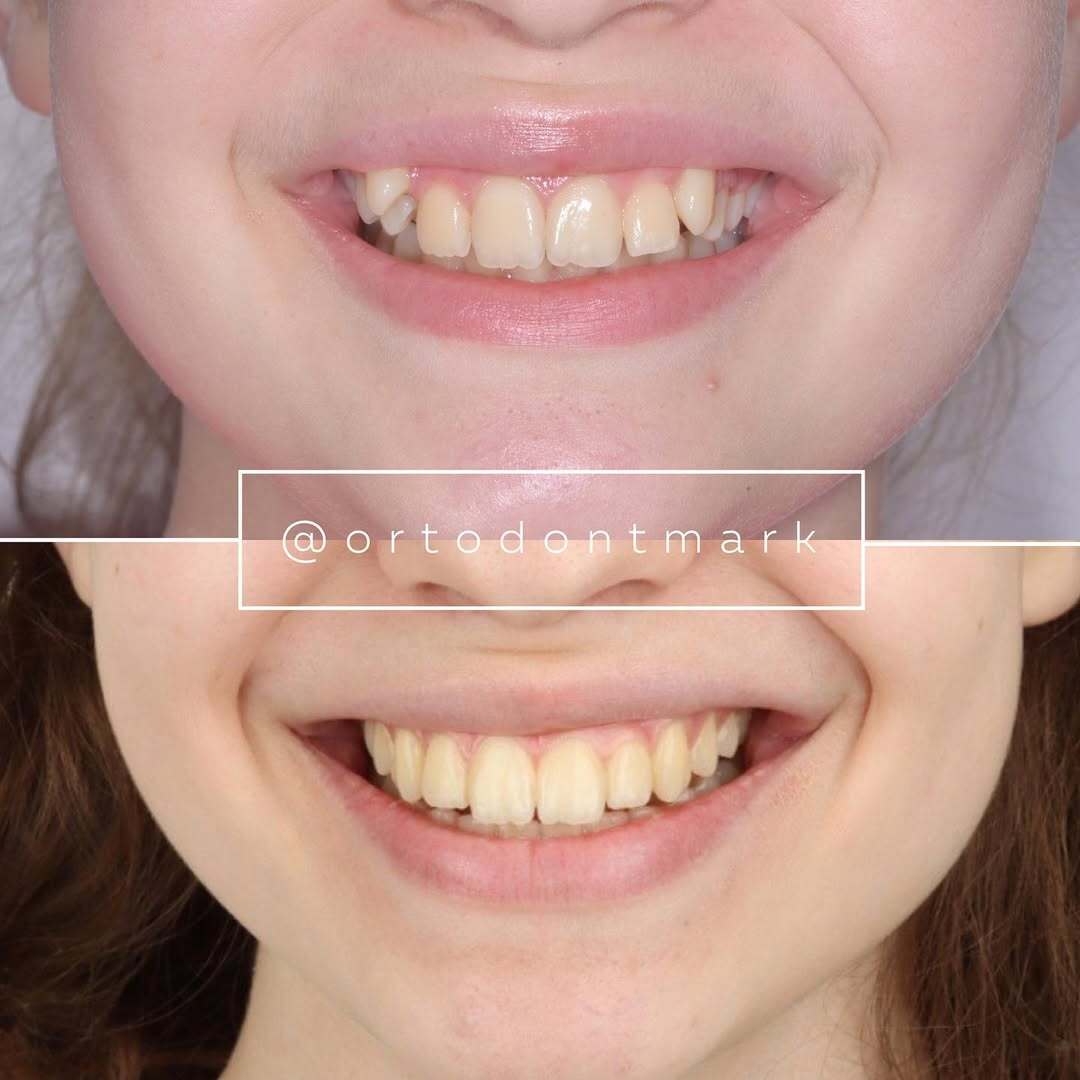
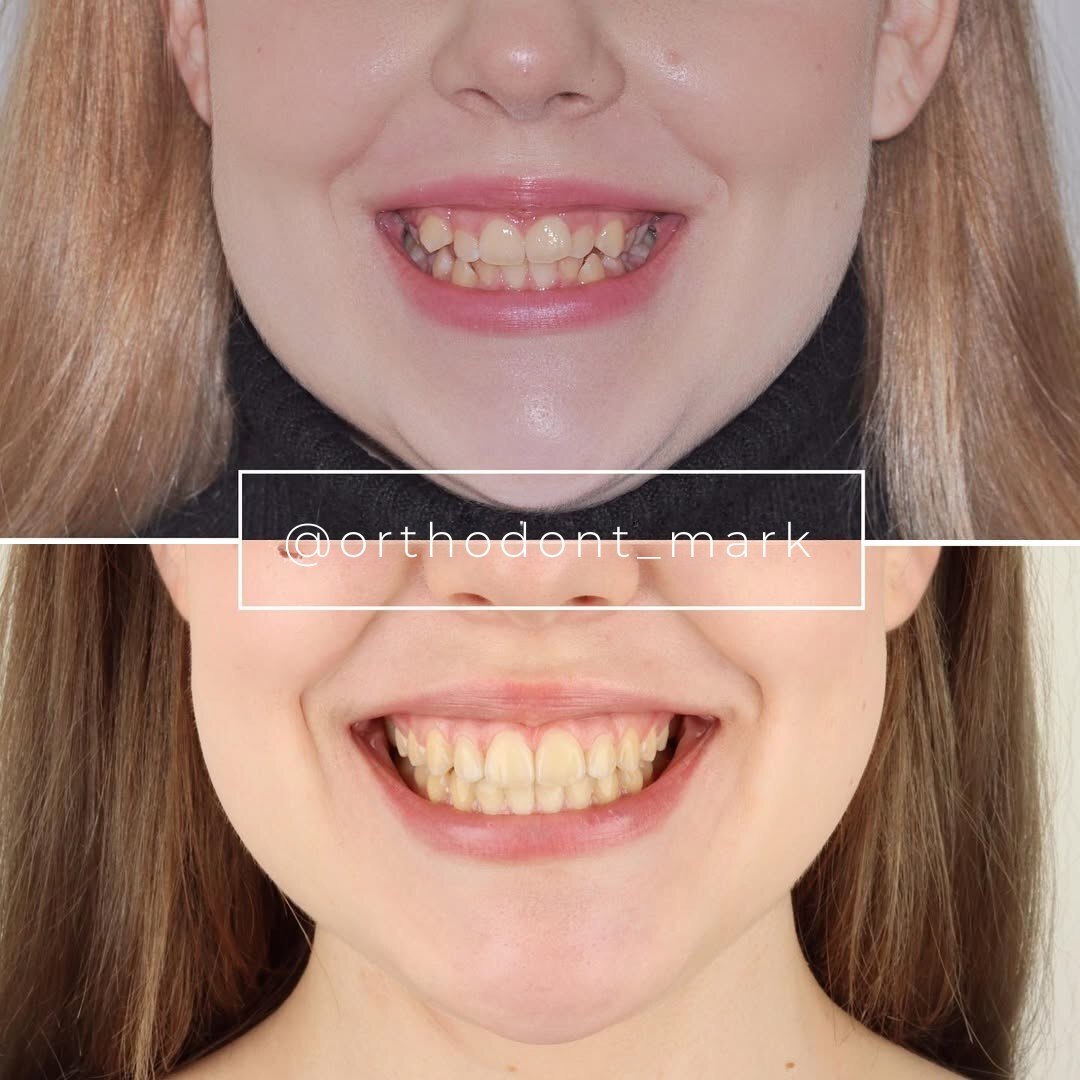
- Crowded teeth
- Distal bite, with the lower jaw shifted backward
- Excessive visibility of the canines, which the patient wanted corrected
Some patients prefer to retain visible canines as a feature, but in this case the patient specifically wanted the excessive canine visibility corrected.
The decision
The treatment plan addressed the crowding and the distal bite, correcting the position of the lower jaw relative to the upper arch while also addressing the patient's specific concern about canine visibility.
Patient preference regarding canine prominence should be discussed explicitly, since not every patient wants it minimized.
The result
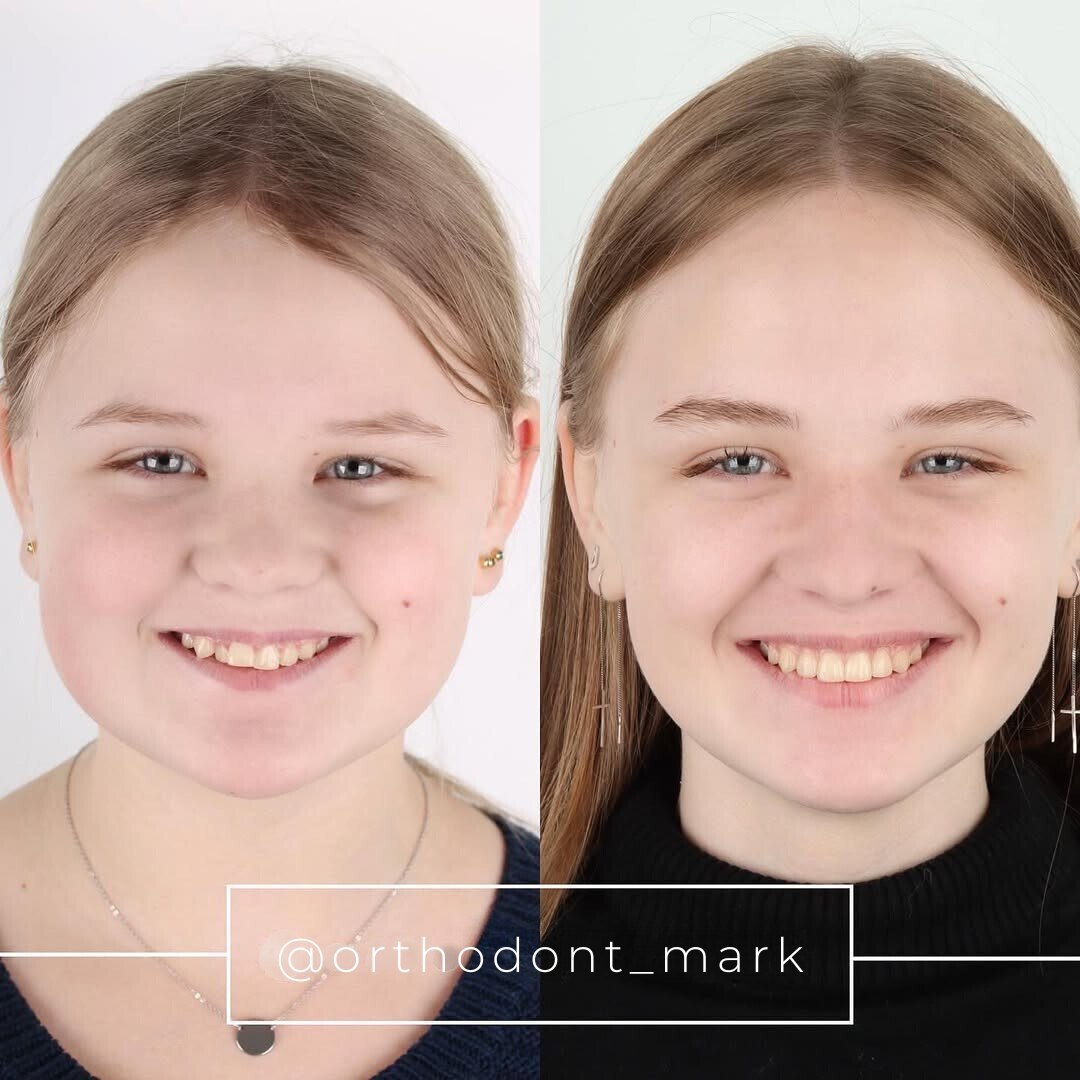
Over 25 months, the bite was corrected and the crowding was resolved, along with the canine visibility concern the patient had raised.
Distal bite and crowding can be addressed together, but clinicians should confirm patient preference on features like canine prominence before finalizing the plan.
About skeletal expansion & MARPE
A distal bite with a retruded lower jaw commonly accompanies crowding, since limited space and a posteriorly positioned mandible both restrict proper tooth alignment. Staged assessment of the sagittal relationship alongside arch space allows the bite and alignment to be corrected together. This case also highlights a planning nuance worth discussing with any patient: some clinicians and patients view pronounced canines as a desirable feature, so aesthetic preferences should be confirmed rather than assumed.
Questions clinicians ask
What is a distal bite?
A distal bite describes a bite relationship in which the lower jaw is positioned backward relative to the upper jaw, as seen in this patient's initial presentation.
Why does canine visibility matter in treatment planning?
Some patients prefer to keep visible canines as a feature, while others want it reduced, so this preference should be discussed with each patient individually.
How long did treatment take?
This case was completed in 25 months.
Learn the decision-making behind cases like this
Get Dr. Mark Radzhabov's free guide to skeletal-expansion appliances — which appliance to choose at which age — plus a free introductory MARPE lesson.
Get the Free Guide →More clinical cases
Original case shared by Dr. Mark Radzhabov on Instagram @orthodont_mark · Published for professional education.