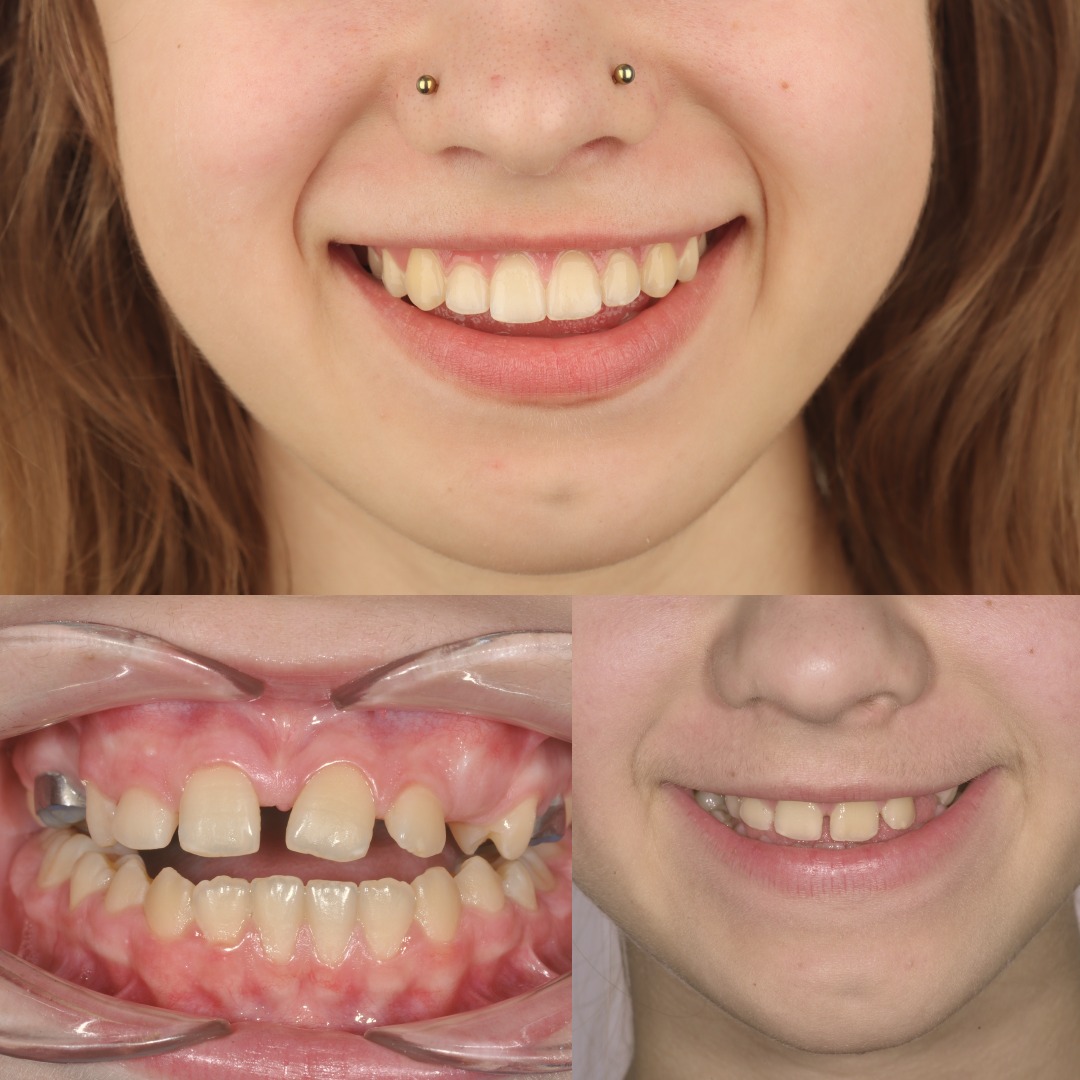
Initial situation
- Narrowing of the maxillary and mandibular bases
- Supraposition (upward displacement) of the maxillary right canine
- Displacement of the smile centerline
- Displacement of the maxillary lateral incisors
- Crowding
- Open bite and tooth misalignment
The decision
The case is shown here as a before/after outcome. The treatment plan followed standard staged assessment of the maxillary narrowing, canine supraposition, midline shift, and open bite described in the initial presentation.
Combined skeletal narrowing and dental displacement can be resolved together to reach a symmetrical, even smile.
The result
After treatment, the patient presented with an even and symmetrical smile.
Cases with combined maxillary and mandibular base narrowing alongside canine supraposition and open bite often require coordinated, multi-factor treatment planning.
About skeletal expansion & MARPE
Narrowing of the maxillary and mandibular bases is a common contributor to crowding, open bite, and canine displacement. In cases like this, clinicians typically begin with a transverse assessment to determine whether skeletal or dental expansion is indicated before addressing vertical and midline discrepancies, since correcting arch width can create the space needed for subsequent alignment.
Questions clinicians ask
What contributes to combined maxillary and mandibular narrowing?
Skeletal base narrowing can be developmental and often presents together with crowding, canine displacement, and bite discrepancies.
How does canine supraposition affect treatment planning?
A canine positioned above the occlusal plane typically requires vertical repositioning as part of the overall alignment plan, in addition to crowding and midline correction.
Why might open bite accompany a narrow dental arch?
Narrow arches can be associated with altered tongue posture and eruption patterns that contribute to an open bite, which is why transverse assessment is often part of the broader diagnostic workup.
Learn the decision-making behind cases like this
Get Dr. Mark Radzhabov's free guide to skeletal-expansion appliances — which appliance to choose at which age — plus a free introductory MARPE lesson.
Get the Free Guide →More clinical cases
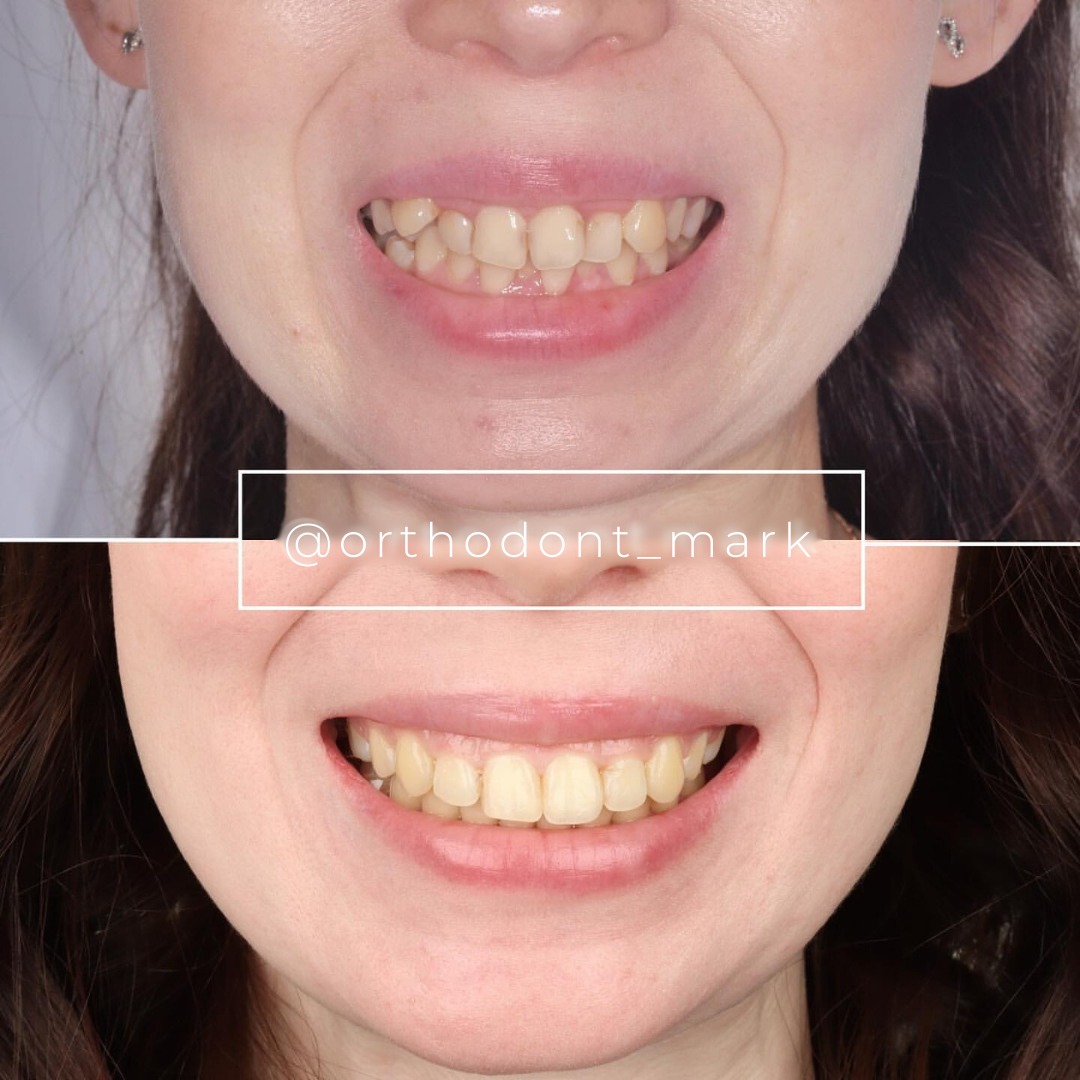
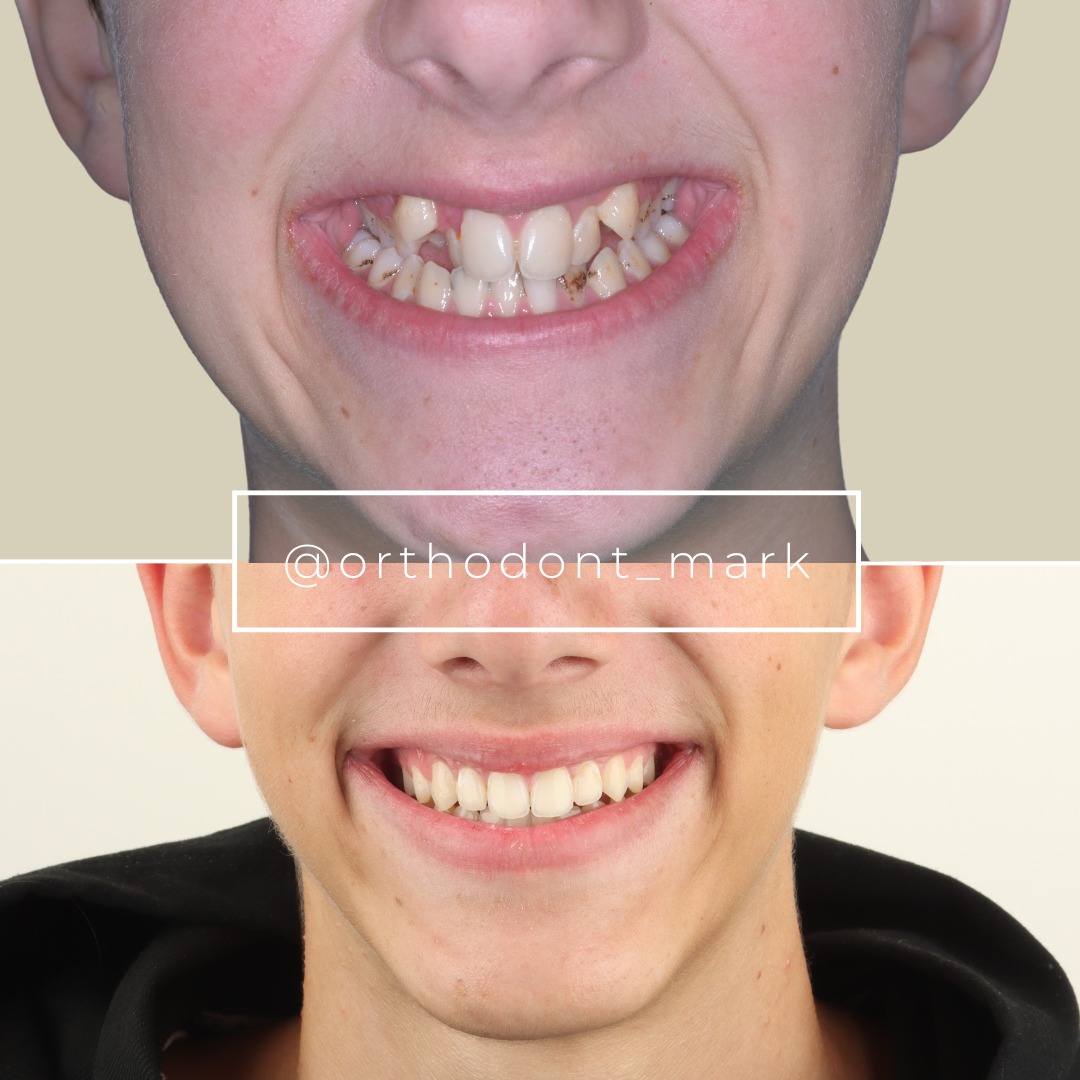
Original case shared by Dr. Mark Radzhabov on Instagram @orthodont_mark · Published for professional education.