
Initial situation
- Skeletal narrowing of the maxilla
- Lack of space for the canine and second premolar
- ENT pathology affecting nasal breathing
- Patient age: 9 years
- Tendency toward a mesial bite
Because the patient showed a tendency toward a mesial bite, treatment was limited to the upper jaw; poor nasal breathing and ENT involvement supported the decision to proceed with skeletal expansion.
The decision
Given the mesial bite tendency, the treatment plan was limited to the maxilla to avoid worsening the sagittal relationship. Skeletal expansion was selected in coordination with the patient's ENT findings of poor nasal breathing. MARPE was used together with a TAD-supported (temporary anchorage device) benefit system, with two 2.3 x 9 mm microimplants placed to support expansion.
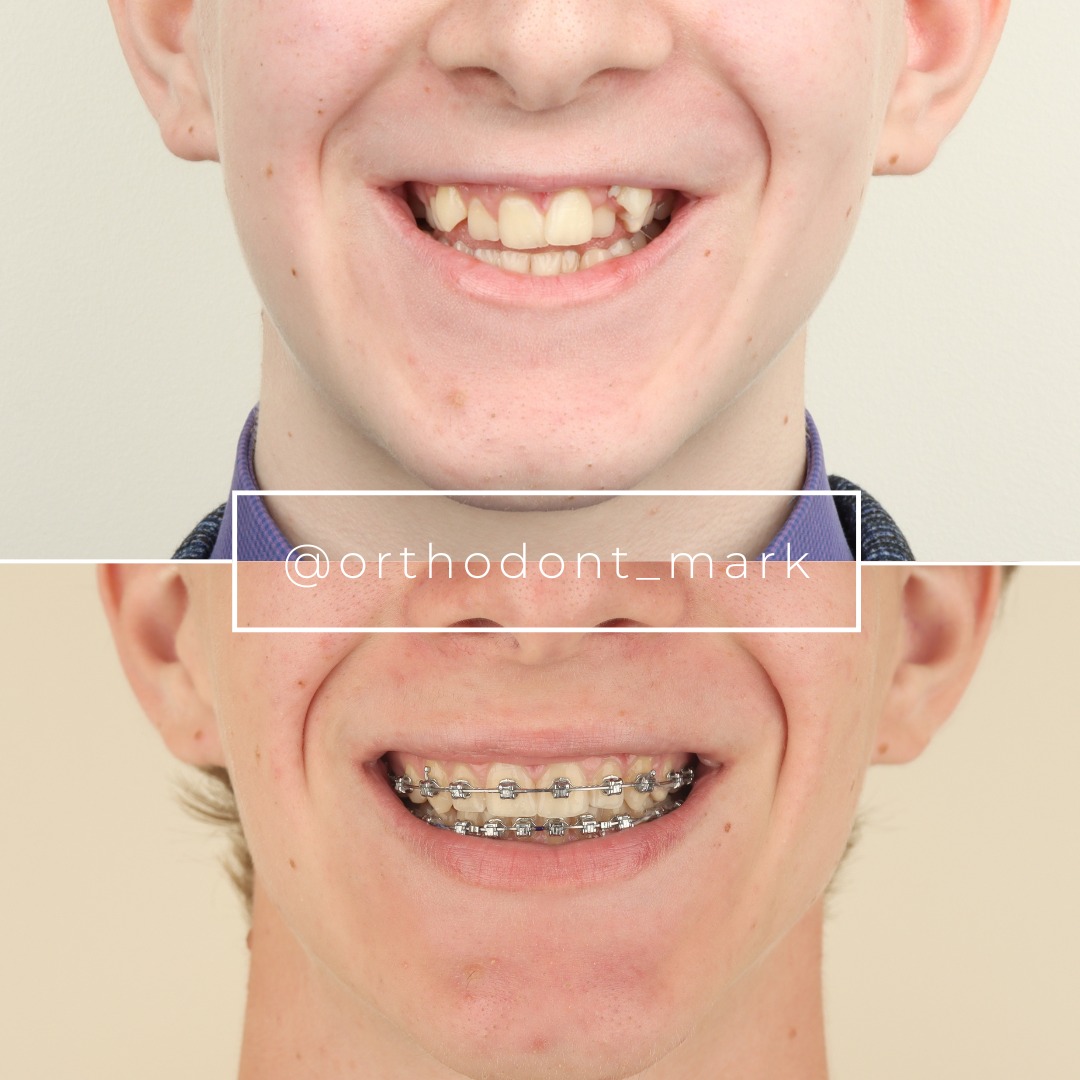
Following the first stage of skeletal expansion, a bracket system was placed and treatment continued on the upper tooth row only.
In growing patients with airway involvement, MARPE with TAD support can achieve skeletal expansion while keeping treatment confined to the arch that needs it.
The result
The after photo was taken 2.5 years after active treatment and bracket system work. The result met the treatment goals set for the patient.
TAD-supported MARPE can be used selectively in one arch when sagittal considerations, such as a mesial bite tendency, argue against treating both jaws simultaneously.
About skeletal expansion & MARPE
This case involved MARPE with TAD-supported anchorage, used to achieve skeletal expansion of the maxilla in a growing patient with airway-related ENT findings. Clinicians managing similar presentations typically coordinate with ENT evaluation, assess sagittal relationships such as a mesial bite tendency before deciding whether to expand one or both arches, and sequence expansion before comprehensive bracket therapy.
Questions clinicians ask
Why was treatment limited to the upper jaw in this case?
The patient had a tendency toward a mesial bite, so treatment was confined to the maxilla to avoid worsening that sagittal relationship.
What role did ENT findings play in the treatment decision?
The patient's poor nasal breathing and ENT evaluation supported the decision to proceed with skeletal expansion rather than a dental-only approach.
What does TAD-supported MARPE involve?
It combines a MARPE appliance with temporary anchorage devices, in this case two microimplants, to support and control the expansion of the maxilla.
Learn the decision-making behind cases like this
Get Dr. Mark Radzhabov's free guide to skeletal-expansion appliances — which appliance to choose at which age — plus a free introductory MARPE lesson.
Get the Free Guide →More clinical cases
Original case shared by Dr. Mark Radzhabov on Instagram @orthodont_mark · Published for professional education.