
Initial situation
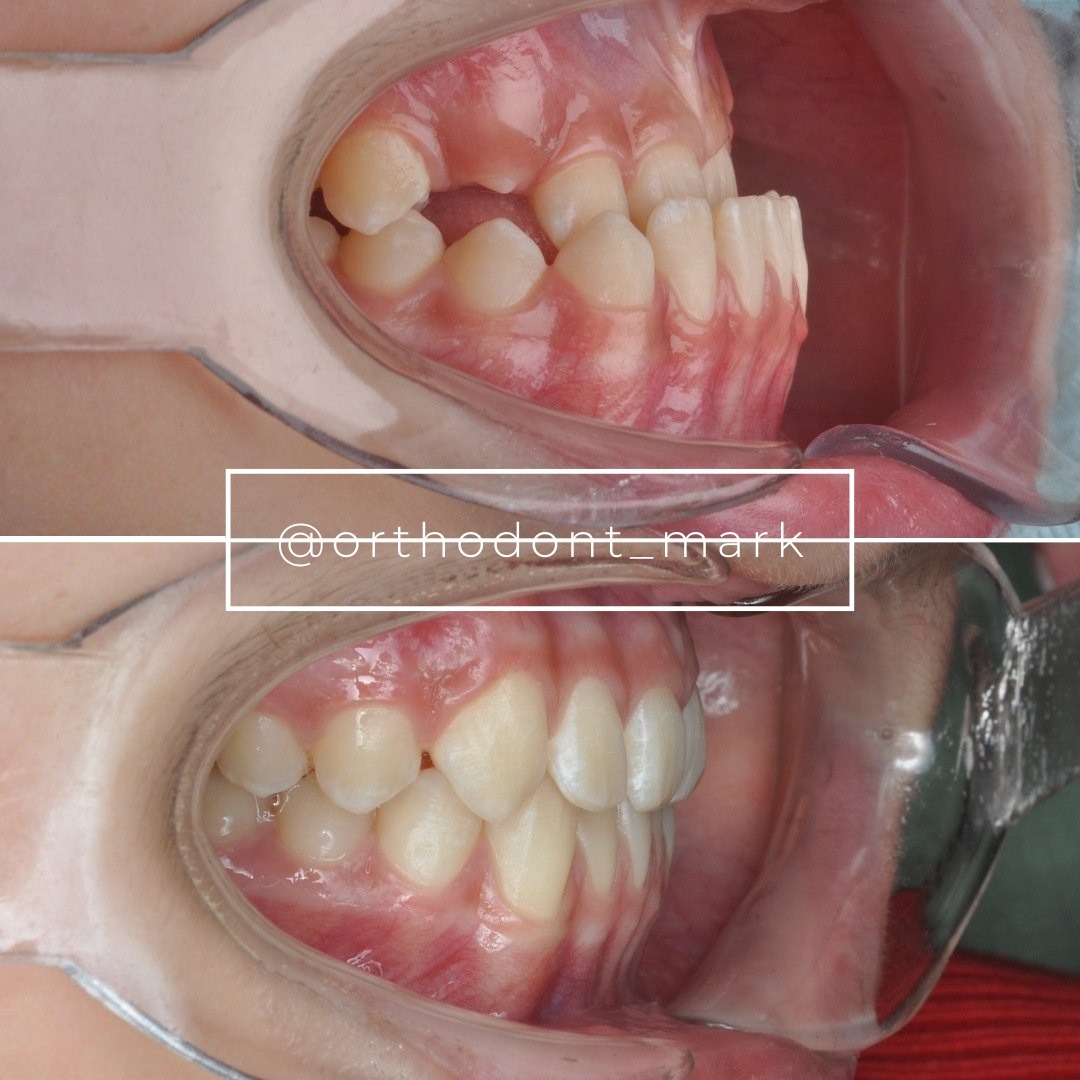
- Narrowing of the upper and lower arches produced severe crowding in the anterior region.
- An anterior open bite was present, with the upper and lower incisors failing to close.
- Posterior teeth in the lateral region did not achieve full occlusal contact.
- Uneven distribution of chewing load had caused abrasion and wedge-shaped defects on several teeth.
The decision
This case is presented as a before-and-after outcome. The treatment plan followed a standard staged assessment addressing the transverse arch discrepancy, the anterior open bite, and the occlusal wear identified at the initial exam.
Cases combining crowding, open bite, and occlusal wear can achieve substantial correction with a structured, staged approach.
The result
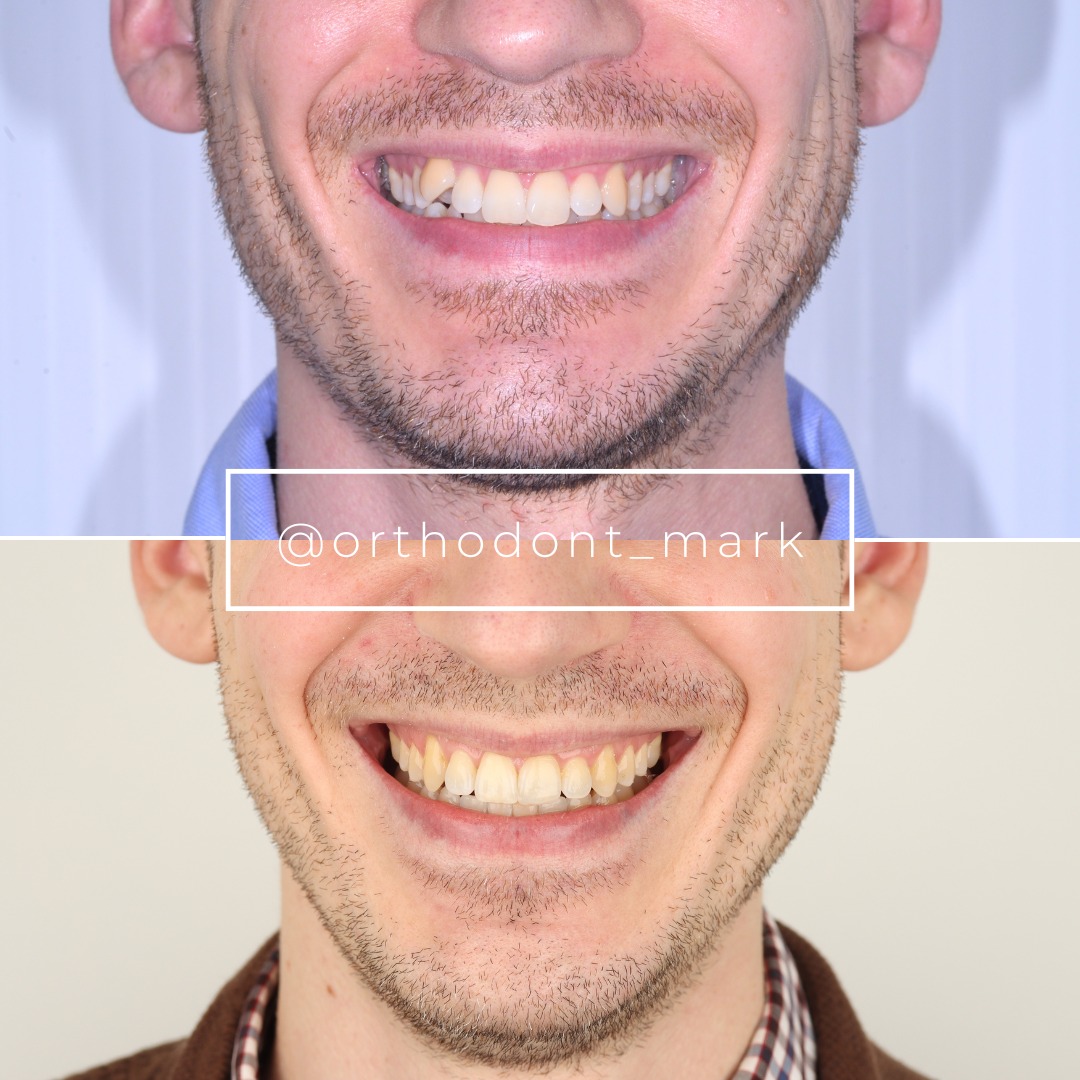
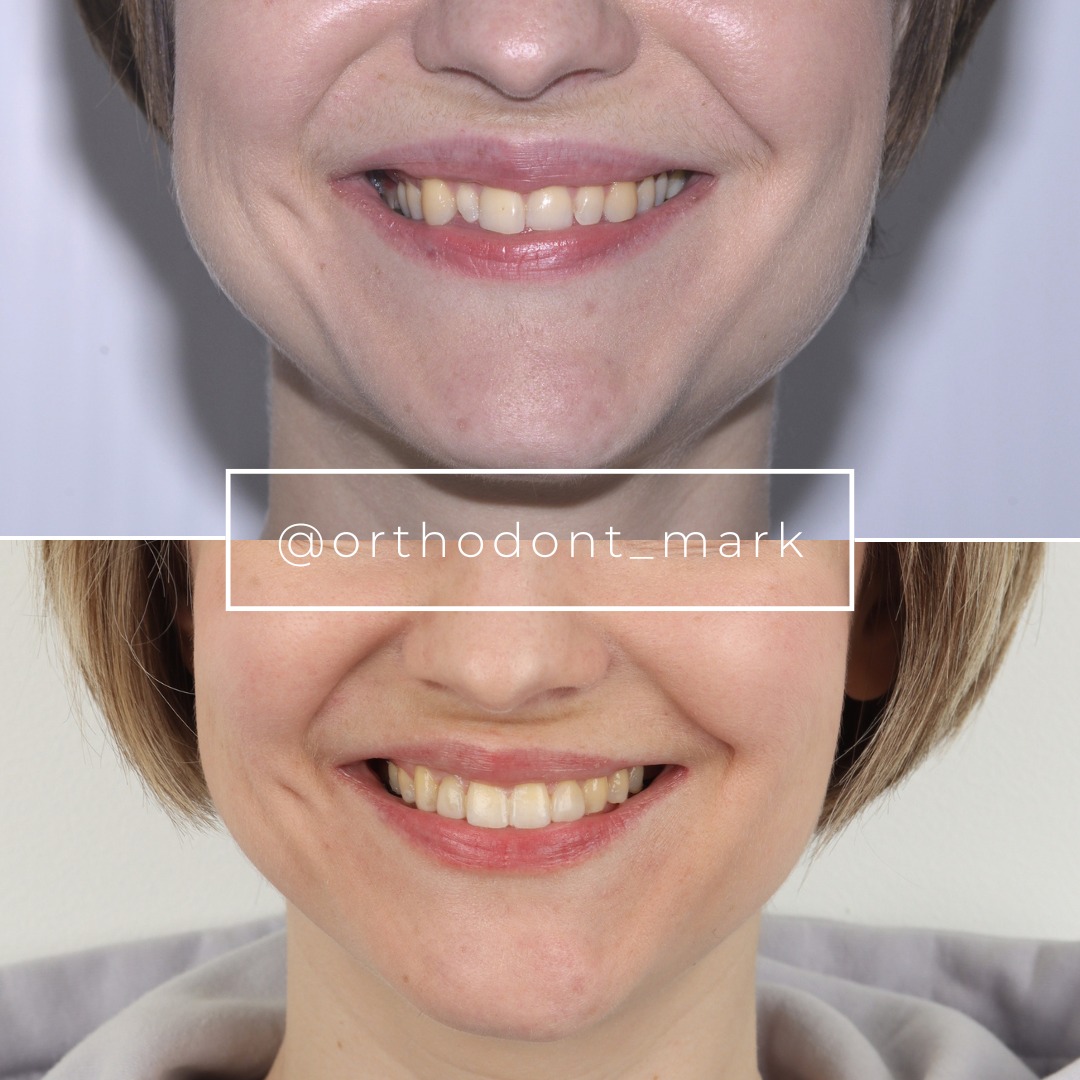
The photographs document the outcome after extensive treatment. The case is shared as encouragement for patients who doubt that treatment can help them.
Overlapping malocclusion patterns, arch narrowing, open bite, and occlusal wear, can respond well to a comprehensive, staged orthodontic plan.
About skeletal expansion & MARPE
Narrow arches combined with an anterior open bite and occlusal wear point to a transverse and vertical discrepancy that benefits from a careful diagnostic workup before any appliance is selected. In cases like this, clinicians typically evaluate arch width, vertical dimension, and occlusal contacts together, since correcting one dimension without accounting for the others can leave compensatory wear patterns unresolved. A staged sequence, informed by this kind of assessment, supports predictable long-term stability.
Questions clinicians ask
What causes an anterior open bite combined with occlusal wear?
This pattern often reflects an underlying transverse arch discrepancy that alters how the teeth meet, shifting chewing forces onto fewer contact points and accelerating wear on some teeth.
How is severe anterior crowding from narrow arches typically addressed?
Clinicians generally begin with a transverse and vertical assessment before selecting an appliance, since arch-width correction often needs to be coordinated with bite closure to avoid relapse.
Can occlusal wear from an untreated malocclusion be reversed?
Existing wear facets are not reversible, but correcting the underlying occlusal discrepancy can redistribute chewing forces and prevent further wedge-shaped defects from developing.
Learn the decision-making behind cases like this
Get Dr. Mark Radzhabov's free guide to skeletal-expansion appliances — which appliance to choose at which age — plus a free introductory MARPE lesson.
Get the Free Guide →More clinical cases
Original case shared by Dr. Mark Radzhabov on Instagram @orthodont_mark · Published for professional education.