
Transverse Deficiency vs Functional Shift:
Before
Deciding to Expand
A CBCT-grounded framework for separating true maxillary constriction from mandibular positional displacement before any expansion appliance is selected.
TL;DR Distinguishing transverse deficiency vs functional shift before expansion planning is a critical clinical decision. True skeletal constriction requires suture-opening force. A positional mandibular shift requires deprogramming and occlusal correction. CBCT-based midpalatal suture staging, as established by Angelieri et al. (2013), anchors the differential before any appliance is selected.
Committing a patient to palatal expansion without first resolving transverse deficiency vs functional shift is one of the costliest diagnostic errors in clinical orthodontics. A posterior crossbite driven by a habitual mandibular displacement will not resolve with a rapid palatal expander. Conversely, a true maxillary constriction managed only with occlusal equilibration will leave skeletal width untreated. Dr. Mark Radzhabov at ortodontmark.com addresses this differential systematically, drawing on CBCT suture staging and randomized expansion trial data to give clinicians a decision framework they can apply at the records appointment.
How Do You Confirm Skeletal Constriction
Before
Selecting an Appliance?
Transverse deficiency vs functional shift is the clinical distinction between a genuine skeletal or dental maxillary constriction and a mandibular displacement driven by occlusal interference, a distinction that determines whether expansion, deprogramming, or surgery is the appropriate first intervention. Both presentations can produce an identical posterior crossbite on initial examination, yet the etiology and the corrective mechanism are entirely different. Committing to a palatal expander before resolving which condition is present risks delivering the wrong treatment with confidence. The mandatory first step is mandibular deprogramming. A Lucia jig, a cotton-roll bite, or a flat anterior bite plane held for sixty seconds will eliminate proprioceptive feedback from the posterior teeth and allow the mandible to seat in centric relation. If the crossbite disappears or reduces substantially in that position, a positional shift—not a structural arch width deficit—is the primary finding. Persistent crossbite in centric relation, by contrast, points toward true maxillary constriction requiring skeletal or dental expansion. CBCT adds a third diagnostic layer. Angelieri et al. (2013) demonstrated that CBCT imaging provides three-dimensional visualization without superimposition for assessing midpalatal suture morphology, allowing the clinician to simultaneously evaluate arch width, alveolar inclination, and suture maturation stage. This triplanar view identifies patients whose arch constriction is primarily alveolar tipping rather than basal bone deficiency—a finding that changes appliance selection as decisively as the deprogramming test itself.
Which Suture Stage Justifies MARPE
Over
Conventional RPE?
Once true skeletal constriction is confirmed, the decision between conventional rapid palatal expansion and miniscrew-assisted expansion pivots on midpalatal suture maturation, not the patient's chronological age. Angelieri et al. (2013) studied 140 subjects aged 5.6 to 58.4 years and established a five-stage CBCT classification—A through E—based on suture morphology observed in axial slices at the level of the palatal vault. The classification allows clinicians to predict suture response to applied force with a precision that a birthdate cannot provide. Stages A and B are typically observed until age 13, while stage C spans roughly ages 11 to 17 years according to Angelieri et al. (2013). A patient presenting in stage A or B carries a suture that remains open and scalloped, making conventional RPE a biomechanically sound choice. Stage C introduces interdigitation that increases resistance, and stages D and E reflect progressive fusion. Critically, Angelieri et al. (2013) found that among boys aged 14 to 17, only 23% showed palatine bone fusion, meaning a substantial proportion of adolescent males retain favorable suture morphology even at ages traditionally assumed to require surgical assistance. Individual assessment of midpalatal suture maturation is essential to identify candidates who can succeed with conventional RME rather than requiring surgical assistance, as Angelieri et al. (2013) concluded. For the MARPE skeletal expansion protocol, stage C is typically the transition zone: higher miniscrew anchorage force can overcome increased interdigitation resistance, whereas stages D and E in the posterior third substantially raise the probability of incomplete separation and should prompt a surgical consultation rather than increased activation frequency.
When Does Bone-Borne Expansion Outperform
Tooth-Borne
RPE in True Constriction?
After confirming true skeletal constriction and staging the suture, the choice between rapid palatal expander mechanics and a bone-borne MARPE device rests on the pattern of desired skeletal change. In a randomized clinical trial, Chun et al. (2022) reported midpalatal suture separation in 90% of conventional RPE patients and 95% of MARPE patients—a meaningful difference in predictability when treating adolescents with stage C sutures where incomplete separation carries retention and relapse risk. Chun et al. (2022) found that MARPE produces significantly less buccal tooth displacement of anchor teeth compared to conventional RPE during expansion and consolidation, with a significance threshold of p < 0.05. For a patient presenting with a functional crossbite that was already causing compensatory buccal tipping of the upper posterior teeth before any appliance, adding further dentoalveolar tipping through a tooth-borne expander compounds the dental side effect rather than correcting the skeletal problem. The bone-borne force vector of MARPE preserves anchor tooth position while directing force more directly through the palatal bone. Chun et al. (2022) also demonstrated that MARPE produces significantly greater increases in nasal width and palatine foramen dimensions compared to conventional RPE at p < 0.05. However, both conventional RPE and MARPE show triangular basal bone expansion with skeletal relapse during the consolidation period per Chun et al. (2022), reinforcing that retention protocol design—not appliance selection alone—governs long-term stability. For practices building out their expansion approach, reviewing rapid palatal expander mechanics alongside MARPE data is essential before finalizing the appliance choice.
Free Clinical Guide
Which Expansion Appliance at Which Age?
Get Dr. Mark Radzhabov's guide to skeletal-expansion appliances — indications, pros & cons, and how to choose by patient age. Free to your inbox.
Prefer video? Watch the free demo lesson on MARPE appliance types, features and trade-offs.
Documented outcomes
Clinical cases from Dr. Mark Radzhabov's practice

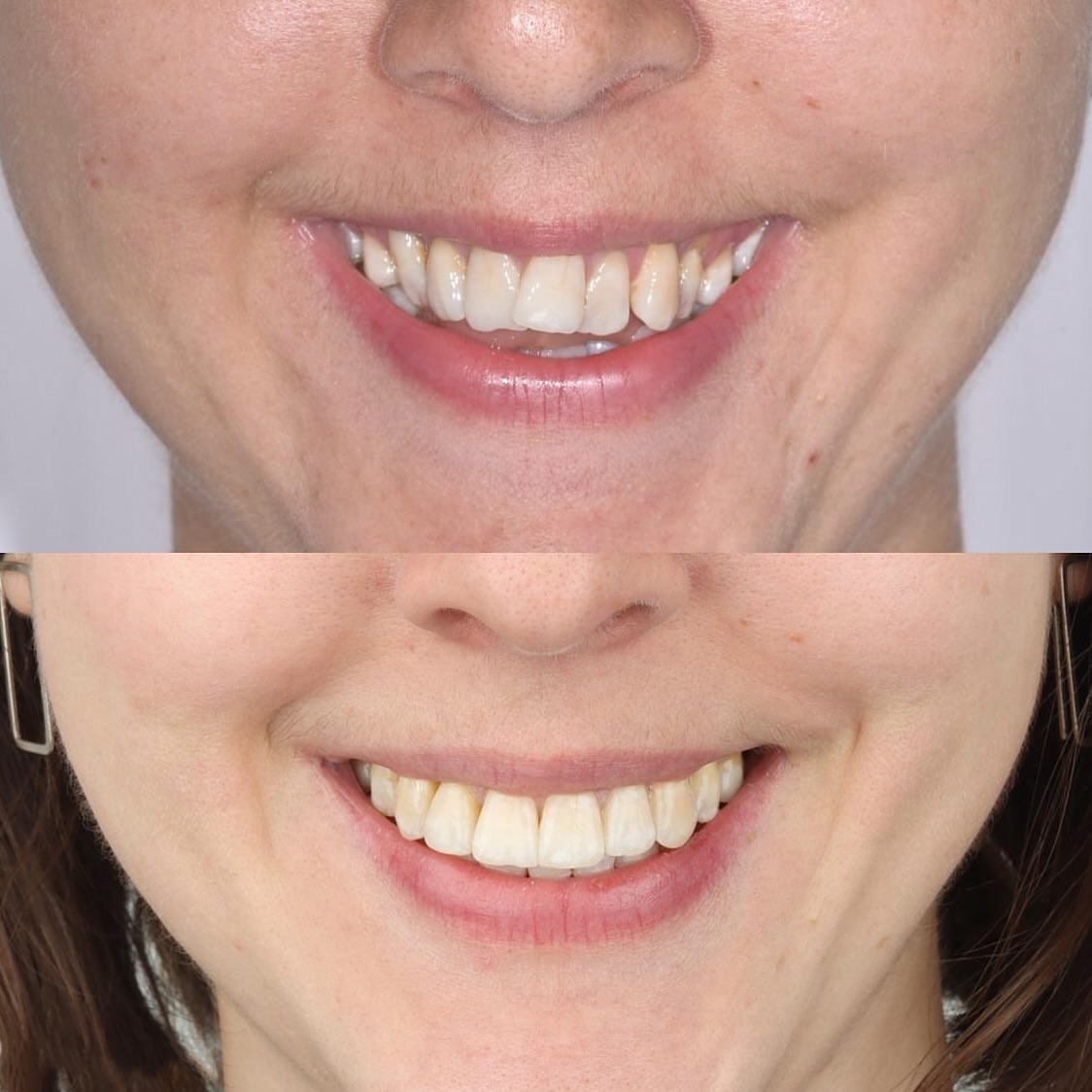

Learn the full MARPE protocol from Dr. Mark Radzhabov
Fundamental course covering CBCT patient selection, miniscrew planning, activation protocols, and 60+ clinical cases. Choose the access level that fits your practice.
Essentials of rapid palatal expansion for practicing orthodontists.
- Core RPE concepts and biomechanics
- 6 structured video lessons
- Clinical decision checklists
- Lifetime access to recordings
Deep-dive into MARPE protocol, diagnostics, and clinical execution.
- 6 modules covering MARPE from A to Z
- CBCT case selection walkthroughs
- Miniscrew placement and activation
- 60+ annotated clinical cases
- Direct Q&A with Dr. Mark Radzhabov
5-element medical consultation framework for dentists and orthodontists.
- Trust-building consultation protocol
- 5 lesson modules
- Templates for treatment plan delivery
- Works with any clinical specialty
Clinical FAQ
How do I clinically distinguish a mandibular shift crossbite from true skeletal transverse deficiency at the records appointment?
Deprogram the mandible with a flat anterior contact. If the posterior crossbite resolves in centric relation, the presentation is positional. Persistent crossbite after deprogramming indicates true maxillary constriction requiring CBCT suture staging to plan the appropriate intervention.
Which CBCT midpalatal suture stages support conventional RPE without miniscrew anchorage?
Stages A and B—typically seen until age 13 per Angelieri et al. (2013)—show open, scalloped suture morphology that responds predictably to conventional RPE force. Stage C introduces resistance. Stages D and E in the posterior third increase incomplete-separation risk substantially.
At what age does palatine bone fusion make palatal expansion unreliable without surgical assistance?
Fusion is not strictly age-determined. Angelieri et al. (2013) found only 23% of boys aged 14–17 showed palatine bone fusion, meaning individual CBCT staging is more predictive than a chronological cutoff when assessing expansion candidates in this age window.
Does MARPE produce more skeletal expansion and less dental tipping than conventional RPE in adolescents?
Yes. Chun et al. (2022) confirmed in a randomized trial that MARPE achieves suture separation in 95% of patients versus 90% for RPE, with significantly less buccal displacement of anchor teeth and greater nasal width increase, both at p < 0.05.
How do I assess midpalatal suture maturation when a patient's chronological age falls in the transitional range of 11 to 17 years?
Rely on CBCT morphology rather than age. Angelieri et al. (2013) demonstrated that suture stage C spans ages 11 to 17, meaning two patients of identical age may carry entirely different suture resistance profiles that alter appliance selection.
Does skeletal relapse occur after MARPE, and how should retention be planned?
Yes. Chun et al. (2022) confirmed that both MARPE and conventional RPE exhibit triangular basal bone expansion with skeletal relapse during the consolidation period. Retention protocol design—duration and appliance type—must be addressed before activation begins.
What radiographic criteria on CBCT differentiate alveolar tipping from basal bone deficiency in transverse evaluation?
Assess buccolingual axial inclination of the maxillary posterior teeth against the palatal vault width measured at the alveolar crest versus the basal bone level. Divergent findings indicate compensatory dental tipping over adequate basal width, shifting the diagnosis away from skeletal expansion candidacy.
Is CBCT mandatory for every transverse deficiency evaluation before MARPE placement?
Angelieri et al. (2013) concluded that individual suture maturation assessment is essential for identifying candidates who can succeed with conventional RME rather than requiring surgical or miniscrew-assisted approaches, making CBCT the diagnostic standard for any adult or transitional-age case.
How do nasal airway outcomes differ between MARPE and conventional RPE in skeletal expansion candidates?
Chun et al. (2022) found MARPE produces significantly greater increases in nasal width and palatine foramen dimensions compared to conventional RPE at p < 0.05, making it the preferred appliance when nasal airway improvement is a concurrent treatment objective.
What is the clinical workflow for distinguishing positional crossbite from skeletal transverse deficiency before selecting an expansion protocol?
Step one: deprogram the mandible. Step two: if crossbite persists, take a CBCT and stage the midpalatal suture using the Angelieri et al. (2013) classification. Suture stage then drives the choice among conventional RPE, MARPE skeletal expansion, or surgical-orthodontic consultation.
Accurate differential diagnosis between a genuine maxillary constriction and a mandibular positional shift is the prerequisite that protects both the patient and the clinician's treatment plan. Misidentifying the problem wastes chair time, risks unnecessary skeletal loading, and—critically—prevents correction of the true underlying discrepancy. Before placing any palatal expander, stage the midpalatal suture on CBCT and deprogram the mandible. The crossbite either self-corrects or it doesn't. Dr. Mark Radzhabov welcomes case consultations through ortodontmark.com for practices refining their expansion screening protocols. Key sources: Angelieri et al., 2013, American Journal of Orthodontics and Dentofacial Orthopedics, doi:10.1016/j.ajodo.2013.04.022. Chun et al., 2022, BMC Oral Health, doi:10.1186/s12903–022-02138-w.