
Early Orthodontic Treatment Decisions:
Treat, Monitor,
or Refer — A Clinical Framework
Suture biology, CBCT geometry, and appliance force output determine the call. Evidence-based criteria for every mixed-dentition crossbite.
TL;DR Early orthodontic treatment decisions require distinguishing patients who benefit from immediate interceptive expansion, those best monitored through mixed dentition, and those needing referral. Suture maturation, expansion pattern, and appliance force output each drive the call. Evidence from CBCT imaging and histology clarifies when palatal expansion is biologically primed to succeed.
A seven-year-old presenting with a unilateral posterior crossbite and a nine-year-old with a bilateral transverse deficit demand different clinical responses — yet both arrive at the same referral question. Early orthodontic treatment decisions are among the highest-stakes judgment calls in mixed-dentition care, because acting too early, too late, or with the wrong appliance carries compounding consequences. At ortodontmark.com, Dr. Mark Radzhabov synthesizes imaging, appliance mechanics, and suture biology to give clinicians a reproducible framework for deciding when to expand, when to observe, and when surgical or specialist referral is the responsible path forward.
How Does the Midpalatal Suture Determine
When to Act
in Growing Patients?
Early orthodontic treatment decisions are the clinician's structured determination — guided by suture maturity, skeletal age, and appliance biomechanics — of whether to initiate interceptive expansion, maintain active monitoring, or refer before the mixed-dentition window closes. The suture is not a static structure. Its biological state at the time of force application governs whether expansion translates into orthopedic change or mere dental tipping. CBCT analysis of midpalatal suture changes, conducted by Kinzinger et al. (2022) in 9 patients aged 7.3 to 13.8 years during RME, demonstrates that suture response is measurable and age-dependent within the growing dentition. This imaging window gives clinicians a direct, objective basis for treatment timing rather than relying solely on chronological age. A wide, undifferentiated suture on axial CBCT slices signals high orthopedic potential. Increasing interdigitation and cortical bridging indicate a narrowing intervention window. Parallel findings on expansion geometry reinforce this point. Kinzinger et al. (2022) showed, in a dental cast study of 60 patients divided into three age groups — under 10 years, 10–12 years, and 12 years and older — that the shape of palatal expansion shifts with skeletal age. Children under 10 years produce parallel expansion, while adolescents aged 12 and older produce a V-shaped opening pattern that concentrates force anteriorly and increases the risk of dental side effects. Identifying which geometry a patient is likely to produce informs both appliance choice and the urgency of intervention.
What Does Bone Formation After RME
Reveal
About Retention Timing and Monitoring?
Post-expansion suture healing is not instantaneous, and the clinical protocol for monitoring or transitioning to retention must respect that biological timeline. Caprioglio et al. (2017) collected histological samples of the midpalatal suture at 7 days and 30 days after RME to track healing progression — a direct tissue-level view of what CBCT can only infer indirectly. The 7-day sample captured the early connective tissue reorganization phase, while the 30-day sample demonstrated new bone formation with perpendicular trabeculae orientation at the midpalatal suture (Caprioglio et al., 2017). The perpendicular orientation of new trabeculae is biomechanically significant: it indicates load-bearing potential along the plane of the previously opened suture, which is the structural basis for transitioning from active expansion to passive retention. For the monitoring decision, this means that releasing retention before adequate mineralization — often a temptation when clinical schedules are compressed — risks rebound before the perpendicular scaffold matures. Monitoring intervals during the consolidation phase should be anchored to this biological window, not to patient convenience. When CBCT is unavailable for serial assessment, a conservative minimum consolidation period aligned with the 30-day histological marker provides a defensible clinical floor.
Which Expander Delivers the Force Profile
Your Patient's
Suture Can Actually Use?
Appliance selection in early treatment is not a brand preference — it is a biomechanical decision with direct consequences for suture loading, dental side effects, and long-term stability. Mechanical testing by Camporesi et al. (2013) established clinically relevant force differences between commonly used designs: the Hyrax and A2620 expanders generated over 20 kg of force, while the Palatal Split screw generated approximately 16 kg across the same activation sequence. The A2620 and Hyrax expanders also demonstrated significantly greater rigidity than the Palatal Split screw across all activation levels (Camporesi et al., 2013). Rigidity affects force decay between activations — a stiffer appliance maintains its programmed load longer, which matters in patients where compliance with activation schedules is variable. In the context of early orthodontic treatment, where suture biology is favorable but precise force delivery still determines the proportion of skeletal versus dental change, appliance rigidity is a design variable rather than an afterthought. For structured RPE training for early transverse deficiency, understanding these mechanical properties translates directly into the treatment-planning consultation: a clinician who can explain to a colleague why a Hyrax-class appliance was chosen over a split-screw design — citing load output and rigidity — is practicing at a higher clinical standard than one who defaults to a single appliance type regardless of patient age or suture status. Referral decisions also pivot here: if the local force threshold exceeds what a developing suture should bear, a lower-output appliance or a phased protocol is more appropriate than an immediate high-force device.
When Does the MARPE Protocol
Outperform
Conventional RPE in the Developing Arch?
Conventional RPE anchored to the premolars and molars delivers palatal force through the periodontal ligament before it reaches the suture — a mechanical detour that becomes increasingly inefficient as skeletal resistance rises. The MARPE protocol for borderline growing patients bypasses this detour by anchoring titanium miniscrews directly into palatal bone, concentrating orthopedic load at the suture interface. Chun et al. (2022) compared RPE and MARPE in a prospective randomized clinical trial, finding that midpalatal suture separation occurred in 90% of RPE patients and 95% of MARPE patients — a clinically meaningful difference in orthopedic efficacy that favors bone-borne mechanics even within the growing dentition. The patient age range in the Chun et al. (2022) trial included subjects aged 18 to 20 and 19 years, anchoring the MARPE advantage in an age group that sits precisely at the boundary between active growth and skeletal consolidation. For clinicians managing mixed-dentition cases near this boundary, the implication is that early identification of patients trending toward suture resistance — before full interdigitation occurs — allows MARPE to be deployed while the suture remains amenable, rather than defaulting to surgical referral. The monitoring protocol between RPE and MARPE also differs. With conventional RPE, palatal force transfer is mediated by dental anchorage that can loosen or tip. Miniscrew-retained MARPE eliminates that variable, making force delivery more consistent across the activation schedule. Clinicians tracking treatment progress via serial CBCT can therefore attribute suture changes more directly to the expansion protocol rather than to anchorage compliance — a cleaner signal for the treat-versus-monitor decision.
Building a Reproducible Treat-Monitor-Refer
Protocol
for Mixed-Dentition Transverse Deficiency
A reproducible clinical protocol collapses the treat-monitor-refer decision into a sequence of objective branch points rather than a gestalt impression. The first branch is imaging: axial CBCT through the midpalatal suture characterizes the degree of interdigitation and cortical fusion, supplying the suture maturity grade that Kinzinger et al. (2022) demonstrated varies meaningfully across the 7.3–13.8 year age span. Patients with open, low-interdigitation sutures enter the treat pathway. Those with dense cortical bridging enter the refer pathway. Intermediate cases enter monitored observation with a defined re-imaging interval. The second branch is expansion geometry. Kinzinger et al. (2022) confirmed that children under 10 years produce parallel expansion while those aged 12 and older produce V-shaped expansion — a distinction that governs which appliance to deploy. Parallel-expansion candidates tolerate higher-force, higher-rigidity devices like the Hyrax class. V-expansion cases benefit from designs that limit anterior force concentration and reduce the risk of incisor root resorption. The third branch is force output matching. Camporesi et al. (2013) measured a meaningful gap between the over-20 kg output of the Hyrax and A2620 versus the approximately 16 kg of the Palatal Split screw. Matching the chosen appliance to the suture's load tolerance — informed by CBCT density and patient age group — prevents both under-treatment and the iatrogenic dental movement that accompanies over-loading a biologically resistant suture. For clinicians building these skills systematically, interceptive expansion case reviews and outcomes at ortodontmark.com provide a documented reference library tied directly to this decision framework.
Free Clinical Guide
Which Expansion Appliance at Which Age?
Get Dr. Mark Radzhabov's guide to skeletal-expansion appliances — indications, pros & cons, and how to choose by patient age. Free to your inbox.
Prefer video? Watch the free demo lesson on MARPE appliance types, features and trade-offs.
Documented outcomes
Clinical cases from Dr. Mark Radzhabov's practice
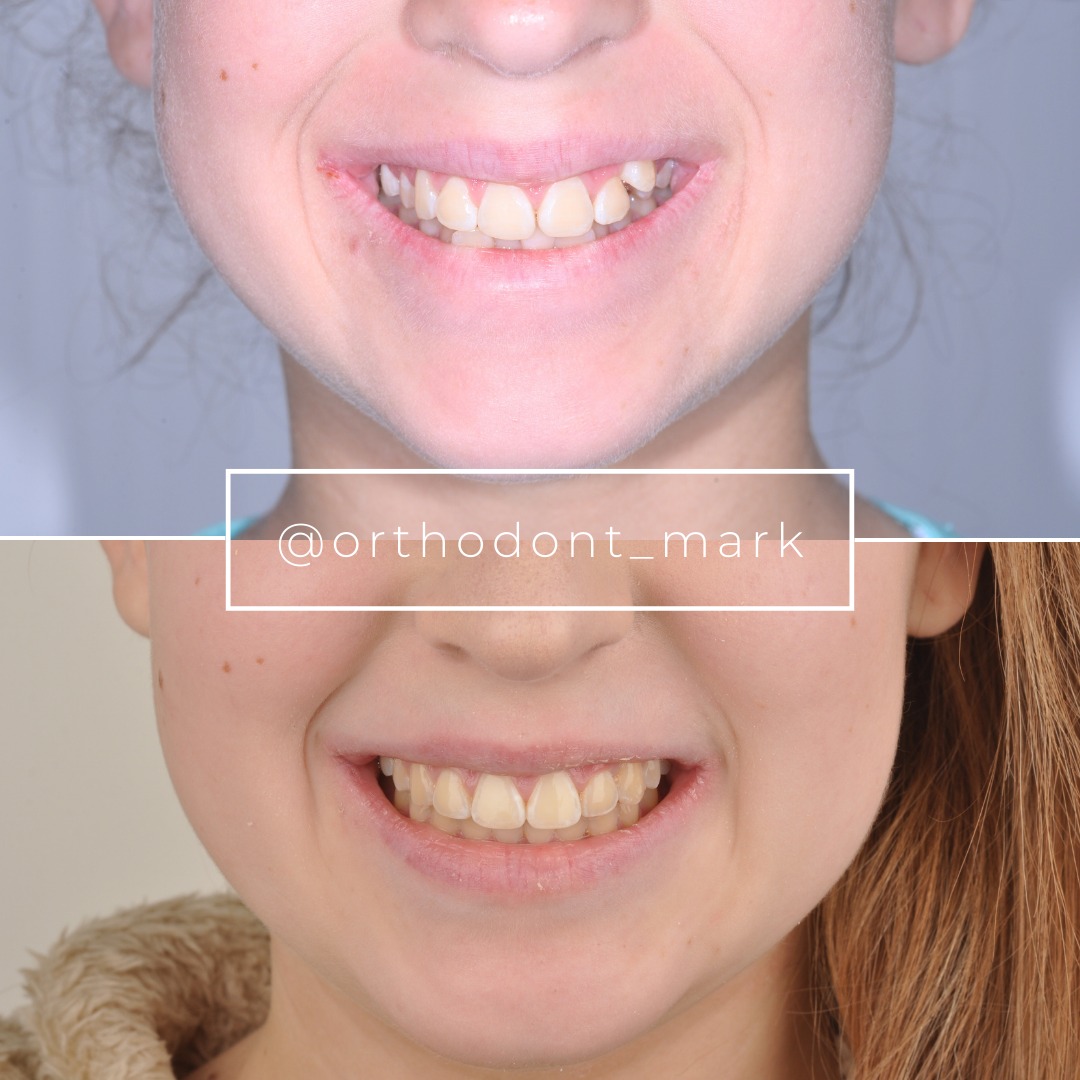
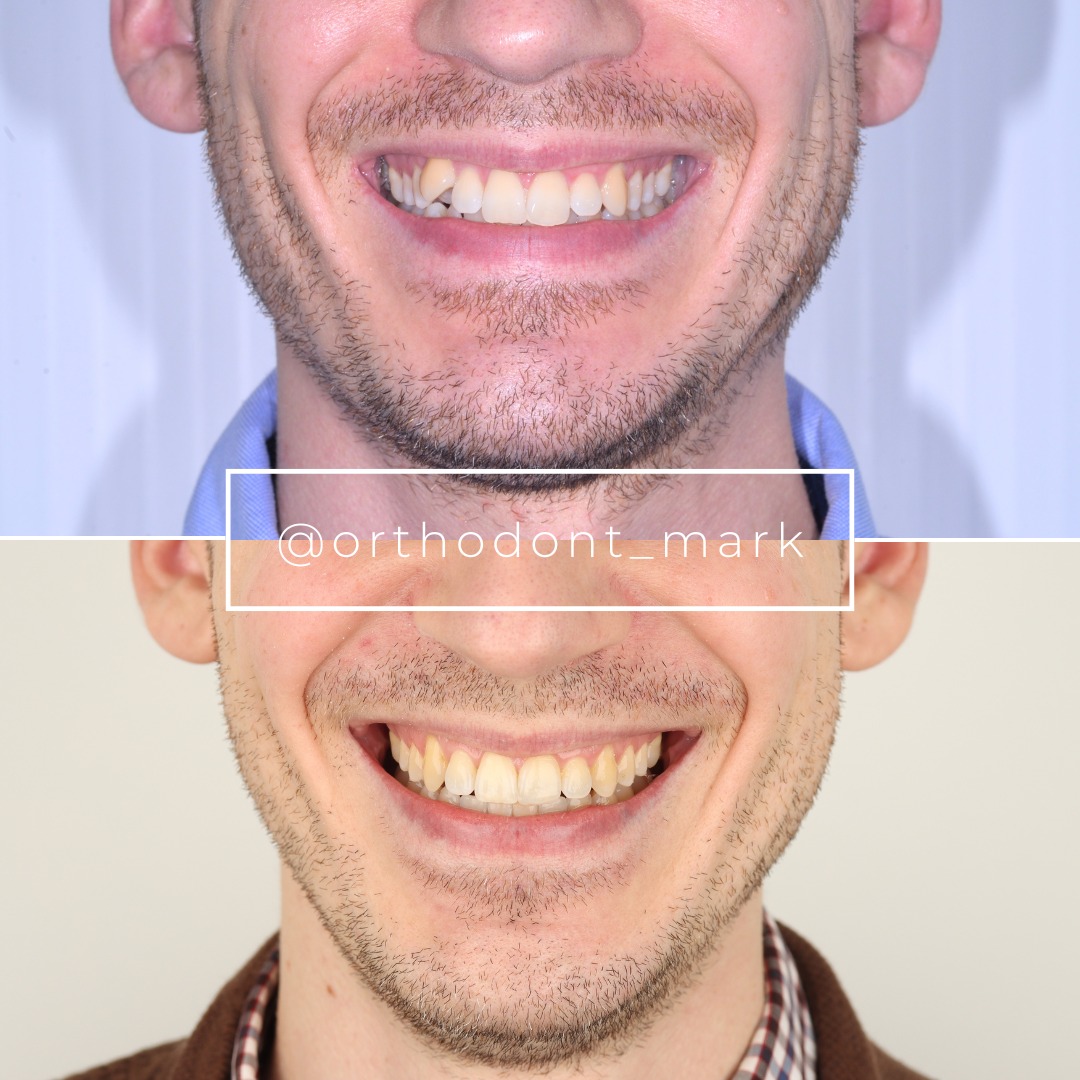
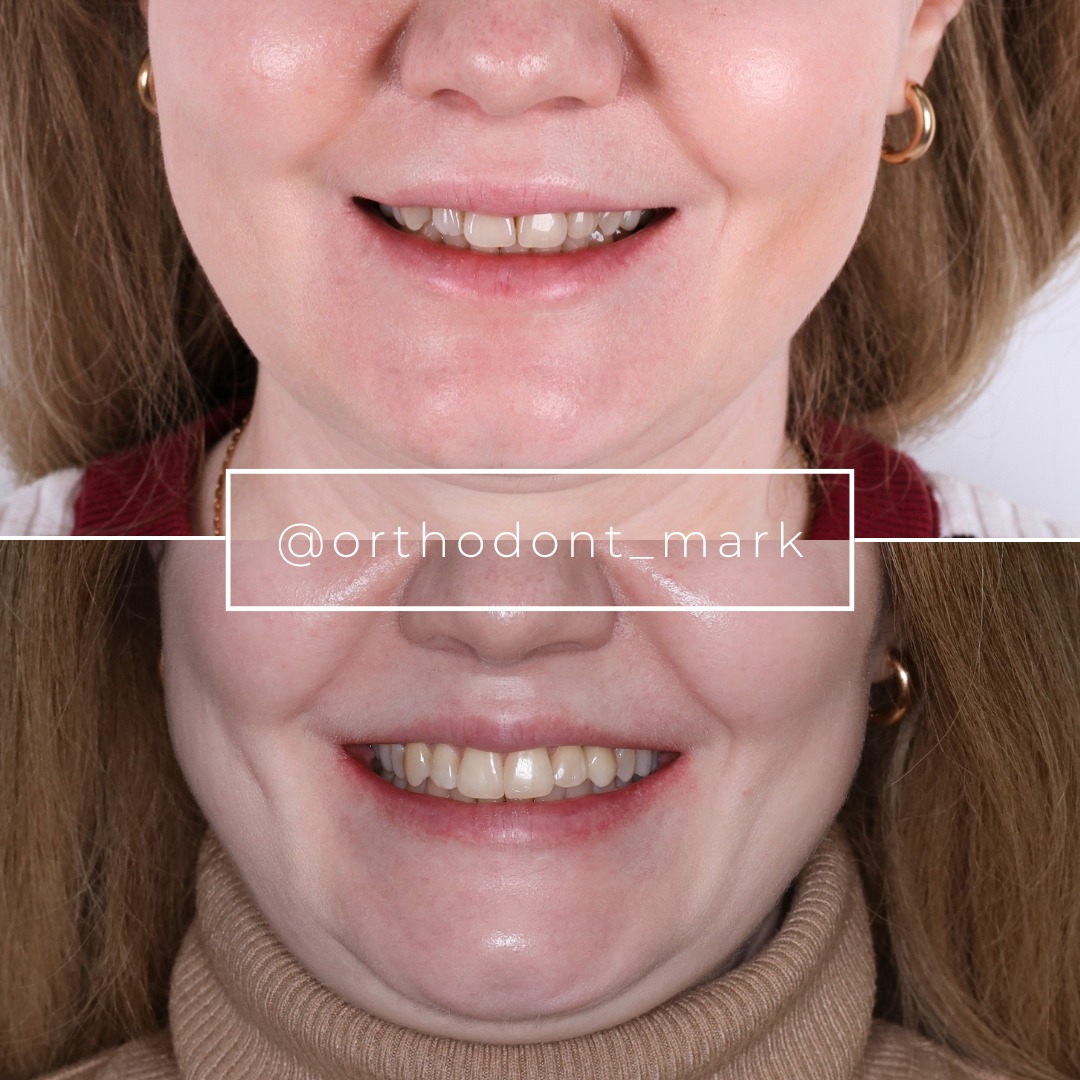
Learn the full MARPE protocol from Dr. Mark Radzhabov
Fundamental course covering CBCT patient selection, miniscrew planning, activation protocols, and 60+ clinical cases. Choose the access level that fits your practice.
Essentials of rapid palatal expansion for practicing orthodontists.
- Core RPE concepts and biomechanics
- 6 structured video lessons
- Clinical decision checklists
- Lifetime access to recordings
Deep-dive into MARPE protocol, diagnostics, and clinical execution.
- 6 modules covering MARPE from A to Z
- CBCT case selection walkthroughs
- Miniscrew placement and activation
- 60+ annotated clinical cases
- Direct Q&A with Dr. Mark Radzhabov
5-element medical consultation framework for dentists and orthodontists.
- Trust-building consultation protocol
- 5 lesson modules
- Templates for treatment plan delivery
- Works with any clinical specialty
Clinical FAQ
At what age does palatal expansion geometry shift from parallel to V-shaped, and how should that change appliance selection?
Kinzinger et al. (2022) confirmed parallel expansion in children under 10 years and V-shaped expansion in patients aged 12 and older. V-shaped geometry concentrates force anteriorly, favoring lower-output or tooth-borne designs that limit incisor root stress.
What is the minimum consolidation period before releasing retention after RME in a growing patient?
Caprioglio et al. (2017) demonstrated perpendicular trabeculae formation at the midpalatal suture by 30 days post-RME, establishing that period as the biological floor for retention. Releasing retention before adequate mineralization risks structural rebound along the newly opened suture plane.
How does MARPE suture separation rate compare to conventional RPE in adolescents near skeletal maturity?
Chun et al. (2022) reported midpalatal suture separation in 90% of RPE patients versus 95% of MARPE patients under identical expansion. Bone-borne mechanics deliver force directly to the suture, reducing attenuation through dental anchors and improving orthopedic efficiency.
Which appliance generates the highest force output across activation levels in mechanical bench testing?
Camporesi et al. (2013) found the Hyrax and A2620 expanders both generated over 20 kg of force, significantly exceeding the approximately 16 kg produced by the Palatal Split screw. The Hyrax and A2620 also demonstrated greater rigidity, maintaining load longer between activations.
How should CBCT findings guide the treat-versus-refer decision for transverse deficiency in mixed dentition?
Axial CBCT through the midpalatal suture reveals interdigitation grade and cortical density that chronological age alone cannot capture. Kinzinger et al. (2022) studied suture changes across a 7.3–13.8 year range, confirming that suture biology varies substantially between same-age patients.
When is surgical referral for palatal expansion the evidence-consistent choice in a growing patient?
Advanced suture interdigitation with cortical bridging on CBCT, combined with moderate-to-severe transverse deficiency, marks the surgical threshold. Appliance-based expansion — RPE or MARPE — requires a biologically responsive suture. Dense interdigitation beyond what the imaging grade supports indicates referral.
How does appliance rigidity affect force delivery in pediatric palatal expansion?
Camporesi et al. (2013) showed the Hyrax and A2620 outperformed the Palatal Split in rigidity across all activation levels. A stiffer appliance sustains the programmed load longer between activations, which matters when pediatric patients have inconsistent compliance with daily activation schedules.
What does histological evidence tell us about when to initiate a monitoring protocol after rapid palatal expansion?
Caprioglio et al. (2017) collected suture samples at 7 and 30 days post-RME. The 7-day sample showed early connective tissue reorganization. By 30 days, new bone with perpendicular trabeculae was evident. This histological timeline should anchor monitoring intervals during the consolidation phase.
Does the number of patients studied in CBCT suture analyses during RME support strong clinical generalizations?
Kinzinger et al. (2022) performed CBCT analysis in 9 patients aged 7.3 to 13.8 years during RME — a targeted sample that reveals suture response patterns rather than population-level prevalence. Findings guide imaging interpretation criteria but should be contextualized within broader clinical evidence.
How should early orthodontic treatment decisions differ between a child under 10 and an adolescent aged 12 or older presenting with similar transverse deficiency?
Kinzinger et al. (2022) demonstrated that a child under 10 achieves parallel suture opening, supporting higher-force appliances. An adolescent aged 12 or older produces V-shaped expansion, requiring anterior force mitigation and closer monitoring for dental side effects. Suture CBCT grades the urgency for both.
Suture histology, expansion geometry, and appliance force output are not abstract research details — they are the inputs that determine whether a palatal expansion case closes cleanly or reopens as a relapse problem years later. Clinicians who anchor their early orthodontic treatment decisions in this evidence tier reduce avoidable referrals and improve outcomes across the mixed-dentition cohort. Dr. Mark Radzhabov's structured RPE training at ortodontmark.com translates these principles into a step-by-step clinical workflow, from imaging interpretation through appliance selection. Enroll, review the case library, and build the decision confidence your mixed-dentition patients deserve. Key sources: Kinzinger et al. (2022), J Orofac Orthop, doi:https://doi.org/10.1007/s00056–022-00429-z. Caprioglio et al. (2017), Int. J. Mol. Sci., doi:doi:10.3390/ijms18030615. Camporesi et al. (2013), BioMedical Engineering OnLine, doi:http://www.biomedical-engineering-online.com/content/12/1/128.