
Torque Loss and Buccal Root Uprighting After Expansion
A Biomechanical Basis for Post-Expansion Finishing Mechanics
Evidence-based protocols for correcting molar and premolar torque after MARPE and MSE, protecting skeletal width gains through targeted finishing mechanics.
TL;DR Torque loss and buccal root uprighting after expansion are predictable biomechanical consequences that must be addressed in post-expansion finishing mechanics. MARPE produces greater skeletal width gains than conventional RPE while reducing buccal displacement of anchor teeth, yet residual crown-root divergence at premolars and molars still requires systematic torque correction before final detailing.
A patient finishes active palatal expansion showing excellent arch width, yet the finishing records reveal buccal crown tipping at the first premolars and molars that the expanded arch dimensions alone cannot resolve. Post-expansion torque finishing mechanics exist precisely for this transition: translating skeletal width into a stable, properly torqued occlusion. Dr. Mark Radzhabov at ortodontmark.com outlines the biomechanical rationale for buccal root uprighting after expansion and the clinical sequence that protects skeletal gains while correcting residual dentoalveolar inclination. Understanding this framework helps orthodontists avoid the common error of advancing to final detailing before anchor teeth are adequately uprighted.
Why Does Torque Loss Occur Consistently After Palatal Expansion?
Post-expansion torque finishing is the systematic application of root-torquing mechanics to the buccal dentition following rapid palatal expansion, aimed at correcting crown-root divergence introduced by both skeletal displacement and appliance design. This divergence is not an anomaly — it is a predictable biomechanical consequence of how lateral force distributes across the alveolar process during active expansion, regardless of appliance type. During conventional rapid palatal expansion, the lateral force vector acts primarily through the anchor teeth, generating a moment that tips crowns buccally while roots lag behind. The result is a measurable angulation discrepancy at the premolars and molars that persists into the consolidation phase. Even after the suture ossifies and width is maintained skeletally, the crown-root axis at the buccal segments remains divergent from the ideal. MARPE modifies this pattern importantly. Because miniscrews transmit load directly to the palatal bone rather than exclusively through the periodontal ligament of anchor teeth, the buccal displacement of premolars and molars is significantly reduced compared to conventional RPE, as demonstrated by Chun et al. (2022). However, reduced displacement is not zero displacement: residual torque loss still accumulates, particularly during consolidation, and must be addressed before archwire finishing can achieve stable root parallelism. For surgical cases, Sant'Ana et al. (2016) confirmed that midpalatal split significantly improves expansion efficacy compared to procedures without the split, meaning surgically assisted cases can achieve greater transverse change — but the same buccal torque dynamics apply at the anchor teeth, and finishing mechanics must account for the larger skeletal movement delivered.
How Does Appliance Choice Influence Post-Expansion Torque Demand?
The finishing burden after expansion is directly proportional to the degree of dentoalveolar tipping introduced during active expansion. Because different expanders impose different biomechanical loads on the anchor teeth, the torque correction required in the finishing phase varies by appliance type — a fact with direct implications for bracket prescription selection and archwire sequencing. Chun et al. (2022) found that MARPE produces greater maxillary width at first premolars and molars than conventional RPE. This superior skeletal yield comes with a comparatively reduced dentoalveolar side effect: the same study documented that MARPE shows significantly less buccal displacement of anchor teeth. The clinical inference is that MARPE cases enter post-expansion finishing with a smaller but still meaningful torque deficit that must be systematically closed. For bone-borne expanders such as MSE and hybrid designs, the force pathway is even more skeletally directed. Sarraj et al. (2021) confirmed that both MSE hybrid and pure bone-borne maxillary expanders achieve complete midpalatal suture separation. When suture separation is complete and skeletal widening is maximal, the dentoalveolar compensation introduced is proportionally smaller relative to the amount of transverse change delivered — yet the absolute crown-root divergence at anchor teeth still demands attention in finishing. For clinicians planning the full treatment arc, the practical guidance is to select the appliance that delivers the target skeletal change with the least anchorage loss, then design a finishing sequence that specifically targets residual buccal root uprighting. Reviewing cases through the MARPE finishing protocol and skeletal expansion mechanics lens helps clarify which archwire prescriptions and auxiliary torquing devices are appropriate for each appliance history.
What Finishing Mechanics Address Buccal Root Uprighting After Expansion?
Post-expansion finishing mechanics for buccal root uprighting fall into a logical sequence tied to consolidation status. Before introducing root-torquing forces, the clinician must confirm adequate palatal bone fill on CBCT — the suture gap should show progressive mineralisation rather than the dark radiolucent void visible at the end of active expansion. Attempting aggressive torque correction against an incompletely mineralised suture risks both relapse and unwanted dental movement. Once bone fill is adequate, rectangular stainless steel archwires in the upper arch become the primary torque instrument. Increasing the wire dimension toward the bracket slot — progressing from smaller cross-sections to full-dimension rectangulars — gradually engages third-order play and begins expressing the torque prescription built into the bracket. At premolars and molars specifically, the bracket prescription should be verified against the pre-expansion CBCT to ensure that the torque value selected will correct, not compound, the buccal inclination introduced by expansion. Auxiliary torquing mechanics — including torquing auxiliaries placed buccally at the molar and premolar brackets, or selective torque adjustment bends in the rectangular archwire — allow the clinician to target individual teeth rather than applying a global torque change across the full arch. This is particularly relevant when the degree of buccal crown tipping differs between first and second premolars, as the expansion force distribution across those two teeth is not always uniform. Nasal width response also informs finishing timing. Chun et al. (2022) reported that MARPE produces greater increases in nasal width at the molar region and greater palatine foramen dimensions compared to conventional RPE immediately after expansion and during consolidation — confirming that skeletal changes extend well beyond the dentoalveolar level and reinforce the value of this approach for practitioners pursuing a comprehensive case review for complex post-expansion torque correction.
Does the Age of the Patient Change Post-Expansion Torque Correction Strategy?
Sant'Ana et al. (2016) studied surgically assisted rapid maxillary expansion in participants ranging from 18.3 to 31.8 years, with a mean age of 24.29 years — a group representing the young adult population in which midpalatal suture resistance is high enough to require surgical facilitation. This age range is directly relevant to finishing mechanics planning: older patients with denser cortical bone surrounding the expanded suture may show slower bone fill and a longer consolidation window before torque correction mechanics can be safely advanced. Suture maturation stage, not chronological age alone, governs consolidation rate and therefore finishing timing. A patient whose CBCT demonstrates dense cortical bridging across the midpalatal gap at eight weeks post-expansion is ready for rectangular archwire mechanics earlier than a patient of the same age whose fill remains incomplete at twelve weeks. The finishing protocol should be indexed to radiographic consolidation criteria, not a fixed calendar schedule. For patients who required surgical assistance — including those from the Sant'Ana et al. (2016) age range — the post-surgical inflammatory phase may transiently accelerate bone formation at the suture site, potentially shortening the window before finishing mechanics can begin. Monitoring via CBCT at the premolar and molar root levels also allows the clinician to detect any periodontal changes at the buccal aspect of anchor teeth that would influence the force magnitude and direction applied during root uprighting. Clinicians building competency in this area benefit from working through a structured MARPE training for post-expansion case management, where case-specific consolidation assessment and finishing sequencing are covered in a systematic clinical context.
Free Clinical Guide
Which Expansion Appliance at Which Age?
Get Dr. Mark Radzhabov's guide to skeletal-expansion appliances — indications, pros & cons, and how to choose by patient age. Free to your inbox.
Prefer video? Watch the free demo lesson on MARPE appliance types, features and trade-offs.
Documented outcomes
Clinical cases from Dr. Mark Radzhabov's practice
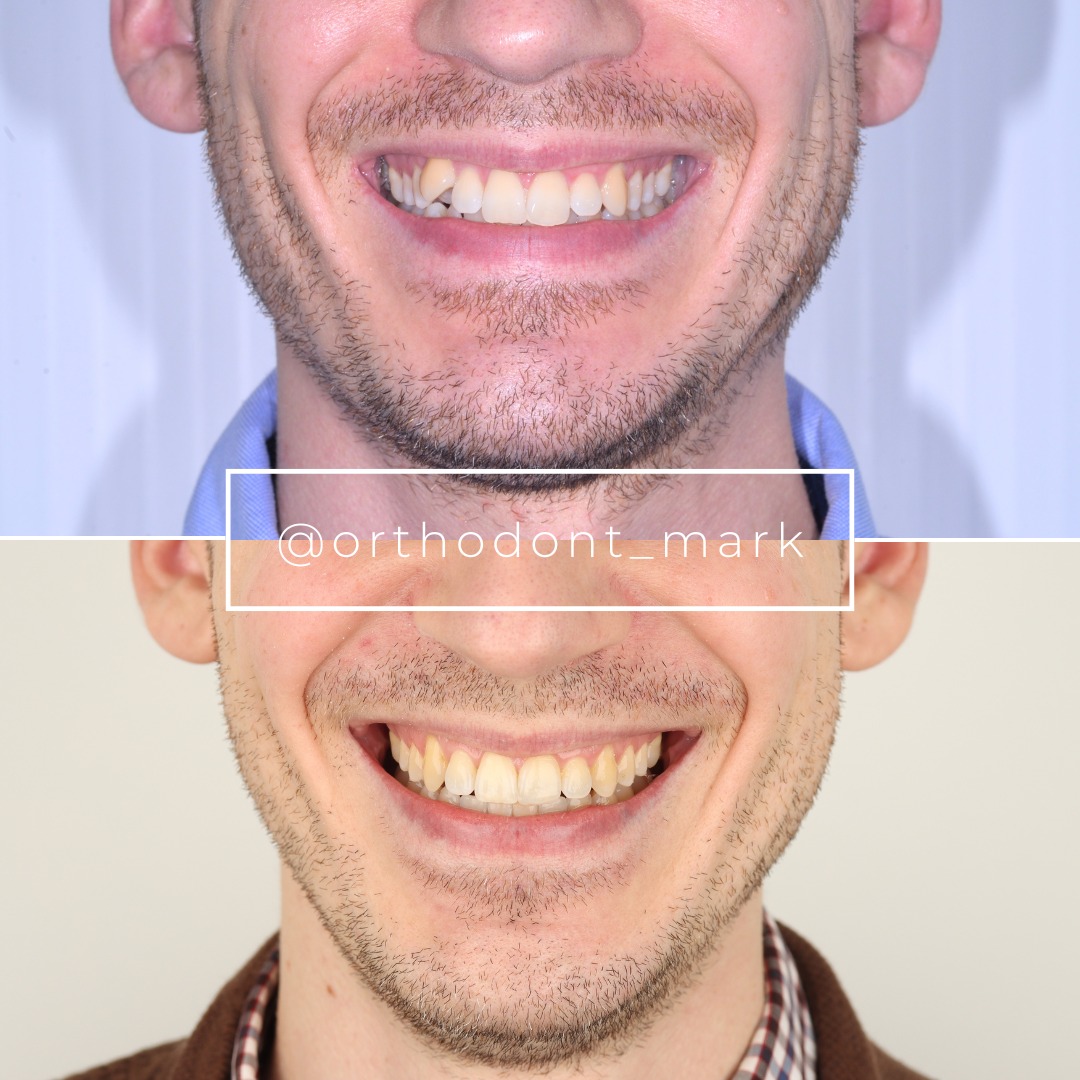
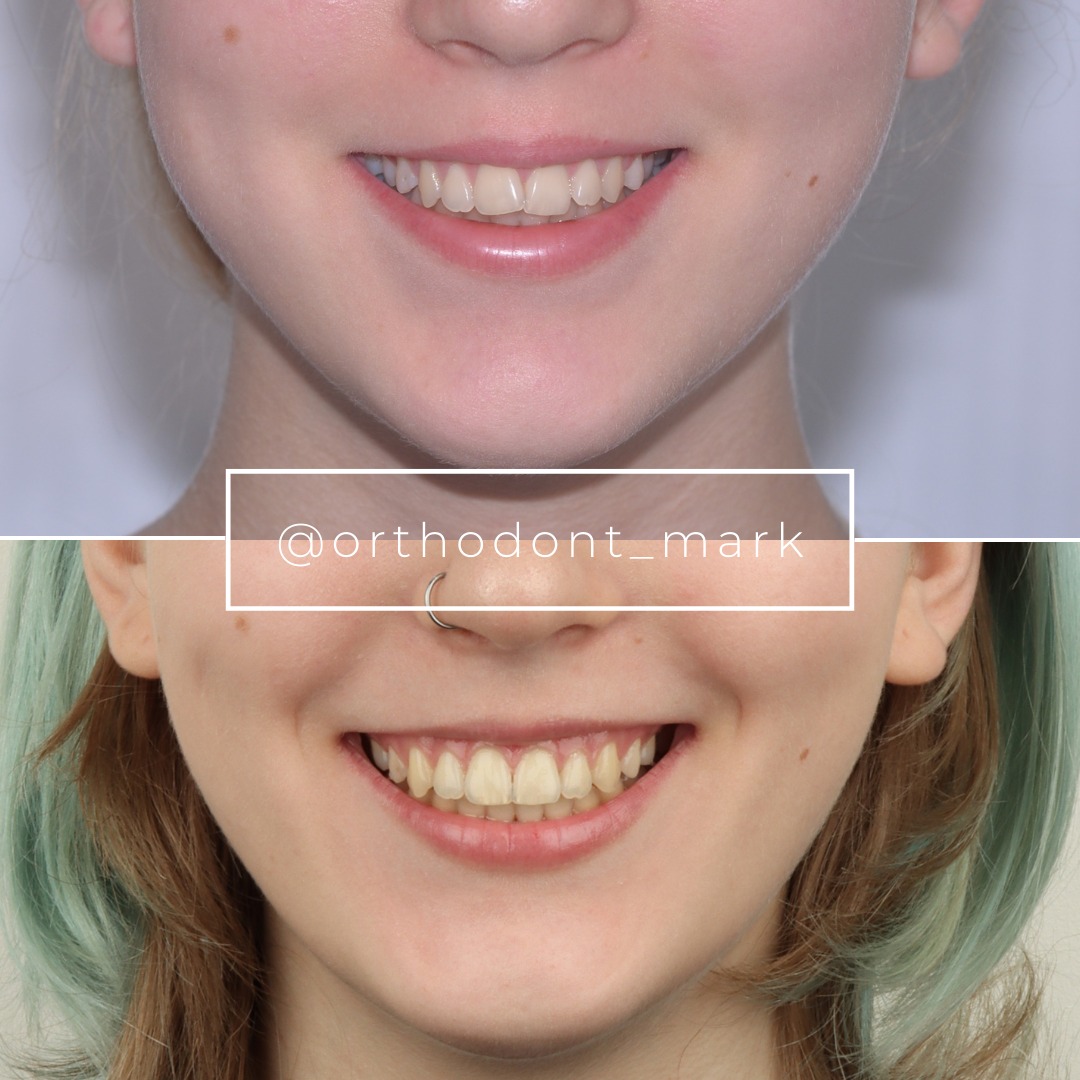
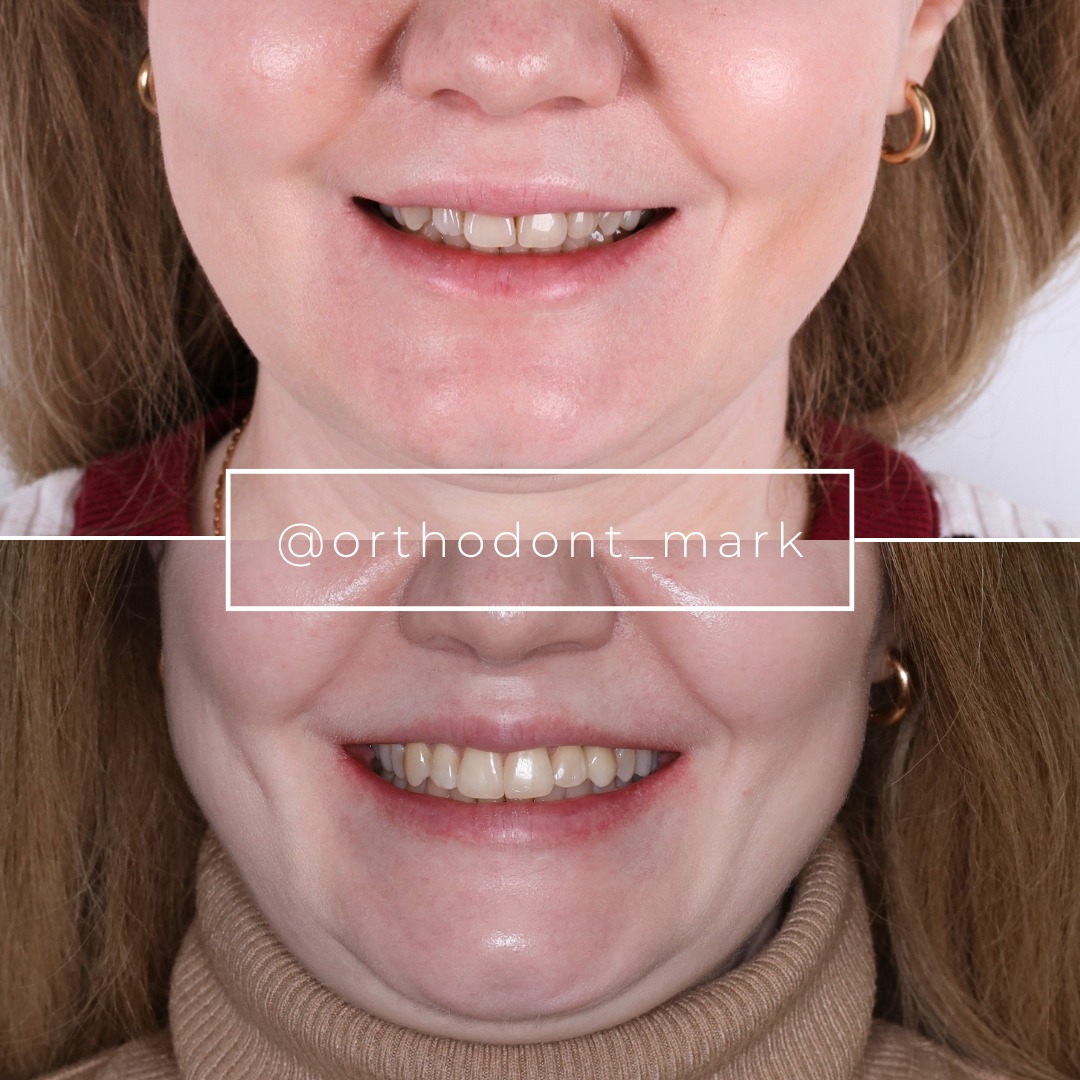
Learn the full MARPE protocol from Dr. Mark Radzhabov
Fundamental course covering CBCT patient selection, miniscrew planning, activation protocols, and 60+ clinical cases. Choose the access level that fits your practice.
Essentials of rapid palatal expansion for practicing orthodontists.
- Core RPE concepts and biomechanics
- 6 structured video lessons
- Clinical decision checklists
- Lifetime access to recordings
Deep-dive into MARPE protocol, diagnostics, and clinical execution.
- 6 modules covering MARPE from A to Z
- CBCT case selection walkthroughs
- Miniscrew placement and activation
- 60+ annotated clinical cases
- Direct Q&A with Dr. Mark Radzhabov
5-element medical consultation framework for dentists and orthodontists.
- Trust-building consultation protocol
- 5 lesson modules
- Templates for treatment plan delivery
- Works with any clinical specialty
Clinical FAQ
What is post-expansion torque finishing and when should it begin in the MARPE protocol?
Post-expansion torque finishing is the systematic correction of buccal crown-root divergence at premolars and molars after active expansion. It should begin only after CBCT confirms adequate mineralisation of the midpalatal suture gap — not on a fixed calendar timeline — to avoid destabilising incomplete bone fill.
Why does buccal root uprighting remain necessary even after MARPE if anchor tooth displacement is reduced?
Although Chun et al. (2022) confirmed that MARPE produces significantly less buccal displacement of anchor teeth than conventional RPE, residual crown-root divergence still accumulates during expansion and consolidation. Reduced tipping is not zero tipping — root uprighting mechanics are still required before stable final detailing.
How does MSE or bone-borne expansion affect the post-expansion finishing mechanics demand compared to tooth-borne RPE?
Bone-borne and hybrid expanders direct force primarily to the palatal cortex, reducing dentoalveolar tipping per unit of skeletal expansion. The absolute torque deficit at anchor teeth is smaller, but targeted root uprighting mechanics remain part of the finishing sequence, especially after large transverse corrections.
What archwire sequence is recommended for buccal root uprighting after MARPE?
Progress from smaller rectangular cross-sections toward full-dimension stainless steel wires to gradually engage the third-order prescription. This engages torque expression progressively rather than applying maximum force immediately after consolidation, reducing the risk of root resorption or periodontal stress at the buccal cortex.
Does the age of the patient alter the post-expansion torque correction protocol?
Sant'Ana et al. (2016) studied SARME patients aged 18.3 to 31.8 years, mean 24.29 years. Older patients often show slower suture mineralisation, extending consolidation before finishing mechanics begin. Radiographic consolidation staging on CBCT is a more reliable trigger than chronological age alone.
How do I differentiate suture consolidation adequate for finishing mechanics from premature initiation on CBCT?
Look for progressive trabecular bridging across the midpalatal gap at the anterior, middle, and posterior suture thirds. A persistent dark radiolucent line indicates incomplete fill. Advancing to full-dimension rectangular archwires before bridging is visible risks relapse of skeletal width and unwanted dental movement.
Can torquing auxiliaries be used at first premolars and molars simultaneously during post-expansion finishing?
Yes, but torquing auxiliary placement should be tooth-specific, guided by CBCT assessment of individual crown-root inclinations. Expansion force distribution is not uniform across premolar and molar segments, so applying identical torque auxiliaries to all buccal anchor teeth may over-correct some while under-correcting others.
What nasal and skeletal changes should I account for when planning finishing mechanics after MARPE?
Chun et al. (2022) reported that MARPE produces greater increases in nasal width at the molar region and greater palatine foramen dimensions compared to conventional RPE. These structural changes confirm the skeletal nature of expansion and should be documented in post-expansion records used to plan the finishing archwire prescription.
Does surgically assisted rapid maxillary expansion change the torque finishing sequence compared to MARPE alone?
The underlying torque dynamics at anchor teeth are similar, but Sant'Ana et al. (2016) showed that midpalatal split significantly improves expansion efficacy, meaning larger skeletal movements are delivered. Greater transverse change may be accompanied by proportionally more complex buccal torque correction demands in the finishing phase.
How do I prevent periodontal complications at buccal root surfaces during post-expansion torque correction?
Before applying root-torquing forces, assess CBCT cross-sections at the first premolar and molar root apices for proximity to the buccal cortical plate. When bone thickness is thin after significant skeletal widening, use lighter torquing forces, progress archwire sizes slowly, and monitor clinically for signs of fenestration or gingival recession.
Buccal root uprighting after expansion is not optional finishing detail — it is the biomechanical bridge between a successful palatal split and a stable, well-torqued occlusion. Clinicians who stage post-expansion mechanics deliberately, addressing premolar and molar torque before final archwire detailing, protect both the skeletal correction and the periodontal envelope of the expanded arch. Dr. Mark Radzhabov encourages colleagues to submit complex post-expansion cases for a structured case review, or to explore the MARPE training pathway at ortodontmark.com to build the protocol confidence needed for consistent finishing outcomes. Key sources: Chun et al. (2022), BMC Oral Health, doi:10.1186/s12903–022-02138-w. Sant'Ana et al. (2016), Int. J. Oral Maxillofac. Surg., doi:10.1016/j.ijom.2016.03.005. Sarraj et al. (2021), APOS Trends in Orthodontics, doi:10.25259/APOS_160_2020.