
Two Stage Expansion Aligner Sequencing:
Evidence
When MARPE Before Aligners Is Justified
CBCT suture maturation data now gives clinicians a precise imaging threshold for staging MARPE before aligner therapy rather than relying on chronological age estimates.
TL;DR Two stage expansion aligner sequencing—MARPE first, then aligner therapy—is justified when CBCT confirms advanced midpalatal suture maturation that prevents single-appliance correction. Govaerts et al. (2023) found the midpalatal suture closed in 61% of 15-year-old females, and Chun et al. (2022) showed MARPE produces greater maxillary width gains with less dental tipping than conventional RPE.
A patient presents with a narrow maxilla and a full-arch crowding pattern that clear aligners alone cannot resolve skeletally. The clinical question is not whether to expand, but in which sequence—and the imaging evidence now gives orthodontists a precise, suture-based answer. Two stage expansion aligner sequencing, where MARPE precedes aligner therapy, is increasingly supported by CBCT suture maturation data rather than age estimates alone. Dr. Mark Radzhabov at ortodontmark.com synthesizes the current peer-reviewed evidence so clinicians can build a defensible, biomechanically logical protocol for this population.
Why Does Suture Maturation Determine Whether
Staging
Is Clinically Necessary?
Two stage expansion aligner sequencing is a multiphase orthodontic protocol in which MARPE achieves skeletal transverse correction first, and aligner therapy addresses residual tooth-position discrepancies in a dedicated second phase. The rationale is structural: once the midpalatal and transpalatal sutures approach fusion, a single-appliance clear aligner strategy cannot generate the orthopedic forces required to separate them, producing dental compensation rather than skeletal correction. Govaerts et al. (2023) found the midpalatal suture closed in 61% of 15-year-old females, meaning that a substantial proportion of adolescent patients presenting for aligner therapy already lack the sutural patency that single-stage aligner correction assumes. Waiting for a cleaner occlusal starting point by attempting aligner-only expansion in these patients risks tipping posterior teeth buccally without moving the basal bone. Govaerts et al. (2023) also reported that the transpalatal suture shows 78–85% closure by age 15, and that zygomaticomaxillary suture closure ranges from 32–47% in females aged 15–17 years. This multi-suture closure pattern means that by mid-adolescence the entire circummaxillary suture system is progressively stiffening, compounding the resistance that any bone-borne appliance must overcome. Staging expansion ahead of aligners therefore addresses a biomechanical reality, not a clinical preference. Clinicians can review the evidence base for miniscrew-assisted skeletal expansion protocol in detail before committing to this sequence.
How Does the Expansion Pattern Change Before
Suture Fusion
and Why Does It Matter for Aligner Sequencing?
Kinzinger et al. (2022) demonstrated that the expansion pattern changes with age from parallel in children under 10 years to V-shaped in adolescents age 12 and older. A V-shaped opening means that anterior palatal width gain is disproportionately smaller than posterior gain, and this anterior-posterior asymmetry must be accounted for when planning the aligner phase that follows. Kinzinger et al. (2022) further showed that the transverse palatal suture opens completely only in younger patients. In older adolescents incomplete sutural engagement produces a different force distribution across the maxillary complex. For the clinician sequencing MARPE before aligners, this means the residual tooth-position corrections handed off to the aligner phase are different in a 14-year-old than in a 9-year-old, and digital treatment planning must account for the asymmetric skeletal gain before aligner staging begins. The anterior-posterior distribution of expansion width also shifts with age, with younger patients showing greater posterior expansion according to Kinzinger et al. (2022). When aligner archwire staging is designed after MARPE, the posterior transverse dimensions already gained skeletally should be locked into the aligner digital setup to prevent the software from re-tipping molars to compensate for what it reads as a width discrepancy. This is a protocol-level detail that distinguishes informed two-stage sequencing from a generic MARPE-then-aligner handoff.
Does MARPE Actually Produce the Skeletal Width
That Aligners
Cannot Generate Independently?
The distinction between MARPE and conventional tooth-borne RPE matters directly to aligner sequencing because the quality of skeletal gain in phase one determines how little compensatory tooth movement is needed in phase two. Chun et al. (2022) reported midpalatal suture separation in 90% of conventional RPE patients and 95% of MARPE patients in a randomized clinical trial, confirming that the bone-borne miniscrew design reliably achieves the sutural split that is the prerequisite for genuine skeletal expansion. Critically for sequencing logic, Chun et al. (2022) showed that MARPE produced greater maxillary width increases at the premolars and molars compared to conventional RPE. This translates clinically to a wider skeletal arch entering the aligner phase, reducing the transverse tooth-movement burden that aligners would otherwise need to manage—and aligners manage transverse demands poorly when they require skeletal rather than dental correction. Chun et al. (2022) also documented that MARPE showed less dental buccal tipping of anchor teeth during expansion and consolidation compared to RPE. Minimizing pre-existing buccal tipping at the start of the aligner phase means the clinician is not using aligner mechanics to undo iatrogenic tipping from expansion—a compounding inefficiency avoided entirely by selecting the right appliance for phase one. Clinicians new to this workflow can review the evidence supporting conventional rapid palatal expander mechanics to understand the contrast before adopting MARPE as the first-stage appliance.
When Does the Evidence Shift the Decision Toward
Surgical
Assistance Rather Than MARPE-First Sequencing?
Not every transversely deficient patient is a candidate for non-surgical two-stage sequencing. The surgical threshold is defined partly by the same suture maturation criteria used to justify MARPE—and partly by the documented complication profile of the surgical alternative. Nowak et al. (2024) reported complications in 9.73% of patients undergoing SARPE in a retrospective cohort, a figure that contextualizes the clinical value of successfully completing MARPE-first sequencing without surgical exposure. Govaerts et al. (2023) reported that orthodontists recommended SARPE at age 15.1 years while maxillofacial surgeons recommended it at 14.8 years. The 0.3-year difference reflects divergent risk thresholds between specialties, but both figures cluster tightly around the 15-year cutoff at which Govaerts et al. (2023) identified a suture closure prevalence sufficient to guide treatment selection. For the clinician considering staged expansion aligner sequencing, CBCT suture staging at this age window is therefore not optional—it determines whether phase one is MARPE or SARPE. The practical implication is that a CBCT obtained at initial records should include midpalatal suture staging using a validated classification. If the suture is at stages A, B, or early C, MARPE-first sequencing with subsequent aligner therapy is biomechanically appropriate. Stage D or E narrows the window for non-surgical expansion considerably, and the Govaerts et al. (2023) data showing 61% midpalatal closure at age 15 means this is not a rare edge case. Clinicians who want to build a reproducible triage workflow can find case-specific planning support through structured MARPE training at ortodontmark.com.
Free Clinical Guide
Which Expansion Appliance at Which Age?
Get Dr. Mark Radzhabov's guide to skeletal-expansion appliances — indications, pros & cons, and how to choose by patient age. Free to your inbox.
Prefer video? Watch the free demo lesson on MARPE appliance types, features and trade-offs.
Documented outcomes
Clinical cases from Dr. Mark Radzhabov's practice
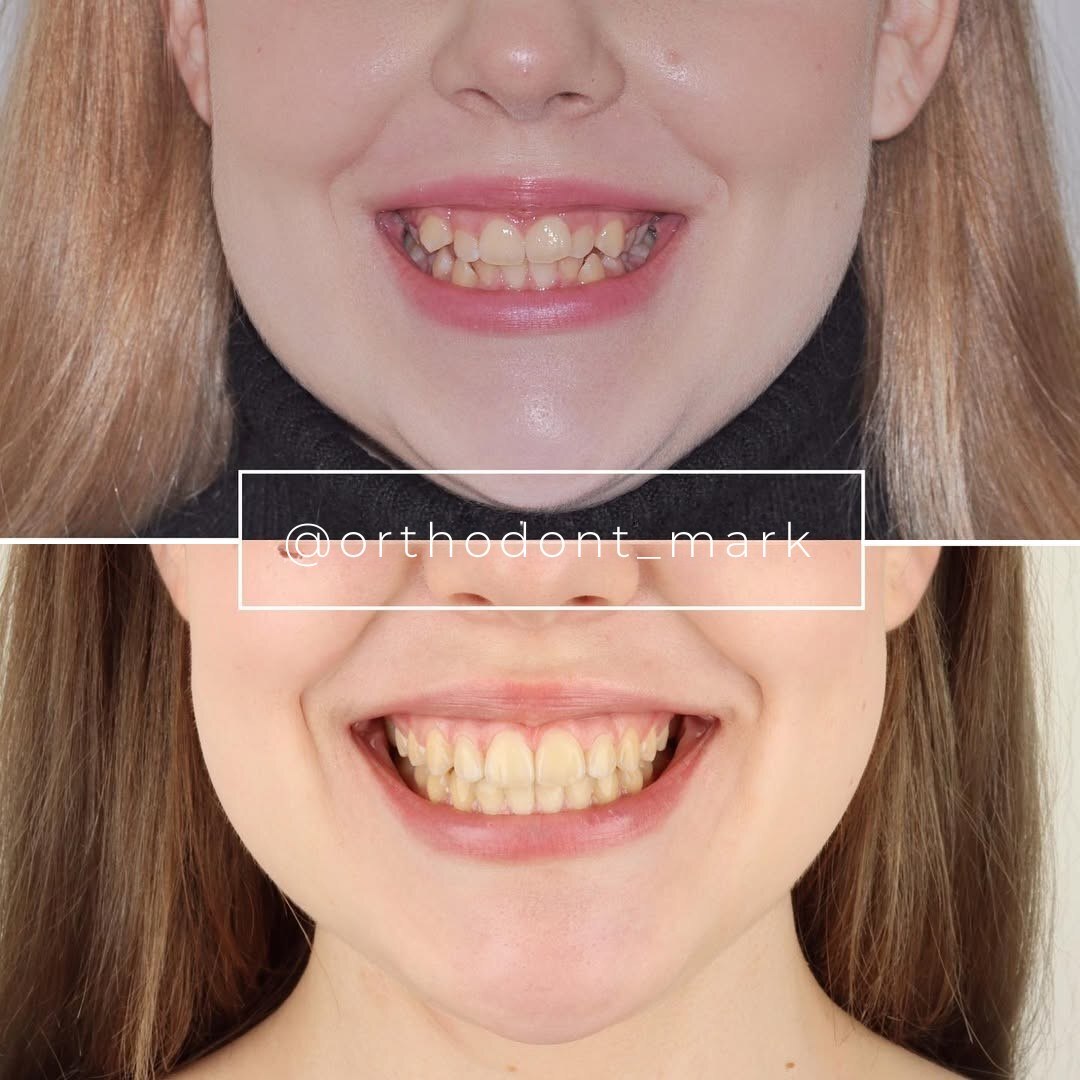
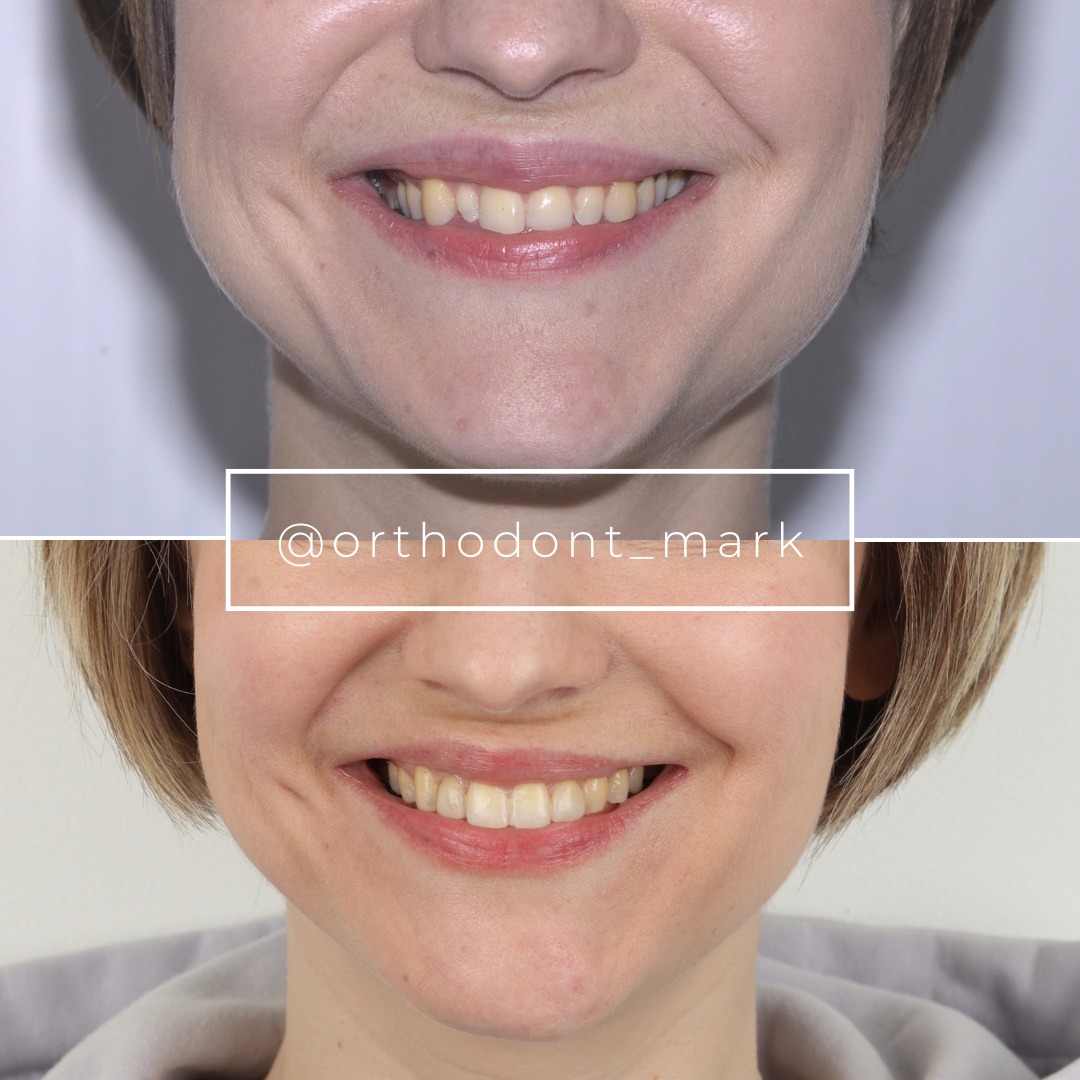
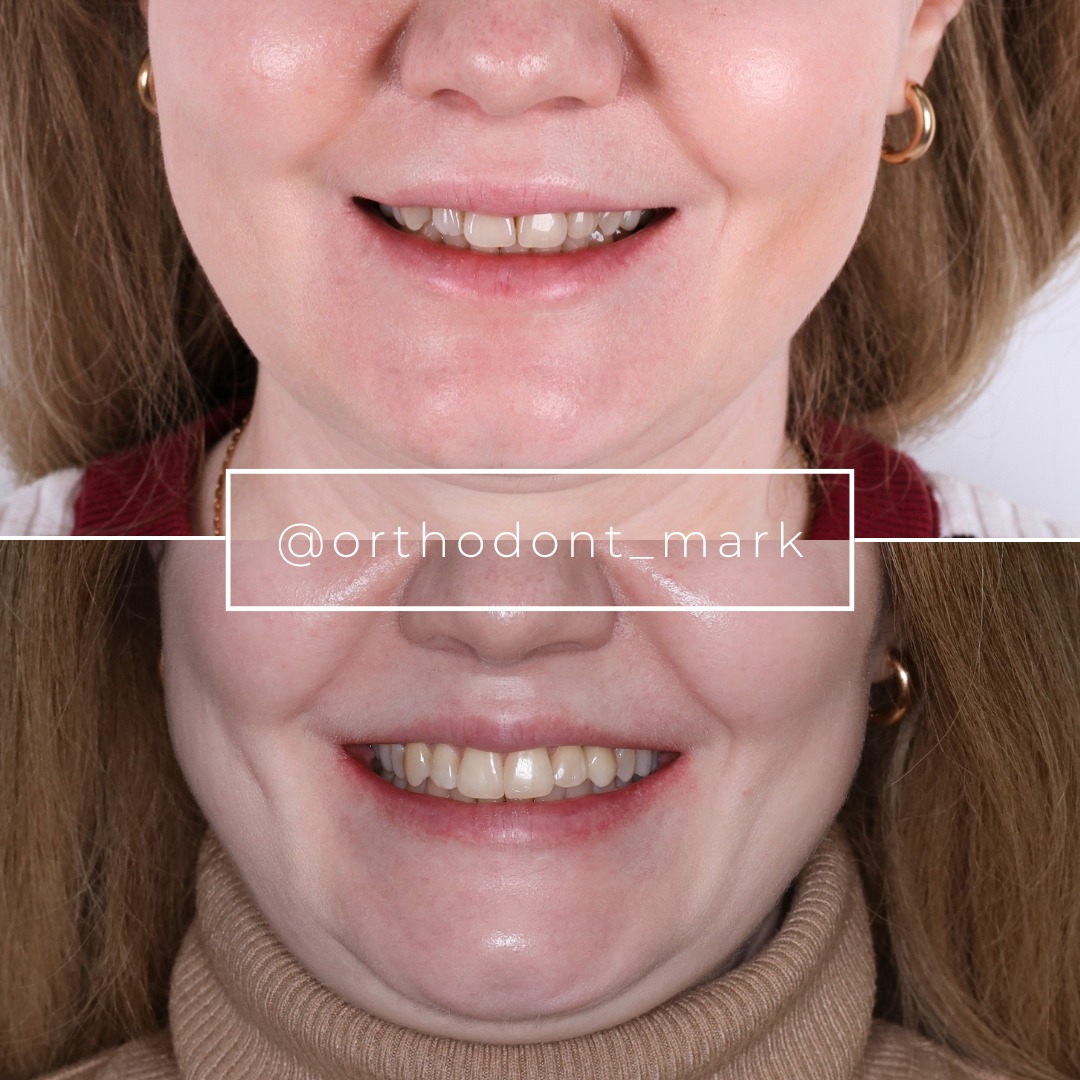
Learn the full MARPE protocol from Dr. Mark Radzhabov
Fundamental course covering CBCT patient selection, miniscrew planning, activation protocols, and 60+ clinical cases. Choose the access level that fits your practice.
Essentials of rapid palatal expansion for practicing orthodontists.
- Core RPE concepts and biomechanics
- 6 structured video lessons
- Clinical decision checklists
- Lifetime access to recordings
Deep-dive into MARPE protocol, diagnostics, and clinical execution.
- 6 modules covering MARPE from A to Z
- CBCT case selection walkthroughs
- Miniscrew placement and activation
- 60+ annotated clinical cases
- Direct Q&A with Dr. Mark Radzhabov
5-element medical consultation framework for dentists and orthodontists.
- Trust-building consultation protocol
- 5 lesson modules
- Templates for treatment plan delivery
- Works with any clinical specialty
Clinical FAQ
What CBCT criteria confirm a patient is a candidate for two stage expansion aligner sequencing rather than aligner-only transverse correction?
Midpalatal suture staging on CBCT is the primary criterion. Govaerts et al. (2023) identified that the suture is closed in 61% of 15-year-old females. Stages A through early C support MARPE-first sequencing, while stages D and E indicate reduced non-surgical potential.
How does suture maturation in females differ from males when planning MARPE before aligner therapy?
Available evidence focuses on females. Govaerts et al. (2023) found significant midpalatal suture maturation reached by age 15 in females, with transpalatal suture closure at 78–85% by that age. Clinicians should assess male patients individually using CBCT staging rather than applying female age thresholds.
Why does MARPE produce a better aligner-phase starting point than conventional RPE in adolescent patients?
Chun et al. (2022) showed MARPE produces greater maxillary width at premolars and molars and less buccal tipping of anchor teeth compared to RPE. Less pre-existing tipping means the aligner phase addresses tooth position rather than correcting iatrogenic dental compensation.
At what age does the expansion pattern become V-shaped and how should this influence aligner staging?
Kinzinger et al. (2022) documented a shift from parallel expansion in children under 10 years to V-shaped in adolescents age 12 and older. The V-shaped pattern produces asymmetric anterior-posterior width gain that must be incorporated into the aligner digital treatment plan at handoff.
What complication rate should clinicians benchmark against when deciding between MARPE-first sequencing and SARPE?
Nowak et al. (2024) reported complications in 9.73% of SARPE patients. This figure represents the surgical risk floor against which non-surgical two-stage expansion aligner sequencing should be weighed during treatment planning and consent.
Does MARPE reliably achieve midpalatal suture separation in patients entering the aligner-eligible age range?
Chun et al. (2022) reported suture separation in 95% of MARPE patients compared to 90% with conventional RPE in a randomized clinical trial. This separation rate supports MARPE as the preferred first-stage appliance when skeletal expansion precedes aligner therapy.
How do specialist recommendations for SARPE age thresholds compare, and what does this mean for MARPE-first case selection?
Govaerts et al. (2023) found orthodontists recommended SARPE at age 15.1 years and maxillofacial surgeons at 14.8 years. Both figures cluster at the 15-year suture maturation threshold, reinforcing that CBCT staging—not specialist opinion alone—should triage MARPE versus SARPE in two-stage protocols.
How does zygomaticomaxillary suture closure affect the feasibility of non-surgical expansion in the MARPE-before-aligner protocol?
Govaerts et al. (2023) documented zygomaticomaxillary suture closure ranging from 32–47% in females aged 15–17 years. Progressive closure across this suture adds resistance to the circummaxillary complex, compounding midpalatal stiffness and reducing the skeletal response achievable without surgical assistance.
What does the transverse palatal suture's behavior in older adolescents mean for planning the consolidation period before aligners begin?
Kinzinger et al. (2022) showed the transverse palatal suture opens completely only in younger patients, not older adolescents. Incomplete opening in adolescents may affect consolidation dynamics and the stability of the skeletal gain transferred to the aligner phase.
How should digital aligner setup account for age-related changes in anterior-posterior expansion distribution after MARPE?
Kinzinger et al. (2022) confirmed that anterior-posterior expansion distribution shifts with age, with younger patients showing greater posterior expansion. When programming the aligner phase, clinicians must map measured post-MARPE arch dimensions into the digital setup to avoid software-generated compensatory tipping.
The evidence reviewed here converges on a single workflow principle: confirm suture status with CBCT before committing to any single-appliance correction strategy. When midpalatal and transpalatal suture maturation is advanced, two stage expansion aligner sequencing—MARPE to open the skeletal foundation, aligners to detail the occlusion—produces outcomes that neither appliance achieves alone. Dr. Mark Radzhabov invites clinicians to audit their current case-selection criteria against these imaging thresholds and explore structured MARPE training at ortodontmark.com to implement the protocol confidently. Key sources: Govaerts et al. (2023), Journal of Orofacial Orthopedics, doi:10.1007/s00056–023-00487-x. Chun et al. (2022), BMC Oral Health, doi:10.1186/s12903–022-02138-w. Nowak et al. (2024), Journal of Clinical Medicine, doi:10.3390/jcm13072053.