
MARPE Case Review Red Flags:
A Literature-Derived Checklist for Borderline Transverse Cases
A structured, evidence-based checklist helping orthodontists identify which transverse cases need peer review before MARPE or RPE appliance placement.
TL;DR MARPE case review red flags are specific imaging and clinical signals that indicate a borderline transverse case warrants peer consultation before appliance placement. Expansion mode shifts from parallel to triangular with age, altering force distribution across the midpalatal suture. Bone-borne appliances reduce dental tipping compared to tooth-borne designs. Recognizing these flags early protects outcomes.
A borderline transverse case can appear deceptively straightforward until the expander is already placed and the midpalatal suture fails to respond as expected. Identifying MARPE case review red flags before treatment — not after the first activation — is the decision point that separates predictable outcomes from difficult recoveries. At ortodontmark.com, Dr. Mark Radzhabov synthesizes the current peer-reviewed imaging and biomechanical evidence to give orthodontists a structured, literature-derived checklist for recognizing which expansion cases demand a second opinion before committing to a protocol.
Which Findings Actually Define a Red Flag
in a Borderline Transverse Case?
A MARPE case review red flag is a clinical or radiographic finding that signals elevated risk of incomplete suture separation, excessive dental side effects, or appliance failure when standard selection criteria are applied to a borderline transverse deficiency. RPE works by separating the medial palatine suture to widen the maxillary basal bone (Bud et al., 2023), so any factor that compromises sutural response changes the risk profile of the entire case. The most actionable red flags fall into three domains: patient age relative to suture maturity, expected expansion geometry, and appliance force output relative to tissue resistance. Each domain can tip an apparently routine case into a result that requires revision or surgical escalation. A structured review of all three before appliance placement — rather than mid-treatment — is the standard the literature supports. Clinicians who attempt to bypass this triage on the grounds that the deficiency looks mild routinely encounter the same complications: asymmetric suture opening, anchor-tooth buccal tipping, and inadequate nasal airway response. The checklist presented here is designed to surface those risks at the diagnosis stage, where course correction is still low-cost.
How Expansion Mode by Age Group Changes
Protocol Selection
for Borderline Transverse Cases
Kinzinger et al. (2022) identified three distinct age-dependent expansion patterns using CBCT and dental cast analysis: patients under 10 years, those between 10 and 12 years, and those over 12 years. Younger children showed greater posterior width gain, while older adolescents demonstrated greater anterior expansion — a difference that directly affects where the clinician needs to measure deficiency and where skeletal correction will actually land. The shift from parallel to triangular expansion mode with increasing age (Kinzinger et al., 2022) is a primary red flag because it means the clinician's pre-treatment transverse measurements may not correspond to post-expansion outcomes. A patient who measures as a candidate for MARPE based on posterior width may receive predominantly anterior expansion if suture geometry has already changed. For the borderline case specifically — where the deficiency is on the threshold of MARPE versus surgically assisted expansion — this geometry shift is decisive. If CBCT reveals early sutural bridging in the posterior third while the anterior suture remains patent, the expected expansion vector will be anterior-dominant regardless of appliance force. That mismatch between clinical need and biological response is a textbook indication for case review before proceeding.
Does Appliance Force Output Flag
Biomechanical Risk
Before the First Activation?
Camporesi et al. (2013) measured the force output of standard RME appliances in vitro and found that Hyrax and A2620 expanders generate forces exceeding 20 kg, while Palatal Split screws generate approximately 16 kg. The same study established that expansion forces in the range of 16 to 20 kg are adequate for successful rapid maxillary expansion, and that the full range across RME devices spans 7.54 to 15.8 kg depending on design. Standard expansion screws for RME are 10 mm in size (Camporesi et al., 2013), a dimension that constrains how force is distributed across anchor teeth and bone. For the borderline transverse case, the red flag is not simply which appliance generates higher force — it is whether that force is delivered to the midpalatal suture or to anchor teeth. Chun et al. (2022) demonstrated that MARPE produces significantly less buccal tipping of anchor teeth during expansion and consolidation than RPE. When a clinician selects a tooth-borne expander for a patient who actually requires skeletal correction, the dental tipping that results is both a complication and a diagnostic signal that was missable at case acceptance. A case review before appliance selection should therefore include a force-pathway audit: is the planned device capable of transmitting adequate load to the suture without exceeding the anchor teeth's tipping tolerance? Cases where the answer is ambiguous — typically those with thin buccal bone over the premolars on CBCT — meet the threshold for a second opinion. Clinicians building familiarity with these criteria can benefit from structured MARPE training and case mentorship to calibrate their pre-treatment checklists.
What Suture Separation Data Tells You
About Protocol Risk
in Adolescent Borderline Cases
Chun et al. (2022) reported midpalatal suture separation in 90% of RPE cases and 95% of MARPE cases — findings from 20 RPE and 20 MARPE participants with mean ages of approximately 14 years. The 5-percentage-point difference between modalities is less clinically significant than the common underlying finding: a non-trivial minority of cases in both arms did not achieve suture separation even at a mean age where the suture is still considered physiologically open. For the borderline transverse case, this finding reframes the red-flag question. The issue is not which appliance works better on average — it is identifying in advance the patients who fall into the non-separating minority. In both Chun et al. (2022) groups, the participants who did not achieve separation could not have been excluded on age alone, since the groups were comparable in age and sex distribution with mean ages around 14 years. That means pre-treatment suture morphology on CBCT — not calendar age — is the discriminating variable. Clinicians reviewing a borderline transverse case should therefore anchor their go/no-go decision to suture imaging rather than to normative age cutoffs. A patient at the same chronological age can present with dramatically different suture architecture depending on skeletal maturity markers. Cases where suture patency is ambiguous on CBCT constitute a clear indication for peer review before proceeding with miniscrew-assisted skeletal expansion protocol. When in doubt, the expansion case consultation planning pathway provides a structured framework for that decision.
A Structured Pre-Treatment Red-Flag Review
Checklist
for Transverse Deficiency Case Acceptance
Translating the evidence into a practice-ready checklist means converting each red-flag domain into a binary clinical question answerable from records already in hand. The five-question format below is designed to be completed at the case presentation stage, before appliance selection, and before the patient is scheduled for miniscrew placement. Question 1 — Suture morphology: Does the CBCT show a patent, non-bridged midpalatal suture across the full anterior-to-posterior extent? Bridging in the posterior third, even with anterior patency, flags a triangular expansion risk per Kinzinger et al. (2022). Question 2 — Expansion geometry need: Is the deficiency posterior, anterior, or uniform? If the clinical need is posterior and suture morphology predicts anterior-dominant opening, the planned appliance will not deliver correction where it is needed. Question 3 — Appliance force pathway: Is the planned device bone-borne or tooth-borne, and does the patient's buccal bone thickness on CBCT support that choice without unacceptable tipping risk? Camporesi et al. (2013) established that forces from 16 to 20 kg are adequate. The question is whether that force reaches the suture or the anchor teeth. Question 4 — Anchor tooth risk: Does the pre-treatment CBCT show thin buccal cortical plate over the maxillary premolars? Chun et al. (2022) confirmed significantly less buccal tipping with bone-borne MARPE versus tooth-borne RPE — a difference that matters most in patients with thin buccal bone. Question 5 — Airway outcome target: Is nasal width improvement part of the treatment objective? Chun et al. (2022) showed MARPE produced significantly greater nasal width increase and larger palatine foramen dimensions than RPE. If airway response matters, appliance selection is not interchangeable. Any case where two or more answers are ambiguous meets the threshold for peer case review.
Free Clinical Guide
Which Expansion Appliance at Which Age?
Get Dr. Mark Radzhabov's guide to skeletal-expansion appliances — indications, pros & cons, and how to choose by patient age. Free to your inbox.
Prefer video? Watch the free demo lesson on MARPE appliance types, features and trade-offs.
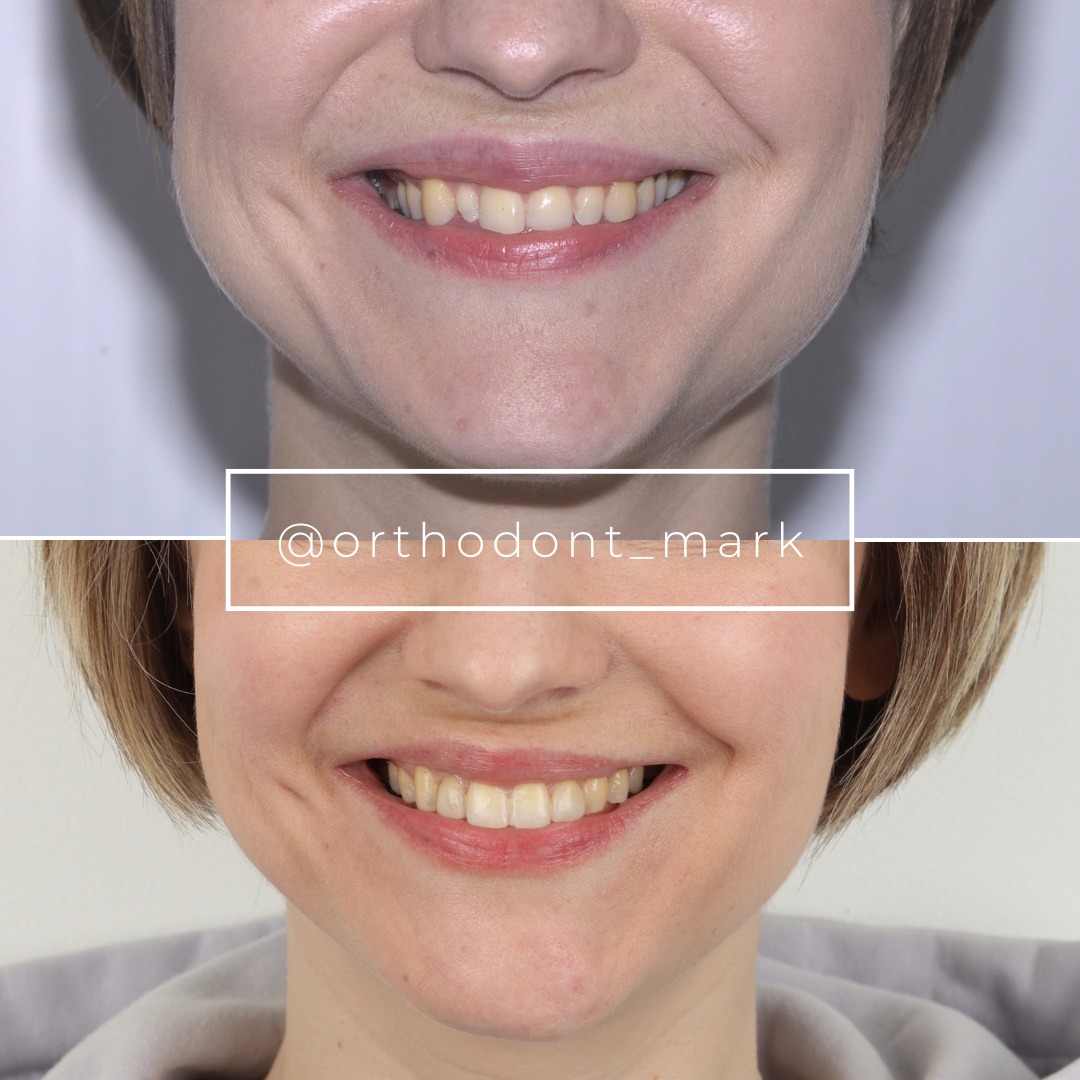
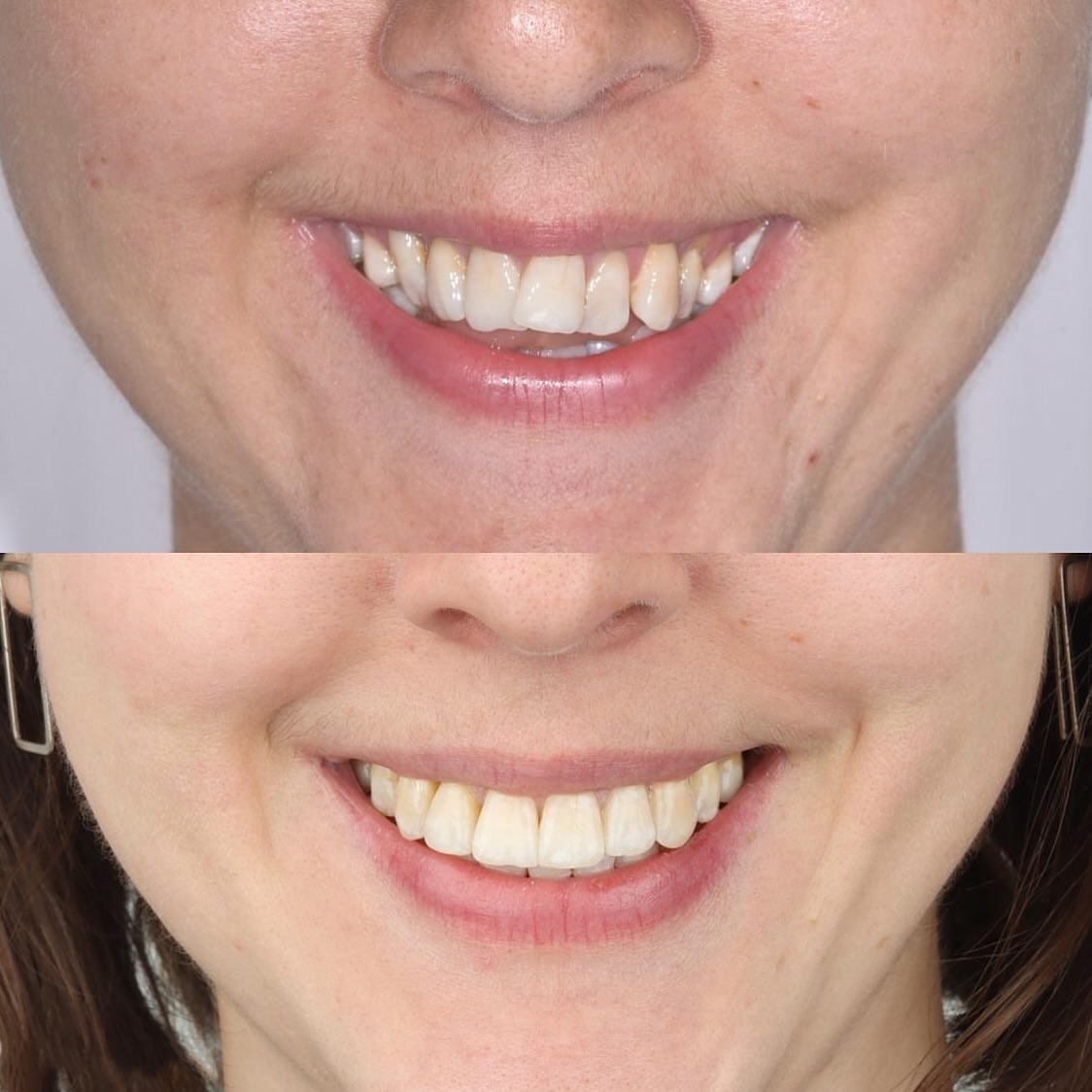
Documented outcomes
Clinical cases from Dr. Mark Radzhabov's practice

Learn the full MARPE protocol from Dr. Mark Radzhabov
Fundamental course covering CBCT patient selection, miniscrew planning, activation protocols, and 60+ clinical cases. Choose the access level that fits your practice.
Essentials of rapid palatal expansion for practicing orthodontists.
- Core RPE concepts and biomechanics
- 6 structured video lessons
- Clinical decision checklists
- Lifetime access to recordings
Deep-dive into MARPE protocol, diagnostics, and clinical execution.
- 6 modules covering MARPE from A to Z
- CBCT case selection walkthroughs
- Miniscrew placement and activation
- 60+ annotated clinical cases
- Direct Q&A with Dr. Mark Radzhabov
5-element medical consultation framework for dentists and orthodontists.
- Trust-building consultation protocol
- 5 lesson modules
- Templates for treatment plan delivery
- Works with any clinical specialty
Clinical FAQ
What are the primary MARPE case review red flags that indicate a borderline transverse case needs peer consultation?
The main red flags are ambiguous suture patency on CBCT, a mismatch between deficiency location and expected expansion geometry, thin buccal cortical bone over anchor teeth, and uncertainty about whether the planned appliance force pathway reaches the suture rather than the anchor dentition.
How does age-dependent expansion geometry affect MARPE patient selection in adolescents over 12 years?
Kinzinger et al. (2022) found that expansion mode changes from parallel to triangular with increasing age, with older adolescents showing greater anterior expansion. If the clinical need is posterior correction, this geometric shift means the planned appliance may not deliver transverse gain where it is needed.
When should an orthodontist seek a second opinion for a borderline transverse expansion case?
A second opinion is warranted when two or more pre-treatment checklist questions are unresolvable from available records — typically involving suture morphology ambiguity, thin buccal bone, or a mismatch between deficiency location and expected expansion vector based on the patient's CBCT findings.
How does MARPE compare to RPE for anchor-tooth buccal tipping in adolescent patients?
Chun et al. (2022) demonstrated that MARPE produced significantly less buccal tipping of anchor teeth during both expansion and consolidation phases compared to RPE, making bone-borne appliance design the preferred option when thin buccal cortical bone is identified as a pre-treatment red flag.
What force output threshold should clinicians use when selecting an RME appliance for a borderline case?
Camporesi et al. (2013) established that forces of 16 to 20 kg are adequate for rapid maxillary expansion. Hyrax and A2620 devices exceed 20 kg, while Palatal Split screws generate approximately 16 kg. The clinical question is whether that force reaches the suture or is absorbed by anchor teeth.
Does CBCT suture morphology predict expansion success more reliably than patient age in borderline transverse cases?
Yes. Chun et al. (2022) found that RPE and MARPE groups were comparable in age and sex distribution yet still produced non-separating cases, demonstrating that calendar age alone cannot identify failure risk. CBCT suture architecture is the necessary discriminating variable for borderline case triage.
What imaging criteria on CBCT should trigger a MARPE case review before appliance placement?
Posterior suture bridging, thin buccal cortical plate over the maxillary premolars, and asymmetric suture density between left and right sides are the primary CBCT findings that indicate elevated risk and should prompt peer review before committing to a miniscrew-assisted expansion protocol.
How does the nasal width response differ between MARPE and RPE, and does it affect case selection?
Chun et al. (2022) showed MARPE produced significantly greater nasal width increase and larger palatine foramen dimensions than RPE. When nasal airway improvement is part of the treatment objective, appliance selection is not interchangeable and must be accounted for in the pre-treatment case review.
What are the rapid palatal expansion contraindications that elevate a case to borderline or surgical territory?
Key contraindications for standard RPE include advanced suture maturation visible on CBCT, severe posterior crossbite requiring more skeletal correction than tooth-borne force can reliably deliver, and inadequate buccal bone thickness to tolerate anchor-tooth tipping without periodontal compromise.
How can orthodontists build a reliable pre-treatment checklist for transverse deficiency diagnosis and expansion case difficulty assessment?
A reliable checklist addresses five domains: suture patency on CBCT, expected expansion geometry by age group, appliance force pathway, anchor-tooth buccal bone thickness, and airway outcome targets. Cases with two or more unresolved domains should proceed to peer consultation before appliance selection.
Recognizing MARPE case review red flags before appliance selection is the single most consequential step in a transverse treatment plan. The evidence from Chun et al. (2022), Kinzinger et al. (2022), and Camporesi et al. (2013) collectively argues that expansion mode, anchor-tooth tipping risk, and appliance force output must all be assessed as a system rather than in isolation. Clinicians who encounter a borderline case are encouraged to seek structured peer review through Dr. Mark Radzhabov's consultation pathway at ortodontmark.com before finalizing protocol. Key sources: Chun et al., 2022, BMC Oral Health, doi:10.1186/s12903–022-02138-w. Kinzinger et al., 2022, doi:10.1007/s00056–022-00429-z. Camporesi et al., 2013, BioMedical Engineering OnLine.